Items Similar to A Rare Blue And White Octagonal Box And Cover, Ming Dynasty Wanli Six-Character
Want more images or videos?
Request additional images or videos from the seller
1 of 14
A Rare Blue And White Octagonal Box And Cover, Ming Dynasty Wanli Six-Character
$49,800
£37,807.21
€43,585.56
CA$70,448.97
A$75,844.73
CHF 40,616.33
MX$913,901.97
NOK 512,465.50
SEK 468,988.70
DKK 325,688.71
About the Item
This octagonal blue-and-white covered box is densely decorated on each facet with dragons twisting their elongated bodies as they move through clouds, filling the entire surface with a tightly composed design. The under-base Da Ming Wanli nian zhi mark is written with fluid, unforced brushwork and displays a well-balanced, natural hand. Wanli-period blue-and-white wares display a wide range of cobalt tones, and the closest comparable example can be found in the collection of the Asian Art Museum, San Francisco, as cited in the reference.
Period: Ming Dynasty Wanli Period (1572~1620)
Medium: Blue and White Porcelain
Type: Octagonal Box
Condition : Excellent
Size : 26cm(Diameter) , 15.5cm(Height)
Provenance : Acquired in late 1990s from Hongkong
Reference :
1) Asian Art Museum San Francisco - Object numberB69P46L.a-.b - Ingot Shaped Box
(Type : Closely related)
2) An example in the Tokyo National Museum is featured in Illustrated Catalogue of Tokyo National Museum: Chinese Ceramics II, Tokyo, 1990, cat. no. 98. Another example, along with its cover, is in the Metropolitan Museum of Art and appears in S. Valenstein's A Handbook of Chinese Ceramics, New York, 1989, pl. 167.
* Distinctive Characteristics of Wanli Blue-and-White Porcelain
Wanli blue-and-white porcelain is distinguished by its bold yet intricate designs, often featuring dragons with five claws (symbolizing imperial authority) entwined with clouds and flames. The compositions are densely packed, filling almost the entire surface, a stylistic departure from the more restrained designs of earlier Ming periods. The cobalt blue used during this era was deeper and more vibrant, achieved through advanced firing techniques, creating striking visual contrasts.
* Unique Artistic Techniques and Forms
A hallmark of Wanli blue-and-white porcelain is its use of segmented decoration, with patterns divided into panels or bands around the vessel. This structured approach allowed for a mix of themes, such as floral motifs alongside mythical creatures, showcasing a rich variety within a single piece. The porcelain's shapes often included practical yet decorative forms, such as lidded jars and dishes, many created for ceremonial use, reflecting both artistry and function.
About the Seller
4.8
Vetted Professional Seller
Every seller passes strict standards for authenticity and reliability
Established in 1999
1stDibs seller since 2023
46 sales on 1stDibs
Typical response time: 1 hour
- ShippingRetrieving quote...Shipping from: seoul, Korea South
- Return Policy
More From This Seller
View AllCovered Boxes from Ca Mau Ship, Qing Dynasty, Yongzheng Reign
Located in seoul, KR
The central design features botanical motifs, with fully bloomed flowers and branches intricately depicted. The rim of the lid is encircled by a decorative band resembling a twisted ...
Category
Antique 18th Century Vietnamese Qing Antiquities
Materials
Ceramic
Blue and white jar with multi-treasure pattern, Mid-Late Qing Period
Located in seoul, KR
The jar features a straight mouth, rounded shoulders, a tucked-in belly, and outward-turned feet, with a high rounded lid topped with a bead. Its shape, resembling a general's helmet...
Category
Antique 19th Century Hong Kong Qing Ceramics
Materials
Ceramic
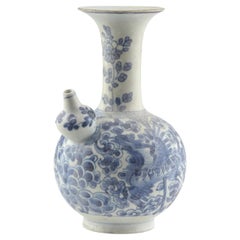
Kendi Blue And White, Qing Dynasty, Kangxi Period, C 1690
Located in seoul, KR
The Kendi is decorated with cobalt blue underglaze depicting flowers and a mythical bird, reflecting the artistic finesse and symbolic expressions of the era. These designs often carry symbolic meanings, with birds sometimes representing immortality or spiritual transcendence in Chinese mythology. The Kendi's form, with a bulbous body and spout for drinking, is a traditional vessel style in Asia, valued for both its functionality and aesthetic appeal.
Period : Qing Dynasty, Kangxi Period
Production Date : 1690-1699
Made in : Jingdezhen
Destination : Netherland
Found/Acquired : Southeast Asia , South China Sea, Vung Tau ship
Reference : Double checked with reference to the original catalogues
1) Christies Amsterdam 1992 - Vung Tau Cargo / Christies
2) Qing Dynasty Export...
Category
Antique 1690s East Asian Qing Antiquities
Materials
Ceramic
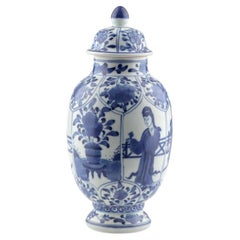
Blue And White Vase, Qing Dynasty, Kangxi Era, Circa 1690
Located in seoul, KR
Vung Tau Shipwreck Coralized Blue Underglazed Porcelain Lidded Vase. Almost perfectly Identical piece from Vietnamese Royal Family in United States provenance have been sold at other auction in California. This stunning porcelain lidded vase is elaborately decorated in a vivid blue underglaze with an ornate scene of concubines in a flower garden. The bottom of the vase bears a conch marking in underglazed blue, is a symbol of royalty, dignity and high rank, the 'Sacred Lungs of Buddha' and spiritual authority.
Period : Qing Dynasty, Kangxi reign
Production Date : 1690-1699
Made in : Jingdezhen
Destination : Amsterdam
Found/Acquired : Southeast Asia , South China Sea, Vung Tau Ship
Reference : Double checked with reference to the original catalogues
1) Christies Amsterdam 1992 - Vung Tau Cargo...
Category
Antique 1690s East Asian Qing Antiquities
Materials
Ceramic
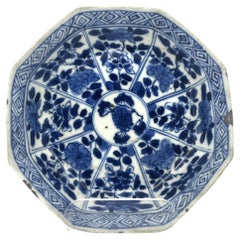
Mid-size Octagonal Saucer, Qing Dynasty, Kangxi era, circa 1690.
Located in seoul, KR
The design features a central medallion surrounded by eight panels, each intricately painted with traditional Chinese botanical and floral motifs.
The number 8 in Chinese culture is associated with prosperity and is considered very auspicious. This may reflect the traditional Chinese cosmological concept of the "Bagua," which are eight trigrams used in Taoist philosophy to represent fundamental principles of reality, seen in various aspects of Chinese culture, including the I Ching and Feng Shui.
The central circle with radiating petals is also a representation of perfect geometric harmony, reflecting the balance and unity which are key elements in Chinese aesthetics. The use of symmetry and balance is seen as a way to represent the harmony of the universe.
Period : Qing Dynasty, Kangxi Period
Production Date : 1690-1699
Made in : Jingdezhen
Destination : Netherland
Found/Acquired : Southeast Asia , South China Sea, Vung Tau...
Category
Antique 1690s Vietnamese Qing Antiquities
Materials
Ceramic
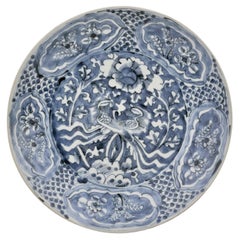
Chinese Swatow Blue and White Ceramic Dish, Late Ming Dynasty
Located in seoul, KR
Famous late ming dynasty chinese blue and white porcelain plate, double phoenix, from the shipwrecked binh thuan
Period: Ming Dyn...
Category
Antique 16th Century Vietnamese Ming Antiquities
Materials
Ceramic
You May Also Like
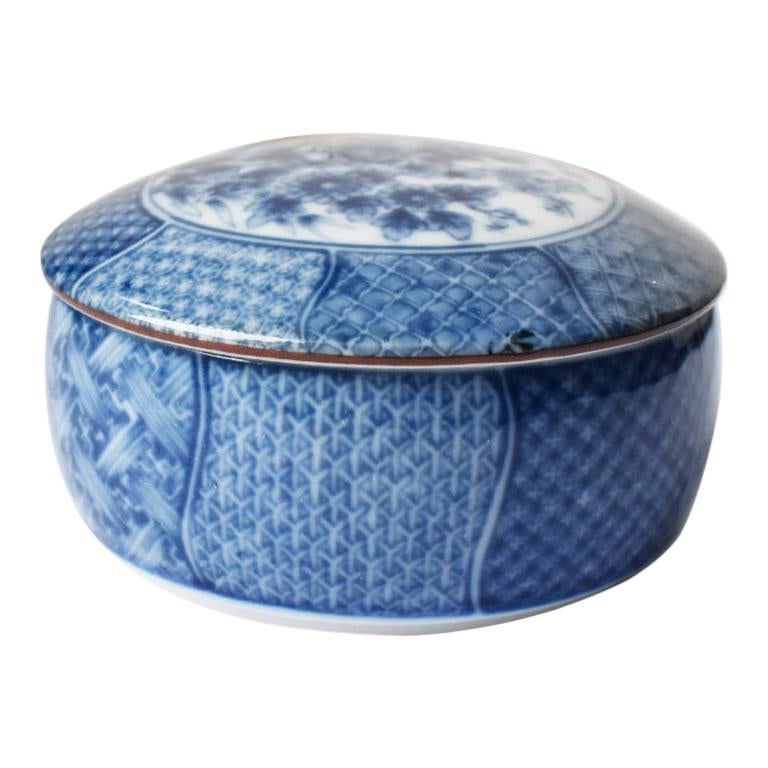
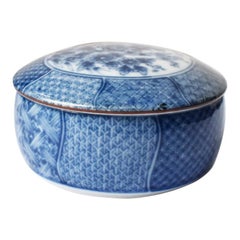
Porcelain Japanese Circular Blue and White Box with Cover
Located in Oklahoma City, OK
Beautiful round porcelain dish or circular box with a cover in blue and white. This circular chinoiserie box with a cover is finely decorated with a crisp blue and white hue. This di...
Category
20th Century Japanese Chinoiserie Ceramics
Materials
Ceramic, Porcelain
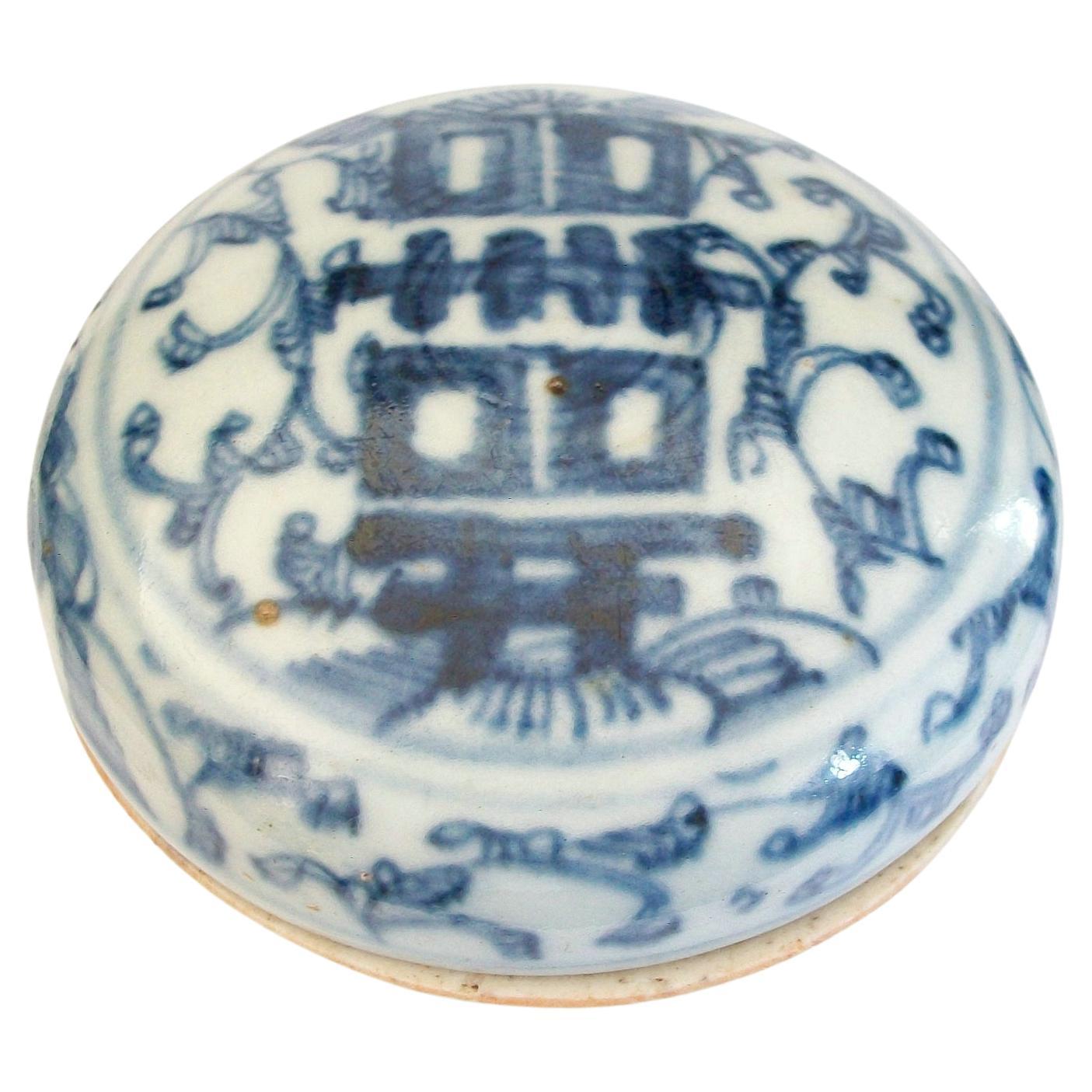
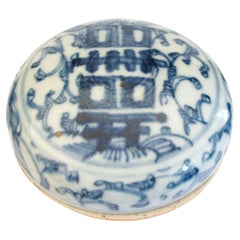
Antique Qing Blue
White Porcelain Box, Unsigned, China, Late 19th Century
Located in Chatham, ON
Antique Qing Dynasty Blue & White porcelain box with cover - hand painted with the double happiness symbol to the top and meandering vines ...
Category
Antique Late 19th Century Chinese Qing Ceramics
Materials
Porcelain
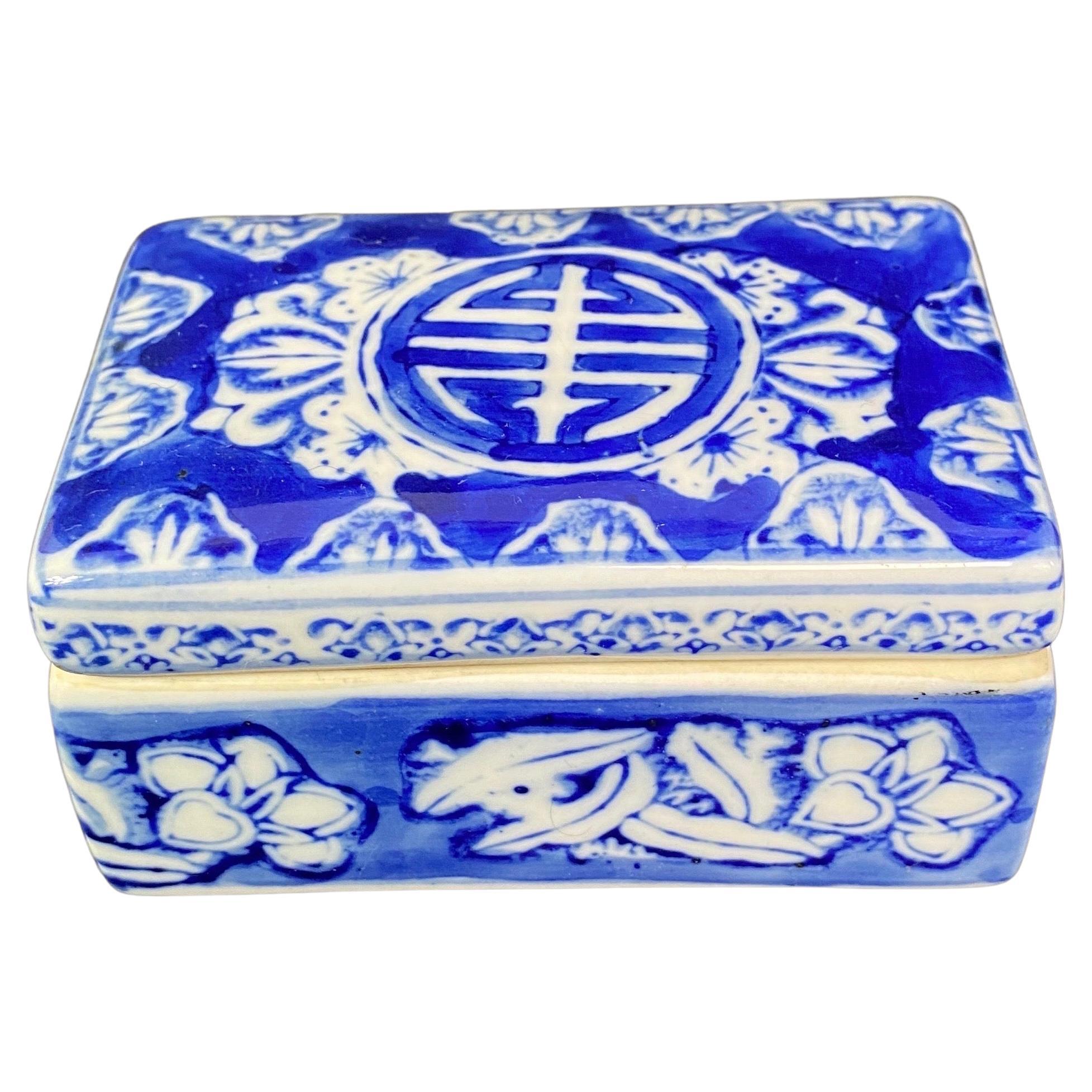
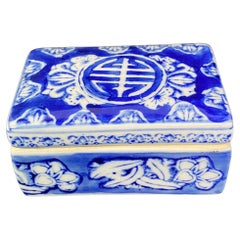
Blue and White Porcelain Ink Writing Jewerly Box - China 1900 Asian art XXth
Located in Beuzevillette, FR
Beautiful writing case with lid in painted porcelain decorated with stylized flowers and framed plant racemes. Blue and white.
This pretty box is a very b...
Category
Early 20th Century Chinese Qing Ceramics
Materials
Porcelain, Ceramic
$266 Sale Price
20% Off
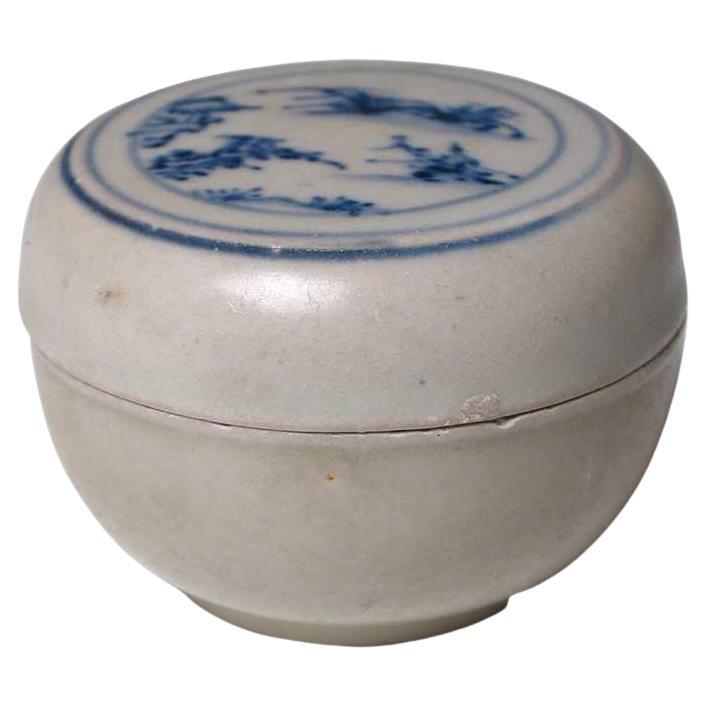
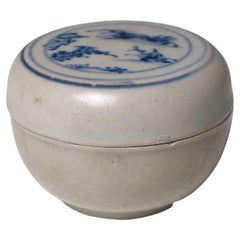
Annamese Blue and White Ceramic Box, Chu Dau kiln, Vietnam
Located in Point Richmond, CA
Annamese Blue and White Ceramic Box, Chu Dau kiln, Vietnam, circa 1500. A ceramic covered flat top circular box with lid decoration in under glaze cobalt blue of a landscape scene co...
Category
Antique 16th Century Vietnamese Ming Ceramics
Materials
Ceramic
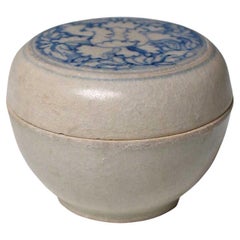
Annamese Molded Blue and White Ceramic Box, Chu Dau kiln, Vietnam
Located in Point Richmond, CA
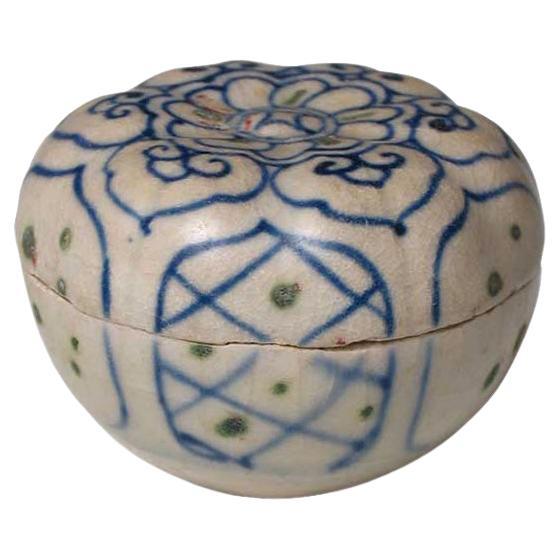
Annamese Molded Blue and White Ceramic Box, Chu Dau kiln, Vietnam, circa 1500. The cover delicately decorated with a central floral medallion from which radiate six conjoined ruyi la...
Category
Antique 16th Century Vietnamese Ming Ceramics
Materials
Ceramic
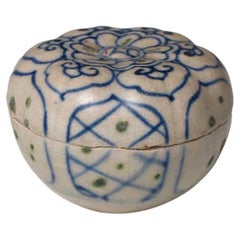
Annamese Blue and White Ceramic Box, Chu Dau kiln, Vietnam
Located in Point Richmond, CA
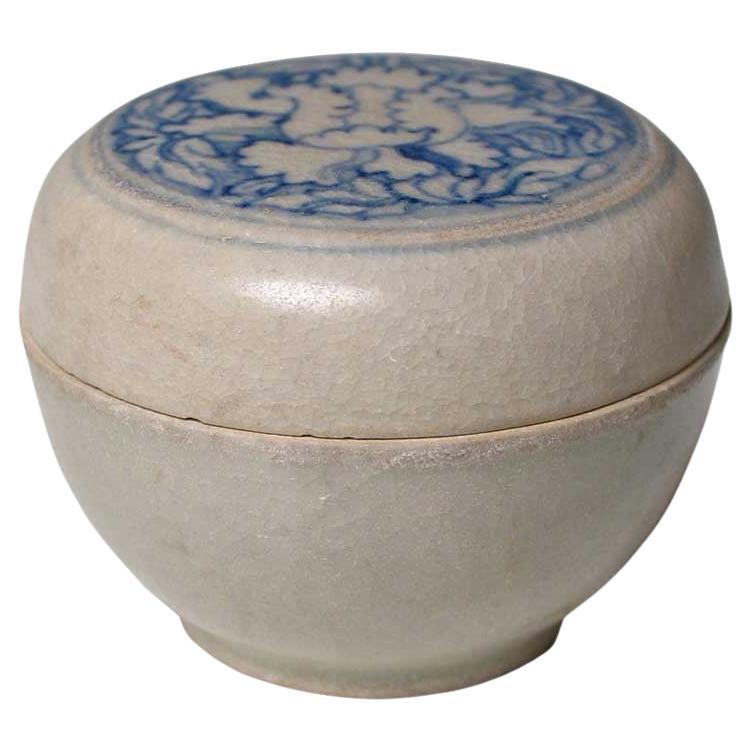
Annamese Blue and White Ceramic Box, Chu Dau kiln, Vietnam, circa 1500. A covered flat top circular box with lid decoration in under glaze cobalt blue of a peony blossom with leafy b...
Category
Antique 16th Century Vietnamese Ming Ceramics
Materials
Ceramic
More Ways To Browse
Octagon Box
Octagonal Box
Ming Dynasty Art
Ming Dynasty Blue And White Porcelain
Chinese Blue And White Dragon
Ming Dynasty Furniture 16th Century
Blue And White Chinese Boxes
Blue And White Porcelain Dragon
16th Century Chinese Blue And White Porcelain
Blue And White Box
Ming Blue White
White Porcelain Boxes
White Ceramic Box
Blue And White Porcelain Chinese Box
Ming Wanli
Wanli Porcelain
Dragon Box
Chinese Cat