Items Similar to A Rare Cream-Glazed Ding yao Ewer and Cover, Five Dynasties/Song Dynasty
Want more images or videos?
Request additional images or videos from the seller
1 of 13
A Rare Cream-Glazed Ding yao Ewer and Cover, Five Dynasties/Song Dynasty
$59,900
£45,257.79
€51,890.10
CA$83,597.34
A$90,960.26
CHF 48,162.33
MX$1,094,314.06
NOK 611,554.32
SEK 559,529.37
DKK 387,691.25
About the Item
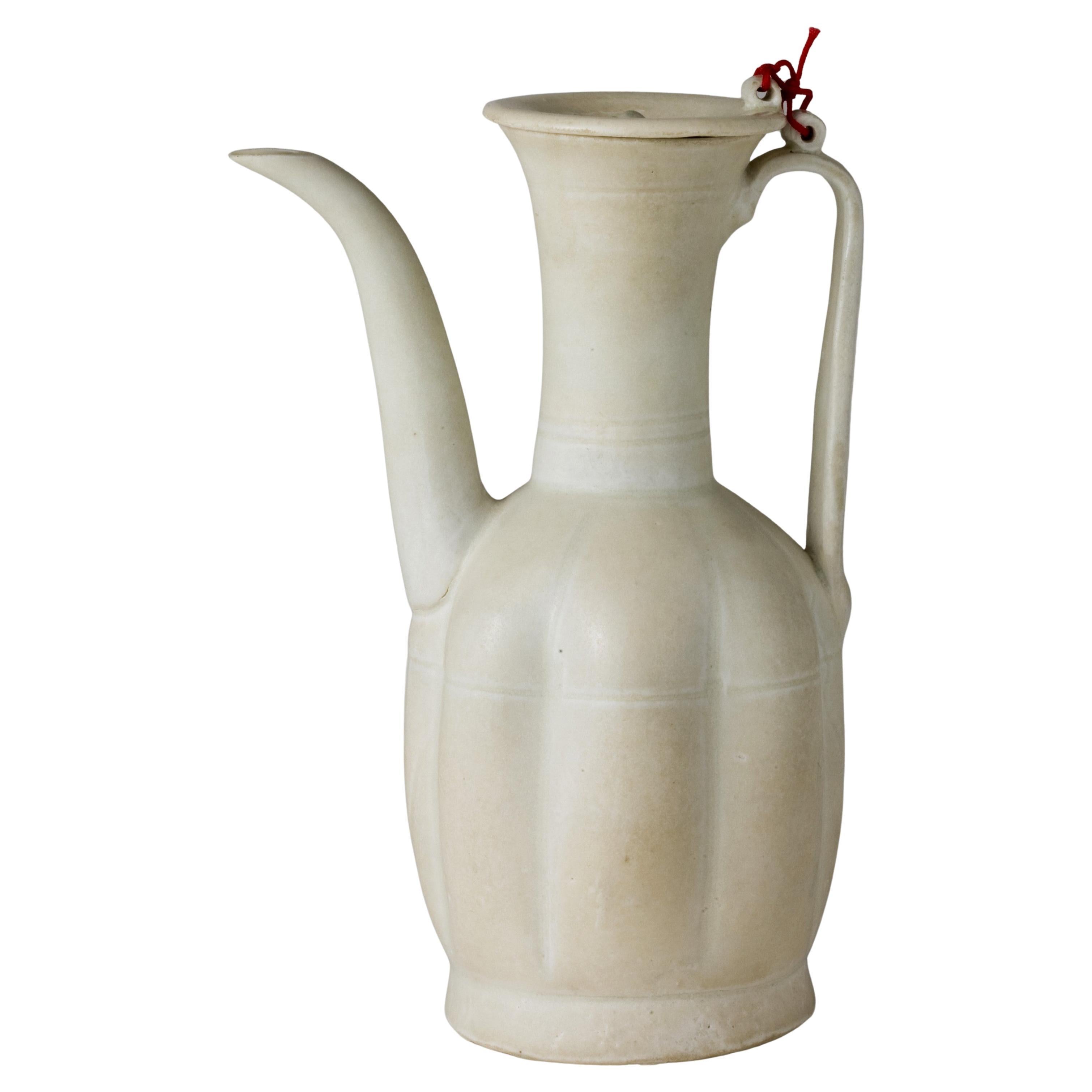
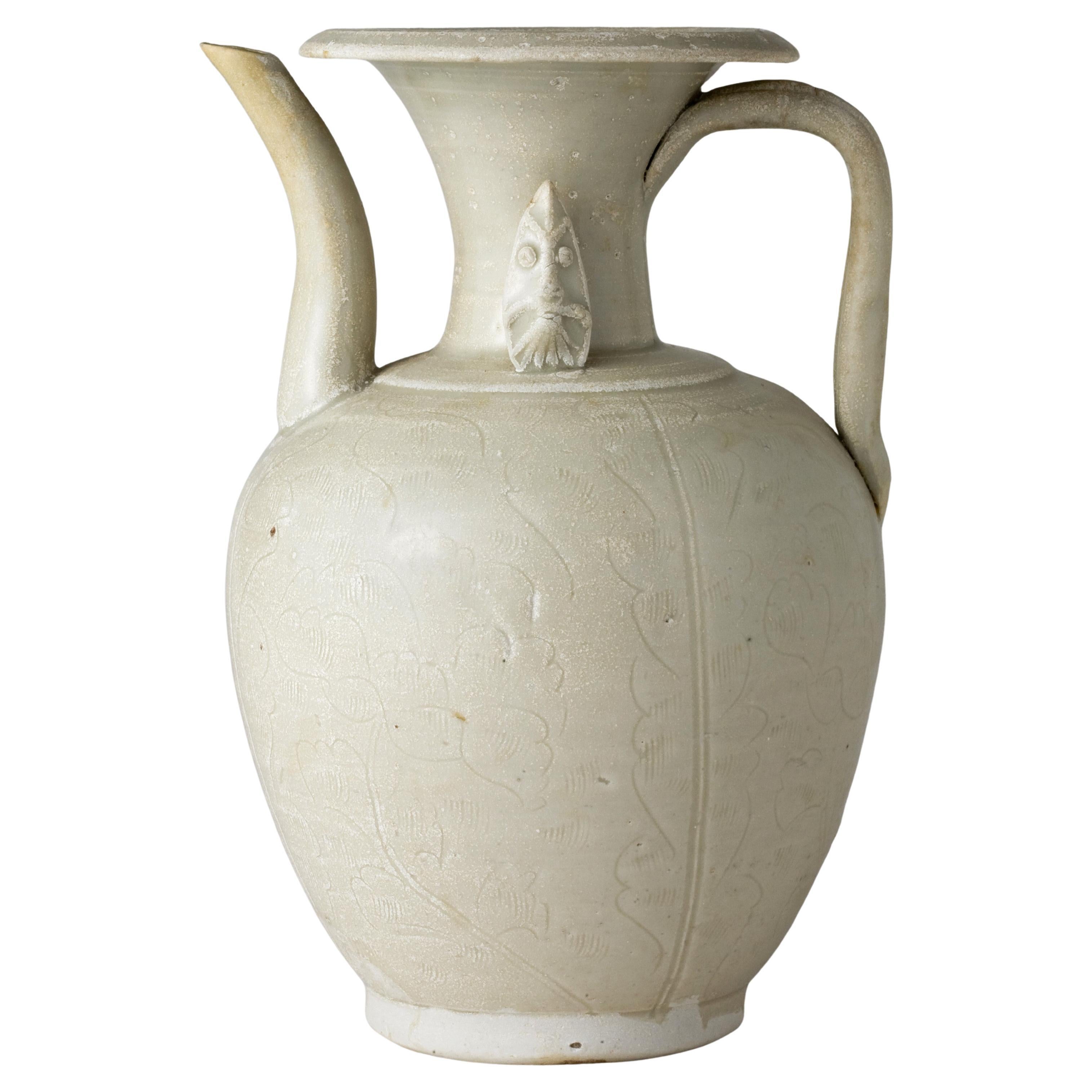
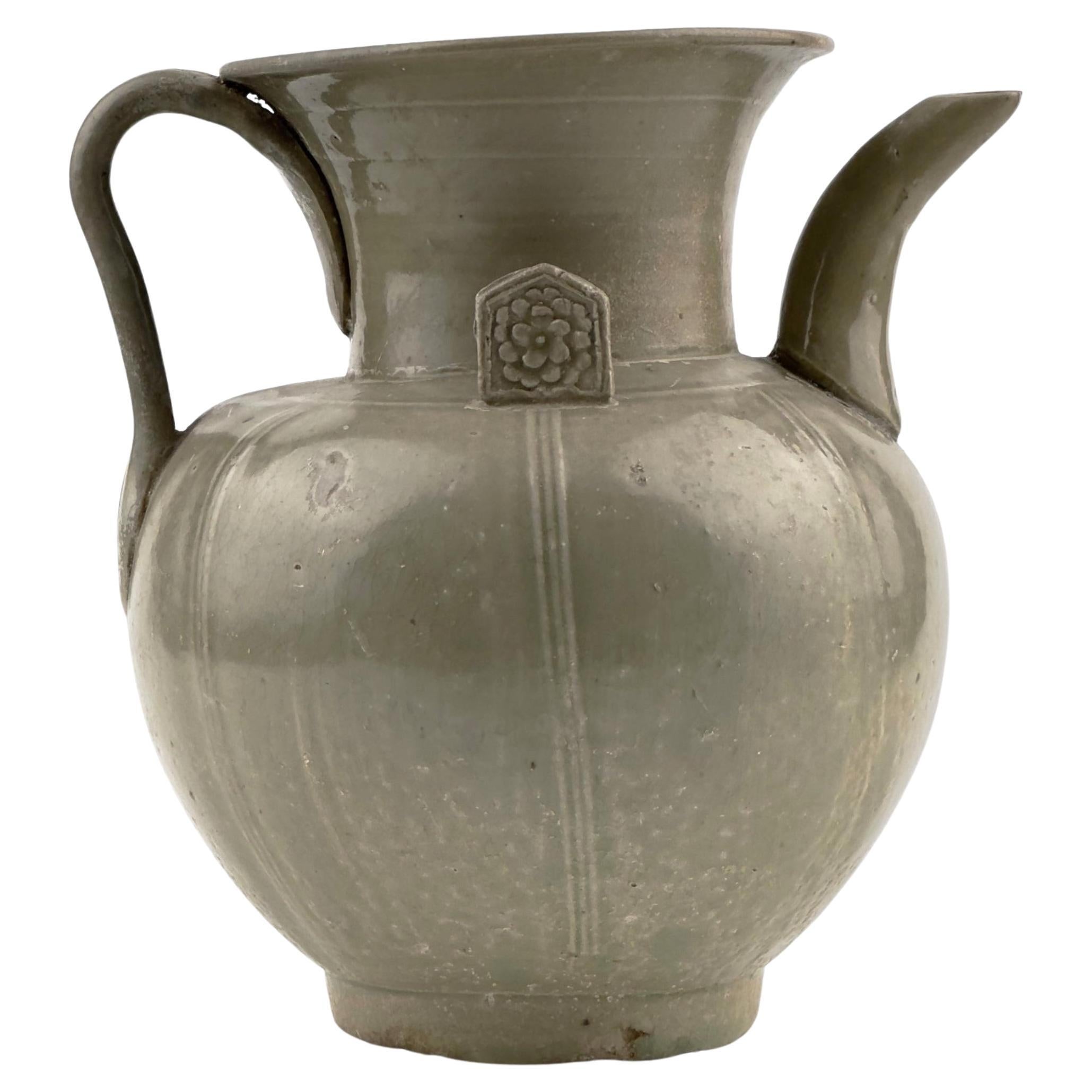
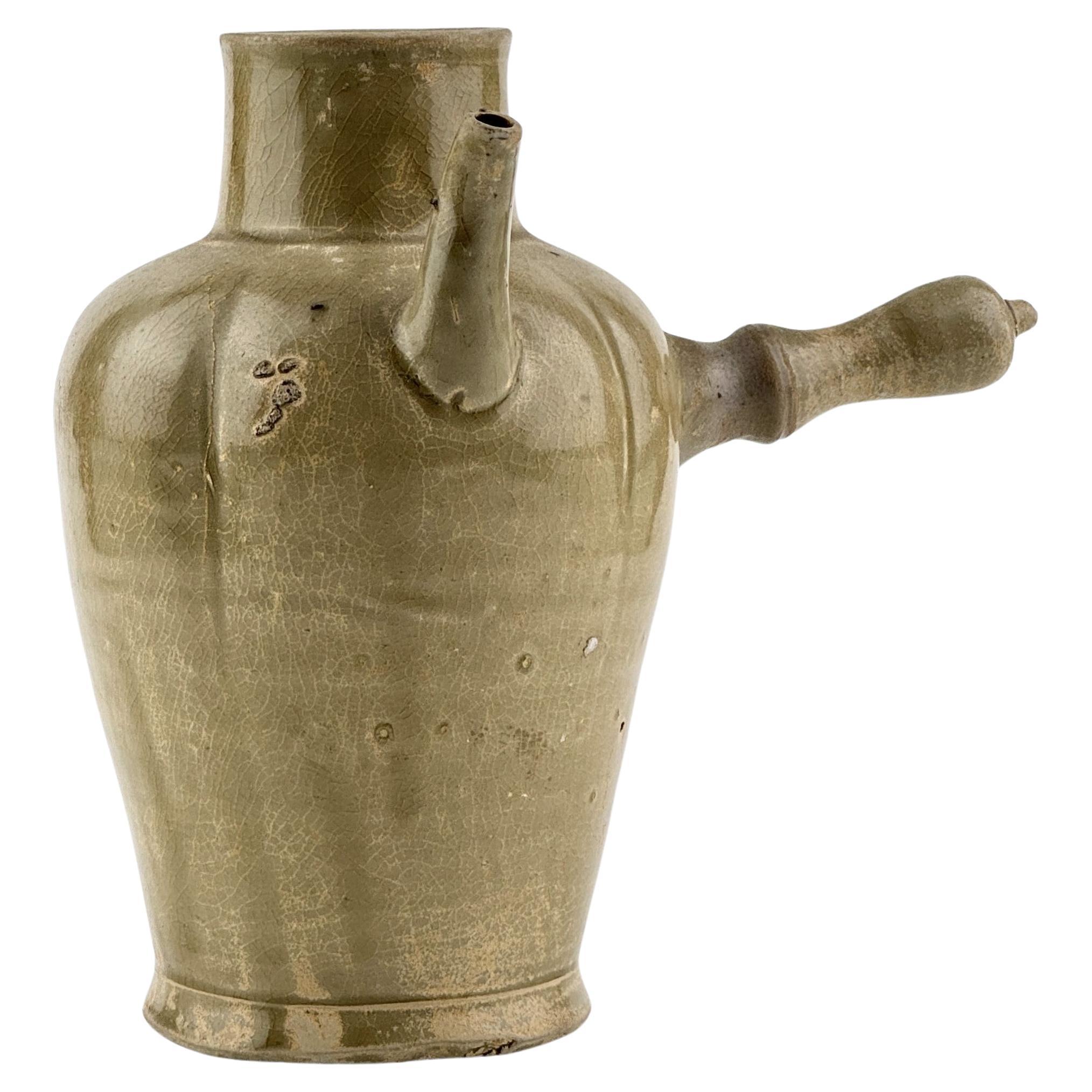
The vessel is of well-proportioned elegance, its ovoid body crisply divided into lobed segments that rise from a neatly cut, short ring foot to a tall, slender trumpet neck. A gracefully arched spout issues from the shoulder, balanced on the opposite side by a long strap handle of refined curvature. The cover, dished and surmounted with a ruyi-shaped finial.
The surface is covered with fine crackles throughout, with areas of brownish deposits settled within the fissures, clearly attesting to the natural aging. The glaze exhibits a stable ivory-toned creamy white color, with a subdued sheen rather than any artificial gloss, and small bubbles and pinholes from the firing process are partially visible.
Period : Five Dynasties/Song Dynasty
Type : Creamy-white Ding yao glaze Ewer
Provenance : Acquired in 1999, Hongkong
Reference : THE MET Accession Number: 18.57.1
Sotheby's London 2018 - St George Street Sale Asian Art - Lot 208
* Ding Ware
Ding ware, produced primarily in Dingzhou, Hebei province, flourished during the Northern Song dynasty (11th–12th century) and is among the finest examples of early white porcelain in China. It is characterized by its ivory-tinged white glaze, thin and compact clay body, and refined carved or molded decoration rendered beneath a translucent glaze.
The body of Ding ware is made from fine, nearly pure porcelain clay, usually of a warm, ivory-white tone rather than pure white. The glaze—highly transparent and slightly viscous—often pools faintly in the recesses, creating a soft creamy hue and emphasizing the carved motifs. This glaze was fired in a reduction atmosphere at high temperature, producing a smooth and glassy surface with a subtle satin sheen.
Decoration was typically achieved by incising or molding floral and foliate designs, such as lotus, peony, or scrolling vines. The carving is shallow yet precise, executed with smooth, confident strokes that appear softened beneath the glaze. Unlike the sharper outlines of later imitation wares, authentic Ding carving retains a fluid, almost hand-drawn quality.
A distinctive feature of Ding ware is its unglazed rim (露胎口). Because vessels were fired upside down to prevent the glaze from adhering to the kiln supports, the mouth rim was left bare and often fitted later with a metal band (usually silver or bronze). This firing method left a thin, unglazed edge that is a key diagnostic trait in authentication.
The footring is typically narrow and neatly trimmed, revealing the fine, dense, slightly buff-colored clay with traces of firing adhesions (spur marks). Over time, genuine Ding pieces may display mild surface iridescence or minute crazing due to glaze aging—considered positive evidence of long-term burial or environmental exposure.
In aesthetic terms, Ding ware exemplifies the Northern Song ideal of purity and restraint, combining delicate craftsmanship, subtle coloration, and quiet luminosity. From a connoisseur’s standpoint, its authenticity is judged by the soft translucence of the glaze, the precision yet warmth of the carving, and the natural oxidation and tactile aging of the exposed clay areas.
- Dimensions:Height: 10.04 in (25.5 cm)Diameter: 2.49 in (6.3 cm)
- Materials and Techniques:Ceramic,Glazed
- Place of Origin:
- Period:
- Date of Manufacture:Five Dynasties/Song Dynasty
- Condition:Minor fading. The lid has been repaired. The main body is in excellent condition.
- Seller Location:seoul, KR
- Reference Number:1stDibs: LU9577238108302
About the Seller
4.8
Platinum Seller
Premium sellers with a 4.7+ rating and 24-hour response times
Established in 1999
1stDibs seller since 2023
46 sales on 1stDibs
Typical response time: 1 hour
- ShippingRetrieving quote...Shipping from: seoul, Korea South
- Return Policy
More From This Seller
View AllRare Cream Glazed Ding yao Ewer and Cover, Song Dynasty (960~1279)
Located in seoul, KR
The body is characterized by distinctly carved octagonal or segmented ridges. The neck rises tall and straight, flaring outward at the rim, a proportion frequently seen in ewers from...
Category
Antique 15th Century and Earlier Hong Kong Chinese Export Antiquities
Materials
Ceramic
Rare annamese cream glazed ewer, Vietnam, 11-15th century
Located in seoul, KR
Famous annamese cream glazed ceramic ewer covered with a cream glaze. Traces of excavation are clearly visible in the glaze.
Dates : Presumably Ly Dynasty (11-13th century)
Region ...
Category
Antique 15th Century and Earlier Vietnamese Antiquities
Materials
Ceramic, Stoneware
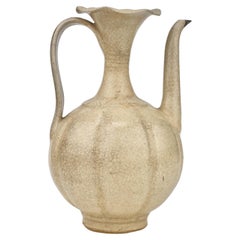
A Zhejiang Porcelain Ewer, Northern Song Dynasty
Located in seoul, KR
The oviform body is divided into few lobes. All covered in a finely crackled pale olive-green glaze. The surface and glaze characteristics are definitive, confirming the authenticity...
Category
Antique 15th Century and Earlier Hong Kong Antiquities
Materials
Porcelain
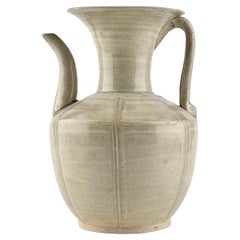
Qingbai Melon form water ewer, Five Dynasties-Northern song dynasty
Located in seoul, KR
The oviform body is divided into few lobes, and the shoulder is applied with a pair of small loops molded.
Period : Five Dynasties-Song Dynasty(907~1279)
Type : Ewer
Medium : Zheji...
Category
Antique 15th Century and Earlier Hong Kong Antiquities
Materials
Porcelain
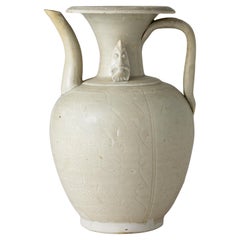
Yue Celadon Ewer, Late Tang-Northern Song Dynasty
Located in seoul, KR
This Yue ware celadon ewer features a gracefully rounded body that expands smoothly, complemented by a wide, flaring mouth. The translucent olive-green glaze envelops the surface, en...
Category
Antique 15th Century and Earlier Hong Kong Tang Antiquities
Materials
Celadon
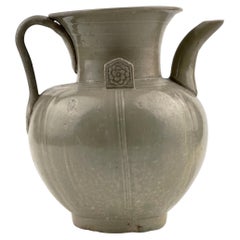
Celadon Ewer with Straight Handle, Tang to Northern Song Dynasty
Located in seoul, KR
Celadon-glazed ewer characterized by its simple and functional design. The piece features a straight handle extending horizontally from the body and a short spout for pouring liquids...
Category
Antique 15th Century and Earlier Hong Kong Tang Antiquities
Materials
Celadon
You May Also Like
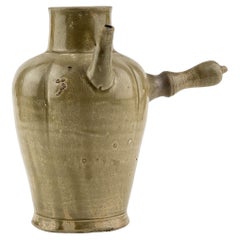
Japanese Ko-Seto Stoneware Ewer with Carved Design
Located in Atlanta, GA
On offer is a rare Ko-seto (old seto) stoneware ewer from Kamakura period (12-14th century) Japan. The exceptionally heavily potted ewer is made of stoneware. The main body was likely hand-coiled with individually built handle, sprout and wheel-made neck and mouth assembled. It takes the basic form from the contemporary Chinese ewer...
Category
Antique 15th Century and Earlier Japanese Archaistic Ceramics
Materials
Stoneware
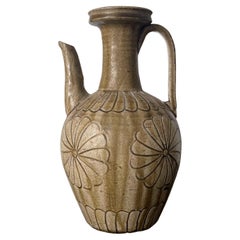
Chinese Off-White Gourd-Shaped Double Ear Porcelain Vase
Located in Queens, NY
Chinese off-white porcelain, gourd-shaped double ear vase decorated in highly subtle tonal lemons, swirling clouds and writing, and accented with two shoulde...
Category
20th Century Chinese Chinese Export Vases
Materials
Porcelain
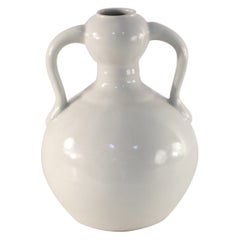
Chinese Dingyao Vase, c. 1100
Located in Chicago, IL
Dingyao porcelain, often called Ding ware, is famous for its creamy-white coloring, refined forms, and low-relief surface patterning. Ding ware was produced ...
Category
Antique 15th Century and Earlier Chinese Minimalist Ceramics
Materials
Stoneware

Korean Celadon Glazed Ritual Ewer, Kundika, Goryeo Dynasty, 13th-14th Century
Located in Austin, TX
An understated and very heavily potted celadon glazed Korean ritual ewer or water sprinkler, kundinka, Goryeo Dynasty, 13th-14th century.
The unusu...
Category
Antique 15th Century and Earlier Korean Ceramics
Materials
Stoneware
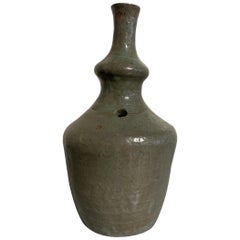
Chinese Sui Dynasty White Glazed Jar with Loop Handles, 6th-7th Century
Located in Austin, TX
A simple and elegant Chinese high fired white glazed jar with four lug handles, Sui Dynasty (581 to 618), probably Heibei Province.
The voluptuou...
Category
Antique 15th Century and Earlier Chinese Tang Ceramics
Materials
Stoneware
Chinese Ming Celadon Bottle Vase, c. 1500
Located in Chicago, IL
This petite ceramic bottle is a Ming-dynasty (1368-1644) vessel originally used for serving rice wine or spirits. The small round bottle is beautiful in its imperfection, shaped with...
Category
Antique 16th Century Chinese Ming Ceramics
Materials
Earthenware