Items Similar to Rare Longquan Celadon Tripod Incense Burner, Song-Yuan Dynasty

Want more images or videos?
Request additional images or videos from the seller
1 of 13
Rare Longquan Celadon Tripod Incense Burner, Song-Yuan Dynasty
$35,000
£26,441.21
€30,322.33
CA$48,835.82
A$53,148.38
CHF 28,173.90
MX$639,415.56
NOK 357,335.58
SEK 326,937.03
DKK 226,530.78
About the Item
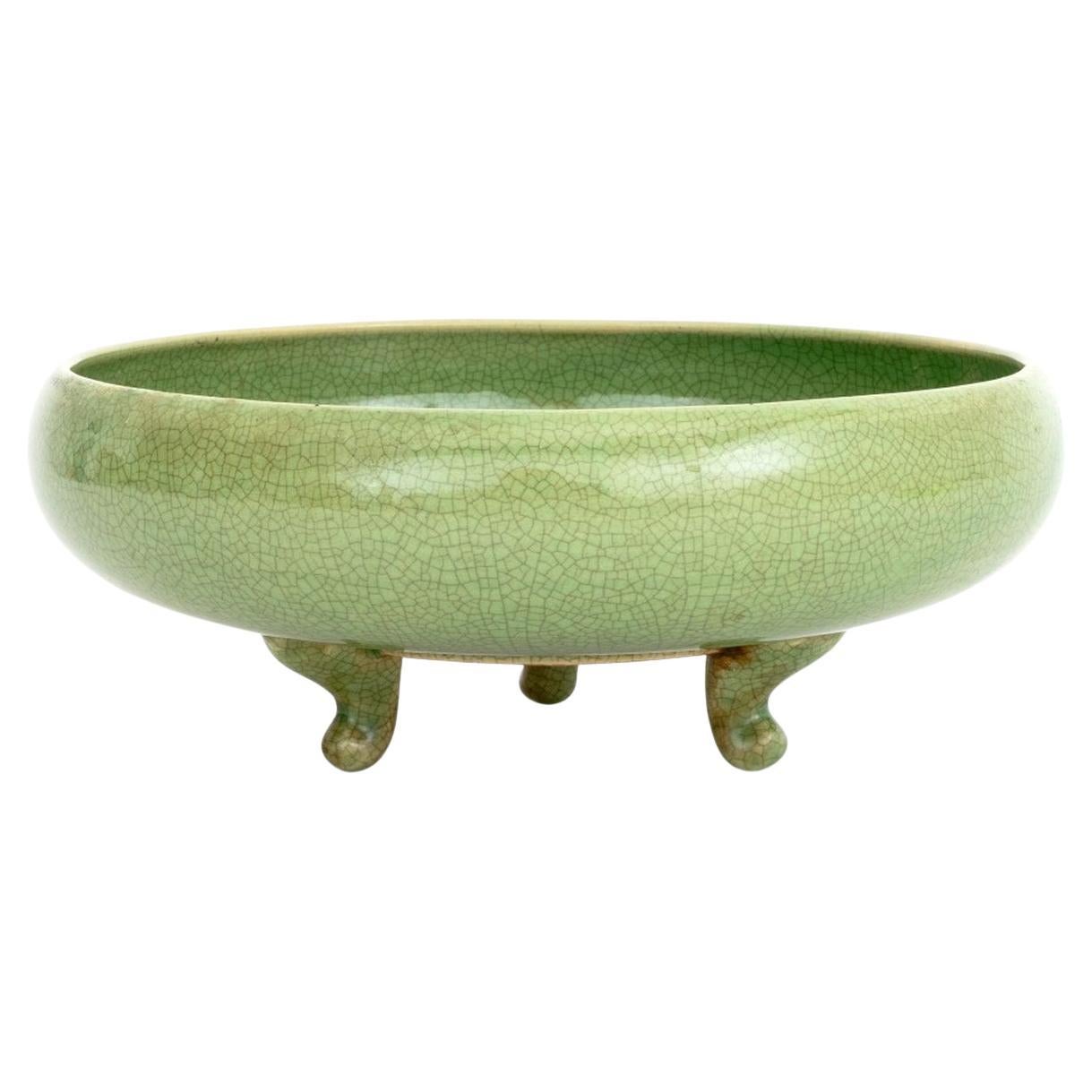
The vessel features a compressed body supported by three tapered feet and a flat, outwardly flaring rim. Three slender flanges originate from a subtle ridge on the shoulder and extend gracefully down each leg. The entire censer is adorned with a lustrous, uniform sea-green glaze.
Period : Southern Song Dynasty - Yuan Dynasty
Type : Celadon
Medium : Longquan ware
Provenance : Acquired in early 2000s from Japan
Reference :
1) Sotheby's Hongkong 29 April 2022 - Important Chinese Art including Jades from the De An Tang Collection and Gardens of Pleasure – Erotic Art from the Bertholet Collection - Lot 3601
(Price realised : 819,000 HKD / Type : Closely related)
2) Christies Newyork 22–23 MAR 2018 - Fine Chinese Ceramics and Works of Art - Lot 709
(Price realised : 187,500 USD / Type : Closely related)
* Song Dynasty Longquan Celadon
Longquan celadon refers to a type of Chinese ceramic that was famous for its distinctive glaze and high-quality craftsmanship, primarily produced during the Song Dynasty (960–1279 AD). These ceramics were made in the Longquan region of the Zhejiang province in eastern China, an area rich in the clay and mineral resources necessary for ceramic production.
The most notable characteristic of Longquan celadon is its glaze, which ranges in color from a pale blue-green to a deep olive green. This unique color comes from the iron oxide in the glaze, which, when fired in a reducing kiln atmosphere, produces the green hue. The thickness of the glaze, as well as the firing conditions, could affect the final shade and appearance of the celadon, with some pieces exhibiting a more crackled texture and others a smoother, glossier finish.
Longquan celadons were highly prized for their beauty and durability, making them popular both domestically within China and internationally. They were exported widely, reaching as far as Southeast Asia, the Middle East, and Africa, where they were often considered luxury items and treasured by various cultures.
The designs of Longquan celadon wares varied from simple and elegant forms to more elaborate decorations, including carved or incised motifs inspired by nature, such as lotus flowers, phoenixes, dragons, and foliage. Despite the variations in decoration, the emphasis was always on the harmony between form, glaze, and decoration, with the glaze playing a crucial role in enhancing the overall aesthetic appeal of the piece.
During the Song Dynasty, Longquan celadon was one of several major types of ceramics produced in China, each with its own distinctive characteristics. However, the quality and beauty of Longquan celadon made it one of the era's most celebrated ceramic types, and it continues to be highly valued by collectors and scholars today.
- Dimensions:Height: 5.12 in (13 cm)Diameter: 5.12 in (13 cm)
- Materials and Techniques:Celadon,Glazed
- Place of Origin:
- Period:
- Date of Manufacture:12-14th century
- Condition:Minor fading. The piece was discovered with its surface damaged. However, it has since been robustly restored.
- Seller Location:seoul, KR
- Reference Number:1stDibs: LU9577243018552
About the Seller
4.8
Platinum Seller
Premium sellers with a 4.7+ rating and 24-hour response times
Established in 1999
1stDibs seller since 2023
46 sales on 1stDibs
Typical response time: 1 hour
- ShippingRetrieving quote...Shipping from: seoul, Korea South
- Return Policy
More From This Seller
View AllCarved Longquan Celadon Vase, Yuan-Ming Dynasty
Located in seoul, KR
A graceful baluster form with a flared mouth, a rounded body, and a slightly raised foot. The vase features two intricate handles in the shape of animal figures holding large looped ...
Category
Antique 15th Century and Earlier Hong Kong Ming Antiquities
Materials
Celadon
A Large Carved Longquan Celadon Yuhuchunping, Yuan-Ming Dynasty
Located in seoul, KR
* DDP Seoul, South Korea (Incoterms) – Seller is responsible for all duties, taxes, and customs clearance.
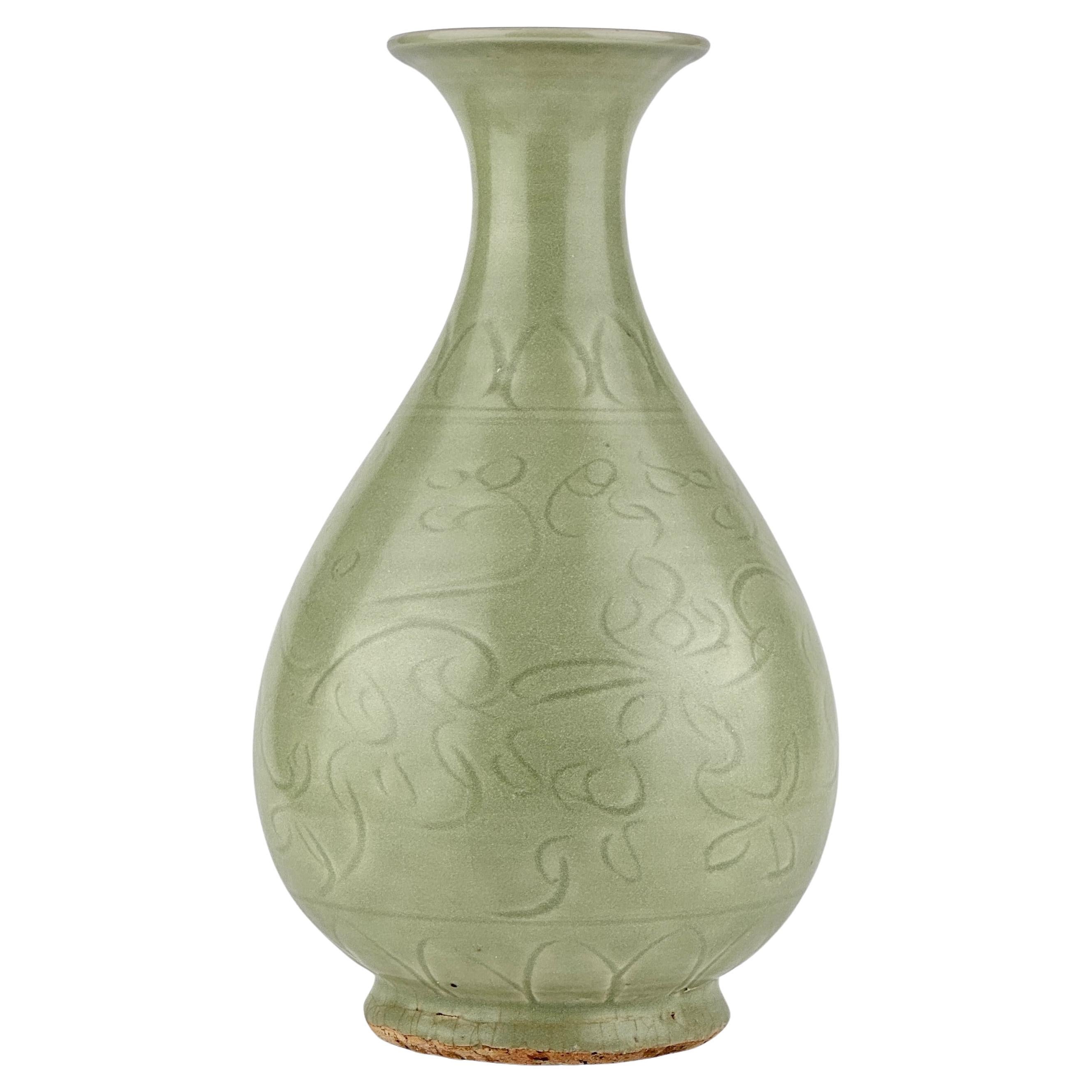
The bulbous body is adorned with elegantly carved floral motifs, with inte...
Category
Antique 15th Century and Earlier East Asian Ming Antiquities
Materials
Celadon
A Longquan Celadon Five-spouted Jar, Sui-Northern Song Dynasty
Located in seoul, KR
The jar features a round body with well-proportioned four distinct tiers and a short, stable foot. The surface is coated in a deep green Longquan celadon glaze, showcasing the sprout...
Category
Antique 15th Century and Earlier Hong Kong Antiquities
Materials
Celadon
Longquan Celadon
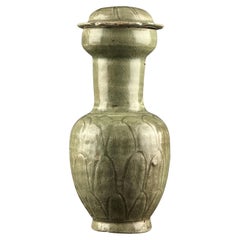
Lotus Petal
Jar And Cover, Sui-Northern Song Dynasty
Located in seoul, KR
The jar is sturdily potted with an oval shaped body carved with overlapping lotus petals below the straight neck. All covered with a crackled glaze of olive-green color with the exce...
Category
Antique 15th Century and Earlier East Asian Antiquities
Materials
Celadon
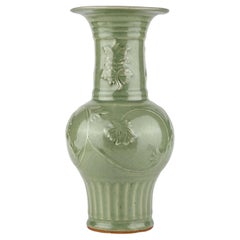
A Rare Longquan Celadon
Peony
Vase Yuan-Ming Dynasty
Located in seoul, KR
This vase features a traditional vase coated with a clear and rich green celadon glaze. A fine network of crazing covers the surface. The neck is adorned with raised vine motifs, whi...
Category
Antique 15th Century and Earlier East Asian Ming Antiquities
Materials
Celadon
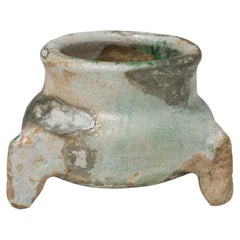
Green-Glazed Tripod Vessel, Han Dynasty
Located in seoul, KR
Han Dynasty green-glazed tripods are comparatively rare, especially ones that have retained their structural integrity and glaze over millennia. Pieces in good condition are scarce b...
Category
Antique 15th Century and Earlier Hong Kong Han Antiquities
Materials
Earthenware
You May Also Like
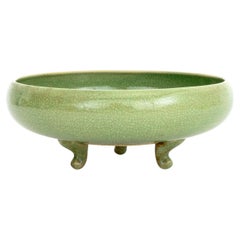
Chinese Longquan Type Porcelain Tripod Censer
Located in Astoria, NY
Chinese Longquan Type Celadon Glazed Porcelain Tripod Censer, on three scrolled feet. 3.25" H x 8.25" Diameter. Provenance: From the Upper East Side Apartment of a Former Ambassador.
Category
Antique 19th Century Chinese Qing Ceramics
Materials
Porcelain
$850 Sale Price
41% Off
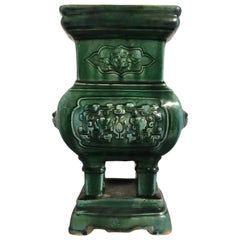
Chinese Qing Dynasty Green Glazed Pottery Incense Burner, Dated 1863
Located in Austin, TX
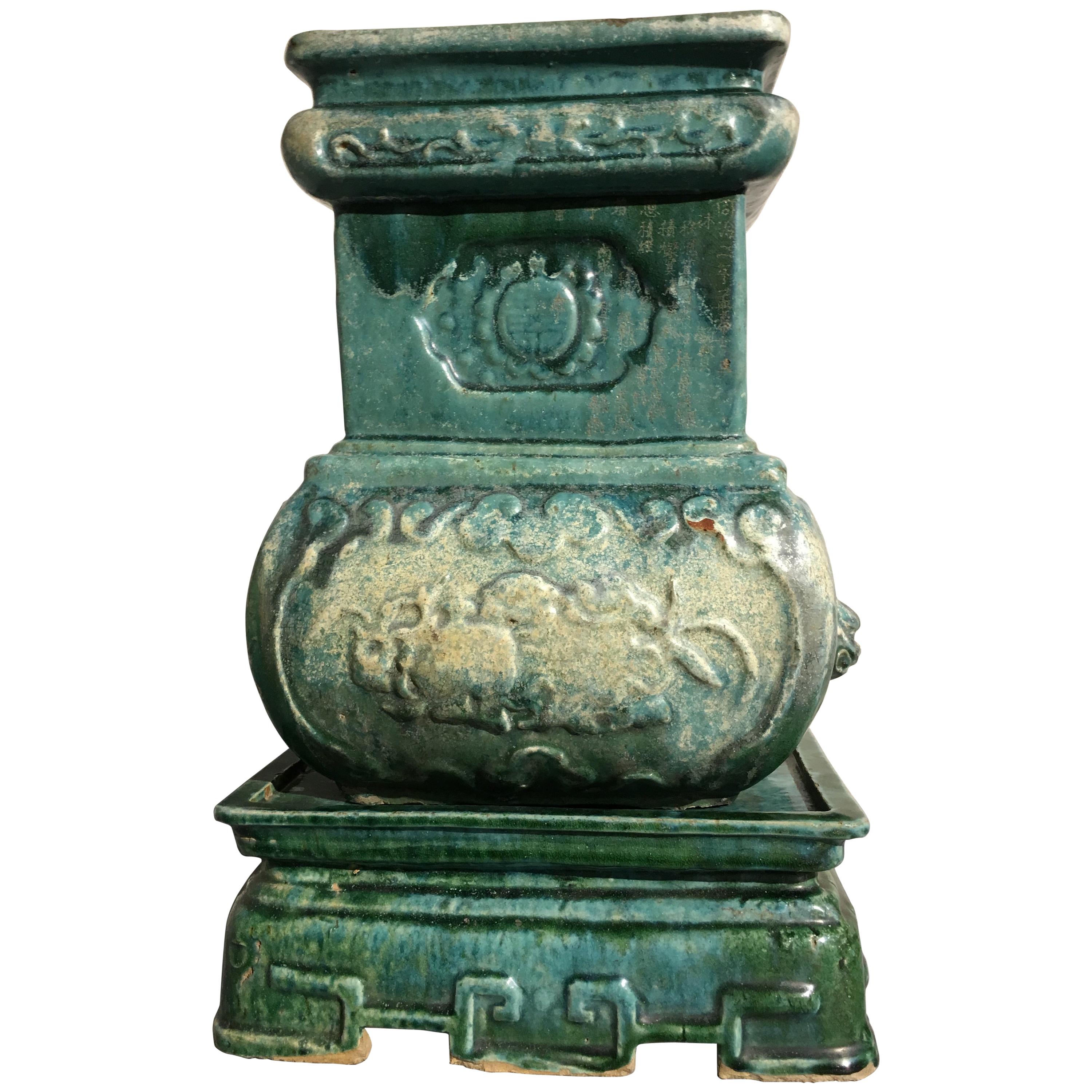
A gorgeous green glazed large Chinese pottery censer of Archaistic shape called a fanghu, set on a separate stand, Qing dynasty, second year of Tongzhi, 1863.
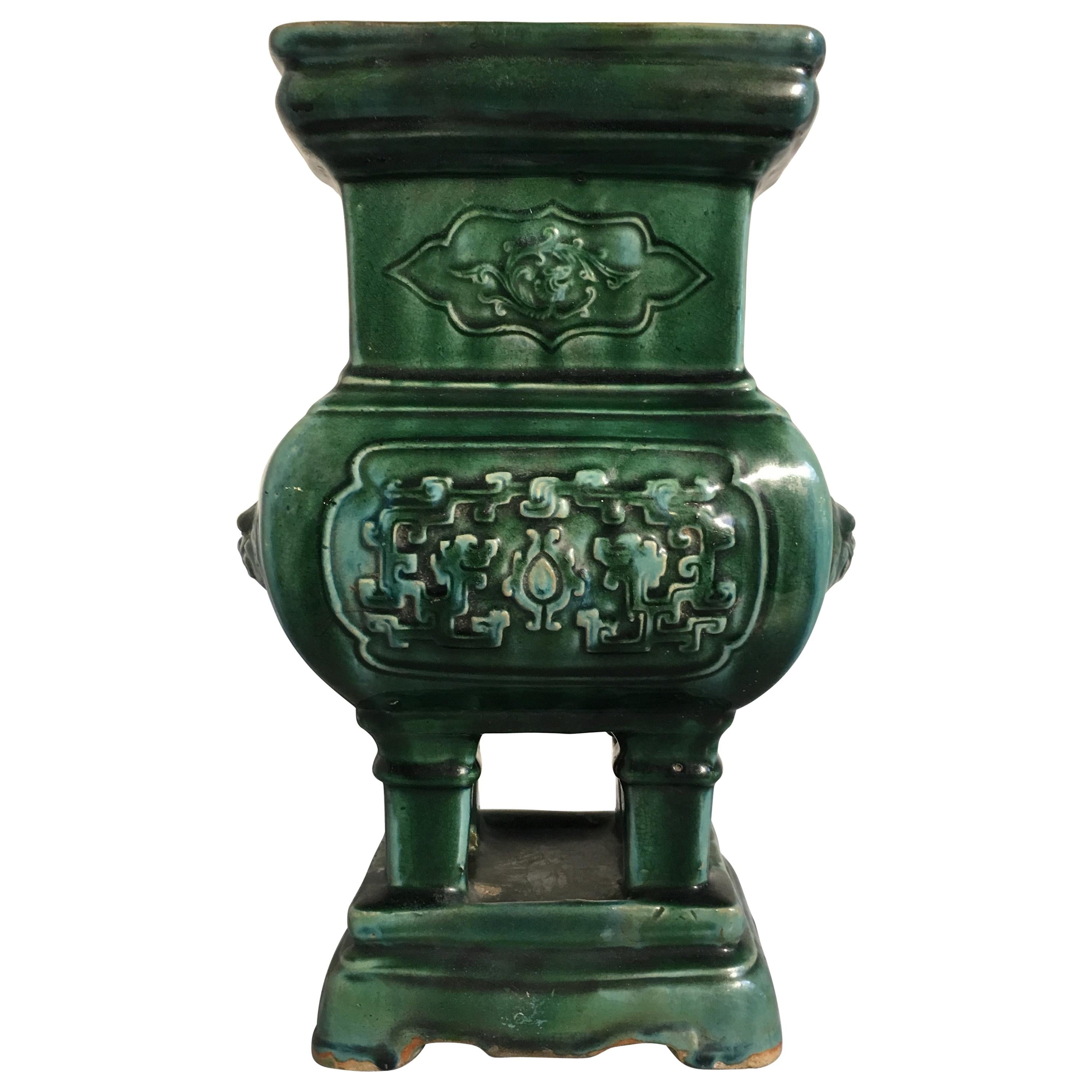
The censer or incense burner crafted in two parts and covered in a thick, runny and unctuous glaze, ranging from dark green to turquoise green, to pale celadon. The neck with shou (longevity) medallions. The body decorated in relief with fruit, pomegranate and finger citron (Buddha's hand). The sides fitted with lion mask handles. The stand with a key fret design, and a pierced Chinese...
Category
Antique 1860s Chinese Qing Ceramics
Materials
Pottery

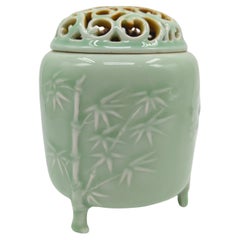
Fine Chinese Celadon Glaze Relief Carved Covered Censer on Tripod Feet mid-20c
Located in Richmond, CA
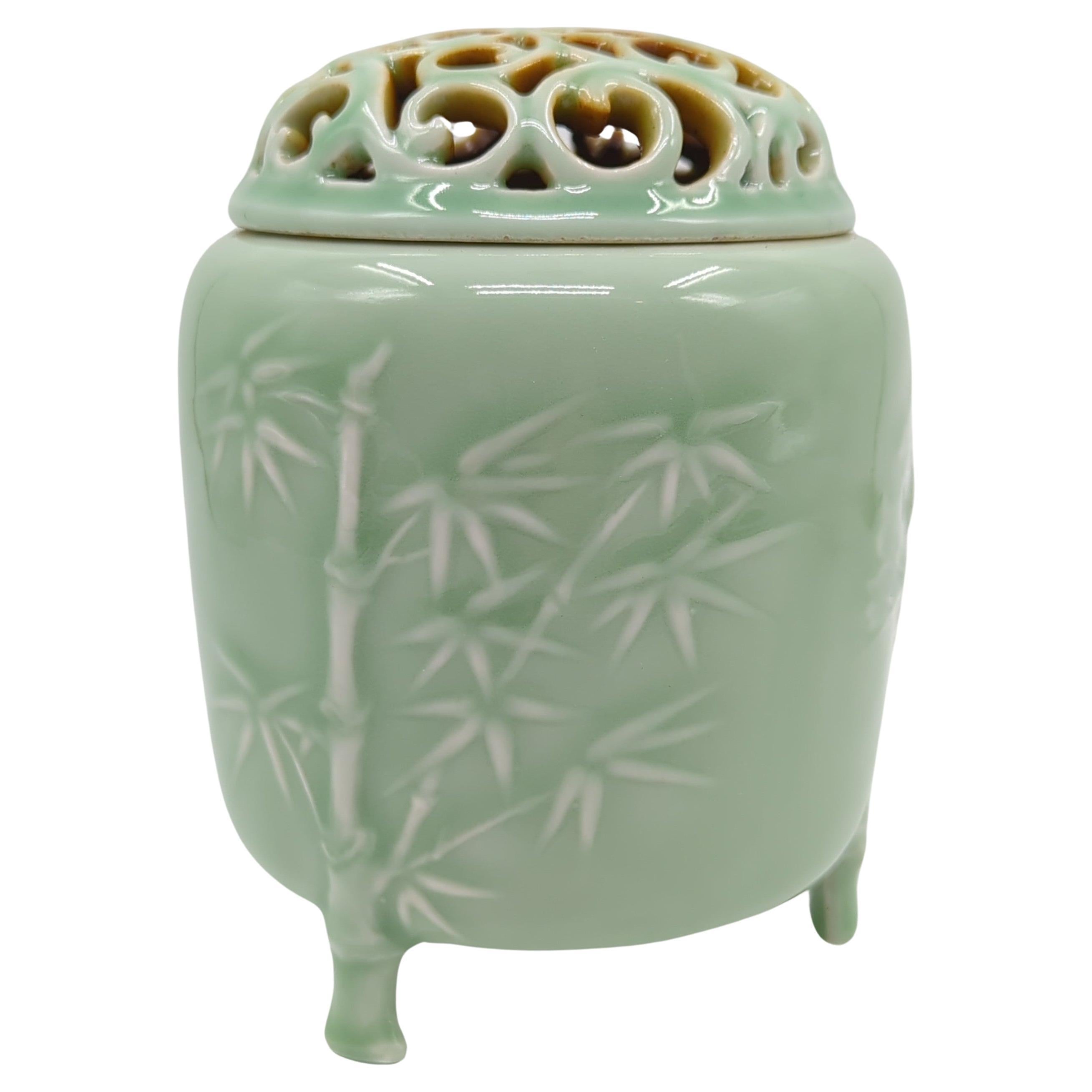
This exceptional covered censer is a testament to the art of Chinese ceramics, executed with remarkable skill and attention to detail. The piece is enveloped in a refined celadon gla...
Category
Mid-20th Century Chinese Qing Ceramics
Materials
Porcelain
Chinese Qing Dynasty Green Glazed Incense Burner, Late 19th Century
Located in Austin, TX
A charming Chinese green glazed pottery censer or incense burner, Qing Dynasty, late 19th century. Now suitable for use as a jardiniere or vase.
The incense burner in glazed a deep green, in imitation of bronze models, and set on four tapered legs attached to a rectangular stand...
Category
Antique Late 19th Century Chinese Qing Planters, Cachepots and Jardinières
Materials
Pottery
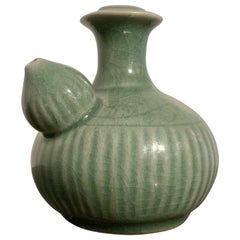
Small Chinese Celadon Glazed Porcelain Kendi, Qing Dynasty, 18th Century, China
Located in Austin, TX
A darling small Chinese celadon glazed kendi, or pouring vessel, mid Qing Dynasty, 18th century, China, for the Southeast Asian market.
The diminutive kendi of typical form, with ...
Category
Antique 18th Century Chinese Qing Ceramics
Materials
Porcelain
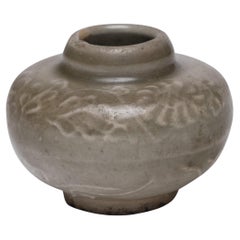
Petite Chinese Celadon Pot, c. 1850
Located in Chicago, IL
This petite stoneware jar from the mid-19th century is decorated with low relief linework of autumn chrysanthemums and crashing waves. With precious scale and a subdued, celadon-grey...
Category
Antique Mid-19th Century Chinese Qing Ceramics
Materials
Earthenware
More Ways To Browse
Antique Burners
Antique Incense
Song Dynasty
Rare Asian Art
Dragon And Phoenix
Garden China Made In Japan
Antique Iron Glaze
Antique Olive Color
Longquan Celadon
Song Dynasty Ceramics
Song Dynasty Celadon
Celadon Incense
Tibetan Conch Shell
Ancient Sword
Antique Buddha House
Antique Slingshot
Mandarin Hat
Neolithic Amphora