Items Similar to A Rare Moulded Dingyao
Cranes And Fishes
Bowl, Northern Song - Jin Dynasty

Want more images or videos?
Request additional images or videos from the seller
1 of 20
A Rare Moulded Dingyao
Cranes And Fishes
Bowl, Northern Song - Jin Dynasty
$59,800
£45,499.05
€52,424.17
CA$84,897.28
A$91,079.59
CHF 48,853.22
MX$1,096,586.09
NOK 615,852.21
SEK 561,571.87
DKK 391,678.49
About the Item
This bowl stands out for its detailed depiction of two fish amid soft spiral waves, bordered by two cranes within the bowl. The design's depth and clarity, from the lifelike portrayal of the landscape to the cranes' meticulously detailed features, render this piece exceptionally unique and rare. Such complex designs on bowls were achieved using a mold, a method initiated at the Ding kilns in the late 11th or early 12th century, enabling heightened precision.
Period : Northern Song-Jin dynasty(960~1234)
Type : Dingyao
Provenance : Acquired in late 1990s, Hongkong
Dimension : 19 cm(Height) x 8cm(Diameter)
Reference :
1) Sotheby's Hongkong 29 April 2022 - Important Chinese Art including Jades from the De An Tang Collection and Gardens of Pleasure - Lot 3695, Lot 3603
(Price : 1,890,000 HKD / Type : Closely related)
2) Sotheby's Hongkong 08 October 2019 Important Chinese Art - lot 3612
(Price : 3,000,000 HKD / Type : Related)
3) Sotheby's Hongkong 22 April 2021 - Monochrome III - Lot 30
(Price : 6,000,000-7,000,000 HKD / Type : Related)
4) The MET - Accession Number: 14.40.155 - Bowl with Peonies
(Type : Closely Related)
* Ding-Yao Ware
Ding ware, produced primarily in Dingzhou, Hebei province, flourished during the Northern Song dynasty (11th–12th century) and is among the finest examples of early white porcelain in China. It is characterized by its ivory-tinged white glaze, thin and compact clay body, and refined carved or molded decoration rendered beneath a translucent glaze.
The body of Ding ware is made from fine, nearly pure porcelain clay, usually of a warm, ivory-white tone rather than pure white. The glaze—highly transparent and slightly viscous—often pools faintly in the recesses, creating a soft creamy hue and emphasizing the carved motifs. This glaze was fired in a reduction atmosphere at high temperature, producing a smooth and glassy surface with a subtle satin sheen.
Decoration was typically achieved by incising or molding floral and foliate designs, such as lotus, peony, or scrolling vines. The carving is shallow yet precise, executed with smooth, confident strokes that appear softened beneath the glaze. Unlike the sharper outlines of later imitation wares, authentic Ding carving retains a fluid, almost hand-drawn quality.
A distinctive feature of Ding ware is its unglazed rim (露胎口). Because vessels were fired upside down to prevent the glaze from adhering to the kiln supports, the mouth rim was left bare and often fitted later with a metal band (usually silver or bronze). This firing method left a thin, unglazed edge that is a key diagnostic trait in authentication.
The footring is typically narrow and neatly trimmed, revealing the fine, dense, slightly buff-colored clay with traces of firing adhesions (spur marks). Over time, genuine Ding pieces may display mild surface iridescence or minute crazing due to glaze aging—considered positive evidence of long-term burial or environmental exposure.
In aesthetic terms, Ding ware exemplifies the Northern Song ideal of purity and restraint, combining delicate craftsmanship, subtle coloration, and quiet luminosity. From a connoisseur’s standpoint, its authenticity is judged by the soft translucence of the glaze, the precision yet warmth of the carving, and the natural oxidation and tactile aging of the exposed clay areas.
- Dimensions:Height: 3.15 in (8 cm)Diameter: 7.49 in (19 cm)
- Materials and Techniques:
- Place of Origin:
- Period:
- Date of Manufacture:960-1234
- Condition:Repaired: mild cracks along the gilted areas, but they were firmly repaired. Minor fading.
- Seller Location:seoul, KR
- Reference Number:1stDibs: LU9577239100822
About the Seller
4.8
Vetted Professional Seller
Every seller passes strict standards for authenticity and reliability
Established in 1999
1stDibs seller since 2023
46 sales on 1stDibs
Typical response time: 1 hour
- ShippingRetrieving quote...Shipping from: seoul, Korea South
- Return Policy
More From This Seller
View AllBowl with twin-fish design, Song Dynasty
Located in seoul, KR
The bowl has a wide, thinly potted rim and a low foot, characteristic of Song dynasty forms. A finely carved and lively twin-fish design decorates the interior, a classic auspicious ...
Category
Antique 15th Century and Earlier East Asian Antiquities
Materials
Ceramic
A Molded Qingbai
Flowers
Dish, Southern Song Dynasty
Located in seoul, KR
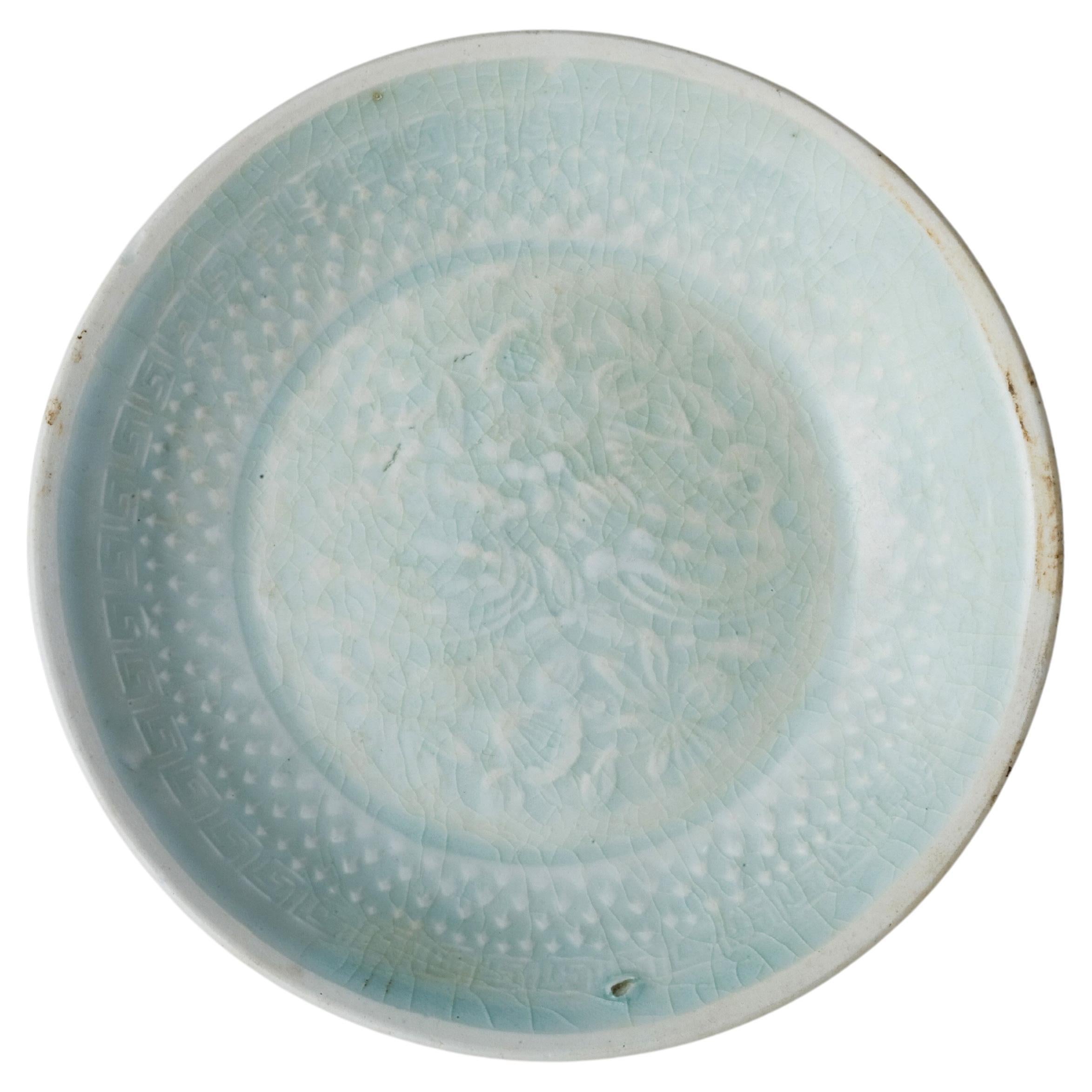
This dish is coated with a transparent bluish-white glaze over a thin white body. The center is incised with a design of lotus flowers and a bird, while the inner wall is encircled b...
Category
Antique 15th Century and Earlier East Asian Antiquities
Materials
Ceramic
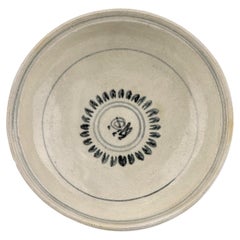
Annamese Dish Circa 15th Century, Le Dynasty
Located in seoul, KR
Its surface is coated with a smooth, glossy white or cream-colored glaze, exuding a clean and elegant finish. At the center, a geometric motif painted in black pigment draws the eye,...
Category
Antique 15th Century and Earlier Vietnamese Antiquities
Materials
Stoneware
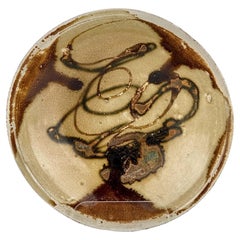
Changsha Bowl from Belitung Ship, Tang Dynasty
Located in seoul, KR
The edges have been dipped in four places with brown, probably iron-oxide. The well of the bowl is freely painted in deep green and coffee coloured brown. These are characteristic fe...
Category
Antique 15th Century and Earlier Indonesian Tang Antiquities
Materials
Pottery
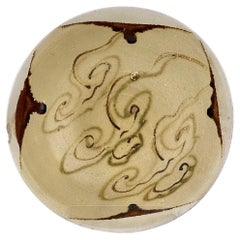
Large Changsha Bowl from Belitung Ship, Tang Dynasty
Located in seoul, KR
The edges have been dipped in four places with brown, probably iron-oxide. The well of the bowl is freely painted in deep green and coffee coloured brown. These are characteristic fe...
Category
Antique 15th Century and Earlier Indonesian Tang Antiquities
Materials
Pottery
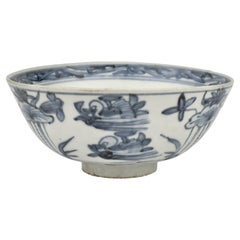
Bowl with mandarin duck and lotus pattern design, Late Ming Era(16-17th century)
Located in seoul, KR
Bowl from the late Ming dynasty cargo. An identical piece is included on page 136 of the Bin Thuan catalog titled 'The Age of Discovery: Asian Ceramics Found...
Category
Antique 16th Century Vietnamese Ming Decorative Bowls
Materials
Ceramic, Porcelain
You May Also Like
Ancient Japanese Bowl with Dragon
Located in Alessandria, Piemonte
O/1393 - This bowl is more antique tha I wrote. This is one piece from a large collection of ancient pottery, gathered 35 years ago and never exhibited to the public.
I woud like to sell...
Category
Early 20th Century Japanese Other Ceramics
Materials
Ceramic
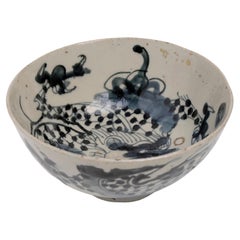
Stoneware Chinese Bowl, Sung Period, 12th-14th Century
Located in Roma, IT
Little stoneware Chinese bowl in glazed stoneware. It is adorned with flower engravings.
Under the base, we can read “Xia Fang'' & ''Ding Hai”.
12th-...
Category
Antique 15th Century and Earlier Chinese Serving Bowls
Materials
Stoneware
$2,135 Sale Price
30% Off
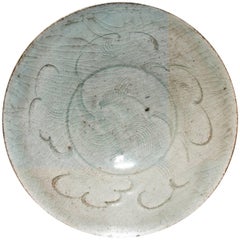
Chinese Jun Ware Streak Glazed Art Pottery Bowl
Located in Bishop
s Stortford, Hertfordshire
A very stylish good quality Chinese Jun Ware pottery bowl decorated with streaked glazes on a red and pale blue glazed ground dating from the latter 19th o...
Category
Antique 19th Century Chinese Other Ceramics
Materials
Pottery
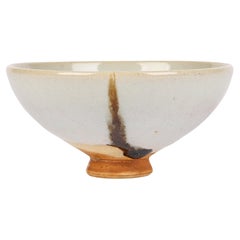
Circular Chinese Porcelain Bowl, Sung Period, 12th-14th Century
Located in Roma, IT
Chinese porcelain bowl adorned with cloud engravings.
12th-14th century, Sung period.
Category
Antique 15th Century and Earlier Chinese Serving Bowls
Materials
Porcelain
$1,952 Sale Price
30% Off
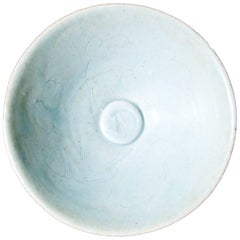
Chinese Porcelain Bowl – Qianlong Period (circa 1740–1770)
Located in Bilzen, BE
Chinese porcelain bowl – Qianlong period (ca. 1740–1770)
Beautiful Chinese porcelain “Batavia ware” bowl from the Qianlong period (1736–1795).
The interior finely painted in undergla...
Category
Antique Mid-18th Century Chinese Qing Ceramics
Materials
Porcelain
Japanese Shino Chawan Tea Bowl Edo Period
Located in Atlanta, GA
A Japanese ceramic Chawan (tea bowl) of e-Shino (painted Shino) ware style circa mid-late 18th century Edo period. The classically shaped bowl features an abstract blue paint of blue grass and displays strong characters in the milky white glaze, with overall crawling and crackling effect. One of the most distinctive characteristics of Shino that is exemplified on this bowl is the small pinholes called suana, which tea masters favor (termed as yuzuhada, or citron skin). The milky-white feldspar...
Category
Antique Late 18th Century Edo Ceramics
Materials
Ceramic