Items Similar to Rare Yue Celadon Chicken-Head Ewer, Jin-Southern Dynasty

Want more images or videos?
Request additional images or videos from the seller
1 of 10
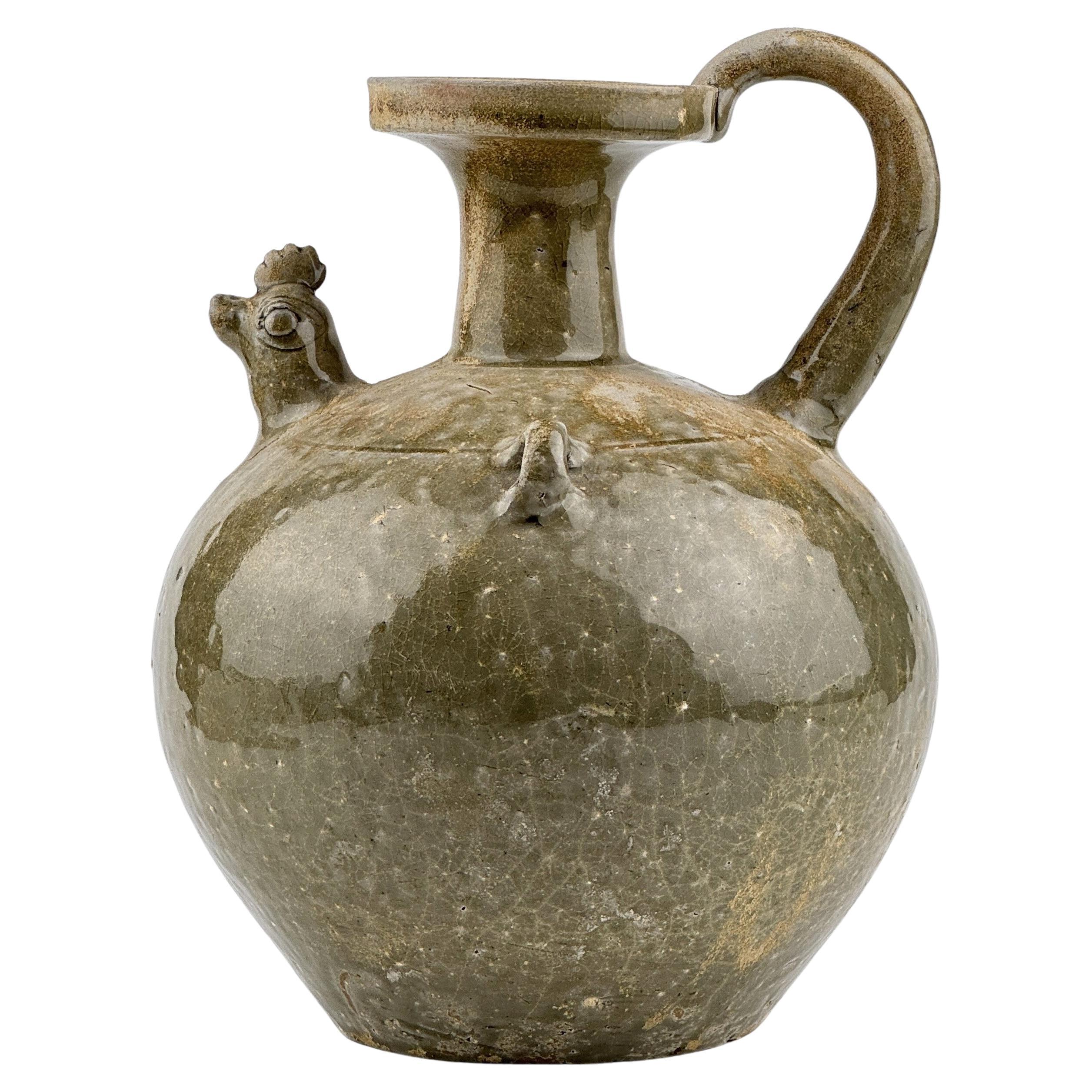
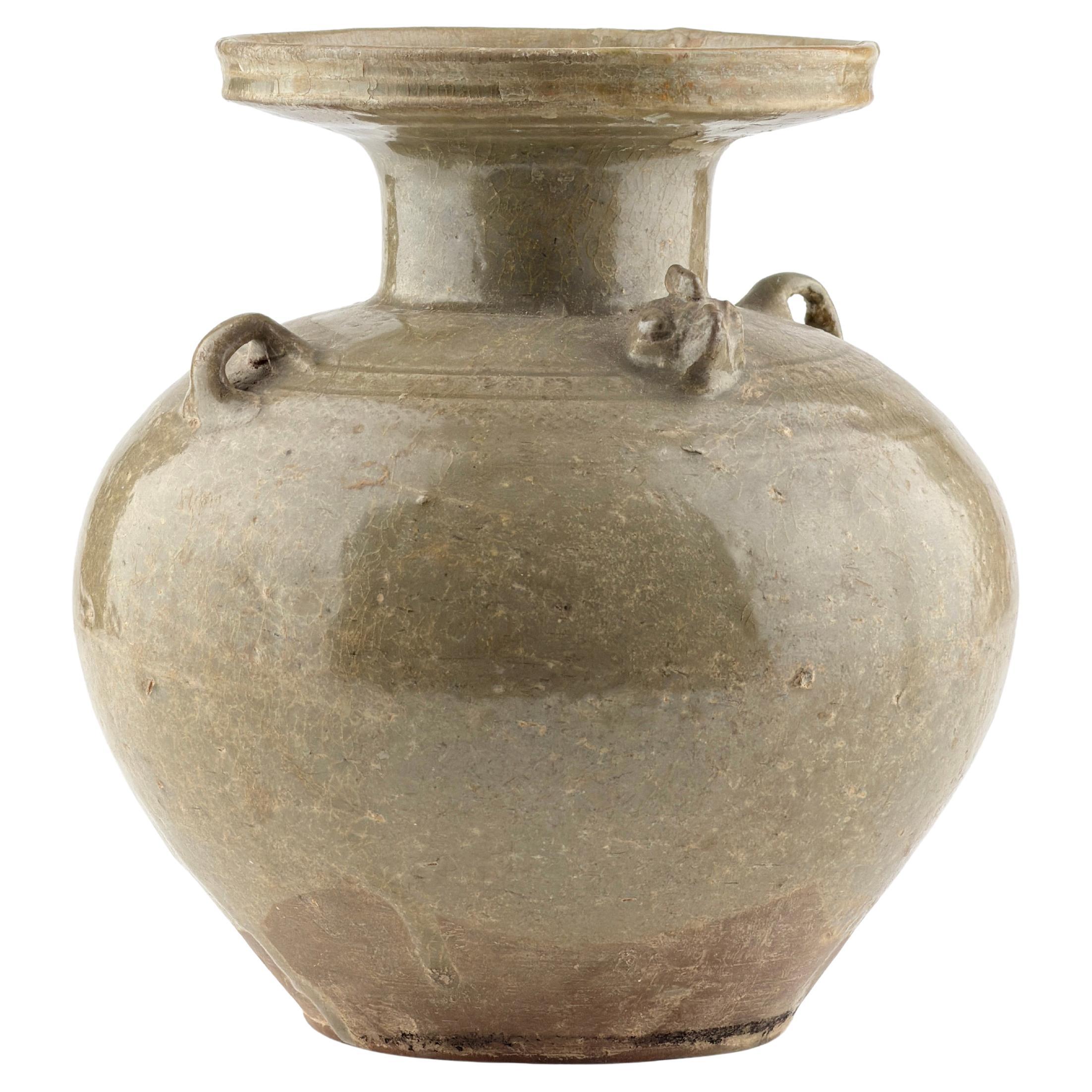
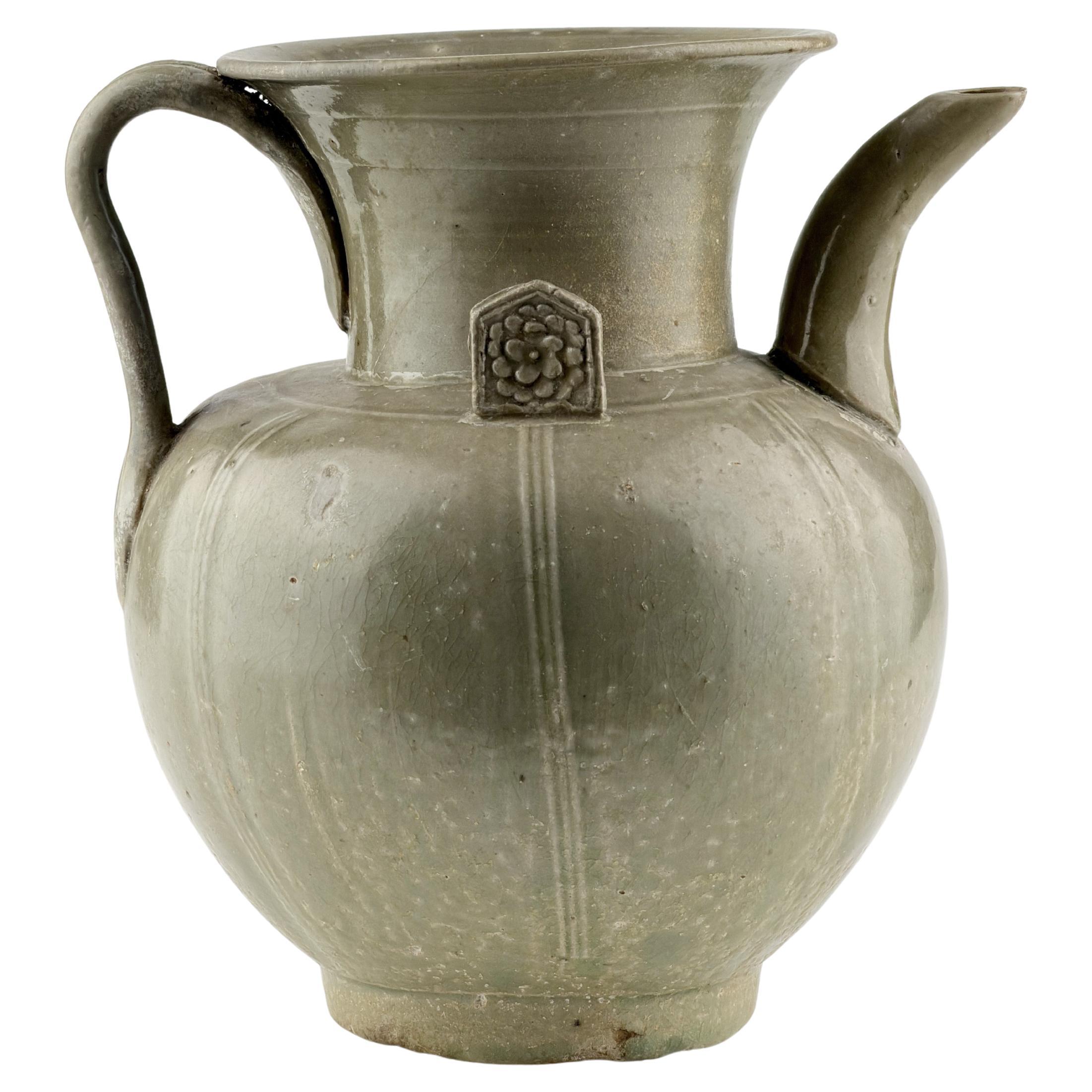
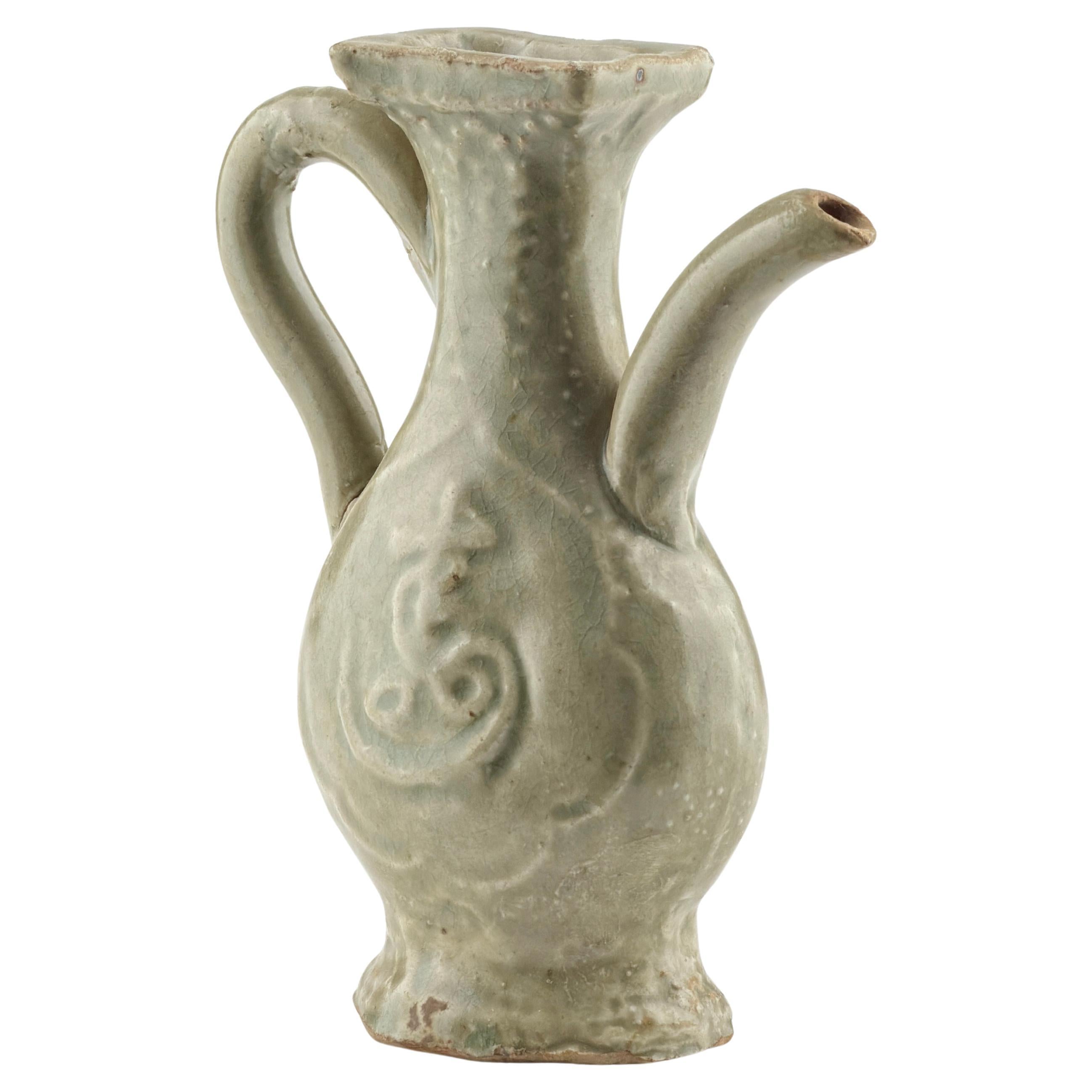
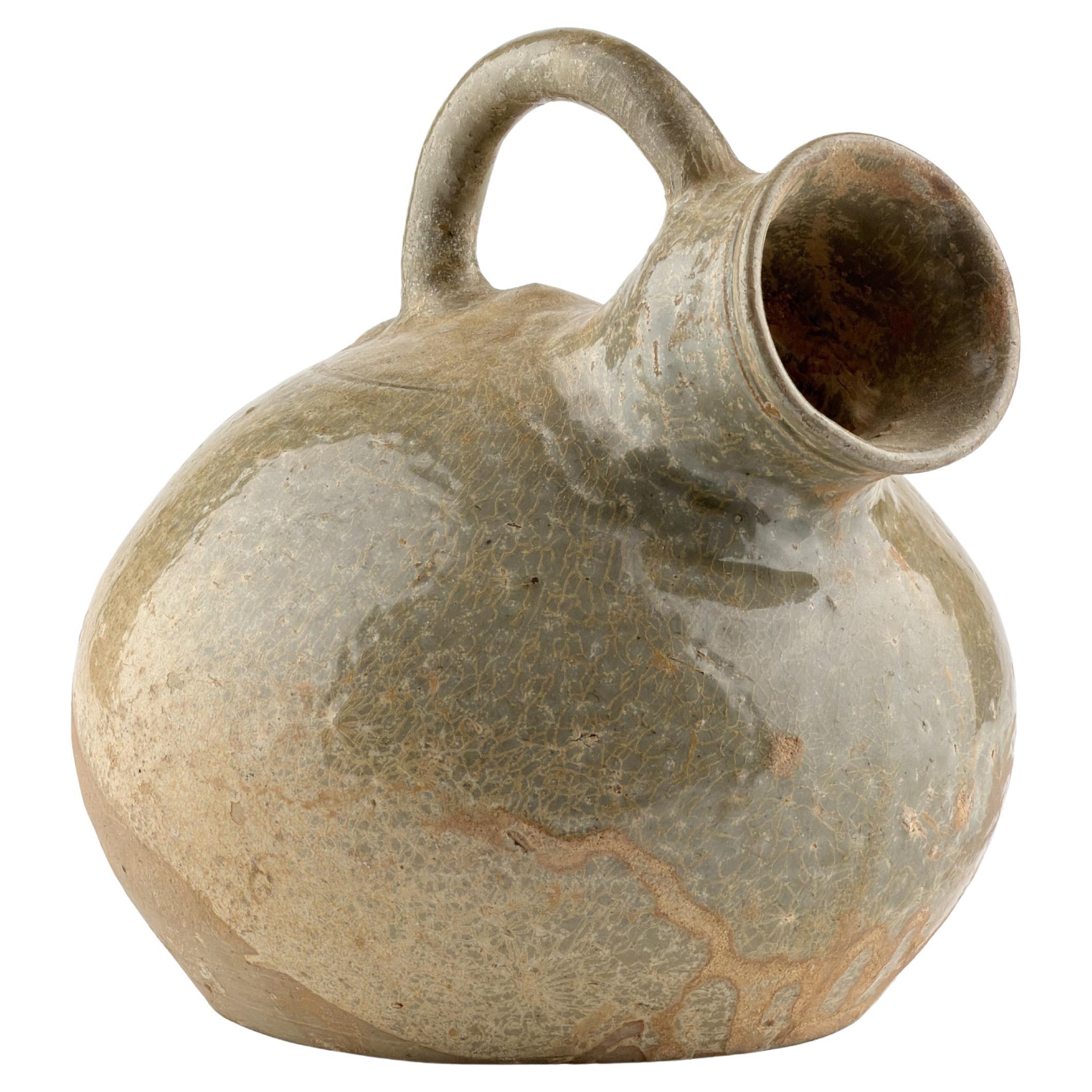
Rare Yue Celadon Chicken-Head Ewer, Jin-Southern Dynasty
$15,900
£12,107.52
€13,941.48
CA$22,531.70
A$24,236.07
CHF 12,952.46
MX$285,674.17
NOK 163,300.14
SEK 149,287.32
DKK 104,166.40
About the Item
Chicken-head ewers are a distinctive ceramic form that developed during the Jin dynasty (265–420), originating in the southern Yue kilns of present-day Zhejiang province, and later spreading to other southern and selected northern celadon workshops. Such vessels frequently appear in elite burial contexts, reflecting the auspicious symbolism of the chicken motif, which was associated with warding off evil and conveying protective, benevolent meaning.
Period : Jin-Southern Dynasty (266 ~ 589 AD)
Type : Ewer
Medium : Yue celadon(Stoneware)
Dimension : 13cm(Height) x 5.5cm(Mouth Diameter)
Provenance : The piece was acquired in Hong Kong in the year 1999.
Condition : Good
Reference :
1) Ashmolean Museum - Accession no.EA1956.286
(Type : Closely related)
2) Sotheby's Hongkong 27 November 2020 - CHINA / 5000 YEARS 博古五千 - Lot 384
(Price Range : 260,000 HKD-360,000 HKD / Type : Closely related)
* Yue Celadon
Yue celadon, also known as Yue ware, is a type of Chinese pottery with a celadon glaze, originating from the eastern Han dynasty (25~220 AD) in the Zhejiang province. The name 'Yue' comes from the Yue kilns which were among the earliest to develop the celadon technique. Yue ware is known for its jade-like glaze, which can range in color from bluish-green to olive green.
Yue celadon was highly regarded during its time and was the first Chinese ware to be imported in large quantities to the Middle East and Africa, significantly influencing the development of ceramics in those regions. The production of Yue ware continued to evolve, and during the Tang dynasty (618~907 AD), it became more refined with more complex shapes and decorations. By the time of the Song dynasty (960~1279 AD), it had greatly influenced other kiln traditions, leading to the development of the classic longquan celadon, which became one of China’s most famous ceramic products.
Yue celadon traditionally embodies elements of auspiciousness and good fortune in Chinese culture. The jade-like celadon glaze is often associated with longevity and health. Various motifs and shapes inscribed on the pottery frequently symbolize luck and prosperity. For example, lotus patterns may represent purity and immortality, while animal figures like the lion symbolizes power, courage, and strength. Lions are considered protectors that ward off evil spirits and bring forth good luck. Furthermore, Yue celadon wares were commonly used as tomb offerings in ancient China, believed to bring fortune and well-being to the deceased in the afterlife.
- Dimensions:Height: 5.12 in (13 cm)Diameter: 2.17 in (5.5 cm)
- Style:Han (Of the Period)
- Materials and Techniques:
- Place of Origin:
- Period:
- Date of Manufacture:266 - 589 AD
- Condition:Minor fading.
- Seller Location:seoul, KR
- Reference Number:1stDibs: LU9577238999412
About the Seller
4.8
Vetted Professional Seller
Every seller passes strict standards for authenticity and reliability
Established in 1999
1stDibs seller since 2023
46 sales on 1stDibs
Typical response time: 1 hour
- ShippingRetrieving quote...Shipping from: seoul, Korea South
- Return Policy
More From This Seller
View AllRare Yue Celadon Chicken-Head Ewer, Jin-Southern Dynasty
Located in seoul, KR
Chicken-head ewers are among the most distinct and emblematic pottery pieces from the Han (206 BC ~ AD 220) to the Tang dynasties. Their production commenced during the Jin dynasty i...
Category
Antique 15th Century and Earlier Hong Kong Han Antiquities
Materials
Pottery
Rare Yue Celadon Chicken-Head Ewer, Jin-Southern Dynasty
Located in seoul, KR
Chicken-head celadon vessels are among the most distinctive and emblematic ceramic forms produced during the dynamic period spanning from the Han dynasty (206 BC–AD 220) through the ...
Category
Antique 15th Century and Earlier Chinese Han Antiquities
Materials
Celadon
Yue Celadon Ewer, Late Tang-Northern Song Dynasty
Located in seoul, KR
This Yue ware celadon ewer features a softly rounded body rising from a stable foot to a wide, flaring mouth. A translucent olive-green glaze is evenly applied, pooling gently in rec...
Category
Antique 15th Century and Earlier East Asian Tang Antiquities
Materials
Celadon
A Molded Longquan Celadon
Fu Shou
Ewer, Ming Dynasty
Located in seoul, KR
One side of the vase showcases a panel with the Shou character at its center, symbolizing longevity, while the opposite side displays the Fu character, signifying luck. The neck of the vase is adorned with leaves. There are similar types and decoration but varying in shape, resembling a pear, all from the same era and crafted in celadon, often referred to as 'fu shou' vases.
Period: Yuan-Ming Dynasty (1271-1644)
Region: Longquan, China
Medium: Celadon
Type: Ewer
Provenance : Acquired in late 1990s from Hongkong
Reference
1) British Museum - Museum number 1931,1118.5
(Type : Closely related)
2) Christies NEW YORK 24–25 MAR 2022 - Important Chinese Ceramics and Works of Art - Lot 1105
(Price realised : 9,450 USD / Type : Related)
3) Sotheby's New York 19 March 2024 - Chinese Art - Lot 172
(Price range : 15,000 USD - 20,000 USD / Type : Related)
* Ming Dynasty Longquan Celadon
Longquan celadon from the Ming Dynasty typically exhibits a more robust and heavier stoneware body compared to its Song Dynasty predecessors. The Ming era saw an evolution in celadon glaze, achieving a wider spectrum of green hues, from olive to bluish-greens. Ming celadons...
Category
Antique 15th Century and Earlier East Asian Ming Antiquities
Materials
Celadon
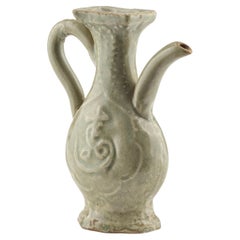
Rare Yue Celadon-Glazed Vessel, Jin dynasty (265-420)
Located in seoul, KR
An early yue celadon jar with a globular body, a short tubular spout, and a single handle attached at the shoulder. The vessel is coated with a grey-green celadon glaze, unevenly app...
Category
Antique 15th Century and Earlier East Asian Antiquities
Materials
Stoneware
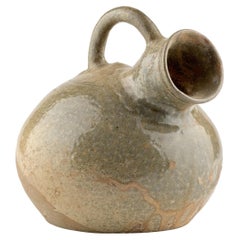
Celadon Ewer with Straight Handle, Tang to Northern Song Dynasty
Located in seoul, KR
The piece features a straight handle extending horizontally from the body and a short spout for pouring liquids. Its surface is coated with a soft, olive-green glaze, which is typica...
Category
Antique 15th Century and Earlier East Asian Tang Antiquities
Materials
Celadon

You May Also Like
Korean Celadon Glazed Ritual Ewer, Kundika, Goryeo Dynasty, 13th-14th Century
Located in Austin, TX
An understated and very heavily potted celadon glazed Korean ritual ewer or water sprinkler, kundinka, Goryeo Dynasty, 13th-14th century.
The unusu...
Category
Antique 15th Century and Earlier Korean Ceramics
Materials
Stoneware
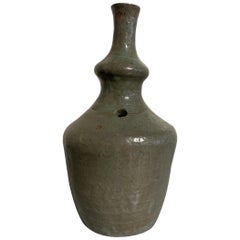
Antique Chinese Yue Chicken Head Spout Ewer
Located in Point Richmond, CA
A globular stoneware body that is well potted with a cup shaped mouth supported on a narrow tall neck. The characteristic chicken head form serves as the spout. The handle is pulled ...
Category
Antique 15th Century and Earlier Chinese Other Ceramics
Materials
Ceramic
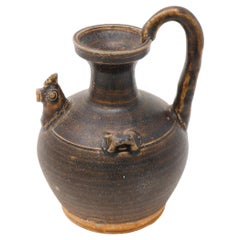
Chinese Ming Celadon Bottle Vase, c. 1500
Located in Chicago, IL
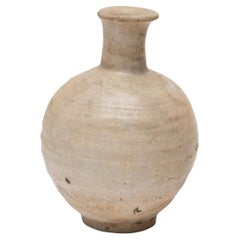
This petite ceramic bottle is a Ming-dynasty (1368-1644) vessel originally used for serving rice wine or spirits. The small round bottle is beautiful in its imperfection, shaped with...
Category
Antique 16th Century Chinese Ming Ceramics
Materials
Earthenware
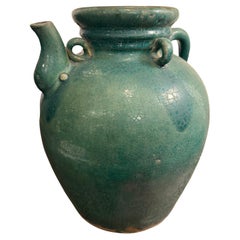
A Chinese Turquoise Glazed Pottery Jar, 19th Century
Located in ARMADALE, VIC
A Chinese Turquoise Glazed Pottery Jar, 19th Century
Provenance: Private Australian Collection.
Dimensions:
Height: 36.5cm.
Diameter: 26cm.
Category
Antique 19th Century Chinese Qing Jars
Materials
Pottery
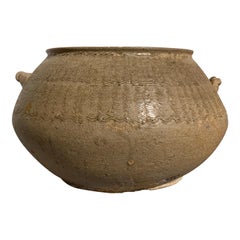
Chinese Yueyao Celadon Glazed Jar
Guan
, Five Dynasties, 10th Century
Located in Austin, TX
A sublime Chinese Yueyao glazed guan jar with incised decoration and applied handles, five dynasties period (907- 979 AD), China.
The vessel of somewhat flattened globular form, w...
Category
Antique 15th Century and Earlier Chinese Tang Ceramics
Materials
Stoneware
Chinese Ming Celadon Oil Bottle, c. 1500
Located in Chicago, IL
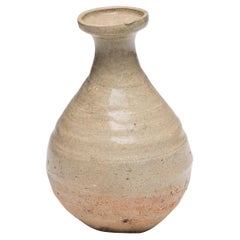
This petite ceramic vessel is a Ming-dynasty (1368-1644) bottle originally used for storing cooking oil or condiments. Dated to the 15th/16th century, the bottle has a gracefully cur...
Category
Antique 16th Century Chinese Ming Ceramics
Materials
Earthenware
More Ways To Browse
Green Celadon
Antique Chicken
Antique Southern Furniture
Asian Heads
Antique China Ware
Celadon Jade
Longquan Celadon
Carved Wooden Crown
12th Century Khmer
Asian Wooden Mask
Gandharan Art
Liao Dynasty
Northern Wei Dynasty
Antique 2000 Furniture
Kangxi Miniature
Sui Dynasty
Antique Chinese Pottery Figures
Antique Chinese Amber