Items Similar to Signed Japanese Edo suji’bachi kabuto (helmet) with a moon
cloud maedate


Want more images or videos?
Request additional images or videos from the seller
1 of 19
Signed Japanese Edo suji’bachi kabuto (helmet) with a moon
cloud maedate
$8,137.81
£6,092.04
€6,800
CA$11,202.71
A$12,246.76
CHF 6,479.09
MX$146,552.14
NOK 82,437.07
SEK 75,462.79
DKK 51,807.63
About the Item
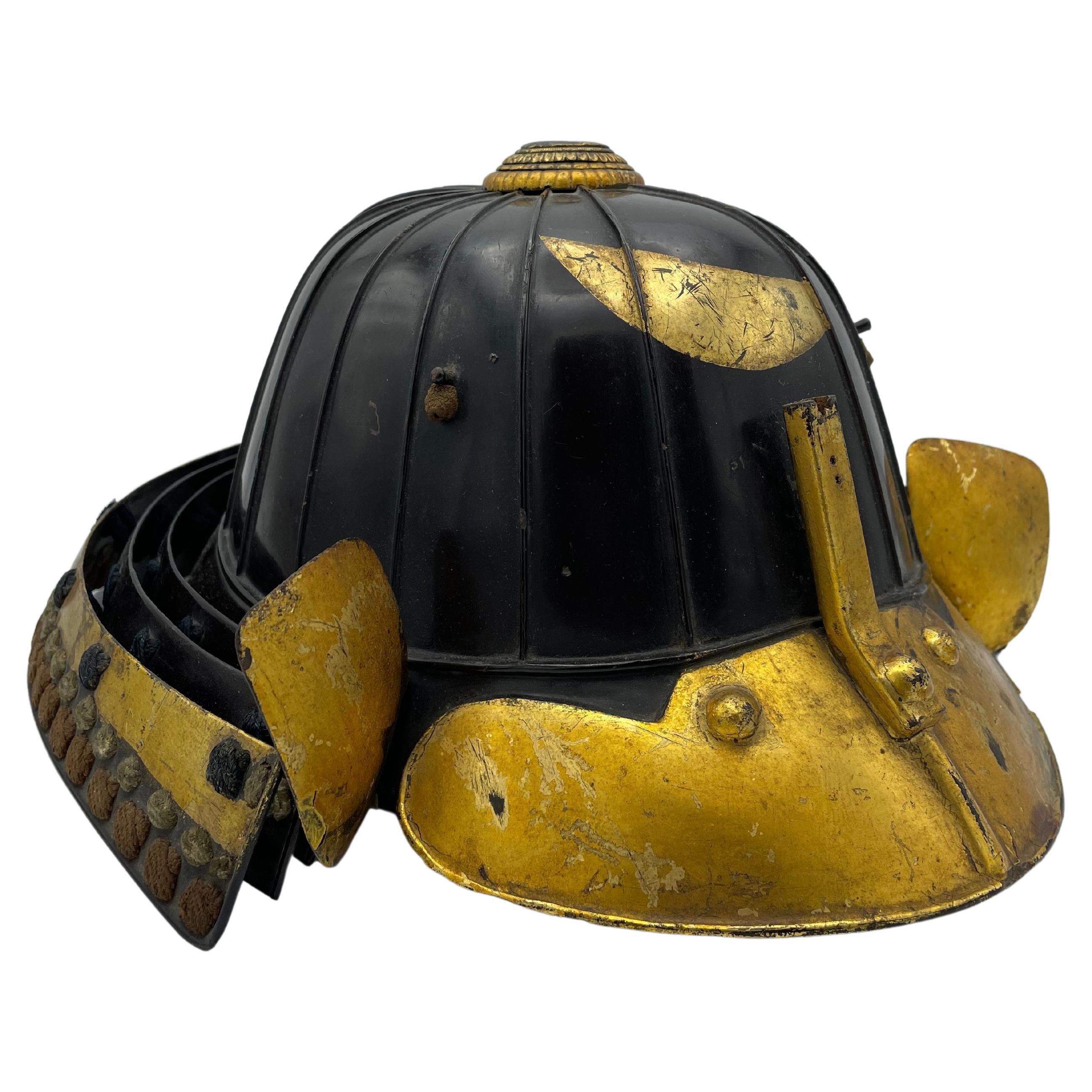
An antique, outstanding signed suji’bachi kabuto (helmet with ridges) surmounted by a gilt metal maedate (forecrest) shaped like a full moon emerging from the clouds heightened by a circular applique depicting three swirling commas (mitsudomoe).
The 52-plate ‘russet iron’ bowl of the the kôseizan type (tall shape). On top a high bronze 7-tiered tehen’no’kanamono (decorative apex fitting). The visor (mabizashi) covered by light decorative ‘smoked leather’ and flanked by a pair of very small fukigaeshi (face guards) finished with black lacquer.
The long, curved four-lame ‘kiritsuke kozane’-plate shikoro (neck guard) lacquered black as well and laced with navy blue silk cords.
The inside of the bowl with an attribution to ‘Munetake’. Signed ‘Made by Munetake’ (Munetake saku).
Period: Japan - 1750-1800 - Edo Period. The shikoro are a marriage to the bowl, both being of the same period.
Approx. Size:
Height 12.20 in/31 cm, Width 11.81 in/30 cm, Depth 13.77 in/35 cm.
Length maedate 3.93 in/10 cm.
Weight 5.07 lbs/2.3 kg.
When shipped we will add a certificate of authenticity.
Price including insured shipping.
- Dimensions:Height: 12.21 in (31 cm)Width: 11.82 in (30 cm)Depth: 13.78 in (35 cm)
- Materials and Techniques:
- Place of Origin:
- Period:
- Date of Manufacture:1750-1800 - Edo Period
- Condition:Wear consistent with age and use. Minor losses. Seen its age, approx. 170-220 years old, it is in a very good condition with traces of wear consistent with age, like minimal lacquer loss along the rims and some wear of the lining. Please look at the photos for a condition reference.
- Seller Location:Amsterdam, NL
- Reference Number:Seller: B27821stDibs: LU7165235921002
About the Seller
4.8
Vetted Professional Seller
Every seller passes strict standards for authenticity and reliability
Established in 1996
1stDibs seller since 2022
22 sales on 1stDibs
- ShippingRetrieving quote...Shipping from: Zwanenburg, Netherlands
- Return Policy
More From This Seller
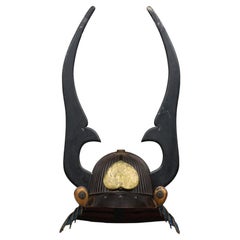
View AllJapanese Edo-Period 62-Plate Kabuto 兜
Helmet
with Long Lacquer Wakidate
Located in Amsterdam, NL
An old and exceptional completely lacquered akoda-nari suji’bachi kabuto (helmet with raised ridges) with a bronze maedate (decorative front piece) shaped like a spade, and mounted b...
Category
Antique 18th Century Japanese Antiquities
Materials
Bronze, Copper, Iron
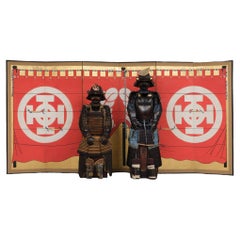
Rare set of 2 Japanese suits-of-armour, complete with 2 matching folding screens
Located in Amsterdam, NL
Important unique set of two suits-of-armour (yoroi), complete with two high six-panel screens, that belong together as is indicated by the used family crests (mon). Two crests are used, both belonging to the Nakagawa family of Oka Castle, Ôita prefecture on Kyûshû.
They are:
– the Nakagawa-kurusu, a circle depicting a Celtic-like cross through a ring.
The cross was originally a Christian symbol but after the ban on Christianity in Japan the use of a hidden cross in family crests could continue.
– the Nakagawa-kashiwa, two leaves of the Japanese Emperor Oak turned to each other (dakikashiwa mon).
The remarkable aspect of this ensemble is the presence of matching crests on both the yoroi and the accompanying folding screens. The kurusu and kashiwa crests adorning the yoroi are elegantly replicated on the screens, providing compelling evidence that these pieces form a harmonious and unified set. This exceptional cohesion between the armour and screens further enhances their artistic and historical value.
After the warlord Toyotomi Hideyoshi (1537-1598) had interfered in the battle between the Lord of Bungo Province Ôtomo Yoshi-mune (1558-1605) and the Shimazu of Hyûga Province, he split the Bungo Province in a number of small fiefs and transferred in 1594 Nakagawa Hideshige (1570-1612) from Miki Castle
in the Harima Fief to Oka Castle in Kyûshû.
The Nakagawa family stayed in possession of Oka Castle till the abolishment of the military use of castles in 1873. In 1884 the Nakagawa family received the title of Count (a title in use till the abolishment of aristocracy in 1947).
After the Nakagawa’s left, the castle and the building soon dilapidated and is now known as Oka Castle Ruins. The castle is located in Taketa Village part of Taketa Town in Ôita Province on Kyûshû.
> Set of two tall byôbu (folding screens),
painted with large red jinmaku (camp enclosure curtain) on a gold leaf ground. The curtains show both crests of the Nakagawa family: one screen depicts two Nakagawa-kurusu crests next to a Nakagawa-kashi crest in the middle, and the other shows the symbols the other way round.
Dimensions:
Total width 148.66 in/377.6 cm (2 x 25.35 in/64.4 cm, 4 x 24.48 in/62.2 cm); Height 72.63 in/184.5 cm.
Period: Japan – Late Edo period (First half 19th century), and maybe even older.
> Yoroi with Nakagawa-kashiwa crest:
A Japanese black lacquered suit-of-armour (yoroi) completely laced with orange cords (kuro’urushinuri hi’ito odoshi nimai’dô’maru).
A thirty-two plate suji’bachi kabuto (helmet with raised ridges) with in front a maedate (fore crest) -with traces of gilding- in the shape of flames, resembling a mythical flaming bird flying down. The fukikaeshi (face guards) and the mabizashi (visor) have the Nakagawa-kashiwa crest in gold maki-e lacquer.
Five curved ‘itazane’-plate neck guards (shikoro) laced with orange cords.
Together with an ‘angry man...
Category
Antique 18th Century Japanese Antiquities
Materials
Gold Leaf, Iron, Metal
Japanese
double gourd
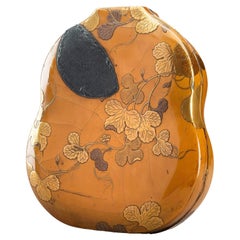
lacquer suzuri’bako (writing box) by Hara Yôyûsai 原羊遊斎
By Hara Yôyûsai
Located in Amsterdam, NL
An uniquely double-gourd-shaped lacquer suzuri’bako (writing box) with a design of gourd leaves, by Hara Yôyûsai (1769-1845).
Covered with amber coloured l...
Category
Antique Early 19th Century Japanese Lacquer
Materials
Bronze
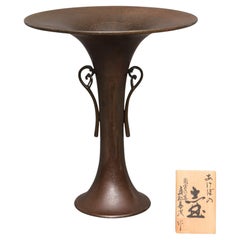
Japanese Patinated Bronze Trumpet Vase by Kanaya Gorôsaburô XI 金谷五良三郎
By Kanaya Gorôsaburô XI 金谷五良三郎
Located in Amsterdam, NL
Elegant brown patinated bronze trumpet vase with gold and red sprinkled design. It has an impressive broad outward curved mouth decorated on both sides with the dots. Its slender bod...
Category
Early 20th Century Japanese Metalwork
Materials
Bronze
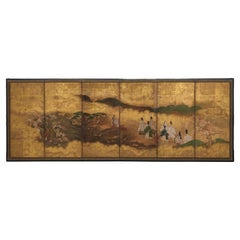
Mid-size 6-panel byôbu 屏風 with a scene from The Tale of Genji
Located in Amsterdam, NL
A refined medium-sized six-panel byôbu (folding screen) showcasing a classical autumn court scene from chapter 7 of The Tale of Genji (Genji Monogatari), titled Momiji no Ga (The Aut...
Category
Antique 17th Century Japanese Paintings and Screens
Materials
Metal, Gold Leaf
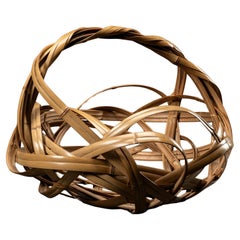
Massive and exceptional Japanese bamboo hanakago 花籠 (ikebana flower basket)
Located in Amsterdam, NL
A massive and exceptional bamboo hanakago (ikebana flower basket). The unusual and modernist basket with a loop handle and showing fine wickerwork in thick strips of bamboo of a ligh...
Category
20th Century Japanese Decorative Baskets
Materials
Bamboo
You May Also Like
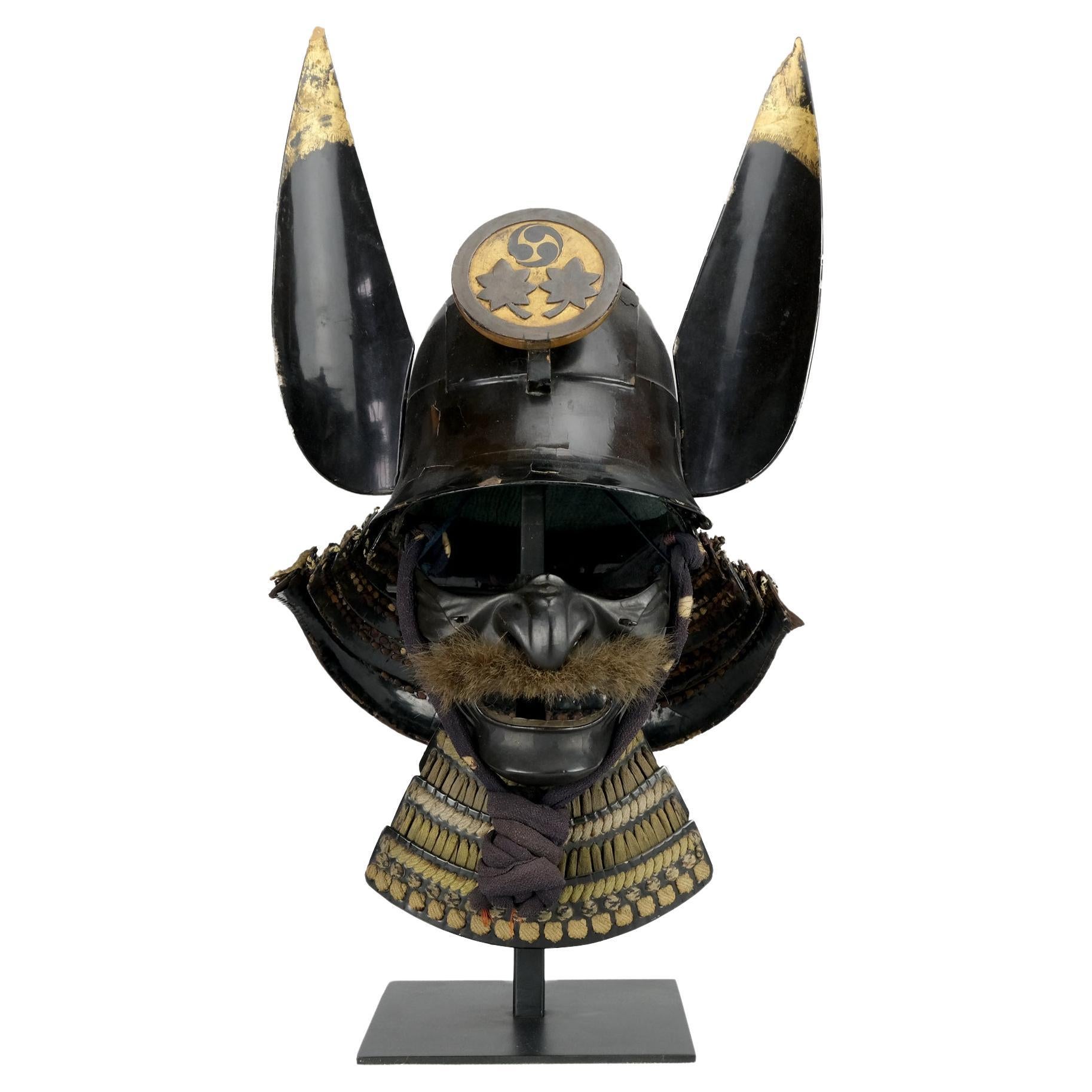
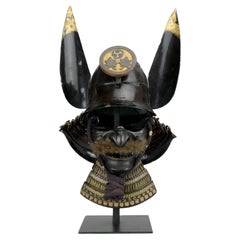
Samurai Helmet "Zunari Kabuto" - Early Edo (circa 1610)
Located in Paris, FR
Samurai Helmet "Zunari kabuto" with 3 black lacquered iron plates.
Japan, early EDO period, circa 1610.
Neck protector (shikoro), 5-strip hineno, laced brown, beige and green.
Central ornament (maedate) in gold and silver lacquered wood. Triple tomo with 2 maple leaves. 2 rounded horn-shaped side ornaments (wakidate) in black and gold lacquered wood.
Black-lacquered iron mask...
Category
Antique Early 17th Century Japanese Edo Antiquities
Materials
Iron
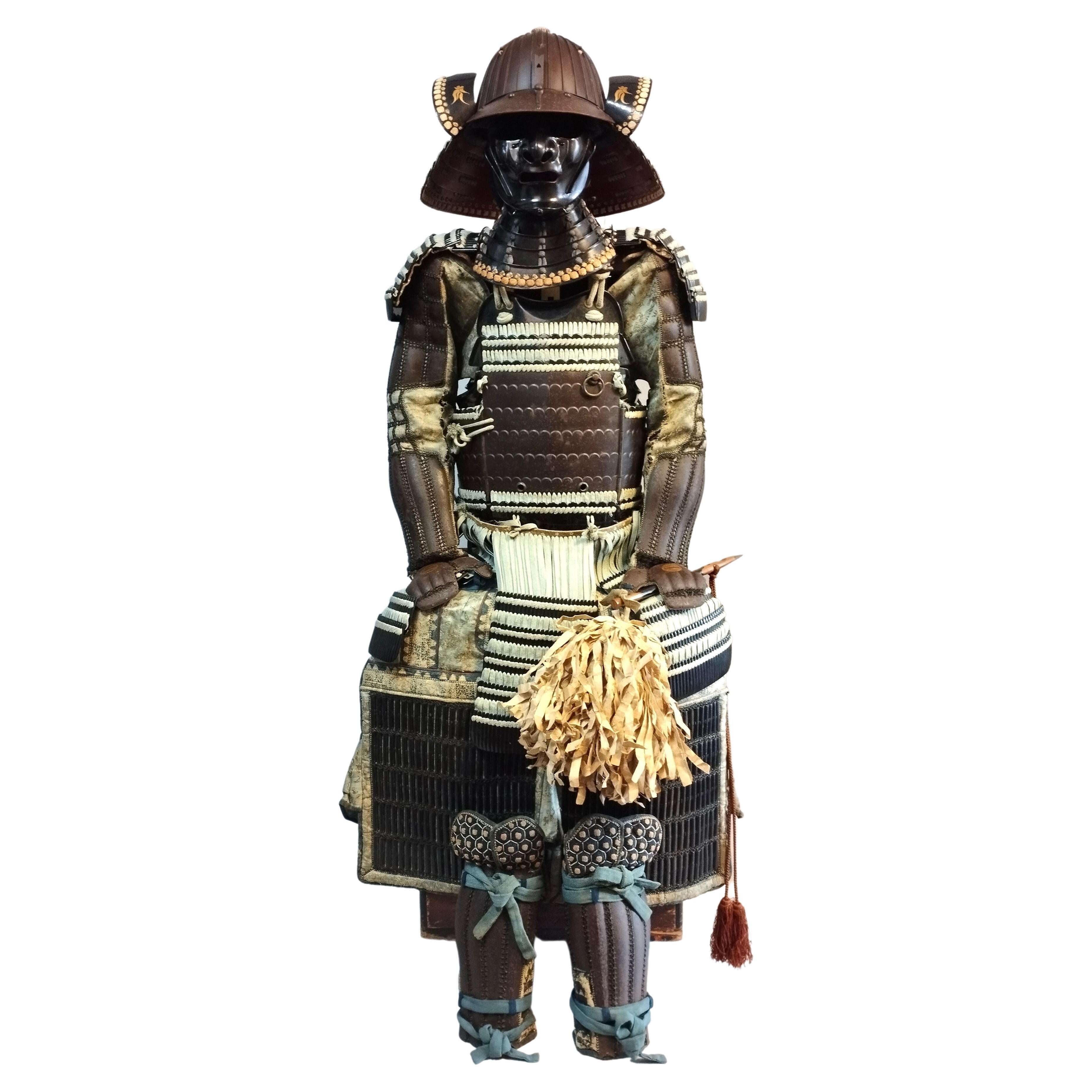
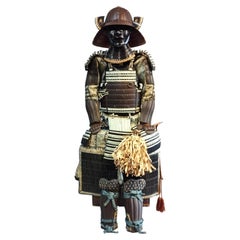
18th Century Hirate Clan Samurai Armor with Signed Kabuto Helmet
Located in Fukuoka, JP
This is a truly exceptional set of 18th century Samurai armor that is sure to impress any collector or enthusiast. The patinated iron used in its construction has aged beautifully, giving the armor a truly unique appearance that is sure to catch the eye. The brocade silk and cotton padding used to line the armor not only provide a comfortable fit for the wearer, but also add an extra layer of decorative flair.
One of the most striking features of this armor is the crests of the Hirate samurai clan that adorn it. These crests are a symbol of the clan's identity and heritage, and their presence on the armor speaks to the deep connection between samurai warriors and the clans they belonged to.
The Kabuto...
Category
Antique 18th Century Japanese Antiquities
Materials
Iron
Japanese Antique Combat Helmet
Kabuto
1800s Edo Era
Located in Paris, FR
This is an antique combat helmet made around 1800s in Edo era in Japan.
Kabuto is a type of helmet first used by ancient Japanese warriors which, in later periods, became an important part of the traditional Japanese armour...
Category
Antique Early 19th Century Japanese Antiquities
Materials
Iron
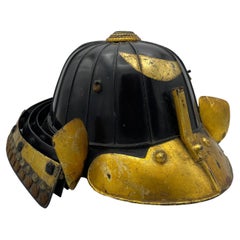
A Momonari-type samurai Kabuto with menpō mask
Located in Milano, IT
A Kabuto Momonari-type samurai helmet, so named because of its characteristic shape resembling a peach, made of natural iron.
The visor (mabizashi) is embellished with raised eyebr...
Category
Antique Late 18th Century Japanese Metalwork
Materials
Iron

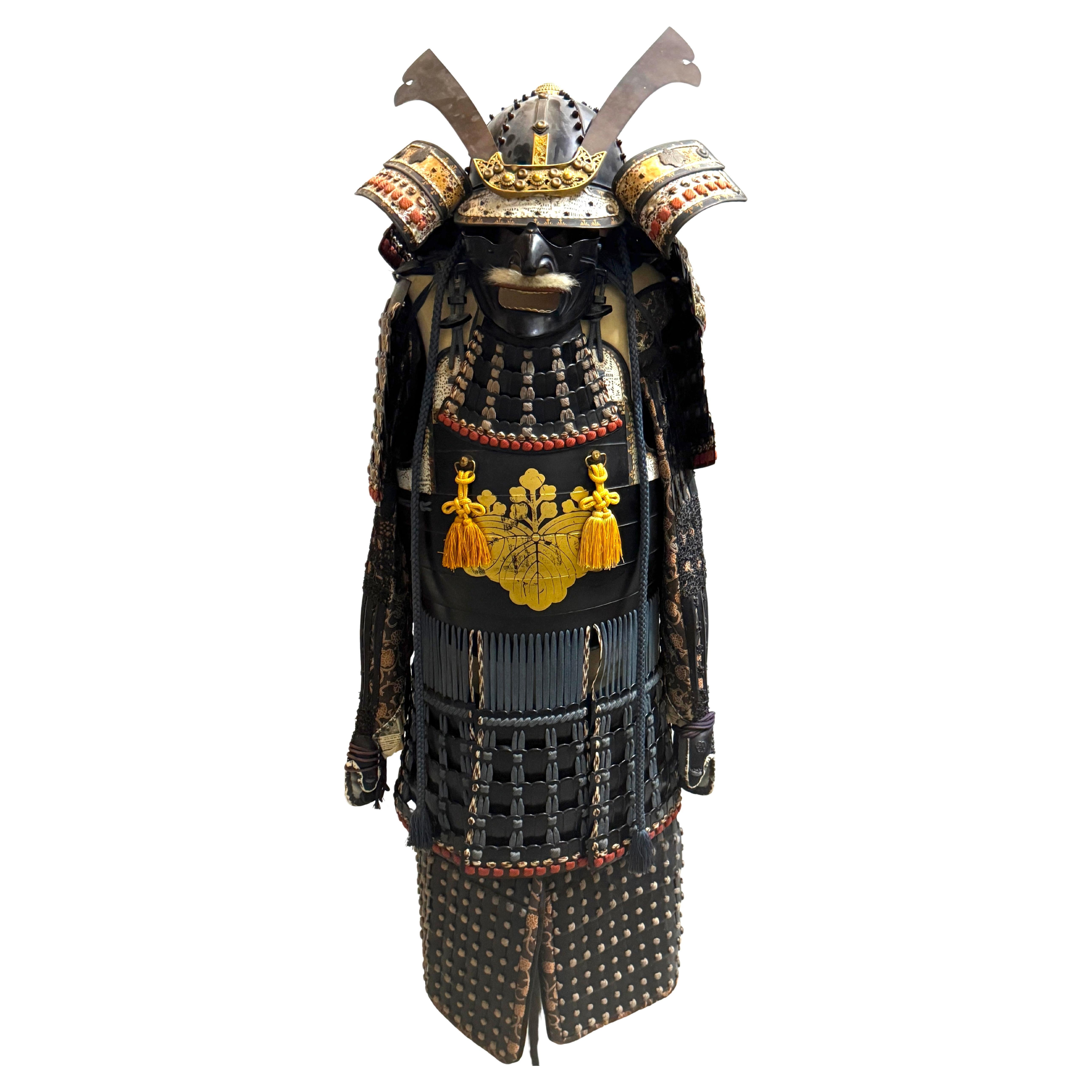
Showa-Period Japanese Samurai Armor (Yoroi), with Paulownia Crest, Post-WWII
Located in West Palm Beach, FL
Showa-Period Japanese Samurai Armor with Paulownia Crest, Post-WWII Diplomatic Gift
A complete suit of Japanese samurai armor (yoroi), crafted in the Showa period (post-World War II...
Category
Mid-20th Century Japanese Showa Arms, Armor and Weapons
Materials
Metal, Brass
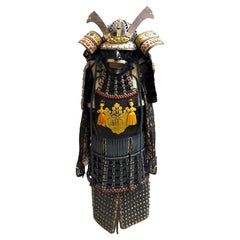
Rare Antique Original high Ranking Edo period Samurai armor Yoroi Japan Daimyō
Located in Ijzendijke, NL
This complete Edo-period samurai armor is an exceptional example of the refined martial elegance and ceremonial grandeur associated with Japan’s warrior aristocracy. Every component reflects a precise harmony of functionality, symbolism, and prestige.
At the heart of the set is a superb suji-bachi kabuto, constructed from multiple riveted iron plates arranged with flawless symmetry and enriched by a beautifully aged patina. It is crowned with a gilt tehen no kanamono, and the imposing maedate presents a pair of antler-like blades framing a gilded sun disc an emblem of celestial authority and divine lineage.
The Fukigaeshi feature extraordinary gilt dragon ornaments, carved in high relief. Dragons, ancient symbols of protection and power, were reserved for armor of the highest rank, strongly indicating that this set belonged to a Daimyō or high-ranking retainer.
The menpō, lacquered in deep black, includes a natural-hair moustache and an articulated jaw (resseibō), lending the face a vivid sense of character. Below it, the shikoro is composed of finely lacquered blue-and-gold plates, meticulously laced with silk.
The okegawa ni-mai dō cuirass is finished in a dark brown lacquer and laced in deep indigo silk, complemented by elegant orange ceremonial tassels a hallmark of formal presentation armor. The sode (shoulder guards) retain their rare bear-fur trimming, an expensive and status-laden material symbolizing courage and noble rank.
Completing the ensemble are beautifully made kote, haidate, and suneate, each executed with rich fabrics and refined lacquer work. A butterfly mon (chō-mon) appears on the leg guards an elegant symbol of transformation, adding a poetic contrast to the armor’s martial presence.
The extensive use of gilding, the rare bear-fur details, and the prominent dragon motifs confirm this as a piece created for the highest echelons of samurai society. It is a masterpiece where ceremonial artistry, symbolism, and authority converge.
Artistic and Historical Significance
This armor epitomizes the Edo-period ideal, when arms and armor transcended their battlefield origins and became expressions of identity, dignity, and cultural refinement. The interplay of dark lacquer, golden ornamentation, and natural materials embodies the spirit of bushidō discipline, inner strength, and beauty through restraint.
Whether displayed in a private collection, gallery, office, or interior setting, this armor commands attention. Its presence transforms any space, making it a truly museum-worthy centerpiece for collectors of Japanese, military, or historical art.
The set includes its traditional stand and storage box. As with all antique armor...
Category
Antique 17th Century Japanese Japonisme Antiquities
Materials
Metal
More Ways To Browse
Vintage Lunch Boxes 1950s
Wheat Thrasher
Dinosaur Statue
Indian Stone Head
Japanese Reed Screens
Khmer Torso
Kimekomi Dolls
Reuge Bird Box
Reuge Music Box Bird
Roman Antiquities Oil Lamp
Royal Presentation Frame
Russian Icon George Slaying
Sui Horse
Tibetan Dzi Beads
Vintage Japanese Erotica
Lacquer Plant Pot
Chinese Pewter Plate
Dragon Rope