Kilim Antiquities

KILIM STYLE

Known for their wealth of rich colors and unique weaving tradition, antique and vintage kilim rugs are one of the most distinguishable types of rugs. The term “kilim” is Turkish in origin, but many variations of this type of textile share a common heritage and are practiced all across the Balkans, throughout the Arab world and elsewhere. There are Persian kilim rugs, kilim rugs from Central Asia and more. 

It is difficult to definitively pin down the origins of kilim weaving, which is known as a “flatweave” or “slit-weave,” but historians believe that skilled artisans may have practiced versions of it as early as the eighth and ninth centuries A.D. in the Anatolia region of Turkey. Many of the Turkish iterations of these flat-woven rugs are recognizable for their arrangements of dazzling, flowing forms, but a range of motifs can appear in kilim rugs — abstract figures that reference rams’ horns, snakes or running water or motifs that are intended to symbolize concepts such as the tree of life or fertility. In Anatolia, women have used kilims to share narratives about their lives. 

The difference between a kilim rug and most other kinds of carpets or pile rugs is in the aforementioned weave. They are made by interweaving variously colored, individual strands of wool (pure soft cotton, silk and goat’s hair are also used with the wool, albeit rarely) versus, say, the Tabriz rugs of Iran, which are hand-knotted rugs. This results in a smooth, frequently reversible surface. It’s a slit-weave because of the gap left between two blocks of color. Kilims are created on a loom, a typically uncomplicated structure mostly made of wood. Owing to the creative freedom that a slit-weave can afford its weaver, they tend to feature a range of bright, contrasting hues like reds, oranges and pinks that appear in bold combinations with deep blues and greens that are brought to life with natural dyes.

Handwoven kilim rugs are less expensive to produce and more durable than other rugs. They were traditionally used as floor coverings in mosques and yurts, as prayer rugs and saddle coverings. And these textiles are pileless: Whereas the Beni Ourain rugs of Morocco can be described as dense with a thick surface or pile, an authentic kilim rug is thin and flat. Because the resulting weave is lightweight, kilim rugs are well adapted for use in the hot summer months, and they are happily embraced by tribal weavers of Morocco, a part of the world that is home to many styles of rugs

With their striking geometric patterns and provocative color pairings, kilim rugs and wall tapestries are loved by design enthusiasts and can bring charm and interest into any dining room, living room or other interior space.

Find kilim rugs and textiles and other vintage rugs on 1stDibs.

to
2
1
3
9
7
5
5
4
3
3
2
2
1
1
1
1
1
3
2
1
2
1
3
3
3
3
2
1
1
3
3
3
Style: Kilim
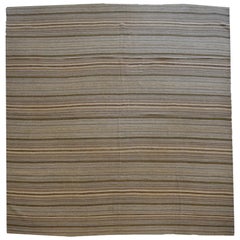
Traditonal Antique 1900s Wool Persian Jajim Kilim Rug, 9 x 9
Located in New York, NY
This antique Persian Jajim Kilim circa 1900 consists of a combination of handspun wools - some vegetable dyed and some undyed. It exhibits a linear, interlaced pattern in the style o...
Category

Early 1900s Persian Antique Kilim Antiquities

Materials

Wool

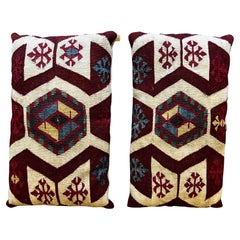
Pair of Antique Kilim Cushions Handmade Around 1940 - N° 305
Located in Paris, FR
Pair of antique kilim cushions handmade around 1940 - N° 305 Thanks to our Restoration-Conservation workshop and also Our know-how, we are ...
Category

1940s Turkish Vintage Kilim Antiquities

Materials

Wool

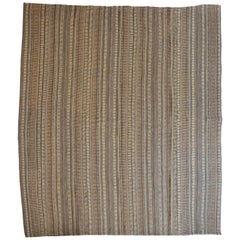
Antique 1900s Wool Persian Jajim Kilim Rug, 9 x 10
Located in New York, NY
This antique Persian double weave Jajim Kilim, circa 1900 consists of hand spun vegetal dyed as well as undyed wools. Its double weave results in a denser texture, completed in the s...
Category

Early 1900s Persian Antique Kilim Antiquities

Materials

Wool

Related Items
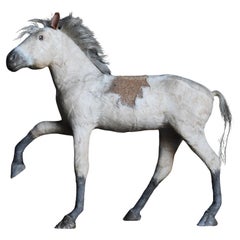
Japanese Antique Horse Figurine 1900s-1940s / Sculpture Object Wabi Sabi
Located in Chōsei District Nagara, JP
This is an antique Japanese horse figurine, crafted in the early Shōwa period (1900s–1940s). Although simple in form, it carries a distinct sense of life—an expressive charm that cou...
Category

Mid-20th Century Japanese Kilim Antiquities

Materials

Glass, Wood, Paper

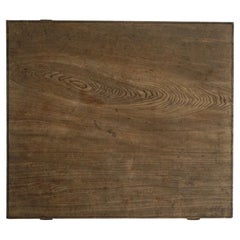
Japanese Antique Zelkova Slab Board, 1940s, Japandi Wabi-Sabi
Located in Chiba, Chiba
A Japanese antique single-slab board crafted from zelkova and dating to the 1940s. The wood grain is strikingly beautiful—bold, flowing, and expressive—giving the piece a sculptural ...
Category

Mid-20th Century Japanese Kilim Antiquities

Materials

Wood

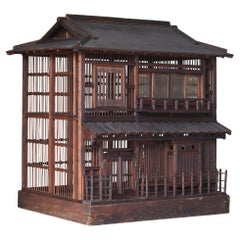
Japanese Antique Birdcage Inspired by a Traditional Machiya House 1920s-1940s
Located in Chōsei District Nagara, JP
This is an old Japanese birdcage, exquisitely crafted in the form of a traditional machiya townhouse. It is an exceptionally rare piece, believed to have been made in the early Showa...
Category

Early 20th Century Japanese Kilim Antiquities

Materials

Bamboo, Cedar

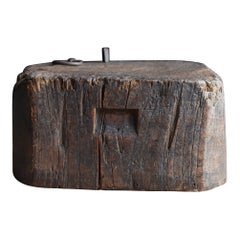
Japanese Antique Wooden Block Workbench 1900s-1940s / Display Stand Wabisabi
Located in Chōsei District Nagara, JP
This is an old Japanese wooden block workbench, believed to have been used in the early Showa period (1900s–1940s). The material is zelkova (keyaki) wood. The countless scratches, dents, and the smoothness of its surface are proof of the many years of daily use and the touch of human hands that have polished it over time. The iron fittings remaining on the surface tell the story of the work once performed here, while also serving as a striking visual accent. The inherent durability and beautiful grain of zelkova have gained even greater depth through the passage of time, creating a unique and irreplaceable texture. Left as it is, it stands as a powerful art piece; as a display stand, it functions beautifully to enhance the presence of whatever is placed upon it. There is a slight tilt, but this too is part of its individuality, telling the tale of its long history. It is not in perfection, but in the imperfections shaped by time, that the Japanese aesthetic of wabi-sabi resides. This wooden workbench is more than just an old tool — it is a sculptural object that reflects the era and the lives of the people who used it. Whether in a home interior, gallery, or as store display furniture...
Category

Mid-20th Century Japanese Kilim Antiquities

Materials

Wood

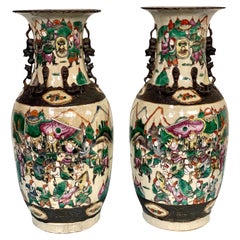
Antique Pair of Large Chinese Vases
Located in LA CIOTAT, FR
A superb pair of large and elegant Chinese 'Nanjing' porcelain baluster vases, each intricately decorated with an encircling battle scene of warriors on foot and on horseback on its ...
Category

Early 20th Century Chinese Kilim Antiquities

Materials

Porcelain, Paint

Antique Pair of Large Chinese Vases
$2,250 / set
H 18.12 in Dm 9.45 in
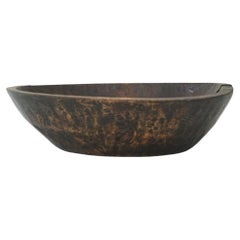
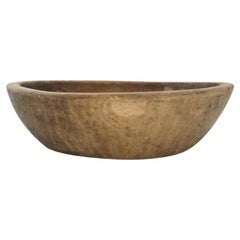
Japanese Antique Wooden Bowl, 1910s–1940s - Japandi Wabi-Sabi Primitive
Located in Chiba, Chiba
A Japanese antique wooden bowl dating from the 1910s–1940s. Once used in daily life as a functional folk craft, the piece is hand-carved from a solid block of wood—its exact species ...
Category

Early 20th Century Japanese Kilim Antiquities

Materials

Wood

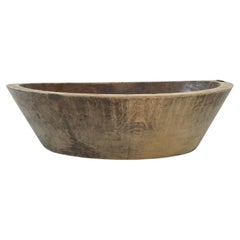
Japanese Antique Wooden Bowl, 1910s–1940s - Japandi Wabi-Sabi Primitive
Located in Chiba, Chiba
A Japanese antique wooden bowl dating from the 1910s–1940s. Once used in daily life as a functional folk craft, the piece is hand-carved from a solid block of wood—its exact species ...
Category

Early 20th Century Japanese Kilim Antiquities

Materials

Wood

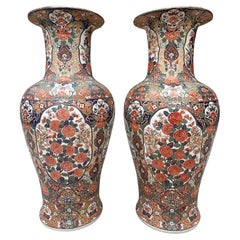
Pair of large antique Japanese Imari porcelain vases
Located in Brea, CA
Large Japanese beautiful porcelain vases A pair of baluster Imari porcelain vases, Japan, Meiji. Polychrome floral decor, very beautiful ,
Category

Early 20th Century Japanese Kilim Antiquities

Materials

Porcelain

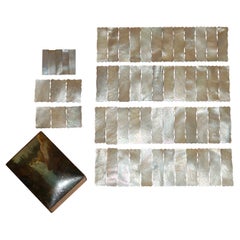
SUITE OF RARE ANTIQUE CHiNESE MOTHER OF PEARL PAIR OF DOVES MAH JONG COUNTERS
Located in West Sussex, Pulborough
Royal House Antiques Royal House Antiques is delighted to offer for sale this lovely large suite of antique Chinese circa 1900 mother of pearl games counters in a lovely hand painte...
Category

Early 1900s Chinese Antique Kilim Antiquities

Materials

Other

Japanese Antique Wooden Bowl, 1910s–1940s - Japandi Wabi-Sabi Primitive
Located in Chiba, Chiba
A Japanese antique wooden bowl dating from the 1910s–1940s. Once used in daily life as a functional folk craft, the piece is hand-carved from a solid block of wood—its exact species ...
Category

Early 20th Century Japanese Kilim Antiquities

Materials

Wood

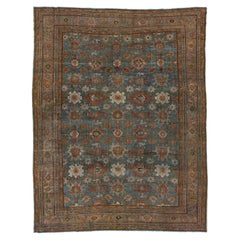
Blue Antique Persian Malayer Wool Rug Allover From The 1900s
Located in Norwalk, CT
Beautiful antique Malayer hand-knotted wool rug with a blue color field. This Persian rug has a gorgeous all-over design with rust and brown accents. This rug measures 11' X 14'. .
Category

20th Century Persian Kilim Antiquities

Materials

Wool

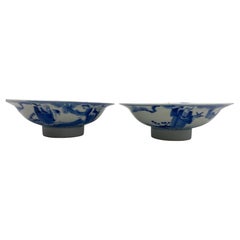
Antique Pair of Chinese Blue and White Porcelain Bowls
Located in Brea, CA
a pair of antique Chinese blue and white porcelain bowls with very beautiful hand paint. There are double blue circles at the bo...
Category

Early 20th Century Chinese Kilim Antiquities

Materials

Porcelain

Kilim antiquities for sale on 1stDibs.

Find a broad range of unique Kilim antiquities for sale on 1stDibs. Many of these items were first offered in the Mid-20th Century, but contemporary artisans have continued to produce works inspired by this style. If you’re looking to add vintage antiquities created in this style to your space, the works available on 1stDibs include asian art and furniture and other home furnishings, frequently crafted with fabric, wool and other materials. If you’re shopping for used Kilim antiquities made in a specific country, there are Asia, Caucasus, and Turkey pieces for sale on 1stDibs. It’s true that these talented designers have at times inspired knockoffs, but our experienced specialists have partnered with only top vetted sellers to offer authentic pieces that come with a buyer protection guarantee. Prices for antiquities differ depending upon multiple factors, including designer, materials, construction methods, condition and provenance. On 1stDibs, the price for these items starts at $715 and tops out at $715 while the average work can sell for $715.

Still Thinking About These?

All Recently Viewed