Medieval Antiquities

MEDIEVAL STYLE

The Middle Ages in Europe followed the end of the Roman Empire, and in this time of change, which preceded the Renaissance, furniture was simple and utilitarian, with most homes having only the necessities like chests and benches. Much of medieval furniture, which was often made in oak or walnut, was built for the elite, particularly the emerging merchant class who owned multiple homes.

Life for many in the medieval era was unstable, and furniture was designed to be functional and portable. Peasants worked the fields for affluent landowners and didn’t have access to literature in the way that nobles and people of the church did (women less so than men). The furniture in their modest dwellings was typically limited to cookware and a handful of stools. Foldable chairs, while uncommon in homes of the early Middle Ages and emblematic of wealth, like all other furnishings of the time, allowed for easy transportation of a household. Trestle tables with detachable legs and collapsible beds were designed to be simply moved from place to place.

Medieval blanket chests were among the most important furniture objects and could further serve as tables or even beds. Some ancient traditions were carried forward to build this sturdy furniture, such as turnery. Although the furniture was minimally designed, embellishments like carvings added elegance to the heavy wood pieces. These details sometimes reflected trends in religious art like rose windows.

By the later Middle Ages, storage pieces like chests of drawers were often adorned with high relief carvings, such as geometric and floral motifs. By the 14th and 15th centuries, design had developed to include more involved pieces like cupboards and desks, while benches frequently doubled as chests with hinged seats. Beds also changed in this era from basic boards to four-post designs with large drapes to keep the sleeper warm. These beds and other medieval bedroom furniture were significant status symbols, passed down through families and used as places to conduct business and receive visitors.

Surviving examples of medieval furniture are very rare, yet its distinctive aesthetics influenced later styles like William and Mary and Arts and Crafts.

Find a collection of medieval seating, garden elements, decorative objects and other furniture on 1stDibs.

to
2
3
2
5
9
7
5
5
4
3
3
2
2
1
1
1
1
1
5
2
2
2
1
1
4
2
2
1
1
5
5
5
Style: Medieval
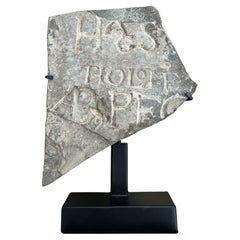
16th century stone architectural fragment
Located in Vosselaar, BE
A 16th century Spanish slate stone architectural fragment. Probably part of a commerative plaque. The Latin inscription only partly present but most likely being a religious referenc...
Category

16th Century Spanish Antique Medieval Antiquities

Materials

Slate

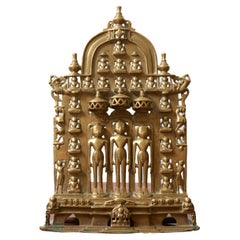
Ancient Jain Altarpiece with Three Standing Jina s, Gujarat, India 16th Century
Located in Antwerp, BE
An authentic, ancient and exceptional Three Jina Shrine. For it’s age the altarpiece is in a very good condition and rather large. The image of three standing, nude Jinas flanked by the other 21 seated Jinas is rare. The lintel of the shrine is showing the nine comets and three seated figures...
Category

16th Century Indian Antique Medieval Antiquities

Materials

Bronze

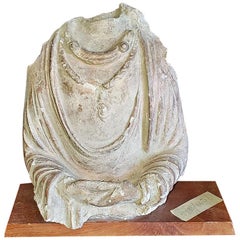
A Stucco Torso of the Buddha, Gandhara, 4th-5th Century
Located in Dallas, TX
PRESENTING a STUNNING piece of Indian Antiquity from circa the 4th-5th Century, namely, A Stucco Torso of the Buddha, Gandhara. Ancient Gandhara is located in the rugged foothills of the Himalayas in what is today northwest Pakistan and eastern Afghanistan, was for centuries a thriving center of trade along the Silk Road linking China, South Asia, and the Mediterranean. The piece was purchased by a Private Collector at Sotheby’s, or more probably, Christies of New York Auction pre-2000. The paper label on the wooden base is “7281/465” for Sale Number 7281, Lot No. 465. Sotheby’s and Christies operate a twice yearly auction of Southeast Asian Art & Antiquities in New York in the months of March and September. The Sale Number is more like a ‘Christies;’ Sale Number but we cannot locate any records for this sale online as it was pre-2004. The sculpture is a Gandharan stucco headless bust...
Category

15th Century and Earlier Afghan Antique Medieval Antiquities

Materials

Stucco

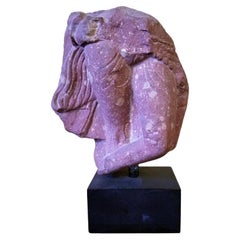
2nd Century Indian Red Sandstone Fragment of a Woman
Located in Dallas, TX
Presenting a stunning little piece of Southeast Asian Indian Antiquity, namely, a Double-sided 2nd Century Red Sandstone Fragment of a Woman. From India, Uttar Pradesh, Mathura. This piece has impeccable Provenance ! It was purchased by a Private Dallas Collector at Christie’s New York Auction on 31st March 2005. Sale Number 1492, Lot No. 43. Christie’s operate a twice yearly auction of Southeast Asian Art & Antiquities in New York in the months of March and September. The sculpture was described as “Property of a European Estate. A Double-sided Red Sandstone Fragment of a Woman. India, Uttar Pradesh, Mathura, Circa 2nd Century.” “Both sides similarly depicting the lower body with a flared sash at left and remains of chained belt: marked with an accession number 1931 on reverse. 8 in (29.2 cm.) high” Provenance: Collection of Prince and Princess Aschwin zur Lippe-Biesterfeld, acquired on 1958?. It carried an Auction estimate of USD 3,000 to USD 5,000 and Sold for USD 2,880 (not including Buyers Premium). Allowing for inflation alone this would be over $6,300 in today’s value. It has substantially increased in value over the years as a RARE piece from a prestigious Collection and a RARE piece of antique Asian antiquity...
Category

15th Century and Earlier Indian Antique Medieval Antiquities

Materials

Sandstone

China 960 Ad Song Dynasty Very Rare Imperial Period Offering Vessel in Bronze
Located in Miami, FL
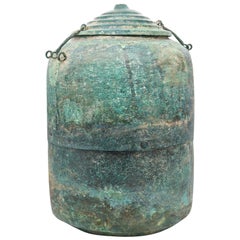
Offering vessel from the Chinese Song Dynasty (960/1279 AD ). A beautiful "offering spiritual vessel" from the Yunnan province region in the ancient China. This rare vessel was created in red bronze during the Song Dynasty period. between 960/1279 AD. This is one of the most unusual forms of red bronze jar. A large vessel, the sides are virtually perpendicular to the base. The stepped lid design is also among the more rare types. The predominant lid design among the Yunnan offering bronzes is the "wheel" pattern, with a few lids having the lotus design. This is also one of the few bronzes displaying clear riveting of a two-part vessel body, with the original twisted elements Has a combined measures including the lid of 12.5 by 8.75 inches (31.75 x 22,23 Cm). The Song Dynasty, was an imperial dynasty of China that began in 960 and lasted until 1279. The dynasty was founded by Emperor Tizu of Song following his usurpation of the throne of the later Zhou, ending the Five-Dynasties and Ten Kingdoms period. The Song often came into conflict with the contemporaneous Liao, Western Xia and Jin dynasties in northern China. After decades of armed resistance defending southern China, it was eventually conquered by the Mongol-led Yuan dynasty. The dynasty is divided into two periods: Northern Song and Southern Song...
Category

15th Century and Earlier Chinese Antique Medieval Antiquities

Materials

Bronze

Related Items
Late 19th-Early 20th Century Chinese Hand Decorated Porcelain Figure
Located in Houston, TX
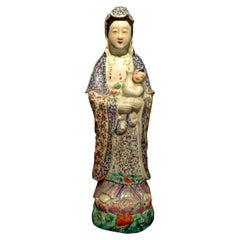
Late 19th-early 20th century Chinese hand decorated porcelain figure. Beautifully hand decorated Chinese porcelain figure. This stunning colorful finely detailed figurine or sculptur...
Category

1890s Chinese Antique Medieval Antiquities

Materials

Porcelain

Khmer Bronze Hairpin
Located in Vosselaar, BE
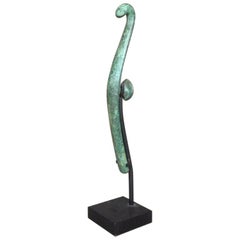
Elegant and refined Khmer bronze hairpin dating between the 12th and 15th century.
Category

15th Century and Earlier Cambodian Antique Medieval Antiquities

Materials

Bronze

Khmer Bronze Hairpin
$360
H 5.12 in W 1.19 in D 1.19 in
Archaic Chinese Bronze Ritual Vessel, Gui, Early Western Zhou, 11th century BCE
Located in Austin, TX
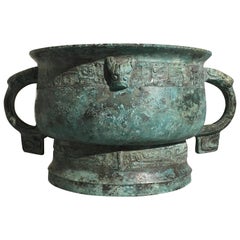
A stunning and rare Chinese archaic bronze gui, a type of ritual bronze vessel used to hold grain, either for feasting, or for making offerings ...
Category

15th Century and Earlier Chinese Antique Medieval Antiquities

Materials

Bronze

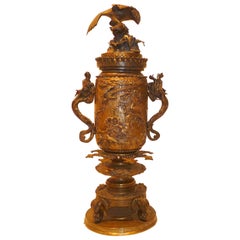
Japanese Bronze Vessel with Dragon Handles and Falcon Lid
Located in Greenwich, CT
Japanese bronze vessel with pair of dragon handles, falcon lid, birds in landscape and elephant heads base.
Category

1890s Japanese Antique Medieval Antiquities

Materials

Bronze

Japanese Bronze Vessel with Dragon Handles and Falcon Lid
$3,500 Sale Price
27% Off
H 26 in W 12 in D 8 in
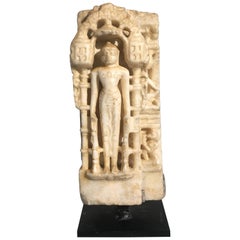
12th Century Indian Carved White Marble Figure of a Jain Tirthankara or Jina
Located in Austin, TX
A well carved Indian white marble Jain temple relief fragment featuring an image of a Jina, circa 12th century, Rajasthan or Gujarat, India. The Tirthan...
Category

15th Century and Earlier Indian Antique Medieval Antiquities

Materials

Marble

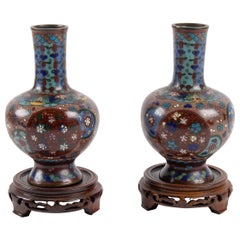
Pair of Cloisonné Bronze Vases, Japan, Circa 1900
Located in Saint-Ouen, FR
Pair of cloisonné bronze vases, Japan, circa 1900, accident on one, slight depression Measures: H 19cm, D 10cm.
Category

20th Century Japanese Medieval Antiquities

Materials

Bronze

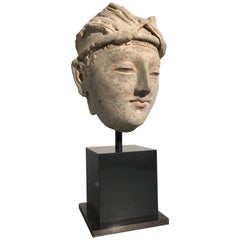
Gandharan Stucco Head of a Donor, 4th-5th Century
Located in Austin, TX
A sublime molded stucco head of a young male donor from the ancient region of Gandhara, 4th-5th century. The youthful nobleman sculpted in an idealized...
Category

15th Century and Earlier Pakistani Antique Medieval Antiquities

Materials

Stucco

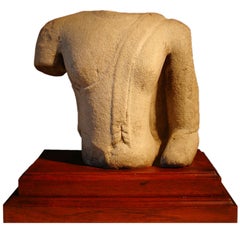
16th Century Thai Ayutthaya Sandstone Torso of the Buddha
Located in Austin, TX
A lovely carved sandstone torso of the Buddha, Ayutthaya period (1350-1767), Thailand. Wonderfully simplistic, the only ornamentation this torso displays...
Category

16th Century Thai Antique Medieval Antiquities

Materials

Sandstone

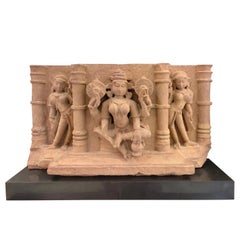
Indian Carved Sandstone Frieze of Lakshmi, Central India, 10th-11th Century
Located in Austin, TX
A large and impressive Indian carved sandstone architectural frieze featuring a central image of the Hindu goddess Lakshmi flanked by two atten...
Category

15th Century and Earlier Indian Antique Medieval Antiquities

Materials

Sandstone

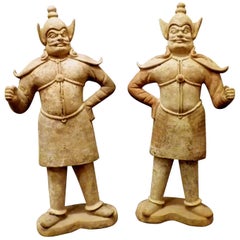
Pair of Very Refined Tang Dynasty Pottery Statue of Guardians, Oxford TL Tested
Located in Greenwich, CT
A pair of very refined standing pottery statue of guardians, dramatic facial expression, beautiful detail, early Tang dynasty 618-907, come with one Oxford authentication TL test cer...
Category

15th Century and Earlier Chinese Antique Medieval Antiquities

Materials

Terracotta

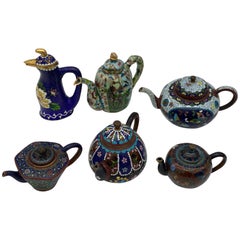
6 Antique Chinese Cloisonne Teapots
Located in Brea, CA
Collection of 6 Chinese cloisonne teapots in varying shapes and designs of flora and fauna. The highest one is 5.5'' H x 2 W x 2.5'' D. the sm...
Category

20th Century Chinese Medieval Antiquities

Materials

Bronze

6 Antique Chinese Cloisonne Teapots
$1,180 / set
H 5.5 in W 2 in D 2.5 in
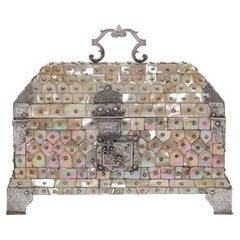
16th-Century Indo-Portuguese Colonial Mother-of-pearl Gujarat Casket
Located in Amsterdam, NL
An exceptional Indo-Portuguese colonial mother-of-pearl veneered casket with silver mounts India, Gujarat, 2nd half of the 16th century, the silver mounts Goa or probably Lisbon Measures: H. 16 x W. 24.6 x D. 16.1 cm An exceptional Gujarati casket with a rectangular box and truncated pyramidal lid (with slopes on each side and a flat top) made from exotic wood, probably teak (Tectona grandis), covered with a mother-of-pearl mosaic. The tesserae, cut from the shell of the green turban sea snail (Turbo marmoratus, a marine gastropod) in the shape of fish scales, are pinned to the wooden structure with silver ball-headed nails. The casket is set on bracket feet on the corners. The masterfully engraved decoration of the silver mounts follows the most refined and erudite Mannerist repertoire of rinceaux and ferroneries dating from the mid-16th century. The high quality and refinement of the silver mounts and, likewise, the silver nails that replaced the original brass pins used to hold the mother-of-pearl tesserae in place indicate the work of a silversmith probably working in Lisbon in the second half of the 16th century. The Indian origin of this production, namely from Cambay (Khambhat) and Surat in the present state of Gujarat in north India, is, as for the last three decades, consensual and fully demonstrated, not only by documentary and literary evidence - such as descriptions, travelogues and contemporary archival documentation - but also by the survival in situ of 16th-century wooden structures covered in mother-of-pearl tesserae. A fine example is a canopy decorating the tomb (dargah) of the Sufi saint, Sheik Salim Chisti (1478-1572) in Fatehpur Sikri in Agra district in the state of Uttar Pradesh, north India. This is an artistic production, geometric in character and Islamic in nature, where usually the mother-of-pearl tesserae form complex designs of fish scales or, similar to the dishes also made using the same technique, with the thin brass sheets and pins, stylized lotus flowers. The truncated pyramidal shape corresponds, like their contemporary tortoiseshell counterparts also made in Gujarat, to a piece of furniture used in the Indian subcontinent within the Islamic world prior to the arrival of the first Portuguese. This shape, in fact, is very old and peculiar to East-Asian caskets, chests or boxes used to contain and protect Buddhist texts, the sutras. A similar chest is the famous and large reliquary chest from Lisbon cathedral that once contained the relics of the city's patron saint, Saint Vincent. Both match in shape, having the same kind of socle or pedestal and bracket feet, and in their engraved silver mountings, featuring the same type of refined, erudite decoration. Their differences lie in the silver borders that frame the entire length of the edges of the chest (both the box and the lid), pinned with silver nails, and on the lock plate, shaped like a coat of arms in the Lisbon example. Given the exceptional dimensions of the reliquary casket...
Category

16th Century Indian Antique Medieval Antiquities

Materials

Silver

Previously Available Items
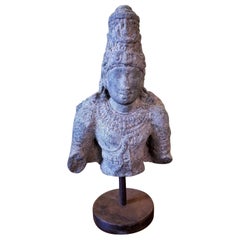
11th Century Indian Granite Bust of Shiva
Located in Dallas, TX
PRESENTING a STUNNING piece of Southeast Asian Indian Antiquity, namely, an 11th Century Granite Bust of Shiva from South India, Chola Dynasty. This piec...
Category

15th Century and Earlier Indian Antique Medieval Antiquities

Materials

Granite

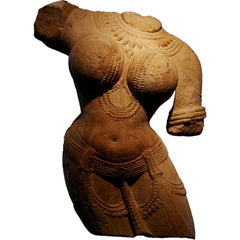
Indian Carved Pink Sandstone Torso of a Female Deity, Madhya Pradesh
Located in Austin, TX
A wonderfully sensual torso of a female deity. Carved from indigenous pink sandstone, she is portrayed in an exaggerated tribhanga (thrice-bent) pose. She wears a diaphanous dhoti and is richly adorned. The low slung belt and jeweled festoons highlight the generous curves of her hips. Her naked torso...
Category

15th Century and Earlier Indian Antique Medieval Antiquities

Materials

Sandstone

Medieval antiquities for sale on 1stDibs.

Find a broad range of unique Medieval antiquities for sale on 1stDibs. Many of these items were first offered in the 18th Century and Earlier, but contemporary artisans have continued to produce works inspired by this style. If you’re looking to add vintage antiquities created in this style to your space, the works available on 1stDibs include asian art and furniture and other home furnishings, frequently crafted with bronze, metal and other materials. If you’re shopping for used Medieval antiquities made in a specific country, there are Asia, India, and South Asia pieces for sale on 1stDibs. It’s true that these talented designers have at times inspired knockoffs, but our experienced specialists have partnered with only top vetted sellers to offer authentic pieces that come with a buyer protection guarantee. Prices for antiquities differ depending upon multiple factors, including designer, materials, construction methods, condition and provenance. On 1stDibs, the price for these items starts at $973 and tops out at $16,173 while the average work can sell for $6,230.

Still Thinking About These?

All Recently Viewed