Items Similar to Superb Set of 5 Elegant Court Attendants, Ming Dynasty, 1368-1644 AD TL Tested

Want more images or videos?
Request additional images or videos from the seller
1 of 8
Superb Set of 5 Elegant Court Attendants, Ming Dynasty, 1368-1644 AD TL Tested
$34,000
£25,685.74
€29,455.98
CA$47,440.51
A$51,629.85
CHF 27,368.94
MX$621,146.54
NOK 347,125.99
SEK 317,595.97
DKK 220,058.47
About the Item
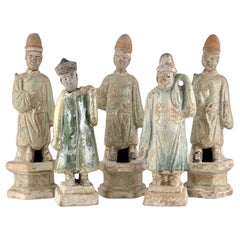
A stunning set of 5 graceful terracotta figurines from the Ming Dynasty '1368-1644' AD. These elegant attendants are standing on a yellow glazed lotus flower over a high hexagonal green plinth and wear fine robes in matching green and yellow glazes. The unglazed areas have pigmented colors in red, black and white. Each is carrying essential offerings for the royal family. The head is detachable as often seen on the larger figures from this period. Meticulously detailed facial expressions have been hand-painted.
Condition: Mint, finely preserved glaze and pigment, undamaged and no repairs.
Provenance: Ex. Danish Collection.
This set is guaranteed authentic and comes with a Certificate of Authenticity and TL Test from Laboratory Kotalla in Germany (The Oldest Thermoluminescence Testing Laboratory in the World).
Dimensions: Average 54 H cms
Burial figurines of graceful dancers, mystical beasts, and everyday objects reveal both how people in early China approached death and how they lived. Since people viewed the afterlife as an extension of worldly life, these figurines, called mingqi, sometimes referred as “spirit utensils” or “vessels of ghosts” disclose details of routine existence and provide insights into belief systems over a thousand-year period.
The Ming dynasty was the ruling dynasty of China – then known as the Empire of the Great Ming – for 276 years (1368–1644 AD). Founded by Chu Yuan-chang, the rebel leader that was successful in removing the mongols from the throne. Chinese control was re-asserted in China and eastern Asia. Literature became more important, schools were created, and the justice system was reformed. The Ming dynasty is described by some as "one of the greatest eras of orderly government and social stability in human history,” was the last imperial dynasty in China ruled by ethnic Han Chinese.
The practice of burying ceramic objects with the deceased went into decline from the 10th to the 14th Century AD. There was a revival in placing miniature representations of glazed terracotta objects such a furniture, food offerings, horses, miniature statues of male and female attendants and many other objects into the burial chamber alongside the departed.
Almost any object that was used in daily life during this period was re-created in miniature form, especially for burial purposes; although other objects which served a utilitarian function were also used in burial chambers.
Miniature representations of food, animal, houses, cooking vessels and many other objects that were enjoyed by the deceased when living were made as offerings to accompany them into the other world. It is thought that familiar objects would ease their way and give them comfort when entering into the after life.
- Dimensions:Height: 21.25 in (53.98 cm)Width: 5.5 in (13.97 cm)Depth: 5.5 in (13.97 cm)
- Style:Ming (Of the Period)
- Materials and Techniques:Terracotta,Glazed
- Place of Origin:
- Period:
- Date of Manufacture:1368-1644 AD
- Condition:Wear consistent with age and use.
- Seller Location:San Pedro Garza Garcia, MX
- Reference Number:Seller: CH-104-1081stDibs: LU3172311015521
About the Seller
3.7
Vetted Professional Seller
Every seller passes strict standards for authenticity and reliability
1stDibs seller since 2017
24 sales on 1stDibs
- ShippingRetrieving quote...Shipping from: Laredo, TX
- Return Policy
More From This Seller
View All6 Elegant Ming Dynasty Court Attendants in Glazed Terracotta, China 1368-1644 AD
Located in San Pedro Garza Garcia, Nuevo Leon
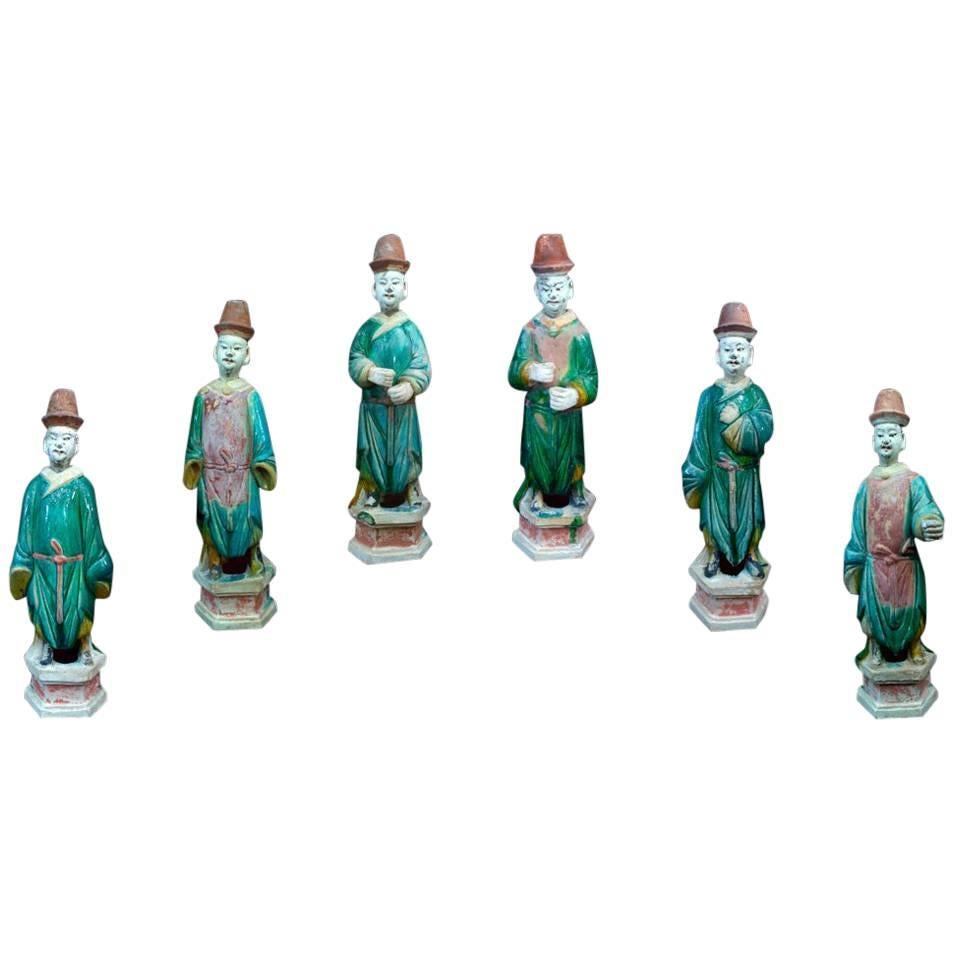
A fine set of a six court attendants as in the Forbidden City of Beijing, elegantly dressed in a Green & Red Daopao – a traditional men’s formal attire from the Ming Dynasty dated 1368-1643 A.D. – with glazed robes and Red Pigment remains in their hat and belts. They stand in an honorary posture atop a red plinth, some with orifices in their hands, where spirit objects were placed to comfort or satisfy the deceased. The heads are detachable, as often seen on the larger figures from this period.
They are accompanied by a Certificate of Authenticity, and Certificate of Expertise by Jean-Yves Nathan - a leading authority specialized in Far East Archaeology from the CEDEA (The European Confederation of Art Experts).
Burial figurines of graceful dancers, mystical beasts, and everyday objects reveal both how people in early China approached death and how they lived. Since people viewed the afterlife as an extension of worldly life, these figurines, called mingqi, sometimes referred as “spirit utensils” or “vessels of ghosts” disclose details of routine existence and provide insights into belief systems over a thousand-year period.
The Ming dynasty was the ruling dynasty of China – then known as the Empire of the Great Ming – for 276 years (1368–1644 AD). Founded by Chu Yuan-chang, the rebel leader that was successful in removing the mongols from the throne. Chinese control was re-asserted in China and eastern Asia. Literature became more important, schools were created, and the justice system was reformed. The Ming dynasty is described by some as "one of the greatest eras of orderly government and social stability in human history,” was the last imperial dynasty in China ruled by ethnic Han Chinese.
The practice of burying ceramic objects with the deceased went into decline from the 10th to the 14th Century AD. There was a revival in placing miniature representations of glazed terracotta objects such a furniture, food offerings, horses, miniature statues...
Category
Antique 15th Century and Earlier Chinese Ming Antiquities
Materials
Terracotta

Magnificent Court Attendants in Terracotta - Ming Dynasty, China 1368-1644 AD TL
Located in San Pedro Garza Garcia, Nuevo Leon
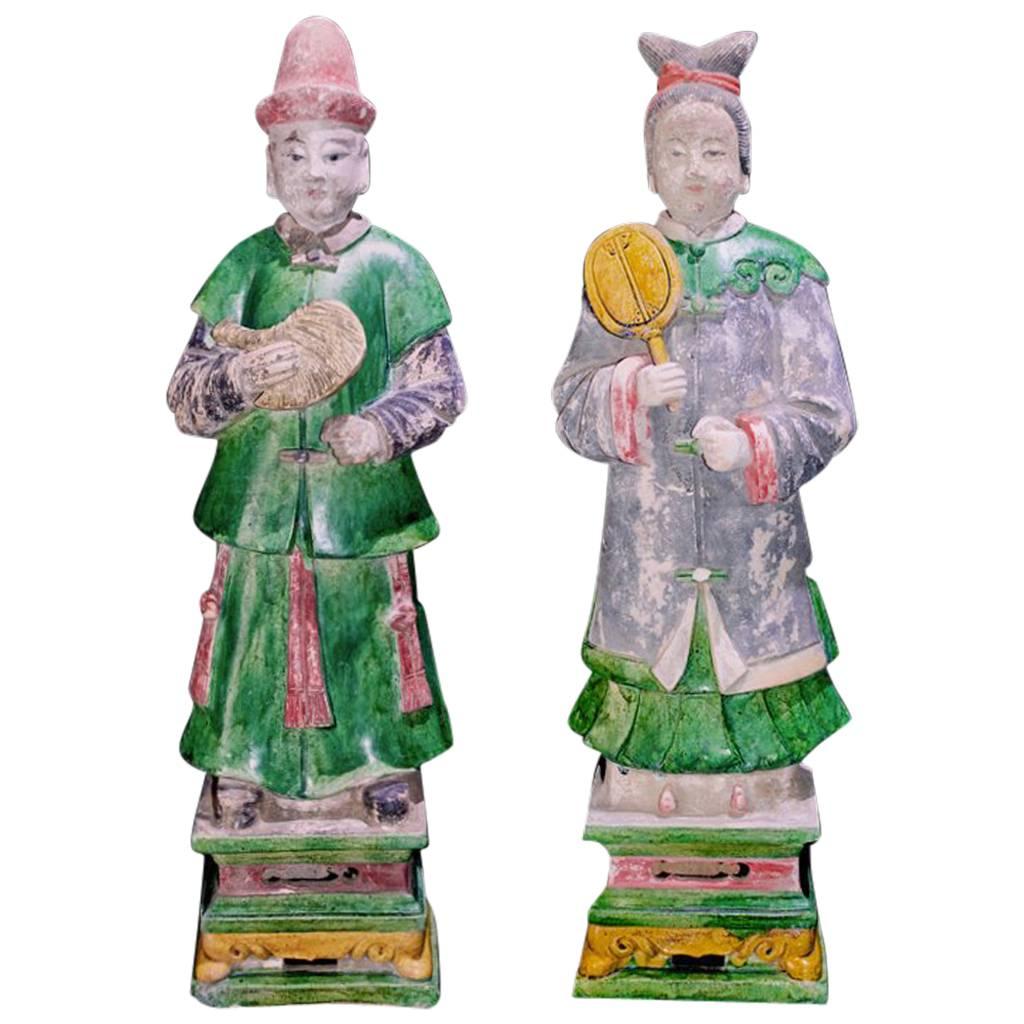
A magnificent pair of male and female courtiers from the Ming Dynasty (1368-1644 CE) in excellent condition. They are wearing traditional Daopao robes in green and black garments wit...
Category
Antique 15th Century and Earlier Chinese Ming Antiquities
Materials
Terracotta
Tang Dynasty Court Official in Sancai Glazed Robes, China
618-907
- TL Tested
Located in San Pedro Garza Garcia, Nuevo Leon
A Tang dynasty sancai (three color) glazed pottery model of a Taoist official, TL tested by Ralf Kotalla - worldwide oldest private laboratory specialized for genuine thermoluminesce...
Category
Antique 15th Century and Earlier Chinese Tang Antiquities
Materials
Terracotta
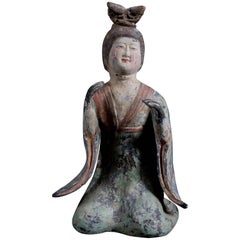
Tang Dynasty Expressive Imperial Court Singer - TL Tested
Located in San Pedro Garza Garcia, Nuevo Leon
Very expressive Imperial Court singer dressed in elegant ceremonial robes with long sleeves and hands in motion. Gray terracotta. Thermoluminescense Test by Ralph Kotalla Lab NE: 05K091003 (Worldwide oldest private laboratory specialized in TL testing...
Category
Antique 15th Century and Earlier Tang Antiquities
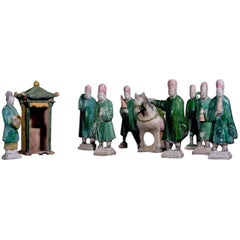
Impressive Terracotta Funerary Procession - Ming Dynasty, China
1368-1644 AD
Located in San Pedro Garza Garcia, Nuevo Leon
Impressive Funeral Ensamble of 10 Terracotta Glazed Figures in green and caramel colors depicting a votive procession with a palanquin, his four carriers, a horse, a stableman, two musicians, and an offering carrier.
This ensemble is accompanied by a Certificate of Authenticity, and Certificate of Expertise by Jean-Yves Nathan - Specialist in Asian Arts for the CEDEA (The European Confederation of Art Experts).
Burial figurines of graceful dancers, mystical beasts, and everyday objects reveal both how people in early China approached death and how they lived. Since people viewed the afterlife as an extension of worldly life, these figurines, called mingqi, sometimes referred as “spirit utensils” or “vessels of ghosts” disclose details of routine existence and provide insights into belief systems over a thousand-year period.
The Ming dynasty was the ruling dynasty of China – then known as the Empire of the Great Ming – for 276 years (1368–1644 AD). Founded by Chu Yuan-chang, the rebel leader that was successful in removing the mongols from the throne. Chinese control was re-asserted in China and eastern Asia. Literature became more important, schools were created, and the justice system was reformed. The Ming dynasty is described by some as "one of the greatest eras of orderly government and social stability in human history,” was the last imperial dynasty in China ruled by ethnic Han Chinese.
The practice of burying ceramic objects with the deceased went into decline from the 10th to the 14th Century AD. There was a revival in placing miniature representations of glazed terracotta objects such a furniture, food offerings, horses, miniature statues...
Category
Antique 15th Century and Earlier Chinese Ming Antiquities
Materials
Terracotta
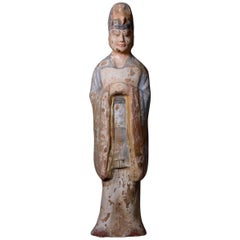
Elegant Terracotta Standing Court Dignitary, Tang Dynasty, EU Passport
Located in San Pedro Garza Garcia, Nuevo Leon
Elegant Standing Court Dignitary with joined hands in blue robes and a bird headdress. Polychrome Traces.
When China was unified again, first briefly ...
Category
Antique 15th Century and Earlier Chinese Tang Antiquities
Materials
Terracotta
You May Also Like
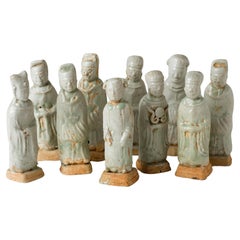
Ten Qingbai Figures of Courtiers, Five Dynasties-Song Dynasty
Located in seoul, KR
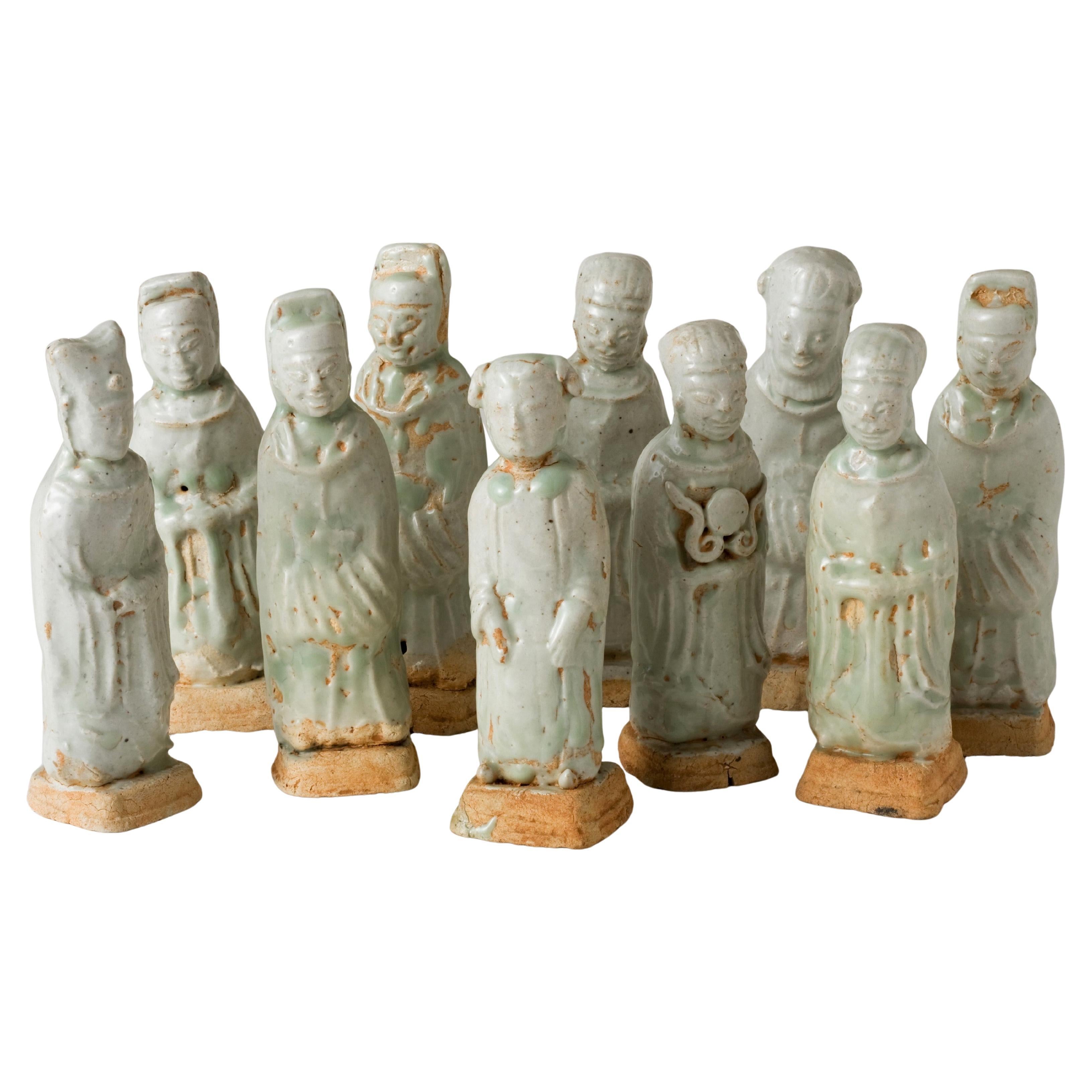
This work is a group of Qingbai (青白磁) porcelain figurines produced during the Five Dynasties to the Northern or Southern Song period (10th–13th century). A transparent glaze is appli...
Category
Antique 15th Century and Earlier East Asian Antiquities
Materials
Porcelain
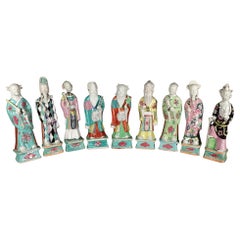
Chinese Export Porcelain Taoist Immortal Figures, Eight Immortals and the Leader
Located in Downingtown, PA
Large English Pearlware Oval Dish with Blue and White Chinoiserie and Shell Edge
This striking large oval dish, dating from circa 1790, is an excellent example of late 18th-century ...
Category
Antique Late 18th Century Chinese Chinese Export Ceramics
Materials
Porcelain
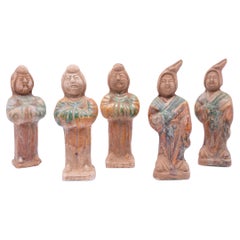
Set of Five Chinese Sancai Female Attendant Figures
Located in Chicago, IL
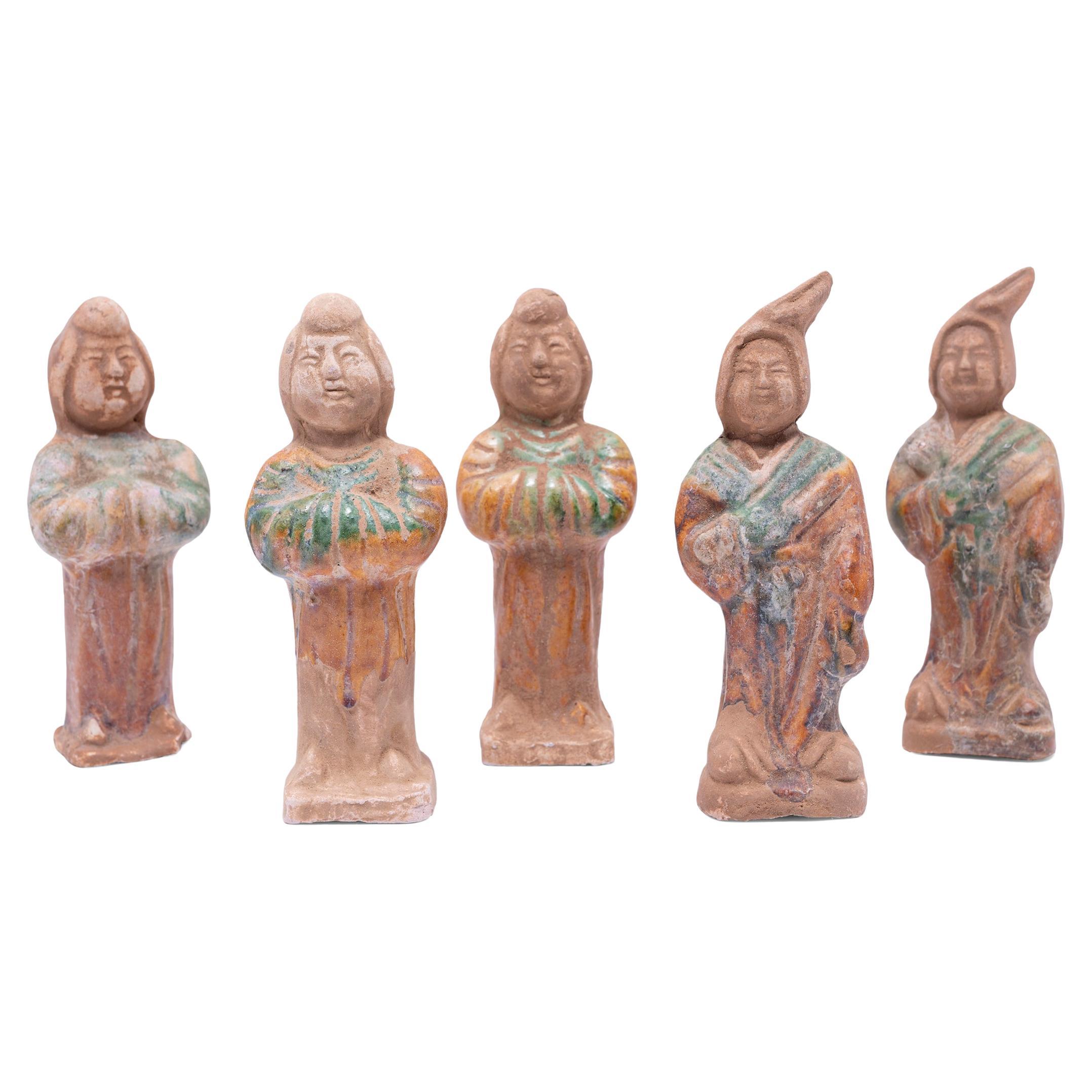
Molded of earthenware, this set of five petite sculptures are a type of centuries-old burial figurine known as míngqì. Such model figures were placed in tombs of individuals with high status to ensure a safe journey to the afterlife. Meant to depict the pleasures of daily life, common burial figures...
Category
Antique 15th Century and Earlier Chinese Antiquities
Materials
Ceramic
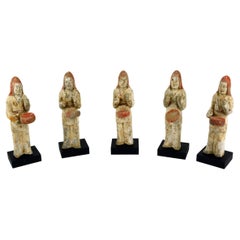
Set of Five Eastern Wei Musicians
Located in Santa Monica, CA
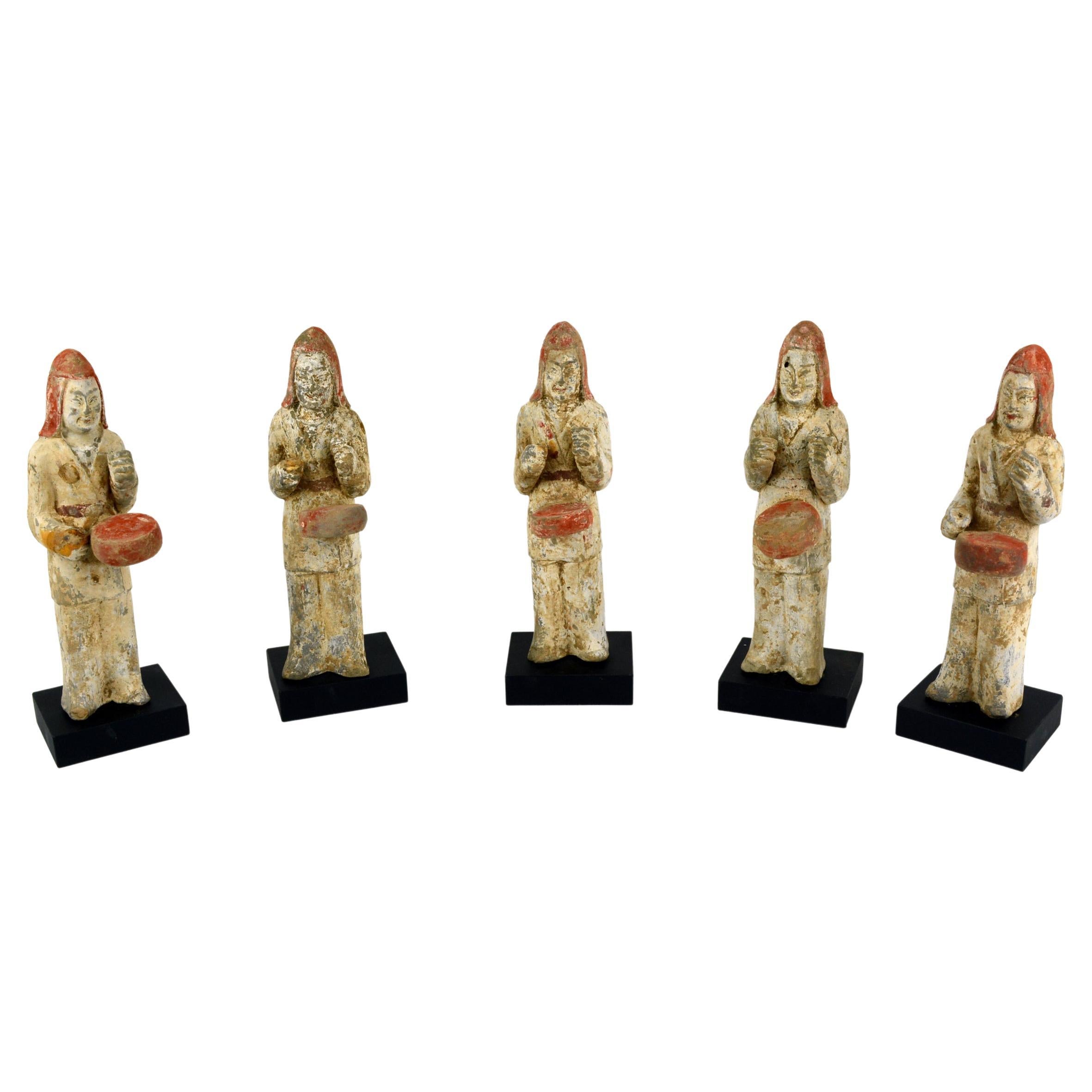
This is a set of 5 unglazed Eastern Wei Musicians holding drums. They are from Hebei and are made of red pottery. 534 - 539 AD. Each figure has a stand whi...
Category
Antique 15th Century and Earlier Chinese Sculptures and Carvings
Materials
Terracotta
$800 Sale Price / set
20% Off
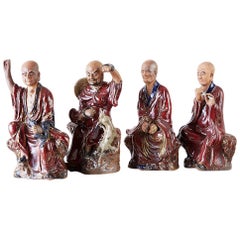
Set of Four Chinese Shiwan Pottery Immortal Deities
Located in Rio Vista, CA
Amazing set of four Chinese Shiwan pottery figures depicting immortal gods or dieties. Beautifully glazed and made on a large scale with fascinating fac...
Category
20th Century Chinese Qing Ceramics
Materials
Pottery
$1,500 Sale Price / set
40% Off
Five Green Glazed Pottery Attendant Figures, Ming Dynasty(1368-1644)
Located in seoul, KR
The three figurines in the back exhibit the typical form of attendants, wearing conical red hats and adopting poses where their right hands are either held in front of their chests o...
Category
Antique 15th Century and Earlier Hong Kong Ming Antiquities
Materials
Pottery