Items Similar to Ten Qingbai Figures of Courtiers, Five Dynasties-Song Dynasty

Want more images or videos?
Request additional images or videos from the seller
1 of 11
Ten Qingbai Figures of Courtiers, Five Dynasties-Song Dynasty
$18,900per set
£14,391.95per set
€16,571.95per set
CA$26,782.96per set
A$28,808.91per set
CHF 15,396.32per set
MX$339,574.95per set
NOK 194,111.49per set
SEK 177,454.74per set
DKK 123,820.43per set
About the Item
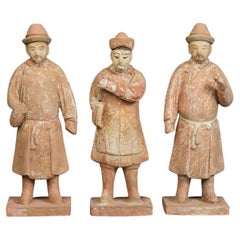
This work is a group of Qingbai (青白磁) porcelain figurines produced during the Five Dynasties to the Northern or Southern Song period (10th–13th century). A transparent glaze is applied over the white clay body, creating a subtle bluish tone. The figures, wearing official caps and long robes, form a set that symbolically represents attendants or civil officials serving the deceased in funerary rites. Traces of glaze flaking and oxidation on the bases indicate that these are excavated pieces. It is particularly rare for a complete group of Qingbai figurines to survive together, which greatly enhances their scholarly and exhibition value.
Although the facial expressions are simplified, the carving of the eyes, nose, and mouth is distinct, reflecting characteristic features of Qingbai figurines of the time. One figure is decorated with an unusual circular emblem on its chest. Each stands on a square pedestal, and despite their simplified modeling, when arranged as a group they create a solemn and ceremonial impression.
Period : Five Dynasties-Song Dynasty
Type : Figure
Medium : Qingbai ware
Size : 15cm(Height), 4~5cm(Diameter)
Condition : Good
Provenance : Acquired in late 1990s from Hongkong
Reference :
1) Sotheby's Hongkong 19 - 26 August 2021 - Two Qingbai figures of courtiers, Southern Song dynasty
(Price realised : 40,320 HKD / Type : Closely related)
2) Galerie Zacke 11th Sep, 2025 - The Collection of Sam and Myrna Myers Part 1 - A FINE COLLECTION OF EIGHTEEN QINGBAI FIGURES, SONG DYNASTY
(Price realised : €19,500 / Type : Closely related)
- Dimensions:Height: 5.91 in (15 cm)Diameter: 1.97 in (5 cm)
- Sold As:Set of 10
- Materials and Techniques:Porcelain,Glazed
- Place of Origin:
- Period:
- Date of Manufacture:Five Dynasties-Song Dynasty
- Condition:Minor fading.
- Seller Location:seoul, KR
- Reference Number:1stDibs: LU9577246807292
About the Seller
4.8
Vetted Professional Seller
Every seller passes strict standards for authenticity and reliability
Established in 1999
1stDibs seller since 2023
46 sales on 1stDibs
Typical response time: 1 hour
- ShippingRetrieving quote...Shipping from: seoul, Korea South
- Return Policy
More From This Seller
View AllFive Green Glazed Pottery Attendant Figures, Ming Dynasty(1368-1644)
Located in seoul, KR
The three figurines in the back exhibit the typical form of attendants, wearing conical red hats and adopting poses where their right hands are either held in front of their chests o...
Category
Antique 15th Century and Earlier Hong Kong Ming Antiquities
Materials
Pottery
Four Green Glazed Pottery Attendant Figures, Ming Dynasty(1368-1644)
Located in seoul, KR
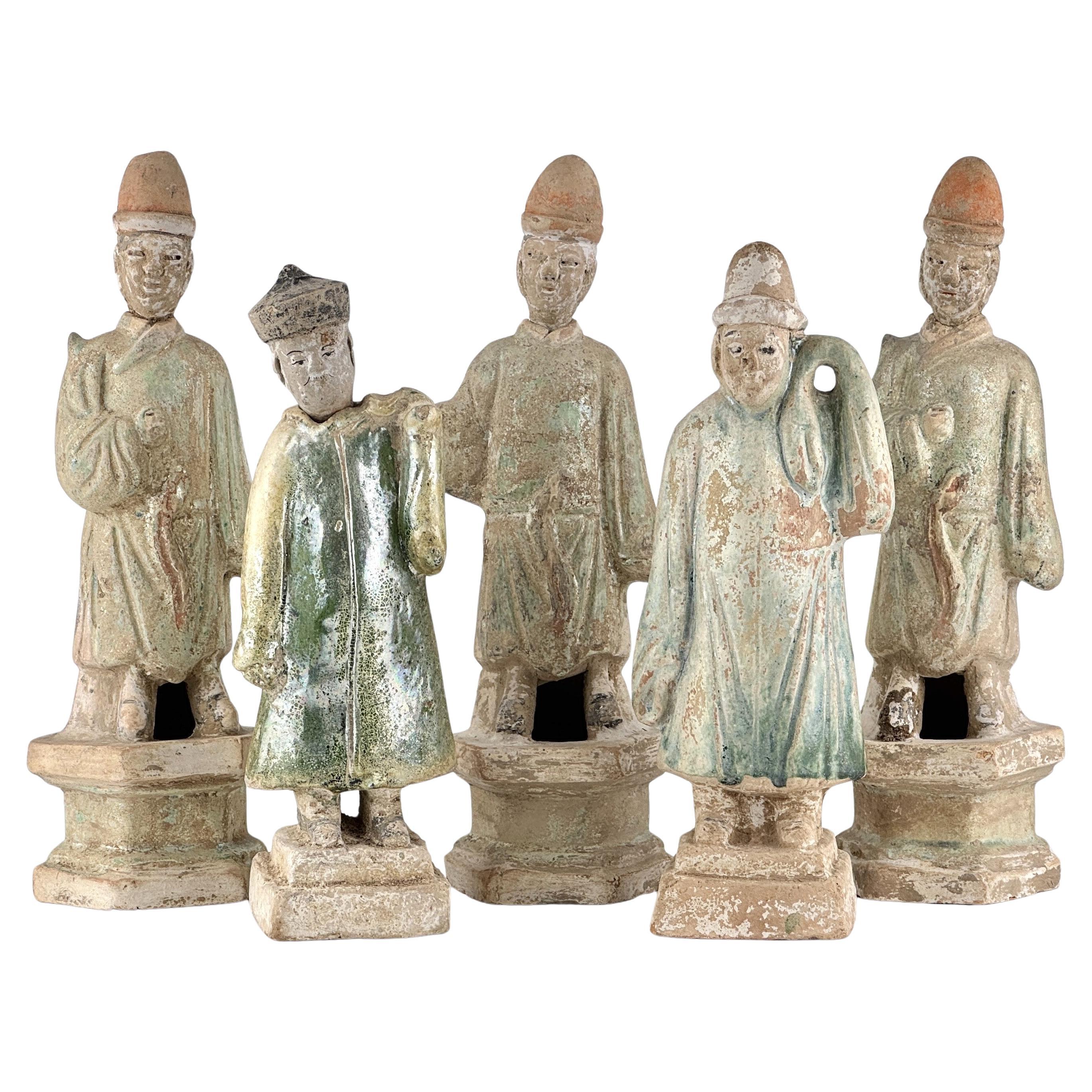
The first figure wears a short cap and takes a posture as if carrying something on the shoulder, possibly symbolizing a servant or a messenger.
The second figure wears a tall hat and...
Category
Antique 15th Century and Earlier Hong Kong Ming Antiquities
Materials
Pottery
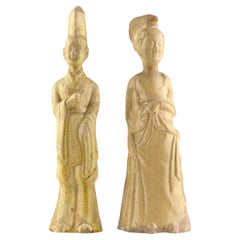
Two Straw-Glazed Pottery Figures of Court Male and Female
Located in seoul, KR
This pair of straw-glazed pottery figures represents a male and female court attendant, both elegantly attired in period fashion. The female figure wears a flowing robe with draped f...
Category
Antique 15th Century and Earlier East Asian Tang Antiquities
Materials
Pottery, Straw
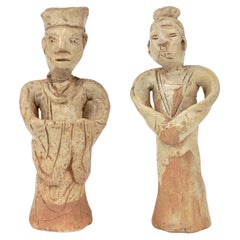
Two Incised Sandstone Mingqi
Located in seoul, KR
Figures from this era tend to be simpler and more utilitarian, reflecting the instability and regional diversity of the time. These pottery figures often unglazed or painted with bas...
Category
Antique 15th Century and Earlier Hong Kong Antiquities
Materials
Sandstone
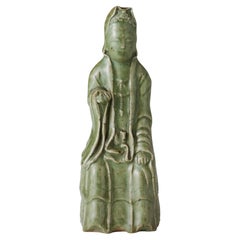
Longquan Celadon Figurine, Ming Dynasty (1368-1644)
Located in seoul, KR
This Longquan celadon figure is defined by a composed frontal presence: half-lidded eyes, a calm oval face, and a hooded mantle that reads as a single, clean silhouette. The robe is modeled with restrained but deep folds—glaze pools in the recesses into a richer olive tone, while the raised edges fire thinner and lighter, sharpening the relief and giving the carving real definition. The color shifts naturally from jade-like grey-green to mossy depths, with fine peppered speckling and subtle kiln character on the surface—an understated, materially convincing piece where form and glaze do the work.
Period: Ming Dynasty (1368-1644)
Region: Longquan, China
Medium: Stoneware - Celadon glazed, with a range from heavy grey to almost white porcelain-like material
Type: Sculpture
Height : 24.5 cm
Provenance : Acquired in 1999, Hongkong
* Ming Dynasty Longquan Celadon
Longquan celadon from the Ming Dynasty typically exhibits a more robust and heavier stoneware body compared to its Song Dynasty predecessors. The Ming era saw an evolution in celadon glaze, achieving a wider spectrum of green hues, from olive to bluish-greens. Ming celadons...
Category
Antique 15th Century and Earlier East Asian Ming Antiquities
Materials
Celadon
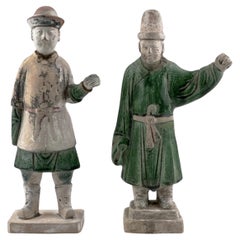
Two Figures of Attendants, Ming Period(1368-1644)
Located in seoul, KR
Statues of attendants crafted from terracotta, featuring glazes in green, Set on rectangular bases.
Period: Ming Dynasty
Medium: Glazed Pottery
Type: Figure
Condition : Excellent(It has soil on it, which is presumed to be evidence of excavation)
Provenance : Acquired in late 1990s from Hongkong
Reference :
1) Indianapolis Museum of Art - Dinastia ming, figure maschili, 1368-1644
(Type : Closely related)
2) V&A Museum - Accession number FE.295:1, 2-2005
(Type : Closely related)
3) Sotheby's 01 May 2007 - The Collection Of Paul Otto Taubert & Jewellery And Decorative Arts - Lot 233
(Price range : 5,000 - 7,000 AUD / Type : Closely related)
4) Asian Art Museum, San Francisco - Object number B60P1631 - Standing Man Tomb Figure
* Ming Dynasty Glazed Pottery Figures
Ming Dynasty glazed pottery figures are renowned for their bold color palette, intricate detailing, and lifelike forms, distinguishing them from earlier traditions. These figures, which depict officials, warriors, animals, and mythical creatures, are characterized by high-gloss lead-based glazes in green, amber, ochre, and sancai (three-color) combinations. The thickly applied glaze pools in recesses, creating depth and enhancing sculptural details. With dynamic postures, expressive facial features, and meticulously rendered drapery, these figures reflect the period’s advancement in ceramic craftsmanship, offering a greater sense of movement and realism compared to the rigid and stylized forms of earlier dynasties.
A defining characteristic of Ming glazed pottery is its elaborate surface detailing, often achieved through raised relief elements and contrasting glazes. Equestrian figures, for example, feature carefully sculpted saddles, harnesses, and decorative embellishments, while human figures are adorned with intricate robes and headdresses. The large scale of these tomb figures, often more imposing than those from previous periods, underscores the increasing importance of funerary art during the Ming era. Unlike later Qing Dynasty figures...
Category
Antique 15th Century and Earlier Hong Kong Ming Antiquities
Materials
Pottery
You May Also Like
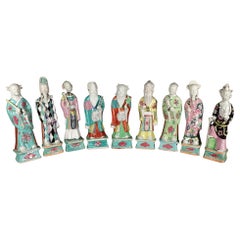
Chinese Export Porcelain Taoist Immortal Figures, Eight Immortals and the Leader
Located in Downingtown, PA
Large English Pearlware Oval Dish with Blue and White Chinoiserie and Shell Edge
This striking large oval dish, dating from circa 1790, is an excellent example of late 18th-century ...
Category
Antique Late 18th Century Chinese Chinese Export Ceramics
Materials
Porcelain
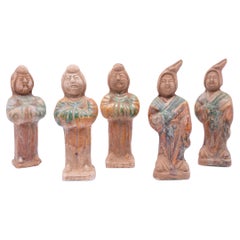
Set of Five Chinese Sancai Female Attendant Figures
Located in Chicago, IL
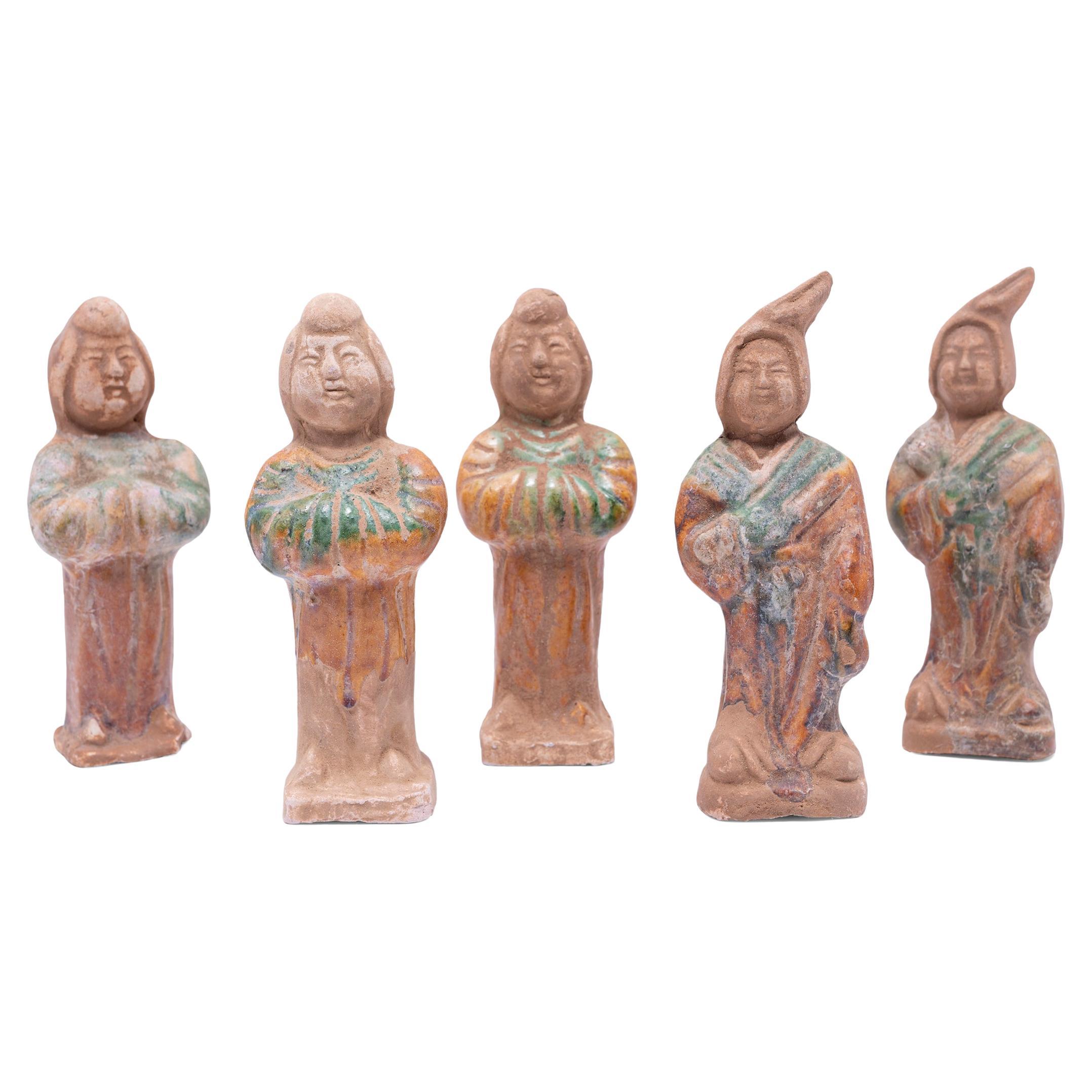
Molded of earthenware, this set of five petite sculptures are a type of centuries-old burial figurine known as míngqì. Such model figures were placed in tombs of individuals with high status to ensure a safe journey to the afterlife. Meant to depict the pleasures of daily life, common burial figures...
Category
Antique 15th Century and Earlier Chinese Antiquities
Materials
Ceramic
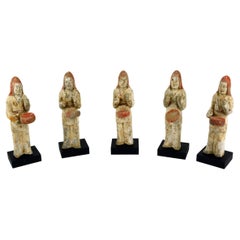
Set of Five Eastern Wei Musicians
Located in Santa Monica, CA
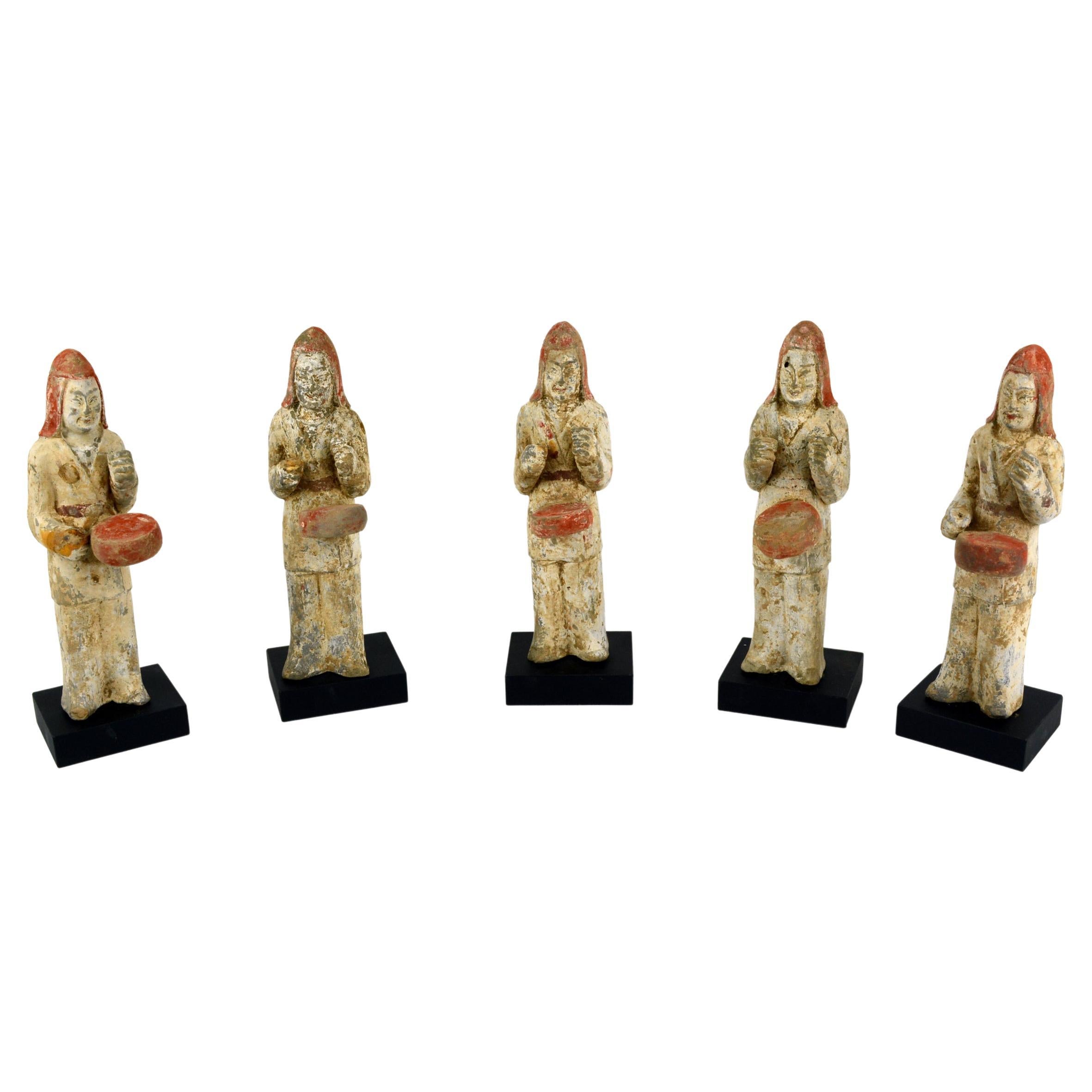
This is a set of 5 unglazed Eastern Wei Musicians holding drums. They are from Hebei and are made of red pottery. 534 - 539 AD. Each figure has a stand whi...
Category
Antique 15th Century and Earlier Chinese Sculptures and Carvings
Materials
Terracotta
$800 Sale Price / set
20% Off
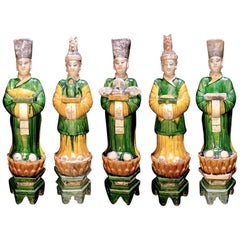
Superb Set of 5 Elegant Court Attendants, Ming Dynasty, 1368-1644 AD TL Tested
Located in San Pedro Garza Garcia, Nuevo Leon
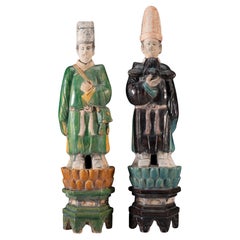
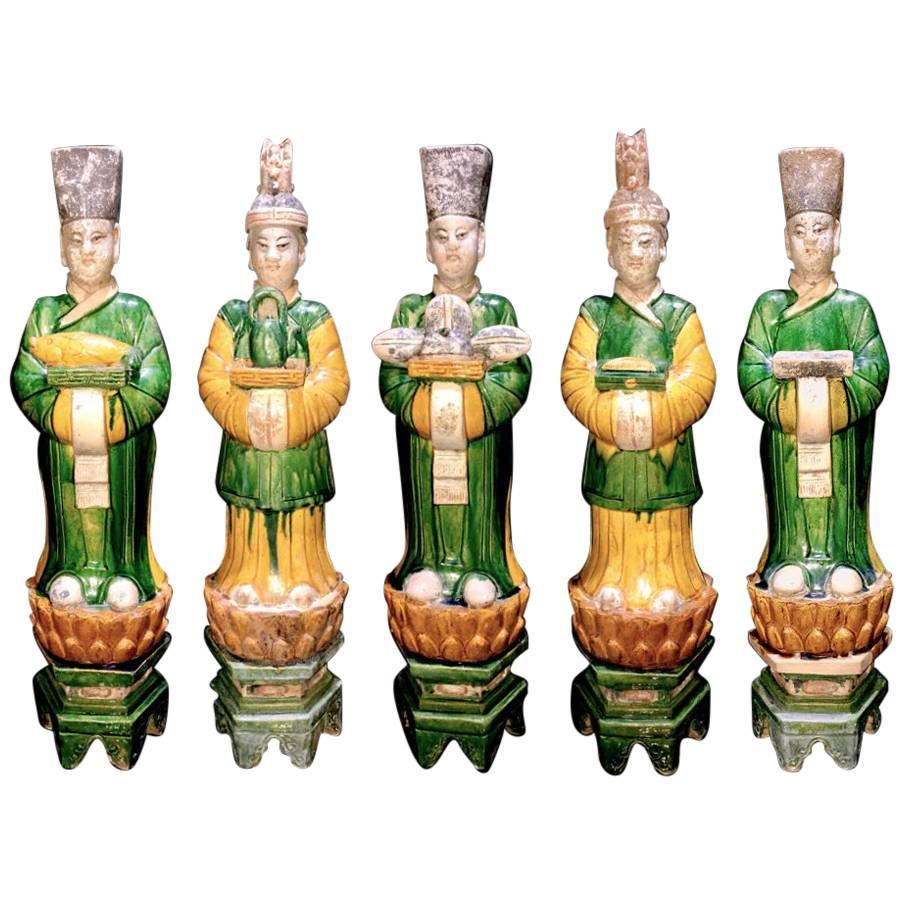
A stunning set of 5 graceful terracotta figurines from the Ming Dynasty '1368-1644' AD. These elegant attendants are standing on a yellow glazed lotus flower over a high hexagonal green plinth and wear fine robes in matching green and yellow glazes. The unglazed areas have pigmented colors in red, black and white. Each is carrying essential offerings for the royal family. The head is detachable as often seen on the larger figures from this period. Meticulously detailed facial expressions have been hand-painted.
Condition: Mint, finely preserved glaze and pigment, undamaged and no repairs.
Provenance: Ex. Danish Collection.
This set is guaranteed authentic and comes with a Certificate of Authenticity and TL Test from Laboratory Kotalla in Germany (The Oldest Thermoluminescence Testing Laboratory in the World).
Dimensions: Average 54 H cms
Burial figurines of graceful dancers, mystical beasts, and everyday objects reveal both how people in early China approached death and how they lived. Since people viewed the afterlife as an extension of worldly life, these figurines, called mingqi, sometimes referred as “spirit utensils” or “vessels of ghosts” disclose details of routine existence and provide insights into belief systems over a thousand-year period.
The Ming dynasty was the ruling dynasty of China – then known as the Empire of the Great Ming – for 276 years (1368–1644 AD). Founded by Chu Yuan-chang, the rebel leader that was successful in removing the mongols from the throne. Chinese control was re-asserted in China and eastern Asia. Literature became more important, schools were created, and the justice system was reformed. The Ming dynasty is described by some as "one of the greatest eras of orderly government and social stability in human history,” was the last imperial dynasty in China ruled by ethnic Han Chinese.
The practice of burying ceramic objects with the deceased went into decline from the 10th to the 14th Century AD. There was a revival in placing miniature representations of glazed terracotta objects such a furniture, food offerings, horses, miniature statues...
Category
Antique 15th Century and Earlier Chinese Ming Antiquities
Materials
Terracotta
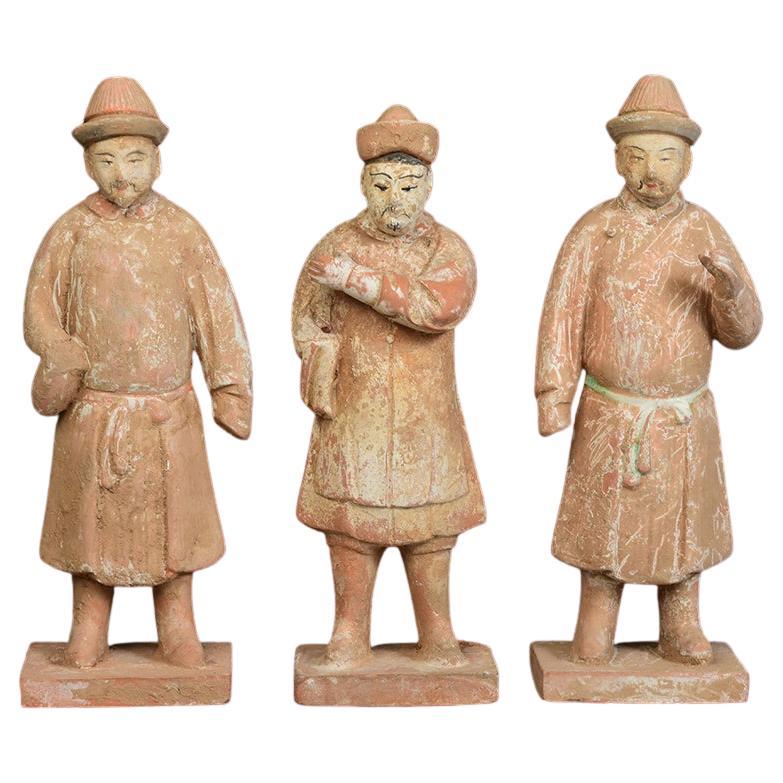
Ming Dynasty, A Set of Antique Chinese Pottery Court Man
Located in Sampantawong, TH
A set of Chinese pottery standing court man.
Age: China, Ming Dynasty, A.D. 1368 - 1644
Size: Height 25.9 - 27.4 C.M. / Width 8.9 - 9.1 C.M.
Condition: well-preserved old burial...
Category
Antique 15th Century and Earlier Chinese Antiquities
Materials
Pottery
$1,920 Sale Price / set
20% Off
Tall Ming Dynasty Sancai Glazed Dignitary Tomb Figures
Located in Dallas, TX
A Pair of Chinese Enameled Sancai Glazed Pottery Attendant Figures Representing Dignitaries.
Ming Dynasty Period. Circa 1600AD
Dimensions; 23 x 5.5 x 5.25 inches (58.4 x 13.7 x 13.3 ...
Category
Antique 16th Century Chinese Ming Figurative Sculptures
Materials
Pottery