Want more images or videos?
Request additional images or videos from the seller
1 of 10
Terracotta Han Dynasty Farm with Pig, China, 200 BC
$9,375List Price
About the Item
- Dimensions:Height: 6.75 in (17.15 cm)Width: 13.25 in (33.66 cm)Depth: 10 in (25.4 cm)
- Style:Han (Of the Period)
- Materials and Techniques:
- Place of Origin:
- Period:
- Date of Manufacture:206 BC - 220 AD
- Condition:Wear consistent with age and use.
- Seller Location:San Pedro Garza Garcia, MX
- Reference Number:Seller: CH-0991stDibs: LU317239610841
About the Seller
3.7
Vetted Professional Seller
Every seller passes strict standards for authenticity and reliability
1stDibs seller since 2017
24 sales on 1stDibs
Authenticity Guarantee
In the unlikely event there’s an issue with an item’s authenticity, contact us within 1 year for a full refund. DetailsMoney-Back Guarantee
If your item is not as described, is damaged in transit, or does not arrive, contact us within 7 days for a full refund. Details24-Hour Cancellation
You have a 24-hour grace period in which to reconsider your purchase, with no questions asked.Vetted Professional Sellers
Our world-class sellers must adhere to strict standards for service and quality, maintaining the integrity of our listings.Price-Match Guarantee
If you find that a seller listed the same item for a lower price elsewhere, we’ll match it.Trusted Global Delivery
Our best-in-class carrier network provides specialized shipping options worldwide, including custom delivery.You May Also Like
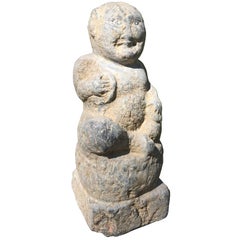
China Ancient Stone Entertainer, Han Dynasty 200 AD
Located in South Burlington, VT
China an ancient limestone figure of an Entertainer replete with hands holding tambourines and a top a drum, -for the afterlife- , Han dynasty 206 BC...
Category
Antique 15th Century and Earlier Chinese Han Sculptures and Carvings
Materials
Limestone
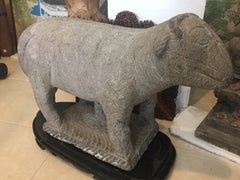
Ancient China Monumental Stone Ram Han Dynasty, 206BC-220AD
Located in South Burlington, VT
China, a large votive model of a stone ram, Han dynasty (206BC-220AD)
Dimensions: 45cm, 18 inches high and 65cm, 26 inches length and 25cm, 10 inches wi...
Category
Antique 15th Century and Earlier Chinese Han Sculptures and Carvings
Materials
Limestone
$17,600 Sale Price
54% Off
H 18 in W 26 in D 10 in
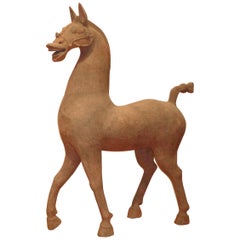
Massive Chinese Han Dynasty Sichuan Terracotta Pottery Horse, Oxford TL Tested
Located in Greenwich, CT
A massive Chinese Han dynasty Sichuan terracotta pottery figure of a horse
Han dynasty (206 BC-220 AD)
Powerfully modelled in a pose of alert attention, its strong neck and head pois...
Category
Antique 15th Century and Earlier Chinese Han Sculptures and Carvings
Materials
Terracotta
$58,000 Sale Price
31% Off
H 50 in W 36 in D 15 in
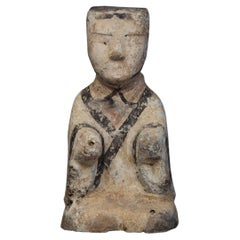
Han Dynasty, Antique Chinese Pottery Attendant Figurine
Located in Sampantawong, TH
Chinese pottery attendant figurine.
Age: China, Han Dynasty, 206 B.C. - A.D. 220
Size: Height 22 C.M. / Width 12 C.M.
Condition: Well-preserved old burial condition overall.
100% s...
Category
Antique 15th Century and Earlier Chinese Antiquities
Materials
Pottery
$1,800 Sale Price
20% Off
H 8.67 in W 4.73 in D 3.19 in
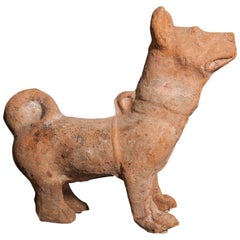
Chinese Han Dynasty Terracotta Fighting Dog
Located in Hudson, NY
Chinese Han Dynasty Terracotta Fighting Dog. During the Han Dynasty (206 BC to 220 AD), terracotta dogs were placed at a grave site in order to protec...
Category
Antique 15th Century and Earlier Chinese Han Ceramics
Materials
Terracotta
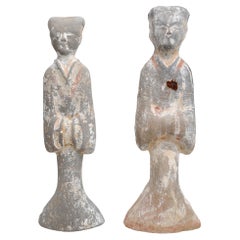
Antique Terracotta Chinese Figures Statues
Located in Alessandria, Piemonte
Antique terracotta figures Han style from my private collection: collected about 35 years ago and never exibited to the public.
One is very ancient, the other one is more recent. The prices are different, but an expert can understand the value. A certificate Oxford test would be needed: I don't have it, so I'm accepting offers: I want to close my activities and I have a beautiful Chinese collection, see the other ones published under my name enrica pasino.
Category
Antique 15th Century and Earlier Chinese Han Antiquities
Materials
Terracotta
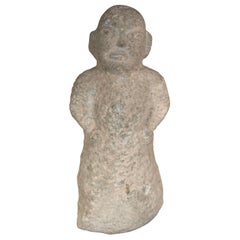
Chinese Ancient Stone Male Figure, 206 BC-220 AD
Located in South Burlington, VT
China, a rare hand carved stone male figure from the Han dynasty (206 BCE-220 CE).
Dimensions: 16 inches tall on its custom stand and and 6 inches wide
Condition: old patina wi...
Category
Antique 15th Century and Earlier Chinese Han Sculptures and Carvings
Materials
Stone
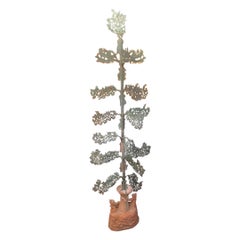
Important Chinese Ancient Bronze Money Tree, 25BC-220AD
Located in South Burlington, VT
China, Ancient Bronze “Money Tree” Yaoqian Shu with original pottery base, Han dynasty (25 BCE – 220 CE)
Dimensions: 155cm, 62 inches high
A sculpted terracotta pottery base in the form of a tortoise with attendants and inserted with five individual bronze pole segments with twenty four individual hanging bronze open work money “branches” attached in tiers, four per tier and topped with a figure of a bronze phoenix as apex most bearing varying degrees of malachite and azurite encrustation from ancient burial.
Important Description Details:
Pottery "tortoise" base: 14.5" high and 11" wide
Bronze sections:
7pcs pole bronze sections approximately 8" length each
1pc top "phoenix" bronze section approximately 7" high and 6" wide
20 pcs long bronze hanging wings approximately 10" long and 5" wide each
4 pcs short bronze hanging wings (near top) approximately 7" long and 4" wide each
Total 32 pcs with ancient green and blue azurite patina.
Catalog reference: Schneible Fine arts catalog - 35 Years Collecting Treasures- Number 11p. 28 (see photos)
Provenance: Provenance: Private family collection formerly exhibited “Asia Week” New York City, Fuller Building, Zabriskie Gallery, 2008.
History of money trees:
In the late Han Dynasty tombs...
Category
Antique 15th Century and Earlier Chinese Han Antiquities
Materials
Bronze
$100,000 Sale Price
33% Off
H 62 in W 26 in D 26 in
Northern Wei Dynasty Terracotta Horses, TL Tested,
386 AD-535 AD
Located in Miami, FL
A massive pottery pair of horses standing on all fours and striding with its right hoof forward. Extended snout ends in parted lips showing teeth beneath in a braying attitude. Low relief bridle on face and well defined eyes. Raised mane down back of the neck
A fantastic example of the Wei dynasty horses.
Large, exquisite walking Ferghana horses with great attention paid to anatomical detail were the choice of the wealthy. The horse was second only in importance to the dragon. It was supposed to possess magical powers which the early Chinese were eager to explore. It would be the horse that would carry the deceased to the next life and it would be the amount of horses that an individual owned that would guarantee his ongoing status in the hereafter.
Thermoluminescence certificate from Madrid Labs included.
In southern China, people turned to Daoism, and mingqi, as well as above-ground sculptures, became ever more infused with animal iconography and energized with dynamic lines.
The north of China was eventually united by nomadic Tuoba invaders who founded the Northern Wei dynasty...
Category
Antique 15th Century and Earlier Chinese Han Antiquities
Materials
Terracotta
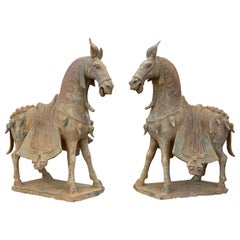
$185,000 / set
H 23.42 in W 11.81 in D 20.47 in
Chinese Han Dynasty Standing Cowled Lady, Gray Pottery, 202 BC - 9 AD, China
Located in Austin, TX
A tall and dramatic Chinese high fired gray pottery model of a standing lady wearing a hood and a flared skirt, Western Han Dynasty (202 BCE - 9 CE), Shaanxi, China.
This striking ...
Category
Antique 15th Century and Earlier Chinese Han Antiquities
Materials
Earthenware, Pottery
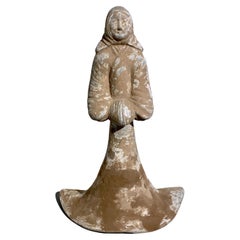
$29,500
H 19.25 in W 14 in D 8 in
More From This Seller
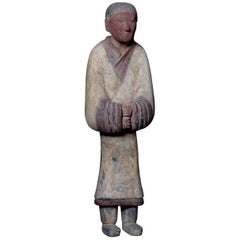
View AllElegant Han Dynasty Terracotta Warrior - China
206 BC - 220 AD
Located in San Pedro Garza Garcia, Nuevo Leon
Impressive terracotta warrior representing a banner bearer gripping a wooden staff with his hands (dematerialized through the ages); his gaze is ser...
Category
Antique 15th Century and Earlier Chinese Han Antiquities
Materials
Terracotta
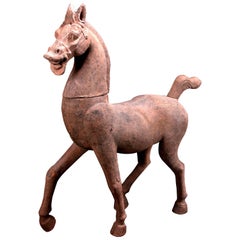
Monumental Han Dynasty Terracotta Horse - TL Tested - China,
206 BC–220 AD
Located in San Pedro Garza Garcia, Nuevo Leon
A massive pottery horse with separately made head and tail, standing on all fours and striding with its right hoof forward. Extended snout ends in parted lips showing teeth beneath i...
Category
Antique 15th Century and Earlier Chinese Han Antiquities
Materials
Terracotta
Eastern Han Dynasty Terracotta Barn Workshop, China
206BC - 220AD
Ex-Museum
Located in San Pedro Garza Garcia, Nuevo Leon
Slab pottery constructed barn workshop having a peaked roof – open walled form with a mechanical pounder and a large round covered storage container. Light blue-green mottled glazed surface with some iridescence patina to the glaze.
Condition: Intact, excellent condition, an unusual example.
Provenance: The Living Torah Museum, Brooklyn; ex. Sands of Time, 2002.
Sculptural effigies of domesticated animals were often interred in the tombs of nobility and elite members of the social hierarchy. Models like this one were made to represent everything from simple goat or pig pens to the most elaborate towers and palaces. Because very few ancient Chinese buildings have survived intact, these models, along with descriptions from ancient texts, give a good representation of what the buildings might have looked like.
This fantastic piece is accompanied by a Certificate of Authenticity.
Burial figurines of graceful dancers, mystical beasts, and everyday objects reveal both how people in early China approached death and how they lived. Since people viewed the afterlife as an extension of worldly life, these figurines, called mingqi, sometimes referred as “spirit utensils” or “vessels of ghosts” disclose details of routine existence and provide insights into belief systems over a thousand-year period. For the first time in Chinese history, we have images of rural and daily life during the Han in the form of contemporary...
Category
Antique 15th Century and Earlier Chinese Han Antiquities
Materials
Terracotta
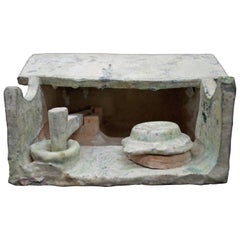
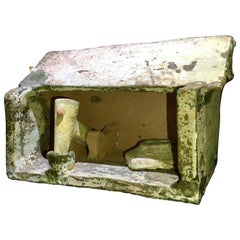
Eastern Han Dynasty Terracotta Model of a Paper Mill , China
206BC - 220AD
Located in San Pedro Garza Garcia, Nuevo Leon
Slab pottery constructed Model of a Paper Mill, in Green and Cream Color Glazed Terracotta having a peaked roof – open walled form with a mechanical pounder and a large round storage container. Light blue-green mottled glazed surface with some iridescence patina to the glaze. The Iridescence is a refraction of the layers on the glass that produces multicolor hues & metallic luster, and only develops after one thousand years of being buried in the ground. An unquestionable mark of antiquity, impossible to falsify.
Han Dynasty, dated 206 B.C-220 A.D.
Condition: Excellent, wear commensurate with age, an unusual example.
This fantastic piece is accompanied by a Certificate of Authenticity.
Sculptural effigies of domesticated animals were often interred in the tombs of nobility and elite members of the social hierarchy. Models like this one were made to represent everything from simple goat or pig pens to the most elaborate towers and palaces. Because very few ancient Chinese buildings have survived intact, these models, along with descriptions from ancient texts, give a good representation of what the buildings might have looked like.
Burial figurines of graceful dancers, mystical beasts, and everyday objects reveal both how people in early China approached death and how they lived. Since people viewed the afterlife as an extension of worldly life, these figurines, called mingqi, sometimes referred as “spirit utensils” or “vessels of ghosts” disclose details of routine existence and provide insights into belief systems over a thousand-year period. For the first time in Chinese history, we have images of rural and daily life during the Han in the form of contemporary records...
Category
Antique 15th Century and Earlier Chinese Han Antiquities
Materials
Terracotta
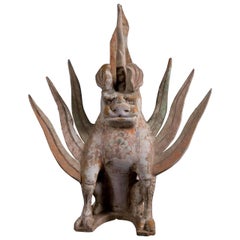
Chimera (Pixiu) Terracotta Mythological Being - Tang Dynasty, China
618-907 AD
Located in San Pedro Garza Garcia, Nuevo Leon
Magnificent Mythological Being "Chimera" with Human Face and Flaming Rays Halo. Orange Terracotta with Traces of Stucco and Painting.
This creature is commonly known as Pixiu. Fierc...
Category
Antique 15th Century and Earlier Chinese Tang Antiquities
Materials
Terracotta
6 Elegant Ming Dynasty Court Attendants in Glazed Terracotta, China 1368-1644 AD
Located in San Pedro Garza Garcia, Nuevo Leon
A fine set of a six court attendants as in the Forbidden City of Beijing, elegantly dressed in a Green & Red Daopao – a traditional men’s formal attire from the Ming Dynasty dated 1368-1643 A.D. – with glazed robes and Red Pigment remains in their hat and belts. They stand in an honorary posture atop a red plinth, some with orifices in their hands, where spirit objects were placed to comfort or satisfy the deceased. The heads are detachable, as often seen on the larger figures from this period.
They are accompanied by a Certificate of Authenticity, and Certificate of Expertise by Jean-Yves Nathan - a leading authority specialized in Far East Archaeology from the CEDEA (The European Confederation of Art Experts).
Burial figurines of graceful dancers, mystical beasts, and everyday objects reveal both how people in early China approached death and how they lived. Since people viewed the afterlife as an extension of worldly life, these figurines, called mingqi, sometimes referred as “spirit utensils” or “vessels of ghosts” disclose details of routine existence and provide insights into belief systems over a thousand-year period.
The Ming dynasty was the ruling dynasty of China – then known as the Empire of the Great Ming – for 276 years (1368–1644 AD). Founded by Chu Yuan-chang, the rebel leader that was successful in removing the mongols from the throne. Chinese control was re-asserted in China and eastern Asia. Literature became more important, schools were created, and the justice system was reformed. The Ming dynasty is described by some as "one of the greatest eras of orderly government and social stability in human history,” was the last imperial dynasty in China ruled by ethnic Han Chinese.
The practice of burying ceramic objects with the deceased went into decline from the 10th to the 14th Century AD. There was a revival in placing miniature representations of glazed terracotta objects such a furniture, food offerings, horses, miniature statues...
Category
Antique 15th Century and Earlier Chinese Ming Antiquities
Materials
Terracotta

Still Thinking About These?
All Recently ViewedMore Ways To Browse
Chinese Pig
Terracotta Pig
Han Dynasty Pig
Ming Horse And Rider
Schist Buddha
Tibetan Prayer Wheel
Vung Tau Vase
Walking Buddha
Wei Horse
Afghanistan Buddha
Ancient Luristan Bronze
Antique Wood Foot Warmer
Bronze Age Sword
Chinese Dagger
Chinese Dragon Pottery Jar
Chinese Porcelain 8 Immortals
Gandharan Schist
Gerald Hong