Items Similar to Tray table incorporating Chines Porcelain pattern, British East India Company
Video Loading
Want more images or videos?
Request additional images or videos from the seller
1 of 22
Tray table incorporating Chines Porcelain pattern, British East India Company
$4,729.13
$5,911.4120% Off
£3,532.17
£4,415.2120% Off
€3,952
€4,94020% Off
CA$6,515.24
CA$8,144.0520% Off
A$7,100.47
A$8,875.5920% Off
CHF 3,760
CHF 4,700.0120% Off
MX$85,284.10
MX$106,605.1320% Off
NOK 47,602.48
NOK 59,503.1020% Off
SEK 43,765.80
SEK 54,707.2520% Off
DKK 30,107.40
DKK 37,634.2520% Off
About the Item
Technical data
Materials: Porcelain tray, wooden legs
Period: Qing Dynasty
Country of origin: China
Good condition for its age and use, with some flaws in the wooden structure
Overall dimensions: 70 x 95 x 80 cm
Porcelain dimensions: 70 x 58 cm
Exquisite Fitzhugh pattern porcelain plate or tray, inlaid in a cabinet that highlights its oval profile and raised on four slightly curved square legs.
The term "Fitzhugh" refers to a type of Chinese export porcelain produced primarily between 1780 and 1840, featuring blue and white designs. It originated with three members of two generations of the Fitzhugh family. Members of this family held important positions as ship captains and even as directors in the British East India Company. Within this company, high-ranking officials were allowed to engage in private trade. Between 1704 and the 1790s, porcelain pieces bearing this pattern were shipped to England.
The design usually includes a central medallion, although it is occasionally replaced by a coat of arms or monogram. The medallion is surrounded by four groupings of flowers representing the four seasons—peony for spring; lotus for summer; chrysanthemum for autumn; and prunus for winter—and symbols that typically represent the four virtues of the Chinese scholar: music, painting, logical thinking, and calligraphy. The design is framed with a decorative border that may be a lattice and spearhead pattern, sometimes known by the term "Nanking," or a more elaborate border featuring butterflies, honeycomb shapes, and floral ornamentation. The definition of the Fitzhugh porcelain group has evolved throughout history in both Europe and America.
In England, authentic Fitzhugh porcelain refers to porcelain that replicates designs associated with William Fitzhugh, a purser in Canton who shipped porcelain to England in 1778, 1789, and 1791. This design consists of a central medallion, four floral clusters, and a trellis-diaper lattice border with a spearhead.
A unique opportunity to acquire a museum-worthy piece!
The British East India Company (1599-1874)
The British East India Company was founded in 1599 by English entrepreneurs to trade with the East Indies, breaking the Dutch monopoly on the spice trade. In 1600, it received a Royal Charter from Queen Elizabeth I granting it a trade monopoly with that region for 15 years. Over time, it transformed into a joint-stock company dominated by wealthy merchants and aristocrats, and although the British government held no shares, it did exercise indirect control. The company eventually handled half of the world's trade, especially in goods such as cotton, tea, silk, opium, and salt.
In 1702, it merged with a rival company and became a major commercial and territorial power in India, with its own army and government functions. Its effective rule in India began in 1757 and ended in 1858, when, following a rebellion, the British Crown took direct control through the Government of India Act. Finally, due to financial problems and political changes, the company was dissolved in 1874, and its functions were absorbed by the British government.
It was primarily established to trade with the East Indies, especially India and China. It traded in products such as spices, tea, silk, cotton, salt, opium, and more. It came to control certain territories in India, acting as a kind of private government, with its own armies, laws, and administrative system, which allowed it to play a key role in the expansion of the British Empire in Asia.
Although its primary function was not artistic, the company had a significant impact on art, mainly indirectly, as it sponsored works of art, encouraged the fusion of European techniques and Eastern styles, and fostered the export of art, textiles, and exotic objects that influenced European fashion and design of the time.
A museum piece!!!
Technical data
Materials: Porcelain tray, wooden legs
Period: Qing Dynasty
Country of origin: China
Good condition for its age and use, with some flaws in the wooden structure
Overall dimensions: 70 x 95 x 80 cm
Porcelain dimensions: 70 x 58 cm
- Creator:Margaret Fitzhugh Browne (Artist)
- Dimensions:Height: 27.56 in (70 cm)Width: 37.41 in (95 cm)Depth: 31.5 in (80 cm)
- Style:Chinese Export (Of the Period)
- Materials and Techniques:
- Place of Origin:
- Period:1790-1799
- Date of Manufacture:1798
- Condition:Wear consistent with age and use.
- Seller Location:Valladolid, ES
- Reference Number:1stDibs: LU2943345387002
About the Seller
4.7
Platinum Seller
Premium sellers with a 4.7+ rating and 24-hour response times
Established in 1990
1stDibs seller since 2017
169 sales on 1stDibs
Typical response time: <1 hour
- ShippingRetrieving quote...Shipping from: VALLADOLID, Spain
- Return Policy
More From This Seller
View AllHuanghuali Demilune Table, Yueyazhuo.
By Chow
s Oriental Furniture Co.
Located in Valladolid, ES
Beautiful honey color with archaistic carvings of dragons across the apron
Amazing A Chinese crescent-shaped table known as a YUEYAZHUO, made of Huanghuali wood, a hardwood highly va...
Category
Antique 1790s French Chinese Export Antiquities
Materials
Wood
Arita Pair of blue and white porcelain serving platters
By Arita
Located in Valladolid, ES
Exquisite pair of large Arita porcelain or Imari porcelain plates or trays. Arita porcelain or Imari porcelain is the Western name for porcelain products made in the town of Arita. I...
Category
Vintage 1920s Japanese Japonisme Porcelain
Materials
Porcelain
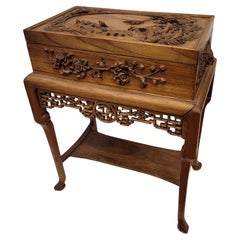
Qing Dynasty Indochina side chest, , carved wood on legs
By Paquement Vietnam
Located in Valladolid, ES
Gorgeous Late Qing Dynasty Indochina side chest, early 20th century, with carved apron and sides.
Combining utility and aesthetics, this late Qing Dynasty side chest effortlessly str...
Category
Antique Early 1900s Vietnamese Qing Cabinets
Materials
Wood
$1,474 Sale Price
20% Off
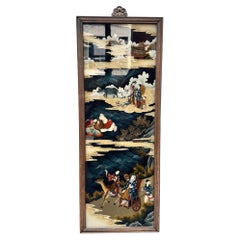
Chinese Qing Reverse-Painted Mirror from the Qing Dynasty
By Chow
s Oriental Furniture Co.
Located in Valladolid, ES
Stunning reverse-painted mirror from the 19th-century Qing Dynasty, depicting different scenes in a vertical narrative.
Different scenes with symbolic and auspicious elements frame r...
Category
Antique 1870s Chinese Qing Paintings and Screens
Materials
Crystal
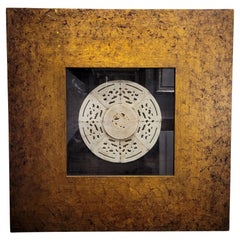
Asian carved and framed green Bi Disc, jadeite
By Chow
s Oriental Furniture Co.
Located in Valladolid, ES
Exquisite carved and framed jadeite bi disc (璧). A bi disc is a circular (flat) jade disc with a hole in the center, used in ancient China. In this case, it is composed of eight piec...
Category
Vintage 1940s Chinese Chinese Export Antiquities
Materials
Crystal, Jade
$1,598 Sale Price
20% Off
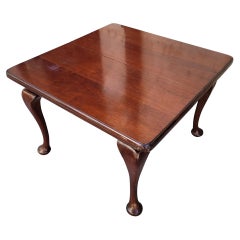
American Hand-Cranked Dining Table by J
JW Meeks, New York
By J.
J.W. Meeks
Located in Valladolid, ES
Outstanding mahogany dining table with a crank extension, from the prestigious American manufacturer J. & J.M. MEEKS of New York.
Early 19th-century George II style table.
Square pro...
Category
Antique 1820s American George II Dining Room Tables
Materials
Iron
You May Also Like
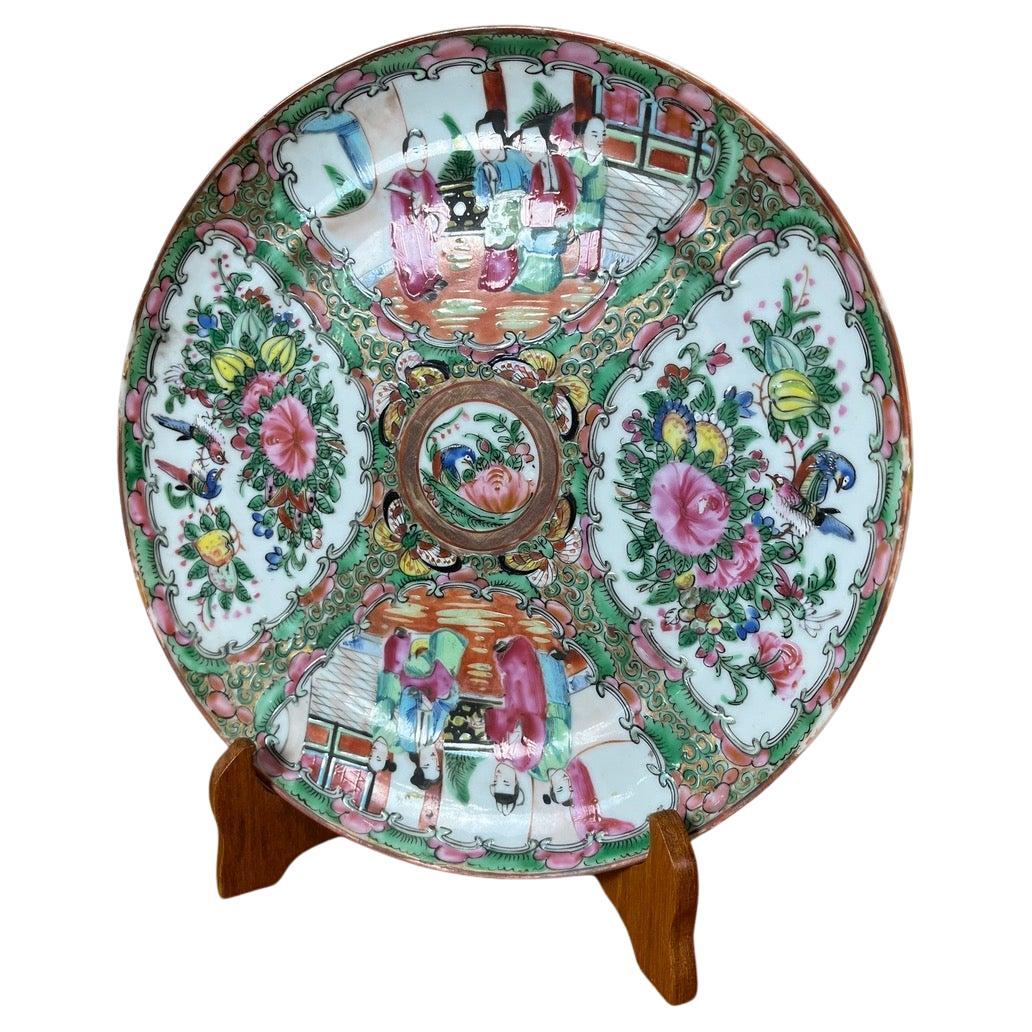
19th century Chinese Canton Porcelain Plate, 1890s
Located in LEGNY, FR
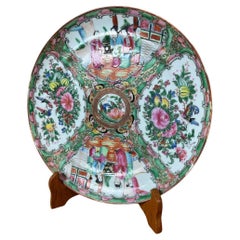
Beautiful decorative plate in Chinese porcelain, Rose Canton style, dating from the 19th century. It is richly adorned with traditional Chinese scenes, flowers, exotic birds, and fig...
Category
Antique Late 19th Century Chinese Platters and Serveware
Materials
Porcelain
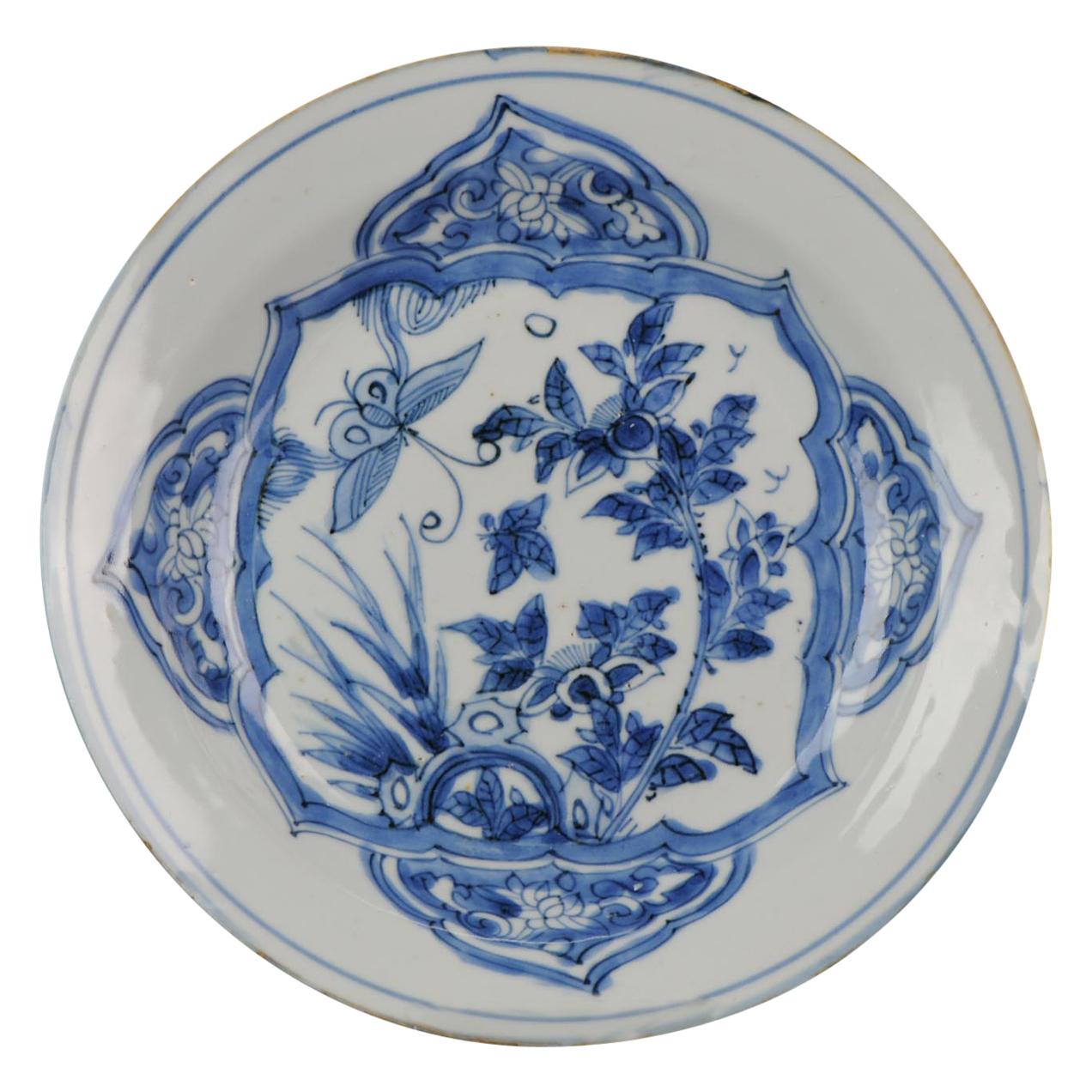
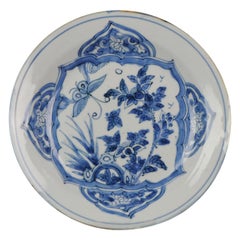
Antique Chinese Porcelain Ming Wanli Chinese Plate Rare Decoration
Located in Amsterdam, Noord Holland
A very nicely decorated plate with a rare size
14-11-18-1-1
Condition
Overall condition a (Good) lots of rimfrits as to be expected from this type of kraak porcelain. ...
Category
Antique 16th Century Chinese Ming Ceramics
Materials
Porcelain
$1,723 Sale Price
20% Off
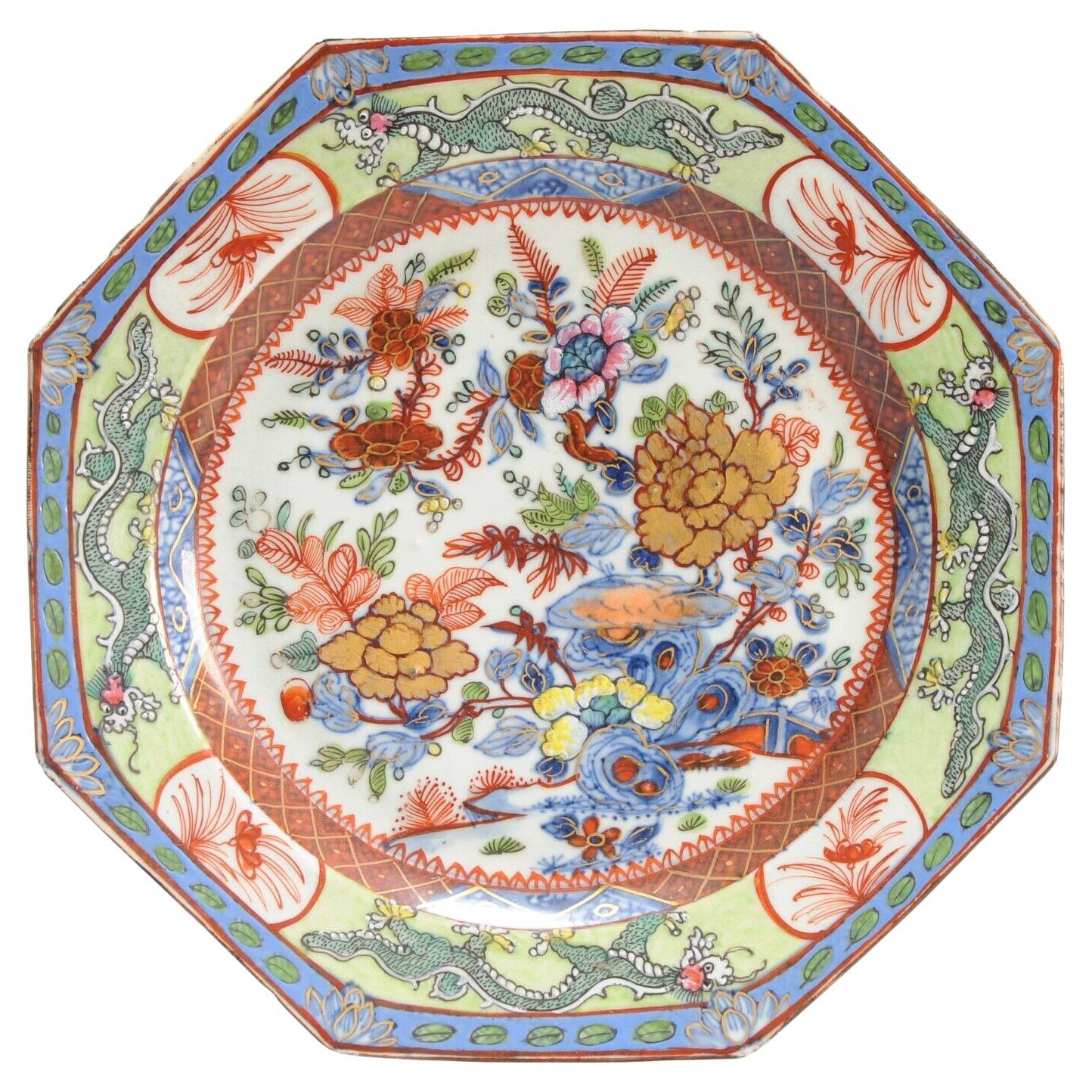
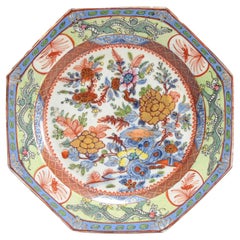
Antique 18th Century Chinese Porcelain Plate with Regency Style Overdecorating
Located in Amsterdam, Noord Holland
A very nicely made piece of 18th century porcelain decorated with a beautiful scene. Underglaze blue and overglaze other enamels done later in Europe.
We have also added a picture of how a similar original Blue and white dish would have looked like.
This is an example of British overdecoration.Provenance:Provenance: Doyle Sep 27, 2024 11:00 Boston Collects, Lot 1083 Six Chinese Porcelain Table Items
18th and 19th centuries Estate / Collection: Property of a Jamestown, Rhode Island Collector
Often seen as ugly and black sheep of the porcelain world. British 1810-1820 Clobbered wares deserve better as they are historically very interesting. So lets call them George the IV or Regency Taste redecorated porcelain. And leave the clobbered behind us as it does no justice to what they are at all. Its not that because we live in a time were these super funky colours are out of taste that we should hate on these pieces.
A short history!
During the early 19th century, the Prince Regent (later King George IV) played a key role in cultivating a taste for the exotic Orient among the British elite, influencing interior design during the Regency era. His lavish projects, such as the Royal Pavilion in Brighton, epitomized this fascination. The Pavilion, with its blend of Indian, Chinese, and Gothic elements, became a symbol of the Prince’s extravagant taste. The interiors featured Chinese wallpaper, Indian textiles, and oriental furniture, reflecting the era’s growing interest in Chinoiserie and other oriental-inspired designs.
This trend extended to the decorative arts, where clobbered Chinese...
Category
Antique 18th Century Chinese Regency Decorative Dishes and Vide-Poche
Materials
Porcelain
$1,614 Sale Price
20% Off
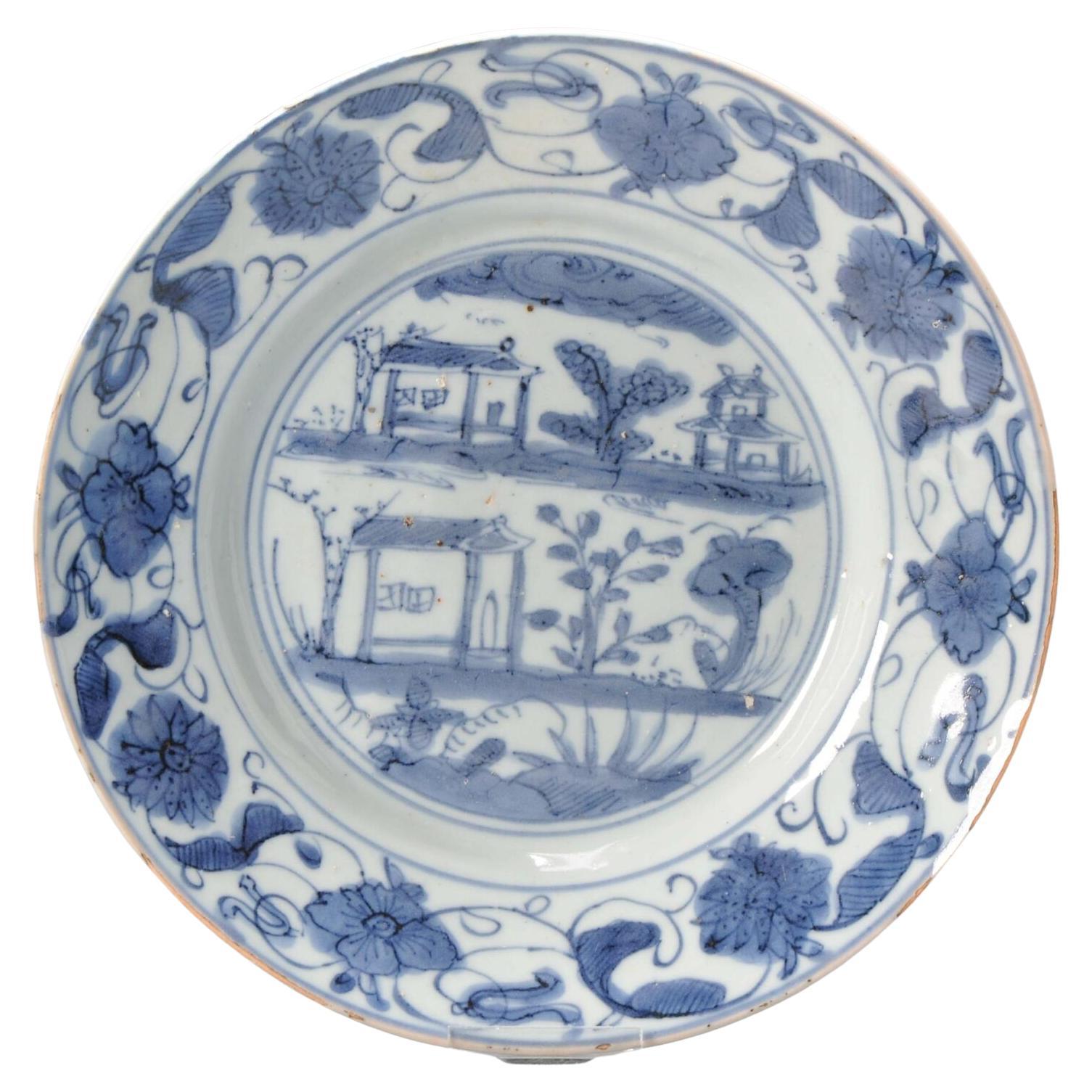
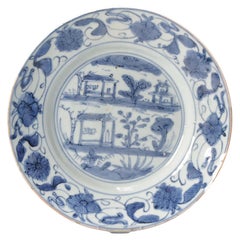
Antique Ming/Transitional Chinese Porcelain Plate, European House, Rare Piece
Located in Amsterdam, Noord Holland
I really found something intriguing. This plate decorated with what are often seen as European houses. Something seen on Transitional Kraak plates and bowls. I borrowed a few picture...
Category
Antique 16th Century Chinese Ming Ceramics
Materials
Porcelain
$4,784 Sale Price
20% Off
A Chinese Wucai Plate, 19th Century
Located in ARMADALE, VIC
A Chinese Wucai Plate, 19th Century
Home decor, Interior design and collectibles.
Provenance: Private Victoria Collection.
Dimension:
Height: 4cm
Width: 20cm
Depth: 14cm.
Category
Antique 19th Century Chinese Qing Ceramics
Materials
Porcelain
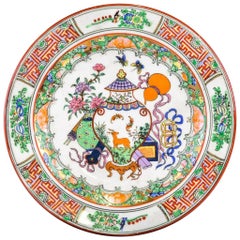
Vintage Chinese Porcelain Plate, Made in China, Early 20th Century
Located in Roma, IT
This porcelain plate is an original decorative object realized in China by Chinese manufacture, at the beginning of the 20th century.
It is decorated with geometric and floral or...
Category
Early 20th Century Chinese Antiquities
Materials
Ceramic
More Ways To Browse
East India Company
British Empire
British India
Table With Coat Of Arms
Blue And White China English China
Antique Exercise
English Plates Blue And White
India Tray
Blue And White Canton China
English Blue And White China
Antique Chinese Tray
Antique Porcelain Tray
Ship Captain
British Royal Coat Of Arms
English Blue And White Porcelain Plates
Chinese Export Porcelain Patterns
Antique India Exports
British Antique China