Items Similar to Antique 18th C Collection of Chinese Porcelain Tea Jars China Kangxi Yongzheng
Want more images or videos?
Request additional images or videos from the seller
1 of 12
Antique 18th C Collection of Chinese Porcelain Tea Jars China Kangxi Yongzheng
$8,613.91
$10,767.3920% Off
£6,433.70
£8,042.1220% Off
€7,198.40
€8,99820% Off
CA$11,867.24
CA$14,834.0520% Off
A$12,933.20
A$16,166.5020% Off
CHF 6,848.69
CHF 8,560.8620% Off
MX$155,341.36
MX$194,176.7120% Off
NOK 86,705.90
NOK 108,382.3720% Off
SEK 79,717.55
SEK 99,646.9320% Off
DKK 54,839.35
DKK 68,549.1920% Off
About the Item
Description
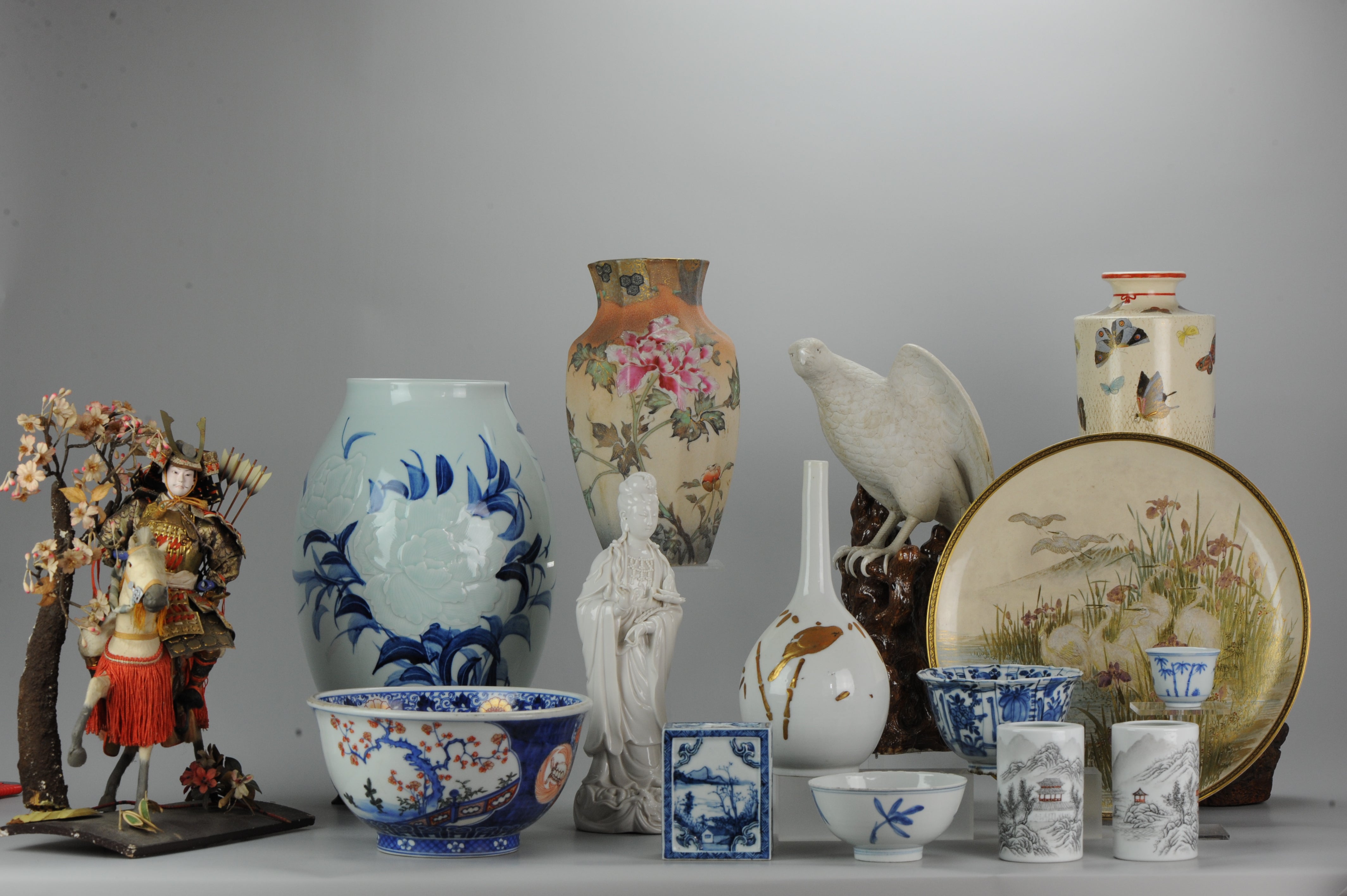
Collected by us personally in the last 8 years. Great example of the variety of porcelain made during the 18th century. All from the 18th century ranging from Kangxi to Qianlong. Fencai, to Imari, Batavian and Blue and White. European market and SE Asian market designs.
condition report;
smallest blue white jar
both lid and jar with some restorations and chips. Size; 58 x 60mm D x H
slightly bigger blue and white jar
1 chip to inside rim and 1 abraded chip to rim. Size; 64 x 70mm D x H
grape blue and white jar
lid restored and chip, jar with small chip. Size; 103 x 130mm D x H
largest blue and white jar
1 fleebite to inside rim only. Size; 118 x 140mm D x H
Large famille rose jar
lid with 2 chips and 2 lines. Jar no damages, just some usage signs/ware. Size; 185 x 240mm D x H
Phoenix rose jar
Lid with line and chip. Jar with restored part. Size; 148 x 160mm D x H
Famille rose jar with crysanthemum knot
lid restored. jar perfect. Size; 102 x 130mm D x H
Famille rose jar with delicate floral scene; 2 chips to inside rim. Size; 88 x 100mm D x H
Polychrome rose jar with ribbens
1 fritspot to handle, 1 chip to rim lid, 1 chip to rim jar and 1 line. Size; 98x120mm DXH
Blue white batavian jar
1 line to jar. Size; 108x140mm DXH
Rose batavian jar
1 chip to inside rim lid, 3 chips to jar rim and 1 line. Size; 85 x 95mm D x H
Green jar without lid
2 frits to inside rim. Size; 112 x 85mm D x H
Smallest imari jar
1 small frit to jar rim. Size; 83 x 90mm D x H
Largest imari jar
perfect. Size; 110 x 140mm D x H
Polychrome rose jar
some frits to inside rim lid. 1 frit to rim jar. Size; 110 x 120mm D x H
Condition
Overall condition; See description.
Period
17th century
18th century Qing (1661 - 1912).
- Dimensions:Height: 0.04 in (1 mm)Diameter: 0.04 in (1 mm)
- Style:Qing (Of the Period)
- Materials and Techniques:
- Place of Origin:
- Period:
- Date of Manufacture:18th Century
- Condition:Wear consistent with age and use. See description.
- Seller Location:Amsterdam, NL
- Reference Number:1stDibs: LU4863228089532
About the Seller
5.0
Gold Seller
Premium sellers maintaining a 4.3+ rating and 24-hour response times
Established in 2015
1stDibs seller since 2019
287 sales on 1stDibs
Typical response time: 4 hours
- ShippingRetrieving quote...Shipping from: Amsterdam, Netherlands
- Return Policy
More From This Seller
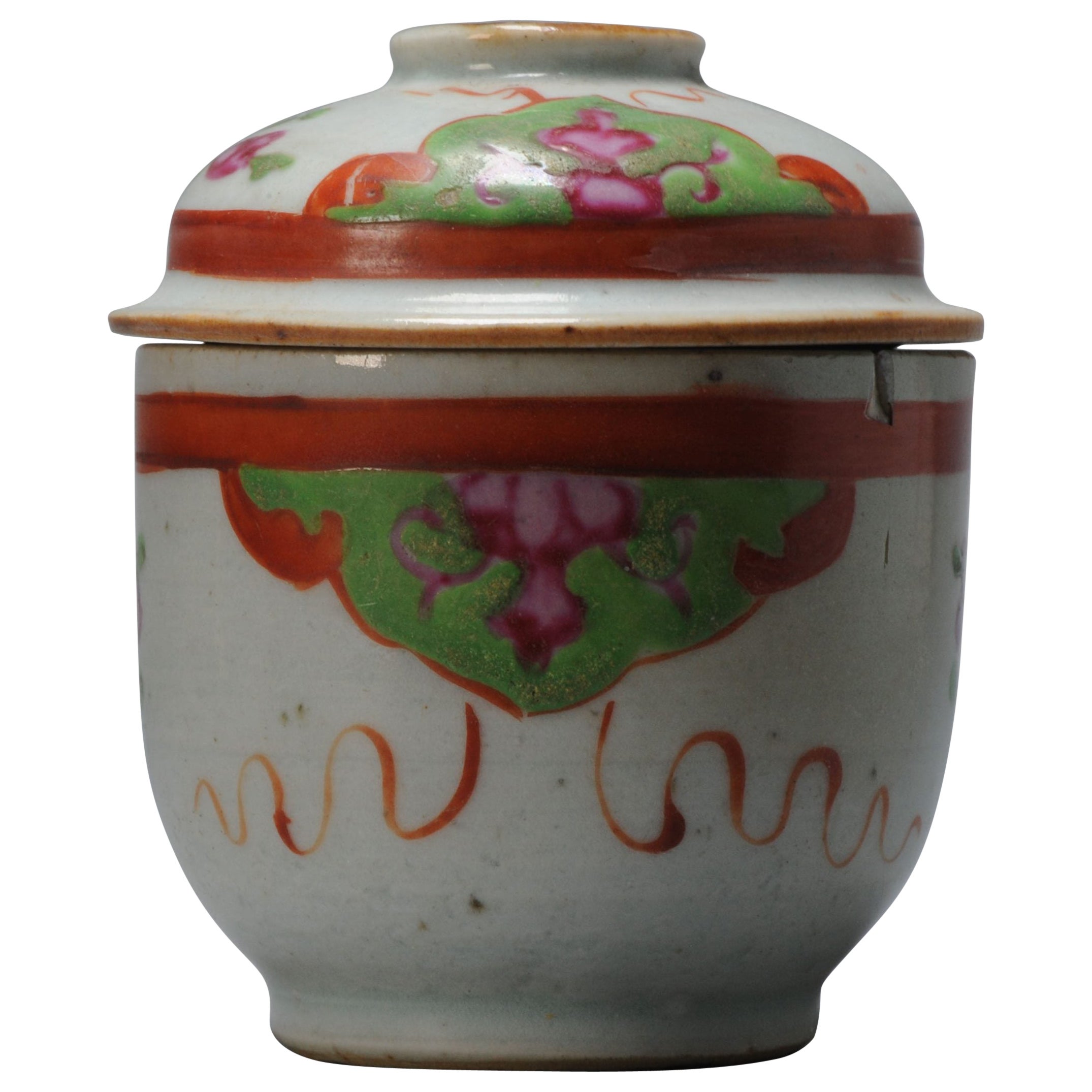
View AllAntique SE Asian Chinese Porcelain Tea Jar China, 18th Century
Located in Amsterdam, Noord Holland
Great quality painting and color in the typical style of these pieces.
Additional information:
Material: Porcelain & Pottery
Type: Jars
Region of Origin: China
Emperor: Qianlong (17...
Category
Antique 18th Century Chinese Jars
Materials
Porcelain
$476 Sale Price
20% Off
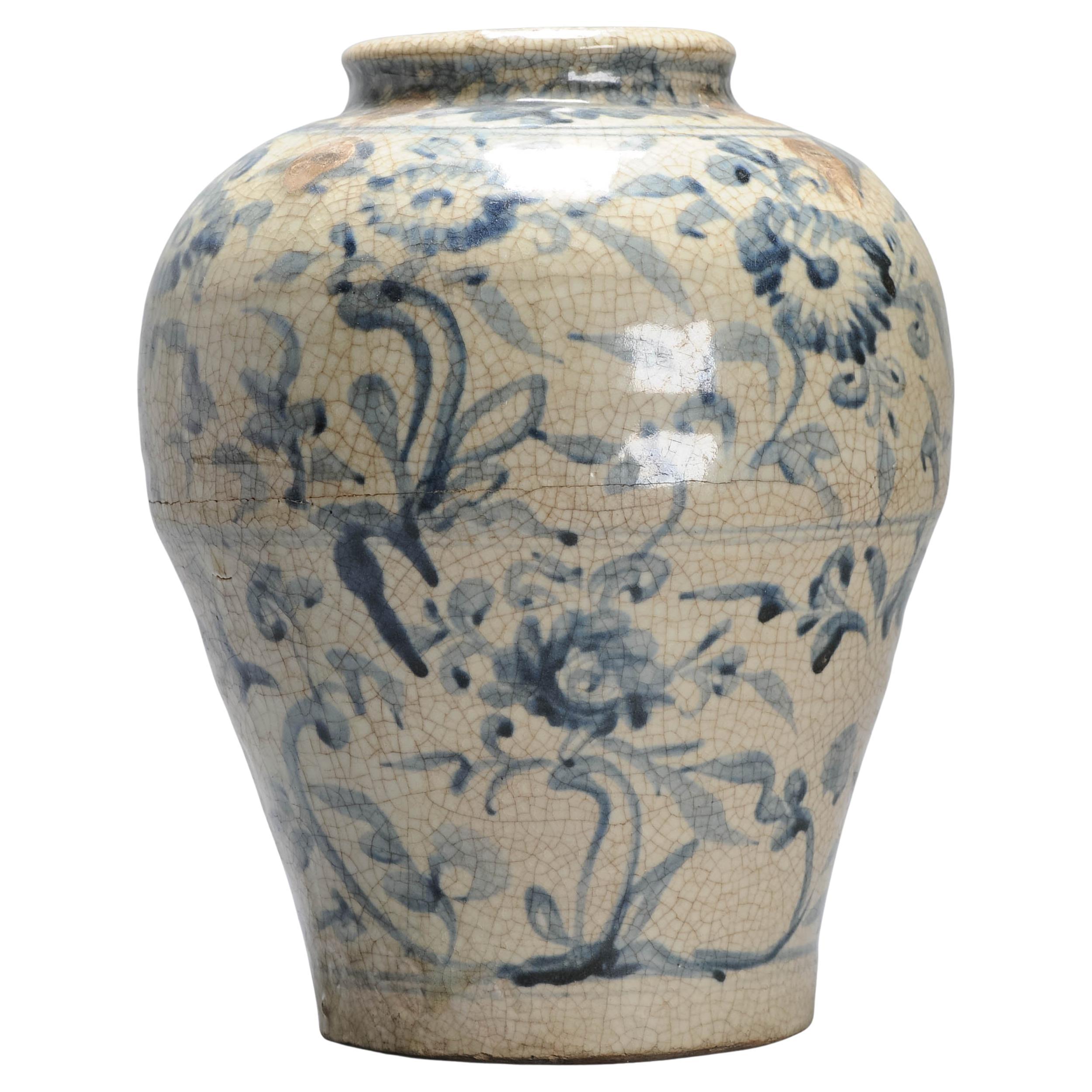
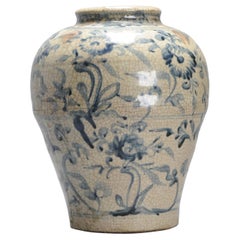
Antique Ming Wanli 1560-1590 Chinese Porcelain Swatow/Zhangzhou Jar
Located in Amsterdam, Noord Holland
Description
A very nicely decorated large dish from around 1600-1630.
Heavy and larger sized piece with beautiful decoration in red and green
Storage box included.
Similar piece in ...
Category
Antique 17th Century Chinese Decorative Dishes and Vide-Poche
Materials
Porcelain
$2,726 Sale Price
20% Off
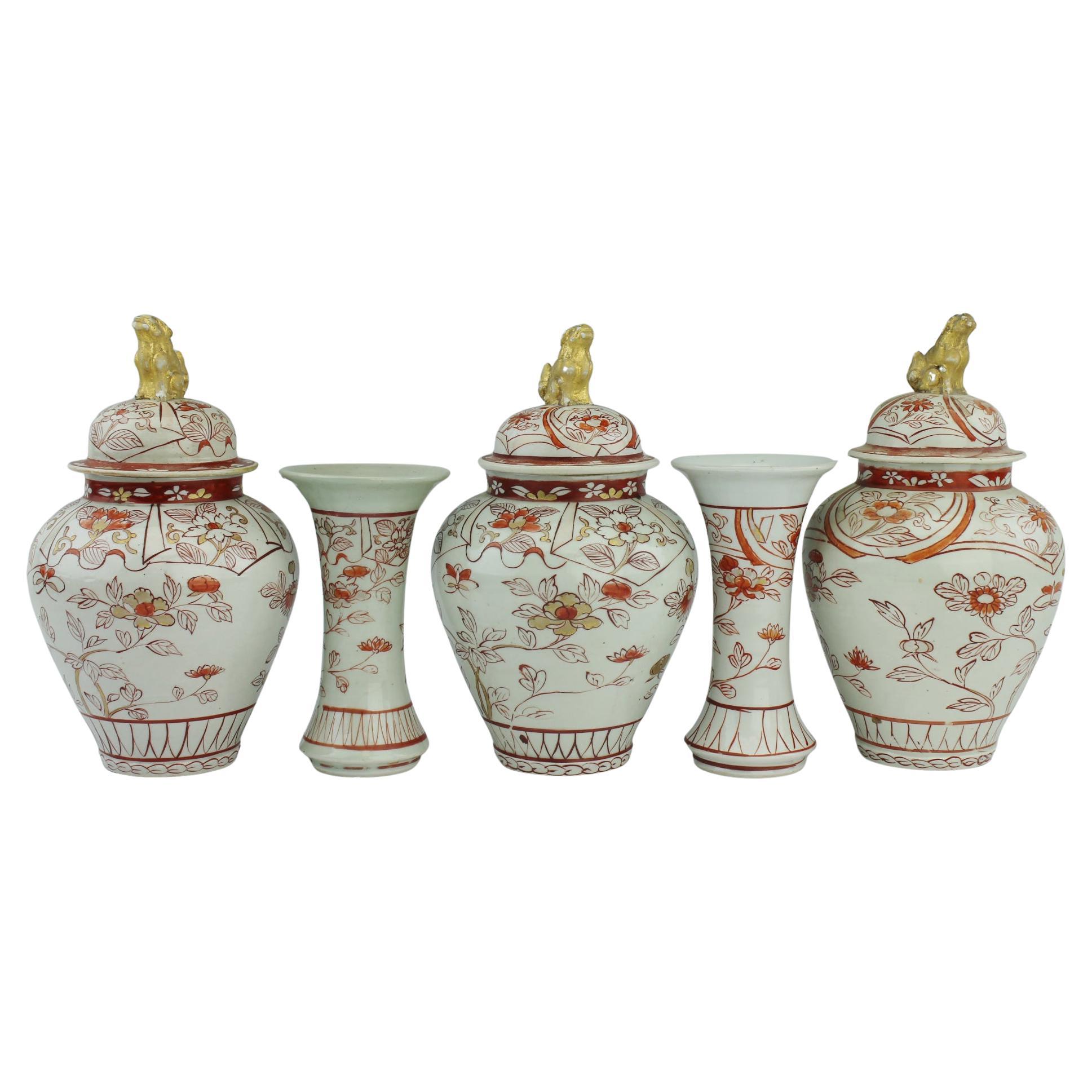
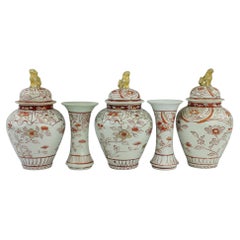
Antique 17th Century Japanese Porcelain Garniture Vases Blood and Milk Edo Pe
Located in Amsterdam, Noord Holland
Sharing with you this amazing set for decorating your home. Interesting and beautifully made.
3 porcelain Arita baluster vases with covers. All decorated with with a nice floral dec...
Category
Antique 17th Century Chinese Edo Vases
Materials
Porcelain
$3,482 Sale Price
20% Off
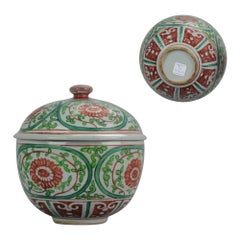
Antique Chinese Porcelain Jar 18th Century SE Asian Thai Market Bencharong Peony
Located in Amsterdam, Noord Holland
A very nicely decorated jar. 18th century Chinese made for the SE Asian / Thai Market. Very rare!
Condition
Overall condition very good only some enamel loss. 190 x 183 mm
Pe...
Category
Antique 19th Century Chinese Qing Ceramics
Materials
Porcelain
$1,732 Sale Price
61% Off
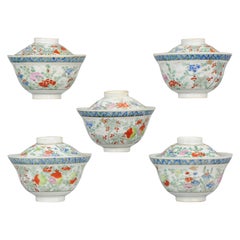
Rare Antique Japanese Meiji Period Set of Tea Bowls Porcelain Straits
Located in Amsterdam, Noord Holland
A very nice set of 5 tea bowls decorated with flowers and pommegranat. They are marked on the base. Decoration for the SE Asian market. Straits style
...
Category
Antique Late 19th Century Japanese Edo Ceramics
Materials
Porcelain
$1,711 Sale Price
20% Off
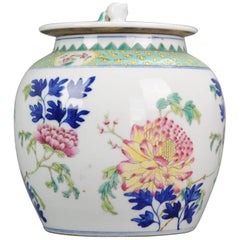
Perfect 20th Century Chinese Porcelain Jingdezhen PRoC Lidded Jar Famille Rose
Located in Amsterdam, Noord Holland
Lovely Chinese Porcelain Lidded Jar, amazing colors and patterns.
Bought in Hong Kong in 1978Lovely Chinese Porcelain Ginger Jar.. marked base
Condition
Overall condition, per...
Category
20th Century Chinese Ceramics
Materials
Porcelain
$1,627 Sale Price
20% Off
You May Also Like
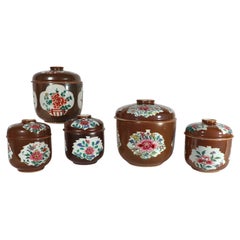
Chinese Export Porcelain Group of Batavia-ware Urns
Covers
Located in Downingtown, PA
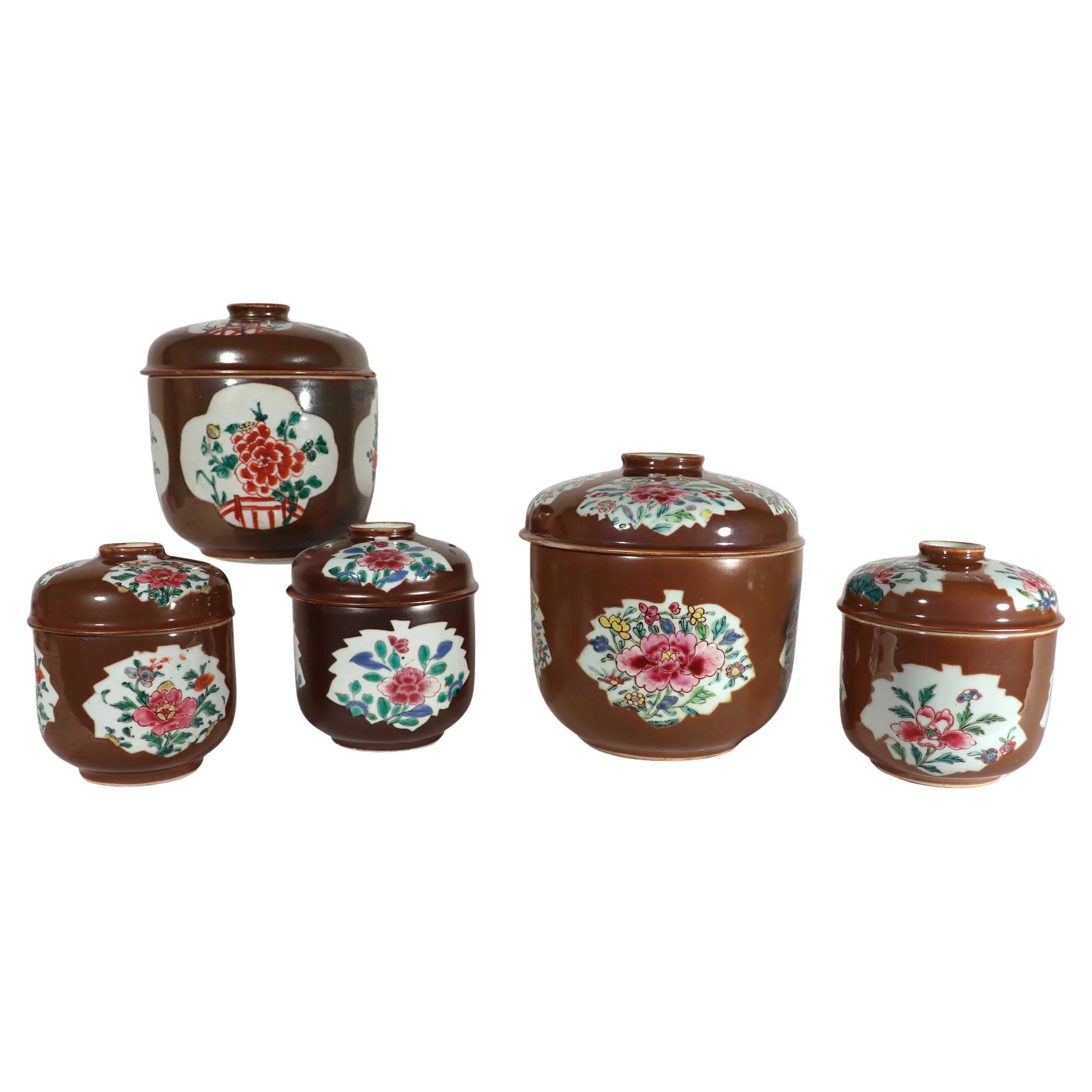
Collection of Five Chinese Export 'Batavia-ware' and Famille Rose Jars and Covers
Qianlong Period, China, Circa 1750s
This handsome collection of five graduated covered jars is a magnificent and rare example of mid-18th-century Chinese Export porcelain, illustrating the highly successful fusion of Chinese ceramic technology and European market demand during the height of the global trade era.
________________________________________
Description and Aesthetic
Medium: Porcelain with underglaze brown glaze and overglaze Famille Rose enamels.
Period: Qianlong (1736–1795).
Origin: Jingdezhen kilns, China, made for the European export market.
The collection comprises two large, two medium, and one small jar, intended to be displayed together as a garniture—a decorative set prized for mantelpieces and cabinets in opulent European interiors.
• The 'Batavia' Ground: Each piece is characterized by a luxurious, deep chocolate-brown glaze covering the exterior, a distinctive aesthetic known historically as "Batavia-ware" or descriptively as café au lait. This rich, monochrome ground was achieved by bathing the porcelain in an iron-rich slip before glazing and firing.
• The Famille Rose Reserves: The dark ground provides a dramatic backdrop for finely painted, leaf-shaped reserves (panels). These panels are adorned with exquisite floral sprays executed in the vibrant Famille Rose palette (meaning "pink family"), which was introduced to China from Europe in the early 18th century. The opaque enamels—dominated by the rose-pink created from colloidal gold—allow for subtle shading and realism, brilliantly depicting the peony (mudan), the Chinese flower of wealth, nobility, and honor.
• The Covers: The domed covers maintain this contrast, with a high, lustrous brown glaze broken by Famille Rose floral sprays that echo the motifs on the body.
________________________________________
Historical Context: Global Trade and Naming
The name "Batavia-ware" is a crucial historical reference, even though the porcelain was manufactured in the kilns of Jingdezhen.
1. The Dutch East India Company (VOC): Batavia (modern-day Jakarta, Indonesia) served as the fortified administrative and trading headquarters of the Dutch East India Company (VOC) in Asia.
2. The Trade Route: Porcelain destined for the European market was collected from various Chinese ports and then centrally transshipped through Batavia. This particular style became famously associated with that major transit port among Western collectors, hence the name, which links the sophisticated manufacturing of China to the powerful trade infrastructure of the Dutch.
3. 18th-Century Opulence: Garnitures like this were highly desirable statements of wealth and worldliness in 18th-century Europe. Their acquisition signified participation in the exotic, global market and a cosmopolitan taste capable of appreciating the high technical and artistic quality of Chinese porcelain.
The successful combination of the deep, rich brown glaze—which evokes a feeling of luxurious Eastern lacquer or polished wood—with the delicate, luminous European-inspired Famille Rose palette represents a brilliant convergence of East-West artistic demands at the height of the Qianlong Emperor’s reign.
________________________________________
Dimensions
Largest Jar: 7 1/2 inches high x 7 1/2 inches diameter; Second Jar: 7 1/4 inches high x 6 1/2 inches diameter; Third Jar: 5 1/2 inches high x 5 inches diameter; Pair of Smaller Jars...
Category
Antique 1750s Chinese Chinese Export Jars
Materials
Porcelain
Pair Chinese Porcelain Ginger or Temple Jars Famille Rose Hand Painted Qianlong
Located in Katonah, NY
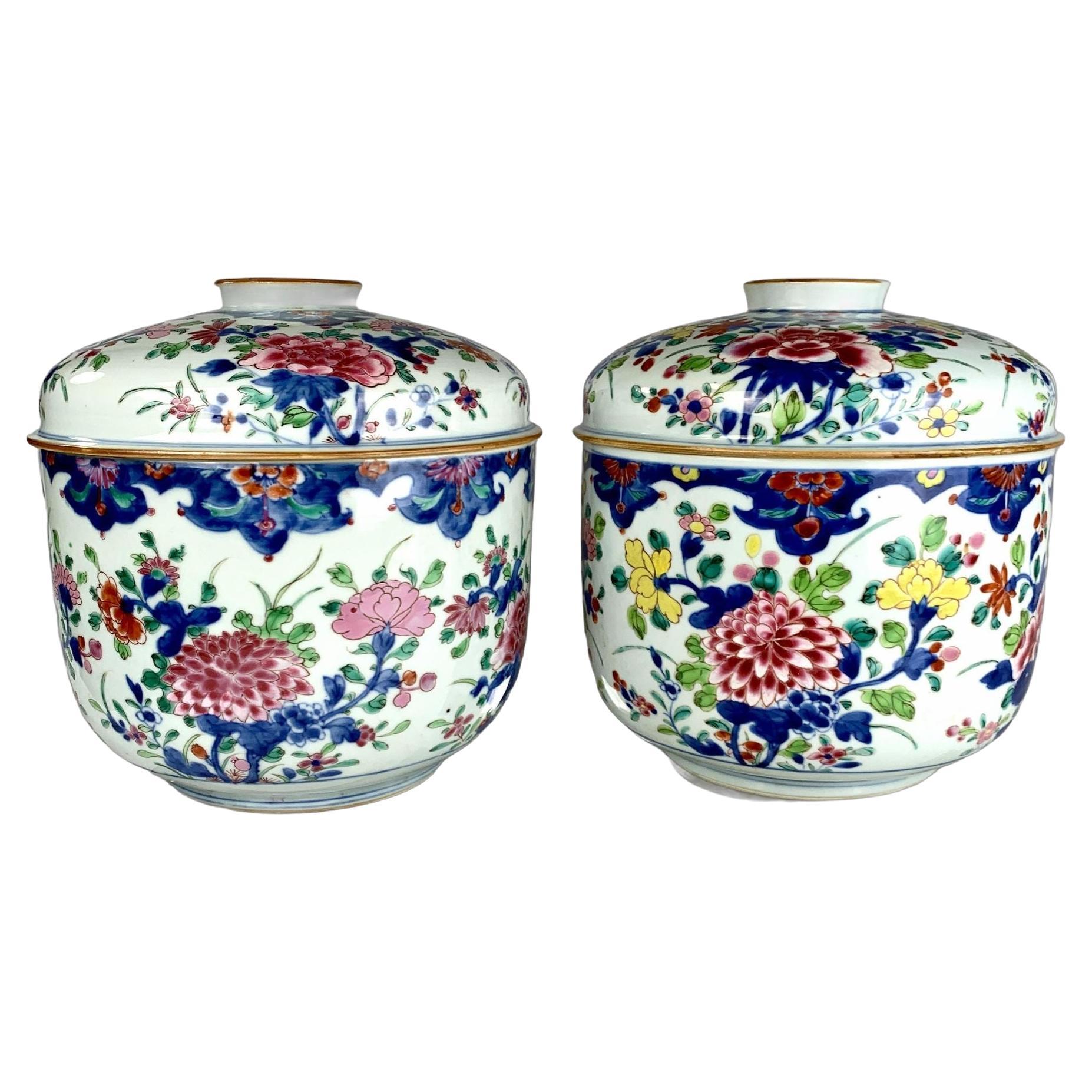
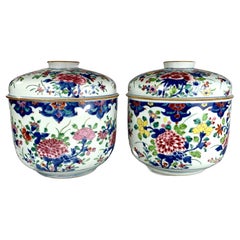
This exceptional pair of 18th-century Chinese porcelain jars is hand-painted in vibrant famille rose enamels with blooming peonies, chrysanthemums, and plum blossoms in brilliant sha...
Category
Antique Mid-18th Century Qing Ceramics
Materials
Porcelain
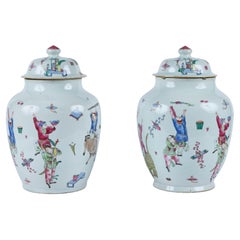
Decorated Chinese Porcelain Covered Jars Republic Period
Located in Los Angeles, CA
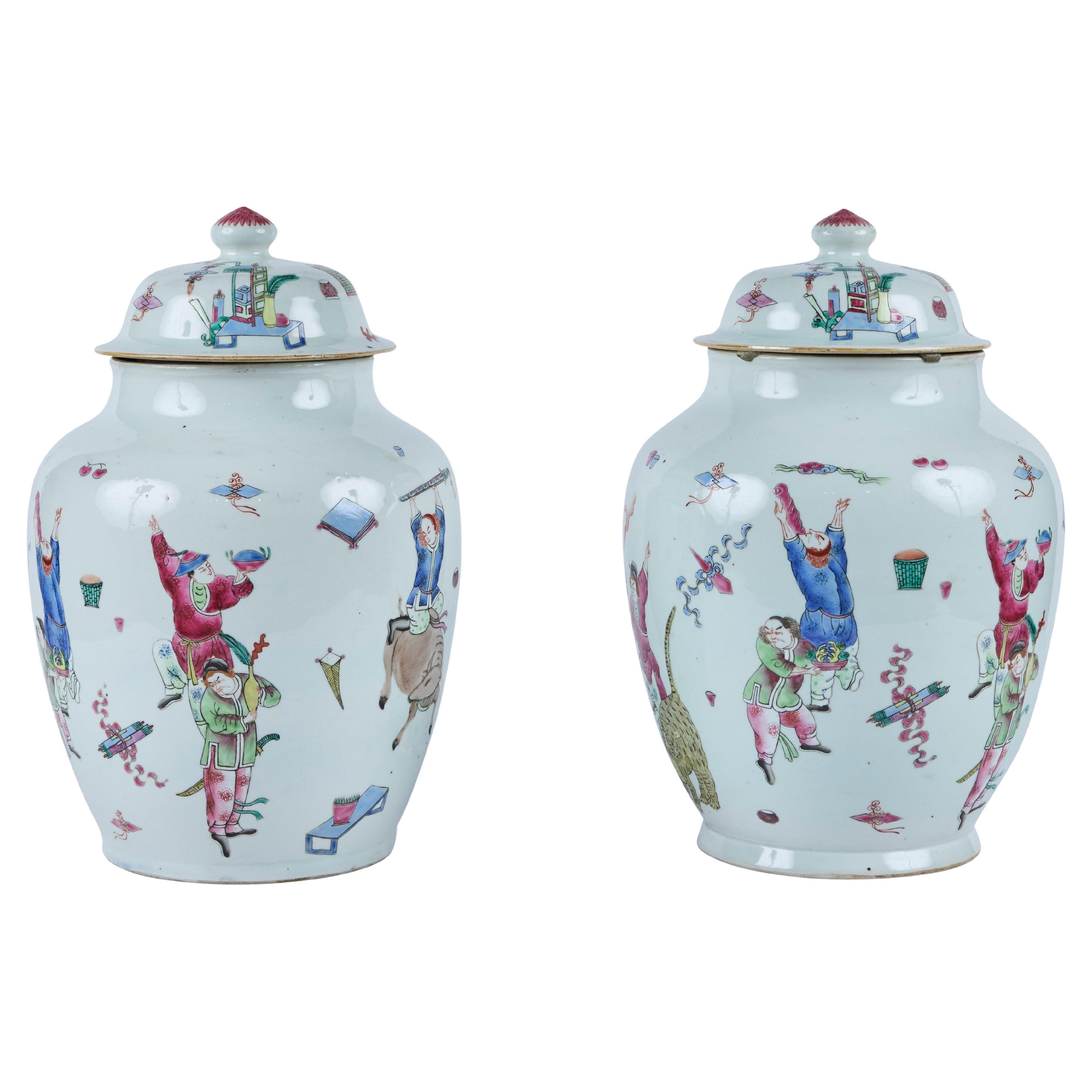
Pair of Chinese, hand-painted, colorful, lidded, porcelain jars with celebratory scenes featuring figures and animals.
Category
Early 20th Century Chinese Chinoiserie Jars
Materials
Porcelain, Paint
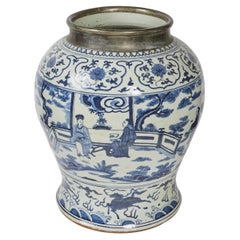
Yuan Dynasty-Style Porcelain Jar
Located in Los Angeles, CA
Yuan Dynasty- style jar with pewter rim (as used in Spice Road), featuring hand-painted scenes of figures in a garden. Republic period.
Category
Early 20th Century Jars
Materials
Pewter
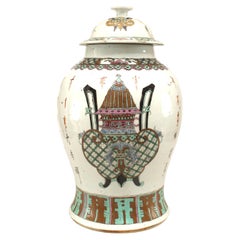
Chinese Style Porcelain Temple Jar
Located in Queens, NY
Asian Chinese style (19th/20th Cent) porcelain temple jar with blue & brown decoration on a white field.
Category
Antique 19th Century Chinese Chinese Export Jars
Materials
Porcelain
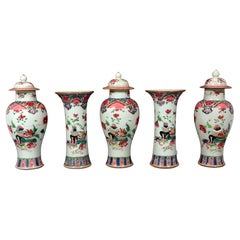
Chinese Export Famille Rose Porcelain Garniture
Located in Downingtown, PA
Chinese Export Five Piece Famille Rose Porcelain Garniture,
circa 1730-1750
The garniture of five Chinese Export porcelain vases consists of three covered baluster vases and two ...
Category
Antique Mid-18th Century Chinese Chinese Export Vases
Materials
Porcelain
$12,400 / set
More Ways To Browse
Imari Jar
Blue And White Antique Jar
Antique Green Jar
Blue Imari
Jar With Handles
Chinese Porcelain Collections
Famille Rose Jar
Kangxi Imari
Antique Tea Jar
Blue And White Tea Jar
Large 18th Century Blue And White Qianlong
Kangxi Blue And White Jar
Large Famille Rose Lidded Jar
Antique Chinese Tea Jars
Kangxi Jar
Imari Meiji
Blue White Chinese Plates
Chinese Famille Verte Porcelains