Items Similar to Chinese Ming Dynasty Ko-Sometsuke Wucai Porcelain Plate
Want more images or videos?
Request additional images or videos from the seller
1 of 21
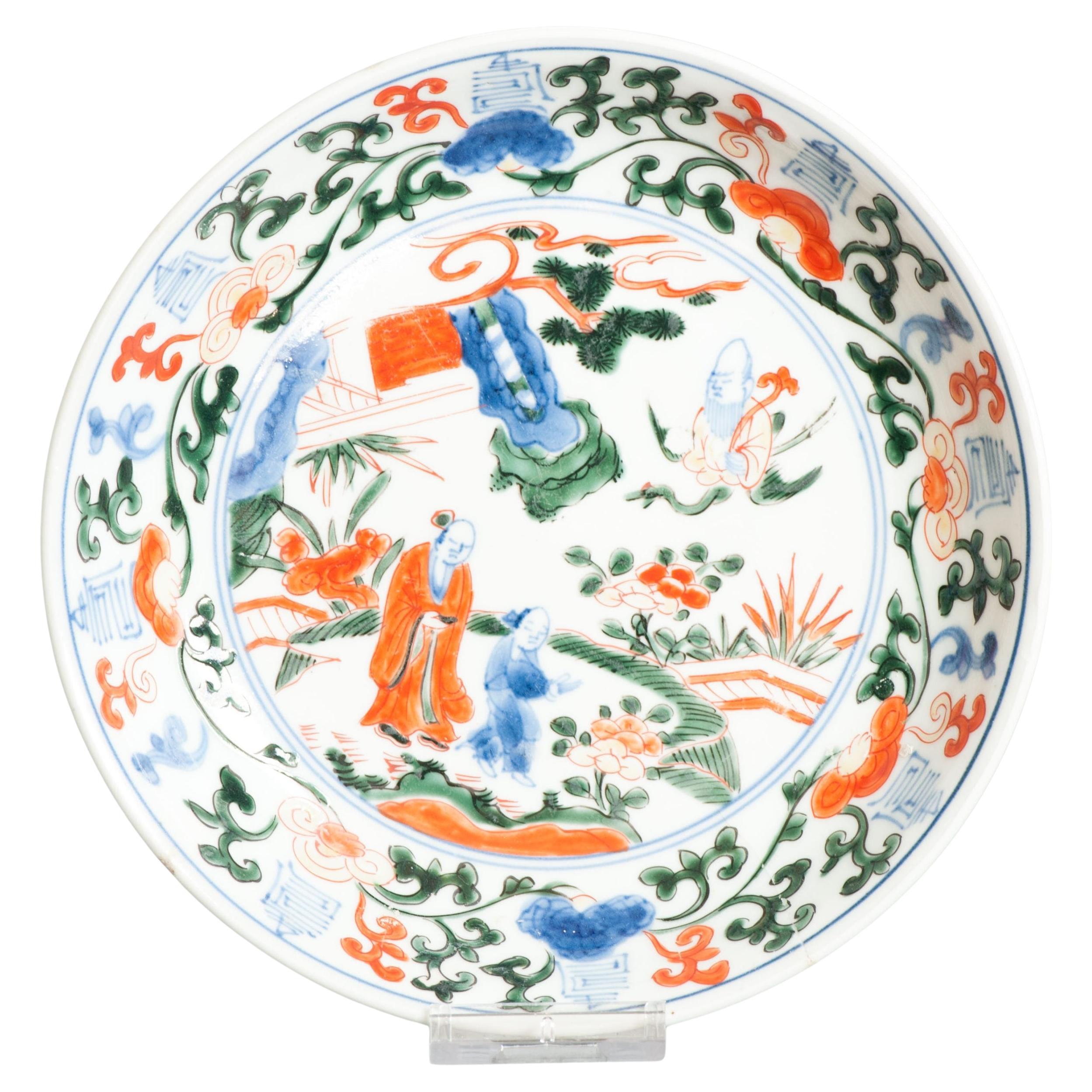
Chinese Ming Dynasty Ko-Sometsuke Wucai Porcelain Plate
$13,693.92
£10,000
€11,721.94
CA$18,857.64
A$20,526.07
CHF 10,876.03
MX$246,857.01
NOK 138,285.92
SEK 126,723.75
DKK 87,562.20
About the Item
CHONGZHENG 1628-1644
From our Chinese collection, we are delighted to offer this rare example Chinese Ko-Sometsuke Wucai Porcelain Plate. The plate potted in porcelain ceramic of circular shape and made specifically for the Japanese market depicts a monkey beneath a peach tree beside lingzhi with a recumbent deer amongst rocks and a bird and small insects flying above. Signed to the underside with the six character Chenghua 大明成化年製 mark in underglaze blue. The Chinese Ko-Sometsuke Wucai Porcelain Plate dates to the Chinese Ming Dynasty 17th century during the Chongzheng period 1628-1644.
NOTES
when these pieces were ordered by Japan Ko-sometsuke porcelain was intentionally manufactured using poorly levigated clay and roughly potted with inconsistencies or imperfections that appealed to the Japanese. Typical Ko-Somesuke wares are often slightly warped in shape and bear rim ‘frits’ or chipping from manufacture which were intentionally made and often perceived as damage or a mistake during firing. Often the glaze would flake off the body of the piece and the edges, known as mushikui, or ‘earth worm nibbles’ were particularly prized.
REFERENCE
-Cf. R Kilburn, Transitional Wares and Their Forerunners, p.139, no.162
-T Canepa and K Butler, Leaping the Dragon Gate
-The Sir Michael Butler Collection of Seventeenth-Century Chinese Porcelain, p.127, III.1.97
-Transitional Wares and Their Forerunners, An exhibition presented by the Oriental Ceramics Society of Hong Kong at the Hong Kong Museum of Art in 1981 page 139, plate 162
KO SOMETSUKE
also known as Tianqi porcelain refers to Chinese underglaze blue porcelain made in the unofficial kilns of Jingdezhen 景德镇 for the Japanese market in the 17th century, Ming dynasty. The term Tianqi 天啓 or tenkei in Japanese is a reference to the era name of the reign of the Tianqi Emperor who ruled between 1621–1628 during the late Ming dynasty though it is not limited to his reign. The size of the wears are usually smaller-medium flatware such as plates and bowls. Designs for this ware are usually landscapes, birds, animals, flowers and figures. Many examples of the ware were treasured in Japan as part of the tea ceremony culture and many show an unmistakable Japanese influence as it is thought that they were often specifically ordered from Japan by period tea masters. Base inscriptions for these types of wears are usually those from previous reigns in the dynasty with a preference for the Chenghua reign mark.
LINGZHI (MUSHROOM)
Ganoderma sichuanense, also known as reishi or Ganoderma lingzhi is a polypore fungus native to East Asia belonging to the genus Ganoderma. Its reddish brown, varnished, kidney-shaped cap with bands and peripherally inserted stem give it a distinct fan-like appearance which has been used for centuries in the Chinese decorative arts.
MING DYNASTY (1368-1644)
The Ming dynasty was an imperial dynasty in China founded by Zhu Yuanzhang, a commoner who overthrew the Mongol Yuan dynasty in 1368. Zhu Yuanzhang established the dynasty and named it Da Ming, which means “Great Brightness”. The Ming Dynasty ruled from 1368 to 1644 before it was succeeded by the Qing Dynasty (1644 to 1912). It was the last imperial dynasty of China to be ruled by the Han people, the majority ethnic group in China.
- Dimensions:Height: 1.07 in (2.7 cm)Diameter: 7.96 in (20.2 cm)
- Style:Ming (Of the Period)
- Materials and Techniques:
- Place of Origin:
- Period:Early 17th Century
- Date of Manufacture:Circa 1635
- Condition:Wear consistent with age and use. Minor losses. Excellent, as mentioned the plate is intentionally warped from initial firing and bears several frits / chipping to the rim which were placed from manufacture to simulate age.
- Seller Location:Newark, GB
- Reference Number:Seller: HASNDD1stDibs: LU6971243758892
About the Seller
5.0
Vetted Professional Seller
Every seller passes strict standards for authenticity and reliability
Established in 2019
1stDibs seller since 2022
40 sales on 1stDibs
Typical response time: 3 hours
- ShippingRetrieving quote...Shipping from: Newark, United Kingdom
- Return Policy
More From This Seller
View AllAntique Genuine Meissen Reticulated Porcelain Cattle Plate
By Meissen Porcelain
Located in Newark, England
With Finely Painted Cattle Scenes
From our Ceramics collection, we are delighted to offer this very unusual Meissen Reticulated Porcelain Plate. The Meissen Plate is beautifully po...
Category
Antique Mid-19th Century German High Victorian Porcelain
Materials
Porcelain
Japanese Meiji Period (1868-1912) Satsuma Earthenware Vase Taizan for Hattori
Located in Newark, England
Meiji Period (1868-1912)
From our Japanese collection, we are delighted to offer Japanese Meiji Period Satsuma Vases. The Satsuma Vase of hexagonal form with a slight waisted neck and tight rounded rim is extensively decorated with multiple figures to two large scenes. The first scene features a beach with waves to the background and a plethora of figures including multiple geisha holding traditional Japanese wagasa’s. The second scene follows on from the first with a large building in the foreground holding figures on a large platform under a pagoda roof with a pagoda building in the background and further figures in the foreground. The scenes are framed by a full detailed border with gilt shapes, flowers amongst pink shaded backgrounds and butterflies around the neck. The Satsuma Vase is unusually signed Fine Art, Satsuma Ware, Dai Nippon (Great Japan), Hattori Made, Gosuido Works, Taizan Painted. 美術, サツマヤキ(薩摩焼), 大日本, 服部造, 五スイ堂工, 對山画 and dates to the Meiji Period (1868-1912) and the turn of the 20th century circa 1905.
Satsuma ware is a type of earthenware pottery originating from the Satsuma province in Southern Kyushu, Japan’s third largest island.
Wagasa are traditional Japanese umbrellas made of washi paper attached to a bamboo frame and treated to ensure it is waterproof.
Meiji Period was an era of Japanese history that spanned from 1868 to 1912. It was the first half of the Empire of Japan, when the Japanese people began to build a paradigm of a modern, industrialised nation state and emergent great power, influenced by Western countries and aesthetics. As a result of radically different ideas, the changes to Japan were profound and it affected the social structure, politics, economy, military, and foreign relations across the board. The period corresponded to the reign of Emperor Meiji and was preceded by the Keio era and was succeeded by the Taisho era.
Cultural Art during the Meiji Period was of particular interest to the government and they overhauled the art export market which in turn promoted Japanese arts via various world’s fairs, beginning in Vienna at the world fair in 1873. The government heavily funded the fairs and took an active role organising how Japan’s culture was presented to the world including creating a semi-public company named Kiritsu Kosho Kaisha (First Industrial Manufacturing Company). The Kiritsu Kosho Kaisha was used to promote and commercialise exports of Japanese art and established the Hakurankai Jimukyoku (Exhibition Bureau) to maintain quality standards. For the 1876 Centennial International Exhibition in Philadelphia, the Japanese government created a Centennial Office and sent a special envoy to secure space for the 30,000 items that would be displayed. The Imperial Household also took an active interest in arts and crafts, commissioning works by select artists to be given as gifts for foreign dignitaries further emphasising the high quality and importance of Japanese art. Just before the end of the 19th century in 1890, the Teishitsu Gigeiin (Artist to the Imperial Household) system was created to recognise distinguished artists. These artists were selected for their exceptionally high quality wares and talent in their own industry. Over a period of 54 years Seventy artists were appointed, amongst these were ceramicist Makuzu Kozan and cloisonné enamel artist...
Category
Antique Early 1900s Japanese Meiji Ceramics
Materials
Earthenware, Pottery

Japanese Meiji Period Cloisonne Enamel Koro Tsukamoto Hikokichi
By Tsukamoto Hikokichi
Located in Newark, England
Silver Mounted
From our Japanese collection, we are thrilled to offer this Japanese Cloisonne Enamel Koro by Tsukamoto Hikokichi. The Cloisonne Enamel Koro of exceptional quality sh...
Category
Early 20th Century Japanese Meiji Metalwork
Materials
Metal, Enamel
Japanese Meiji Period Satsuma Vase by Ryokuzan
Located in Newark, England
From our Japanese Satsuma Collection, we are delighted to offer this Japanese Satsuma Vase by Ryokuzan 緑山. The Satsuma vase of ovoid shape with a tapered body, circular foot rim, wai...
Category
Antique Early 1900s Japanese Meiji Ceramics
Materials
Ceramic, Earthenware, Pottery

Japanese Meiji Period Satsuma Vase by Kinkozan
By Kinkozan
Located in Newark, England
FREE WORLDWIDE SHIPPING
FROM KYOTO’S FAMED KINKOZAN WORKSHOP, A MEIJI-PERIOD SATSUMA VASE OF EXCEPTIONAL ENAMEL AND GILT.
From our Japanese Satsuma collection, we are delighted to ...
Category
Antique Late 19th Century Meiji Ceramics
Materials
Ceramic, Earthenware, Pottery
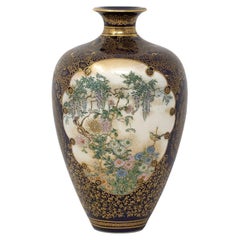
Japanese Meiji Period Cloisonne Enamel Vase by Ando Jubei
By Ando Jubei
Located in Newark, England
Free international shipping
Ando Cloisonne Company Mark
From our Japanese collection, we are delighted to introduce this Japanese Cloisonne Enamel Vase by Ando Jubei. The Cloisonn...
Category
Antique Early 1900s Japanese Meiji Metalwork
Materials
Enamel, Wire
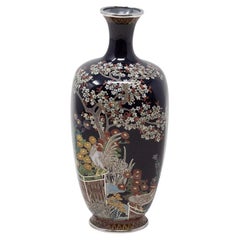
You May Also Like
Antique ca 1700 Japanese Porcelain Arita Plate Wucai style Wanli Marked Shou Lao
Located in Amsterdam, Noord Holland
Description
Very happy with this new arrival.
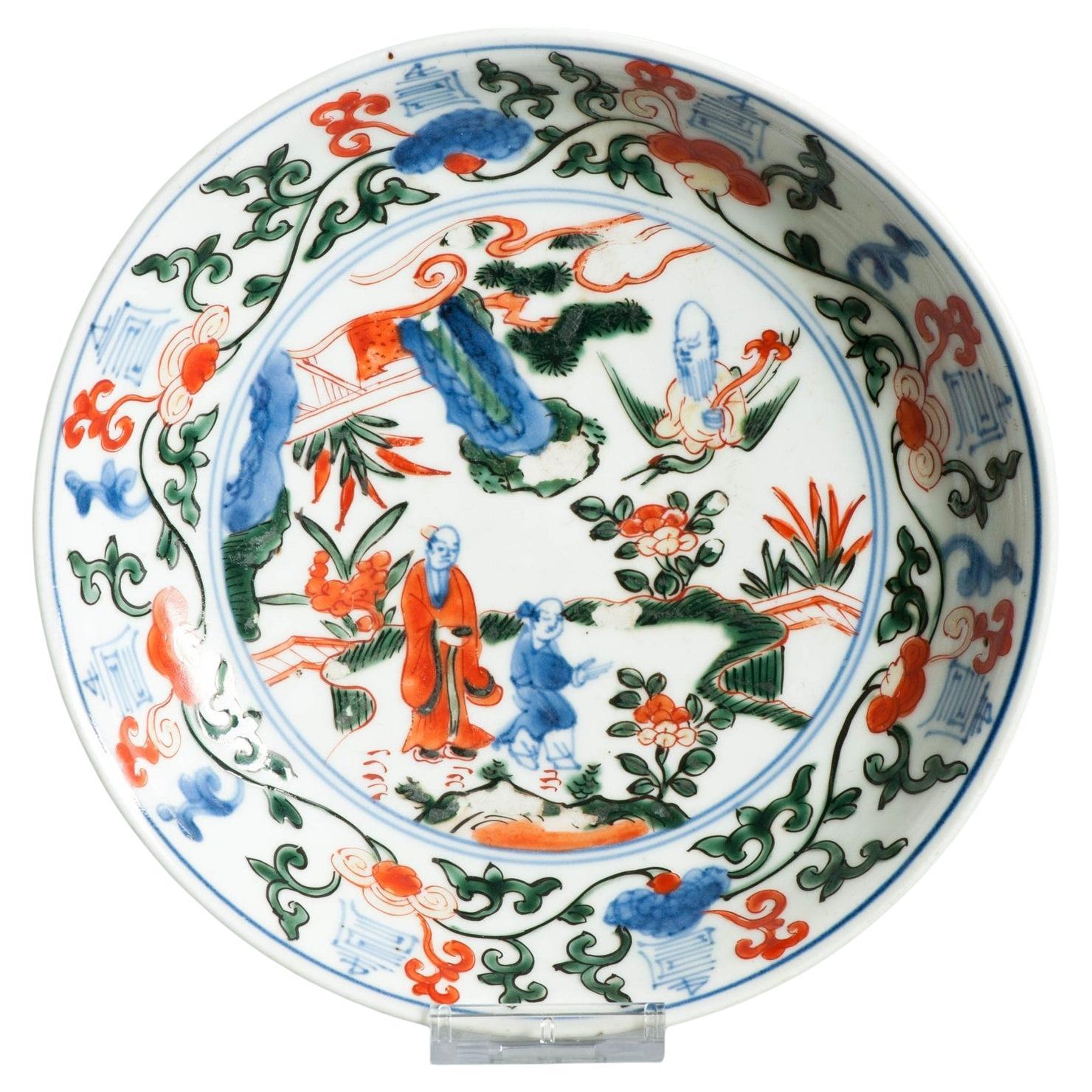
Arita/Kakiemon plate unusual Chinese Wucai design. Dating to circa 1700. A Japanese version of a Wanli classic dish.
Condition
Ennamel...
Category
Antique Early 18th Century Japanese Ceramics
Materials
Porcelain
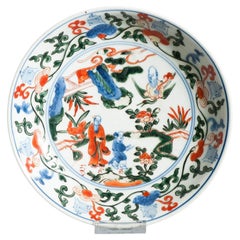
Wanli Antique Ming Period Chinese Porcelain Kraak Plate CHENGHUA MARKED
Located in Amsterdam, Noord Holland
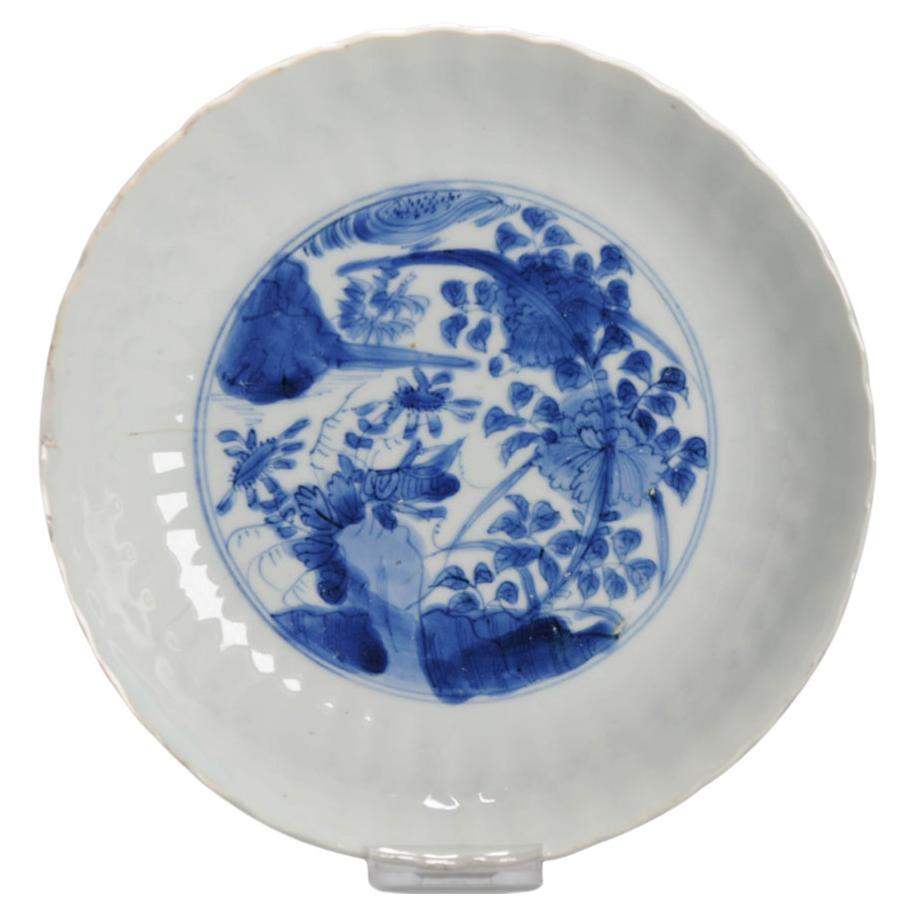
A very nicely potted and painted kraak plate of a desirable cobalt blue! Stunning piece with beautiful and typical landscape scene. Visible is a grasshopper on a rock
Moulded in the ...
Category
Antique 17th Century Chinese Ming Ceramics
Materials
Porcelain
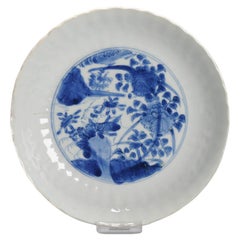
$11,856 Sale Price
20% Off
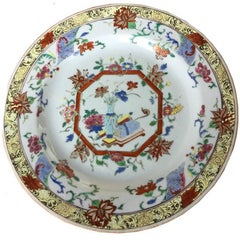
Antique 18th Century Chinese Fencai porcelain plate, Kangxi
Located in Delft, NL
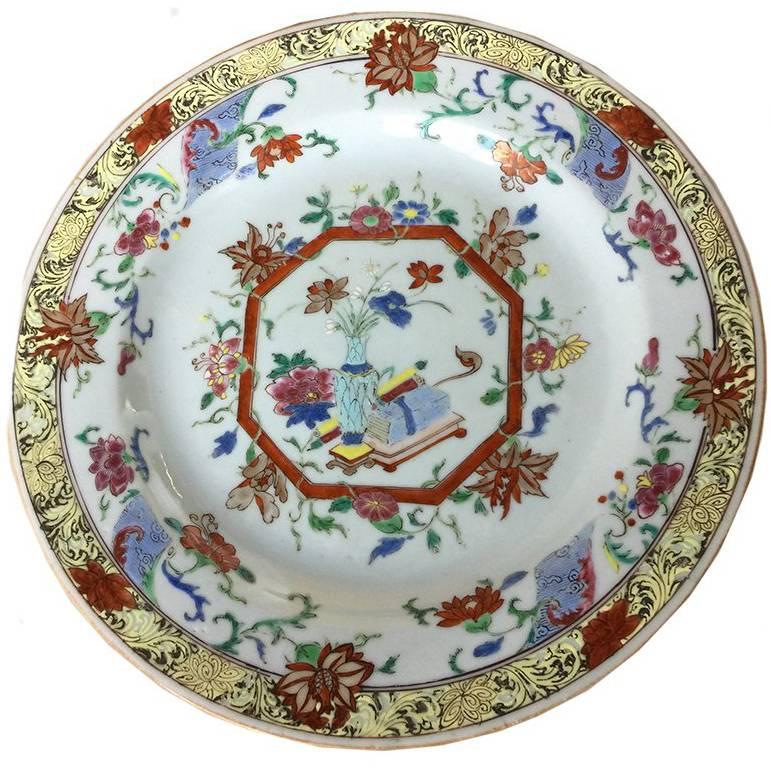
Antique 18th century Chinese Fencai porcelain plate, Kangxi
With decoration in the middle of a vase with flowers surrounded in octangle line with flo...
Category
Antique 18th Century Chinese Antiquities
Materials
Porcelain
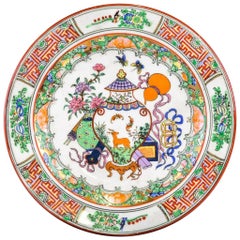
Vintage Chinese Porcelain Plate, Made in China, Early 20th Century
Located in Roma, IT
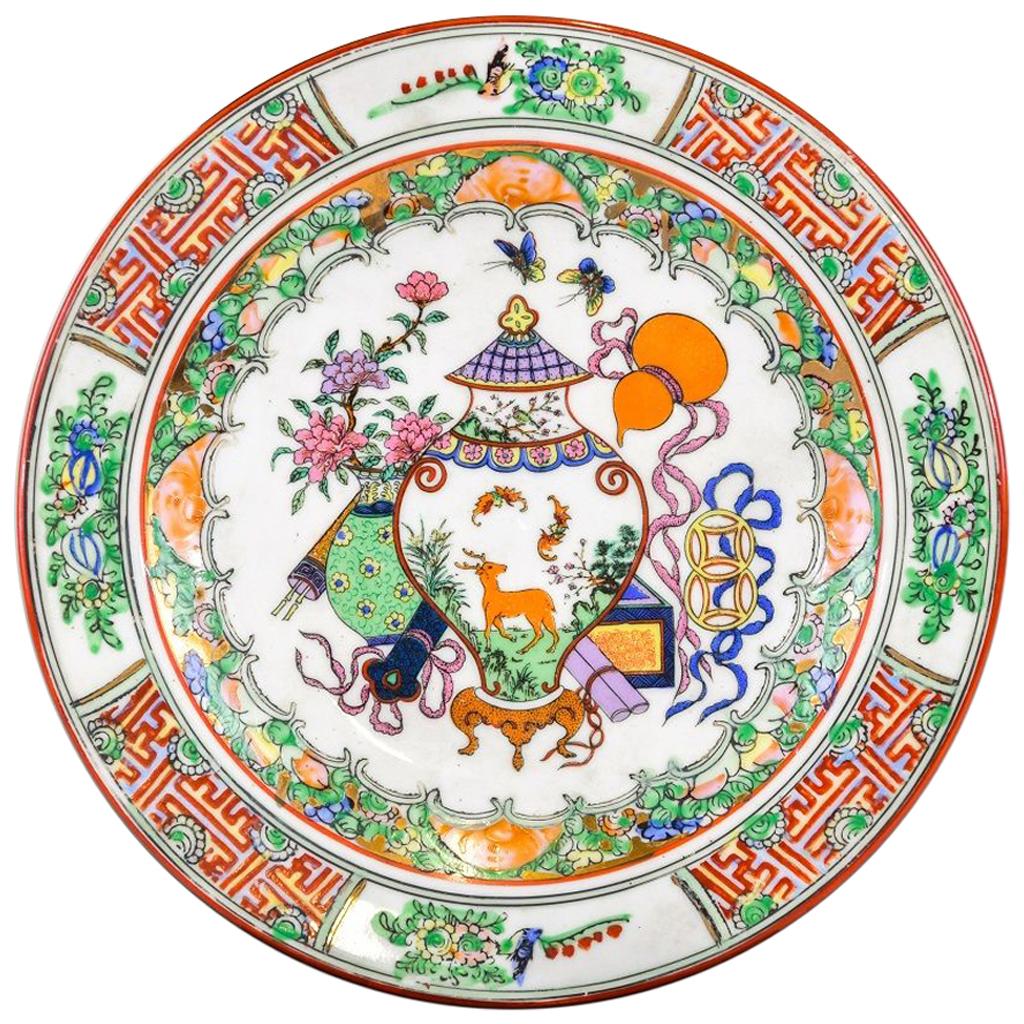
This porcelain plate is an original decorative object realized in China by Chinese manufacture, at the beginning of the 20th century.
It is decorated with geometric and floral or...
Category
Early 20th Century Chinese Antiquities
Materials
Ceramic
$233 Sale Price
30% Off
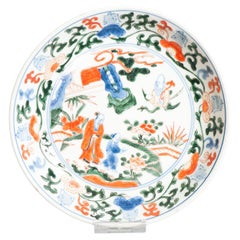
Antique ca 1700 Japanese Porcelain Arita Plate Wucai style Wanli Marked Shou Lao
Located in Amsterdam, Noord Holland
Description
Very happy with this new arrival.
Arita/Kakiemon plate unusual Chinese Wucai design. Dating to circa 1700. A Japanese version of a Wanli classic dish.
Condition
FIlled ...
Category
Antique Early 18th Century Japanese Ceramics
Materials
Porcelain
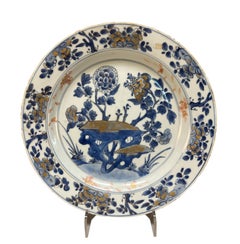
17th Century Chinese Kangxi Porcelain Plate
Located in Kent, Dover
A large XVII Century Kangxi Chinese porcelain plate, hand painted with gold leaf highlights. In good condition, just nibbling to the edges.
Category
Antique 1690s Chinese Porcelain
Materials
Porcelain
More Ways To Browse
17th Century Chinese Japanese Porcelain
Ming Dynasty Art
Hand Painted Plate Blue Porcelain China
China Painted Plates
Chinese Hand Painted Plates
Oriental Ceramics
Japanese Monkey
Monkey Tree
Wucai Porcelain
Ming Dynasty Plate
Recumbent Deer
Antique Chawan
Dehua Porcelain
Korean Inlay
Asian Ceramic Pots
Calligraphy Ceramics
Chinese 14th Century
Chinese Antique Rose Mandarin Porcelain