Items Similar to Fine Trumpet Satsuma Vase by Taizan Yohei

Want more images or videos?
Request additional images or videos from the seller
1 of 20
Fine Trumpet Satsuma Vase by Taizan Yohei
$9,800
£7,407.67
€8,496.90
CA$13,661.60
A$14,871.77
CHF 7,893.94
MX$178,939.40
NOK 100,026.97
SEK 91,652.97
DKK 63,454.34
About the Item
A tall ceramic satsuma ware vase in a rare slender trumpet form with very fine surface decoration by Japanese potter Taizan Yohei IX (1864-1922). The vase was dated to late Meiji period circa 1890-1900s.
The main motif and the focal point of the vase is the continuous panel that circumvents the entire mid-body, apparently a rendition of the Boy's Festival, known as "Tango no Sekku" in Japanese. The traditional festival is celebrated on May 5th of each year. Originated in Nara Period (710-794), the ancient holiday was the day to pray for the good fortune, health and success of the male offsprings in the households. The elaborate decoration shows a large number of boys, all dressed in distinct attires, densely packed in a parade. Each individually styled, the boys are engaged in different poses, some with props, some interacting with each other, providing a snap picture of the joyful day. The upper part of the vase shows four round cartouches on a mixed geometrical background, each a vignette of arrangement of flowers, plants and birds, The lower part of the vase features three cartouches in a similar fashion. Both the mouth and base rim were superfluously decorated with scrolls of various motifs, including Greek keys, moriage vines and fleur-de-lis. The entire surface of the glaze has a uniform fine crackle. Within the mouth as well as the base, the glaze appears to have some fine black powder mixed in that forms a subtle swirl pattern. We are not sure if this was intended by artist or occurred during the kiln firing by chance, but it was clearly as made. An impressed mark of "Taizan" was placed at the interior base as shown.
Fine work like this vase is uncommon among the existing Taizan's work. This vase is likely dated to early period of his career before he started working with Kinkozan. Taizan Yohei (Taizan IX) was adopted in 1878 into the Taizan family, a potter family active as early as 1670s. In 1872, Taizan VIII started to export of their products together with Kinkozan IV. Taizan IX continued to expand the family business and collaborate with Kinkozan until 1894 and possibly later until 1900s but at a smaller scale. His work with Kinkozan was mostly known in the west where they often co-signed the work.
- Dimensions:Height: 9.5 in (24.13 cm)Diameter: 4.125 in (10.48 cm)
- Style:Meiji (Of the Period)
- Materials and Techniques:Ceramic,Enameled
- Place of Origin:
- Period:
- Date of Manufacture:1890s-1900s
- Condition:Wear consistent with age and use. Fine condition with occasional small surface mark and minimal shelf wear. The glaze over the mouth and base interior shows fine black powder in swirling pattern as shown. Not from postproduction or restoration. Examined under UV.
- Seller Location:Atlanta, GA
- Reference Number:1stDibs: LU945041015882
About the Seller
4.9
Platinum Seller
Premium sellers with a 4.7+ rating and 24-hour response times
Established in 2006
1stDibs seller since 2010
583 sales on 1stDibs
Typical response time: <1 hour
- ShippingRetrieving quote...Shipping from: Atlanta, GA
- Return Policy
More From This Seller
View AllFine Japanese Ceramic Satsuma Vase by Kinkozan
By Kinkozan
Located in Atlanta, GA
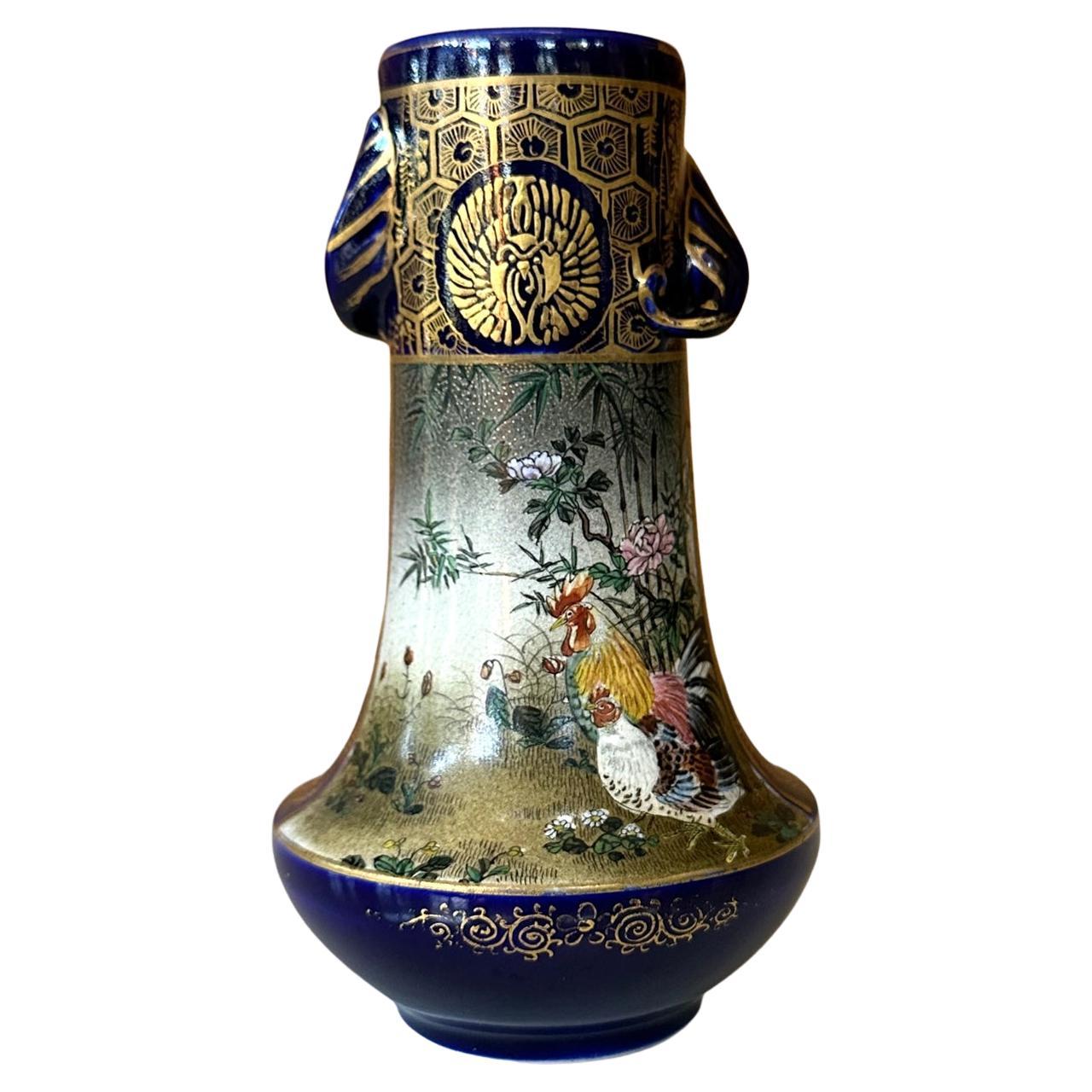
A miniature Japanese ceramic vase from the end of Meiji period circa 1880s- 1910s by Kinkozan (1645-1927). One of the largest studio manufacturers of the export ceramics at the time ...
Category
Early 20th Century Japanese Meiji Ceramics
Materials
Ceramic
Fine and Rare Miniature Satsuma Vase by Taizan Yohei
Located in Atlanta, GA
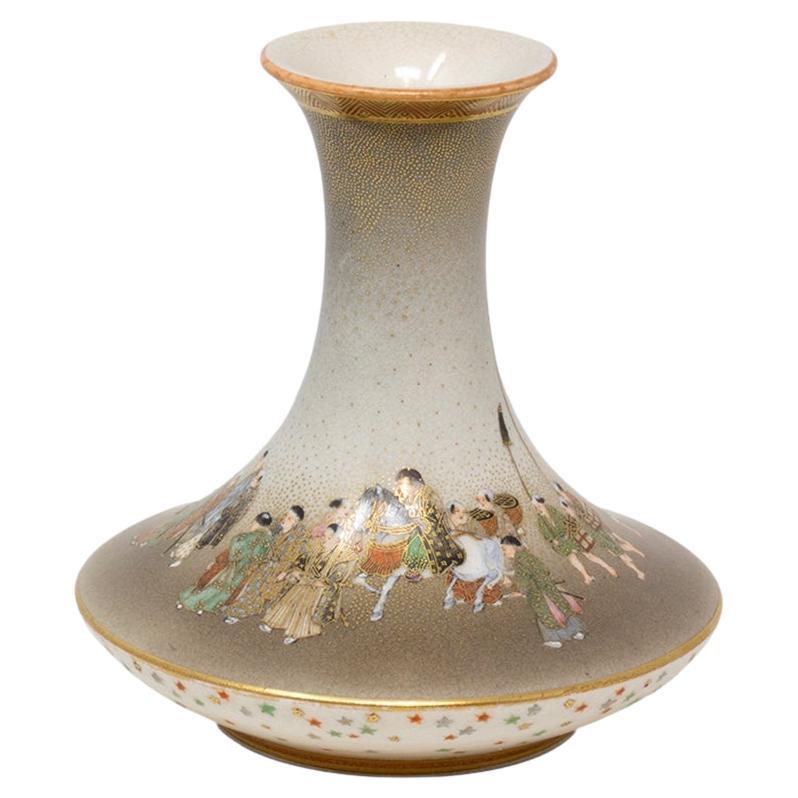
A very fine miniature ceramic vase in satsuma ware by Taizan Yohei IX (1864-1922) circa 1880-1890s of late Meiji period. The vase with a broad flat should...
Category
Antique 1880s Japanese Japonisme Ceramics
Materials
Ceramic
Exquisite Japanese Satsuma Vase by Seikozan
Located in Atlanta, GA
A miniature vase in elegant upright form reminiscent of the Chinese imperial Willow Leaf form made by Japanese studio Seikozan circa 1890-1910s (late Meiji Period). One of the many a...
Category
Antique 1880s Japanese Meiji Ceramics
Materials
Ceramic
Fine Japanese Satsuma Vase by Ryozan Okamoto for Yasuda Company Meiji Period
Located in Atlanta, GA
A finely decorated Japanese satsuma ceramic vase by Ryozan Okamoto (c.1820s-1910s) for Yasuda. Ryozan is the head artist working for Yasuda company, a Japanese ceramic makers and dea...
Category
Antique Early 1900s Japanese Meiji Ceramics
Materials
Ceramic
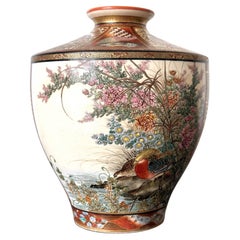
Japanese Miniature Satsuma Vase Yabu Meizan Meiji
By Yabu Meizan
Located in Atlanta, GA
A small Satsuma vase from the studio of Yabu Meizan (birth name Yabu Masashichi; 1853-1934), who is one of the most celebrated and collectible Satsu...
Category
Antique Early 1900s Japanese Meiji Ceramics
Materials
Ceramic
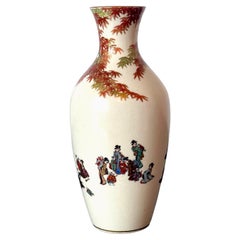
Large Japanese Satsuma Ceramic Vase Kinkozan
By Kinkozan
Located in Atlanta, GA
A large Japanese ceramic vase from the end of Meiji period circa 1890-1910s by Kinkozan (1645-1927). One of the largest studio manufacturers of the export ceramics at the time based in Kyoto. In the typical style of satsuma made at the turn of 20th century, the vase is elaborately decorated with a rather unusual kinran-de (gold paint) and green enamel highlight on a mottled brown background. The painterly decoration depicts a large seasonal floral arrangement in a circular fashion. Besides the obviously superb craftsmanship, what sets this particular vase apart from many lower quality and mass-produced pieces is its tone-on-tone color pallet that is visually somber and the small and sensitive details that heralds the change of the seasons. When the viewer goes beyond the first casual glimpse of the blossom and foliage, one would notice that on the edges of certain leaves as well as along the stalks, there accumulates a very thin layer of the white dust that represents the frost. The flower in bloom are chrysanthemums. Despite of being splendid, they are the messengers of the autumn. The large lotus leaf was subtly rendered in a bended and slightly withered manner, just past its prime. Although the lotus is still in bloom, the prominent seed pod indicates it may be the last for the season. The sentimental capture of the change of the seasons is not unusual in Japanese art. This vase poetically represents such a subtle transition from summer to fall, perhaps depicting the very first frost.
The neck of the vase is also slightly unusual with two rolled rings...
Category
Early 20th Century Japanese Meiji Ceramics
Materials
Ceramic
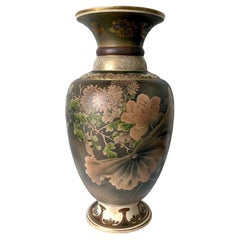
You May Also Like
Japanese Meiji Period (1868-1912) Satsuma Vase by Kinkozan
By Kinkozan
Located in Newark, England
JAPANESE SATSUMA PROCESSIONAL VASE
From our Japanese collection, we are delighted to introduce to the market this Japanese Satsuma Vase by Kinkozan. The vase with a compressed body ...
Category
Antique Late 19th Century Japanese Meiji Ceramics
Materials
Ceramic, Earthenware, Pottery

Meiji period Satsuma vase.
By Satsuma
Located in Brighton, Sussex
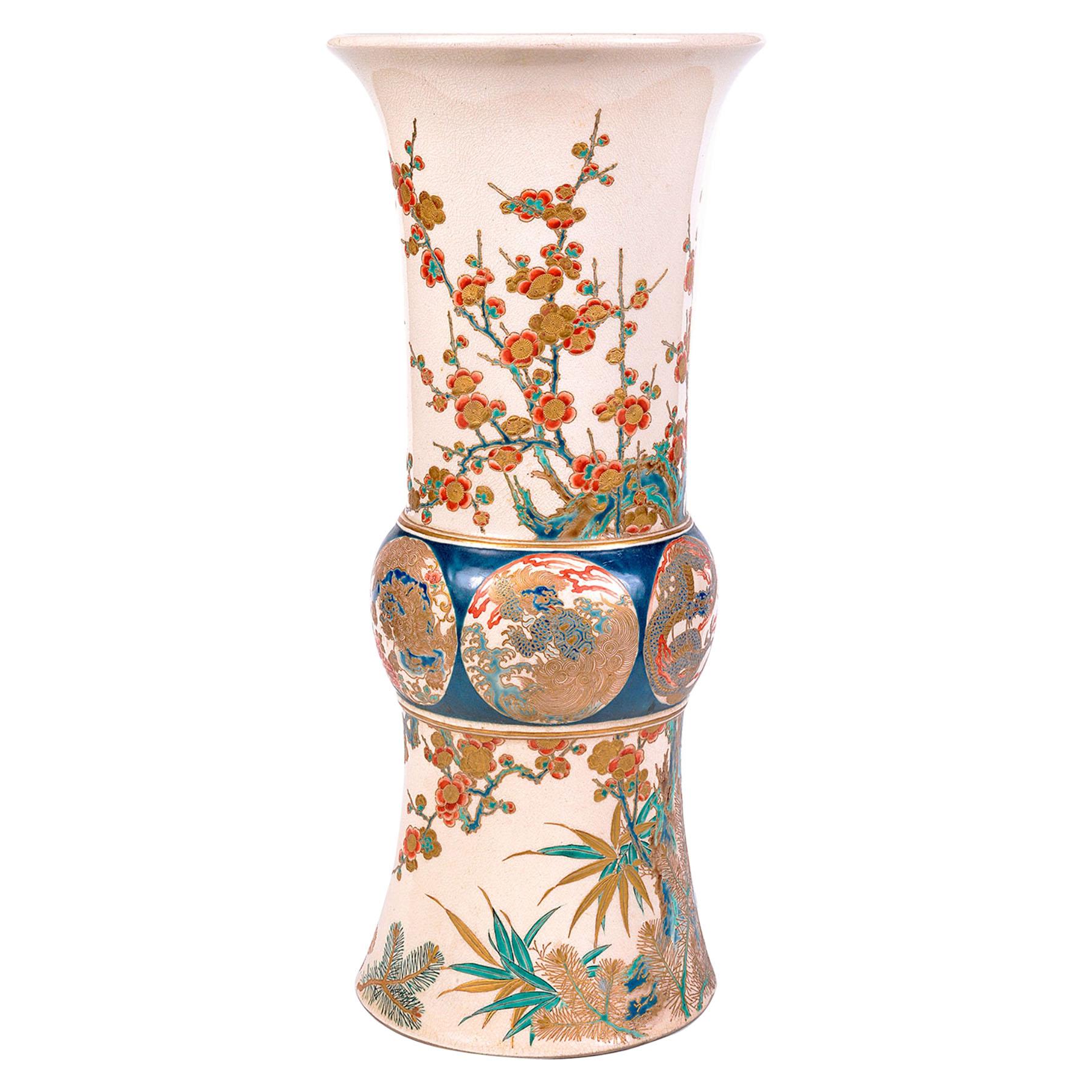
A good quality 19th Century Japanese Satsuma vase, having imperial influences with a dark blue ground, blossom tree decoration to the flared neck, circul...
Category
Antique Late 19th Century Japanese Vases
Materials
Porcelain
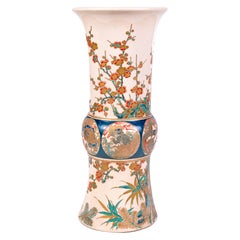
Japanese Antique Earthenware Satsuma Vase by Kinkozan Meiji Period
By Kinkozan
Located in Newark, England
FREE WORLDWIDE SHIPPING
MEIJI PERIOD (1868-1912)
From our Japanese Satsuma collection, we’re pleased to offer this Meiji period bottle-form Satsuma vase by Kinkozan.
The vase is...
Category
Antique Early 1900s Japanese Meiji Ceramics
Materials
Ceramic, Earthenware, Pottery
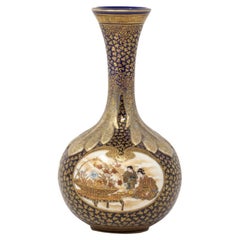
Large Meiji Period Satsuma Earthenware Floor Vase
Located in Lymington, Hampshire
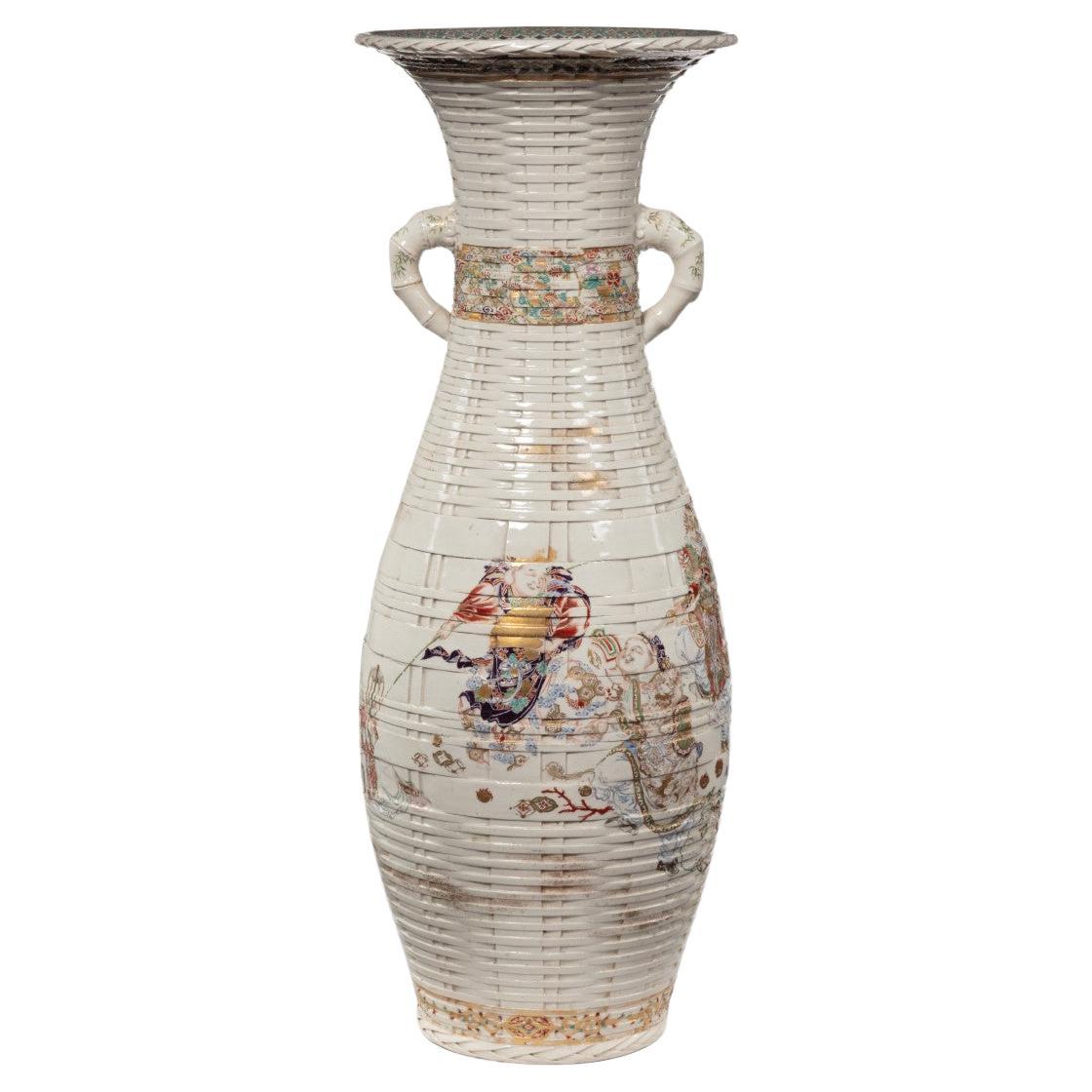
A large Meiji period Satsuma earthenware floor vase, the skittle shaped body painted in pastel overglaze enamels and gilding with a continuous frieze of the Seven Gods...
Category
Antique 1870s Japanese Meiji Ceramics
Materials
Enamel
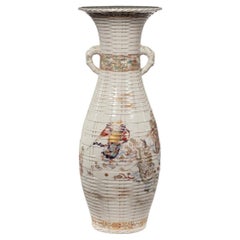
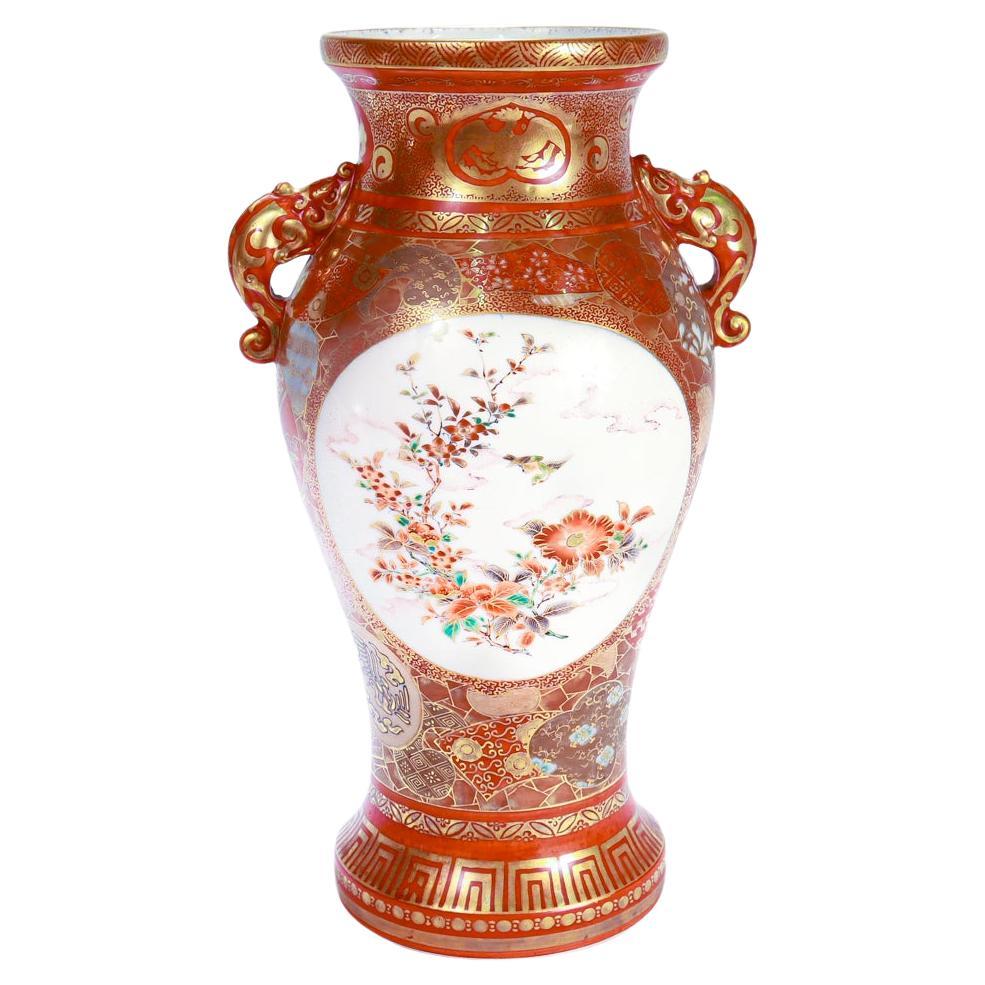
Antique Japanese Meiji Period Kutani Porcelain Vase by Shoundo / Matsumoto Sahei
Located in Philadelphia, PA
A fine antique Japanese Meiji period Kutani porcelain vase.
By Matsumoto Sahei/Shoundo.
In an aka-e style decorated throughout in iron red with extensive gilt accents.
There are cartouches to either side both with branches of red flower with a backdrop of clouds on a white ground.
With 2 figural dragon finial handles.
Marked to the base with '九谷松雲堂製' which translates as 'Made by Shoundo of Kutani'
Matsumoto Sahei (1851-1918) was a master potter who enjoyed success & recognition during his era. In 1876, Sahei received the artist name Shoundo from the nanga painter Tokuda Kansho - he would use that title for nearly 20 years until passing it onto his son as his successor in 1893. Sahei also has the distinction of taking Tokuda Yasokichi I as an apprentice when the latter was 17-years-old. The Tokuda family is perhaps one of the most famous families of Japanese ceramics: Yasokichi I is credited with revitalizing the lost art of ko-Kutani and Yasokichi I, II, & III were all recognized as "Living National Treasures" during their lifetimes.
Shoundo exhibited internationally numerous times at the tail end of the 19th Century. The Keisei Isogaya Museum of Art (which specializes in Meiji Kutani) has a vase of Sahei's that was exhibited in the Philadelphia Centennial Exhibition of 1876. He is listed as exhibiting a wide variety of porcelain goods at the 1878, 1889, and 1900 Paris World Exhibitions. He is also listed as exhibiting 'incense burners & porcelain' at the World's Columbian Exhibition held in 1893 in Chicago. The pair of vases that Sahei exhibited in Paris in 1900 bear a strong resemblance to this pair.
Simply a wonderfully rare Japanese porcelain...
Category
Early 20th Century Japanese Meiji Ceramics
Materials
Porcelain
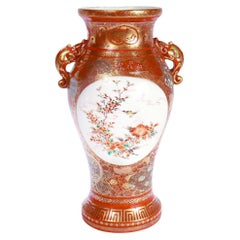
A Fine Japanese Satsuma vase signed by Ryokuzan. Meiji period
Located in London, GB
A exquisite Satsuma vase signed by Ryokuzan.
Meiji Era.
Of a slender ovoid shape featuring intricate hand-painted designs and delicate gilded accents.
The vase is adorned with...
Category
Antique 19th Century Japanese Ceramics
Materials
Ceramic, Porcelain
More Ways To Browse
Antique Trumpet
Antique Satsuma Vase
Antique Props
Antique Trumpet Vase
Vase 1922
1900s Scale
Japan Satsuma Style Moriage Vase
Taizan Yohei
Blue And Celadon Asian Vase
Ming Kraak Porcelain
Old Imari
Chinese Porcelain Plaque
Sancai Pottery
16th Century Chinese Porcelain
Brown Japanese Ceramic Bowl
Canton Enamel
Japanese Raku Ceramics
Bizen Pottery