Want more images or videos?
Request additional images or videos from the seller
1 of 11
Important Ancient Chinese Zodiac Complete Collection, Ming Dynasty 1368-1644
Price:$4,200
$4,900List Price
About the Item
- Dimensions:Height: 8 in (20.32 cm)Width: 3.5 in (8.89 cm)Depth: 3.5 in (8.89 cm)
- Style:Ming (Of the Period)
- Materials and Techniques:
- Place of Origin:
- Period:
- Date of Manufacture:1500
- Condition:Wear consistent with age and use.
- Seller Location:South Burlington, VT
- Reference Number:1stDibs: LU128926721973
About the Seller
5.0
Platinum Seller
Premium sellers with a 4.7+ rating and 24-hour response times
Established in 1990
1stDibs seller since 2015
2,425 sales on 1stDibs
Typical response time: 1 hour
Authenticity Guarantee
In the unlikely event there’s an issue with an item’s authenticity, contact us within 1 year for a full refund. DetailsMoney-Back Guarantee
If your item is not as described, is damaged in transit, or does not arrive, contact us within 7 days for a full refund. Details24-Hour Cancellation
You have a 24-hour grace period in which to reconsider your purchase, with no questions asked.Vetted Professional Sellers
Our world-class sellers must adhere to strict standards for service and quality, maintaining the integrity of our listings.Price-Match Guarantee
If you find that a seller listed the same item for a lower price elsewhere, we’ll match it.Trusted Global Delivery
Our best-in-class carrier network provides specialized shipping options worldwide, including custom delivery.You May Also Like
Impressive Terracotta Funerary Procession - Ming Dynasty, China
1368-1644 AD
Located in San Pedro Garza Garcia, Nuevo Leon
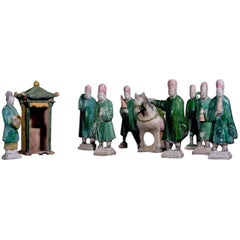
Impressive Funeral Ensamble of 10 Terracotta Glazed Figures in green and caramel colors depicting a votive procession with a palanquin, his four carriers, a horse, a stableman, two musicians, and an offering carrier.
This ensemble is accompanied by a Certificate of Authenticity, and Certificate of Expertise by Jean-Yves Nathan - Specialist in Asian Arts for the CEDEA (The European Confederation of Art Experts).
Burial figurines of graceful dancers, mystical beasts, and everyday objects reveal both how people in early China approached death and how they lived. Since people viewed the afterlife as an extension of worldly life, these figurines, called mingqi, sometimes referred as “spirit utensils” or “vessels of ghosts” disclose details of routine existence and provide insights into belief systems over a thousand-year period.
The Ming dynasty was the ruling dynasty of China – then known as the Empire of the Great Ming – for 276 years (1368–1644 AD). Founded by Chu Yuan-chang, the rebel leader that was successful in removing the mongols from the throne. Chinese control was re-asserted in China and eastern Asia. Literature became more important, schools were created, and the justice system was reformed. The Ming dynasty is described by some as "one of the greatest eras of orderly government and social stability in human history,” was the last imperial dynasty in China ruled by ethnic Han Chinese.
The practice of burying ceramic objects with the deceased went into decline from the 10th to the 14th Century AD. There was a revival in placing miniature representations of glazed terracotta objects such a furniture, food offerings, horses, miniature statues...
Category
Antique 15th Century and Earlier Chinese Ming Antiquities
Materials
Terracotta
$15,625
H 8.5 in W 4 in D 4 in
Superb Set of 5 Elegant Court Attendants, Ming Dynasty, 1368-1644 AD TL Tested
Located in San Pedro Garza Garcia, Nuevo Leon
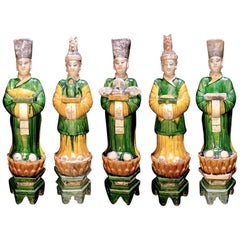
A stunning set of 5 graceful terracotta figurines from the Ming Dynasty '1368-1644' AD. These elegant attendants are standing on a yellow glazed lotus flower over a high hexagonal green plinth and wear fine robes in matching green and yellow glazes. The unglazed areas have pigmented colors in red, black and white. Each is carrying essential offerings for the royal family. The head is detachable as often seen on the larger figures from this period. Meticulously detailed facial expressions have been hand-painted.
Condition: Mint, finely preserved glaze and pigment, undamaged and no repairs.
Provenance: Ex. Danish Collection.
This set is guaranteed authentic and comes with a Certificate of Authenticity and TL Test from Laboratory Kotalla in Germany (The Oldest Thermoluminescence Testing Laboratory in the World).
Dimensions: Average 54 H cms
Burial figurines of graceful dancers, mystical beasts, and everyday objects reveal both how people in early China approached death and how they lived. Since people viewed the afterlife as an extension of worldly life, these figurines, called mingqi, sometimes referred as “spirit utensils” or “vessels of ghosts” disclose details of routine existence and provide insights into belief systems over a thousand-year period.
The Ming dynasty was the ruling dynasty of China – then known as the Empire of the Great Ming – for 276 years (1368–1644 AD). Founded by Chu Yuan-chang, the rebel leader that was successful in removing the mongols from the throne. Chinese control was re-asserted in China and eastern Asia. Literature became more important, schools were created, and the justice system was reformed. The Ming dynasty is described by some as "one of the greatest eras of orderly government and social stability in human history,” was the last imperial dynasty in China ruled by ethnic Han Chinese.
The practice of burying ceramic objects with the deceased went into decline from the 10th to the 14th Century AD. There was a revival in placing miniature representations of glazed terracotta objects such a furniture, food offerings, horses, miniature statues...
Category
Antique 15th Century and Earlier Chinese Ming Antiquities
Materials
Terracotta
$34,000
H 21.25 in W 5.5 in D 5.5 in
Ming Dynasty Celadon Glazed Charger
Located in Stamford, CT
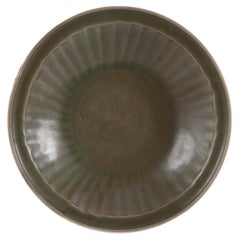
Ming dynasty celadon glazed charger having fluted interior with plain well center.
Category
Antique Mid-17th Century Chinese Ming Ceramics
Materials
Ceramic
Chinese Stoneware Bowl or Dish Longquan Celadon Incised, Yuan Dynasty 1271-1368
Located in Lincoln, Lincolnshire
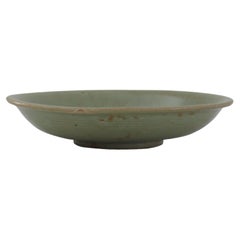
This is a very old interesting Chinese stoneware Longquan Celadon bowl or plate with incised decoration, which we date to the Yuan Dynasty, circa 1300.
The bowl is well potted on a low foot.
The bowl is an olive green colour having a celadon glaze with incised decoration to its centre of what looks like a flower stem and additionally three incised string lines to the outer wall. Unglazed parts fire to a terracotta brown colour as with the base section
The piece is unmarked but for similar pieces see the superb book: Chinese Ceramics by He Li published by Thames & Hudson, 1996; pages 164 to 184.
NOTES
Longquan is a city in South west China. These wares were produced over a long time period from 959 to 1550; which covers the Northern Song, Southern Song...
Category
Antique 15th Century and Earlier Chinese Other Ceramics
Materials
Stoneware
$1,025
H 1.38 in Dm 6.6 in
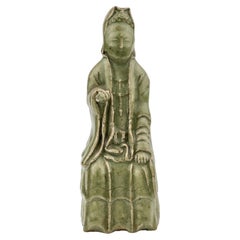
Longquan Celadon Figurine, Ming Dynasty (1368-1644)
Located in seoul, KR
This sculpture is a Longquan celadon from the Ming Dynasty, renowned for its rich and jade-like green glaze. The figurine is likely a representation of a Buddhist deity or a revered scholar, showcasing the calm aesthetic expressions and graceful contours prevalent during the era. The spectrum of celadon glaze ranges from a dense grey stoneware to a nearly white porcelain texture, with unglazed parts revealing a terracotta brown upon firing. Such pieces were often part of household altars, reflecting the era's spiritual devotion. This artifact would be a treasured exhibit in any museum's Asian art collection, symbolizing both religious reverence and artistic excellence.
Period: Ming Dynasty (1368-1644)
Region: Longquan, China
Medium: Stoneware - Celadon glazed, with a range from heavy grey to almost white porcelain-like material
Type: Sculpture
Height : 24.5 cm
Provenance : Acquired in 1999, Hongkong
* Ming Dynasty Longquan Celadon
Longquan celadon from the Ming Dynasty typically exhibits a more robust and heavier stoneware body compared to its Song Dynasty predecessors. The Ming era saw an evolution in celadon glaze, achieving a wider spectrum of green hues, from olive to bluish-greens. Ming celadons...
Category
Antique 15th Century and Earlier Hong Kong Ming Antiquities
Materials
Celadon
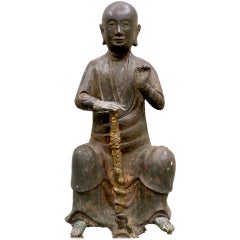
Bronze Figure of a Seated Luohan, Ming Dynasty, 1368-1644
Located in Torino, IT
Cast seated wearing a simple robe with his right hand resting on the hilt of a snake-entwined sword, the left hand held aloft, his face with meditative expre...
Category
Antique Early 1600s Chinese Ming Sculptures
Materials
Bronze
6 Elegant Ming Dynasty Court Attendants in Glazed Terracotta, China 1368-1644 AD
Located in San Pedro Garza Garcia, Nuevo Leon
A fine set of a six court attendants as in the Forbidden City of Beijing, elegantly dressed in a Green & Red Daopao – a traditional men’s formal attire from the Ming Dynasty dated 1368-1643 A.D. – with glazed robes and Red Pigment remains in their hat and belts. They stand in an honorary posture atop a red plinth, some with orifices in their hands, where spirit objects were placed to comfort or satisfy the deceased. The heads are detachable, as often seen on the larger figures from this period.
They are accompanied by a Certificate of Authenticity, and Certificate of Expertise by Jean-Yves Nathan - a leading authority specialized in Far East Archaeology from the CEDEA (The European Confederation of Art Experts).
Burial figurines of graceful dancers, mystical beasts, and everyday objects reveal both how people in early China approached death and how they lived. Since people viewed the afterlife as an extension of worldly life, these figurines, called mingqi, sometimes referred as “spirit utensils” or “vessels of ghosts” disclose details of routine existence and provide insights into belief systems over a thousand-year period.
The Ming dynasty was the ruling dynasty of China – then known as the Empire of the Great Ming – for 276 years (1368–1644 AD). Founded by Chu Yuan-chang, the rebel leader that was successful in removing the mongols from the throne. Chinese control was re-asserted in China and eastern Asia. Literature became more important, schools were created, and the justice system was reformed. The Ming dynasty is described by some as "one of the greatest eras of orderly government and social stability in human history,” was the last imperial dynasty in China ruled by ethnic Han Chinese.
The practice of burying ceramic objects with the deceased went into decline from the 10th to the 14th Century AD. There was a revival in placing miniature representations of glazed terracotta objects such a furniture, food offerings, horses, miniature statues...
Category
Antique 15th Century and Earlier Chinese Ming Antiquities
Materials
Terracotta

$19,000
H 15.25 in W 5.25 in D 4 in
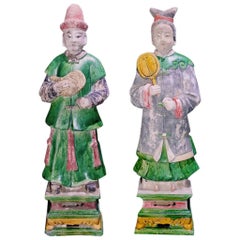
Magnificent Court Attendants in Terracotta - Ming Dynasty, China 1368-1644 AD TL
Located in San Pedro Garza Garcia, Nuevo Leon
A magnificent pair of male and female courtiers from the Ming Dynasty (1368-1644 CE) in excellent condition. They are wearing traditional Daopao robes in green and black garments wit...
Category
Antique 15th Century and Earlier Chinese Ming Antiquities
Materials
Terracotta
$21,250
H 25.4 in W 8 in D 5 in
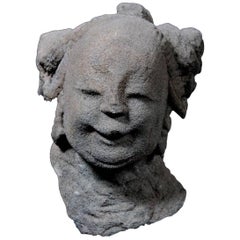
Ming Dynasty Celestial Deity Head Carved in Stone - China
1368-1644 AD
Located in San Pedro Garza Garcia, Nuevo Leon
Wonderful celestial deity head with a jovial expression in stone with a finely engraved cap. It is mounted on a custom lucite base.
This piece is accompanied by a Certificate of Authenticity, and Certificate of Expertise by Jean-Yves Nathan - Specialist in Asian Arts for the CEDEA (The European Confederation of Art Experts).
The Ming dynasty was the ruling dynasty of China – then known as the Empire of the Great Ming...
Category
Antique 15th Century and Earlier Chinese Ming Antiquities
Materials
Stone
Lady Guanyin Bodhisattva Gilded Wood Carving - Ming Dynasty, China 1368-1644 AD
Located in San Pedro Garza Garcia, Nuevo Leon
Magnificent Lady Guanyin Bodhisattva seated in Royal Relaxation pose hand-carved in Gilded Wood with traces of paint still visible.
This expressi...
Category
Antique 15th Century and Earlier Chinese Ming Antiquities
Materials
Wood
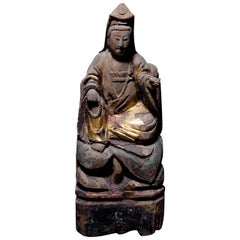
$5,625
H 13 in W 5 in D 4.25 in
More From This Seller
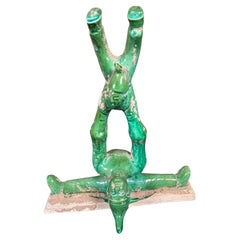
View AllChinese Ancient Acrobat Entertainers Collection, Ming Dynasty 1368-1644
Located in South Burlington, VT
Ancient Chinese collection of twelve (12) acrobatic entertainers each performing a unique twisting profile , some with with cymbal and drum attributes, Ming Dynasty 1368-1644.
Unmi...
Category
Antique 15th Century and Earlier Chinese Ming Sculptures and Carvings
Materials
Ceramic, Pottery
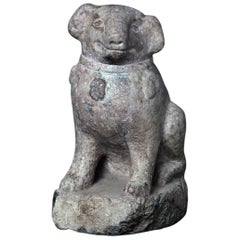
Important Ancient Chinese Effigy Pug Dog, Ming Dynasty 1368-1644
Located in South Burlington, VT
China, a carving of a canine “Pug”, Ming Dynasty, 1368-1644 CE
Dimensions: 38 cm, 15” High
Photographs taken indoors and out of doors for your viewing pleasure.
The hand carved limestone beast shown on its haunches with naturalistic joyful expression and a well defined compact head, ears, noes, eyes, feet, and tail parted to one side on reverse with distinctive collar ornament seated four square on a thick base all-over showing a weathered surface from significant age.
Formerly exhibited “Asia Week” New York City, Fuller Building, Hutton Gallery 2006.
Provenance: ex collection luoyang, Henan Province, China.
Includes custom display base as shown
Catalog reference: 35 years collecting 35 treasures, Number 35, p.76 (photo)
In ancient China, it is a well-known fact that several types of small dogs were bred and were favored pet gifts between emperors and kings including Lion Dogs, Pekingese and Lo-sze breeds. Some Lo-sze are pictured wearing collars with bells a frequent combination fancied by European royalty of the seventeenth and eighteenth centuries. Lo-sze or pugs were prized for their compact body, good bones, flat face, square jaw, short coat, curled tail, side set back ears, and temperate disposition.
History:
Placing stone animals in important tombs can be traced back at least to the Qin Dynasty (221-206 BCE), some two thousand years ago. In ancient times, stone animals and human figures placed before imperial tombs symbolized royal power and privilege in addition to decorative functions.
The first Ming tomb...
Category
Antique 15th Century and Earlier Chinese Ming Sculptures and Carvings
Materials
Limestone
$6,650 Sale Price
21% Off
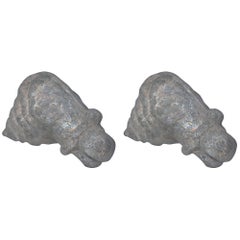
China Antique Pair "Spirit Path" Horse Sculptures, Ming Dynasty 500 Years Old
Located in South Burlington, VT
China, a monumental pair (2) of 500 year old lime stone “Spirit Path” Equine horse head sculptures.
Ming dynasty, (1368-1644 CE).
Please view our video.
A pair of near life size and robust head sections with fine, wavy combed manes, well defined mouths, ears, nostrils, and ornamental bridles, all carved in a medium to dark gray limestone with considerable weathering to surfaces. The smaller head with a later inscription on bottom and signed “Zhuang”.
Formerly exhibited “Treasures from Asia”, Shelburne Vermont, Shelburne Art Center, 2006. Originally found in the vicinity of the village of Chuan near Luoyang City, Henan Provance, China.
Each mounted on a custom iron display stand.
Dimensions:
A the smaller 32.5cm, 13” high and 62.5cm, 25” in length and with display stand, 60cm, 24” high;
b the larger 37.5cm, 15” high and 67.5cm, 27” in length and with display stand
65cm, 26” high.
Please view additional photographs from our Chinese antiquities catalog 35 Years Collecting 35 Treasures, page 60.
History:
Placing stone animals and human figures along spirit paths in front of important tombs can be traced back at least to the Qin Dynasty (221-206 BCE), some two thousand years ago. In ancient times, stone animals and human figures placed before imperial tombs symbolized royal power and
privilege in addition to decorative functions. Life size “spirit path” stone horse sculptures are known and can be viewed from Ming dynasty tombs including thirteen imperial tombs of the Ming Dynasty scattered over an area of forty square kilometers in Changping District to the northwest of Beijing.
The first Ming tomb...
Category
Antique 16th Century Chinese Ming Statues
Materials
Limestone
$19,200 Sale Price
60% Off
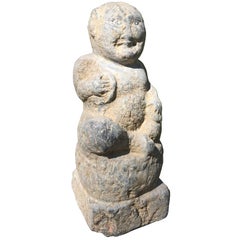
China Ancient Stone Entertainer, Han Dynasty 200 AD
Located in South Burlington, VT
China an ancient limestone figure of an Entertainer replete with hands holding tambourines and a top a drum, -for the afterlife- , Han dynasty 206 BC...
Category
Antique 15th Century and Earlier Chinese Han Sculptures and Carvings
Materials
Limestone
$12,000 Sale Price
20% Off
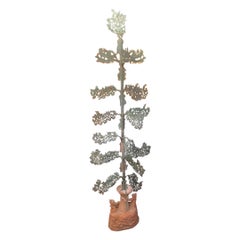
Important Chinese Ancient Bronze Money Tree, 25BC-220AD
Located in South Burlington, VT
China, Ancient Bronze “Money Tree” Yaoqian Shu with original pottery base, Han dynasty (25 BCE – 220 CE)
Dimensions: 155cm, 62 inches high
A sculpted terracotta pottery base in the form of a tortoise with attendants and inserted with five individual bronze pole segments with twenty four individual hanging bronze open work money “branches” attached in tiers, four per tier and topped with a figure of a bronze phoenix as apex most bearing varying degrees of malachite and azurite encrustation from ancient burial.
Important Description Details:
Pottery "tortoise" base: 14.5" high and 11" wide
Bronze sections:
7pcs pole bronze sections approximately 8" length each
1pc top "phoenix" bronze section approximately 7" high and 6" wide
20 pcs long bronze hanging wings approximately 10" long and 5" wide each
4 pcs short bronze hanging wings (near top) approximately 7" long and 4" wide each
Total 32 pcs with ancient green and blue azurite patina.
Catalog reference: Schneible Fine arts catalog - 35 Years Collecting Treasures- Number 11p. 28 (see photos)
Provenance: Provenance: Private family collection formerly exhibited “Asia Week” New York City, Fuller Building, Zabriskie Gallery, 2008.
History of money trees:
In the late Han Dynasty tombs...
Category
Antique 15th Century and Earlier Chinese Han Antiquities
Materials
Bronze
$100,000 Sale Price
33% Off
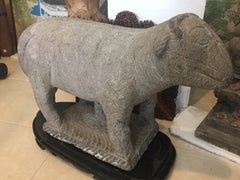
Ancient China Monumental Stone Ram Han Dynasty, 206BC-220AD
Located in South Burlington, VT
China, a large votive model of a stone ram, Han dynasty (206BC-220AD)
Dimensions: 45cm, 18 inches high and 65cm, 26 inches length and 25cm, 10 inches wi...
Category
Antique 15th Century and Earlier Chinese Han Sculptures and Carvings
Materials
Limestone
$17,600 Sale Price
54% Off
Still Thinking About These?
All Recently ViewedMore Ways To Browse
Chinese Zodiac Figures
Korean Ceramic Plates
Kozan Gama
Martaban Pot
Ming Dynasty Pearl
Okinawa Pottery
Oribe Tea Bowl
Satsuma Bucket
Satsuma Chrysanthemum
Scalloped Rose Medallion Bowl
Shigaraki Tea Jar
Thousand Butterfly Plate
Vietnamese Pottery
Wucai Bowl
Yongzheng Tea Bowl
Yu Fujiwara
Zhong Kui
Antique Fire Sprinkler