Want more images or videos?
Request additional images or videos from the seller
1 of 6
Japan, Pair of Satsuma Vases, Signed Hattori, Meiji Period Around 1870/80
$1,305.21List Priceper set
About the Item
- Dimensions:Height: 4.53 in (11.5 cm)Diameter: 2.56 in (6.5 cm)
- Sold As:Set of 2
- Materials and Techniques:
- Place of Origin:
- Period:
- Date of Manufacture:1880/1900
- Condition:Minor losses. One of the vases has a very tinny chip. The other one is perfect.
- Seller Location:PARIS, FR
- Reference Number:1stDibs: LU6491234048972
About the Seller
5.0
Recognized Seller
These prestigious sellers are industry leaders and represent the highest echelon for item quality and design.
Established in 1982
1stDibs seller since 2022
7 sales on 1stDibs
Authenticity Guarantee
In the unlikely event there’s an issue with an item’s authenticity, contact us within 1 year for a full refund. DetailsMoney-Back Guarantee
If your item is not as described, is damaged in transit, or does not arrive, contact us within 7 days for a full refund. Details24-Hour Cancellation
You have a 24-hour grace period in which to reconsider your purchase, with no questions asked.Vetted Professional Sellers
Our world-class sellers must adhere to strict standards for service and quality, maintaining the integrity of our listings.Price-Match Guarantee
If you find that a seller listed the same item for a lower price elsewhere, we’ll match it.Trusted Global Delivery
Our best-in-class carrier network provides specialized shipping options worldwide, including custom delivery.You May Also Like
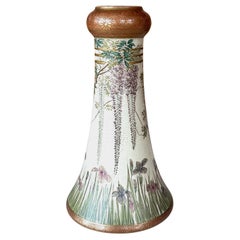
Fine Japanese Enameled Satsuma Vase by Kinkozan Meiji Period
By Kinkozan
Located in Atlanta, GA
A ceramic satsuma ware vase with very fine surface decoration made by Kinkozan circa 1880-1900s of late Meiji Period. The vase is of an elegant and relatively rare form with a trumpet shape body and the so-called garlic neck and opening. The surface is exquisitely decorated in a floral scheme with gilt and a light jewel-tone enamel. The top part showcases large bundles of wisteria blossom in white and purple, cascading down from a gilt wood trellis...
Category
Antique 1880s Japanese Meiji Ceramics
Materials
Ceramic
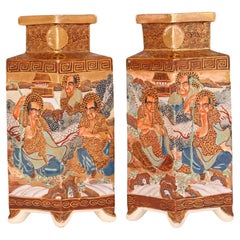
Satsuma Japanese Meiji Pair Diamond Shaped Pottery Vases
By Satsuma
Located in Bishop
s Stortford, Hertfordshire
A good and unusual pair antique Japanese Satsuma Meiji diamond shaped pottery vases decorated with monk figures with a scrolling dragon dating from the 1...
Category
Antique 19th Century Japanese Meiji Ceramics
Materials
Pottery
$621
Free Shipping
H 5.12 in W 2.76 in D 1.97 in
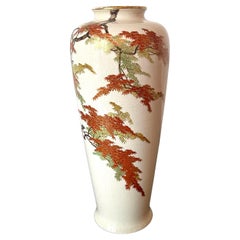
Japanese Satsuma Vase Yabu Meizan Meiji
By Yabu Meizan
Located in Atlanta, GA
A Satsuma baluster form vase from the studio of Yabu Meizan (birth name Yabu Masashichi; 1853-1934), who is one of the most celebrated and collectible Satsuma artists from Meiji Peri...
Category
Early 20th Century Japanese Meiji Ceramics
Materials
Ceramic
Large Meiji Period Satsuma Earthenware Floor Vase
Located in Lymington, Hampshire
A large Meiji period Satsuma earthenware floor vase, the skittle shaped body painted in pastel overglaze enamels and gilding with a continuous frieze of the Seven Gods...
Category
Antique 1870s Japanese Meiji Ceramics
Materials
Enamel
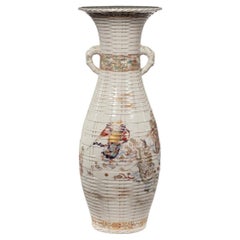
Large Meiji Period Satsuma Earthenware Floor Vase
Located in Lymington, Hampshire
A large Meiji period Satsuma earthenware floor vase, the of baluster form, painted in pastel overglaze enamels and gilding with two large sprays of flowers including prunus blossom, ...
Category
Antique 1870s Japanese Meiji Ceramics
Materials
Enamel
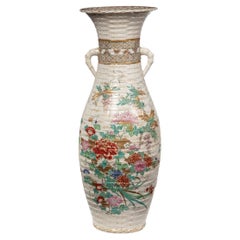
Japanese Miniature Satsuma Vase Yabu Meizan Meiji
By Yabu Meizan
Located in Atlanta, GA
A small Satsuma vase from the studio of Yabu Meizan (birth name Yabu Masashichi; 1853-1934), who is one of the most celebrated and collectible Satsu...
Category
Antique Early 1900s Japanese Meiji Ceramics
Materials
Ceramic
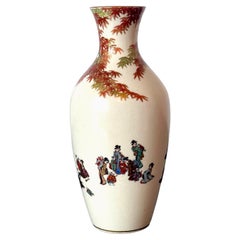
Late 19th Century Signed Japanese Hand Painted Satsuma Temple Jar Meiji Period
Located in Cincinnati, OH
This outstanding late 19th century Japanese Satsuma porcelain covered temple jar has a traditional form with a domed lid. The piece features exquisite hand painted decoration which includes brightly hued flowers and associated foliage along with highly detailed jewel-toned butterflies with gilt highlights, all of which are on a shaded blue ground. The jar and lid also bear large chrysanthemums executed in heavy white enamel with underlying hints of green. The collar of the jar and edge of the lid have wide gilt bands finished with fine incised linear decoration that has been accented with blue, black and white enamel. The underside of the jar is hand lettered with characters reading Dai Nippon...
Category
Antique 1880s Japanese Meiji Ceramics
Materials
Ceramic
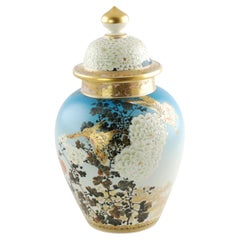
$4,950
H 12.5 in Dm 7 in
Pair of Japanese Meiji Period Imari Vases with Dragon Handles
Located in New York, NY
A Monumental pair of Japanese Meiji Period Imari vases with Dragon handles, Japanese Porcelain Studio Marks on Underside. Each is beautifully ...
Category
Antique 1880s Japanese Meiji Ceramics
Materials
Porcelain
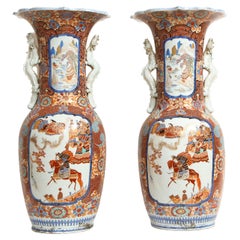
Pair Of Japanese Meiji Period Satsuma Vases
Located in Norwood, NJ
Find pair of Meiji period Japanese Satsuma 4 panel vases. Each vase featuring one panel with scholars and one panel with samurai. The two side panels are floral. Wonderfully gilt and...
Category
Early 20th Century Japanese Meiji Vases
Materials
Ceramic
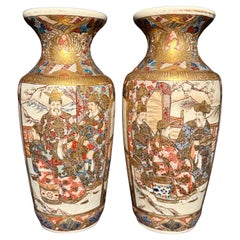
Pair of Japanese Late Meiji Period Fukagawa Porcelain Vases, circa 1900
Located in Takarazuka, JP
Superb pair of Japanese large Meiji period Fukagawa signed porcelain vases (circa 1900). Intricately hand-painted in cobalt blue underglaze with polychrome and gold overglaze on a st...
Category
Antique Early 1900s Japanese Meiji Vases
Materials
Gold
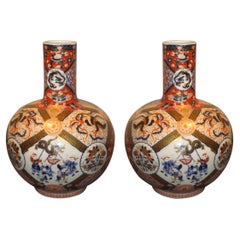
$29,500 / set
H 13.5 in Dm 13.5 in
More From This Seller
View AllJapan, Set of Two Japanese Vases for Flower Arrangement, Ikebana
Located in PARIS, FR
Rare ceramic set of hand made vases Japanese flower arrangements. Very attractive even without flowers.
Hand made, hand painted and signed by the ar...
Category
Mid-20th Century Japanese Vases
Materials
Ceramic
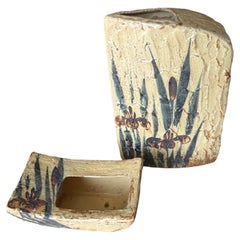
Large Signed Studio pottery Japanese vase
Located in PARIS, FR
This is a striking Japanese studio pottery vase, signed but with an unknown artist’s mark, housed in its original box. Likely crafted circa 1980, the vase showcases expert hand model...
Category
Late 20th Century Vases
Materials
Ceramic
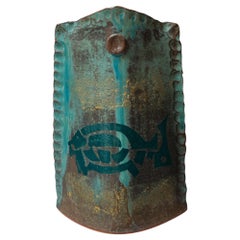
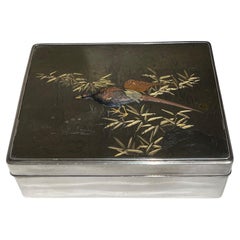
Box signed Katsutoshi Koku, Japan, Meiji period (1868-1912)
Located in PARIS, FR
Box signed Katsutoshi Koku, Japan, Meiji period (1868-1912)
Rectangular silver box bearing the Japanese junjin hallmark, signifying pure silver, made during the Meiji period (1868-1...
Category
Antique Late 19th Century Japanese Decorative Boxes
Materials
Silver
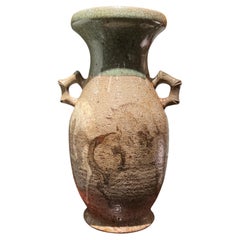
Japanese Ceramic Vase with Horses, Somayaki, Japan circa 1830
Located in PARIS, FR
Japanese Ceramic Vase with Horses, Somayaki, Japan circa 1830
This rare two-handled baluster vase from the late Edo period is a typical example of Ōbori Sōma pottery. Its surface fe...
Category
Antique Early 19th Century Japanese Vases
Materials
Ceramic
$1,234 Sale Price
20% Off
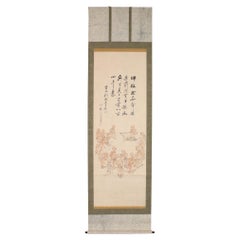
Rare Japanese painting, Skeletons Studying, Shaku Kaiyin, Japan Meiji Period
Located in PARIS, FR
Skeletons Studying, Shaku Kaiyin, Japan Meiji Period
This ink-on-paper painting, mounted as a scroll with colored paper borders, is titled Skeletons Studying. It portrays a circle of...
Category
Antique Late 19th Century Japanese Paintings and Screens
Materials
Paper
$1,803 Sale Price
20% Off
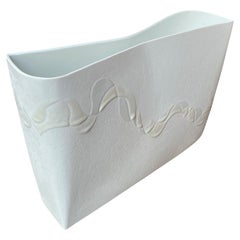
Japan, Porcelain vase by Shigekazu Nagae, 1991
Located in PARIS, FR
Born in 1953 in Seto, renowned for its long ceramic tradition, Shigekazu Nagae has established himself as one of the emblematic figures of contemporary abstract porcelain. Raised in a family of potters, he learned traditional ceramic techniques from a young age before transcending them with a resolutely modern approach. A graduate of the Seto ceramics school, he perfected his mastery of Ikomi, a porcelain casting technique, which he reinvented by integrating it into an innovative artistic approach. This vase, circa 1991, bears witness to this constant exploration of the material and aesthetic limits of porcelain. Its fluid form, enhanced by delicate undulations, seems to capture an eternal movement, evoking both the softness and tension of the molten material. These undulating patterns, forming a slight relief on the surface, already announce Nagae's current sculptural research, where forms, freed from all constraints, stretch and curve like waves frozen in time.
Nagae's work, although deeply rooted in Japanese tradition, has won international recognition. His pieces are now included in the collections of some of the most prestigious museums in the world, such as the Metropolitan Museum of Art in New York, the Musée National de Céramique in Sèvres, and the Victoria & Albert Museum in London.
In his most recent creations, Nagae continues his quest for the perfect form, transforming porcelain into a living, almost organic material. Each piece, although shaped by the chance of the firing process, is the result of a unique technical mastery and artistic vision, making Shigekazu Nagae an essential pioneer of contemporary ceramic art.
Nagae uses casting, a technique traditionally associated with mass production. However, he diverts this process to shape forms, challenging the limits of the technique.
As with this vase, his creations begin by casting rectangular pieces in slip, which are then left to dry and undergo an initial firing. The joints are then vitrified by the application of glaze, fusing the pieces into a single entity.
He quickly progresses to abstract forms for which he uses the same technique and then suspends the slip sheets in his kiln using...
Category
Late 20th Century Japanese Vases
Materials
Porcelain
Still Thinking About These?
All Recently ViewedMore Ways To Browse
Pair Of Satsuma Vases
Small Satsuma Vase
Canton China Early 19th Century
Edo Period Ceramics
Qianlong Plate
Asian Furniture Foo Dogs
Chinese Rose Canton
Rose Mandarin
18th Century Chinese Furniture Bamboo
Japanese Green Ceramics
Painted Japanese Bowl
Glazed Korean
Kraak Porcelain
Ming Blue White
Large China Bowl
Rose Canton Porcelain
Signed Asian Vases
Vintage Japanese Kutani