Items Similar to Japanese Antique Earthenware Satsuma Vase by Kinkozan Meiji Period
Want more images or videos?
Request additional images or videos from the seller
1 of 21
Japanese Antique Earthenware Satsuma Vase by Kinkozan Meiji Period
$5,471.08
£4,000
€4,703.06
CA$7,615.46
A$8,173.10
CHF 4,381.11
MX$98,359.55
NOK 55,239.26
SEK 50,370.55
DKK 35,131.86
About the Item
FREE WORLDWIDE SHIPPING
MEIJI PERIOD (1868-1912)
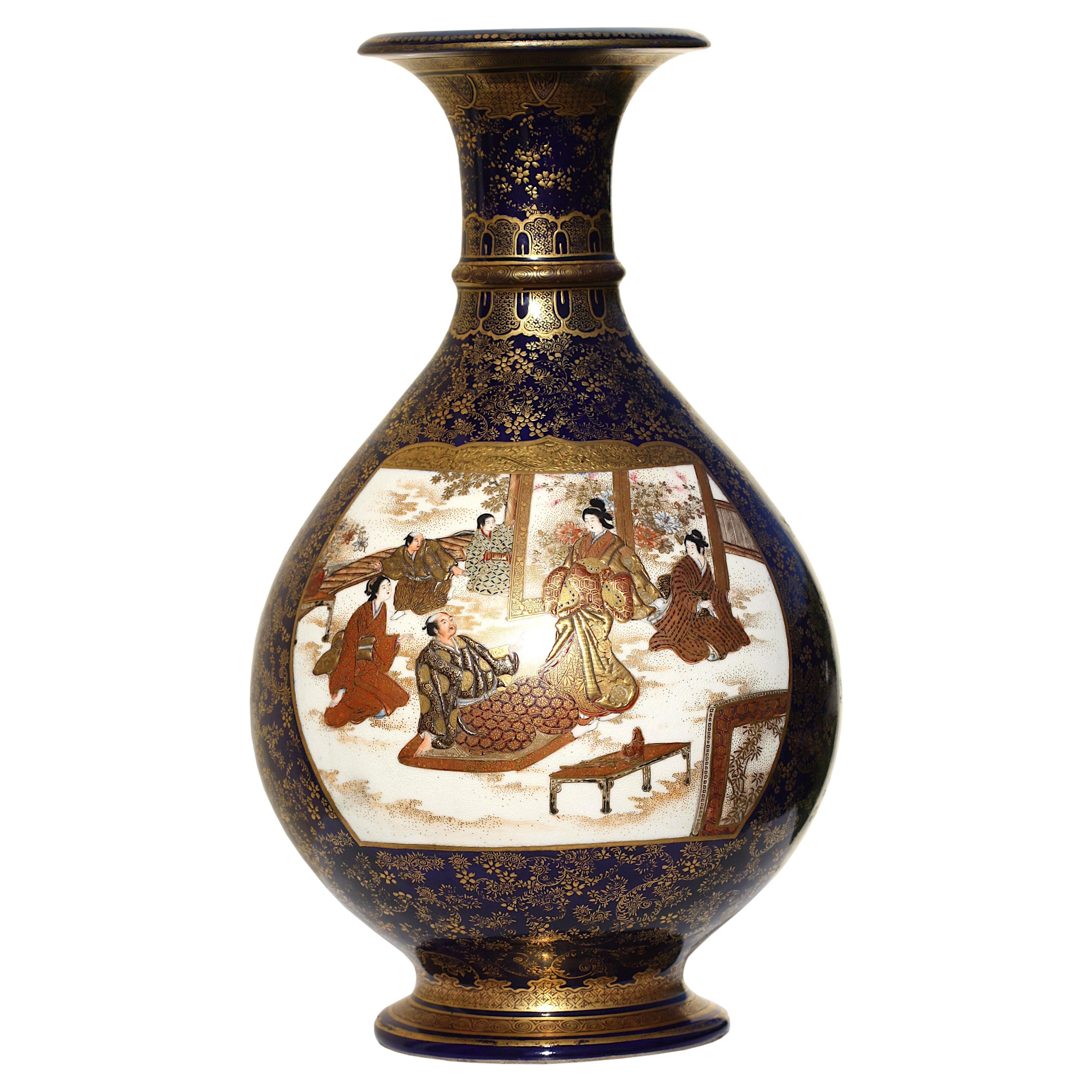
From our Japanese Satsuma collection, we’re pleased to offer this Meiji period bottle-form Satsuma vase by Kinkozan.
The vase is of traditional bottle shape potted from earthenware, with a flared top rim and broad bulbous body, finished in a rich cobalt blue ground glaze. A wide band of finely gilt foliage extends across the surface, interspersed with detailed Greek key ornamentation around the rim and high relief-moulded leaf forms falling from the neck. The gilt work is applied with precision and carries strong visual contrast against the deep blue enamel. Three oval cartouches are set around the body, each individually painted with figural scenes. The compositions depict groups of seated and standing figures in traditional dress, each panel worked in fine brush detail with areas of raised enamel highlighting the folds and textures of the garments. The painting demonstrates the narrative style associated with the Kinkozan studio during the late Meiji period, where storytelling and surface decoration were brought together in balance.
The base of the satsuma vase carries both the gilt-painted Kinkozan mark and a blind embossed Kinkozan seal, indicating that the piece was both potted and painted within the studio. A third collector’s label is also present beside the signature indicating the vase came from a larger collection. This vase dates to the Meiji period (1868–1912), a time when the Kinkozan workshop in Kyoto produced some of the most sought-after examples of export Satsuma ware. The combination of cobalt blue, detailed figural scenes, and intricate gilt work reflects the workshop’s attention to surface decoration and their position in the Japanese ceramic export market of the late 19th century. A finely painted and richly decorated example of signed Meiji period Kinkozan Satsuma ware.
PROVENANCE
Private Middle Eastern collection.
About the Seller
5.0
Vetted Professional Seller
Every seller passes strict standards for authenticity and reliability
Established in 2019
1stDibs seller since 2022
40 sales on 1stDibs
Typical response time: <1 hour
- ShippingRetrieving quote...Shipping from: Newark, United Kingdom
- Return Policy
More From This Seller
View AllJapanese Antique Earthenware Satsuma Vase by Kinkozan Meiji Period
By Kinkozan
Located in Newark, England
FREE WORLDWIDE SHIPPING
MEIJI PERIOD (1868-1912)
From our Japanese Satsuma collection, we are delighted to present this exceptional Meiji period Satsuma vase by Kinkozan
This tal...
Category
Antique Late 19th Century Japanese Meiji Ceramics
Materials
Ceramic, Earthenware, Pottery
Japanese Meiji Period Satsuma Vase by Kinkozan
By Kinkozan
Located in Newark, England
FREE WORLDWIDE SHIPPING
FROM KYOTO’S FAMED KINKOZAN WORKSHOP, A MEIJI-PERIOD SATSUMA VASE OF EXCEPTIONAL ENAMEL AND GILT.
From our Japanese Satsuma collection, we are delighted to ...
Category
Antique Late 19th Century Meiji Ceramics
Materials
Ceramic, Earthenware, Pottery
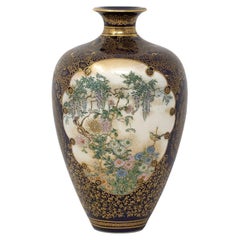
Japanese Meiji Period Satsuma Vase by Ryokuzan
Located in Newark, England
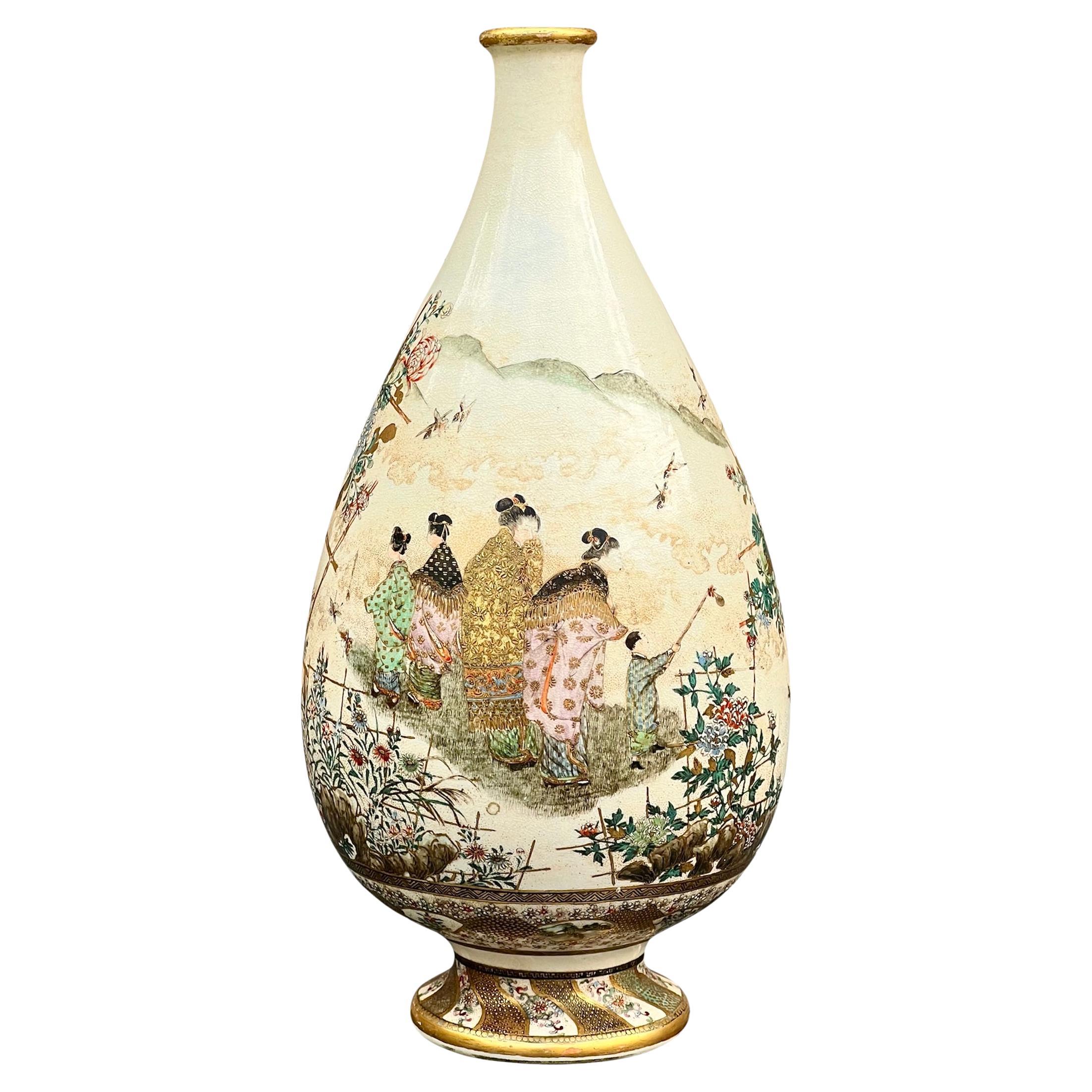
From our Japanese Satsuma Collection, we are delighted to offer this Japanese Satsuma Vase by Ryokuzan 緑山. The Satsuma vase of ovoid shape with a tapered body, circular foot rim, wai...
Category
Antique Early 1900s Japanese Meiji Ceramics
Materials
Ceramic, Earthenware, Pottery

Japanese Meiji Period (1868-1912) Satsuma Vase by Kinkozan
By Kinkozan
Located in Newark, England
JAPANESE SATSUMA PROCESSIONAL VASE
From our Japanese collection, we are delighted to introduce to the market this Japanese Satsuma Vase by Kinkozan. The vase with a compressed body ...
Category
Antique Late 19th Century Japanese Meiji Ceramics
Materials
Ceramic, Earthenware, Pottery

Antique Japanese Meiji Period Satsuma Vase by Ryozan
Located in Newark, England
MEIJI PERIOD 1868-1912
From our Japanese collection, we are delighted to offer this Japanese Satsuma Vase by Ryozan. The vase of tapered form with tightly pinched neck and flared to...
Category
Antique Late 19th Century Japanese Meiji Ceramics
Materials
Ceramic, Earthenware, Pottery
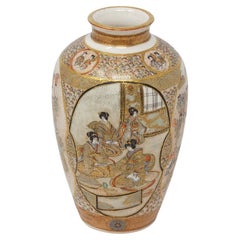
Japanese Antique Meiji Period Satsuma Vase by Kinkozan
By Kinkozan
Located in Newark, England
GLOBULAR FORM MINIATURE VASE
From our Japanese collection, we are delighted to offer this Japanese Satsuma Vase by Kinkozan. The Satsuma Vase made from earthenware pottery is potted...
Category
Antique Early 1900s Japanese Meiji Ceramics
Materials
Ceramic, Earthenware, Pottery

You May Also Like
Japanese Satsuma Earthenware Vase by Kinkozan, Meiji Period
By Kinkozan
Located in West Palm Beach, FL
A Japanese Satsuma Earthenware Vase by Kinkozan, Meiji period (1868-1912)
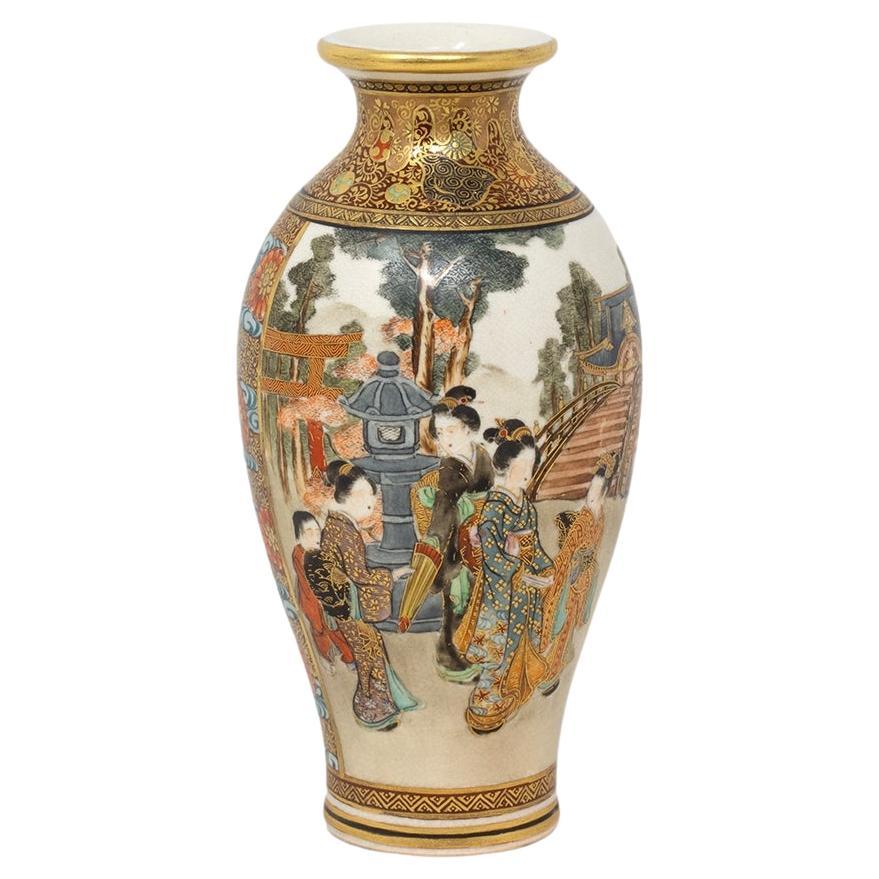
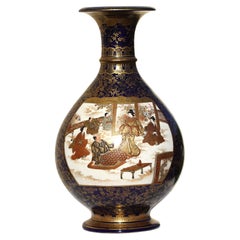
The body inset with two panels, one depicting figures seated around a table, the other painted with a joyful scene in a shrine, all reserved on a blue ground decorated with a gilt flower pattern, signed Nihon Kyoto Kinkozan zo...
Category
20th Century Antiquities
Materials
Ceramic
Satsuma earthenware vase by kinkozan, Meiji period
By Kinkozan
Located in Tel Aviv - Jaffa, IL
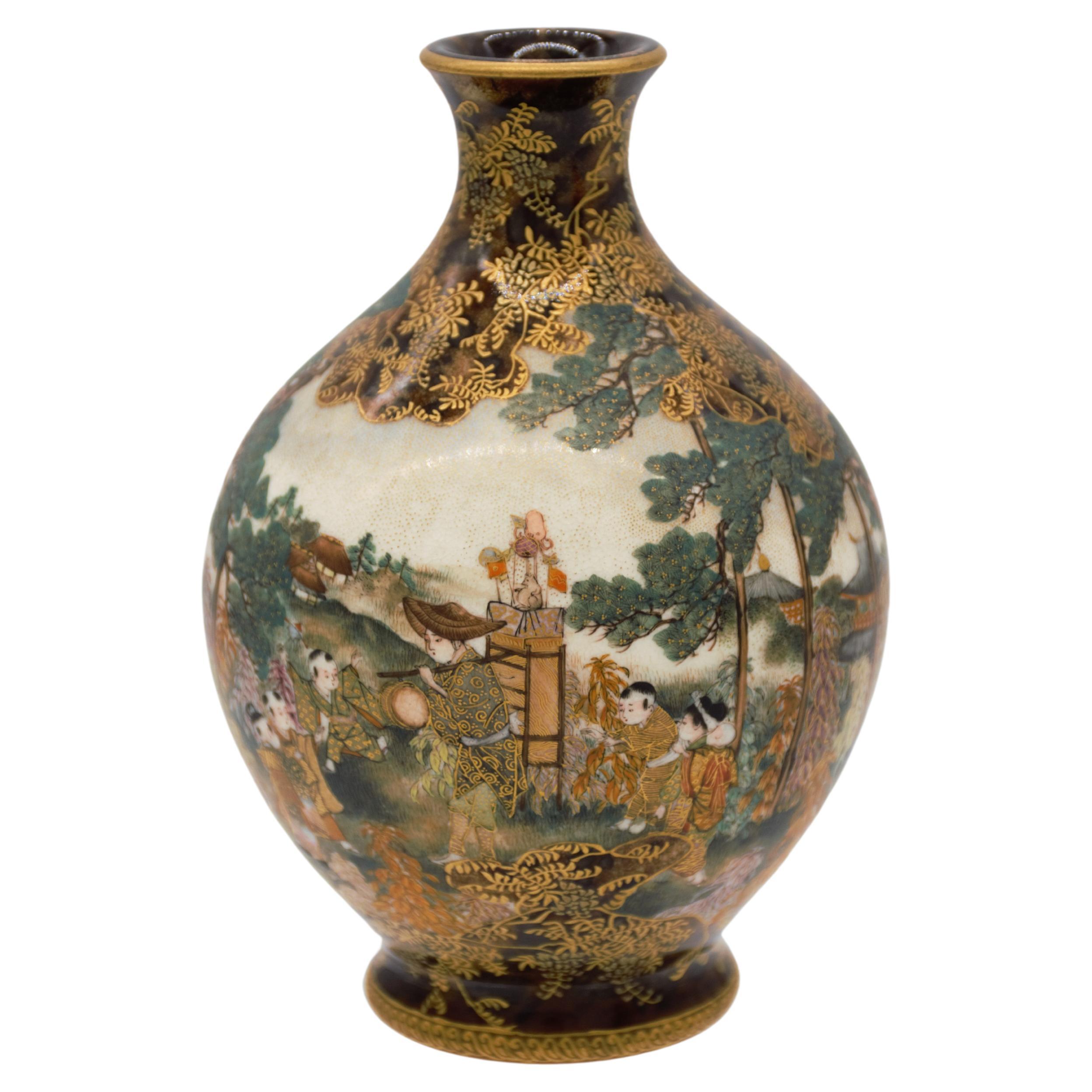
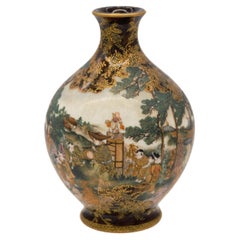
the body of this small marvelous vase is painted with a scene of a puppet show vendor with his wood backpack, on top of the backpack there are toys and dolls, he is surrounded with a group of 6 children, and on the background you can see a village.
on the other side of the vase there is an amazing painting of flowers and on the sides there are two amazing strong pine trees, the amorphous background is decorated in a "Tortoiseshell" color and design that gives it a real character and which is quite rare to see on satsuma pottery.
all the vase is over richly overpainted over the glaze with gold, which gives it its depth and realism.
signed Kyoto Kinkozan zo, and sealed Kinkozan zo
Kyoto’s Satsuma:
The painting technique used in Kyoto’s Satsuma-style ware is said to be the invention of the sixth generation Kinkōzan Sōbei (1824–1884). The Kinkōzan were a famous family of Kyoto Awataguchi potters who made ceramics that were used at Shōren'in, a temple closely tied to the imperial family, and by the shoguns of the Edo government. In fact the shogun is said to have granted them the name Kinkōzan. With the upheavals at the end of the Edo period, however, and the reforms of the subsequent Meiji government, the potters lost their traditional patrons and had to develop new markets.
Just at that time, the visit of a certain Westerner is said to have decided them to embark on overseas trade. By 1870, they had perfected Kyō Satsuma...
Category
Antique 1890s Japanese Meiji Ceramics
Materials
Gold
A Fine Japanese Satsuma Vase . Meiji Period. Kinkozan
Located in London, GB
A Fine Japanese Satsuma Vase with Bijin, Peacock, and Chrysanthemums.
Attributed to Kinkozan Workshop, Kyoto, Meiji period (late 19th century)
Of pear-shaped form with a flared f...
Category
Antique 19th Century Japanese Ceramics
Materials
Ceramic, Porcelain
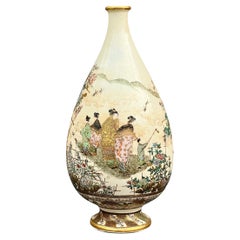
Fine Japanese Ceramic Satsuma Vase by Kinkozan
By Kinkozan
Located in Atlanta, GA
A miniature Japanese ceramic vase from the end of Meiji period circa 1880s- 1910s by Kinkozan (1645-1927). One of the largest studio manufacturers of the export ceramics at the time ...
Category
Early 20th Century Japanese Meiji Ceramics
Materials
Ceramic
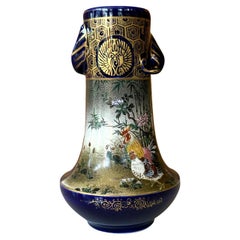
Japanese Satsuma Vase Meiji Period Genzan
Located in Vienna, AT
Description:
Japanese Satsuma vase dating to the Meiji period (1868–1912). The base bears a stamped kanji mark indicating Genzan as the maker. The vase is finely decorated in overgla...
Category
Antique 1860s Japanese Meiji Vases
Materials
Porcelain
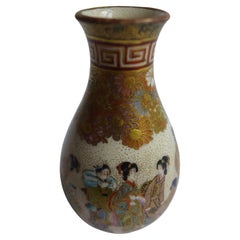
Fine Japanese Satsuma Vase by Ryozan Okamoto for Yasuda Company Meiji Period
Located in Atlanta, GA
A finely decorated Japanese satsuma ceramic vase by Ryozan Okamoto (c.1820s-1910s) for Yasuda. Ryozan is the head artist working for Yasuda company, a Japanese ceramic makers and dea...
Category
Antique Early 1900s Japanese Meiji Ceramics
Materials
Ceramic