Items Similar to Japanese Antique Earthenware Satsuma Vase by Kinkozan Meiji Period

Want more images or videos?
Request additional images or videos from the seller
1 of 21
Japanese Antique Earthenware Satsuma Vase by Kinkozan Meiji Period
$26,703.15
£19,500
€22,857.79
CA$36,772.40
A$40,025.83
CHF 21,208.25
MX$481,371.16
NOK 269,657.55
SEK 247,111.31
DKK 170,746.28
About the Item
FREE WORLDWIDE SHIPPING
MEIJI PERIOD (1868-1912)
From our Japanese Satsuma collection, we are delighted to present this exceptional Meiji period Satsuma vase by Kinkozan
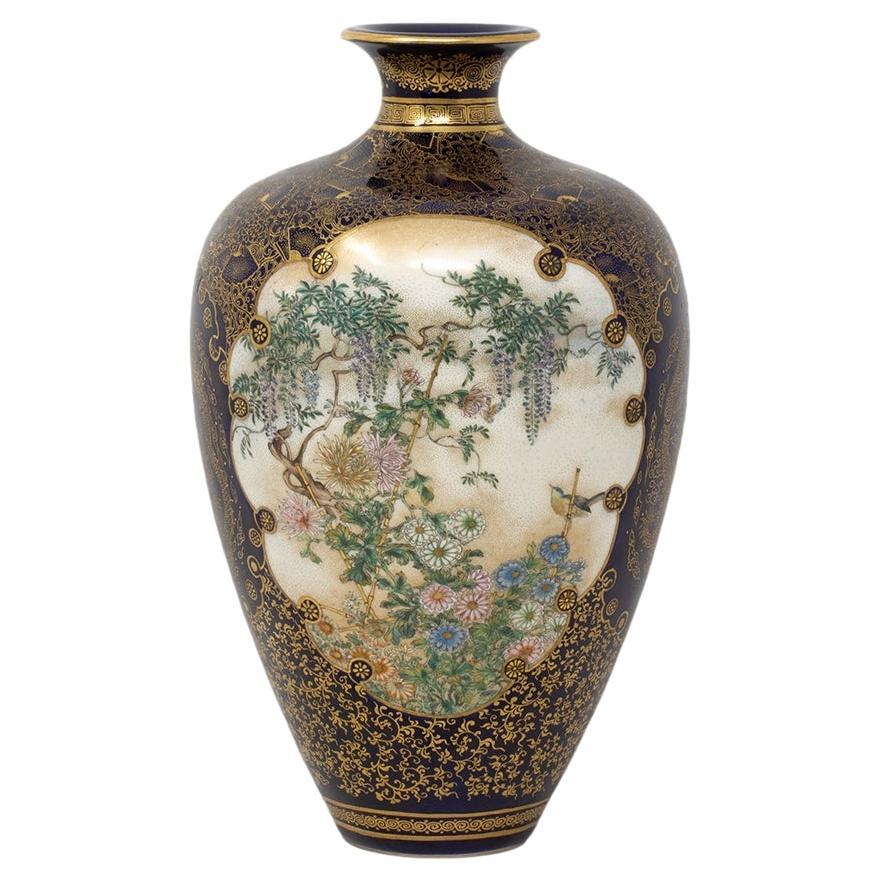
This tall baluster form vase is a showcase of Kinkozan’s mastery in intricate overglaze enamelling and fine gilt decoration. The body is finished in a deep cobalt ground, profusely enriched with scrolling gilt foliage and flourishes framing two large opposing oval panels, each vividly painted with a distinct seasonal and symbolic scene.
Front Panel - Bijin and Garden Scene
One side depicts a graceful bijin (beautiful lady) dressed in a richly patterned kimono in shades of blue and gold, holding a fan decorated with a crane motif, a symbol of longevity and good fortune. She stands within a lush garden setting surrounded by flowering chrysanthemums, peonies, and daisies in full bloom, all rendered with meticulous brushwork and heightened in gilt. Towering bamboo stems rise behind her, representing strength and resilience, while the abundance of flowers evokes seasonal prosperity and renewal.
Reverse Panel - Birds and Floral Abundance
The opposite panel bursts with life, depicting an elaborate garden teeming with birds and blossoms. A proud rooster and hen strut among an array of flowers including chrysanthemums, peonies, and wisteria, symbols of beauty, elegance, and seasonal change. Perched among the branches, small green warbling birds (Mejiro) and sparrows flit through the blossoms, their plumage picked out in jewel-like enamels. A golden pheasant stands proud on the top of a small rocky outcrop overlooking the space. The scene captures both movement and tranquillity, embodying the harmonious coexistence of nature.
Handles and Decorative Borders
The vase is flanked by moulded gilt shishi (foo dog) handles with pierced rings, symbolic guardians traditionally associated with protection and warding off evil spirits. These handles sit between panels of densely patterned gilt floral scrollwork, extending up the flared neck and down to the base, harmonising with the painted scenes.
Signature and Period
Signed to the base in gilt characters 京都金光山製造 (Kyoto Kinkozan sei – Kyoto, Kinkozan Manufactured), the vase dates to the Meiji period, circa 1890, a time when Kinkozan ware was at the height of its popularity among both domestic collectors and Western export markets.
An outstanding example of Meiji-period craftsmanship, this vase showcases exquisite artistry, intricate detailing, and remarkable technical skill, an unmistakable statement piece for the discerning collector of fine Japanese Satsuma ware.
KINKOZAN 金光山
the Kinkozan family have been associated with pottery dating back to 1645. They went on to become the largest producer of Satsuma ware by one individual company, from the end of the 19th century until 1927 after which the factory closed. By the 1850s Kobayashi Sobei (1824-84), Kinkozan Sobei (artist name Kinkozan IV), started to export his products together with the Kyoto manufacturer Taizan VIII. The main target market was America with their main production period approximately between 1875-1927 under the leadership of Kinkozan V(1868-1927).
MEIJI PERIOD (1868-1912)
The Meiji era marked Japan’s transformation into a modern nation and a golden age of decorative arts. With the end of samurai rule and Japan’s opening to the West, artisans produced works of exceptional quality for both domestic and international audiences. Supported by the government through world fairs and Imperial commissions, Japanese lacquerware, cloisonné, satsuma ceramics, bronzes, and ivory carvings reached collectors worldwide. Many leading artists of the time, including Makuzu Kozan and Namikawa Yasuyuki, were honoured as Imperial Household Artists, ensuring the Meiji period remains one of the most celebrated eras of Japanese art.
SATSUMA WARE
Satsuma ware originated in southern Kyūshū around 1600 and developed into one of Japan’s most recognisable ceramics. Early Ko-Satsuma pieces were rustic, dark-clay wares made for everyday use, while the later Kyō-Satsuma style became famous worldwide during the Meiji period.
Characterised by ivory crackled glaze, delicate overglaze enamels, and lavish gilding, export Satsuma appealed strongly to Western collectors. Designs often feature landscapes, flowers, figures, and scenes from Japanese life and mythology. Renowned artists such as Yabu Meizan, Ryozan, and the Kinkōzan workshop produced some of the finest examples, which remain highly sought after today. Genuine Satsuma can often be identified by the Shimazu crest, artist signatures, or the mark “Dai Nippon” used during the Meiji era.
- Creator:Kinkozan (Maker)
- Dimensions:Height: 11.91 in (30.25 cm)Diameter: 5.71 in (14.5 cm)
- Style:Meiji (Of the Period)
- Materials and Techniques:
- Place of Origin:
- Period:
- Date of Manufacture:Circa 1890
- Condition:Wear consistent with age and use.
- Seller Location:Newark, GB
- Reference Number:Seller: UDYDWD1stDibs: LU6971247464582
About the Seller
5.0
Vetted Professional Seller
Every seller passes strict standards for authenticity and reliability
Established in 2019
1stDibs seller since 2022
40 sales on 1stDibs
Typical response time: 3 hours
- ShippingRetrieving quote...Shipping from: Newark, United Kingdom
- Return Policy
More From This Seller
View AllJapanese Antique Earthenware Satsuma Vase by Kinkozan Meiji Period
By Kinkozan
Located in Newark, England
FREE WORLDWIDE SHIPPING
MEIJI PERIOD (1868-1912)
From our Japanese Satsuma collection, we’re pleased to offer this Meiji period bottle-form Satsuma vase by Kinkozan.
The vase is...
Category
Antique Early 1900s Japanese Meiji Ceramics
Materials
Ceramic, Earthenware, Pottery
Japanese Meiji Period Satsuma Vase by Kinkozan
By Kinkozan
Located in Newark, England
FREE WORLDWIDE SHIPPING
FROM KYOTO’S FAMED KINKOZAN WORKSHOP, A MEIJI-PERIOD SATSUMA VASE OF EXCEPTIONAL ENAMEL AND GILT.
From our Japanese Satsuma collection, we are delighted to ...
Category
Antique Late 19th Century Meiji Ceramics
Materials
Ceramic, Earthenware, Pottery
Japanese Meiji Period Satsuma Vase by Ryokuzan
Located in Newark, England
From our Japanese Satsuma Collection, we are delighted to offer this Japanese Satsuma Vase by Ryokuzan 緑山. The Satsuma vase of ovoid shape with a tapered body, circular foot rim, wai...
Category
Antique Early 1900s Japanese Meiji Ceramics
Materials
Ceramic, Earthenware, Pottery

Antique Japanese Meiji Period Satsuma Vase by Ryozan
Located in Newark, England
MEIJI PERIOD 1868-1912
From our Japanese collection, we are delighted to offer this Japanese Satsuma Vase by Ryozan. The vase of tapered form with tightly pinched neck and flared to...
Category
Antique Late 19th Century Japanese Meiji Ceramics
Materials
Ceramic, Earthenware, Pottery
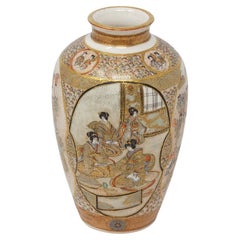
Japanese Antique Meiji Period Satsuma Vase by Kinkozan
By Kinkozan
Located in Newark, England
GLOBULAR FORM MINIATURE VASE
From our Japanese collection, we are delighted to offer this Japanese Satsuma Vase by Kinkozan. The Satsuma Vase made from earthenware pottery is potted...
Category
Antique Early 1900s Japanese Meiji Ceramics
Materials
Ceramic, Earthenware, Pottery

Japanese Meiji Period (1868-1912) Satsuma Vase by Kinkozan
By Kinkozan
Located in Newark, England
JAPANESE SATSUMA PROCESSIONAL VASE
From our Japanese collection, we are delighted to introduce to the market this Japanese Satsuma Vase by Kinkozan. The vase with a compressed body ...
Category
Antique Late 19th Century Japanese Meiji Ceramics
Materials
Ceramic, Earthenware, Pottery

You May Also Like
Japanese Satsuma Earthenware Vase by Kinkozan, Meiji Period
By Kinkozan
Located in West Palm Beach, FL
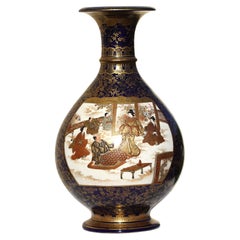
A Japanese Satsuma Earthenware Vase by Kinkozan, Meiji period (1868-1912)
The body inset with two panels, one depicting figures seated around a table, the other painted with a joyful scene in a shrine, all reserved on a blue ground decorated with a gilt flower pattern, signed Nihon Kyoto Kinkozan zo...
Category
20th Century Antiquities
Materials
Ceramic
Satsuma earthenware vase by kinkozan, Meiji period
By Kinkozan
Located in Tel Aviv - Jaffa, IL
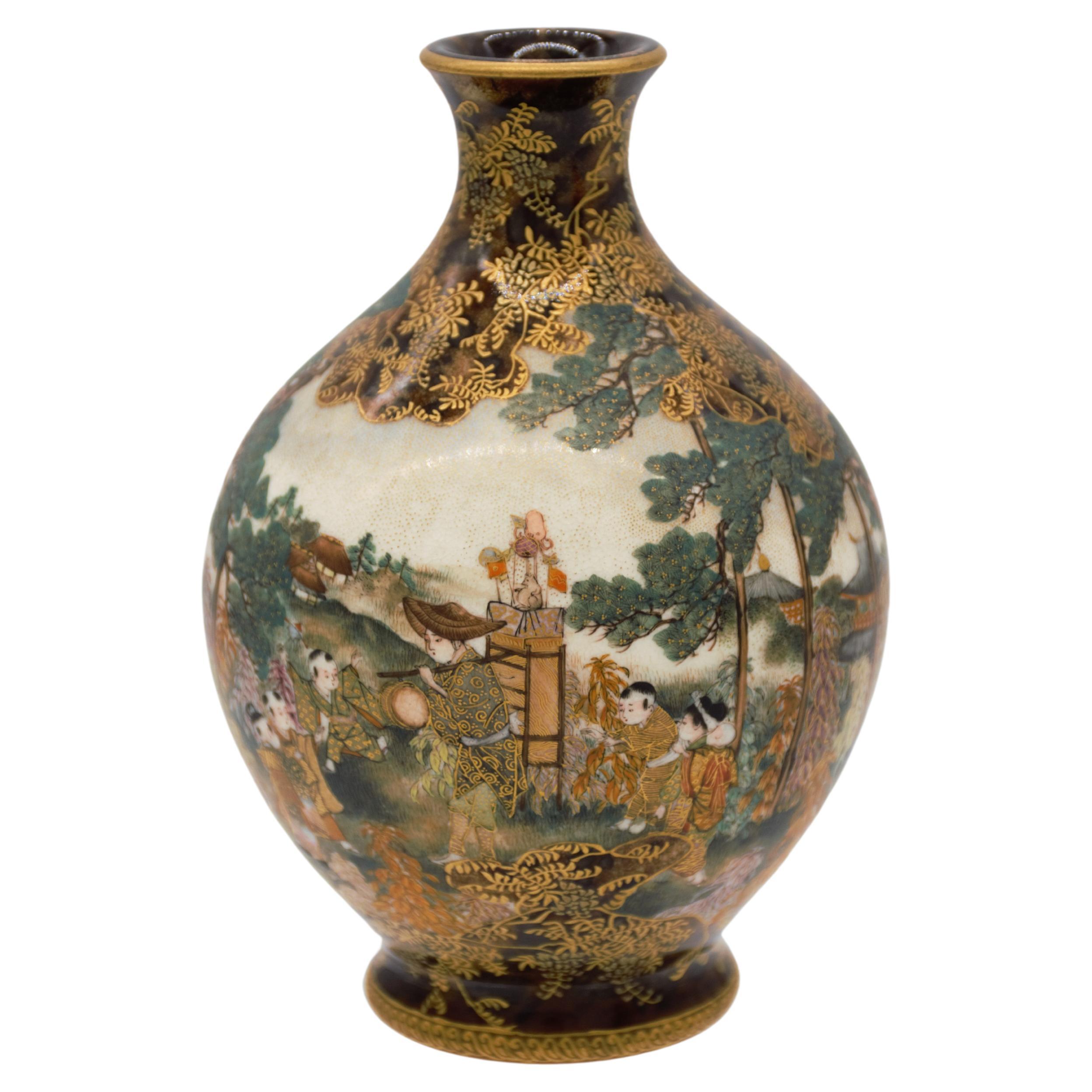
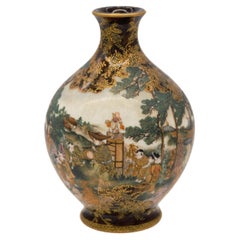
the body of this small marvelous vase is painted with a scene of a puppet show vendor with his wood backpack, on top of the backpack there are toys and dolls, he is surrounded with a group of 6 children, and on the background you can see a village.
on the other side of the vase there is an amazing painting of flowers and on the sides there are two amazing strong pine trees, the amorphous background is decorated in a "Tortoiseshell" color and design that gives it a real character and which is quite rare to see on satsuma pottery.
all the vase is over richly overpainted over the glaze with gold, which gives it its depth and realism.
signed Kyoto Kinkozan zo, and sealed Kinkozan zo
Kyoto’s Satsuma:
The painting technique used in Kyoto’s Satsuma-style ware is said to be the invention of the sixth generation Kinkōzan Sōbei (1824–1884). The Kinkōzan were a famous family of Kyoto Awataguchi potters who made ceramics that were used at Shōren'in, a temple closely tied to the imperial family, and by the shoguns of the Edo government. In fact the shogun is said to have granted them the name Kinkōzan. With the upheavals at the end of the Edo period, however, and the reforms of the subsequent Meiji government, the potters lost their traditional patrons and had to develop new markets.
Just at that time, the visit of a certain Westerner is said to have decided them to embark on overseas trade. By 1870, they had perfected Kyō Satsuma...
Category
Antique 1890s Japanese Meiji Ceramics
Materials
Gold
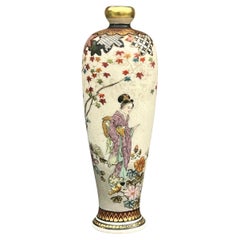
A Fine Japanese Satsuma vase signed by Ryokuzan. Meiji period
Located in London, GB
A exquisite Satsuma vase signed by Ryokuzan.
Meiji Era.
Of a slender ovoid shape featuring intricate hand-painted designs and delicate gilded accents.
The vase is adorned with...
Category
Antique 19th Century Japanese Ceramics
Materials
Ceramic, Porcelain
Fine Japanese Ceramic Satsuma Vase by Kinkozan
By Kinkozan
Located in Atlanta, GA
A miniature Japanese ceramic vase from the end of Meiji period circa 1880s- 1910s by Kinkozan (1645-1927). One of the largest studio manufacturers of the export ceramics at the time ...
Category
Early 20th Century Japanese Meiji Ceramics
Materials
Ceramic
Antique ca 1900 Japanese Satsuma vase Richly Decorated Marked
Located in Amsterdam, Noord Holland
Description
A Japanese Satsuma vase and cover marked base
Condition
Overall Condition: 1 restuck chip to rim. Size 190mm high
Period
19th century Meiji Periode (1867-1912).
Category
Antique 19th Century Japanese Meiji Ceramics
Materials
Porcelain
$301 Sale Price
48% Off
A Fine Japanese Satsuma Vase . Meiji Period. Kinkozan
Located in London, GB
A Fine Japanese Satsuma Vase with Bijin, Peacock, and Chrysanthemums.
Attributed to Kinkozan Workshop, Kyoto, Meiji period (late 19th century)
Of pear-shaped form with a flared f...
Category
Antique 19th Century Japanese Ceramics
Materials
Ceramic, Porcelain