Items Similar to Japanese Antique Meiji Period Satsuma Vase by Kinkozan
Want more images or videos?
Request additional images or videos from the seller
1 of 15
Japanese Antique Meiji Period Satsuma Vase by Kinkozan
$4,372.12
£3,200
€3,758.41
CA$6,074.20
A$6,533.67
CHF 3,491.78
MX$77,013.36
NOK 44,023.21
SEK 40,245.57
DKK 28,081.66
About the Item
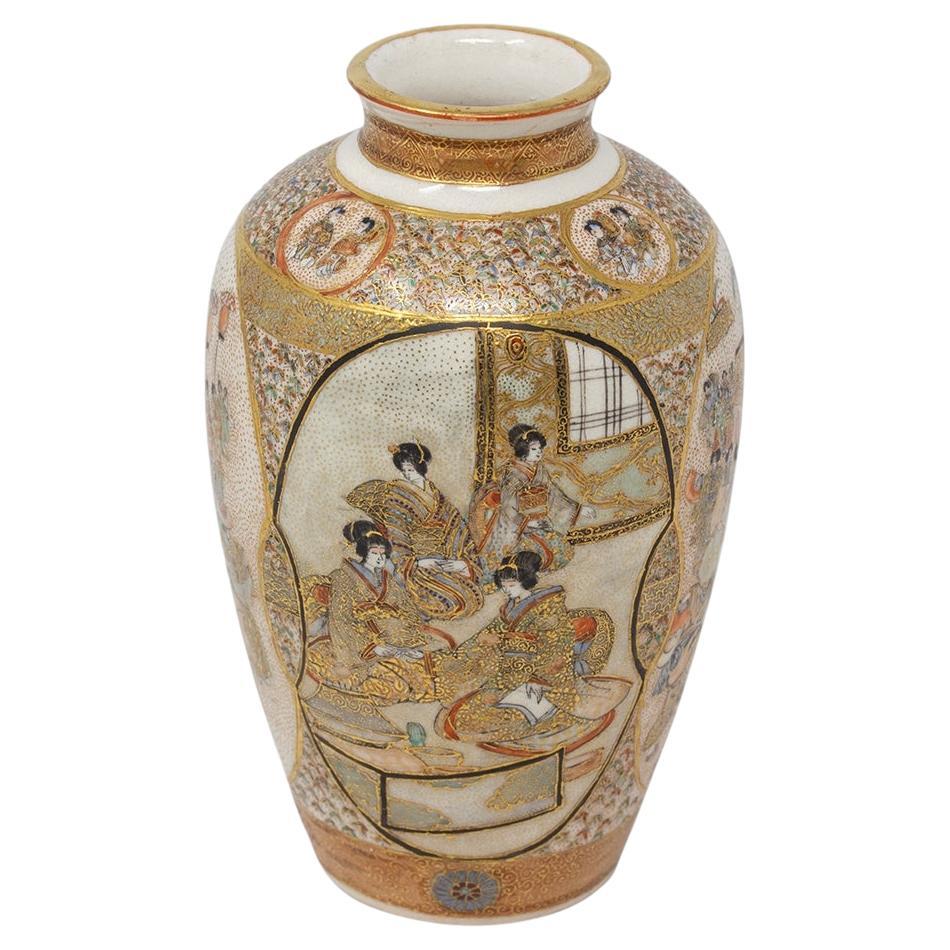
GLOBULAR FORM MINIATURE VASE
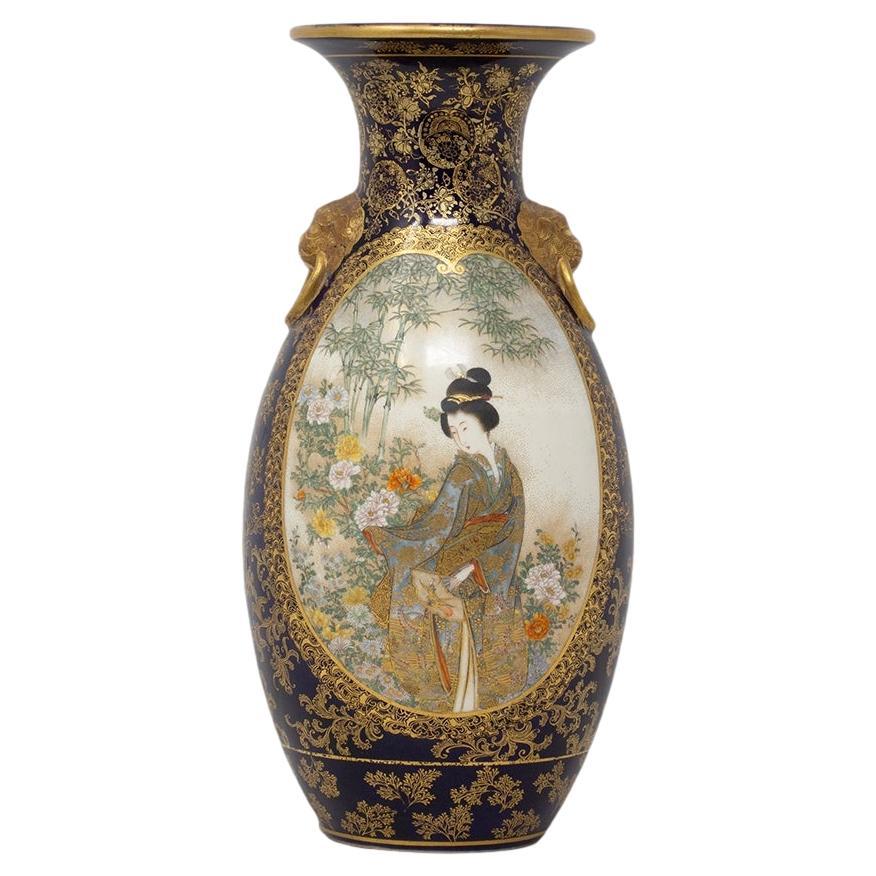
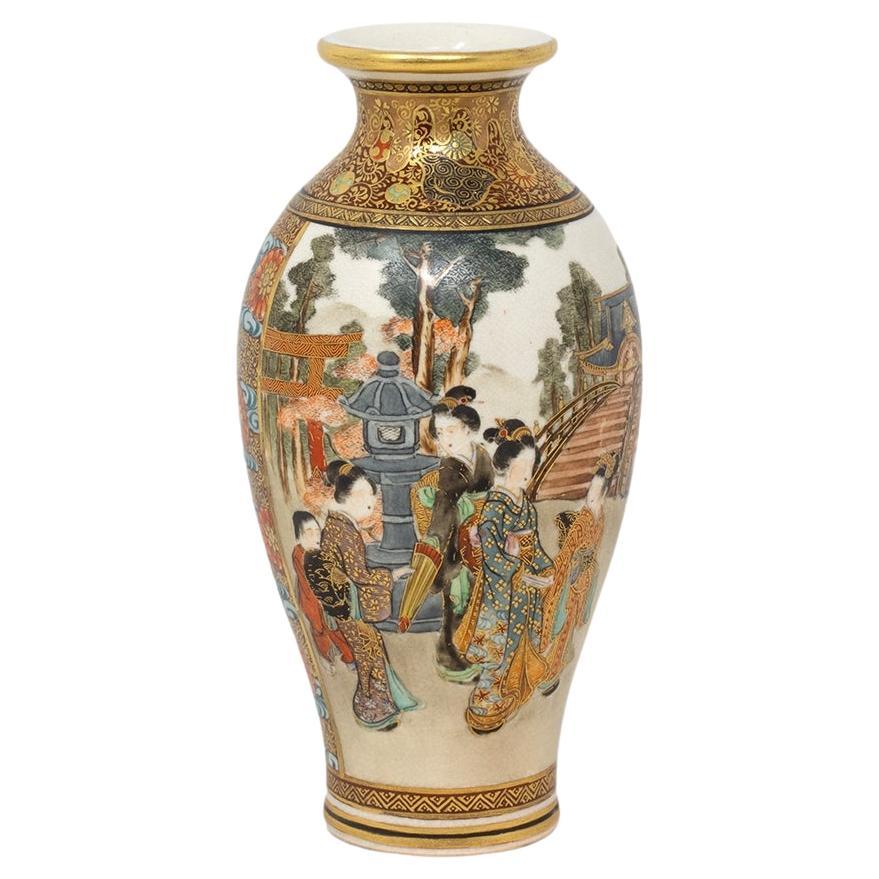
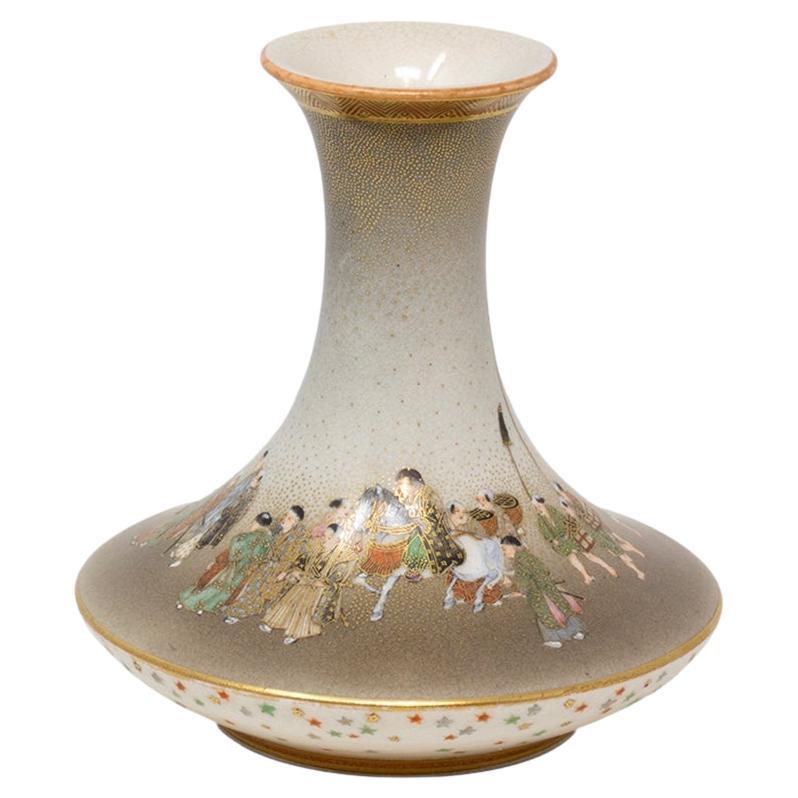
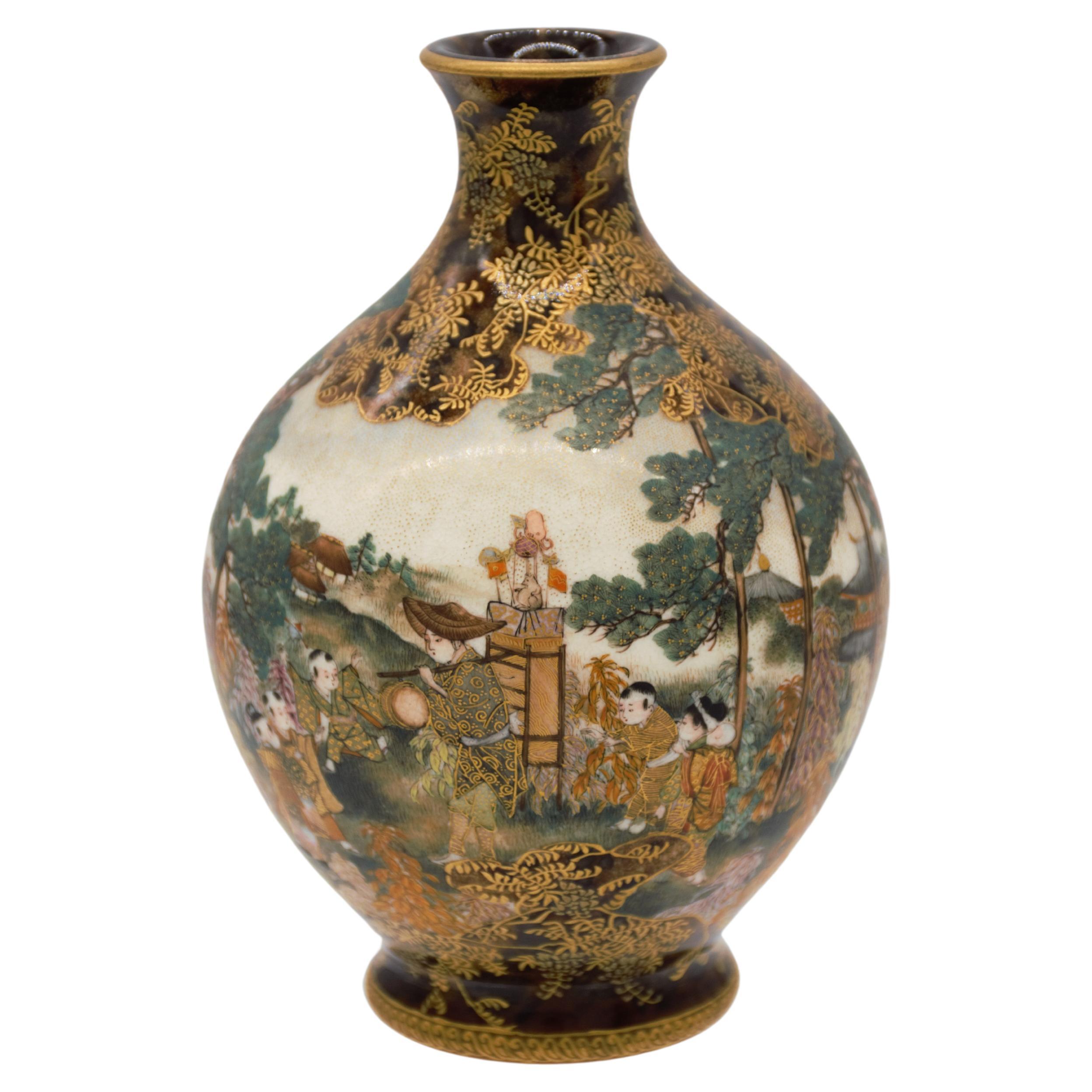
From our Japanese collection, we are delighted to offer this Japanese Satsuma Vase by Kinkozan. The Satsuma Vase made from earthenware pottery is potted in beautiful globular form with a tightly pinched neck and rolled top rim. The Satsuma Vase is beautifully decorated to the exterior with a top floral arrangement within a gilt border and a bottom geometric gilt rim with the centre of the vase is subtly painted with beautiful Bijin and children. The underside of the Japanese Satsuma Vase is signed with painted mark for Kinkozan 金光山 and two original retail stickers from the Kinkozan shop. The Satsuma Vase dates to the Meiji period(1868-1912) and the turn of the 20th century.
KINKOZAN 金光山
the Kinkozan family have been associated with pottery dating back to 1645. They went on to become the largest producer of Satsuma ware by one individual company, from the end of the 19th century until 1927 after which the factory closed. By the 1850s Kobayashi Sobei (1824-84), Kinkozan Sobei (artist name Kinkozan IV), started to export his products together with the Kyoto manufacturer Taizan VIII. The main target market was America with their main production period approximately between 1875-1927 under the leadership of Kinkozan V(1868-1927).
SATSUMA
ware is a type of earthenware pottery originating from the Satsuma province in Southern Kyushu, Japan’s third largest island.
MEIJI PERIOD
was an era of Japanese history that spanned from 1868 to 1912. It was the first half of the Empire of Japan, when the Japanese people began to build a paradigm of a modern, industrialised nation state and emergent great power, influenced by Western countries and aesthetics. As a result of radically different ideas, the changes to Japan were profound and it affected the social structure, politics, economy, military, and foreign relations across the board. The period corresponded to the reign of Emperor Meiji and was preceded by the Keio era and was succeeded by the Taisho era.
Cultural Art during the Meiji Period was of particular interest to the government and they overhauled the art export market which in turn promoted Japanese arts via various world’s fairs, beginning in Vienna at the world fair in 1873. The government heavily funded the fairs and took an active role organising how Japan’s culture was presented to the world including creating a semi-public company named Kiritsu Kosho Kaisha (First Industrial Manufacturing Company). The Kiritsu Kosho Kaisha was used to promote and commercialise exports of Japanese art and established the Hakurankai Jimukyoku (Exhibition Bureau) to maintain quality standards. For the 1876 Centennial International Exhibition in Philadelphia, the Japanese government created a Centennial Office and sent a special envoy to secure space for the 30,000 items that would be displayed. The Imperial Household also took an active interest in arts and crafts, commissioning works by select artists to be given as gifts for foreign dignitaries further emphasising the high quality and importance of Japanese art. Just before the end of the 19th century in 1890, the Teishitsu Gigeiin (Artist to the Imperial Household) system was created to recognise distinguished artists. These artists were selected for their exceptionally high quality wares and talent in their own industry. Over a period of 54 years Seventy artists were appointed, amongst these were ceramicist Makuzu Kozan and cloisonné enamel artist Namikawa Yasuyuki.
- Creator:Kinkozan (Maker)
- Dimensions:Height: 2.76 in (7 cm)Diameter: 2.96 in (7.5 cm)
- Style:Meiji (Of the Period)
- Materials and Techniques:
- Place of Origin:
- Period:1900-1909
- Date of Manufacture:Circa 1900
- Condition:Wear consistent with age and use.
- Seller Location:Newark, GB
- Reference Number:Seller: BYDDYL1stDibs: LU6971245760632
About the Seller
5.0
Vetted Professional Seller
Every seller passes strict standards for authenticity and reliability
Established in 2019
1stDibs seller since 2022
40 sales on 1stDibs
Typical response time: <1 hour
- ShippingRetrieving quote...Shipping from: Newark, United Kingdom
- Return Policy
More From This Seller
View AllAntique Japanese Meiji Period Satsuma Vase by Ryozan
Located in Newark, England
MEIJI PERIOD 1868-1912
From our Japanese collection, we are delighted to offer this Japanese Satsuma Vase by Ryozan. The vase of tapered form with tightly pinched neck and flared to...
Category
Antique Late 19th Century Japanese Meiji Ceramics
Materials
Ceramic, Earthenware, Pottery
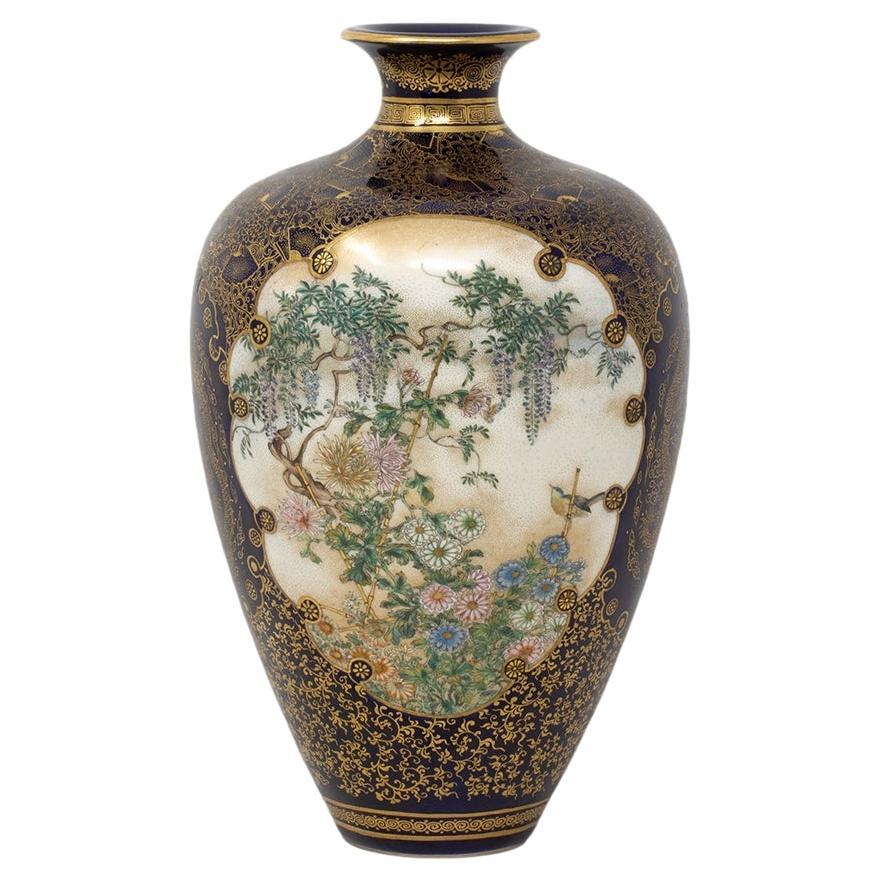
Japanese Antique Earthenware Satsuma Vase by Kinkozan Meiji Period
By Kinkozan
Located in Newark, England
FREE WORLDWIDE SHIPPING
MEIJI PERIOD (1868-1912)
From our Japanese Satsuma collection, we are delighted to present this exceptional Meiji period Satsuma vase by Kinkozan
This tal...
Category
Antique Late 19th Century Japanese Meiji Ceramics
Materials
Ceramic, Earthenware, Pottery
Japanese Meiji Period Satsuma Vase by Ryokuzan
Located in Newark, England
From our Japanese Satsuma Collection, we are delighted to offer this Japanese Satsuma Vase by Ryokuzan 緑山. The Satsuma vase of ovoid shape with a tapered body, circular foot rim, wai...
Category
Antique Early 1900s Japanese Meiji Ceramics
Materials
Ceramic, Earthenware, Pottery

Japanese Meiji Period (1868-1912) Satsuma Vase by Kinkozan
By Kinkozan
Located in Newark, England
JAPANESE SATSUMA PROCESSIONAL VASE
From our Japanese collection, we are delighted to introduce to the market this Japanese Satsuma Vase by Kinkozan. The vase with a compressed body ...
Category
Antique Late 19th Century Japanese Meiji Ceramics
Materials
Ceramic, Earthenware, Pottery

Japanese Meiji Period Satsuma Vase by Kinkozan
By Kinkozan
Located in Newark, England
FREE WORLDWIDE SHIPPING
FROM KYOTO’S FAMED KINKOZAN WORKSHOP, A MEIJI-PERIOD SATSUMA VASE OF EXCEPTIONAL ENAMEL AND GILT.
From our Japanese Satsuma collection, we are delighted to ...
Category
Antique Late 19th Century Meiji Ceramics
Materials
Ceramic, Earthenware, Pottery
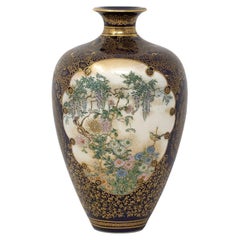
Japanese Antique Earthenware Satsuma Vase by Kinkozan Meiji Period
By Kinkozan
Located in Newark, England
FREE WORLDWIDE SHIPPING
MEIJI PERIOD (1868-1912)
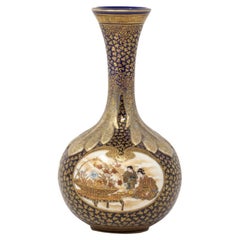
From our Japanese Satsuma collection, we’re pleased to offer this Meiji period bottle-form Satsuma vase by Kinkozan.
The vase is...
Category
Antique Early 1900s Japanese Meiji Ceramics
Materials
Ceramic, Earthenware, Pottery
You May Also Like
Satsuma earthenware vase by kinkozan, Meiji period
By Kinkozan
Located in Tel Aviv - Jaffa, IL
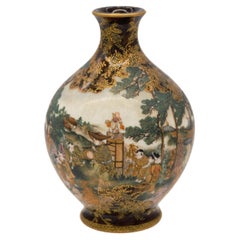
the body of this small marvelous vase is painted with a scene of a puppet show vendor with his wood backpack, on top of the backpack there are toys and dolls, he is surrounded with a group of 6 children, and on the background you can see a village.
on the other side of the vase there is an amazing painting of flowers and on the sides there are two amazing strong pine trees, the amorphous background is decorated in a "Tortoiseshell" color and design that gives it a real character and which is quite rare to see on satsuma pottery.
all the vase is over richly overpainted over the glaze with gold, which gives it its depth and realism.
signed Kyoto Kinkozan zo, and sealed Kinkozan zo
Kyoto’s Satsuma:
The painting technique used in Kyoto’s Satsuma-style ware is said to be the invention of the sixth generation Kinkōzan Sōbei (1824–1884). The Kinkōzan were a famous family of Kyoto Awataguchi potters who made ceramics that were used at Shōren'in, a temple closely tied to the imperial family, and by the shoguns of the Edo government. In fact the shogun is said to have granted them the name Kinkōzan. With the upheavals at the end of the Edo period, however, and the reforms of the subsequent Meiji government, the potters lost their traditional patrons and had to develop new markets.
Just at that time, the visit of a certain Westerner is said to have decided them to embark on overseas trade. By 1870, they had perfected Kyō Satsuma...
Category
Antique 1890s Japanese Meiji Ceramics
Materials
Gold
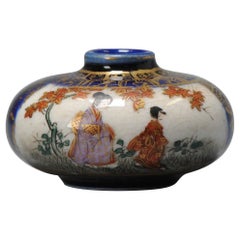
Antique Meiji Period Japanese Satsuma Vase Figural Decoration Marked
Located in Amsterdam, Noord Holland
Fabulous Japanese earthenware Satsuma vase with nice decoration of flowers and figures decoration marked. Meiji period, 19th c
Lovely piece.
Additional information:
Material: Porce...
Category
Antique 19th Century Japanese Vases
Materials
Porcelain
$532 Sale Price
20% Off
A Fine Japanese Satsuma Vase . Meiji Period. Kinkozan
Located in London, GB
A Fine Japanese Satsuma Vase with Bijin, Peacock, and Chrysanthemums.
Attributed to Kinkozan Workshop, Kyoto, Meiji period (late 19th century)
Of pear-shaped form with a flared f...
Category
Antique 19th Century Japanese Ceramics
Materials
Ceramic, Porcelain
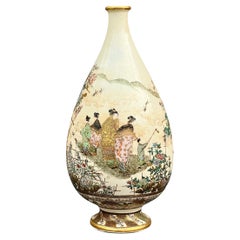
Miniature Antique Meiji Period Japanese Satsuma Vase Figural Decoration marked
Located in Amsterdam, Noord Holland
Fabulous Japanese earthenware Satsuma Vase with nice decoration of flowers and figures decoration marked. Meiji period, 19th c
Lovely piece.
Marked base, both faded.
Additional in...
Category
Antique 19th Century Japanese Vases
Materials
Porcelain
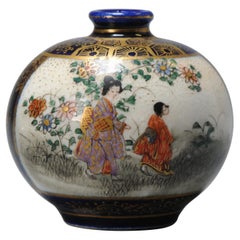
$406 Sale Price
48% Off
Fine Japanese Satsuma Vase by Ryozan Okamoto for Yasuda Company Meiji Period
Located in Atlanta, GA
A finely decorated Japanese satsuma ceramic vase by Ryozan Okamoto (c.1820s-1910s) for Yasuda. Ryozan is the head artist working for Yasuda company, a Japanese ceramic makers and dea...
Category
Antique Early 1900s Japanese Meiji Ceramics
Materials
Ceramic
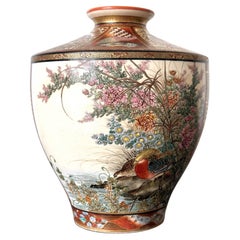
A Fine Japanese Satsuma vase signed by Ryokuzan. Meiji period
Located in London, GB
A exquisite Satsuma vase signed by Ryokuzan.
Meiji Era.
Of a slender ovoid shape featuring intricate hand-painted designs and delicate gilded accents.
The vase is adorned with...
Category
Antique 19th Century Japanese Ceramics
Materials
Ceramic, Porcelain
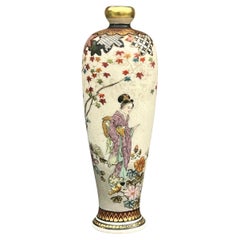
More Ways To Browse
Antique Meiji
Satsuma Vases
Antique Stickers
Antique Satsuma Vase
Centennial 1876
Antique Miniature Vases
1900 Japanese Vase
Miniatures Japan
Japanese Painted Ceramic Vase
Globular Vase
Antique Japanese Painted Vases
Meiji Pottery Vases
1900 Satsuma Vases
Qajar Art
Satsuma Figures
16th Century Plate
Antique Swatow Porcelain
Antique Water Dropper