Want more images or videos?
Request additional images or videos from the seller
1 of 11
Japanese Antique Red Enameled Porcelain Crouching Cat Sculpture, 1920
$375List Price
About the Item
- Dimensions:Height: 3 in (7.62 cm)Width: 8 in (20.32 cm)Depth: 4 in (10.16 cm)
- Style:Taisho (Of the Period)
- Materials and Techniques:
- Place of Origin:
- Period:
- Date of Manufacture:1920
- Condition:Wear consistent with age and use.
- Seller Location:South Burlington, VT
- Reference Number:1stDibs: LU128928104723
About the Seller
5.0
Platinum Seller
Premium sellers with a 4.7+ rating and 24-hour response times
Established in 1990
1stDibs seller since 2015
2,425 sales on 1stDibs
Typical response time: 1 hour
Authenticity Guarantee
In the unlikely event there’s an issue with an item’s authenticity, contact us within 1 year for a full refund. DetailsMoney-Back Guarantee
If your item is not as described, is damaged in transit, or does not arrive, contact us within 7 days for a full refund. Details24-Hour Cancellation
You have a 24-hour grace period in which to reconsider your purchase, with no questions asked.Vetted Professional Sellers
Our world-class sellers must adhere to strict standards for service and quality, maintaining the integrity of our listings.Price-Match Guarantee
If you find that a seller listed the same item for a lower price elsewhere, we’ll match it.Trusted Global Delivery
Our best-in-class carrier network provides specialized shipping options worldwide, including custom delivery.You May Also Like
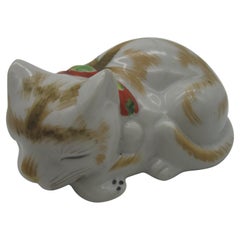
Japanese Meiji Period Gold White Porcelain Sleeping Cat Sculpture, circa 1910
Located in Takarazuka, JP
Exquisite Meiji period Japanese Kutani sculpture of a sleeping cat in fine porcelain, inspired by the small wooden sculpture at the entrance of...
Category
Early 20th Century Japanese Meiji Animal Sculptures
Materials
Gold
$850
H 2 in W 4 in D 3 in
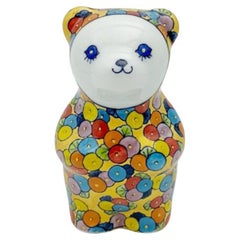
Japanese Contemporary Gold Purple Orangs Porcelain Bear Sculpture, 7
Located in Takarazuka, JP
Extraordinary Japanese contemporary porcelain bear sculpture, hand-painted in green, blue, orange purple in a dramatic pattern set against a gold background, by Japanese artist from the historic Imari-Arita region of Japan.
This stunning bear is from the limited edition series of four bear...
Category
21st Century and Contemporary Japanese Meiji Animal Sculptures
Materials
Gold
Chinese Porcelain Foo Dog Hand Enameled Polychrome, circa 1920
Located in Lincoln, Lincolnshire
This is a good Chinese porcelain foo dog, sometimes called a temple lion all hand painted in polychrome coloured enamels, that we date to the early 20th Century period, circa 1920.
...
Category
Early 20th Century Chinese Qing Ceramics
Materials
Porcelain

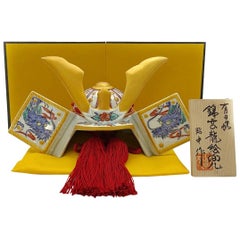
Japanese Contemporary Gilded Porcelain Kabuto Helmet
Located in Takarazuka, JP
Unique Japanese contemporary decorative porcelain "kabuto" or helmet, hand painted in gold, red and blue colors. Kabuto dates back to 6th century. I...
Category
21st Century and Contemporary Japanese Edo Figurative Sculptures
Materials
Gold
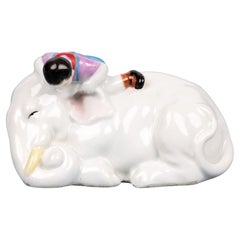
Japanese Porcelain Boy with Elephant Figure
Located in Bishop
s Stortford, Hertfordshire
A delightful Japanese attributed porcelain figure of a resting elephant with a young boy dating from the early 20th century. The hollow molded figure portrays a sleeping elephant, ly...
Category
Early 20th Century Japanese Other Ceramics
Materials
Porcelain
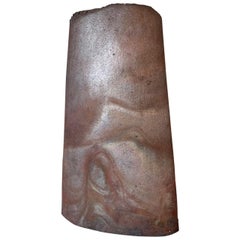
Japanese Contemporary Ceramic Sculpture Kiyoharu Ichino
By Kiyoharu Ichino
Located in Atlanta, GA
"Purple Dawn", a ceramic sculpture piece by Japanese potter Kiyoharu Ichino (1957-). Purchased from Touching Stone, Santa Fe, New Mexico in 2003. Tradition meets renovation, this sculptural piece with its slab like minimal shape draws the viewer into its mysterious shape that is reminiscent of a monument. Its surface, with the typical Tanba clay fired at very high temperature and completely free of glaze, radiates a subtle metallic sheen that is nearly in a shade of purple. This piece was purchased from Touching Stone, Santa Fe, New Mexico in 2003.
Artist's bio from the gallery and the exhibition:
"Kiyoharu Ichino was born in 1957 in Tachikui into an extended family steeped in pottery-making tradition. He learned all aspects of Tanba pottery since childhood. When he was twenty, he moved to Seto to study pottery under a master of Akatsu-yaki. Upon returning to Tachikui, he launched his career with the Tanba Group Kiln. In 1983, he established his own kiln and began showing in galleries all over Japan. His works have been selected repeatedly for the prestigious juried Japan Traditional Crafts Exhibition sponsored by the Japan Crafts Association. In 1995, he was nominated to be a permanent member of The Japan Crafts Association, an honor bestowed to the most experienced and talented artists.
Traditional Tanba pottery is fired unglazed at very high temperature in large wood-fueled kilns. Ichino uses both an anagama (hole kiln) and a noborigama (climbing kiln), burning almost a thousand bundles of wood over several days to bring out the unique personalities of Tanba clay, which is renowned for its rich texture and deep purplish brown colors. Many of his pieces show silvery fire-marks like swirling mists left by the wood fire. His pieces appear to be integral parts of the clay rather than separate objects made from it. To show the unique clay texture, he often includes seemingly unfinished edges in his designs, exposing the rough clay body. Despite the high level of sophistication and innovation, Ichino's works maintain a strong connection with the ancient Tanba pottery tradition. Ichino should be no stranger to many Santa Fe residents. His work has been exhibited both in Touching Stone Gallery and as part of a major exhibition in the New Mexico Museum of International Folk Art in 2006.
About Tanba ware...
Category
Early 2000s Japanese Modern Ceramics
Materials
Ceramic
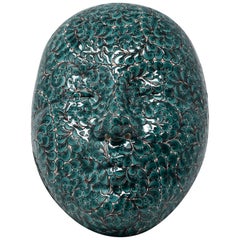
Japanese Contemporary Green Porcelain Mask by Master Artist
Located in Takarazuka, JP
Mesmerizing signed contemporary decorative porcelain mask, intricately hand painted on both sides. It's a signed masterpiece by award-winning master por...
Category
21st Century and Contemporary Japanese Meiji Figurative Sculptures
Materials
Porcelain
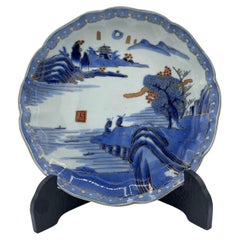
Antique Japanese Blue Imari Ware Plate 1920s
Located in Paris, FR
This is a plate which was made in Japan in Taisho era (around 1920s).
It was made with Imari yaki technnique.
This imari plate is made by Gekkyuu, there is a signature on the plate...
Category
Mid-20th Century Japanese Taisho Ceramics
Materials
Porcelain
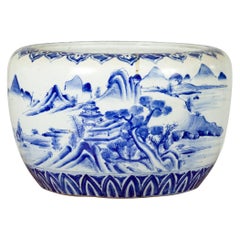
Japanese Taishō Period 1920s Blue and White Round Porcelain Planter
Located in Yonkers, NY
A Japanese Taishō period blue and white porcelain planter from circa 1920, with landscape scenes. Created in Japan during the early 20th century Taishō period, this exquisite blue an...
Category
Early 20th Century Japanese Taisho Ceramics
Materials
Porcelain
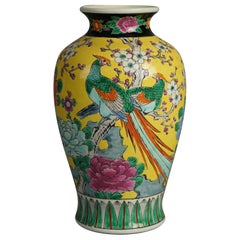
Antique Japanese Porcelain Enameled Vase, Garden &Scene Pheasant C1910
Located in Big Flats, NY
Antique Japanese Porcelain Enameled Vase, Garden &Scene Pheasant, Made in Japan, C1910
Measures- 10.75''H x 6.25''W x 6.25''D
A finely crafted antique Japanese porcelain vase from ci...
Category
Early 20th Century Japanese Ceramics
Materials
Porcelain
$440 Sale Price
20% Off
H 10.75 in W 6.25 in D 6.25 in
More From This Seller
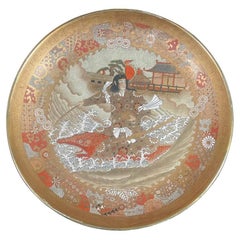
View AllJapanese Huge Antique Captain Whale Fisherman Satsuma Charger, 18 Inches
Box
Located in South Burlington, VT
Japanese Satsuma, a fine and monumental 18" Meiji period charger Ozara with rare motif: Captain fisherman and his fish.
Depicting a tale of Urashima Tarō* (see below),
Signed Jyukan pottery by Chinjyu Makoto, in a lovely gold gilt and red detailed hand-painted composition
Age: 1880-1900.
Dimensions: 18 inches diameter and includes owner's signed wooden presentation box, tomobako.
Hand made and hand painted.
Finest quality.
Provenance: Old Southern Japanese collection.
Urashima Tarō (浦島 太郎?) is a Japanese legend about a fisherman who holds a fishing pole and rescues a turtle and is rewarded for this with a visit to Ryūgū-jō, the palace of Ryūjin, the Dragon God, under the sea. He stays there for three days and upon his return to his village, finds himself 300 years in the future.
Finest quality. Largest size. Original collector box tomobako included.
Lifetime guarantee of authenticity: All of our Asian works of art come with our Lifetime Authenticity Guarantee.
We are members of the North American Japanese Garden Association (NAJGA) specializing for ten years now in old and authentic Japanese stone...
Category
Antique 19th Century Japanese Meiji Sculptures and Carvings
Materials
Ceramic
$1,000 Sale Price
88% Off
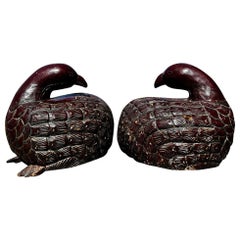
Japan Huge Antique Pair Quail Sculptures Hand-Carved Red Lacquered
Located in South Burlington, VT
Fine Pair (2) Quails In A Monumental Size
Japan, a fine huge pair (2) of antique quail sculpture hand-carved and red lacquered, Taisho period.
Fine...
Category
Early 20th Century Japanese Taisho Sculptures and Carvings
Materials
Wood
$1,400 Sale Price
63% Off
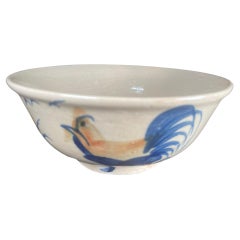
Japanese Fine Large Rooster And Birds Tea Bowl, Hand-Built and Hand Glazed
Located in South Burlington, VT
Mint Kyo ware bowl
From Japan, a beautiful hand-built, painted and glazed, Kyo ware large bowl or large tea bowl with a proud rooster and birds motif created in the 1930s.- over se...
Category
Vintage 1930s Japanese Showa Ceramics
Materials
Ceramic, Pottery
$76 Sale Price
20% Off
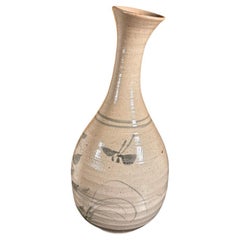
Extraordinary Japanese Hand Thrown Blue And White Wabi-Sabi Vase, Early 19thc.
Located in South Burlington, VT
A recent find: an old Japanese SHOKI-IMARI blue-and-white porcelain ware bottle
with unique hand painted designs called Kusabana-Chou-Monyou (Grass, flower, and butterfly patterns)...
Category
Antique Early 19th Century Japanese Edo Ceramics
Materials
Pottery
$312 Sale Price
53% Off
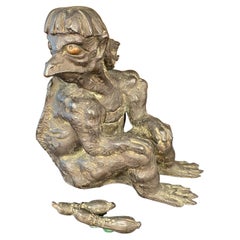
Japanese Rare Early Bronze Folk Art Figure Kappa, circa 1930
Located in South Burlington, VT
Japan, a beautiful, unusual and possibly unique antique hand cast bronze "Kappa" (child protector) sculptor complete with a separately formed bronze pair of 3.5 inch long cucumbers- a kappa's favorite snack food.
Kappas are playful water spirits from Japanese folklore associated with rivers and traditional tales.
Signed
An incised artist signature “Bunraku” on base. "Bunraku" is associated with Japanese puppet play and performance,
Kappa Bring Good Fortune
Japanese Kappa...
Category
Early 20th Century Japanese Taisho Sculptures and Carvings
Materials
Bronze
$995 Sale Price / set
81% Off
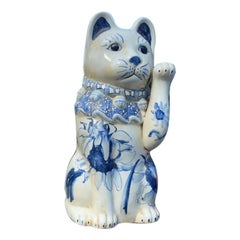
Japanese Big Antique Blue And White Hand-Painted Good Fortune Money Cat
Located in South Burlington, VT
Japan a rare large-scale and lovely hand-painted blue and white ceramic Maneki Neko good fortune money cat.
It is from the Arita/ imari kilns and dates to the early 20th century.
Notice the intricate detailed blue painting on white porcelain of this cat's eyes, body, necklace, and tail.
Dimensions: Big 15.5 inches tall and 7inches wide.
This comes from a very fine Kyoto area collection.
Handsome hand painted blue detail replete with a necklace with bells and bows.
Old original patina from appropriate age.
An earlier work of art that is hard to find in this size and quality.
Handmade and hand-painted.
Only one.
History:
The Maneki-Neko (Japanese literally -beckoning cat) - is a common Japanese figurine (lucky charm, talisman) which is often believed to bring good luck to the owner. In Modern Times, they are usually made of ceramic or plastic. Wooden examples are few and far between. The figurine depicts a cat (traditionally a calico Japanese Bobtail) beckoning with an upright paw, and is usually displayed in—often at the entrance of—shops, restaurants, pachinko parlors, and other businesses. The maneki-neko is sometimes also called the welcoming cat, lucky cat, money cat, happy cat...
Category
Early 20th Century Japanese Taisho Sculptures and Carvings
Materials
Ceramic
$760 Sale Price
52% Off
Still Thinking About These?
All Recently ViewedMore Ways To Browse
Cat Japan
Porcelain Cat Sculpture
English Arts And Crafts Pottery
Enamel Cat
Antique Enamelware
Pottery Cat
Japanese Cat
Antique Porcelain Cats
Imari Collection
Royal Crown Derby Imari
Korean White Porcelain
Japanese Cat Art
Cat Sculpture Japan
Signed Imari
Japanese Porcelain Cat
Johnson Bros
Japanese Tsukubai
Japanese Water Basin