Items Similar to Japanese Ceramic Sake Bottle Chosen Karatsu Ware
Want more images or videos?
Request additional images or videos from the seller
1 of 12
Japanese Ceramic Sake Bottle Chosen Karatsu Ware
$3,500
£2,642.39
€3,031.34
CA$4,885.81
A$5,320.19
CHF 2,814.66
MX$64,159.42
NOK 35,812.10
SEK 32,739.79
DKK 22,639.33
About the Item
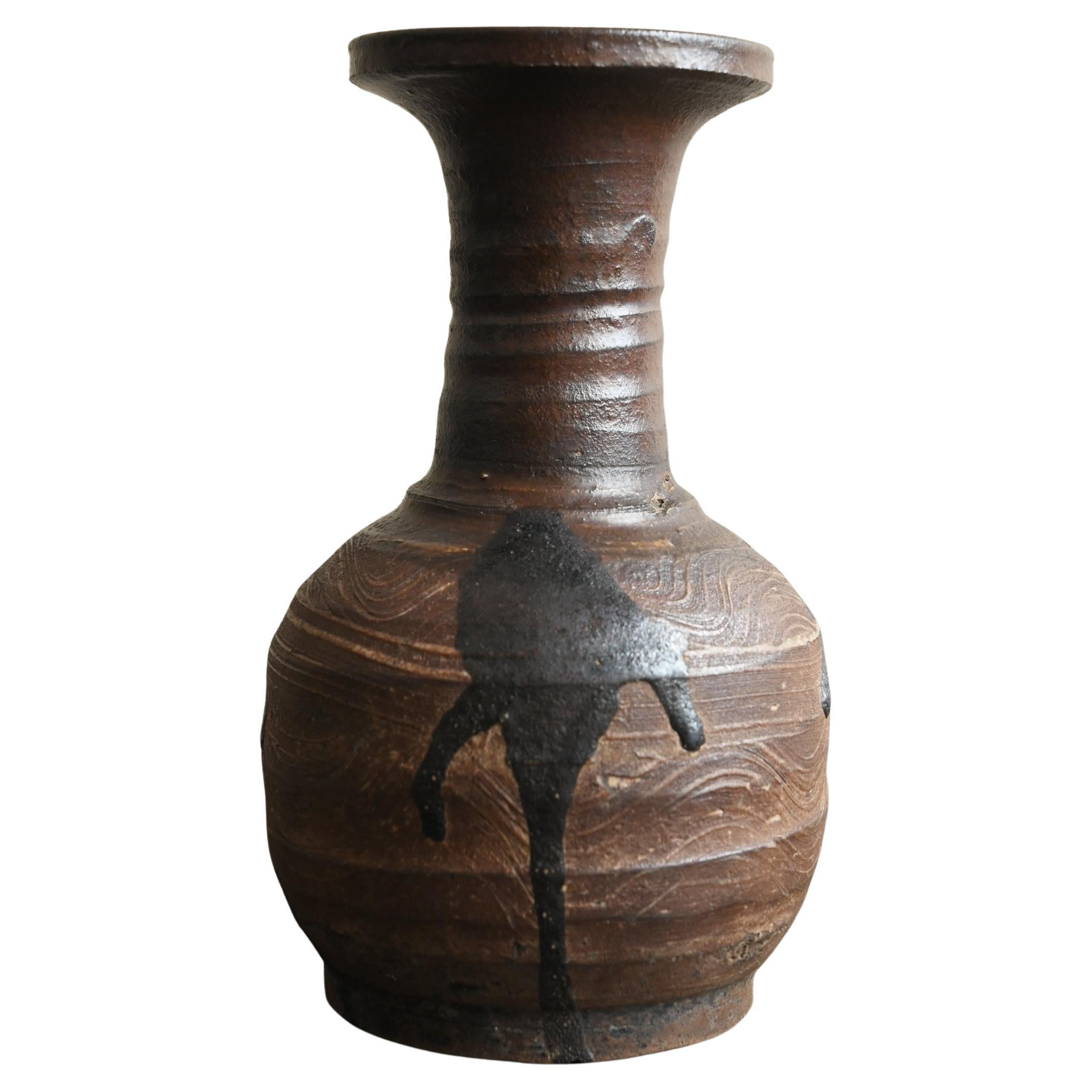
The long neck bottle of classic form was heavily potted with coarse clay with high iron content. The flask, circa 18th century Edo period, was purposed for sake storage but also substituted as a flower vase during tea ceremony. The surface is covered in glossy black glaze and contrasts strikingly with white ash glaze around the shoulder. The white, fired with straw, displays a splashing feather effect and fine crackles, blending in with the black artistically. This type of Karatsu ware was originally introduced by Korean potters who were forcefully brought to Japan after the invasion of Korea at the end of 16th century. They originally settled in Naeshirogawa and Tateno area (nowadays Satsuam) and kick-started the local pottery industry. Their techniques and aesthetics spread across Japan and left strong imprints on Japanese ceramics.
This sub-type Karatsu ware is such an example, known as Chosen or Korean Karatsu. On the base of the bottle, there are two old stickers. One shows the price in BP (British Pounds). The other states that the bottle is a black satsuma from Naeshirogawa circa 18th century. Our research contradicts this acclaimed origin and identifies the flask as being a Chosen Karatsu type. There is, however, strong artistic link between black satsuma ware and chosen karatsu as mentioned above because both were derived from Korean prototypes.
Reference: The Golden Age of Karatsu Stoneware by Francois Villemin. Page 74 and 159.
For a very similar piece see A New Yorker's view of the world: The John C Weber Collection. Cat no. 87 on page 256.
- Dimensions:Height: 10.6 in (26.93 cm)Diameter: 7 in (17.78 cm)
- Style:Japonisme (Of the Period)
- Materials and Techniques:
- Place of Origin:
- Period:
- Date of Manufacture:18th Century
- Condition:Wear consistent with age and use. Light surface wear with a couple of minute flakes on the glaze. Patina on the base.
- Seller Location:Atlanta, GA
- Reference Number:1stDibs: LU945016196382
About the Seller
4.9
Platinum Seller
Premium sellers with a 4.7+ rating and 24-hour response times
Established in 2006
1stDibs seller since 2010
583 sales on 1stDibs
Typical response time: <1 hour
- ShippingRetrieving quote...Shipping from: Atlanta, GA
- Return Policy
More From This Seller
View AllKorean Caledon Vase Bottle with Kintsugi Repair Goryeo Dynasty
Located in Atlanta, GA
A ceramic wide-mouthed bottle vase covered in green celadon glaze from Goryeo dynasty circa 11-12th century. The bottle vase with such a form (mouth with wide rim, long and slender neck, tall body with swelled shoulders that taper down toward the base) is known as "kwanggubyong" in Korean and developed from the prototype of bottles from united Silla kingdom. It was used for holding oil or liquid. Some of this type of vase take a plain form without much decoration other than glaze; Some feature basic geometrical lines, such as this one. Three concentric rings were featured along the neck and on the shoulder. Some with more carving on the body (see a vase in the collection of Brooklyn Musuem, 79.246.3) or a simple paint with iron glaze (See c.16-1930 in Fitzwilliam Musuem, Cambridge, UK).
The vase on offer is covered in a lovely green celadon glaze which exhibits fine even crackles throughout the surface. It has a slightly uneven base with the foot ring shaved by the potter. The surface is original with a nice mellow patina. There is a historical kintsugi repair on the mouth rim, with its gold vain...
Category
Antique 15th Century and Earlier Korean Archaistic Ceramics
Materials
Ceramic
Japanese Ceramic Vase Mingei Style Hamada Shoji
By Hamada Shoji
Located in Atlanta, GA
A heavily potted stoneware vase in cylindrical form, decorated with abstract strokes in iron rust glaze (known as Persimmon Glaze in Japanese) on a black glazed background. The pattern suggests autumn grasses, and it was applied with free hands. The vase is attributed to Japanese potter Hamada Shoji...
Category
Late 20th Century Japanese Arts and Crafts Ceramics
Materials
Ceramic
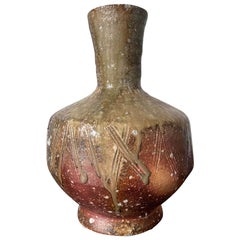
Modern Japanese Ceramic Shigaraki Ikebana Vase Takahashi Shunsai
Located in Atlanta, GA
A tall ceramic vase made in the tradition of Shigaraki ware by Japanese potter Takahashi Shunsai (1927-2011), the fourth heir of the famed Rakusai lineage of potters. The vase is heavily potted in the reddish sandy Shigaraki clay. It has a Classic vase form made for Ikebana display. The surface is thickly draped with natural ash glaze that deposited onto the body during the firing process in the kiln. It also features decoration of carved lines. Nuggets of feldspar were incorporated in the clay and exposed onto the surface as crystal like jewels. Substantial and archaic looking, the vase also has a strong modern appeal due to its Mingei styling. It was signed on the base with a pressed seal Shunsai as shown. The vase comes with its original wood storage box (tomobako) with bears the title and signature in Kanji and a seal. It also retains a paperwork noting the artist's biography and practice philosophy in Japanese.
Born in Shigaraki, Shunsai was the second son of renowned potter Takahashi Rakusai...
Category
1990s Japanese Modern Ceramics
Materials
Ceramic
Asian Flambe Studio Pottery Vase
By Kyoto Pottery
Located in Atlanta, GA
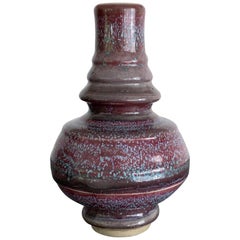
A garlic bottle vase in an archaic Chinese form, but likely Japanese in origin. Several circumventing grooves however, suggest a more modern age. It was done in a brilliant purple glaze over a robin egg blue background glaze. The bubbling and bursting effects during the firing renders the surface an artistic spotting effect. The color pallet recalls the Classic Jun Yao...
Category
Antique Late 19th Century Japanese Japonisme Ceramics
Materials
Ceramic
Korean Ceramic Faceted Wine Bottle Vase Joseon Dynasty
Located in Atlanta, GA
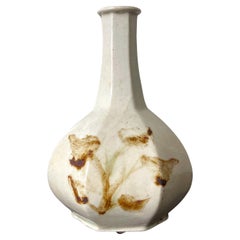
A Korean ceramic bottle with octagonal faceted form with underglaze copper red decoration. The robust bottle with the long neck and a relatively thick built was used to hold liquor such as wine and it was from Joseon dynasty, likely late period (circa mid-late 19th century). The bottle was covered in a milky white glaze with a pleasant warm yellow tint. It has an underglaze iron red paint of branches of gingko leaves on the front and the back side. The color was oxidated into an ochre brown hue instead of iron red. The octagonal form extends nicely from the opening to the base, continuing through the body and makes this bottle geometrically interesting. The rustic paint of the gingko leaves also render the piece a folky modern appeal.
For three faceted wine bottles from different period of Joseon Dynasty, see illustration 2, 71 and 73 of "Five Centuries of Korean Ceramics Pottery and Porcelains of the Yi Dynasty...
Category
Antique 19th Century Korean Archaistic Ceramics
Materials
Ceramic
Fine Japanese Ceramic Satsuma Vase by Kinkozan
By Kinkozan
Located in Atlanta, GA
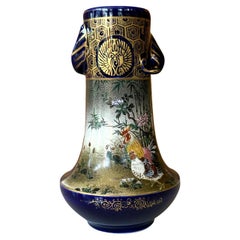
A miniature Japanese ceramic vase from the end of Meiji period circa 1880s- 1910s by Kinkozan (1645-1927). One of the largest studio manufacturers of the export ceramics at the time ...
Category
Early 20th Century Japanese Meiji Ceramics
Materials
Ceramic
You May Also Like
Kaneshige Toyo National Treasure Signed Japanese Bizen Pottery Sake Bottle Vase
Located in Studio City, CA
A beautiful, perfectly shaped and balanced antique Bizen ware shibui sake bottle (tokkuri) vase by renowned Japanese master potter/artist Kaneshige Toyo (1896-1967) featuring a unique natural, wonderfully textured organic forming ash glaze. Kaneshige is universally considered to be the founder of modern Bizen pottery.
In 1956, Kaneshige was certified as a Living National Treasure (Important Intangible Cultural Heritage) for his work in Bizen Ware pottery/ceramics. Bizen Ware is a type of Japanese pottery traditionally from the Bizen province, presently a part of the Okayama prefecture. It is considered one of the Six Ancient Japanese Kilns (along with Echizen ware, Seto ware, Shigaraki ware, Tamba ware, and Tokoname ware).
The piece is signed/ sealed on the base with one of Kaneshige's traditional incised marks.
A rather striking and engaging work. One of the best Kaneshige works we have come across. Scarce and hard to find in such an excellent condition. Would be a fantastic addition to any Japanese/Asian pottery or Bizen Ware collection or eye-catching stand-alone work in about any setting.
Kaneshige's work can be found in numerous prominent collections and museums including:
Aichi Prefectural Ceramic Museum, Seto, Japan
Brooklyn Museum, NY
Hagi Uragami Museum, Yamaguchi, Japan
Honolulu Art Museum, HI
Ibaraki Ceramic Art Museum, Kasama, Japan
Indiana Art...
Category
Mid-20th Century Japanese Showa Ceramics
Materials
Stoneware
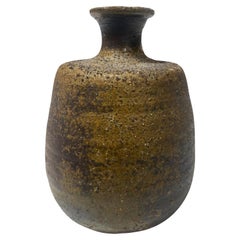
Scarce Antique Japanese Mishima Karatsu Ware Glazed Sake Bottle Vase Pottery
Located in Forney, TX
A rare and beautiful nearly 300 year old Japanese pottery Mishima Karatsu (三島唐津) sake bottle tokkuri (徳利) circa 1750
Japan, Edo period (1603-1868), Saga prefecture, Karatsu kilns, M...
Category
Antique 18th Century Japanese Edo Bottles
Materials
Pottery, Ceramic, Stoneware
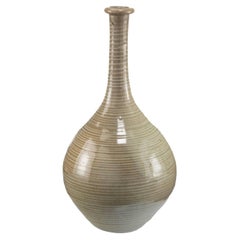
Japanese Pottery Vessel, Japan, Wabi Sabi, Mid-20th Century
Located in Edogawa-ku Tokyo, JP
Japanese pottery vase, mid-20th century, with a strong sculptural presence and wabi-sabi character. The rounded body with a narrow neck recalls the form of a sake bottle (tokkuri), w...
Category
Mid-20th Century Japanese Ceramics
Materials
Ceramic
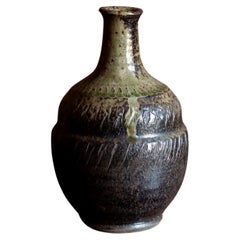
Japanese antique pottery small vase / Karatsu ware / Edo period / Kyushu region
Located in Sammu-shi, Chiba
This is Takeo Karatsu pottery, believed to have been fired during the Edo period (circa 17th to 19th centuries).
Karatsu ware is traditional Japanese ceramics made in the Karatsu reg...
Category
Antique 19th Century Japanese Edo Vases
Materials
Pottery
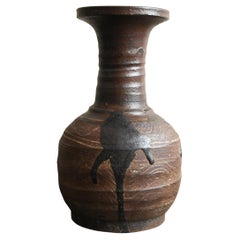
Edo-period Japanese Kurawanka Hasami Ware Porcelain Tokkuri Flask
Located in Chiba, JP
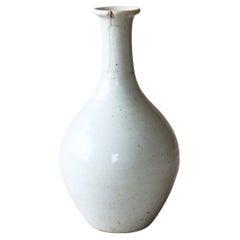
Japanese Hasami ware kurawanka-type white porcelain tokkuri (sake flask), mid-late Edo period, mid 18th – early 19th century, approx. H 19.7 x D 10.5cm (7.75 x 4.13in). Characteristi...
Category
Antique Early 19th Century Japanese Edo Ceramics
Materials
Porcelain, Pottery
Japanese Antique Pottery Bottle 1860s-1900s/Flower Vase Wabisabi Jar Mingei
Located in Sammu-shi, Chiba
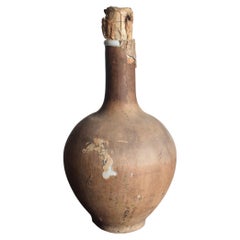
This is an old Japanese sake bottle. It is from the Meiji period (1860s-1900s). It is made of ceramic and covered with paper. It is slightly cracked and reinforced with paper. The pa...
Category
Early 20th Century Japanese Meiji Ceramics
Materials
Pottery, Paper
$600 Sale Price
25% Off
More Ways To Browse
Japanese Ceramics
Japan Ware
18th Century Japanese Art
Antique Ceramic Bottles
Japanese Sake
Satsuma Ware
Sake Bottle
Antique Japanese Bottles
Japanese Sake Bottles
Antique Cat Collection
Antique Sake Bottle
Antique Japanese Sake Bottles
Black Satsuma
Japanese Ceramic Sake Bottle
18th Century Flask
Karatsu Ware
Red Japanese Furniture
Japanese Satsuma