Items Similar to Japanese Meiji Period (1868-1912) Satsuma Kogo Incense Box by Taizan Yohei
Want more images or videos?
Request additional images or videos from the seller
1 of 20
Japanese Meiji Period (1868-1912) Satsuma Kogo Incense Box by Taizan Yohei
$2,471.30
£1,800
€2,115.78
CA$3,426.56
A$3,684.98
CHF 1,970.37
MX$44,439.83
NOK 24,916.64
SEK 22,702.26
DKK 15,809.55
About the Item
DEPICTING BISHAMON ONE OF THE SEVEN LUCKY GODS
From our Japanese Satsuma collection, we are delighted to offer this Japanese Satsuma Kogo by Taizan. The Satsuma Kogo of petit circular form in two halves with a matching lid and base beautifully decorated throughout. The lid of the Satsuma Kogo has a central painting of Bishamon, one of the seven Japanese lucky gods within a black oval cartouche bordered by scrolling motifs and further painted decoration. The base of the kogo is painted with a looped pattern intercepted by small floral gold motif and a single banded pattern. The base is signed with the blind mark 帯山 for Taizan Yohei. The interior of the Satsuma Kogo is painted on both the inner lid and the base, the inner lid depicts a citron tree (also known as buddha’s hand) with a small lady beetle. The base is painted with a rectangular scroll style portrait with a central crane bird stood upon a rocky outcrop in front of a river of gold framed in a bamboo stem with foliage. The Japanese Satsuma Kogo by Taizan dates to the Meiji Period (1868-1919).
- Creator:Taizan Yohei IX (Maker)
- Dimensions:Height: 1.38 in (3.5 cm)Diameter: 2.96 in (7.5 cm)
- Style:Meiji (Of the Period)
- Materials and Techniques:
- Place of Origin:
- Period:
- Date of Manufacture:Circa 1900
- Condition:
- Seller Location:Newark, GB
- Reference Number:Seller: PDSS1stDibs: LU6971243956232
About the Seller
5.0
Vetted Professional Seller
Every seller passes strict standards for authenticity and reliability
Established in 2019
1stDibs seller since 2022
40 sales on 1stDibs
Typical response time: 3 hours
- ShippingRetrieving quote...Shipping from: Newark, United Kingdom
- Return Policy
More From This Seller
View AllJapanese Antique Meiji Period Satsuma Vase by Kinkozan
By Kinkozan
Located in Newark, England
GLOBULAR FORM MINIATURE VASE
From our Japanese collection, we are delighted to offer this Japanese Satsuma Vase by Kinkozan. The Satsuma Vase made from earthenware pottery is potted...
Category
Antique Early 1900s Japanese Meiji Ceramics
Materials
Ceramic, Earthenware, Pottery

Antique Japanese Meiji Period Satsuma Vase by Ryozan
Located in Newark, England
MEIJI PERIOD 1868-1912
From our Japanese collection, we are delighted to offer this Japanese Satsuma Vase by Ryozan. The vase of tapered form with tightly pinched neck and flared to...
Category
Antique Late 19th Century Japanese Meiji Ceramics
Materials
Ceramic, Earthenware, Pottery
Japanese Meiji Period (1868-1912) Satsuma Earthenware Vase Taizan for Hattori
Located in Newark, England
Meiji Period (1868-1912)
From our Japanese collection, we are delighted to offer Japanese Meiji Period Satsuma Vases. The Satsuma Vase of hexagonal form with a slight waisted neck and tight rounded rim is extensively decorated with multiple figures to two large scenes. The first scene features a beach with waves to the background and a plethora of figures including multiple geisha holding traditional Japanese wagasa’s. The second scene follows on from the first with a large building in the foreground holding figures on a large platform under a pagoda roof with a pagoda building in the background and further figures in the foreground. The scenes are framed by a full detailed border with gilt shapes, flowers amongst pink shaded backgrounds and butterflies around the neck. The Satsuma Vase is unusually signed Fine Art, Satsuma Ware, Dai Nippon (Great Japan), Hattori Made, Gosuido Works, Taizan Painted. 美術, サツマヤキ(薩摩焼), 大日本, 服部造, 五スイ堂工, 對山画 and dates to the Meiji Period (1868-1912) and the turn of the 20th century circa 1905.
Satsuma ware is a type of earthenware pottery originating from the Satsuma province in Southern Kyushu, Japan’s third largest island.
Wagasa are traditional Japanese umbrellas made of washi paper attached to a bamboo frame and treated to ensure it is waterproof.
Meiji Period was an era of Japanese history that spanned from 1868 to 1912. It was the first half of the Empire of Japan, when the Japanese people began to build a paradigm of a modern, industrialised nation state and emergent great power, influenced by Western countries and aesthetics. As a result of radically different ideas, the changes to Japan were profound and it affected the social structure, politics, economy, military, and foreign relations across the board. The period corresponded to the reign of Emperor Meiji and was preceded by the Keio era and was succeeded by the Taisho era.
Cultural Art during the Meiji Period was of particular interest to the government and they overhauled the art export market which in turn promoted Japanese arts via various world’s fairs, beginning in Vienna at the world fair in 1873. The government heavily funded the fairs and took an active role organising how Japan’s culture was presented to the world including creating a semi-public company named Kiritsu Kosho Kaisha (First Industrial Manufacturing Company). The Kiritsu Kosho Kaisha was used to promote and commercialise exports of Japanese art and established the Hakurankai Jimukyoku (Exhibition Bureau) to maintain quality standards. For the 1876 Centennial International Exhibition in Philadelphia, the Japanese government created a Centennial Office and sent a special envoy to secure space for the 30,000 items that would be displayed. The Imperial Household also took an active interest in arts and crafts, commissioning works by select artists to be given as gifts for foreign dignitaries further emphasising the high quality and importance of Japanese art. Just before the end of the 19th century in 1890, the Teishitsu Gigeiin (Artist to the Imperial Household) system was created to recognise distinguished artists. These artists were selected for their exceptionally high quality wares and talent in their own industry. Over a period of 54 years Seventy artists were appointed, amongst these were ceramicist Makuzu Kozan and cloisonné enamel artist...
Category
Antique Early 1900s Japanese Meiji Ceramics
Materials
Earthenware, Pottery

Japanese Meiji Period (1868-1912) Satsuma Vase by Kinkozan
By Kinkozan
Located in Newark, England
JAPANESE SATSUMA PROCESSIONAL VASE
From our Japanese collection, we are delighted to introduce to the market this Japanese Satsuma Vase by Kinkozan. The vase with a compressed body ...
Category
Antique Late 19th Century Japanese Meiji Ceramics
Materials
Ceramic, Earthenware, Pottery

Japanese Antique Earthenware Satsuma Vase by Kinkozan Meiji Period
By Kinkozan
Located in Newark, England
FREE WORLDWIDE SHIPPING
MEIJI PERIOD (1868-1912)
From our Japanese Satsuma collection, we are delighted to present this exceptional Meiji period Satsuma vase by Kinkozan
This tal...
Category
Antique Late 19th Century Japanese Meiji Ceramics
Materials
Ceramic, Earthenware, Pottery
Japanese Meiji Period Satsuma Vase by Kinkozan
By Kinkozan
Located in Newark, England
FREE WORLDWIDE SHIPPING
FROM KYOTO’S FAMED KINKOZAN WORKSHOP, A MEIJI-PERIOD SATSUMA VASE OF EXCEPTIONAL ENAMEL AND GILT.
From our Japanese Satsuma collection, we are delighted to ...
Category
Antique Late 19th Century Meiji Ceramics
Materials
Ceramic, Earthenware, Pottery
You May Also Like
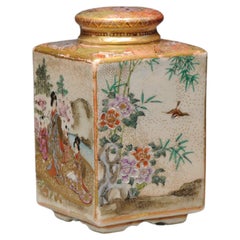
Antique 19th C Japanese Satsuma Box Matsumoto Hozan Marked Base Japan
Located in Amsterdam, Noord Holland
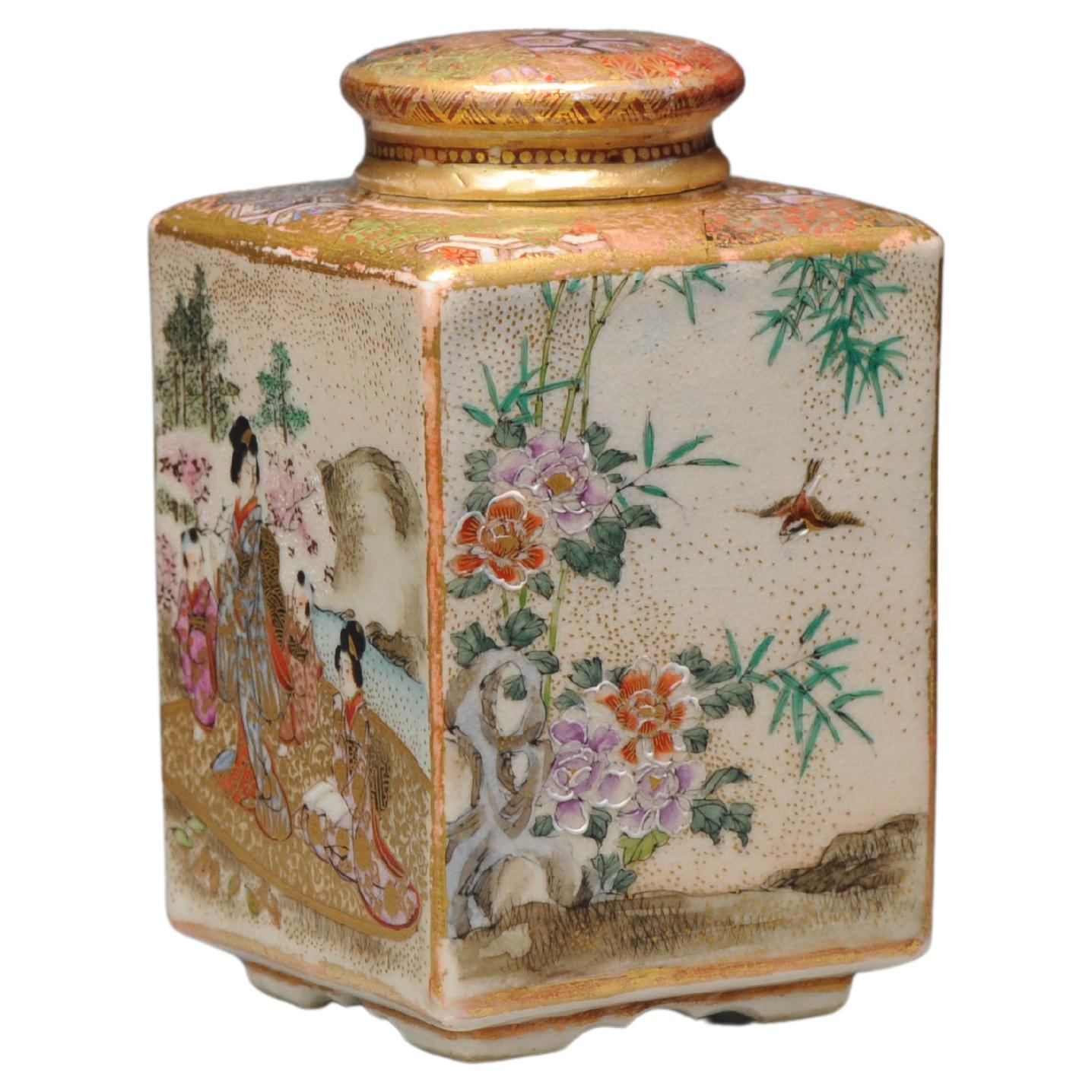
A small Satsuma vase, Yasuda, unidentified artist, of cuboid form with slightly domed cover, decorated with bijin alternating with landscape scenes,...
Category
Antique 19th Century Japanese Meiji Ceramics
Materials
Porcelain
$1,239 Sale Price
20% Off
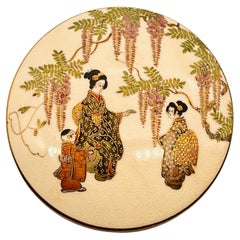
A Fine Japanese Satsuma kogo (incense box) Signed by Kinkozan. Meiji period
Located in London, GB
A Satsuma circular kogo (incense box) and cover signed by Kinkozan
19th century
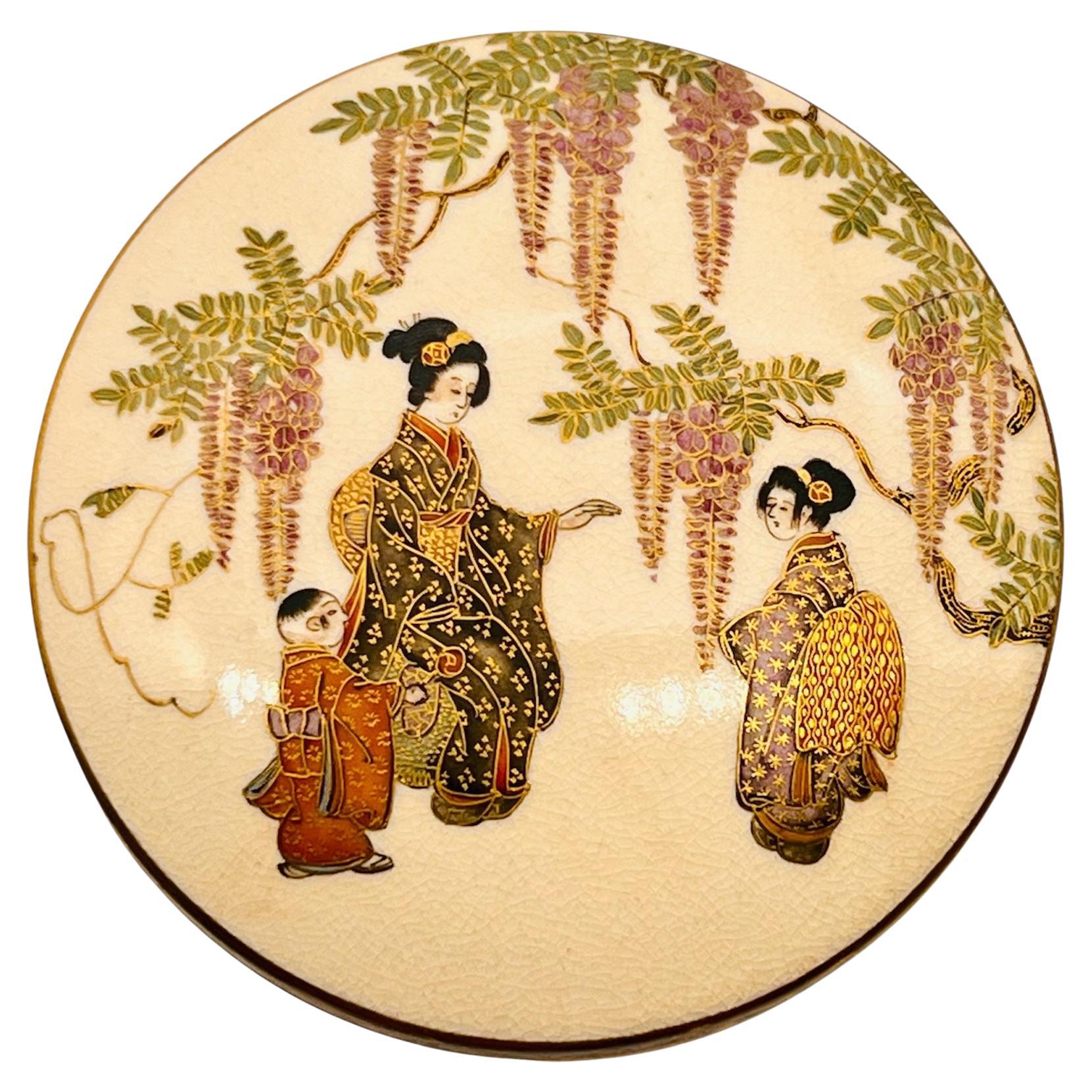
Finely painted in enamels and gilt, the cover with wisteria and a scene of a woman and children ...
Category
Antique Late 19th Century Japanese Ceramics
Materials
Ceramic, Porcelain
Satsuma Earthenware Covered Box, by Kinkozan
By Satsuma
Located in West Palm Beach, FL
A Satsuma Earthenware covered box,
by Kinkozan,
Japanese, Meiji period (1868-1912)
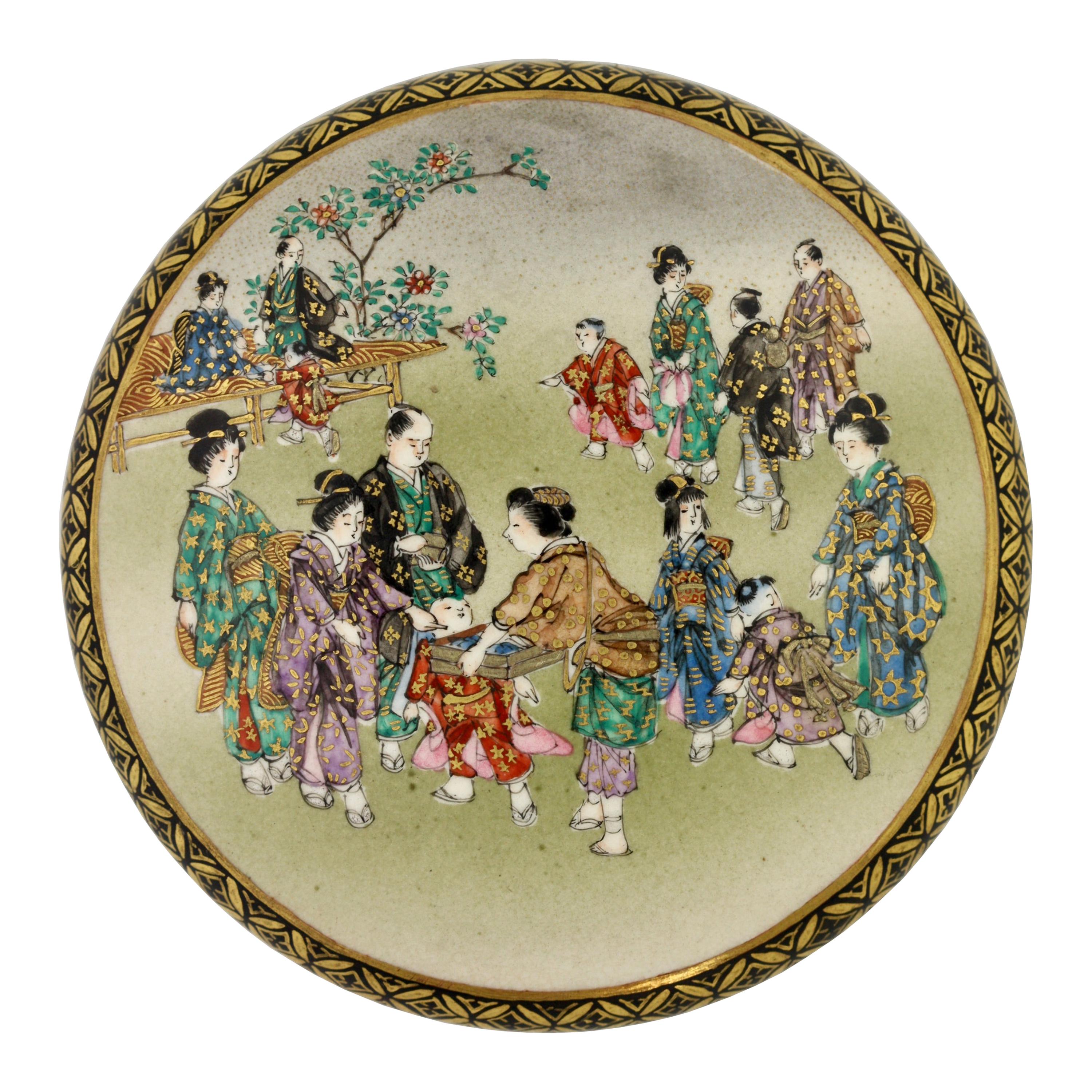
decorated in polychrome enamels and gilt over a clear, crackled glaze, delicately painted with s...
Category
Antique Early 1900s Ceramics
Materials
Earthenware
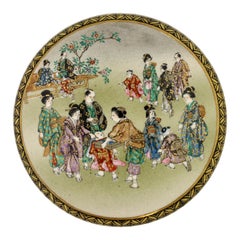
Japanese Satsuma Bowl Landscape Figural Decoration Marked, 19th Century
Located in Amsterdam, Noord Holland
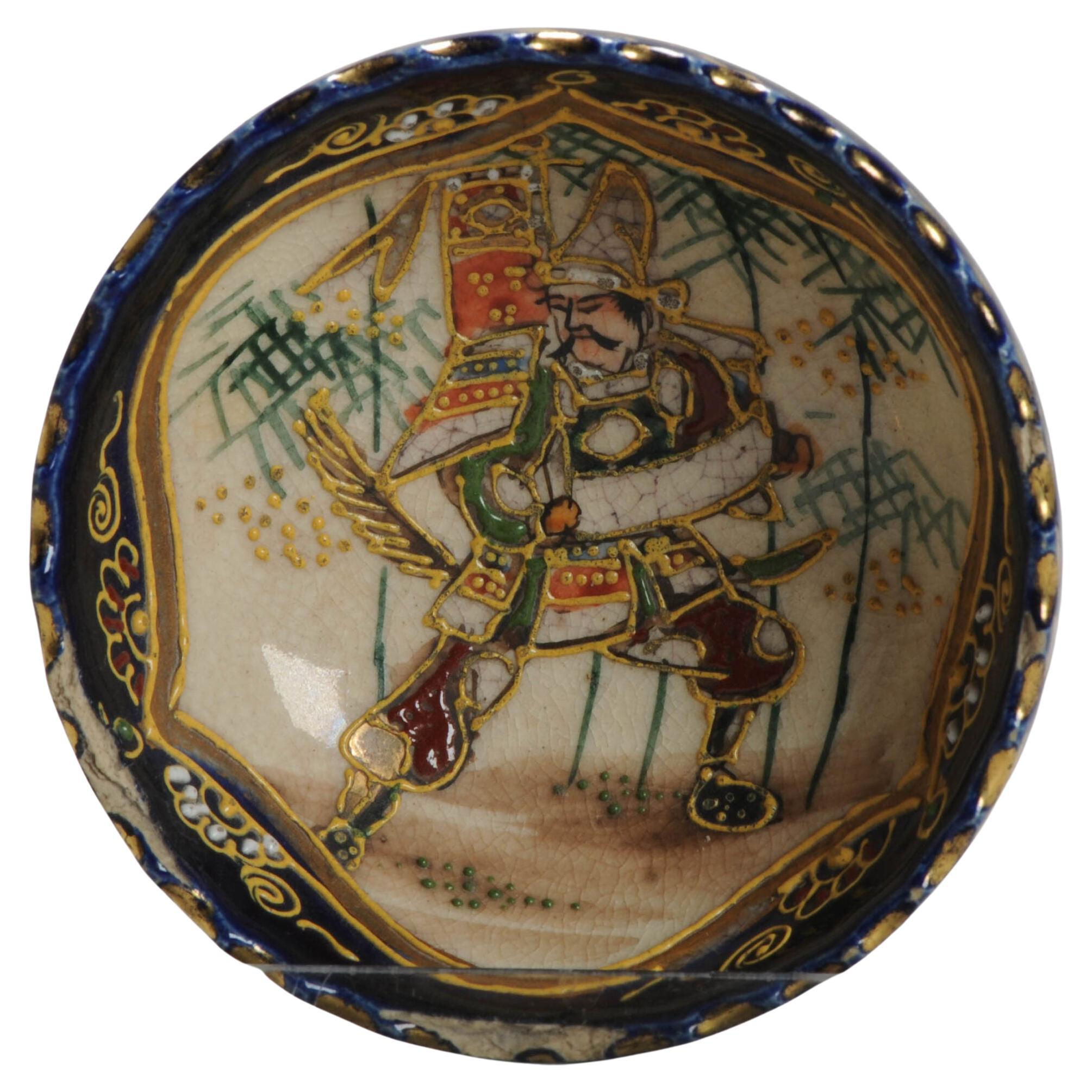
Fabulous Japanese earthenware Satsuma bowl with nice decoration of a landscape with figures. Meiji period, 19th c.
Lovely piece.
Additional information:
Material: Porcelain & Pott...
Category
20th Century Japanese Meiji Decorative Bowls
Materials
Porcelain
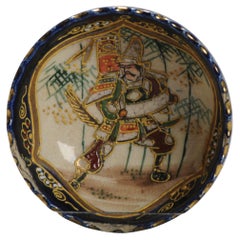
Koro Satsuma Japanese ceramic
Located in Buenos Aires, Argentina
Koro Satsuma Japanese ceramic
Japanese glazed ceramic in various colors
Meiji Style Circa 1940 Origin Japan
It has traditional images painted on its front and back.
The purpose of th...
Category
Vintage 1940s Japanese Meiji Ceramics
Materials
Enamel
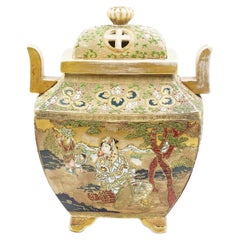
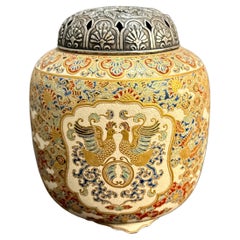
Japanese Satsuma Incense Burner, Koro, with Silver Lid, Meiji Period, Japan
Located in Austin, TX
A fantastic Japanese Satsuma incense burner, koro, with phoenix and brocade designs and a silver lid, Meiji Period, late 19th century, Japan.
The cens...
Category
Antique 1890s Japanese Meiji Ceramics
Materials
Silver
More Ways To Browse
Buddha Hand
Antique Beetle
Crane Birds
Japanese Meiji Period Box
Incense Box
Seven Gods
Japanese Incense Box
Satsuma Incense
Seven Lucky Gods
Taizan Yohei
Chinese Antique Rose Mandarin Porcelain
Chinese Butterfly Porcelain
Chinese Qing Dog
Chinese Tea Bowl
Japanese Bizen
Vintage Green China
Antique Chinese China Fruit
Antique Chinese Signs