Want more images or videos?
Request additional images or videos from the seller
1 of 16
Japanese Meiji Period Kakiemon Porcelain Incense Burner of Daruma
$2,900List Price
About the Item
- Dimensions:Height: 8 in (20.32 cm)Width: 4 in (10.16 cm)Depth: 3.5 in (8.89 cm)
- Style:Meiji (Of the Period)
- Materials and Techniques:
- Place of Origin:
- Period:
- Date of Manufacture:Late 19th Century
- Condition:Wear consistent with age and use.
- Seller Location:Astoria, NY
- Reference Number:Seller: G228 - 113212 - 11181stDibs: LU889312721181
About the Seller
4.9
Vetted Professional Seller
Every seller passes strict standards for authenticity and reliability
1stDibs seller since 2010
2,610 sales on 1stDibs
Typical response time: 11 hours
Authenticity Guarantee
In the unlikely event there’s an issue with an item’s authenticity, contact us within 1 year for a full refund. DetailsMoney-Back Guarantee
If your item is not as described, is damaged in transit, or does not arrive, contact us within 7 days for a full refund. Details24-Hour Cancellation
You have a 24-hour grace period in which to reconsider your purchase, with no questions asked.Vetted Professional Sellers
Our world-class sellers must adhere to strict standards for service and quality, maintaining the integrity of our listings.Price-Match Guarantee
If you find that a seller listed the same item for a lower price elsewhere, we’ll match it.Trusted Global Delivery
Our best-in-class carrier network provides specialized shipping options worldwide, including custom delivery.You May Also Like
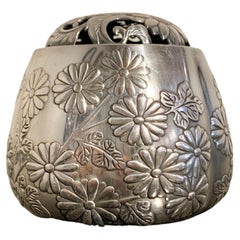
Japanese Silver Incense Burner, Akoda Koro, by Nomura, Meiji Period, Japan
Located in Austin, TX
A lovely and luxurious Japanese silver incense burner of lobed melon form, akoda koro, marked jungin and signed Nomura, Meiji Period, circa 1900, Japan.
The silver koro...
Category
Vintage 1910s Japanese Meiji Metalwork
Materials
Silver, Sterling Silver
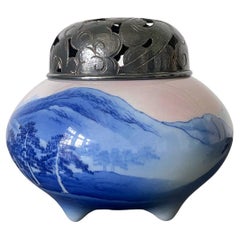
Japanese Glazed Ceramic and Silver Koro Incense Burner Makuzu Kozan
By Makuzu Kozan
Located in Atlanta, GA
A tri-pod ceramic incense burner (koro) by Japanese Imperial potter Makuzu Kozan (1842-1916) circa late Meiji to the start of Taisho period (1890-1910s). A fine example of the artist's work belonging to the late part of his underglaze paint phase (started around 1887 until his death), the surface of the koro was painted in beautiful shades of blue to depict a continuous landscape not unlike a traditional ink and watercolor hand scroll. The rise and fall mountains recede and fade into the horizon and are dotted with groves of pines. The sky is painted with a beautiful subtle shade of pink, suggesting a time of sunrise or sunset. The koro is fitted with an ensuite reticulated sterling silver hoya (incense cover), pierced with swirling cloud and marked with "pure silver' in Kanji. The base is signed in underglaze blue "Makuzu Kozan Sei" within a double ring. The piece is beautifully potted in form and the decoration was done with expertise using the novel technique developed by Kozan called Fuki-e (the blow painting), in order to achieve the striking landscape known as "Mountain and Water" with sense of dimensions and gradient, the poetic effects normally conveyed only by sumi ink staining on paper. The piece comes with an unsigned tomobako (wood storage box) of a recent age.
Also known as Miyagawa Kozan (1842–1916), Makuzu Kozan was one of the most established and collected ceramist from Meiji Period. Born as Miyagawa Toranosuke, Kozan established his pottery studio in Yokohama around 1870s and later became one of the appointed artists to the Japanese Imperial household. His work was exhibited in many international fairs that the Meiji government participated at the turn of the century and won many grand prizes. Being one of the most creative ceramists, Kozan started experimenting with new chemical colors from the West in the format of his porcelain glaze around 1880s. New colors allowed him to create underglaze designs that appeared bright, smooth and glossy. He even invented his own receipt of cobalt blue to achieve a much brighter yet softer shade, as evident on this vase. To create landscape that is realistic and dimensional, more common in the western paintings, he was inspired by the native Japanese ink painting technique developed around 1900 by Yokoyama...
Category
Antique Early 1900s Japanese Japonisme Ceramics
Materials
Silver
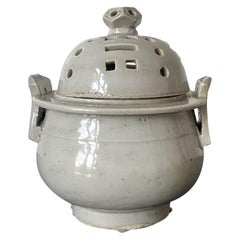
Korean white Porcelain Ritual Incense Burner with Bagua Pattern Joseon Dynasty
Located in Atlanta, GA
An antique Korean ritual incense burner circa 19th century, late Joseon dynasty. It was made in Bunwon Kiln in Gwangju, Gyeonggi Do, near Seoul. The ceramic container has a thickly b...
Category
Antique 19th Century Korean Archaistic Ceramics
Materials
Ceramic
$6,800
H 6.5 in Dm 6.25 in
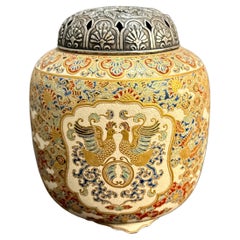
Japanese Satsuma Incense Burner, Koro, with Silver Lid, Meiji Period, Japan
Located in Austin, TX
A fantastic Japanese Satsuma incense burner, koro, with phoenix and brocade designs and a silver lid, Meiji Period, late 19th century, Japan.
The cens...
Category
Antique 1890s Japanese Meiji Ceramics
Materials
Silver
Japanese Satsuma Incense Burner, Koro, Meiji Period, Late 19th Century, Japan
Located in Austin, TX
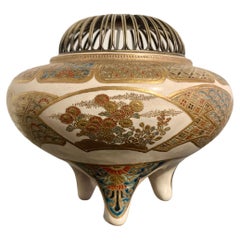
A fine and elegant Japanese Satsuma tripod incense burner, koro, with pierced metal lid, signed Eizan (?) Meiji Period, late 19th century, Japan.
The koro, or censer, features a stoneware body of slightly compressed globular form, supported on three short and squat legs. The wide mouth with a recessed metal rim, and topped by an openwork metal lid topped with overlapping chrysanthemum blossoms of silver repousse.
The body of the koro finely painted with fan shaped cartouches. The fans in the foreground with sprays of blossoming chrysanthemum. The fans in the background with intricate geometric brocade designs.
The shoulder of the incense burner decorated with cartouches formed as stylized chrysanthemum petals, and intricately decorated with geometric and floral brocade designs.
The painting finely done in raised gilt and polychrome enamels, including the highly desirable gosu blue...
Category
Antique Late 19th Century Japanese Meiji Ceramics
Materials
Silver, Metal
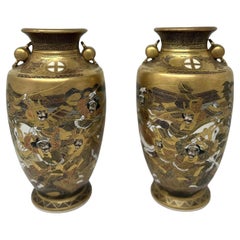
Antique Pair Japanese Satsuma Hand Painted Vase Urns Meiji Period 1868-1912
Located in Dublin, Ireland
Stunning Pair of early Meiji period Satsuma heavy gauge earthenware Rouleau Japanese Vases of Museum quality and generous proportions. These beautiful Satsuma-ware vases were made du...
Category
Antique 19th Century Japanese Anglo-Japanese Ceramics
Materials
Ceramic, Porcelain
$1,541 / set
H 9.75 in W 5.25 in D 5.25 in
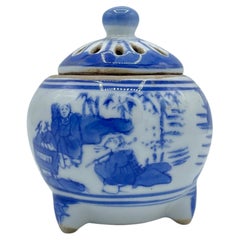
Japanese Porcelain Incense Burner 1970s Karabito
Located in Paris, FR
This is an incense burner which was made in Japan around 1970s in Showa era. This incense burner is made with ceramic.
Dimensions: 8 x 8 x H10 cm
Category
Vintage 1970s Japanese Showa Ceramics
Materials
Ceramic
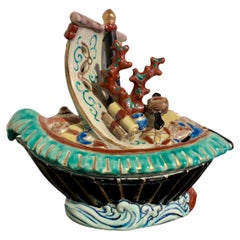
Japanese Kutani Treasure Boat
Takarabune
Censer, Taisho Period, Japan
Located in Austin, TX
A wonderful Japanese Kutani porcelain incense burner, koro, in the form of a treasure ship, Takarabune, Taisho Period (1912 - 1926), Japan.
The censer boldly modeled as the legendary Takarabune, or Treasure Ship, a mythical ship said to carry the shichifukujin, the Seven Lucky Gods, around the heavens during the first days of the New Year, visiting lucky humans to bring blessings and prosperity.
The black bodied, single mast ship sails on the water, its sail full of wind and decorated with the character "takara", meaning treasure. The pierced top of the ship serving as the cover for the censer. It is loaded with magical items and treasure, most prominently, a large coral branch...
Category
Vintage 1910s Ceramics
Materials
Porcelain
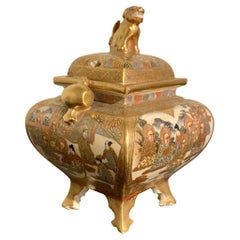
Small Japanese Satsuma Incense Burner, Koro, Meiji Period, Late 19th Century
Located in Austin, TX
A fine Japanese Satsuma stoneware incense burner, koro, Meiji Period, late 19th century, Japan.
The koro of square shape with curved sides,...
Category
Antique 1890s Ceramics
Materials
Enamel
$1,200
H 5.25 in W 4 in D 3.75 in
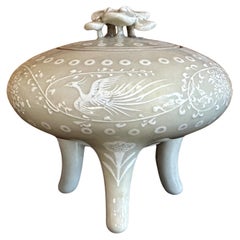
Rare Japanese Porcelain Incense Burner with Inlays Makuzu Kozan
By Makuzu Kozan
Located in Atlanta, GA
A porcelain incense burner (koro) made by Japanese potter Makuzu Kozan (also known as Miyagawa Kozan, 1842-1916) circa 1890s-1900s (end of Meiji Period). The koro features an elegant...
Category
Antique Late 19th Century Japanese Meiji Ceramics
Materials
Ceramic
More From This Seller
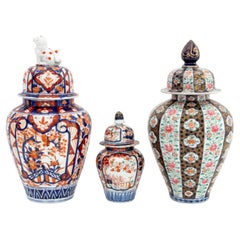
View AllJapanese Porcelain Covered Ginger Jars, 3
Located in Astoria, NY
Collection of Three Japanese Porcelain Covered Ginger Jars, comprising: (2) two Japanese imari, one with foo dog finial, and (1) one alternating blue and white floral ground with tea...
Category
20th Century Chinese Ceramics
Materials
Porcelain
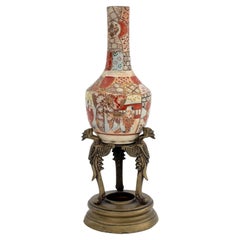
Japanese Satsuma Pottery Bottle Vase
Located in Astoria, NY
Japanese Satsuma Pottery Bottle Vase, with painted and gilt figural interior scenes mounted on brass griffin base. Overall: 12.25" H x 4.75" Diameter. Provenance: From the Collection...
Category
20th Century Japanese Meiji Ceramics
Materials
Brass
$650 Sale Price
31% Off
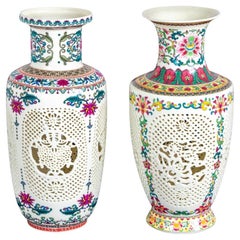
Chinese Reticulated Porcelain Baluster Vases, 2
Located in Astoria, NY
Group of Two Chinese Reticulated Porcelain Baluster Vases, 20th century, each with polychrome decoration and pierced bodies, marked to bases.
Larger: 11.25" H x 5.25" Diameter.
Category
20th Century Chinese Qing Ceramics
Materials
Porcelain
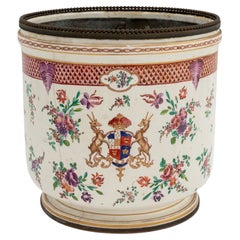
Chinese Export Armorial Porcelain Jardiniere
Located in Astoria, NY
Chinese Export Armorial Porcelain Jardiniere, 19th century, with metal mounted rim and metal insert, with pink floral and garland motif with crest to center, iron red character mark ...
Category
Antique 19th Century Chinese Chinese Export Ceramics
Materials
Metal
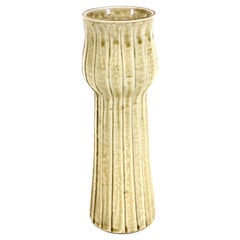
Japanese Mid-Century Glazed Ceramic Lotus Vase
Located in Astoria, NY
Japanese Mid-Century Modern glazed ceramic vase in lotus shape, stamped with mark on the bottom. 9.5" height x 3.25" diameter.
Category
Mid-20th Century Japanese Mid-Century Modern Vases
Materials
Pottery
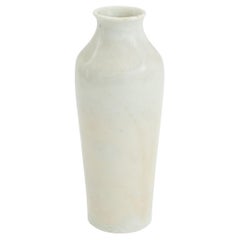
Chinese White Porcelain Bottle Vase
Located in Astoria, NY
Chinese White Porcelain Bottle Vase. 7.5" H x 3" Diameter. Provenance: From a 35 East 75th Street Estate.
Category
Early 20th Century Chinese Qing Ceramics
Materials
Porcelain
$550 Sale Price
35% Off
Still Thinking About These?
All Recently ViewedMore Ways To Browse
Kakiemon Porcelain
Japanese Kakiemon
Japanese Incense Burner Antique
Meiji Incense Burner
Japanese Daruma
China Blue Porcelain
Antique Chinese Blue And White Porcelain
Chinese Porcelain Hand Painted
Chinese Blue And White Ceramics
Japan Hand Painted Porcelain
Japanese Imari
Century Furniture Ming
Meiji Period Furniture
Vintage Asian Ceramics
Famille Porcelain
Ming Dynasty
Japanese Porcelain Imari
Japanese Blue And White Porcelain