Items Similar to Japanese Satsuma Ceramic Ewer Yabu Meizan
Want more images or videos?
Request additional images or videos from the seller
1 of 19
Japanese Satsuma Ceramic Ewer Yabu Meizan
$12,000
£9,070.61
€10,404.37
CA$16,728.49
A$18,210.33
CHF 9,666.05
MX$219,109.46
NOK 122,482.01
SEK 112,228.13
DKK 77,699.19
About the Item
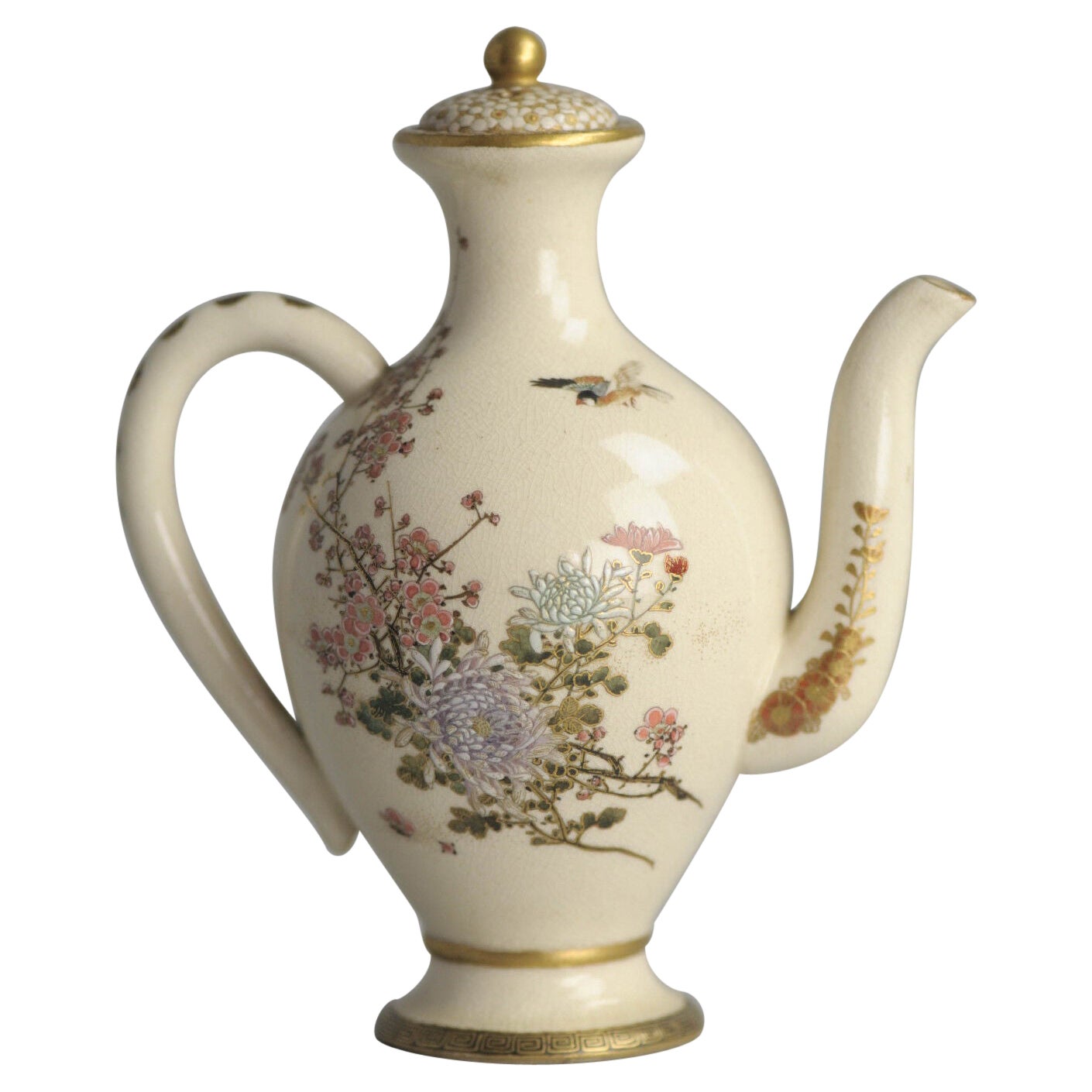
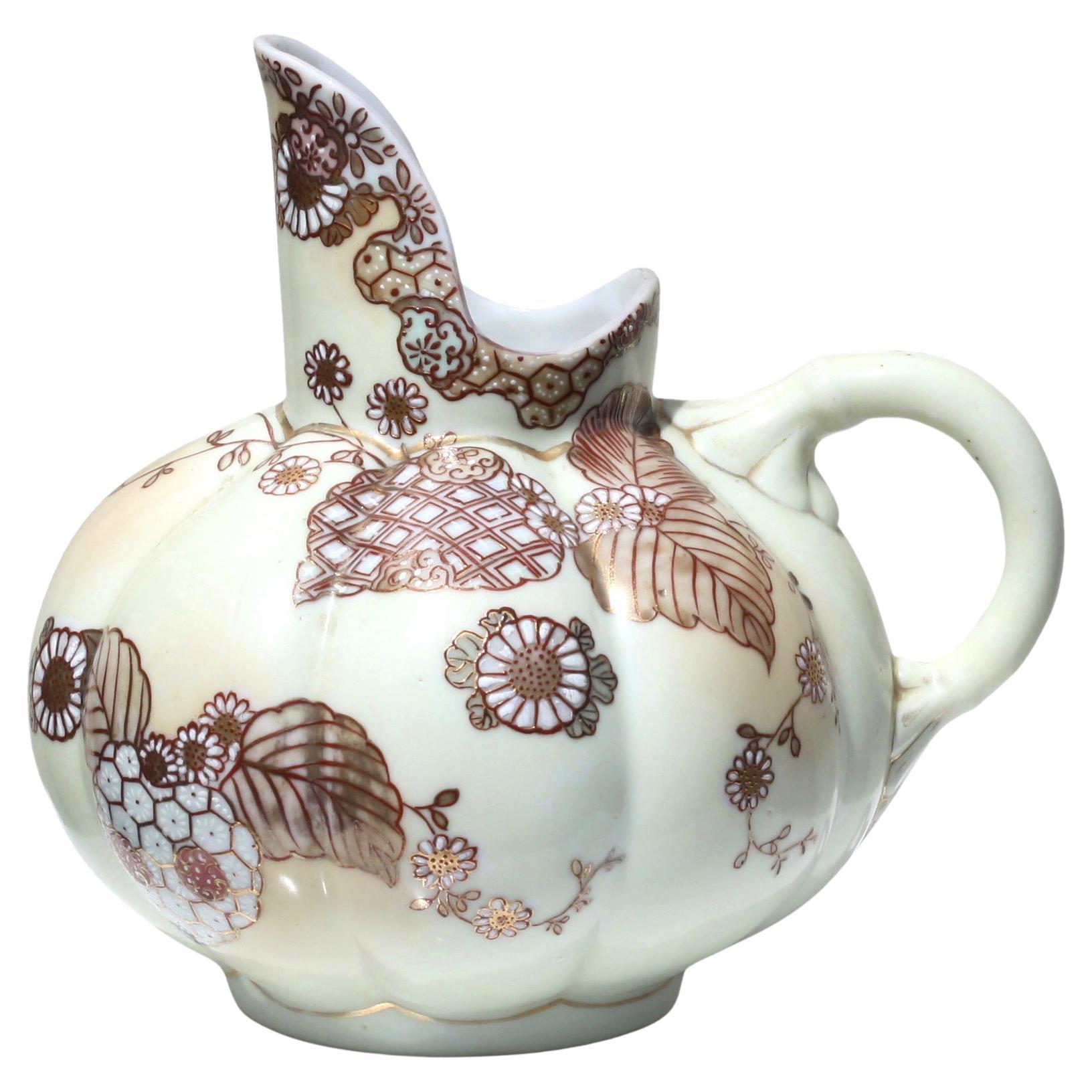
A Satsuma ware miniature ewer from the studio of Yabu Meizan (birth name Yabu Masashichi; 1853-1934), who was one of the most celebrated and collectible Satsuma artists from the Meiji Period. From his studio in Osaka, Yabu Meizan oversaw the production of the finest Satsuma wares for both domestic and export markets. He participated many international expose at the turn of the 20th century and won numerous awards for his creation.
This ewer is exquisite in every aspect. The classic elegant form is delicate and harmonious in proportion. The surface was decorated in a dense millefleur pattern (thousand flowers). The detailed rendering is visually stunning. The intricate gold gilt outlining every single petals and then layering them make the piece a piece of miniature art with jewel quality, Scrolling vine design with astonishing details crawls along the handle and pouring neck. The lid is a beautiful carved piece with lotus petals (likely original but it is also possibly a historical replacement). Around the base rim, a geometrical border with double black square features a black enamel background, another signature feature among the his work. The base is marked with the golden seal of Yabu Meizan. Circa early 20th century.
Ewer form is not a common form in Yabu Meizan's repertoire. Millefleur patter was used in some of his work, but generally as a partial element. A full surface covering found on this piece is also relatively rare. Standing 4.75 inches high, the ewer makes a great example of his finest studio work at the pinnacle of the Satsuma ceramic production.
- Creator:Yabu Meizan (Maker)
- Dimensions:Height: 4.75 in (12.07 cm)Width: 4 in (10.16 cm)Depth: 2.2 in (5.59 cm)
- Style:Japonisme (Of the Period)
- Materials and Techniques:
- Place of Origin:
- Period:
- Date of Manufacture:Early 20th Century
- Condition:Wear consistent with age and use. Fine condition nearly impeccable, one tiny bite on the mouth rim as shown, a couple of unevenness along the inner edge of the mouth rim. Contact wear on the base.
- Seller Location:Atlanta, GA
- Reference Number:1stDibs: LU945023732912
Yabu Meizan
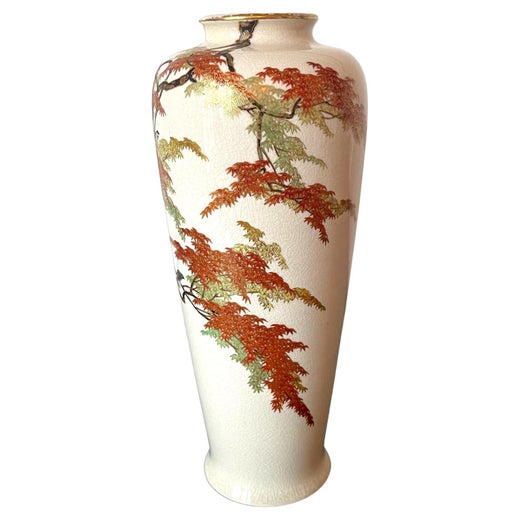
Yabu Meizan was a Japanese artist and workshop owner known for painting on porcelain. He was the most prolific producer of Satsuma ware. Meizan actively marketed his work internationally as well as domestically, taking an active role in organizing the presentation of Japanese wares at the world's fairs.
About the Seller
4.9
Platinum Seller
Premium sellers with a 4.7+ rating and 24-hour response times
Established in 2006
1stDibs seller since 2010
583 sales on 1stDibs
Typical response time: <1 hour
- ShippingRetrieving quote...Shipping from: Atlanta, GA
- Return Policy
More From This Seller
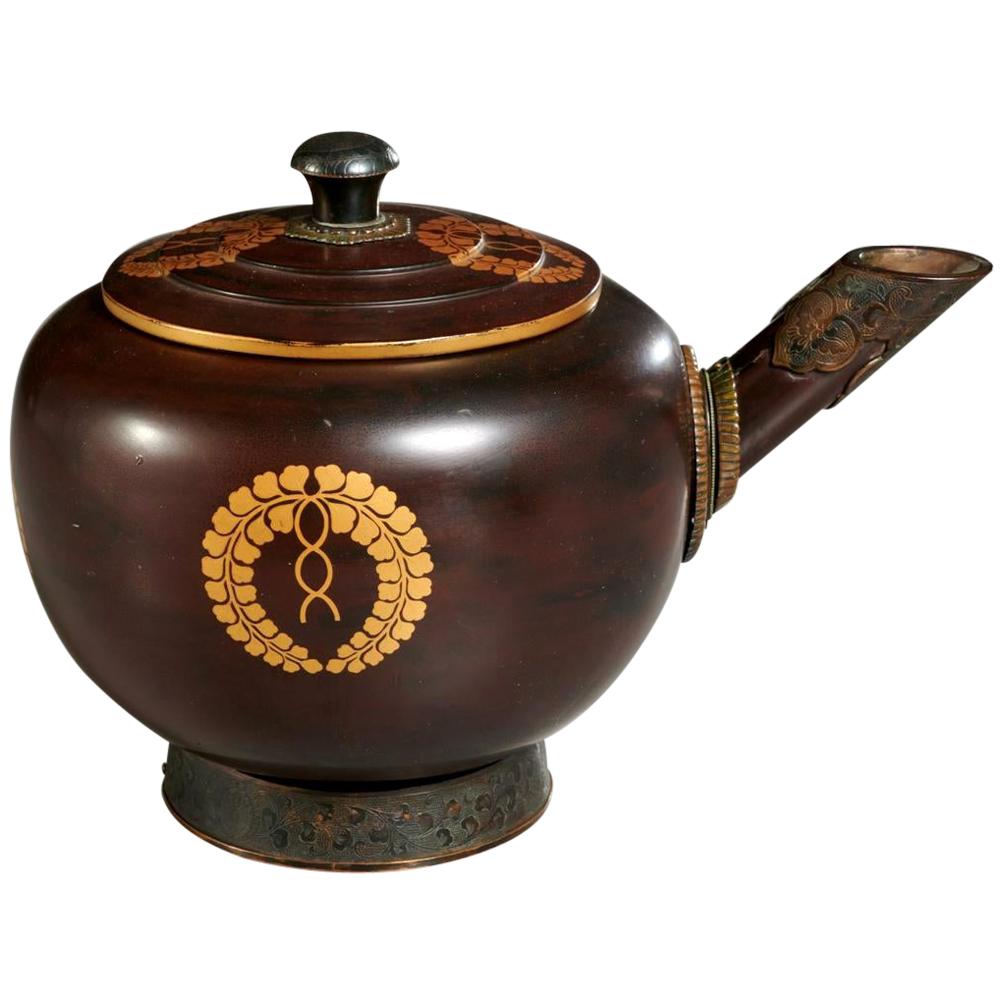
View AllJapanese Antique Ewer Lacquer with Bronze Edo to Meiji Period
Located in Atlanta, GA
A Japanese lacquer water ewer without handle (known as hazo in Japanese) that was used to carry water, traditionally together with a large basin (known as tsunodarai) for domestic us...
Category
Antique 19th Century Japanese Japonisme Lacquer
Materials
Bronze
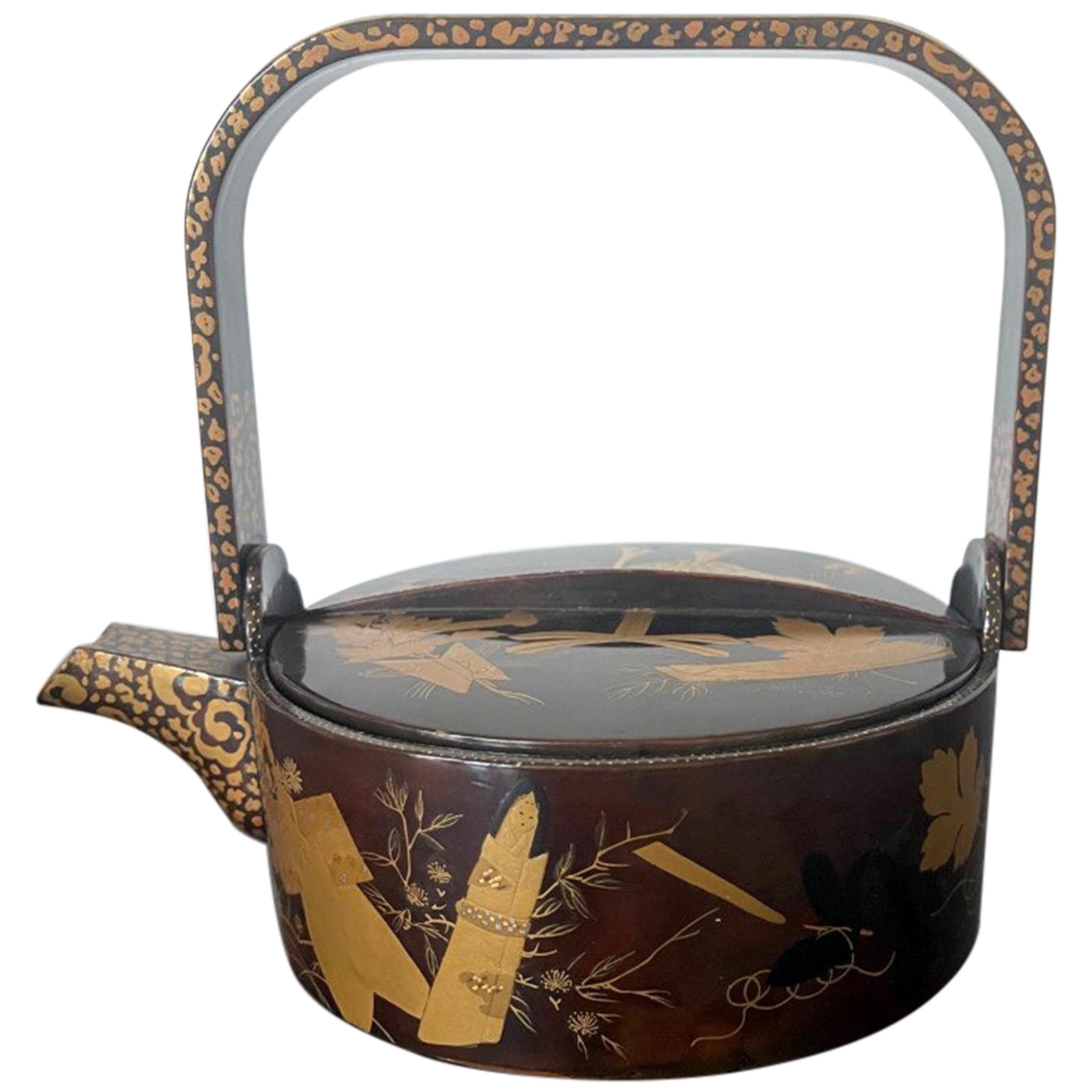
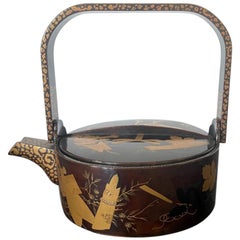
Japanese Lacquer Maki-e Sake Ewer Meiji Period
Located in Atlanta, GA
A Japanese lacquered wood sake ewer with maki-e design, circa late 19th century, Meiji period. The nicely decorated lacquerware is of a Classic sake ewer for...
Category
Antique 1890s Japanese Japonisme Lacquer
Materials
Lacquer
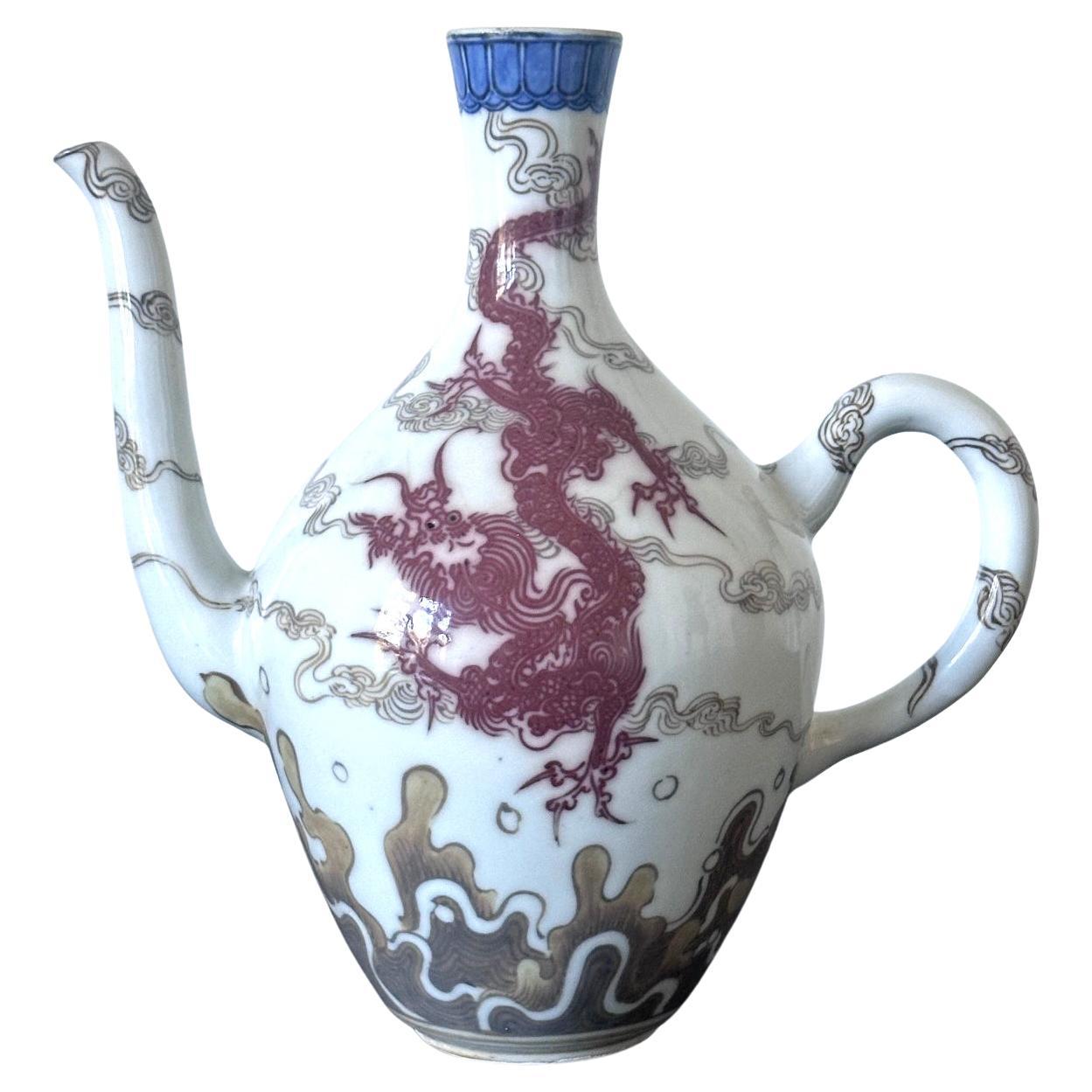
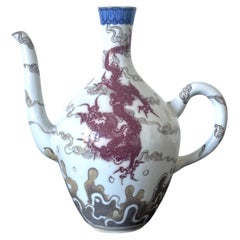
Early Porcelain Underglaze Dragon Ewer by Makuzu Kozan Meiji Period
By Makuzu Kozan
Located in Atlanta, GA
A porcelain ewer with fine underglaze iron red, brown and blue decoration made by the legendary Japanese imperial potter Makuzu Kozan (1842-1916), this relatively rare piece is dated to circa Meiji 23rd to 26th year (1890-1893) based on the mark used on the base. This is the starting period when the artists departed from his high-relief and gold gilt period and started focusing on making porcelain pieces with underglaze paint and experimented new colors. The ewer form is also relatively rare in the artist's survived repertoire compared to other forms.
The piece takes its shape from the prototype Chinese...
Category
Antique 1890s Japanese Meiji Ceramics
Materials
Ceramic
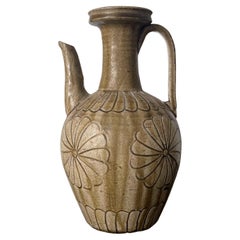
Japanese Ko-Seto Stoneware Ewer with Carved Design
Located in Atlanta, GA
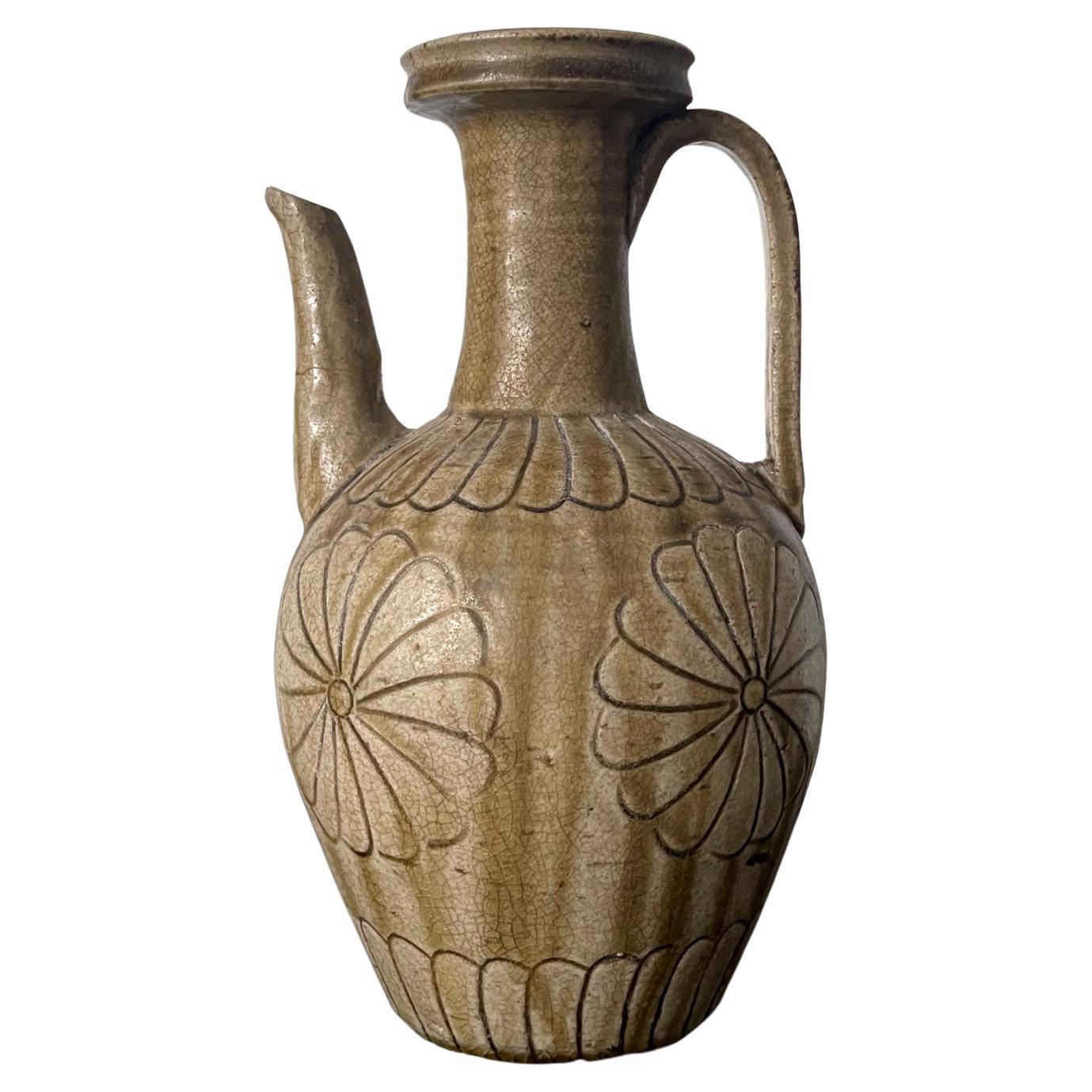
On offer is a rare Ko-seto (old seto) stoneware ewer from Kamakura period (12-14th century) Japan. The exceptionally heavily potted ewer is made of stoneware. The main body was likely hand-coiled with individually built handle, sprout and wheel-made neck and mouth assembled. It takes the basic form from the contemporary Chinese ewer...
Category
Antique 15th Century and Earlier Japanese Archaistic Ceramics
Materials
Stoneware
Japanese Mingei Glazed Tea Pot with Kintsugi by Shoji Hamada
By Shoji Hamada
Located in Atlanta, GA
A Japanese stoneware tea pot by Hamada Shoji (Japanese 1894-1978) circa 1960-80s. The teapot is of the classic form and of a strong style of Mingei (folk ...
Category
20th Century Japanese Modern Ceramics
Materials
Ceramic

Japanese Ceramic Sake Bottle Chosen Karatsu Ware
Located in Atlanta, GA
The long neck bottle of classic form was heavily potted with coarse clay with high iron content. The flask, circa 18th century Edo period, was purposed for sake storage but also substituted as a flower vase during tea ceremony. The surface is covered in glossy black glaze and contrasts strikingly with white ash glaze around the shoulder. The white, fired with straw, displays a splashing feather effect and fine crackles, blending in with the black artistically. This type of Karatsu ware...
Category
Antique 18th Century Japanese Japonisme Ceramics
Materials
Ceramic

You May Also Like
Exquisite Japanese Satsuma Tea or Milk Pot Marked Base Bird Rare, 19th Century
Located in Amsterdam, Noord Holland
Epical Piece.The painting work is cool.
Additional information:
Material: Porcelain & Pottery
Region of Origin: China
Period: Meiji Period
Original/Reproduction: Original
Age: 1800-...
Category
Antique 19th Century Chinese Tea Sets
Materials
Porcelain
$533 Sale Price
39% Off
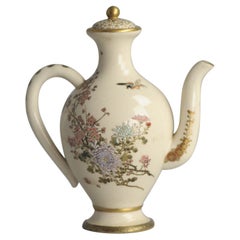
Japanese Porcelain Gilt and Enamel Pitcher
Located in West Palm Beach, FL
A Japanese Porcelain gilt and enamel pitcher
Signed
Measures: 8 by 8 in. (20.32 x 20.32 cm.).
Category
20th Century Antiquities
Materials
Porcelain
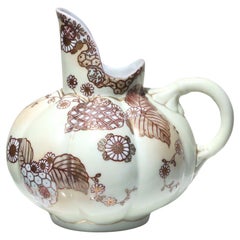
Very Rare Ming Dynasty Porcelain Ewer with Ottoman Gem-Set Tombak Mounts
Located in London, GB
Very rare Ming dynasty porcelain ewer with ottoman gem-set tombak mounts
Chinese and Turkish, 16th/17th century
Measures: Tombak: height 20cm,...
Category
Antique 16th Century Chinese Ming Bottles
Materials
Multi-gemstone, Brass
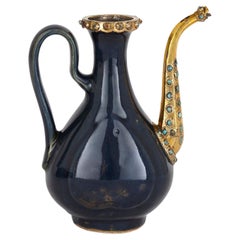
Antique Meiji Period Japanese Satsuma Tea Pot Japan, 19th Century
Located in Amsterdam, Noord Holland
Faboulous japanese earthenware Teapot of unusual shape.
Additional information:
Material: Porcelain & Pottery
Type: Tea/Coffee Drinking: Bowls, Cups & Teapots
Japanese Style: Satsum...
Category
Antique 19th Century Japanese Tea Sets
Materials
Porcelain
$852 Sale Price
20% Off
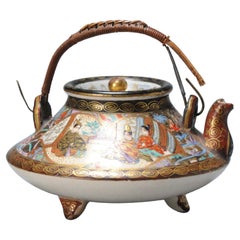
Japanese Antique Earthenware Satsuma Vase by Kinkozan Meiji Period
By Kinkozan
Located in Newark, England
FREE WORLDWIDE SHIPPING
MEIJI PERIOD (1868-1912)
From our Japanese Satsuma collection, we’re pleased to offer this Meiji period bottle-form Satsuma vase by Kinkozan.
The vase is...
Category
Antique Early 1900s Japanese Meiji Ceramics
Materials
Ceramic, Earthenware, Pottery
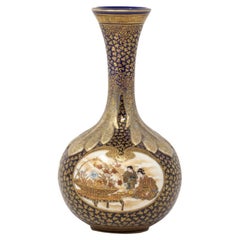
Antique Japanese Pitcher
Mizutsugi
with Copper 1920s Kinyoudou
Located in Paris, FR
This is an antique pitcher for tea ceremony made in Japan around 1920s (Taisho era). And made with Copper. This pitcher has a signature on the bottom, written Kinyoudou.
This kind ...
Category
Vintage 1920s Japanese Taisho Pitchers
Materials
Copper
$441 Sale Price
20% Off