Want more images or videos?
Request additional images or videos from the seller
1 of 20
Japanese Shigaraki Large Storage Jar, Tsubo, Muromachi to Edo Period, circa 1600
$8,000List Price
About the Item
- Dimensions:Height: 15.75 in (40.01 cm)Diameter: 12.75 in (32.39 cm)
- Style:Edo (Of the Period)
- Materials and Techniques:
- Place of Origin:
- Period:
- Date of Manufacture:circa 1600
- Condition:Wear consistent with age and use. The stand with a stable split to the wood. Also with scuff marks to the top. The jar in very good condition. One The foot somewhat uneven; a shim used for stability.
- Seller Location:Austin, TX
- Reference Number:1stDibs: LU894714988842
About the Seller
5.0
Platinum Seller
Premium sellers with a 4.7+ rating and 24-hour response times
Established in 2001
1stDibs seller since 2010
356 sales on 1stDibs
Typical response time: 2 hours
Authenticity Guarantee
In the unlikely event there’s an issue with an item’s authenticity, contact us within 1 year for a full refund. DetailsMoney-Back Guarantee
If your item is not as described, is damaged in transit, or does not arrive, contact us within 7 days for a full refund. Details24-Hour Cancellation
You have a 24-hour grace period in which to reconsider your purchase, with no questions asked.Vetted Professional Sellers
Our world-class sellers must adhere to strict standards for service and quality, maintaining the integrity of our listings.Price-Match Guarantee
If you find that a seller listed the same item for a lower price elsewhere, we’ll match it.Trusted Global Delivery
Our best-in-class carrier network provides specialized shipping options worldwide, including custom delivery.You May Also Like
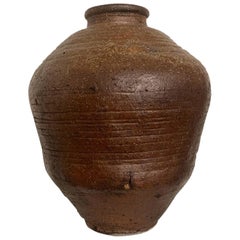
Large Japanese Antique Shigaraki Tsubo Jar
Located in Atlanta, GA
An antique Japanese stoneware storage jar, known as tsubo from Shigaraki kiln, circa 17th-18th century (early Edo possibly Momoyama period)....
Category
Antique 17th Century Japanese Japonisme Ceramics
Materials
Ceramic
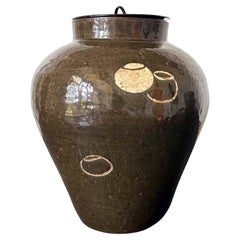
Japanese Ceramic Seto Tea Leaf Tsubo Jar Edo Period
Located in Atlanta, GA
A Japanese glazed ceramic jar with a lacquered wood lid circa 19th century of late Edo to early Meiji Period. The stoneware tsubo was used as a storage vessel for produce such as tea...
Category
Antique 19th Century Japanese Edo Ceramics
Materials
Ceramic
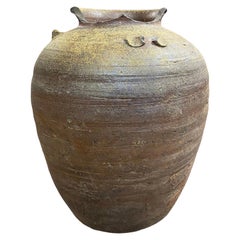
Japanese Antique Momoyama Edo Bizen Ware Pottery Wabi-Sabi Art Tsubo Jar Vase
Located in Studio City, CA
An absolutely stunning Bizen ware stoneware vase/jar/vessel - produced sometime during the late Momoyama period (1568-1600) / Early Edo Period (1603-1867). Bizen yaki...
Category
Antique 16th Century Japanese Edo Ceramics
Materials
Stoneware
$1,495
H 10.25 in W 8.5 in D 8.5 in
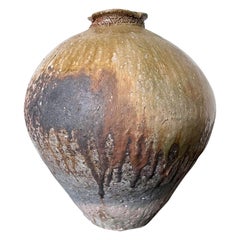
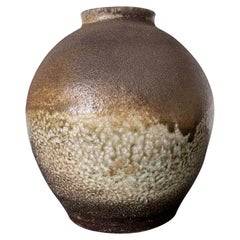
Large Ceremic Shigaraki Tsubo by Nagaoka Masami
Located in Atlanta, GA
An impressive Shigaraki Tsubo (jar normally for storage) in an archaic form with a bulbous and robust body that opens with a small lipped mouth. Heavil...
Category
21st Century and Contemporary Japanese Modern Ceramics
Materials
Ceramic
Japanese Shigaraki Jar for Ikebana by Shiho Kanzaki
By Shiho Kanzaki
Located in Atlanta, GA
A Shigaraki stoneware jar by Japanese potter Shino Kanzaki (1942-2018). Kanzaki is a world renowned potter in Shigaraki who based his modern work on the ancient tradition of Shigaraki and Iga ware...
Category
20th Century Japanese Modern Ceramics
Materials
Ceramic
Japanese antique pottery [Tamba] jar / Edo period / 1600s / Beautiful glazed
Located in Sammu-shi, Chiba
This is a Tamba ware jar produced in Japan during the early Edo period (circa 17th century). Tamba ware, along with Seto, Tokoname, Echizen, Shigaraki, and Bizen, is known as one of ...
Category
Antique 17th Century Japanese Edo Jars
Materials
Pottery
![Japanese antique pottery [Tamba] jar / Edo period / 1600s / Beautiful glazed](https://a.1stdibscdn.com/japanese-antique-pottery-tamba-jar-edo-period-1600s-beautiful-glazed-for-sale/f_54872/f_466032721757489428606/f_46603272_1757489429398_bg_processed.jpg?width=240)
$1,200
H 16.74 in Dm 13.86 in
Japanese Shigaraki Grain Storage Jar
Located in Hudson, NY
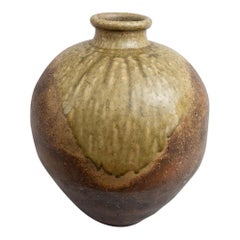
Shigaraki is one of the six ancient kilns of Japan. Early 17th century full formed vessel with refined neck and green glaze on front shoulder. Very similar to two pieces in "Shigerak...
Category
Antique Early 18th Century Japanese Jars
Materials
Pottery
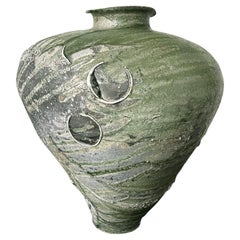
Massive Ceramic Jar Tsubo by Japanese Potter Tsujimura Yui
By Tsujimura Yui
Located in Atlanta, GA
A massive and magnificent ceramic Tsubo jar by Japanese potter Tsujimura Yui (1975-). Inspired by the techniques and aesthetics of the early medieval Sue ware, the artist hand builds an impressive voluminous oviform, irregular by intention, from a combination clay from both Shigaraki and Iga, coarse by nature and rich in feldspar. Fired on their sides horizontally, the surface of the thick wall tsubo is covered with streaks and drips of natural ash glazes in shades of green and blue, forming an abstract and mesmerizing pattern that resembles geothermal earth activity. Additional ashes are blown during the firing to accentuate the textures. Most recognizably, there are many circular marks scattered on the surface of his archaic looking vessels. That is resulted from using stacked tea bowls to prevent the conjoining of the vessels. After the firing, the stacked vessels are chipped away, leaving behind those circular impression, as well as deep pools of glaze which gather where they were placed.
Born in 1975, Tsujimura Yui is the first son of the contemporary ceramic artist Tsujimura Shiro...
Category
Early 2000s Japanese Modern Ceramics
Materials
Ceramic
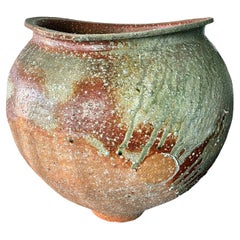
Large Contemporary Ceramic Tsubo Jar by Kai Tsujimura
Located in Atlanta, GA
A massive stoneware tsubo floor jar created by Japanese contemporary ceramic artist Kai Tsujimura (1976-). The heavy jar with its impressive volume was made in the tradition of Iga ware with local coarse sandy clay that turned reddish after the firing. It took its shape from heavy medieval storage jars with a wide-open mouth. For a nearly identical form, see an Echizen jar from Heian period (794–1185) in the collection of MET (Accession Number: 1977.261). The surface showcases scattered white crystalized feldspars and a green vitrified ash glaze cascade down the body (known as biidoro in Japanese - after the Portuguese word for glass vidoro). These is a globular shape impressed on the jar. It is a signature practice of the Tsujimura potter family by stacking bowls between the pieces in the kiln during the firing, resulting in an accidental but iconic aethetic (Kai and Yui Tsujimura...
Category
2010s Japanese Organic Modern Ceramics
Materials
Stoneware
Large Contemporary Japanese Shigaraki Vessel Kohyama Yasuhisa
By Kohyama Yasuhisa
Located in Atlanta, GA
A striking stoneware vase made in the tradition of Shigaraki ware by celebrated Japanese potter Kohyama Yasuhisa (1936-) in the year of 2005. Born in the town of Shigaraki, Yasuhisa ...
Category
Early 2000s Japanese Modern Ceramics
Materials
Ceramic
More From This Seller
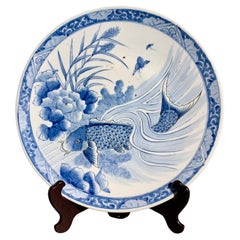
View AllLarge Japanese Blue and White Arita Porcelain Charger, Edo Period, 19th C, Japan
Located in Austin, TX
A large Japanese blue and white decorated Arita porcelain charger, Edo Period, early 19th century, Japan.
The large and shallow blue and white Arita porcelain charger measures 18 ...
Category
Antique Early 19th Century Japanese Edo Ceramics
Materials
Porcelain
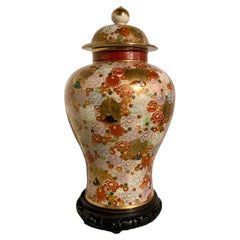
Large Japanese Satsuma Covered Vase, Showa Period, Mid 20th Century, Japan
Located in Austin, TX
A very large and exuberantly decorated Japanese Satsuma millefleur covered vase, marked Satsuma, Showa period, mid 20th century, Japan.
The large vase of attractive baluster form, with a slightly splayed foot, narrow waist, and tapered body with high shoulders and short neck. The vase topped by a domed cover with a large finial shaped like a hoju, the wish fulfilling jewel.
The vase decorated all over in a dense field of flowering blossoms - peony, lotus, and chrysanthemum - in a design known as millefleur, or a thousand flowers. The flowers freely and cheerfully painted in various colors of red, white, orange, green, blue and yellow, with raised white enamels...
Category
Mid-20th Century Japanese Showa Ceramics
Materials
Stoneware
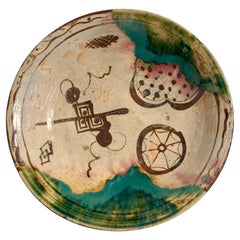
Japanese Ao-Oribe Glazed Stoneware Dish, Early Edo Period, 17th Century, Japan
Located in Austin, TX
A fine and rare Japanese ao-oribe glazed minoyaki stoneware dish, late Momoyama or early Edo period, 17th century, Japan.
The circular dish of wheel thrown ...
Category
Antique 17th Century Japanese Edo Ceramics
Materials
Stoneware
Large Japanese Imari Charger, Edo/Meiji Period, mid 19th century, Japan
Located in Austin, TX
A large 18.25" diameter Japanese Imari porcelain charger, Edo to Meiji Period, mid 19th century, Japan.
The large charger of near flattened form and decorated in the typical Imari palette of underglaze blue with red, orange and green overglaze enamels and gilt highlights.
The design is centered on a roundel with a dense design of scrolling peony blossoms and leaves in underglaze blue. Two large pictorial reserves of Shinto priests...
Category
Antique Mid-19th Century Japanese Meiji Ceramics
Materials
Porcelain
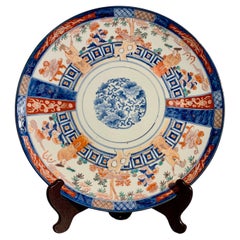
Large Japanese Imari Charger 16", Edo / Meiji Period, mid 19th century, Japan
Located in Austin, TX
A large and charming Japanese imari charger with Chinese boys, Edo to Meiji Period, mid 19th century, Japan.
The large porcelain charger measuring 16" in diameter features high, slo...
Category
Antique 1860s Japanese Meiji Ceramics
Materials
Porcelain
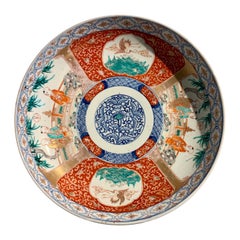
Large Japanese Imari Fluted Charger, Edo/Meiji Period, Mid 19th Century, Japan
Located in Austin, TX
A large and impressive Japanese Imari porcelain fluted charger with scalloped rim, signed Kaji(chu?), Edo to Meiji Period, mid 19th century, Japan.
The magnificent Japanese Imari charger measures 25" in diameter, and is decorated in the typical imari palette of underglaze blue with overglaze red, orange, blue, and green enamels with gilt highlights. The large charger also features fluted sides and a scalloped gilt rim.
The design of the charger is centered on a central floral medallion with three large chrysanthemum blossoms and vegetal scrolls. Radiating out from the central medallion are various brocade patterned sections that roughly follow the shape of the fluting. Some larger sections feature images of cranes and minogame (turtles with long tails), both symbols of longevity, while other feature dragons and phoenix, symbols of authority and power. Four large reserves depict charming scenes of a scholar and his students within a bamboo grove having discourse and examining scrolls.
The back of the charger decorated in underglaze blue with bold floral and vegetal scrolls. With a three character inscription in underglaze blue reading Kaji(chu?) Sei.
The charger is fitted with an antique metal hanger...
Category
Antique Mid-19th Century Japanese Meiji Ceramics
Materials
Porcelain
Still Thinking About These?
All Recently ViewedMore Ways To Browse
Japanese Gilt
Blue And White Chinese Export Porcelain
Antique Blue And White China
Antique Celadon
Chinese Famille Rose
Japanese Arita
Chinese Bowl
Blue And White Fine China
Antique Ming Dynasty
Chinese Famille Rose Porcelain
Rare Antique China
Japanese Gold Imari Hand Painted
Arita Imari
Antique Famille Rose Porcelain
Japanese Porcelain By Master Artists
Red Japanese Furniture
Japanese Satsuma
China Dish