1 of 9
Meiji Period Satsuma Pair of Vases
$3,850List Price
About the Item
- Dimensions:Height: 9.85 in (25 cm)Diameter: 5.52 in (14 cm)
- Sold As:Set of 2
- Style:Japonisme (Of the Period)
- Materials and Techniques:
- Place of Origin:
- Period:
- Date of Manufacture:circa 1880-1900
- Condition:
- Seller Location:Paris, FR
- Reference Number:1stDibs: LU99632588682
Authenticity Guarantee
In the unlikely event there’s an issue with an item’s authenticity, contact us within 1 year for a full refund. DetailsMoney-Back Guarantee
If your item is not as described, is damaged in transit, or does not arrive, contact us within 7 days for a full refund. Details24-Hour Cancellation
You have a 24-hour grace period in which to reconsider your purchase, with no questions asked.Vetted Professional Sellers
Our world-class sellers must adhere to strict standards for service and quality, maintaining the integrity of our listings.Price-Match Guarantee
If you find that a seller listed the same item for a lower price elsewhere, we’ll match it.Trusted Global Delivery
Our best-in-class carrier network provides specialized shipping options worldwide, including custom delivery.You May Also Like
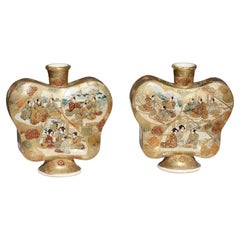
A pair of "butterfly" Satsuma earthenware vases, Meiji period
Located in West Palm Beach, FL
A pair of "butterfly" Satsuma earthenware vases, Meiji period
finely decorated in enamels and gilt with scenes of Samurai and retainers and high ranking female members of the househ...
Category
Antique 19th Century Ceramics
Materials
Ceramic
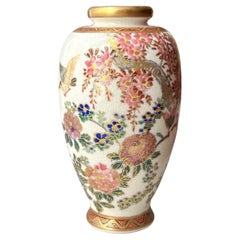
Meiji Period Diminutive Satsuma Baluster Vase.
By Satsuma
Located in Vero Beach, FL
Meiji Period Diminutive Satsuma Baluster Vase.
This Japanese Satsuma vase from the late Meiji period is hand painted and gilt decorated with a Japanese landscape in exquisite detail...
Category
20th Century Japanese Meiji Ceramics
Materials
Porcelain
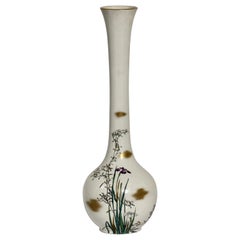
Kinkozan, Japanese Satsuma Vase, Meiji Period
By Kinkozan
Located in West Palm Beach, FL
Kinkozan, Japanese Satsuma vase,
Meiji Period (1868-1912)
Of baluster form with an elongated neck decorated in polychrome enamels and gilt on a clear crackle glaze in an Art-Nouvea...
Category
20th Century Ceramics
Materials
Ceramic
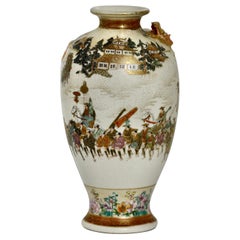
Japanese Satsuma Earthenware Vase, Meiji Period
Located in West Palm Beach, FL
Japanese Satsuma Earthenware Vase, Meiji Period, 1868-1912, of baluster form, the decorated in poly-chrome enamels and gilt on a clear crackle glaze with a Daimyo procession, the nec...
Category
20th Century Ceramics
Materials
Ceramic
Japanese Satsuma Vase Pair by Senzan Meiji Period
Located in Newark, England
FREE WORLDWIDE SHIPPING
From our Japanese Satsuma collection, we’re pleased to offer this unusually shaped pair of Japanese Satsuma vases, signed by the artist Senzan 泉山 and dating...
Category
Early 20th Century Japanese Meiji Ceramics
Materials
Ceramic, Earthenware
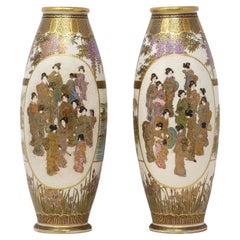
A Fine Japanese Satsuma Vase . Meiji Period. Kinkozan
Located in London, GB
A Fine Japanese Satsuma Vase with Bijin, Peacock, and Chrysanthemums.
Attributed to Kinkozan Workshop, Kyoto, Meiji period (late 19th century)
Of pear-shaped form with a flared f...
Category
Antique 19th Century Japanese Ceramics
Materials
Ceramic, Porcelain
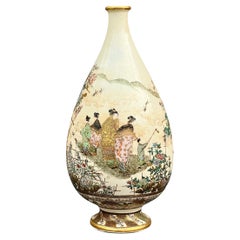
Satsuma earthenware vase by kinkozan, Meiji period
By Kinkozan
Located in Tel Aviv - Jaffa, IL
the body of this small marvelous vase is painted with a scene of a puppet show vendor with his wood backpack, on top of the backpack there are toys and dolls, he is surrounded with a group of 6 children, and on the background you can see a village.
on the other side of the vase there is an amazing painting of flowers and on the sides there are two amazing strong pine trees, the amorphous background is decorated in a "Tortoiseshell" color and design that gives it a real character and which is quite rare to see on satsuma pottery.
all the vase is over richly overpainted over the glaze with gold, which gives it its depth and realism.
signed Kyoto Kinkozan zo, and sealed Kinkozan zo
Kyoto’s Satsuma:
The painting technique used in Kyoto’s Satsuma-style ware is said to be the invention of the sixth generation Kinkōzan Sōbei (1824–1884). The Kinkōzan were a famous family of Kyoto Awataguchi potters who made ceramics that were used at Shōren'in, a temple closely tied to the imperial family, and by the shoguns of the Edo government. In fact the shogun is said to have granted them the name Kinkōzan. With the upheavals at the end of the Edo period, however, and the reforms of the subsequent Meiji government, the potters lost their traditional patrons and had to develop new markets.
Just at that time, the visit of a certain Westerner is said to have decided them to embark on overseas trade. By 1870, they had perfected Kyō Satsuma...
Category
Antique 1890s Japanese Meiji Ceramics
Materials
Gold
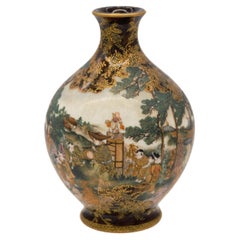
Large Meiji Period Satsuma Earthenware Floor Vase
Located in Lymington, Hampshire
A large Meiji period Satsuma earthenware floor vase, the of baluster form, painted in pastel overglaze enamels and gilding with two large sprays of flowers including prunus blossom, ...
Category
Antique 1870s Japanese Meiji Ceramics
Materials
Enamel
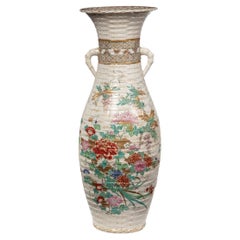
Large Meiji Period Satsuma Earthenware Floor Vase
Located in Lymington, Hampshire
A large Meiji period Satsuma earthenware floor vase, the skittle shaped body painted in pastel overglaze enamels and gilding with a continuous frieze of the Seven Gods...
Category
Antique 1870s Japanese Meiji Ceramics
Materials
Enamel
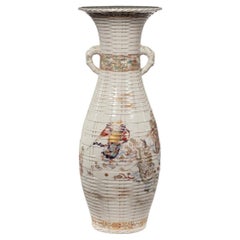
Japanese Meiji Period Satsuma Vase by Ryokuzan
Located in Newark, England
From our Japanese Satsuma Collection, we are delighted to offer this Japanese Satsuma Vase by Ryokuzan 緑山. The Satsuma vase of ovoid shape with a tapered body, circular foot rim, wai...
Category
Antique Early 1900s Japanese Meiji Ceramics
Materials
Ceramic, Earthenware, Pottery

Still Thinking About These?
All Recently ViewedMore Ways To Browse
Famille Verte Porcelain
Antique Japanese Porcelain Bowl
Antique Joseon
Green Chinese Ceramics
Chinese Yongzheng
Satsuma Hand Painted
Meiji Satsuma Vases
Rose Medallion Porcelain
Chinese Famille Verte
Ming Dynasty Furniture 16th Century
Blue And White Porcelain Dragon
Qing Dish
Imari 18th Century
Satsuma Meiji Period
Meiji Charger
Asian Brown Jars
Japanese Meiji Plates
Blue Lotus