Items Similar to Miyanaga Tozan III Seihakuji Glazed Tokkuri, Showa Era, Japan
Want more images or videos?
Request additional images or videos from the seller
1 of 17
Miyanaga Tozan III Seihakuji Glazed Tokkuri, Showa Era, Japan
$6,800
£5,166.32
€5,937.19
CA$9,551.43
A$10,396.50
CHF 5,508.73
MX$125,033.59
NOK 70,042.11
SEK 64,185.84
DKK 44,350.43
About the Item
A sublime and elegant seihakuji (qingbai or celadon) glazed porcelain tokkuri (sake bottle) by Miyanaga Tozan III, also known as Miyanaga Rikichi, (b. 1935), Showa Period, circa 1980's, Japan.
The sake bottle, called a tokkuri, is delicately potted of fine porcelain and glazed all over in a subtle pale blue green celadon glaze known as seihakuji (called qingbai in China). The thin, nearly transparent glaze is luminous, evoking water or moonlight.
Contrasting beautifully with the subtleness of the glaze is the bold and unexpected spiraling design that seems to torque the bottle, underscoring the potter's masterful understanding of clay, geometry, and form. Five raised lines descend straight down the neck from the mouth of the bottle before turning elegantly and dramatically at the shoulder, straightening again down the sides, and turning once again just above the foot. The raised ridges of the lines barely hold the thin seihakuji glaze, revealing the pure white porcelain below.
The tokkuri of somewhat typical shape, with an ovoid body, squared shoulders, tall, narrow neck, and elegantly everted mouth, all set on a short recessed foot.
Holding the bottle is a joy. The ridges are unexpectedly smooth. The glaze has a soft and supple feel. And the bottle seems to conform to one's hands. Looking down into the mouth, the twisted lines almost feel like swirling water, creating a whirlpool effect. A similar and even stronger effect is achieved while viewing the foot.
The bottle with an inscribed signature to the underside reading "Ri" (for Rikichi) with a collection number in ink. The tokkuri comes with the original signed tomobako. The exterior of the lid inscribed "Seihakuji" and "Tokkuri". The interior of the lid signed "Miyanaga Rikichi saku" and sealed.
Kyoto based potter Miyanaga Tozan III (b. 1935) was previously known as Miyanaga Rikichi before taking over his father's mantle in 1999. Part of the second generation of avant-garde ceramicists, he is the third in a line of celebrated and accomplished ceramicists, beginning with his grandfather, Tozan I (1868 - 1941). His daughter, Miyanaga Aiko, is set to eventually take over the family kiln.
Provenance: Christie's Japanese and Korean Art, March 24, 2003, lot 201.
For a vase from the same series, please see lot 1123 from the Sotheby's September 2023 sale, Freddie Mercury: A World of His Own / In Love with Japan
- Dimensions:Height: 7.5 in (19.05 cm)Width: 4.75 in (12.07 cm)Depth: 4.75 in (12.07 cm)
- Style:Showa (Of the Period)
- Materials and Techniques:
- Place of Origin:
- Period:1980-1989
- Date of Manufacture:circa 1980 s
- Condition:Wear consistent with age and use. In fine condition, with no chips, cracks, or repairs. The wooden tomobako missing one bar to the interior of the cover.
- Seller Location:Austin, TX
- Reference Number:1stDibs: LU894736936232
About the Seller
5.0
Platinum Seller
Premium sellers with a 4.7+ rating and 24-hour response times
Established in 2001
1stDibs seller since 2010
356 sales on 1stDibs
Typical response time: <1 hour
- ShippingRetrieving quote...Shipping from: Austin, TX
- Return Policy
More From This Seller
View AllSmall Chinese Celadon Glazed Porcelain Kendi, Qing Dynasty, 18th Century, China
Located in Austin, TX
A darling small Chinese celadon glazed kendi, or pouring vessel, mid Qing Dynasty, 18th century, China, for the Southeast Asian market.
The diminutive kendi of typical form, with ...
Category
Antique 18th Century Chinese Qing Ceramics
Materials
Porcelain
Tokuda Yasokichi I Kutani "Poppies" Vase, Meiji or Taisho Period, Japan
Located in Austin, TX
A striking Japanese Kutani ware "Poppies" bottle vase by Tokuda Yasokichi I (1873 - 1956), Meiji to Taisho Period, circa 1915, Japan.
The attractive vase is decorated with a bold d...
Category
Vintage 1910s Japanese Showa Ceramics
Materials
Porcelain
Ono Kotaro Seihakuji Glazed Vase, Heisei Era, circa 2000
Located in Austin, TX
A subtle and finely potted seihakuji glazed vase by Japanese contemporary ceramicist Ono Kotaro (b. 1953), circa 2000.
Ono Kotaro is known for balancing...
Category
Late 20th Century Japanese Ceramics
Materials
Porcelain, Cedar
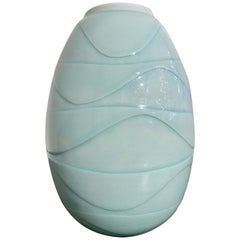
Chinese Export Kendi, Swatow Ware, Porcelain with Polychrome Enamels, circa 1900
Located in Austin, TX
A delightful Swatow ware Chinese export shipwreck porcelain kendi featuring a writing dragon and an apocryphal Tongzhi mark, late 19th or early 20th centur...
Category
Antique Early 1900s Chinese Qing Ceramics
Materials
Porcelain
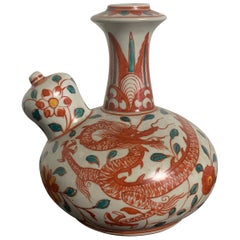
Japanese Kutani Sake Bottle, Tokkuri, Yoshidaya Style, Edo Period, early 19th c
By Yoshidaya
Located in Austin, TX
A bold and dramatic Japanese Kutani porcelain square tokkuri (bottle for sake), decorated in the Yoshidaya style, and attributed to the Yoshidaya Kiln (1824 - 1831).
The striking sa...
Category
Antique 1820s Japanese Edo Ceramics
Materials
Ceramic, Stoneware
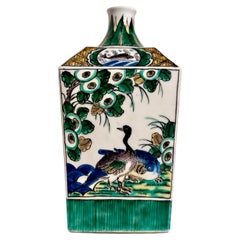
Chinese Qing Dynasty Flambé Glazed Bottle Vase, Tianqiuping, Late 19th Century
Located in Austin, TX
A gorgeous Chinese monochrome red flambé glazed bottle vase, called a tianqiuping, Qing Dynasty, late 19th century.
The voluptuous body o...
Category
Antique Late 19th Century Chinese Qing Vases
Materials
Porcelain
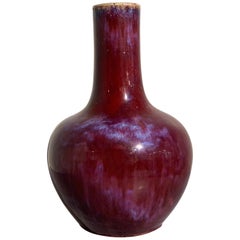
You May Also Like
Japanese Porcelain Vase Meiji Period Makuzu Kozan
By Makuzu Kozan
Located in Atlanta, GA
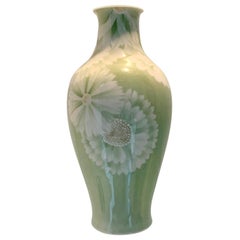
A finely decorated and glazed Japanese porcelain vase by Makuzu Kozan (1842-1916) circa 1900s Meiji Period. The vase is of a classic bottle form with baluster body and short neck. It was decorated with underglaze white magnolia blossom on a pleasant celadon background. The stamens of the flower were artistically rendered in a low relief, giving the design a realistic appeal with the dimension.
Miyagawa Kozan...
Category
Early 20th Century Japanese Meiji Ceramics
Materials
Porcelain
Japanese Ceramic Pottery
Located in Oklahoma City, OK
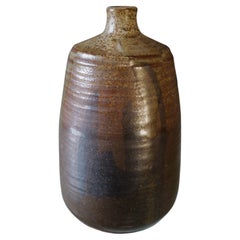
Experience the timeless beauty of Japanese craftsmanship with this exquisite ceramic pottery vase. Meticulously handcrafted by skilled artisans, this vase showcases the rich artistic traditions of Japan.
The vase features a sleek and elegant design, with smooth curves and clean lines that exude a sense of understated sophistication. Its graceful form captures the essence of minimalism, creating a harmonious balance between simplicity and elegance.
Crafted from high-quality ceramic, this vase boasts a stunning glaze that accentuates its unique texture and adds a touch of depth to its surface. The glaze beautifully reflects light, creating a mesmerizing play of colors that enhances the overall aesthetic appeal.
Embracing the principles of wabi-sabi, a Japanese philosophy that embraces imperfections and celebrates the beauty of nature, this vase showcases subtle irregularities that make it one-of-a-kind. Each delicate brushstroke and subtle variation in color and tone tells a story, adding a sense of authenticity and charm to the piece.
Whether displayed as a standalone art object or adorned with a carefully arranged bouquet of flowers, this Japanese ceramic pottery...
Category
20th Century Japanese Mid-Century Modern Vases
Materials
Ceramic
Bicone Vase by U-Turn Ushiro
Located in Sammu-shi, Chiba
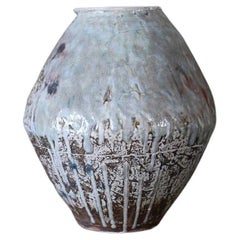
Bicone vase by U-Turn Ushiro.
It is baked for several days in an anagama (a kiln that burns firewood).
It is shaped vertically symmetrically. The copper contained in the clay blows out on the surface, and reddish-black spots can be seen partially. It is a work where you can see various reactions of various ingredients.
U-Turn Ushiro
While working at the fire station...
Category
2010s Japanese Japonisme Ceramics
Materials
Pottery
Japanese Pottery Vessel, Japan, Wabi Sabi, Mid-20th Century
Located in Edogawa-ku Tokyo, JP
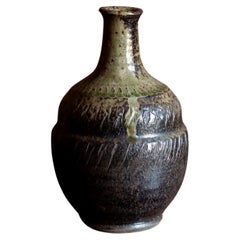
Japanese pottery vase, mid-20th century, with a strong sculptural presence and wabi-sabi character. The rounded body with a narrow neck recalls the form of a sake bottle (tokkuri), w...
Category
Mid-20th Century Japanese Ceramics
Materials
Ceramic
Japanese Antique Flower Vase Tokoname Ware 1970s
Located in Paris, FR
This is a flower vase made around 1970s and with style Tokoname.
Tokonane Yaki is the oldest and the most important ceramic center of the six ancient kilns of Japan.
Tokonane Yaki is the oldest and the most important ceramic center of the six ancient kilns of Japan with Shigaraki, Bizen, Tanba, Echizen and Seto. Ceramic is produced there since the end of the Heian periode (11th century).
Tokoname-yaki (Tokoname ware...
Category
Vintage 1970s Japanese Vases
Materials
Porcelain
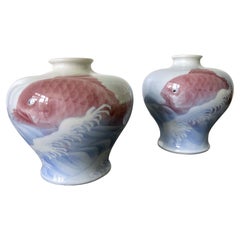
One of The Two Japanese Ceramic Vases Makuzu Kozan Meiji Period
By Makuzu Kozan
Located in Atlanta, GA
Two small nearly identical ceramic vases by Japanese Meiji imperial potter Makuzu Kozan (1842-1916), circa 1890-1900s. The vases were made in the form of jarlet with swelled shoulder...
Category
Antique Late 19th Century Japanese Japonisme Ceramics
Materials
Ceramic
More Ways To Browse
1980s Japanese
Japanese Sake
Kiln Japanese
Vintage Torque
Sake Bottle
Blue And Celadon Asian Vase
Japanese Sake Bottles
Japanese Blue And White Bottle Vase
Vintage Japanese Sake Bottle
Antique Rose Canton China
Kangxi Dish
Chinese Ming Plate
Japanese Satsuma Pottery
Antique Chinese Famille Rose Plate
Red Chinese Ceramics
Japanese Edo Period Imari
Pierced China
Antique Kintsugi