1 of 18
Pair of Handpainted Blue and White Meiji Period Double Gourde Vases
$3,412.66List Priceper set
About the Item
- Dimensions:Height: 12 in (30.48 cm)Diameter: 7 in (17.78 cm)
- Sold As:Set of 2
- Materials and Techniques:
- Place of Origin:
- Period:
- Date of Manufacture:circa 1880s
- Condition:Wear consistent with age and use.
- Seller Location:London, GB
- Reference Number:1stDibs: LU5548224584732
Authenticity Guarantee
In the unlikely event there’s an issue with an item’s authenticity, contact us within 1 year for a full refund. DetailsMoney-Back Guarantee
If your item is not as described, is damaged in transit, or does not arrive, contact us within 7 days for a full refund. Details24-Hour Cancellation
You have a 24-hour grace period in which to reconsider your purchase, with no questions asked.Vetted Professional Sellers
Our world-class sellers must adhere to strict standards for service and quality, maintaining the integrity of our listings.Price-Match Guarantee
If you find that a seller listed the same item for a lower price elsewhere, we’ll match it.Trusted Global Delivery
Our best-in-class carrier network provides specialized shipping options worldwide, including custom delivery.You May Also Like
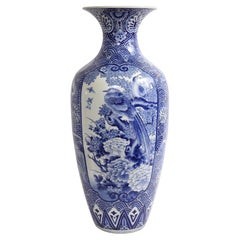
Japanese Meiji Period, Blue and White Vase with Phoenix Decoration
Located in New York, NY
A Palace Size Japanese Meiji Period (1868-1912) Blue and White Vase with Phoenix Decoration. This vase is absolutely beautiful with an incredible array of hand-painted blue decoratio...
Category
Antique 1890s Japanese Meiji Ceramics
Materials
Porcelain
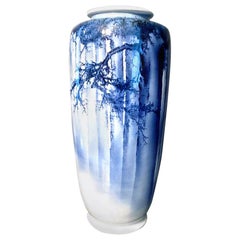
Large Japanese Blue and White Vase by Mazuku Kozan Meiji Period
By Makuzu Kozan
Located in Atlanta, GA
A striking blue and white vase from the studio of Japanese Potter Makuzu Kozan, also known as Miyagawa Kozan (1842–1916), one of the most established and collected ceramist from Meiji Period. Born as Miyagawa Toranosuke, Kozan established his pottery studio in Yokohama around 1870s and later became one of the appointed artist to the Japanese Imperial household. His work was exhibited in many international fairs that the Meiji government participated at the turn of the century and won many grand prizes.
With a relative large size, this vase is decorated with underglaze cobalt blue using the novel technique developed by Kozan called Fuki-e (the blow painting), in order to achieve the striking dimensional misty winter landscape. The pine trees with upright trunks and down-sweeping branches appear receding into the depth of the mist, forming an visually unending forest. Known as one of the most creative ceramists, around 1880s, Kozan started experimenting with new chemical colors from the West in the format of his porcelain glaze. New colors allowed him to create underglaze design that appeared bright, smooth and glossy. He even invented his own receipt of cobalt blue to achieve a much brighter yet softer shade, as evident on this vase. To create landscape that is realistic and dimensional, more common in the western paintings, he was inspired by the native Japanese ink painting technique developed around 1900 by Yokoyama...
Category
Early 20th Century Japanese Japonisme Ceramics
Materials
Porcelain
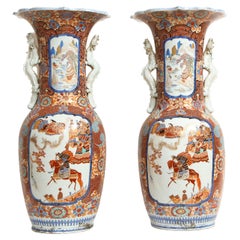
Pair of Japanese Meiji Period Imari Vases with Dragon Handles
Located in New York, NY
A Monumental pair of Japanese Meiji Period Imari vases with Dragon handles, Japanese Porcelain Studio Marks on Underside. Each is beautifully ...
Category
Antique 1880s Japanese Meiji Ceramics
Materials
Porcelain
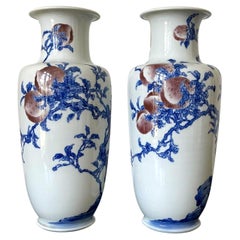
Pair of Rare Porcelain Commemorative Vases by Makuzu Kozan Meiji Period
By Makuzu Kozan
Located in Atlanta, GA
A pair of porcelain vases in classic form, decorated with underglaze blue and copper red painting by Imperial potter Makuzu Kozan. Also known as Miyagawa Kozan (1842–1916), Makuzu was one of the most established and collected ceramist known to the west from Meiji Period.
The vases are in a classic Chinese form called "Bang Chu Ping" (grain-mallet vase...
Category
Vintage 1910s Japanese Japonisme Ceramics
Materials
Ceramic
Pair of Japanese Late Meiji Period Fukagawa Porcelain Vases, circa 1900
Located in Takarazuka, JP
Superb pair of Japanese large Meiji period Fukagawa signed porcelain vases (circa 1900). Intricately hand-painted in cobalt blue underglaze with polychrome and gold overglaze on a st...
Category
Antique Early 1900s Japanese Meiji Vases
Materials
Gold
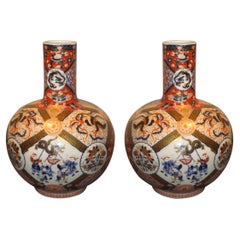
$29,500 / set
H 13.5 in Dm 13.5 in
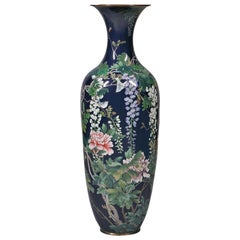
Large Meiji Period Cloisonne Enamel Vase
Located in London, GB
Of ovoid form, with a narrow neck and outward flaring rim, on dark blue ground depicting wisteria blossoms in white and purple cascading from the shoulder with birds throughout and w...
Category
Antique Late 19th Century Japanese Meiji Vases
Materials
Enamel
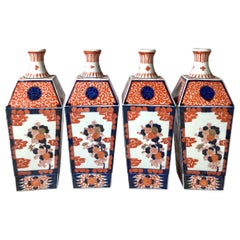
Rare Set of 4 Meiji Period Imari Bottle Form Vases
Located in Lambertville, NJ
A rare set of four hand painted Japanese porcelain Imari bottle form vases. The vases of square tapering form with classic Imari iron red and cobalt blue ...
Category
Antique 1880s Japanese Meiji Ceramics
Materials
Porcelain
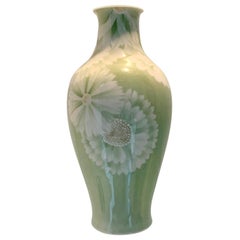
Japanese Porcelain Vase Meiji Period Makuzu Kozan
By Makuzu Kozan
Located in Atlanta, GA
A finely decorated and glazed Japanese porcelain vase by Makuzu Kozan (1842-1916) circa 1900s Meiji Period. The vase is of a classic bottle form with baluster body and short neck. It was decorated with underglaze white magnolia blossom on a pleasant celadon background. The stamens of the flower were artistically rendered in a low relief, giving the design a realistic appeal with the dimension.
Miyagawa Kozan...
Category
Early 20th Century Japanese Meiji Ceramics
Materials
Porcelain
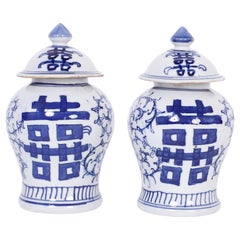
Pair of Blue and White Porcelain Double Happiness Jars
Located in Palm Beach, FL
Chinese blue and white porcelain lidded jars with Classic form and decorated with the familiar joy and unity symbol of double happiness on the front and back.
Category
21st Century and Contemporary Chinese Chinoiserie Ceramics
Materials
Porcelain
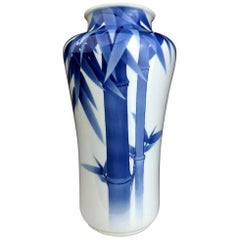
Japanese Porcelain Vase Makuzu Kozan Meiji Period
By Makuzu Kozan
Located in Atlanta, GA
A striking blue and white vase from the studio of Japanese Potter Makuzu Kozan, also known as Miyagawa Kozan (1842–1916), one of the most established and collected ceramist from Meiji Period. Born as Miyagawa Toranosuke, Kozan established his pottery studio in Yokohama circa 1870s and later became one of the appointed artists to the Japanese Imperial household. His work was exhibited in many international fairs that the Meiji government participated at the turn of the century and won many grand prizes.
Of a relatively large size, this vase is decorated with underglaze cobalt blue using the novel technique developed by Kozan called Fuki-e (the blow painting). As a result, the bamboos appear took on a three-dimensional quality as if appearing in a mist. Known as one of the most creative ceramists, circa 1887, Kozan started experimenting with new chemical colors from the West in the format of his porcelain glaze. New colors allowed him to create underglaze design that appeared bright, smooth and glossy. He even invented his own receipt of cobalt blue to achieve a much brighter yet softer shade, as evident on this vase. To create landscape that is realistic and dimensional, more common in the western paintings, he was inspired by the native Japanese ink painting technique developed around 1900 by Yokoyama Taikan...
Category
Antique Early 1900s Japanese Japonisme Ceramics
Materials
Ceramic
Still Thinking About These?
All Recently ViewedMore Ways To Browse
Meiji Blue And White
Vase Converted To Lamp
Qing Famille Rose
Antique Rose Medallion
Korea Ceramics
Qing Qianlong
Chinese Qing Ceramic
Meiji Plate
19th Century Japanese Satsuma Vases
Mandarin Furniture
Ming Dynasty Blue And White Porcelain
Antique Kutani
Chinese Blue And White Dragon
Antique Chinese Celadon
Rose Medallion China
Joseon Dynasty
Chinese Art Pottery
Chinese Village