Items Similar to Pair of Japanese Moriage Satsuma Vases with Gold Gilding Circa 1930-1940
Video Loading
Want more images or videos?
Request additional images or videos from the seller
1 of 19
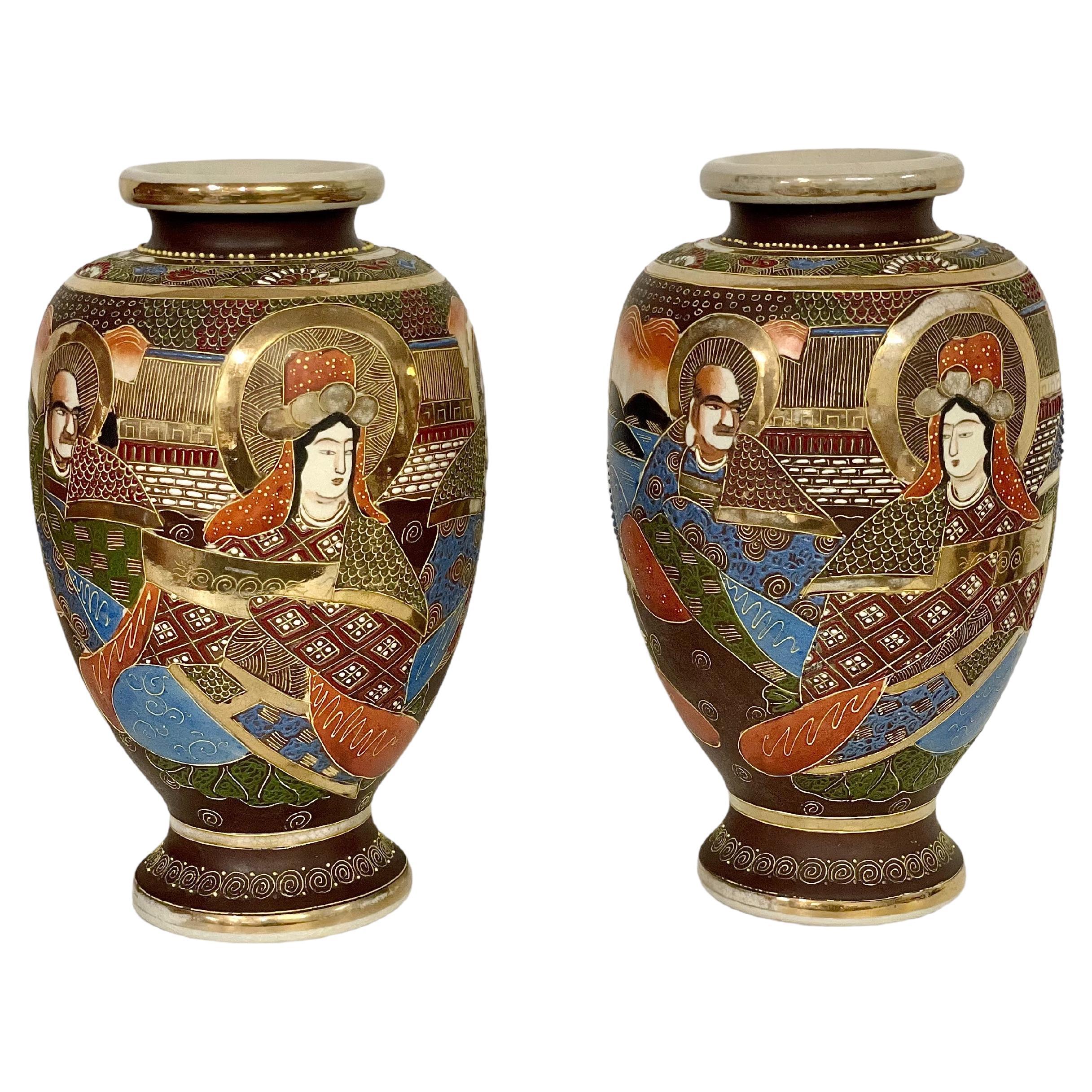
Pair of Japanese Moriage Satsuma Vases with Gold Gilding Circa 1930-1940
$2,154.13per set
£1,612.60per set
€1,800per set
CA$2,965.42per set
A$3,241.79per set
CHF 1,715.05per set
MX$38,793.21per set
NOK 21,821.58per set
SEK 19,975.45per set
DKK 13,713.78per set
About the Item
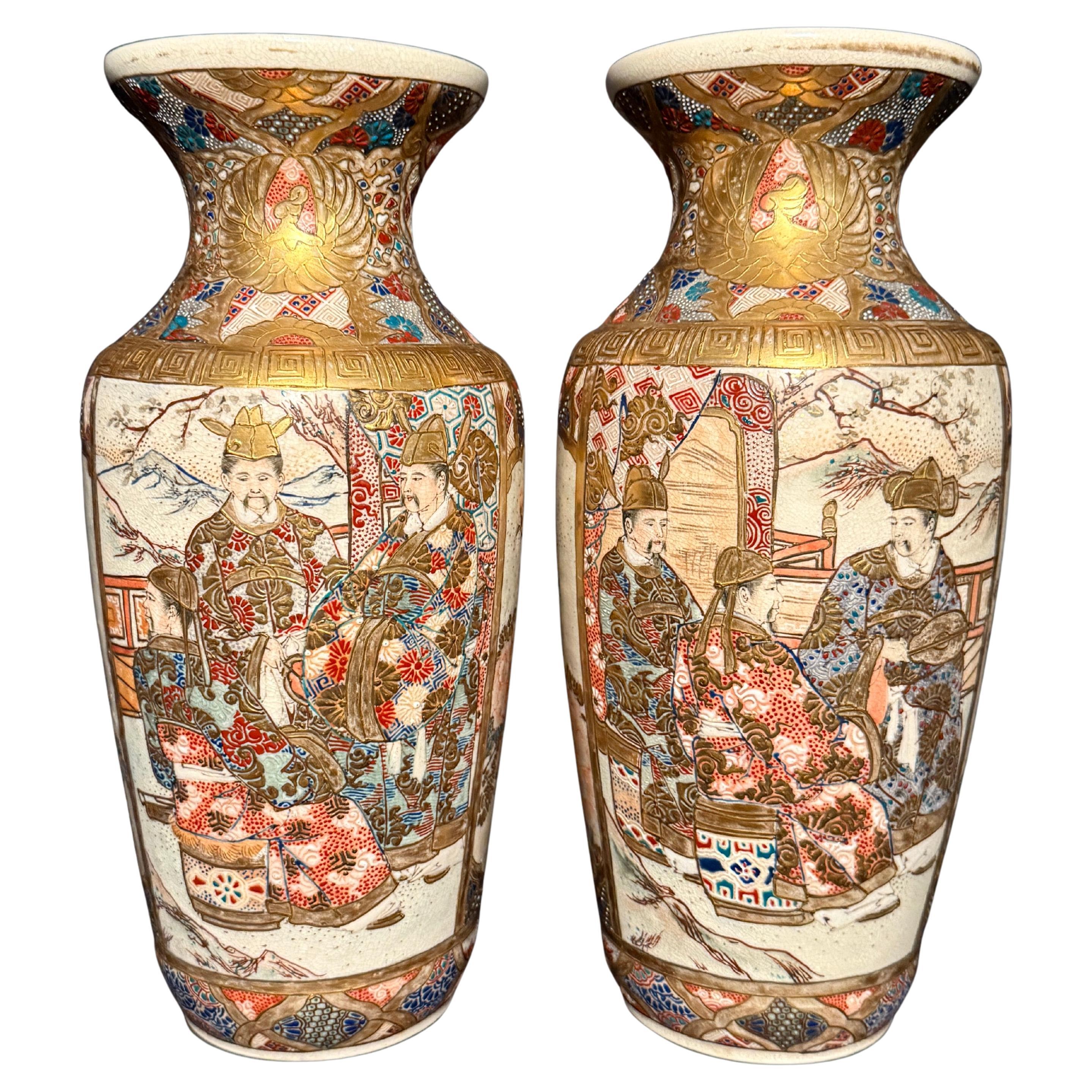
Japanese Satsuma vases from the circa 1930-1940 period are a particular style of ceramic art that originated from the Satsuma province of Japan. Satsuma ware is renowned for its intricate hand-painted designs, rich colors, and distinctive crackled glaze.
Satsuma ware dates back to the early 17th century, but it gained widespread popularity in the late 19th and early 20th centuries, including the 1930s and 1940s. Satsuma vases produced during this time often reflected a mix of traditional and modern influences, as Japan went through a period of cultural exchange and artistic experimentation.
Satsuma vases are made from a type of Japanese earthenware clay known for its fine texture and malleability. The vases are hand-formed or wheel-thrown and then meticulously hand-painted with intricate designs using enamel paints. The distinctive crackled glaze was achieved by firing the vases at a relatively low temperature, allowing the glaze to crack during the cooling process.
The moriage technique involves applying three-dimensional, raised ornamentation to the surface of the ceramic piece, creating a visually textured and layered effect. Artisans create three-dimensional patterns, designs, or intricate motifs using a special mixture of clay, slip, or porcelain paste. The raised elements are added by hand to the ceramic body, and each detail is carefully shaped to achieve the desired effect.
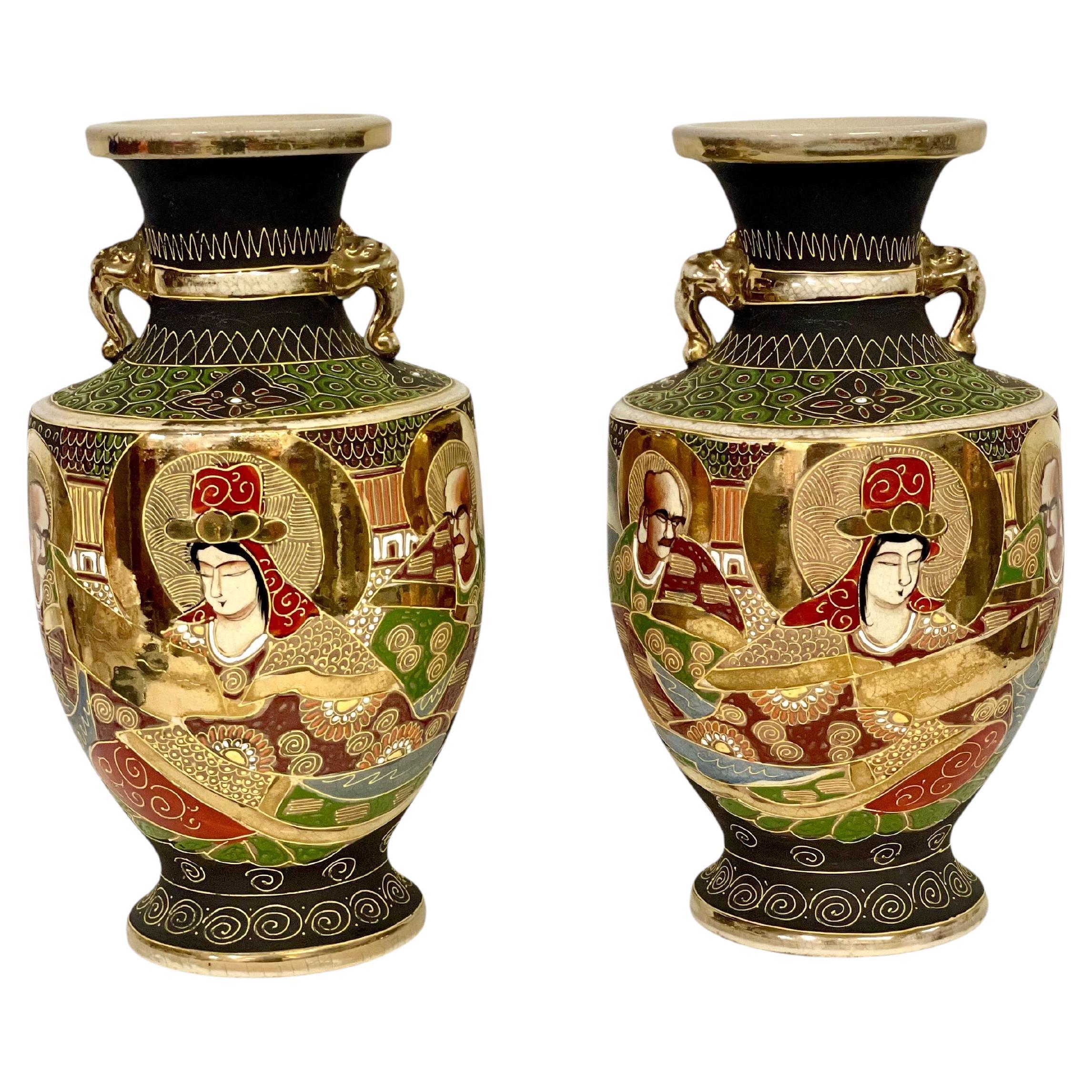
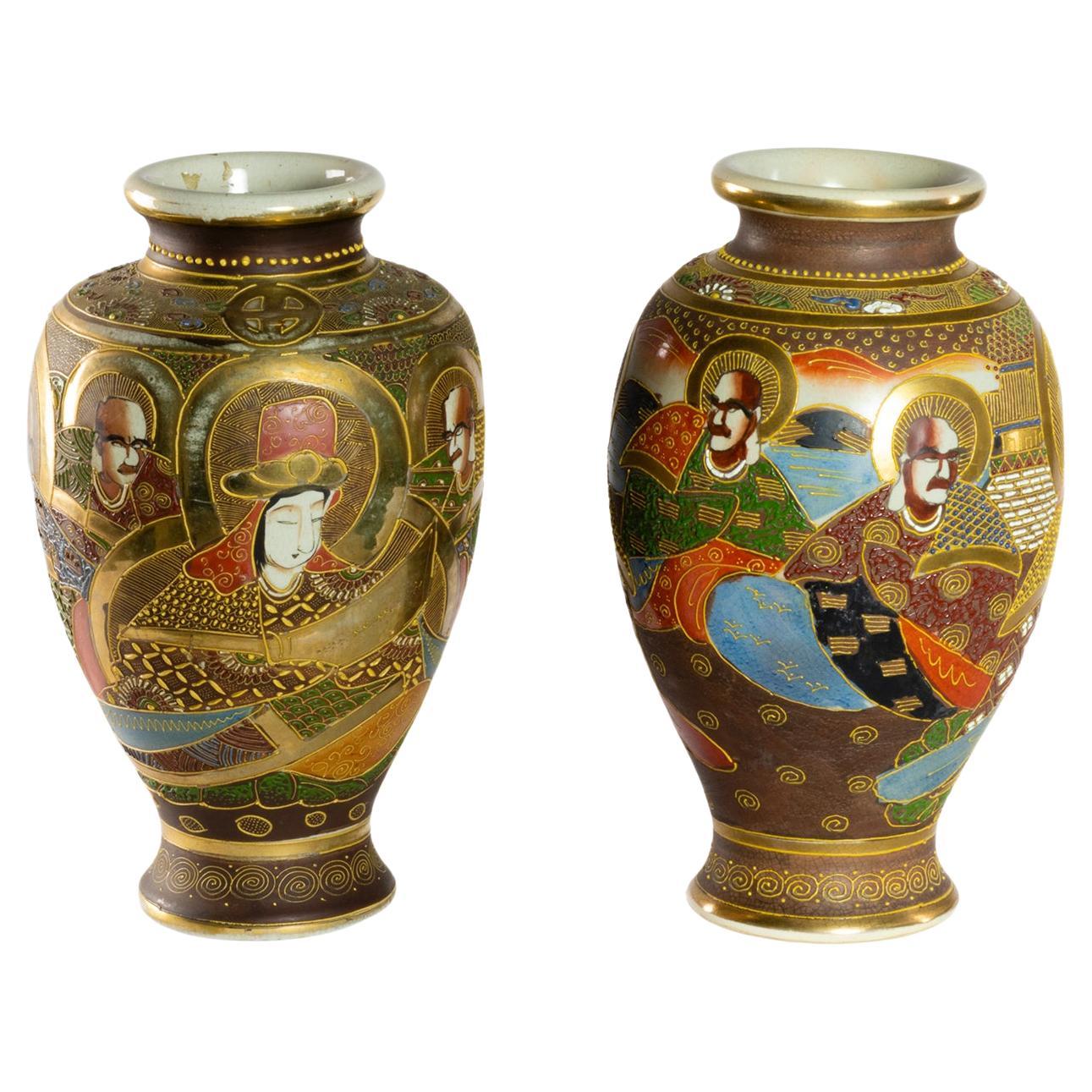
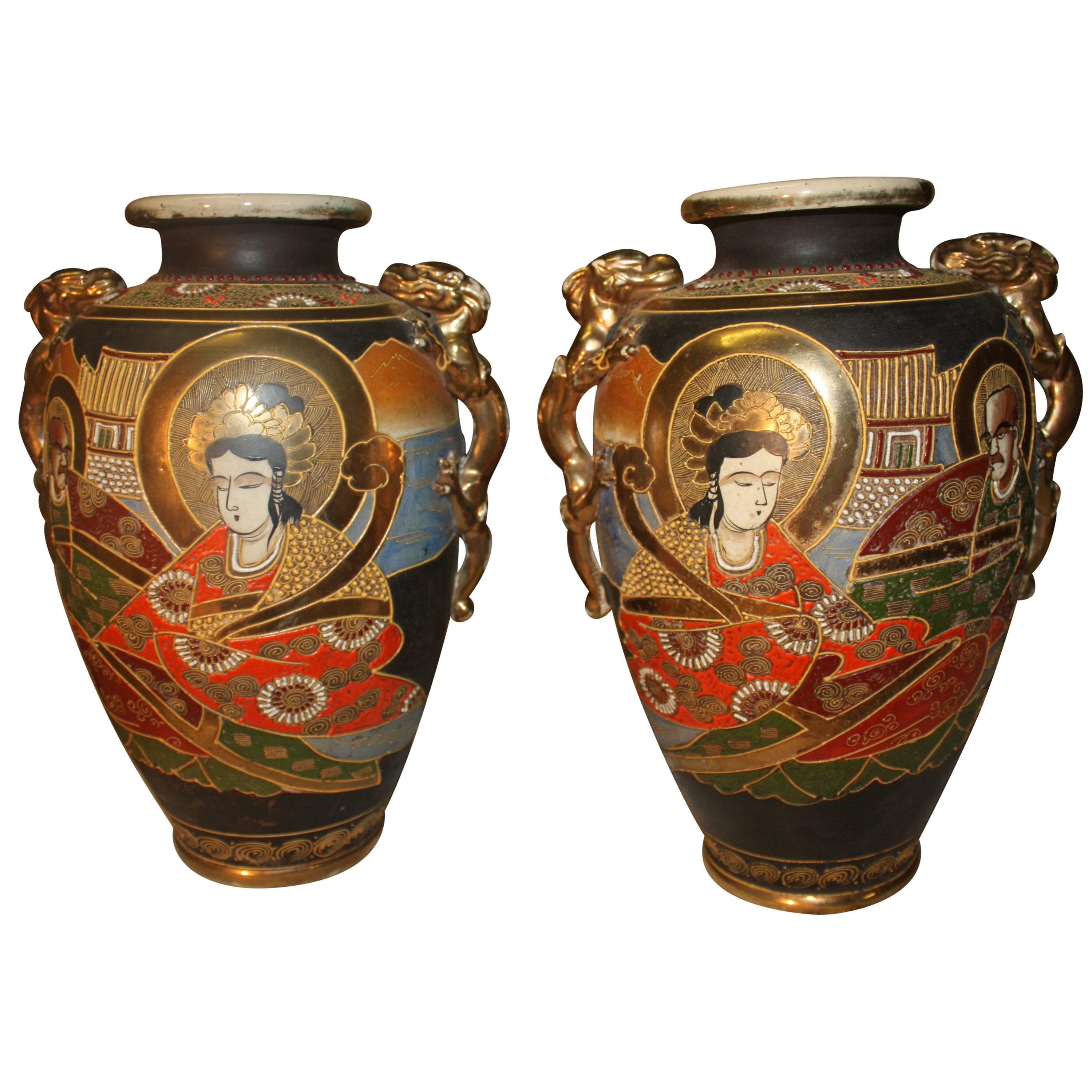
The moriage is then gold gilded as some of the intricate ornamental patterns and the halos around the three immortal figures depicted on each vase. The decoration is of Kannon with a rakan on each side of her. In Buddhist iconography, Kannon (also known as Kuan Yin or Avalokiteshvara) is a Bodhisattva associated with compassion and mercy. Bodhisattvas are enlightened beings who have chosen to postpone their own enlightenment to help alleviate the suffering of all sentient beings. The imagery of Kannon flanked by a rakan on each side is a common representation in Buddhist art, especially in Japan. The rakan are individuals who have attained a high level of spiritual realization and enlightenment. They are considered disciples of the Buddha and are revered for their wisdom and guidance on the path to enlightenment. The composition of Kannon with a rakan on each side emphasizes the interconnectedness of compassion, wisdom, and enlightenment.
The other side depicts a priest in front of a temple, with the Kunlun mountains depicted in the background – where all immortals reside.
Mark attributed to late Showa or Taisho period
- Dimensions:Height: 12.8 in (32.5 cm)Diameter: 7.29 in (18.5 cm)
- Sold As:Set of 2
- Style:Showa (Of the Period)
- Materials and Techniques:
- Place of Origin:
- Period:
- Date of Manufacture:1930-1940
- Condition:Wear consistent with age and use.
- Seller Location:Ixelles, BE
- Reference Number:1stDibs: LU8924235547102
About the Seller
No Reviews Yet
Vetted Professional Seller
Every seller passes strict standards for authenticity and reliability
1stDibs seller since 2023
- ShippingRetrieving quote...Shipping from: Ixelles, Belgium
- Return Policy
More From This Seller
View AllPair of Moon-Shaped Vases, China Late 19th Century
Located in Ixelles, BE
A pair of large moon-shaped "flasks" vases painted in blue and white, each flask decorated with scenes of active characters and surrounded by borders of floral motifs and foliate pat...
Category
21st Century and Contemporary Chinese Antiquities
Materials
Porcelain
$64,145 Sale Price / set
20% Off
Pair of 19th Century Qing Dynasty Faux Bamboo Chinese Vases
Located in Ixelles, BE
Faux bamboo Chinese vases were a type of decorative art that emerged during the Qing Dynasty (1644-1912) in China. These porcelain vases were designed to mimic the appearance of bamboo, a plant highly regarded in Chinese culture for its resilience, elegance, and symbolism. Bamboo is associated with attributes such as flexibility, strength, and modesty, making it a popular motif in Chinese art.
In the Qing Dynasty the color yellow held significant symbolism and represented imperial authority, power, and the emperor himself. Yellow was considered the most sacred and prestigious color in Chinese culture, and it had strong associations with the emperor's position as the Son of Heaven and the ruler of all under heaven.
The marks at the bottom of the vases indicate that these were crafted more specifically during the Tongzhi period – an emperor who reigned from 1861 to 1875, which effectively lasted nthrough his adolescence and was largly overshadowed by the rule of his mother, Empress Dowager Cixi. Although he had little influence over state affairs, the events of his reign gave rise to what historians call the “Tongzhi Restoration”, an unsuccessful modernization program.
The polychrome enamels representing on one vase a traditional Chinese kite...
Category
Antique Late 19th Century Chinese Chinese Export Ceramics
Materials
Porcelain
$2,680 Sale Price / set
20% Off
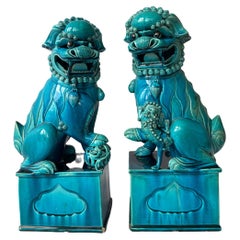
Large Pair of Graduated Turquoise Porcelain Foo Dogs. Chinese Circa 1880
Located in Ixelles, BE
Chinese turquoise-colored porcelain foo dogs from circa 1880 are exquisite examples of traditional Chinese ceramic art. Foo dogs, also known as guardian lions or temple lions, are ic...
Category
Antique Late 19th Century Chinese Qing Ceramics
Materials
Ceramic
$8,329 Sale Price / set
20% Off
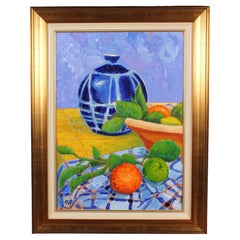
Antoine Giroux Fauvist Painting - Still Life - Ref 176
By Antoine Giroux
Located in Ixelles, BE
Antoine Giroux: Capturing the Vibrancy of the Mediterranean
Born in Brussels in 1955, Antoine Giroux's journey to artistic expression took a unique path through the realms of music ...
Category
Mid-20th Century Belgian Paintings
Materials
Wood, Paint
$1,148 Sale Price
20% Off
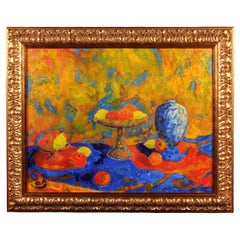
Antoine Giroux Fauvist Painting - Still Life - Ref 473
Located in Ixelles, BE
Antoine Giroux: Capturing the Vibrancy of the Mediterranean
Born in Brussels in 1955, Antoine Giroux's journey to artistic expression took a unique path through the realms of music ...
Category
Late 20th Century Belgian Paintings
Materials
Canvas, Wood, Paint
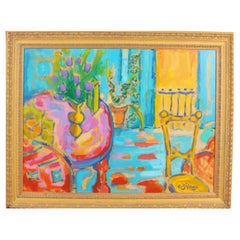
Antoine Giroux Fauvist Painting - Interior - Ref 143
By Antoine Giroux
Located in Ixelles, BE
Antoine Giroux: Capturing the Vibrancy of the Mediterranean
Born in Brussels in 1955, Antoine Giroux's journey to artistic expression took a unique path through the realms of music ...
Category
Late 20th Century Belgian Paintings
Materials
Wood, Paint
You May Also Like
Pair of Japanese Satsuma
Moriage
Porcelain Gilt Vases
By Satsuma
Located in LA CIOTAT, FR
This handsome pair of 20th century glazed and gilded Japanese Satsuma vases, with their vivid, jewel-like colours and elegant baluster-shaped forms, feature the traditional Japanese ...
Category
20th Century Japanese Ceramics
Materials
Porcelain
Pair of Early 20th Century Japanese Satsuma Vases
By Satsuma
Located in LA CIOTAT, FR
This exquisite pair of Satsuma vases dates back to the early 20th century. Hand-painted with intricate relief decorations, these ceramic masterpieces showcase exceptional craftsmansh...
Category
20th Century Japanese Ceramics
Materials
Ceramic
Pair of Kinkozan Satsuma Vases with Gold Kinrande, 19th Century
By Kinkozan
Located in Lisbon, PT
A pair of signed Sbei Kinkozan VII Satsuma polychrome porcelain vases with gold standard (kinrande) from Kyoto, Imperial City, Japan.
Kyo Satsuma ceramics contain intricately detail...
Category
Antique 19th Century Japanese Meiji Vases
Materials
Porcelain
$4,049 Sale Price / set
28% Off
Pair of 19th Century "Satsuma" Vases
Located in Stockbridge, GA
Pair of 19th century Satsuma vases, Japan 19th century.
Category
Antique Late 19th Century Japanese Ceramics
Materials
Ceramic
$3,100 / set
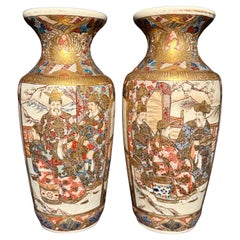
Pair Of Japanese Meiji Period Satsuma Vases
Located in Norwood, NJ
Find pair of Meiji period Japanese Satsuma 4 panel vases. Each vase featuring one panel with scholars and one panel with samurai. The two side panels are floral. Wonderfully gilt and...
Category
Early 20th Century Japanese Meiji Vases
Materials
Ceramic
$1,875 / set
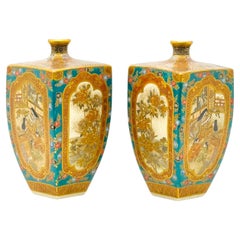
A Rare and Important Pair of Satsuma Vases by Okamoto Ryozan, Meiji Period
Located in London, GB
A Rare and Important Pair of Satsuma Vases signed Okamoto Ryozan
Meiji period (late 19th century)
Kyoto, circa 1890
Exhibition Standard
Each of tapering square form with a short wai...
Category
Antique 19th Century Japanese Ceramics
Materials
Ceramic, Porcelain
$8,207 Sale Price / set
20% Off
More Ways To Browse
Satsuma Vases
Antique Satsuma Vase
20th Century Satsuma Vase
Japanese Vases With Gold
Early Satsuma
Satsuma Pottery
Satsuma Ware
Japanese Satsuma Pottery
Pair Of Satsuma Vases
Moriage Japanese
Moriage Vase
Kuan Yin
Satsuma Gold Vase
Japanese Vases Moriage
Satsuma Moriage
Japan Satsuma Style Moriage Vase
Satsuma Moriage Vase
Japanese Shoji