Want more images or videos?
Request additional images or videos from the seller
1 of 11
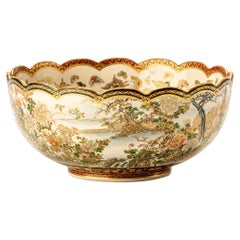
A Satsuma ceramic bowl decorated with a millefiori motif, signed Kinkozan
$2,582.15List Price
About the Item
- Dimensions:Height: 3.23 in (8.2 cm)Diameter: 10.24 in (26 cm)
- Style:Japonisme (In the Style Of)
- Materials and Techniques:
- Place of Origin:
- Period:
- Date of Manufacture:Meiji late 19th century
- Condition:Repaired. Refinished. Minor losses.
- Seller Location:Milano, IT
- Reference Number:1stDibs: LU9162241505572
About the Seller
No Reviews Yet
Recognized Seller
These prestigious sellers are industry leaders and represent the highest echelon for item quality and design.
Established in 2012
1stDibs seller since 2023
6 sales on 1stDibs
Typical response time: 17 hours
Authenticity Guarantee
In the unlikely event there’s an issue with an item’s authenticity, contact us within 1 year for a full refund. DetailsMoney-Back Guarantee
If your item is not as described, is damaged in transit, or does not arrive, contact us within 7 days for a full refund. Details24-Hour Cancellation
You have a 24-hour grace period in which to reconsider your purchase, with no questions asked.Vetted Professional Sellers
Our world-class sellers must adhere to strict standards for service and quality, maintaining the integrity of our listings.Price-Match Guarantee
If you find that a seller listed the same item for a lower price elsewhere, we’ll match it.Trusted Global Delivery
Our best-in-class carrier network provides specialized shipping options worldwide, including custom delivery.You May Also Like
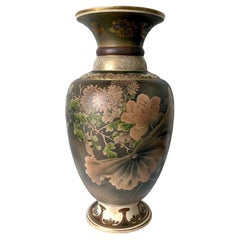
Large Japanese Satsuma Ceramic Vase Kinkozan
By Kinkozan
Located in Atlanta, GA
A large Japanese ceramic vase from the end of Meiji period circa 1890-1910s by Kinkozan (1645-1927). One of the largest studio manufacturers of the export ceramics at the time based in Kyoto. In the typical style of satsuma made at the turn of 20th century, the vase is elaborately decorated with a rather unusual kinran-de (gold paint) and green enamel highlight on a mottled brown background. The painterly decoration depicts a large seasonal floral arrangement in a circular fashion. Besides the obviously superb craftsmanship, what sets this particular vase apart from many lower quality and mass-produced pieces is its tone-on-tone color pallet that is visually somber and the small and sensitive details that heralds the change of the seasons. When the viewer goes beyond the first casual glimpse of the blossom and foliage, one would notice that on the edges of certain leaves as well as along the stalks, there accumulates a very thin layer of the white dust that represents the frost. The flower in bloom are chrysanthemums. Despite of being splendid, they are the messengers of the autumn. The large lotus leaf was subtly rendered in a bended and slightly withered manner, just past its prime. Although the lotus is still in bloom, the prominent seed pod indicates it may be the last for the season. The sentimental capture of the change of the seasons is not unusual in Japanese art. This vase poetically represents such a subtle transition from summer to fall, perhaps depicting the very first frost.
The neck of the vase is also slightly unusual with two rolled rings...
Category
Early 20th Century Japanese Meiji Ceramics
Materials
Ceramic
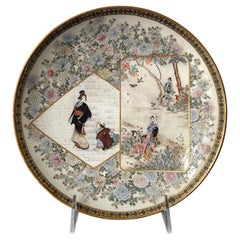
Japanese Satsuma Ceramic Dish with Fine Decoration by Kinkozan
By Kinkozan
Located in Atlanta, GA
A satsuma ceramic dish made by Kinkozan studio circa 1980-1900s in the late Meiji Period. The dish with a thick robust wall is supported by a large ring base and features finely deta...
Category
Antique Late 19th Century Japanese Meiji Ceramics
Materials
Ceramic
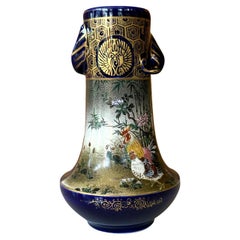
Fine Japanese Ceramic Satsuma Vase by Kinkozan
By Kinkozan
Located in Atlanta, GA
A miniature Japanese ceramic vase from the end of Meiji period circa 1880s- 1910s by Kinkozan (1645-1927). One of the largest studio manufacturers of the export ceramics at the time ...
Category
Early 20th Century Japanese Meiji Ceramics
Materials
Ceramic
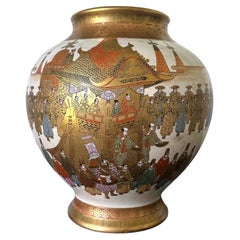
Fine Japanese Satsuma Ceramic Jar with Gilt Decoration by Kinkozan
By Kinkozan
Located in Atlanta, GA
A large Japanese ceramic vase from end of Meiji period circa 1880s- 1910s by Kinkozan (1645-1927). One of the largest studio manufacturers of the export ceramics at the time based in Kyoto. In the typical style of satsuma made at the turn of 20th century, the vase is of a moon jar shape and finely decorated with kinran-de (gold paint) on a cream white background with even fine crackles. What sets this particular vase apart from many lower quality and mass-produced pieces is the meticulously renditioned surface decoration. Lavishly gilded with a continuous design, the carefully composed imagery depicts an elaborately decorated float cart in a festival parade. A group of people are seated within the float with a woman and a child standing in the front. Surrounding the float are streams of marchers dressed...
Category
Early 20th Century Japanese Meiji Ceramics
Materials
Ceramic
Satsuma Earthenware Covered Box, by Kinkozan
By Satsuma
Located in West Palm Beach, FL
A Satsuma Earthenware covered box,
by Kinkozan,
Japanese, Meiji period (1868-1912)
decorated in polychrome enamels and gilt over a clear, crackled glaze, delicately painted with s...
Category
Antique Early 1900s Ceramics
Materials
Earthenware
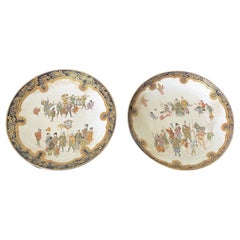
Pair Japanese Satsuma Plates with Miniature Decoration by Kinkozan
By Kinkozan
Located in Atlanta, GA
A pair of Satsuma ceramic plates made by Kinkozan studio circa 1880-1900s during the late Meiji Period. Each dish features miniature enamel decoration o...
Category
Antique Late 19th Century Japanese Meiji Ceramics
Materials
Ceramic
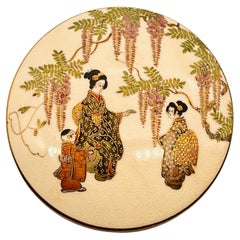
A Fine Japanese Satsuma kogo (incense box) Signed by Kinkozan. Meiji period
Located in London, GB
A Satsuma circular kogo (incense box) and cover signed by Kinkozan
19th century
Finely painted in enamels and gilt, the cover with wisteria and a scene of a woman and children ...
Category
Antique Late 19th Century Japanese Ceramics
Materials
Ceramic, Porcelain
$1,032
H 1.78 in Dm 3.75 in
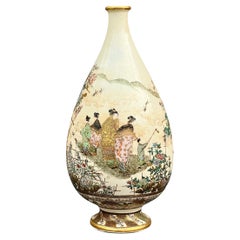
A Fine Japanese Satsuma Vase . Meiji Period. Kinkozan
Located in London, GB
A Fine Japanese Satsuma Vase with Bijin, Peacock, and Chrysanthemums.
Attributed to Kinkozan Workshop, Kyoto, Meiji period (late 19th century)
Of pear-shaped form with a flared f...
Category
Antique 19th Century Japanese Ceramics
Materials
Ceramic, Porcelain
Japanese Meiji Period Satsuma Vase by Kinkozan
By Kinkozan
Located in Newark, England
FREE WORLDWIDE SHIPPING
FROM KYOTO’S FAMED KINKOZAN WORKSHOP, A MEIJI-PERIOD SATSUMA VASE OF EXCEPTIONAL ENAMEL AND GILT.
From our Japanese Satsuma collection, we are delighted to ...
Category
Antique Late 19th Century Meiji Ceramics
Materials
Ceramic, Earthenware, Pottery
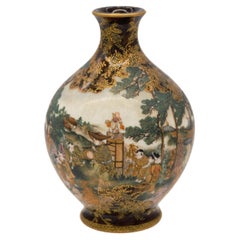
Satsuma earthenware vase by kinkozan, Meiji period
By Kinkozan
Located in Tel Aviv - Jaffa, IL
the body of this small marvelous vase is painted with a scene of a puppet show vendor with his wood backpack, on top of the backpack there are toys and dolls, he is surrounded with a group of 6 children, and on the background you can see a village.
on the other side of the vase there is an amazing painting of flowers and on the sides there are two amazing strong pine trees, the amorphous background is decorated in a "Tortoiseshell" color and design that gives it a real character and which is quite rare to see on satsuma pottery.
all the vase is over richly overpainted over the glaze with gold, which gives it its depth and realism.
signed Kyoto Kinkozan zo, and sealed Kinkozan zo
Kyoto’s Satsuma:
The painting technique used in Kyoto’s Satsuma-style ware is said to be the invention of the sixth generation Kinkōzan Sōbei (1824–1884). The Kinkōzan were a famous family of Kyoto Awataguchi potters who made ceramics that were used at Shōren'in, a temple closely tied to the imperial family, and by the shoguns of the Edo government. In fact the shogun is said to have granted them the name Kinkōzan. With the upheavals at the end of the Edo period, however, and the reforms of the subsequent Meiji government, the potters lost their traditional patrons and had to develop new markets.
Just at that time, the visit of a certain Westerner is said to have decided them to embark on overseas trade. By 1870, they had perfected Kyō Satsuma...
Category
Antique 1890s Japanese Meiji Ceramics
Materials
Gold
More From This Seller
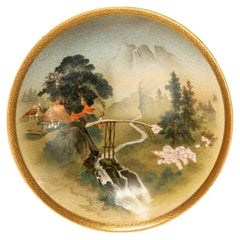
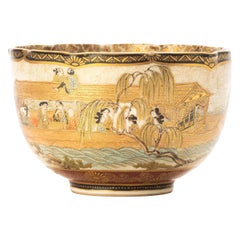
View AllA Satsuma bowl decorated with a striking landscape
Located in Milano, IT
Satsuma bowl decorated with a striking landscape that evokes the beauty and serenity of the Japanese hills, with a gently flowing river surrounded by trees and mountains.
The bowl i...
Category
Antique 19th Century Japanese Japonisme Ceramics
Materials
Ceramic
Satsuma ceramic lobed bowl, signed Juzan under the base
Located in Milano, IT
Satsuma ceramic lobed bowl adorned with raised enamels and fine gold details, depicting a vibrant landscape within. Characters and traditional Japanese home...
Category
Antique Late 19th Century Japonisme Ceramics
Materials
Ceramic
A Japanese Satsuma ceramic lobed bowl
Located in Milano, IT
Satsuma ceramic lobed bowl with curved corners and embellished with a refined scene of daily life along a watercourse on the outside. The interior is adorne...
Category
Antique Late 19th Century Japanese Japonisme Ceramics
Materials
Ceramic
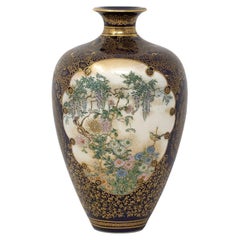
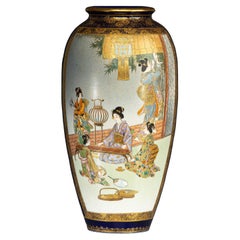
A Satsuma vase depicting daily life scene signed Kinkozan
Located in Milano, IT
Kyoto Satsuma vase with polychrome decoration on a cobalt blue background, embellished with gold floral motifs. A reserve shows scenes of daily life with Geisha in brightly colored k...
Category
Antique Late 19th Century Japanese Ceramics
Materials
Ceramic
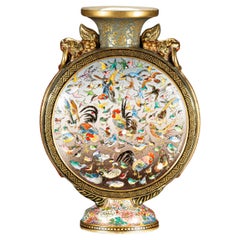
Satsuma moon flask decorated with naturalistic motifs signed by Koshida and Zuizan
Located in Milano, IT
Satsuma Moonflask vase decorated with polychrome nature motifs within two circular, convex reserves, depicting roosters, ducks, and various birds. On the other side, a pair of pheasa...
Category
Antique Late 19th Century Japanese Ceramics
Materials
Ceramic
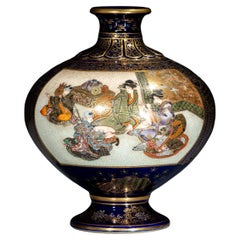
A cobalt-blue Satsuma vase depicting courtly scenes, signed Kinkozan
Located in Milano, IT
A globular Satsuma vase decorated with polychrome enamels and gold on a cobalt-blue ground. The neck features an elegant raised floral motif reminiscent of a chrysanthemum.
The body ...
Category
Antique Late 19th Century Japanese Ceramics
Materials
Ceramic
Still Thinking About These?
All Recently ViewedMore Ways To Browse
Millefiori Bowl
Antique Hand Painted Japanese Bowl
Hydrangea Antique
Satsuma Bowl
Antique Satsuma Bowl
Japanese Satsuma Bowl
Antique Azaleas
Old Imari
Chinese Porcelain Plaque
Sancai Pottery
16th Century Chinese Porcelain
Brown Japanese Ceramic Bowl
Canton Enamel
Japanese Raku Ceramics
Bizen Pottery
Chinese Export Famille Verte
Chinese Export Qianlong
Kutani Ware