Items Similar to Satsuma earthenware vase by kinkozan, Meiji period

Want more images or videos?
Request additional images or videos from the seller
1 of 6
Satsuma earthenware vase by kinkozan, Meiji period
$6,000
£4,535.31
€5,202.18
CA$8,364.25
A$9,105.16
CHF 4,833.03
MX$109,554.73
NOK 61,241
SEK 56,114.07
DKK 38,849.59
About the Item
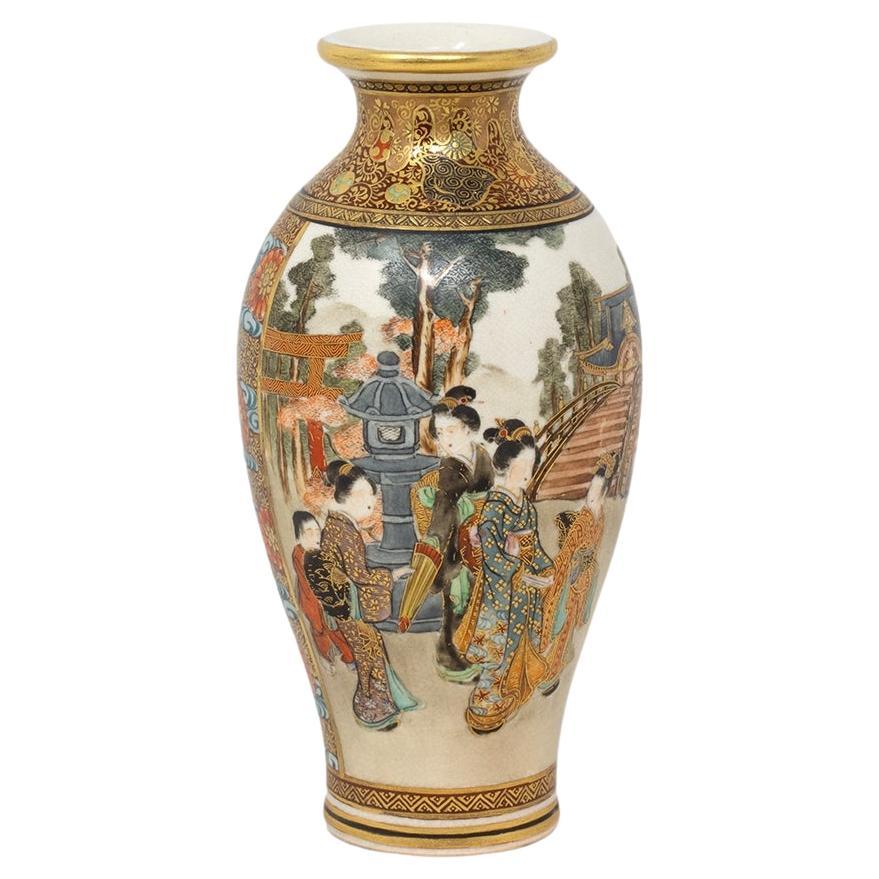
the body of this small marvelous vase is painted with a scene of a puppet show vendor with his wood backpack, on top of the backpack there are toys and dolls, he is surrounded with a group of 6 children, and on the background you can see a village.
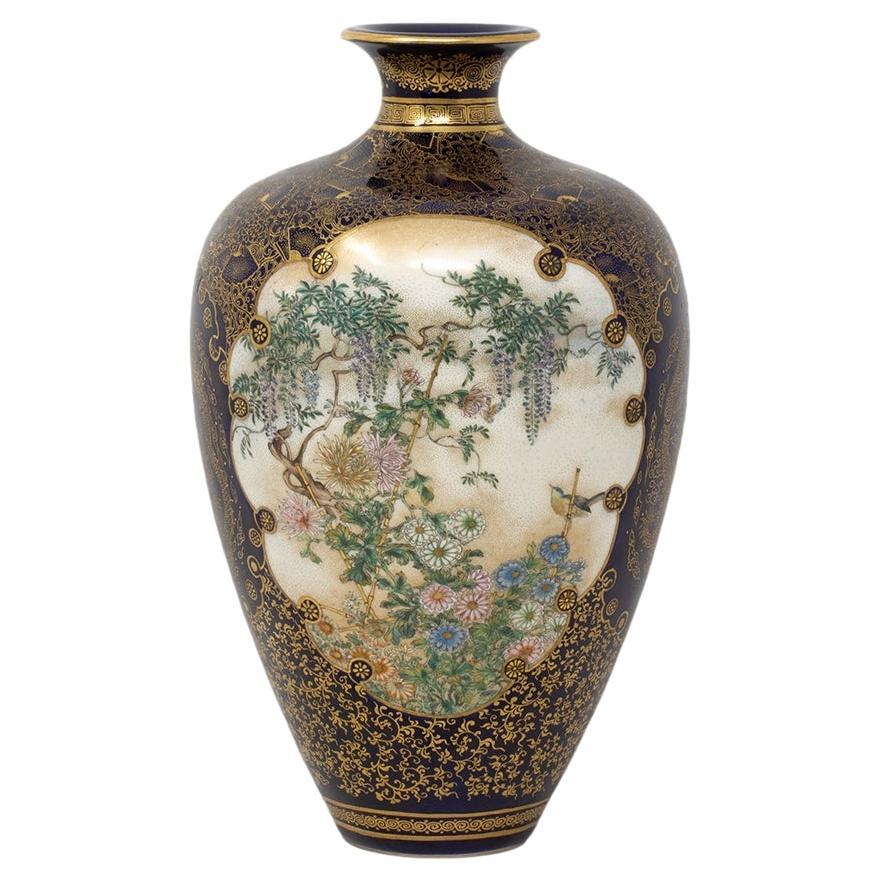
on the other side of the vase there is an amazing painting of flowers and on the sides there are two amazing strong pine trees, the amorphous background is decorated in a "Tortoiseshell" color and design that gives it a real character and which is quite rare to see on satsuma pottery.
all the vase is over richly overpainted over the glaze with gold, which gives it its depth and realism.
signed Kyoto Kinkozan zo, and sealed Kinkozan zo
Kyoto’s Satsuma:
The painting technique used in Kyoto’s Satsuma-style ware is said to be the invention of the sixth generation Kinkōzan Sōbei (1824–1884). The Kinkōzan were a famous family of Kyoto Awataguchi potters who made ceramics that were used at Shōren'in, a temple closely tied to the imperial family, and by the shoguns of the Edo government. In fact the shogun is said to have granted them the name Kinkōzan. With the upheavals at the end of the Edo period, however, and the reforms of the subsequent Meiji government, the potters lost their traditional patrons and had to develop new markets.
Just at that time, the visit of a certain Westerner is said to have decided them to embark on overseas trade. By 1870, they had perfected Kyō Satsuma’s glazing technique and by 1872 they began their export in full scale. The Kyō Satsuma techniques invented by Kinkōzan Sōbei VI were then passed down to his son, Kinkōzan Sōbei VII (1868–1927), who further developed the ware.
Kinkōzan Sōbei VII (1868–1927)
The Kinkōzan continued to enlarge their business throughout the Meiji period to the point where the production of Kyō Satuma exceeded the original Satsuma made in Kagoshima.
Kinkōzan's climbing kilns
At the point of peak production, Kyoto's Satuma kilns boasted over 700 workers within a production complex over 4000 square meters in size. The ceramics were produced from two types of local clay taken from the outskirts of Awadaguchi and two types of clay from Koga in the neighboring Shiga prefecture. Painting, packing, and selling were taken care of within Kinkōzan workshops. At the time, Awataguchi was so crowded with ceramic workshops—including Obiyama, Yasuda, and Kusube—that it was said that the flames of the Awadaguchi kilns burned through the day and night.
The numerous collections of Kyoto Satsuma in Europe and the U.S. bespeak the success of Kyō Satsuma on the export market. Among the numerous museums with Kyō Satsuma holdings are the Victoria and Albert Museum in the U.K., the Guimet Museum of Asian Art in France and the Philadelphia Museum of Art in the U.S., which house Kyō Satsuma vases, incense burners, bowls, and dishes in their collections.
Kyō Satsuma production was initiated with an eye on the international market, and it reflects the trends of the late 19th century soon after Japan had reopened its doors, depicting Japan as the West wanted to see it. The heavy use of gold, the typical Japanese paintings of genre scenes or birds and flowers, and the many coffee cups and teapots produced all catered to Western preferences and life styles. Pairs of vases were frequently used as lamps or as decorations for fireplaces.
About the Seller
No Reviews Yet
Vetted Professional Seller
Every seller passes strict standards for authenticity and reliability
1stDibs seller since 2023
- ShippingRetrieving quote...Shipping from: Tel Aviv - Jaffa, Israel
- Return Policy
More From This Seller
View AllÉMILE GALLÉ Vase, circa 1900 overlaid cameo glass red flowers, square shape
Located in Tel Aviv - Jaffa, IL
An attractive late 19th Century cameo glass vase of elongated square form cut with decorative burgundy and red flowers against a warm yellow background with excellent hand finished d...
Category
Antique 1890s Vases
Materials
Art Glass, Blown Glass, Cut Glass
Antique early 20th Chinese Exceptional Solid Silver Teapot, Wu Hua物華, Tianjin
Located in Tel Aviv - Jaffa, IL
Antique early 20th Century exceptionally rare Chinese solid silver teapot, of traditional round form, the body finely engraved in traditional Chinese style, suggesting this teapot was made for the Chinese market. The body engraved with bamboo and butterflies , the unusual handle imitating bamboo, the removable lid set with a peach finial (Peaches are the symbol of longevity). According to Daoist lore, the peaches of immortality grew in the garden of the Queen Mother of the West - Xi Wangmu.
the spout with a hedged cover in the shape of a lingzhi mushroom and a FU symbol of good furtune.
the top frieze is decorated with 8 Chinese symbols: a scroll, a Ruyi scepter, a qin, The Endless Knot, a pendant, an old book, a wrist rest, and two overlapping squares.
The teapot is very unusual, fine and exceptionally crisp. it is made of heavy Gauge silver and the attention to detail and design is simply outstanding.
"WU HUA...
Category
Early 20th Century Chinese Chinese Export Metalwork
Materials
Silver
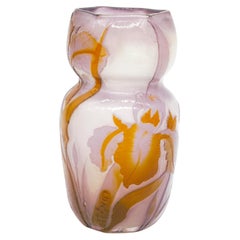
ÉMILE GALLÉ
Iris
Vase, circa 1900 overlaid cameo and fire polished glass
By Émile Gallé
Located in Tel Aviv - Jaffa, IL
ÉMILE GALLÉ (1846-1904)
Rare and important 'Iris' Vase, circa 1900
Overlaid cameo and fire polished glass, well documented in books and exhibitions
Signed in cameo Gallé.
Measuremen...
Category
Early 20th Century French Art Nouveau Vases
Materials
Art Glass, Blown Glass, Cut Glass
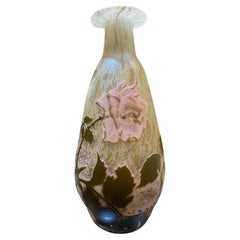
Rare Daum Nancy Wheel-Carved Rose
La France
double overlay Cameo Glass Vase
By Daum
Located in Tel Aviv - Jaffa, IL
This wonderful, elegantly shaped with a flared rim vase , by Daum Nancy, features
wheel-carved cameo glass of the highest quality detailing an amazing pink roses, or rose of France ...
Category
Vintage 1910s French Art Nouveau Vases
Materials
Art Glass, Blown Glass, Cut Glass, Opaline Glass
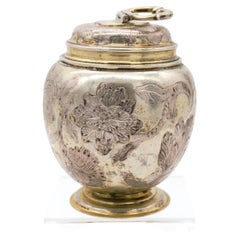
Rare German Parcel-Gilt Silver Canister, Abraham Drentwett i, Augsburg 1649-1666
Located in Tel Aviv - Jaffa, IL
Important German parcel-gilt silver canister, Abraham Drentwett I, Augsburg, circa 1649-1666 Abraham Drentwett I is one of Augsburg's foremost silversmiths during the Baroque period. He was Active 1641-1666 , he is best known for having executed Queen Christina's silver throne...
Category
Antique 17th Century German Baroque Sterling Silver
Materials
Silver
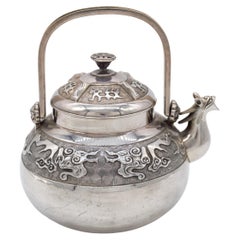
Amazing Japanese silver teapot and cover, dragon spout Meiji period 19TH century
Located in Tel Aviv - Jaffa, IL
amazing rare archaistic style silver ewer or tea pot with cover, the design is Of archaistic style dragons on the main frieze and on the cover, this style came from ancient Chinese a...
Category
Antique 1890s Japanese Metalwork
Materials
Silver
$12,000
Free Shipping
You May Also Like
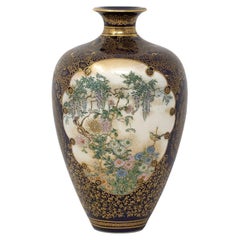
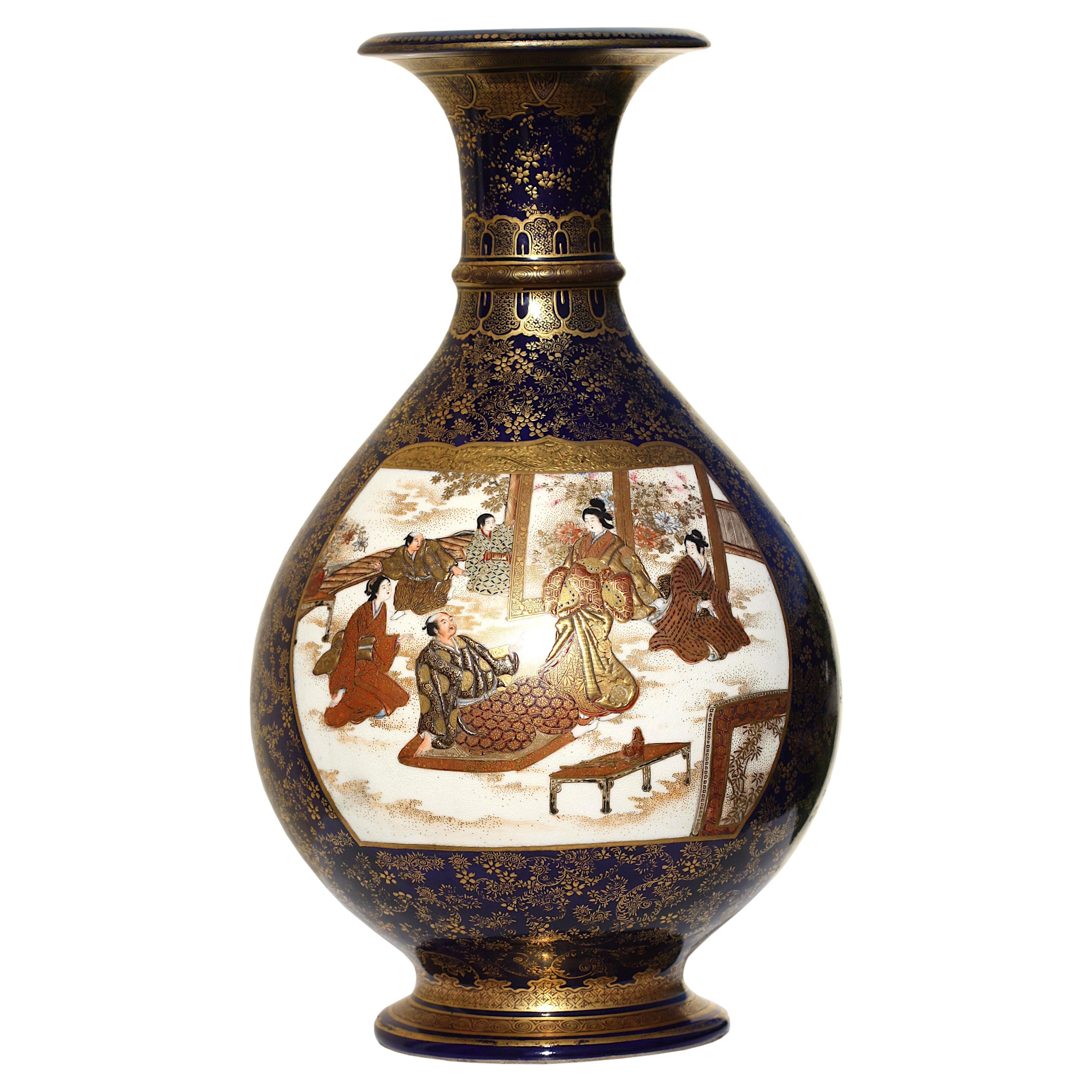
Japanese Satsuma Earthenware Vase by Kinkozan, Meiji Period
By Kinkozan
Located in West Palm Beach, FL
A Japanese Satsuma Earthenware Vase by Kinkozan, Meiji period (1868-1912)
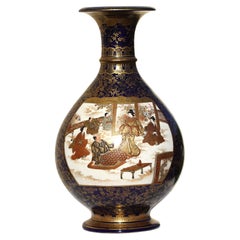
The body inset with two panels, one depicting figures seated around a table, the other painted with a joyful scene in a shrine, all reserved on a blue ground decorated with a gilt flower pattern, signed Nihon Kyoto Kinkozan zo...
Category
20th Century Antiquities
Materials
Ceramic
Japanese Antique Earthenware Satsuma Vase by Kinkozan Meiji Period
By Kinkozan
Located in Newark, England
FREE WORLDWIDE SHIPPING
MEIJI PERIOD (1868-1912)
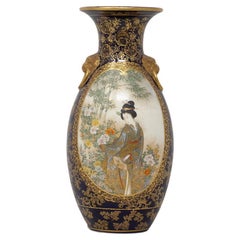
From our Japanese Satsuma collection, we are delighted to present this exceptional Meiji period Satsuma vase by Kinkozan
This tal...
Category
Antique Late 19th Century Japanese Meiji Ceramics
Materials
Ceramic, Earthenware, Pottery
Japanese Antique Earthenware Satsuma Vase by Kinkozan Meiji Period
By Kinkozan
Located in Newark, England
FREE WORLDWIDE SHIPPING
MEIJI PERIOD (1868-1912)
From our Japanese Satsuma collection, we’re pleased to offer this Meiji period bottle-form Satsuma vase by Kinkozan.
The vase is...
Category
Antique Early 1900s Japanese Meiji Ceramics
Materials
Ceramic, Earthenware, Pottery
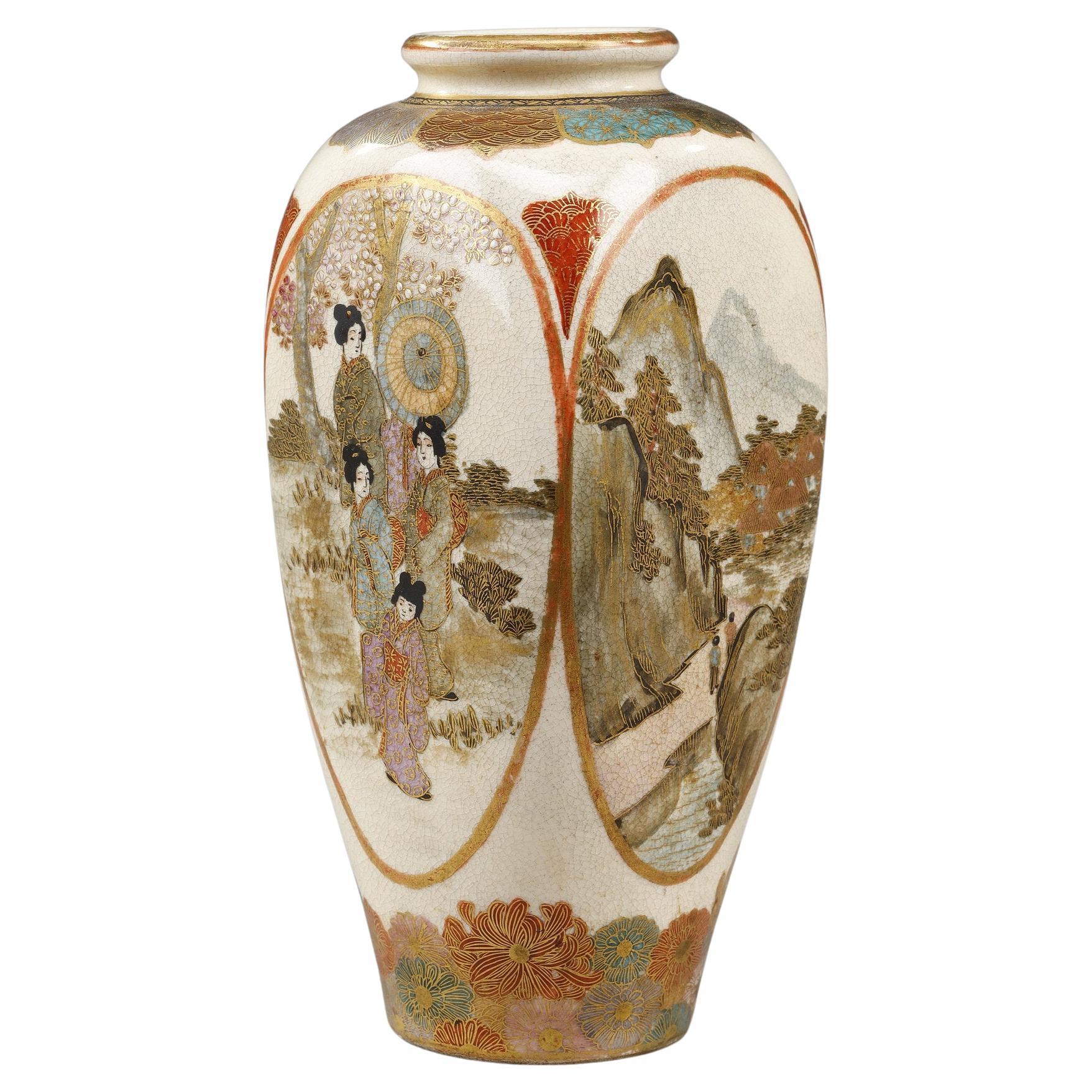
Satsuma porcelain vase from the Meiji period, Japan
Located in Paris, FR
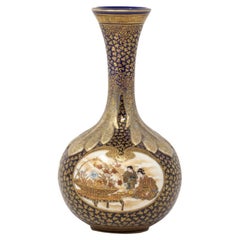
Small porcelain vase in Satsuma earthenware. The 4-sided body is decorated in polychrome and gold enamels with geishas in a garden, a mountain landscape, a bird on a flowering branch...
Category
Antique 1890s Japanese Ceramics
Materials
Porcelain
Japanese Meiji Period Satsuma Vase by Ryokuzan
Located in Newark, England
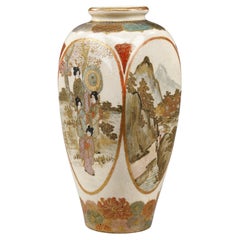
From our Japanese Satsuma Collection, we are delighted to offer this Japanese Satsuma Vase by Ryokuzan 緑山. The Satsuma vase of ovoid shape with a tapered body, circular foot rim, wai...
Category
Antique Early 1900s Japanese Meiji Ceramics
Materials
Ceramic, Earthenware, Pottery

Japanese Meiji Period Satsuma Vase by Kinkozan
By Kinkozan
Located in Newark, England
FREE WORLDWIDE SHIPPING
FROM KYOTO’S FAMED KINKOZAN WORKSHOP, A MEIJI-PERIOD SATSUMA VASE OF EXCEPTIONAL ENAMEL AND GILT.
From our Japanese Satsuma collection, we are delighted to ...
Category
Antique Late 19th Century Meiji Ceramics
Materials
Ceramic, Earthenware, Pottery