Items Similar to Satsuma Incense Burner
Want more images or videos?
Request additional images or videos from the seller
1 of 5
Satsuma Incense Burner
$3,450
£2,613.05
€3,001
CA$4,834.58
A$5,256.16
CHF 2,786.82
MX$63,008.05
NOK 35,419.09
SEK 32,448.70
DKK 22,428.70
About the Item
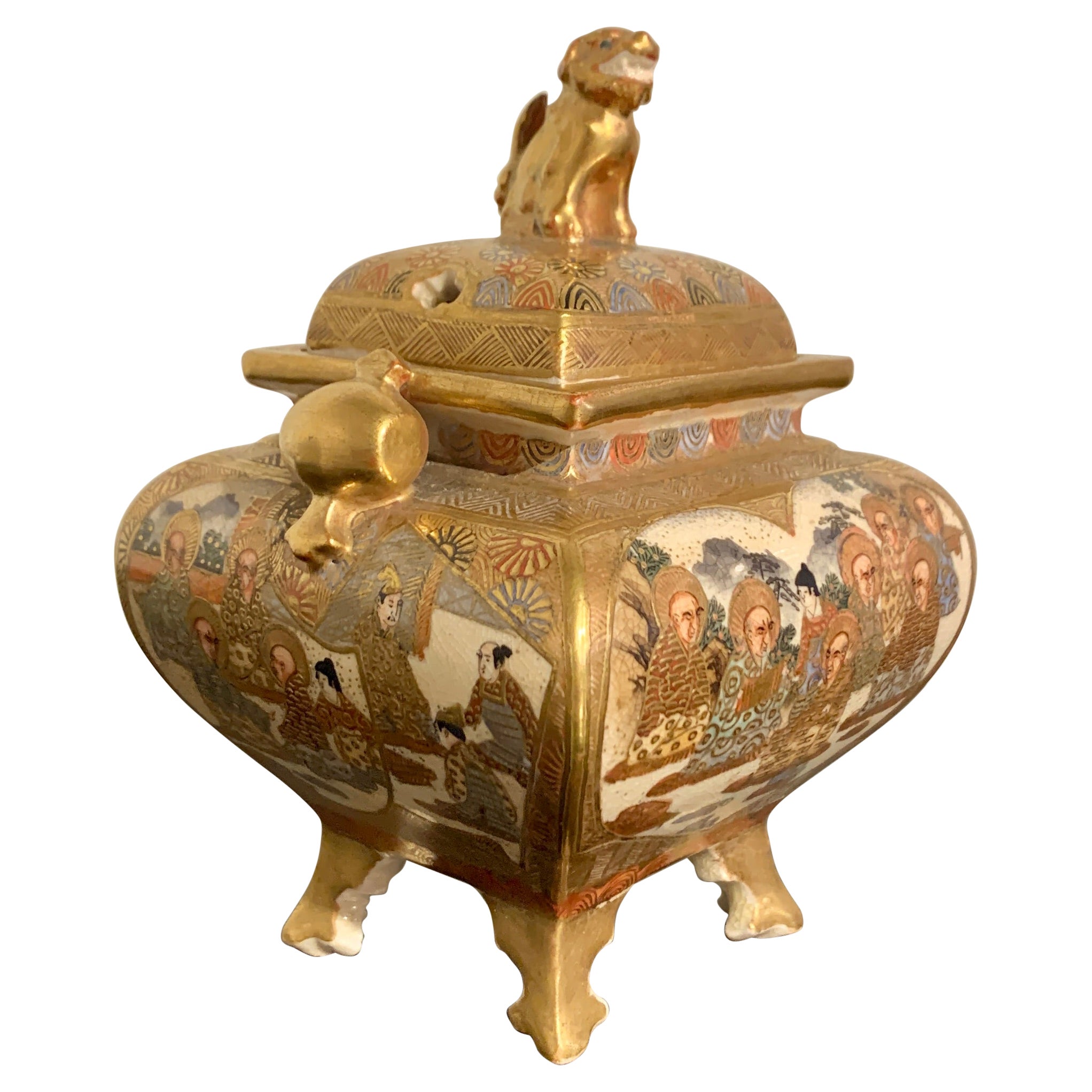
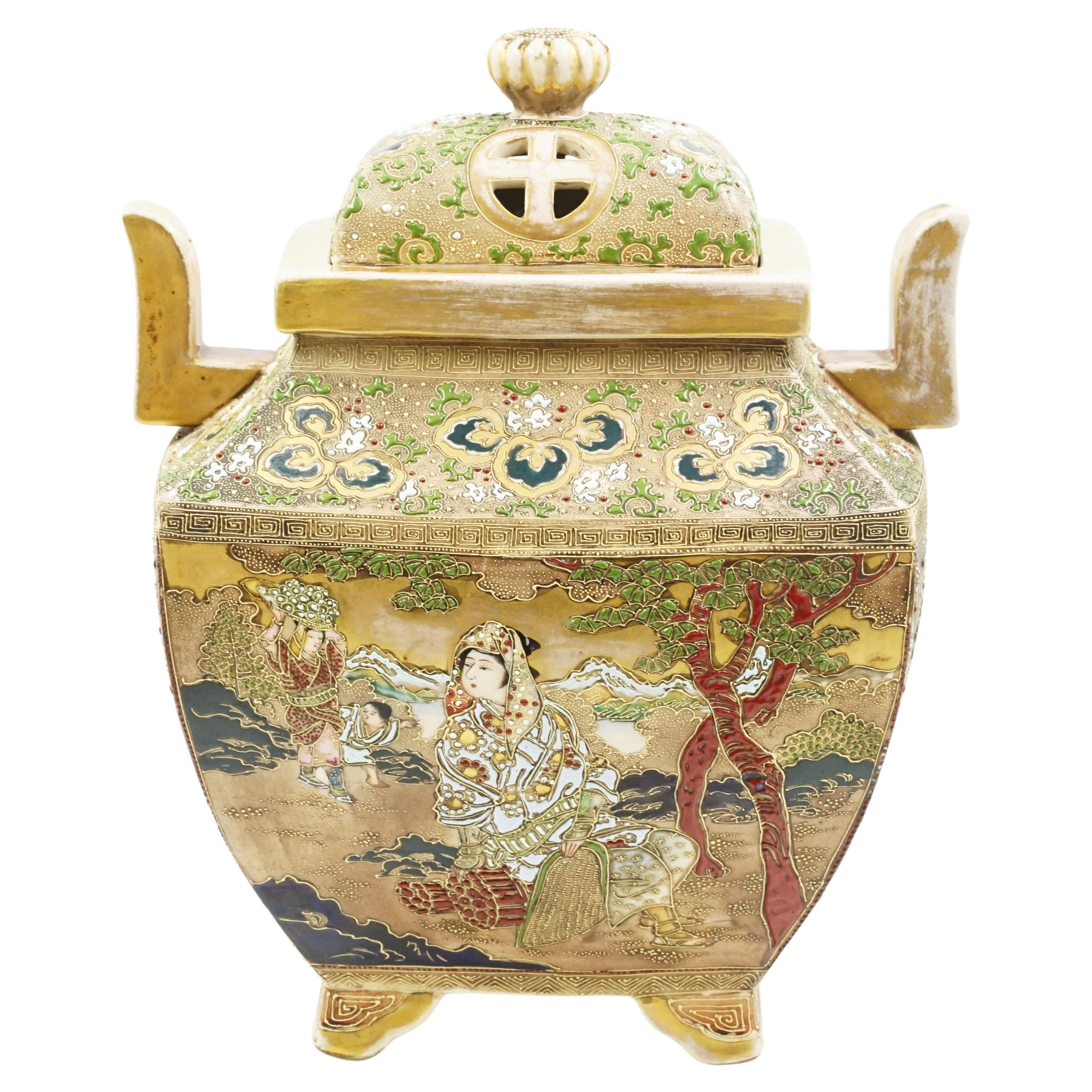
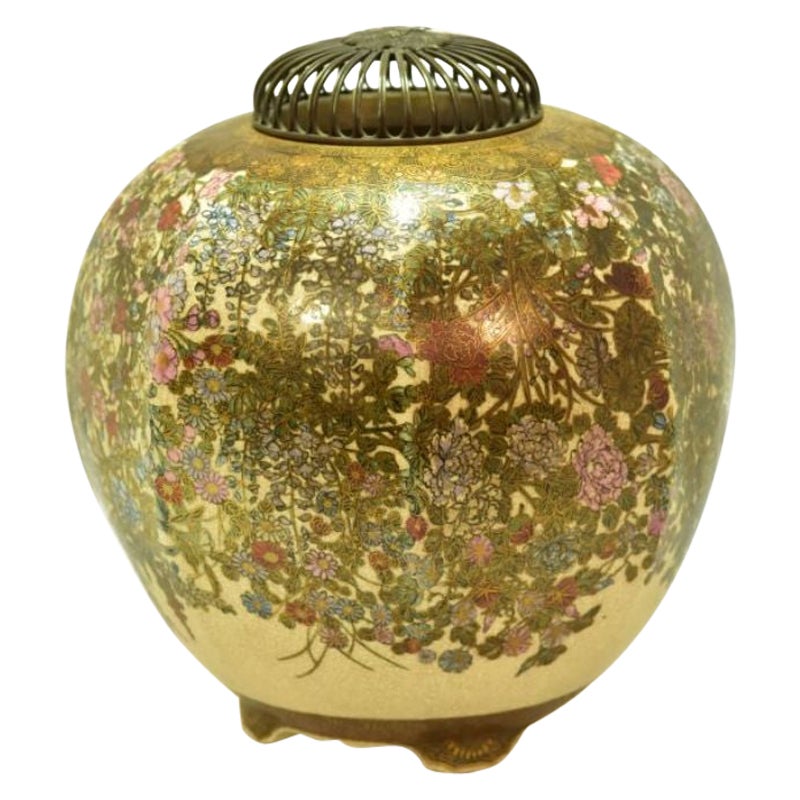
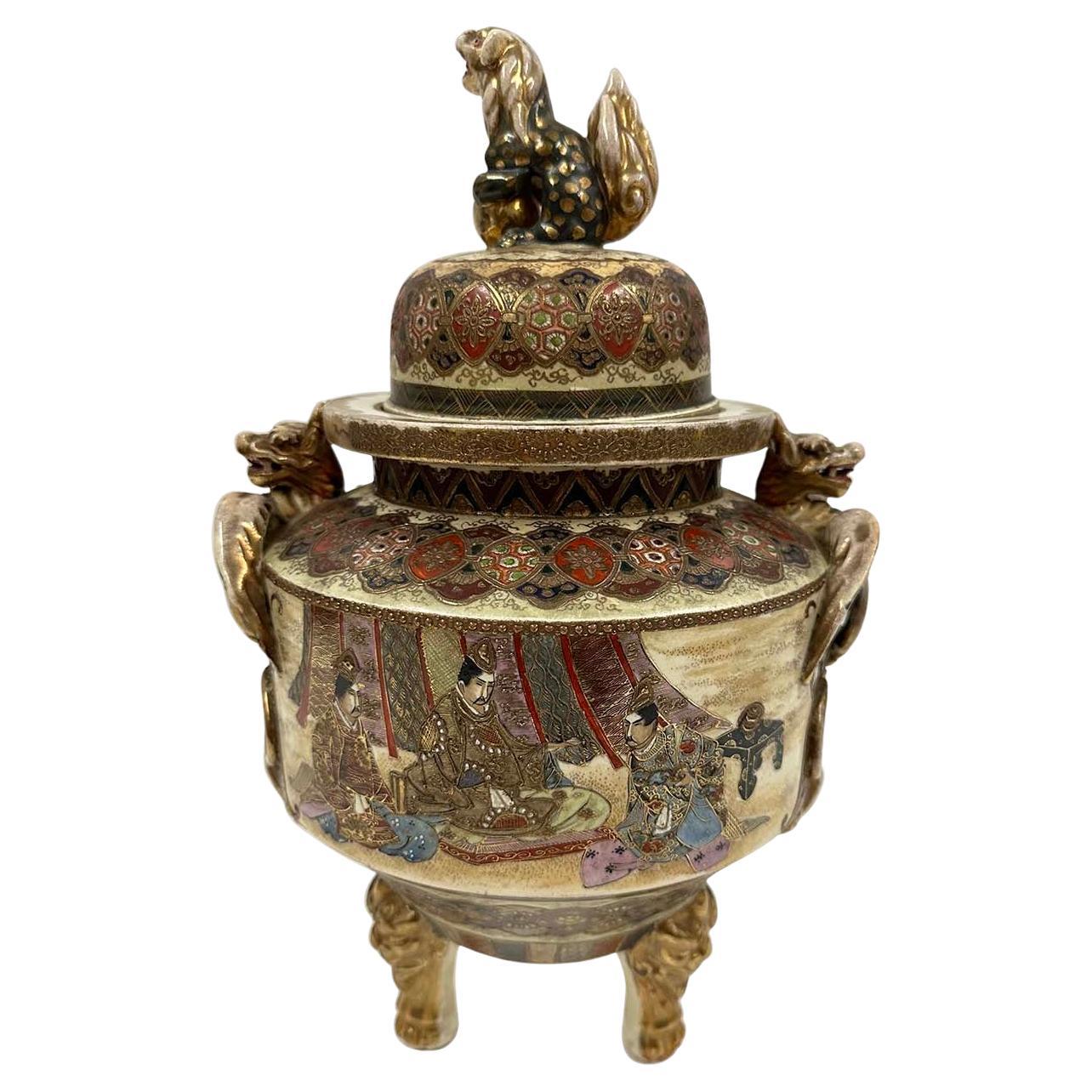
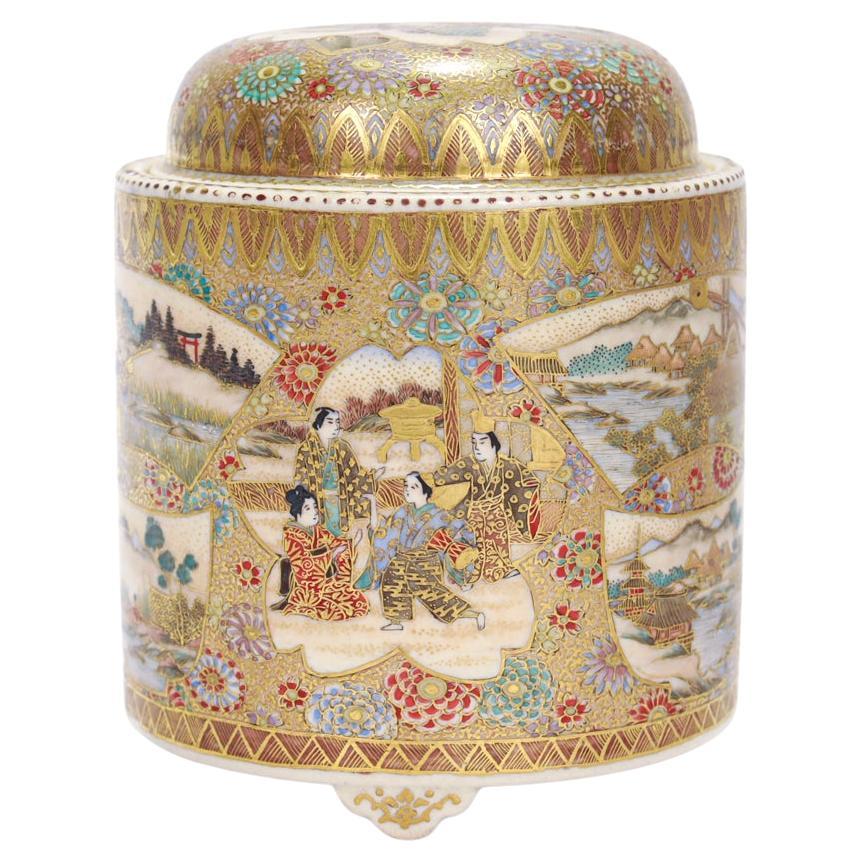
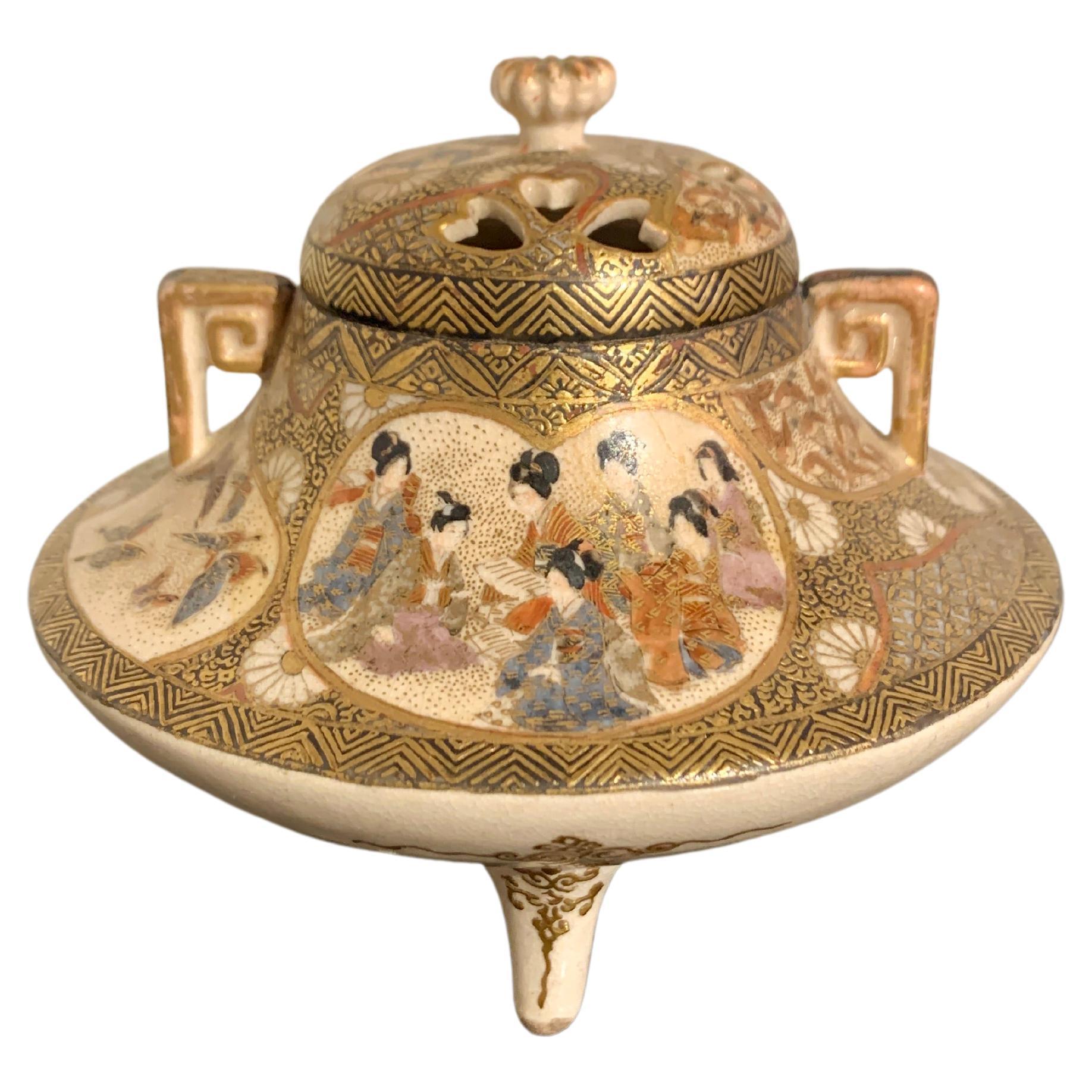
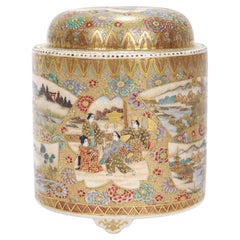
This Japanese Satsuma incense burner is a decorative work of art from the Meiji period, distinguished by its exquisite craftsmanship and intricate detailing. Made from fine earthenware, this burner features a creamy, off-white glaze adorned with vibrant overglaze enamels and gold detailing. Lively scenes are on full display on each side, featuring tea ceremonies, the playing of instruments and children playing. Used for burning incense during ceremonies, Satsuma incense burners exemplify the blend of form, function and artistic beauty characteristic of Meiji-era Satsuma ware.
This burner has a round shape with a perforated, dome-shaped lid and is supported by intricately decorated feet. A stunning and utilitarian object such as this would have been highly prized both domestically and internationally. It is marked with the Shimazu family crest, or mon, and the artist's signature, indicating their origin from the Satsuma region.
The signature contains the characters of the signature for Hozan for the artist Matsumoto Hozan at the Kyoto-based workshop in the Meiji period. Hozan also worked for Yasuda and produced some of the highest quality satsuma ware on the market.
For nearly 150 years, Satsuma earthenware has captivated collectors and is regarded as a quintessential art form of the Meiji period. Initially crafted in the 17th century, this luminous style reached its height around 1790. Originating near Kagoshima Prefecture on Kyushu Island, Satsuma ware was initially produced by Korean potters for the Shimazu family and the local populace. Its international acclaim soared after its exhibition at the 1867 Exposition Universelle in Paris. Subsequently, Satsuma ware was widely commissioned for export to the West, with production expanding to major Japanese cities such as Kyoto, Osaka, Tokyo and Yokohama.
Signed with the characters of “Hozan" in Japanese and the Shimazu family crest
Meiji period (1868-1912)
5" high x 4" in diameter
- Dimensions:Height: 5 in (12.7 cm)Width: 4 in (10.16 cm)Depth: 4 in (10.16 cm)
- Style:Meiji (Of the Period)
- Materials and Techniques:
- Place of Origin:
- Period:
- Date of Manufacture:19th Century
- Condition:
- Seller Location:New Orleans, LA
- Reference Number:Seller: 31-90931stDibs: LU891145819632
About the Seller
5.0
Recognized Seller
These prestigious sellers are industry leaders and represent the highest echelon for item quality and design.
Established in 1912
1stDibs seller since 2010
114 sales on 1stDibs
Typical response time: 5 hours
- ShippingRetrieving quote...Shipping from: New Orleans, LA
- Return Policy
More From This Seller
View AllShort Satsuma Vase
Located in New Orleans, LA
This magnificent vase is adorned with intricate geometric patterns and elegant gold gilding, featuring two captivating scenes. One side depicts figures in vividly colorful attire adm...
Category
Antique 19th Century Japanese Meiji Vases
Materials
Earthenware
$2,950
Japanese Lacquer Tray
Located in New Orleans, LA
As beautiful as it is practical, this Japanese Meiji-period lacquered tray is distinguished by its exceptional craftsmanship. It exhibits a phenomenal artistry as the entire tray is ...
Category
Early 20th Century Japanese Meiji Lacquer
Materials
Lacquer
$8,850
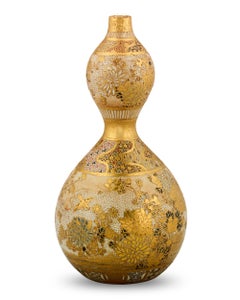
Double Gourd Satsuma Vase
Located in New Orleans, LA
This exquisitely detailed, double-gourd Japanese Satsuma vase represents the zenith of Japanese earthenware artistry. Elaborately hand-painted, it features detailed floral motifs, wh...
Category
Antique 19th Century Japanese Meiji Vases
Materials
Earthenware
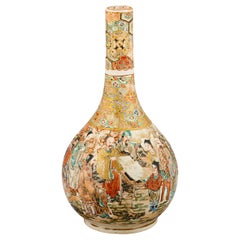
Satsuma Vase with Figures
Located in New Orleans, LA
This Japanese Satsuma vase is intricately decorated with geometric patterns and lively scenes of leisure activities including calligraphy and a friendly game of Go. The vase presents...
Category
Antique 19th Century Japanese Meiji Vases
Materials
Earthenware
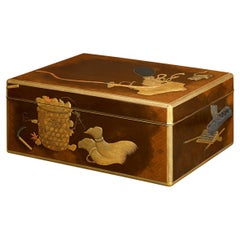
Japanese Lacquer Box
Located in New Orleans, LA
This exquisite Meiji-period lacquer document box known as a ryoshibako showcases the meticulous artistry of maki-e, a technique of raised lacquer decoration. Adorned with gold and vi...
Category
Antique 19th Century Asian Meiji Lacquer
Materials
Gold
$39,850
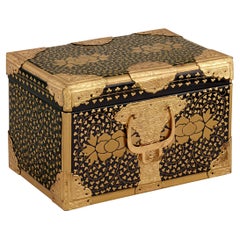
Edo-Period Lacquerware Chest
Located in New Orleans, LA
Edo-Period Lacquerware Chest
19th-century
This exquisite chest, inspired by Hasami-Bako travel trunks, is a striking example of Japanese lacquerware. The hiramaki-e technique—applie...
Category
Antique 19th Century Japanese Edo Decorative Boxes
Materials
Gold
You May Also Like
Small Japanese Satsuma Incense Burner, Koro, Meiji Period, Late 19th Century
Located in Austin, TX
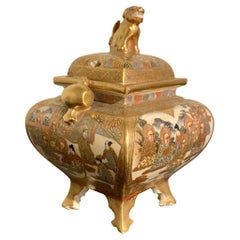
A fine Japanese Satsuma stoneware incense burner, koro, Meiji Period, late 19th century, Japan.
The koro of square shape with curved sides,...
Category
Antique 1890s Ceramics
Materials
Enamel
Koro Satsuma Japanese ceramic
Located in Buenos Aires, Argentina
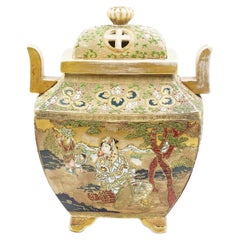
Koro Satsuma Japanese ceramic
Japanese glazed ceramic in various colors
Meiji Style Circa 1940 Origin Japan
It has traditional images painted on its front and back.
The purpose of th...
Category
Vintage 1940s Japanese Meiji Ceramics
Materials
Enamel
Incense Burner in Satsuma Earthenware
Located in Marseille, FR
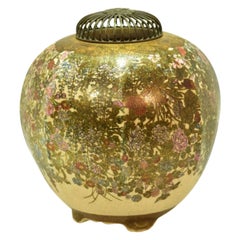
JAPAN - Circa 1900 Incense burner in Satsuma earthenware with vegetal decoration. Openwork lid in shibuichi surmounted by a flower in slight relief...
Category
Antique 19th Century Japanese More Asian Art, Objects and Furniture
Materials
Earthenware
Antique Japanese Meiji Period Satsuma Incense Burner Censer
Located in Pomona, CA
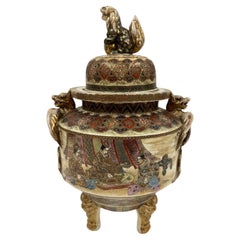
UP for you consideration is a beautiful antique Meiji period Japanese gold gilt satsuma incense burner marked/signed by Kinkozan. Very fine hand...
Category
Early 20th Century Japanese Chinese Export Urns
Materials
Porcelain
Miniature Antique Japanese Satsuma Pottery Censer or Koro
By Kinkozan
Located in Philadelphia, PA
A fine antique Japanese Satsuma pottery incense burner.
With a cream ground and an extensively gilt exterior.
There are numerous cartouches around the censer with each having a un...
Category
Early 20th Century Meiji Ceramics
Materials
Pottery
Japanese Satsuma Tripod Censer, Koro, Meiji period, Early 20th Century, Japan
Located in Austin, TX
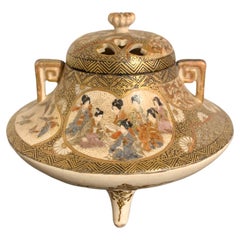
A small and finely decorated Japanese Satsuma tripod incense burner (koro), signed Kyozan, Meiji period, circa 1900, Japan.
The censer, koro, with a compressed body supported by t...
Category
Antique Early 1900s Japanese Meiji Ceramics
Materials
Stoneware
More Ways To Browse
Perforated Dome
Satsuma Incense
Japanese Family Crest
Satsuma Incense Burner
Paris Ware
Qajar Art
Satsuma Figures
16th Century Plate
Antique Swatow Porcelain
Antique Water Dropper
Arita Charger
Black Imari
Celadon Glazed Bowl
Edo Charger
Japanese Charger Edo
Kangxi Famille Verte Porcelain
Swatow Porcelain
Antique Korean Celadon