Aesthetic Movement Ceramics

AESTHETIC MOVEMENT

In 1880, polymath designer William Morris declared: “If you want a golden rule that will fit everybody, this is it: Have nothing in your houses that you do not know to be useful or believe to be beautiful.” His words encapsulated the Aesthetic Movement, which prized beauty above all and blurred the lines between fine art and the decorative arts, particularly through lavishly crafted furniture pieces.

The Aesthetic Movement, whose major proponents included author Oscar Wilde, flourished from the 1860s to the 1880s and was mostly popular in England and the United States. Design expositions like the 1876 Centennial International Exhibition in Philadelphia, as well as the publishing of how-to books for interior design, helped disseminate Aesthetic Movement bedroom furniture, serveware, coffee tables and other items, especially to the middle class.

The establishment of new art museums, art clubs and a rising passion for collecting at the time contributed to a growing appreciation for art. Morris’s founding of Morris Co. in 1862 and the commercializing of this “cult of beauty” by the Liberty store in London, starting in the late 19th century, further disseminated the idea of a domestic space that was thoughtfully and floridly designed.

Leading Aesthetic Movement furniture designers included E.W. Godwin, who drew on Japanese influences and whose work reflected a wider enthusiasm for imported East Asian art. British designer Christopher Dresser created textiles, ceramics and more that were also inspired by Japanese decorative art but were representative of additional diverse design sources that ranged from Egypt to Mexico.

The Aesthetic Movement’s eclecticism resulted in dazzling interiors. Japanese fans were positioned on Renaissance-inspired cabinets with brass hardware, while mantels made of rich walnut or finely carved ebonized wood and adorned with painted Minton tiles mingled with cast-iron chairs against a backdrop of floral wallpaper. In 1881, in New York City, stenciled checkerboard motifs and painted floral murals could be found under an opalescent glass chandelier in a luxurious dressing room designed by German émigré cabinetmaker-decorator George Alfred Schastey. Amid the rise of the industrial age, the style’s promotion of art in everyday life would inform the Arts and Crafts Movement and Art Nouveau.

Find a collection of antique Aesthetic Movement seating, tables, decorative objects and other furniture and antiques on 1stDibs.

to
1
2
2
87
54
17
16
14
7
6
5
5
4
3
3
2
2
2
1
2
2
2
1
1
2
2
2
2
2
2
Style: Aesthetic Movement
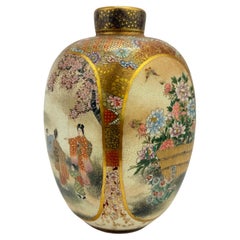
Japanese Satsuma Earthenware Four-Panel Tea Caddy, Ryuzan - Kyoto, Meiji-Taisho
Located in Atlanta, GA
Japanese Satsuma Earthenware Four-Panel Tea Caddy Attributed to Ryuzan Studio (龍山), Kyoto, Meiji–Taisho Period, circa 1900–1920 A finely painted Japanese Satsuma earthenware tea cad...
Category

Late 19th Century Japanese Antique Aesthetic Movement Ceramics

Materials

Enamel

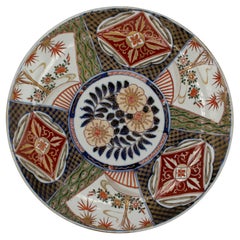
Late 19th Century Aesthetic Movement Imari Charger
Located in Chapel Hill, NC
Late 19th century Aesthetic movement Imari Charger, 15 7/8" dia. Rich, deep colors. Six alternating panels of a bamboo tree in garden with "seaweed" motif & geometric motifs surrounding the central floral medallion. Reverse blue and white decoration. Whitehall Antiques...
Category

Late 19th Century Japanese Antique Aesthetic Movement Ceramics

Materials

Ceramic, Porcelain

Related Items
Japanese Meiji Period (1868-1912) Satsuma Earthenware Vase Taizan for Hattori
Located in Newark, England
Meiji Period (1868-1912) From our Japanese collection, we are delighted to offer Japanese Meiji Period Satsuma Vases. The Satsuma Vase of hexagonal form with a slight waisted neck and tight rounded rim is extensively decorated with multiple figures to two large scenes. The first scene features a beach with waves to the background and a plethora of figures including multiple geisha holding traditional Japanese wagasa’s. The second scene follows on from the first with a large building in the foreground holding figures on a large platform under a pagoda roof with a pagoda building in the background and further figures in the foreground. The scenes are framed by a full detailed border with gilt shapes, flowers amongst pink shaded backgrounds and butterflies around the neck. The Satsuma Vase is unusually signed Fine Art, Satsuma Ware, Dai Nippon (Great Japan), Hattori Made, Gosuido Works, Taizan Painted. 美術, サツマヤキ(薩摩焼), 大日本, 服部造, 五スイ堂工, 對山画 and dates to the Meiji Period (1868-1912) and the turn of the 20th century circa 1905. Satsuma ware is a type of earthenware pottery originating from the Satsuma province in Southern Kyushu, Japan’s third largest island. Wagasa are traditional Japanese umbrellas made of washi paper attached to a bamboo frame and treated to ensure it is waterproof. Meiji Period was an era of Japanese history that spanned from 1868 to 1912. It was the first half of the Empire of Japan, when the Japanese people began to build a paradigm of a modern, industrialised nation state and emergent great power, influenced by Western countries and aesthetics. As a result of radically different ideas, the changes to Japan were profound and it affected the social structure, politics, economy, military, and foreign relations across the board. The period corresponded to the reign of Emperor Meiji and was preceded by the Keio era and was succeeded by the Taisho era. Cultural Art during the Meiji Period was of particular interest to the government and they overhauled the art export market which in turn promoted Japanese arts via various world’s fairs, beginning in Vienna at the world fair in 1873. The government heavily funded the fairs and took an active role organising how Japan’s culture was presented to the world including creating a semi-public company named Kiritsu Kosho Kaisha (First Industrial Manufacturing Company). The Kiritsu Kosho Kaisha was used to promote and commercialise exports of Japanese art and established the Hakurankai Jimukyoku (Exhibition Bureau) to maintain quality standards. For the 1876 Centennial International Exhibition in Philadelphia, the Japanese government created a Centennial Office and sent a special envoy to secure space for the 30,000 items that would be displayed. The Imperial Household also took an active interest in arts and crafts, commissioning works by select artists to be given as gifts for foreign dignitaries further emphasising the high quality and importance of Japanese art. Just before the end of the 19th century in 1890, the Teishitsu Gigeiin (Artist to the Imperial Household) system was created to recognise distinguished artists. These artists were selected for their exceptionally high quality wares and talent in their own industry. Over a period of 54 years Seventy artists were appointed, amongst these were ceramicist Makuzu Kozan and cloisonné enamel artist...
Category

Early 1900s Japanese Antique Aesthetic Movement Ceramics

Materials

Earthenware, Pottery

Japanese Meiji Period Satsuma Vase by Ryokuzan
Located in Newark, England
From our Japanese Satsuma Collection, we are delighted to offer this Japanese Satsuma Vase by Ryokuzan 緑山. The Satsuma vase of ovoid shape with a tapered body, circular foot rim, wai...
Category

Early 1900s Japanese Antique Aesthetic Movement Ceramics

Materials

Ceramic, Earthenware, Pottery

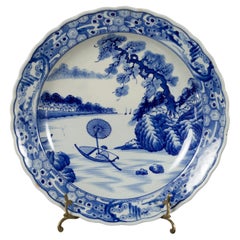
Japanese 19th Century Porcelain Imari Charger with Painted Blue and White Décor
Located in Yonkers, NY
A Japanese Imari porcelain charger plate from the 19th century, with hand-painted blue and white décor depicting a man rowing a boat. Created in J...
Category

19th Century Japanese Antique Aesthetic Movement Ceramics

Materials

Porcelain

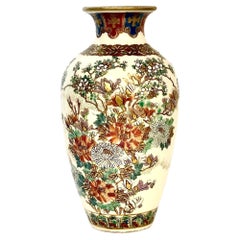
Antique Japanese Taisho Satsuma Painted Vase
Located in LA CIOTAT, FR
A petite and beautiful hand-decorated ceramic baluster vase, painted all around with traditional Japanese motifs, including native flora, birds and bamboo stems on a creamy glazed background. The colour palette is bold and bright, with highlights of green, red and blue, together with plentiful gilt relief...
Category

Early 20th Century Japanese Aesthetic Movement Ceramics

Materials

Ceramic

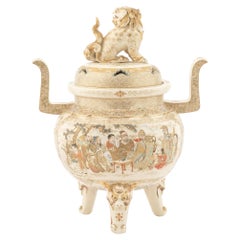
Japanese Meiji Period Satsuma Tripod Censer
Located in New York, NY
Very fine quality Japanese Meiji period Satsuma tripod censer with a foo dog finial. wonderful painting quality.
Category

Late 19th Century Japanese Antique Aesthetic Movement Ceramics

Materials

Ceramic

Japanese Meiji Period Satsuma Tripod Censer
$1,800
H 15.75 in W 13 in D 9 in
A Japanese Floral Imari Vase, 19th Century
Located in ARMADALE, VIC
A Japanese Floral Imari Vase, 19th Century Provenance: Private Australian Collectio...
Category

19th Century Japanese Antique Aesthetic Movement Ceramics

Materials

Porcelain

A Japanese Imari Plate, 19th Century
Located in ARMADALE, VIC
A Japanese Imari Plate, 19th Century Home decor, Interior design and collectibles. Provenance: Private Australian Collection. Dimension: Height: 4.5cm Diameter: 30cm
Category

19th Century Japanese Antique Aesthetic Movement Ceramics

Materials

Porcelain

A Japanese Imari Plate, 19th Century
$600
H 1.78 in Dm 11.82 in
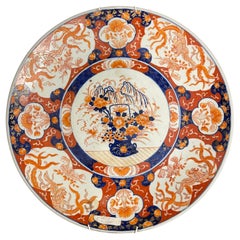
A Japanese Imari Charger, 19th Century
Located in ARMADALE, VIC
A Japanese Imari Charger, 19th Century Provenance: Private Australian Collection. Description: The central floral basket motif within a border of hou-ou bird cartouches to a cobalt...
Category

19th Century Japanese Antique Aesthetic Movement Ceramics

Materials

Porcelain

A Japanese Imari Charger, 19th Century
$1,280
H 2.17 in Dm 16.15 in
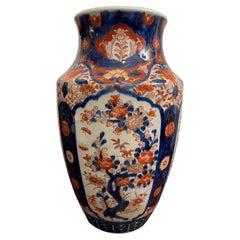
A Japanese Imari Vase, 19th Century
Located in ARMADALE, VIC
A Japanese Imari Vase, 19th Century Provenance: Private Australian Collection. Description: The body embellished with a repeating design of flowers and dragon cartouches united by ...
Category

19th Century Japanese Antique Aesthetic Movement Ceramics

Materials

Porcelain

A Japanese Imari Vase, 19th Century
$550
H 7.29 in Dm 4.14 in
Japanese Satsuma Dragon Vase, Meiji Period, c 1900, Japan
Located in Austin, TX
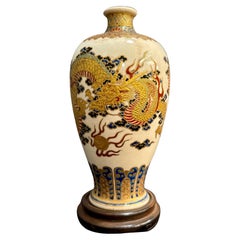
A fantastic small Japanese Satsuma vase with image of writhing dragons, Meiji Period, circa 1900, Japan. The vase of elegant baluster form, with a slightly flared foot, slender body...
Category

Early 1900s Japanese Antique Aesthetic Movement Ceramics

Materials

Ceramic, Porcelain, Pottery, Stoneware, Hardwood
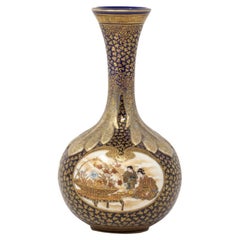
Japanese Antique Earthenware Satsuma Vase by Kinkozan Meiji Period
Located in Newark, England
FREE WORLDWIDE SHIPPING MEIJI PERIOD (1868-1912) From our Japanese Satsuma collection, we’re pleased to offer this Meiji period bottle-form Satsuma vase by Kinkozan. The vase is...
Category

Early 1900s Japanese Antique Aesthetic Movement Ceramics
Materials

Ceramic, Earthenware, Pottery

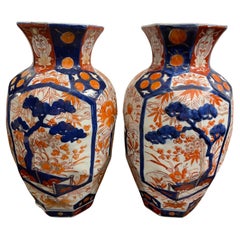
A Pair of Imari Vases, 19th Century
Located in ARMADALE, VIC
A Pair of Imari Vases, 19th Century Provenance: Private Australian Collection. Description: Each with an octagonal everted rim alternating between cobalt bands centred by two plu...
Category

19th Century Japanese Antique Aesthetic Movement Ceramics

Materials

Porcelain

A Pair of Imari Vases, 19th Century
$1,920 / set
H 11.82 in Dm 5.91 in
Previously Available Items
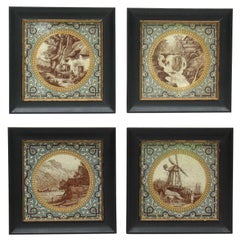
Four Aesthetic Movement Transfer Printed Minton Tiles BY L.T. SWETNAM Circa 1890
Located in Ottawa, Ontario
LOT OF FOUR AESTHETIC MOVEMENT TRANSFER PRINTED MINTON TILES FROM A LANDSCAPES SERIES ‘ TOWN AND RIVER’ BY L.T. SWETNAM Circa 1890. Detailed tondo sepia renderings of rustic sceneri...
Category

1890s English Antique Aesthetic Movement Ceramics

Materials

Ceramic

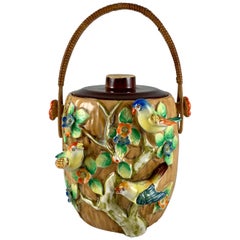
Rattan Handled Bird in Blossom Branch Japanese Pottery Biscuit Barrel, 1920s
Located in Philadelphia, PA
An unusual biscuit barrel marked in red ink – Made in Japan, circa 1920s, Pre WWII. A highly dimensional barrel showing three birds in high relief perched in a tree surrounded by ...
Category

Early 20th Century Japanese Aesthetic Movement Ceramics

Materials

Pottery

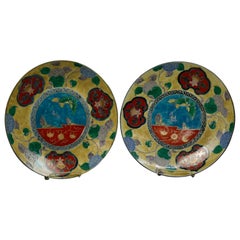
Antique Japanese Aesthetic Imari Porcelain Butterfly Charger, 19th Century, Pair
Located in Big Flats, NY
An antique pair of Japanese Aesthetic Imari chargers offer porcelain construction with hand enameled central medallion having stylized butterfly garden design with border having styl...
Category

19th Century Japanese Antique Aesthetic Movement Ceramics

Materials

Porcelain

Antique Pair of Japanese Satsuma Aesthetic Porcelain Vases, circa 1870
Located in Big Flats, NY
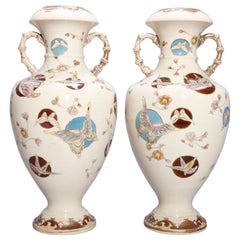
An antique pair of Japanese Satsuma Aesthetic vases offer porcelain construction in urn form with all-over detached butterfly and bamboo design, each with double bamboo form handles,...
Category

19th Century Japanese Antique Aesthetic Movement Ceramics

Materials

Porcelain

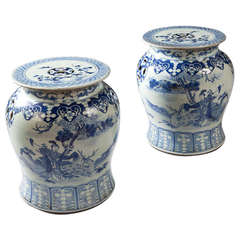
Fine Pair of 19th Century Chinese Porcelain Garden Seats
Located in London, GB
A fine pair of mid 19th century blue and white garden seats, decorated with courtesans and landscapes.
Category

19th Century Chinese Antique Aesthetic Movement Ceramics

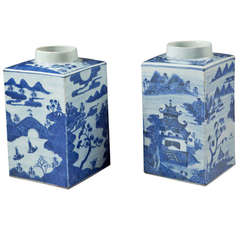
Matched Pair of Chinese Blue and White Porcelain Tea Jars
Located in London, GB
A fine pair of early 19th century blue and white square tea jars, decorated with landscapes and mountainous scenes.
Category

19th Century Chinese Antique Aesthetic Movement Ceramics

Materials

Porcelain

Aesthetic Movement ceramics for sale on 1stDibs.

Find a broad range of unique Aesthetic Movement ceramics for sale on 1stDibs. Many of these items were first offered in the 19th Century, but contemporary artisans have continued to produce works inspired by this style. If you’re looking to add vintage ceramics created in this style to your space, the works available on 1stDibs include asian art and furniture and other home furnishings, frequently crafted with ceramic, porcelain and other materials. If you’re shopping for used Aesthetic Movement ceramics made in a specific country, there are Asia, East Asia, and England pieces for sale on 1stDibs. While there are many designers and brands associated with original ceramics, popular names associated with this style include and Minton. It’s true that these talented designers have at times inspired knockoffs, but our experienced specialists have partnered with only top vetted sellers to offer authentic pieces that come with a buyer protection guarantee. Prices for ceramics differ depending upon multiple factors, including designer, materials, construction methods, condition and provenance. On 1stDibs, the price for these items starts at $595 and tops out at $750 while the average work can sell for $673.

Still Thinking About These?

All Recently Viewed