Want more images or videos?
Request additional images or videos from the seller
1 of 7
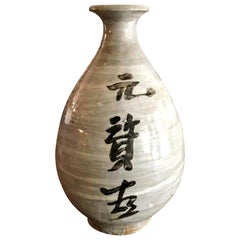
Sumida Gawa Tall Signed Koko Japanese Pottery Ceramic Glazed Vase, Early 1900s
$699List Price
About the Item
- Creator:Sumida Gawa (Maker)
- Dimensions:Height: 12 in (30.48 cm)Diameter: 5 in (12.7 cm)
- Style:Meiji (Of the Period)
- Materials and Techniques:Stoneware,Glazed
- Place of Origin:
- Period:
- Date of Manufacture:Late 1800s-Early 1900s
- Condition:Wear consistent with age and use. A very small chip to fold of robe (barely noticeable. Please see photos) else in very good vintage condition with no cracks or obvious flaws. Beautiful overall.
- Seller Location:Studio City, CA
- Reference Number:1stDibs: LU2254318077631
About the Seller
5.0
Platinum Seller
Premium sellers with a 4.7+ rating and 24-hour response times
1stDibs seller since 2016
972 sales on 1stDibs
Authenticity Guarantee
In the unlikely event there’s an issue with an item’s authenticity, contact us within 1 year for a full refund. DetailsMoney-Back Guarantee
If your item is not as described, is damaged in transit, or does not arrive, contact us within 7 days for a full refund. Details24-Hour Cancellation
You have a 24-hour grace period in which to reconsider your purchase, with no questions asked.Vetted Professional Sellers
Our world-class sellers must adhere to strict standards for service and quality, maintaining the integrity of our listings.Price-Match Guarantee
If you find that a seller listed the same item for a lower price elsewhere, we’ll match it.Trusted Global Delivery
Our best-in-class carrier network provides specialized shipping options worldwide, including custom delivery.You May Also Like
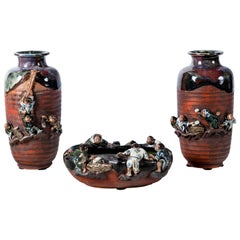
Sumida Gawa Pottery Garniture, Japan, circa 1890-1900
By Sumida Gawa
Located in Buenos Aires, Buenos Aires
Sumida Gawa pottery garniture. Japan, circa 1890-1900.
Category
Antique Early 1900s Japanese Japonisme Garniture
Materials
Ceramic
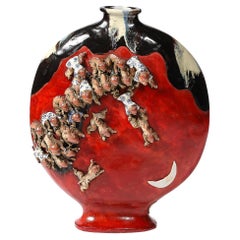
Sumida Gawa Vermillion Red Glazed Pottery Vase W/ Clustered Sculptural Primates
By Sumida Gawa
Located in New York, NY
This stunningly rendered Sumida Gawa Pottery Vase in Vermillion Red Glaze W/Clustered Sculptural Primates originates from Japan, Circa 1890. Features a vermillion red glaze with a vi...
Category
Antique 1890s Japanese Art Nouveau Vases
Materials
Ceramic
$3,475
H 14.5 in W 12 in D 5 in
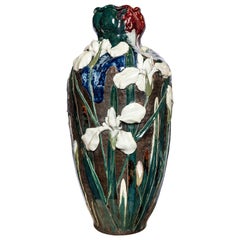
Sumida Gawa Pottery Vase, Japan, early 20th century.
Located in Buenos Aires, Buenos Aires
Sumida Gawa pottery vase, Japan, early 20th century.
Category
Early 20th Century Japanese Japonisme Vases
Materials
Ceramic
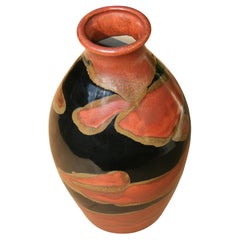
Japanese Glazed Modernist Ceramic Vase
Located in Douglas Manor, NY
1888 Japanese artist made modernist undulating glazed ceramic vase.
Makers stamp on bottom
Category
Vintage 1970s Ceramics
Materials
Ceramic
Early 1900s Pair Antiques Japanese Porcelain Vases with Flowers and Butterflies
Located in Milan, IT
Pair of vases made of polychrome porcelain depicting hand-decorated flowers and butterflies, complete with base of carved wood. Japanese manufacture, early 1900s, signed on the base....
Category
Early 20th Century Japanese Vases
Materials
Porcelain, Wood
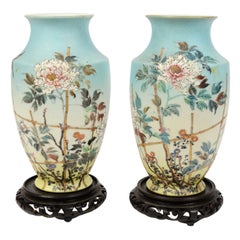
$2,740 / set
H 9.69 in Dm 3.35 in
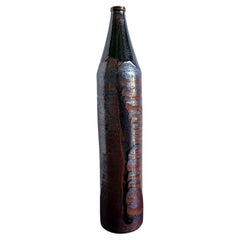
Early Tall Ceramic Vase with Unique Glaze by Brother Thomas Bezanson
By Brother Thomas Bezanson
Located in Atlanta, GA
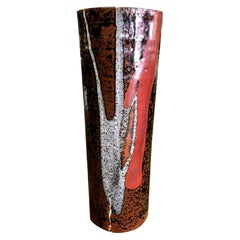
An early ceramic vase in a cylinder form by potter Brother Thomas Bezanson (1929-2007). Unusually tall at 21.75 inches, the vase strikes the viewer with its slender silouette with a tapering neck and mouth opening. What is extraordinary about this piece is the complex glaze Bezanson applied on the surface. Three vertical black glaze stripes are featured around the surface. On one side, stacks of horizontal finger-like marks were placed on a brown and silvery iridescent background, characterized as "Honan tenmoku" glaze. The other side, the glaze took on a brilliant silver oxidation in a mottled effect. The top conical portion is largely covered with a thick and oily "black olive" glaze, which is dripping down in high saturation. Circles surrounding the rim was less iron-saturated, forming a more orderly visual border. In close range, the different glazes across the vase displays subtle changes of shimmering, iridescent and textured effects and are visually mesmerizing.
Bezanson's ceramic and glaze techniques was rooted in Asian ceramic tradition but utterly modern looking.
The vase was marked on the base "Benedictine Monks Weston Vermont", "^60 BRENER" and Bezanson's decipher as shown. The decipher indicated that this vase was made in Weston VT circa 1965-1970, same period of another vase with similar glaze effect in our gallery (shown in the last photo), showcasing the highly sophisticated techniques Bezanson mastered and used fluidly in his ceramic work.
Brother Thomas Bezanson (1929-2007) was a Canadian born artist and Benedictine monk primarily known for his porcelain pottery and mastery of complex glazes. Strongly influenced by Asian pottery, often adapting traditional Chinese and Japanese pottery methods and materials to his work. He is renowned for his original glaze recipes and perfect forms and always sought to create something new and beautiful. His exacting standards made for the shattering of over 80% of each firing. One "rescued" piece however is now in the collection of the Museum of Fine Arts, Boston. His estate is represented by Pucker Gallery...
Category
Mid-20th Century American Modern Vases
Materials
Ceramic
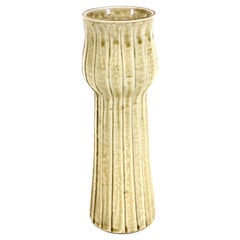
Japanese Mid-Century Glazed Ceramic Lotus Vase
Located in Astoria, NY
Japanese Mid-Century Modern glazed ceramic vase in lotus shape, stamped with mark on the bottom. 9.5" height x 3.25" diameter.
Category
Mid-20th Century Japanese Mid-Century Modern Vases
Materials
Pottery
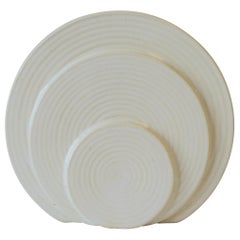
Japanese Pottery Vase
Located in New York, NY
A very beautiful white to off-white round Japanese pottery vase, late Modern/Art Deco period, circa early-20th century Japan, 1921-1941. Vase has a ...
Category
Early 20th Century Japanese Art Deco Vases
Materials
Ceramic, Pottery
Large Japanese Satsuma Ceramic Vase Kinkozan
By Kinkozan
Located in Atlanta, GA
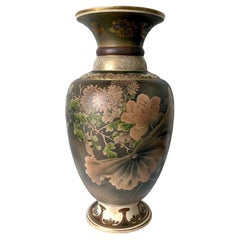
A large Japanese ceramic vase from the end of Meiji period circa 1890-1910s by Kinkozan (1645-1927). One of the largest studio manufacturers of the export ceramics at the time based in Kyoto. In the typical style of satsuma made at the turn of 20th century, the vase is elaborately decorated with a rather unusual kinran-de (gold paint) and green enamel highlight on a mottled brown background. The painterly decoration depicts a large seasonal floral arrangement in a circular fashion. Besides the obviously superb craftsmanship, what sets this particular vase apart from many lower quality and mass-produced pieces is its tone-on-tone color pallet that is visually somber and the small and sensitive details that heralds the change of the seasons. When the viewer goes beyond the first casual glimpse of the blossom and foliage, one would notice that on the edges of certain leaves as well as along the stalks, there accumulates a very thin layer of the white dust that represents the frost. The flower in bloom are chrysanthemums. Despite of being splendid, they are the messengers of the autumn. The large lotus leaf was subtly rendered in a bended and slightly withered manner, just past its prime. Although the lotus is still in bloom, the prominent seed pod indicates it may be the last for the season. The sentimental capture of the change of the seasons is not unusual in Japanese art. This vase poetically represents such a subtle transition from summer to fall, perhaps depicting the very first frost.
The neck of the vase is also slightly unusual with two rolled rings...
Category
Early 20th Century Japanese Meiji Ceramics
Materials
Ceramic
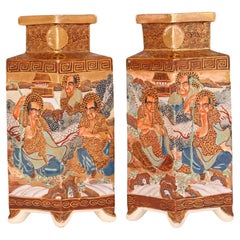
Satsuma Japanese Meiji Pair Diamond Shaped Pottery Vases
By Satsuma
Located in Bishop
s Stortford, Hertfordshire
A good and unusual pair antique Japanese Satsuma Meiji diamond shaped pottery vases decorated with monk figures with a scrolling dragon dating from the 1...
Category
Antique 19th Century Japanese Meiji Ceramics
Materials
Pottery
$624
Free Shipping
H 5.12 in W 2.76 in D 1.97 in
More From This Seller
View AllTatsuzo Shimaoka Japanese Glazed Rope Inlay Pottery Ceramic Vase with Signed Box
By Tatsuzo Shimaoka 2
Located in Studio City, CA
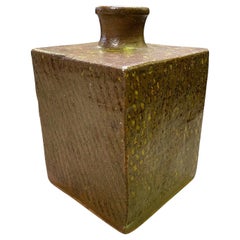
A wonderfully designed and gorgeously colored coveted square Mingei bottle vase by Japanese National Treasure pottery master Tatsuzo Shimaoka. This vase is an early work of Shimaoka's before he started to use his impressed "Ta" signature. The rich colors are truly amazing and shift in the light.
The vase comes with a Shimaoka signed and sealed box.
The work is exquisite in every way and has a wonderful feel and heft to it.
Shimaoka, who started as an apprentice to famed Japanese potter Shoji Hamada in 1946 before opening his own studio, has exhibited worldwide including North America, Asia, and Europe. In 1996 he was bestowed the title of Japanese Living Treasure...
Category
20th Century Japanese Showa Ceramics
Materials
Earthenware
Japanese Large Heavy Banko Ware Ceramic Pottery Stoneware Vase, 19th Century
Located in Studio City, CA
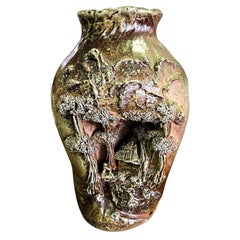
A fantastic, wonderfully glaze stoneware Banko ware vase with beautifully detailed craftsmanship.
Banko ware pottery is thought to have originate...
Category
Antique 19th Century Japanese Meiji Ceramics
Materials
Stoneware
Korean Buncheong Joseon Dynasty Glazed Pottery Ceramic Calligraphy Vase
Located in Studio City, CA
A beautifully glazed and colored, hand-decorated Korean Buncheong vase. Joseon Dynasty (1392-1910). Very nice patina.
We are listing it as 19th cent...
Category
Antique 19th Century Korean Ceramics
Materials
Earthenware
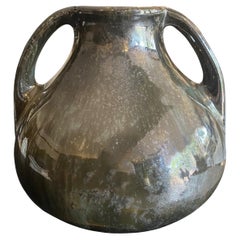
Fulper Pottery Signed Mirror Black Glazed Two Handle Vase , Early 1900s
By Fulper Pottery
Located in Studio City, CA
A gorgeously glazed, classically designed two handle Fulper Pottery vase featuring a mirror black/dark charcoal glaze that radiates in the light.
Signed on the base with Fulper lo...
Category
Early 20th Century American Arts and Crafts Vases
Materials
Pottery
Japanese Midcentury Large Glazed Pottery Vase in the Manner of Shoji Hamada
Located in Studio City, CA
A really large and wonderful piece. Clearly, the maker was a fan of Shoji Hamada's work. Could be a Mashiko Ware pottery vase.
Signed on the base along with a sticker on the insi...
Category
Vintage 1960s Japanese Showa Ceramics
Materials
Earthenware
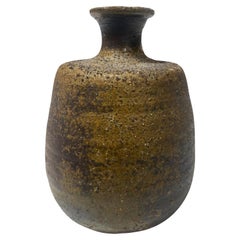
Kaneshige Toyo National Treasure Signed Japanese Bizen Pottery Sake Bottle Vase
Located in Studio City, CA
A beautiful, perfectly shaped and balanced antique Bizen ware shibui sake bottle (tokkuri) vase by renowned Japanese master potter/artist Kaneshige Toyo (1896-1967) featuring a unique natural, wonderfully textured organic forming ash glaze. Kaneshige is universally considered to be the founder of modern Bizen pottery.
In 1956, Kaneshige was certified as a Living National Treasure (Important Intangible Cultural Heritage) for his work in Bizen Ware pottery/ceramics. Bizen Ware is a type of Japanese pottery traditionally from the Bizen province, presently a part of the Okayama prefecture. It is considered one of the Six Ancient Japanese Kilns (along with Echizen ware, Seto ware, Shigaraki ware, Tamba ware, and Tokoname ware).
The piece is signed/ sealed on the base with one of Kaneshige's traditional incised marks.
A rather striking and engaging work. One of the best Kaneshige works we have come across. Scarce and hard to find in such an excellent condition. Would be a fantastic addition to any Japanese/Asian pottery or Bizen Ware collection or eye-catching stand-alone work in about any setting.
Kaneshige's work can be found in numerous prominent collections and museums including:
Aichi Prefectural Ceramic Museum, Seto, Japan
Brooklyn Museum, NY
Hagi Uragami Museum, Yamaguchi, Japan
Honolulu Art Museum, HI
Ibaraki Ceramic Art Museum, Kasama, Japan
Indiana Art...
Category
Mid-20th Century Japanese Showa Ceramics
Materials
Stoneware
Still Thinking About These?
All Recently ViewedMore Ways To Browse
Antique Japanese Stoneware
Tall Art Pottery
Japanese Vase Tall
Sumida Gawa
17th Century Blue And White China
Rose Medallion
Asian Vase Pair
Canton China
Kangxi Porcelain
Blue And White Imari Porcelain
19th Century Chinese Famille Rose
Chinese Ming Dynasty
Japanese Chargers
Kangxi Period
18th Century Chinese Qianlong Porcelain
Chinese Kangxi Porcelain
Japanese Arita Blue And White
Blue Japanese Ceramics