1 of 6
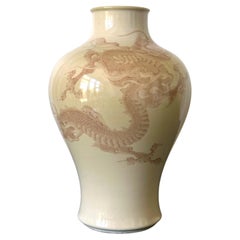
Unusual Early 20th Century Makuzu Kozan Vase
$2,528.39List Price
About the Item
- Creator:Makuzu Kozan (Manufacturer)
- Dimensions:Height: 12.6 in (32 cm)Width: 7.09 in (18 cm)Depth: 7.09 in (18 cm)
- Style:Meiji (In the Style Of)
- Materials and Techniques:Porcelain,Glazed
- Place of Origin:
- Period:
- Date of Manufacture:1920
- Condition:It is very unusual to have the original box with the vase.
- Seller Location:London, GB
- Reference Number:1stDibs: LU2961312103953
Authenticity Guarantee
In the unlikely event there’s an issue with an item’s authenticity, contact us within 1 year for a full refund. DetailsMoney-Back Guarantee
If your item is not as described, is damaged in transit, or does not arrive, contact us within 7 days for a full refund. Details24-Hour Cancellation
You have a 24-hour grace period in which to reconsider your purchase, with no questions asked.Vetted Professional Sellers
Our world-class sellers must adhere to strict standards for service and quality, maintaining the integrity of our listings.Price-Match Guarantee
If you find that a seller listed the same item for a lower price elsewhere, we’ll match it.Trusted Global Delivery
Our best-in-class carrier network provides specialized shipping options worldwide, including custom delivery.You May Also Like
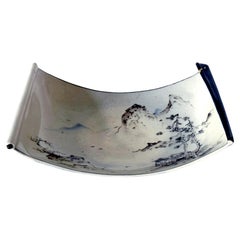
Rare Japanese Porcelain Painted Footed Dish Makuzu Kozan
By Makuzu Kozan
Located in Atlanta, GA
A rare footed dish in the form of an open scroll painting with literati landscape from the studio of Japanese Potter Makuzu Kozan. Also known as Miyagawa Kozan (1842–1916), Makuzu wa...
Category
Antique Early 1900s Japanese Meiji Ceramics
Materials
Porcelain
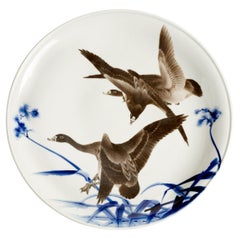
Rare Large Japanese Porcelain Presentation Plate Makuzu Kozan
By Makuzu Kozan
Located in Atlanta, GA
A large presentation plate with striking pictorial design from the studio of Japanese Potter Makuzu Kozan. Also known as Miyagawa Kozan (1842–1916),...
Category
Early 20th Century Japanese Meiji Ceramics
Materials
Porcelain
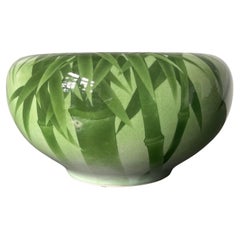
Japanese Ceramic Centerpiece Bowl Makuzu Kozan Meiji Period
By Makuzu Kozan
Located in Atlanta, GA
A beautiful ceramic vessel in the form of Bo, the so-called monk's alms bowl from the studio of Japanese Potter Makuzu Kozan, also known as Miyagawa Kozan (1842–1916), one of the most established and collected ceramist from Meiji Period. Born as Miyagawa Toranosuke, Kozan established his pottery studio in Yokohama circa 1870s and later became one of the appointed artists to the Japanese Imperial household. His work was exhibited in many international fairs that the Meiji government participated at the turn of the century and won many grand prizes.
Of a relatively large size, this piece was made as a decorative center piece for display. It was brilliantly decorated with underglaze paint of a green-on-green bamboo motif, using the novel technique developed by Kozan called Fuki-e (the blow painting). As a result, the bamboos appear took on a three-dimensional quality as if appearing in a mist. Known as one of the most creative ceramists, circa 1887, Kozan started experimenting with new chemical colors from the West in the format of his porcelain glaze. New colors allowed him to create underglaze design that appeared bright, smooth and glossy. To create design that is realistic and dimensional, more common in the western paintings, he was inspired by the native Japanese ink painting technique developed around 1900 by Yokoyama Taikan...
Category
Antique Early 1900s Japanese Japonisme Ceramics
Materials
Ceramic
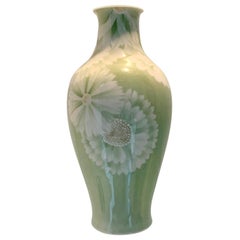
Japanese Porcelain Vase Meiji Period Makuzu Kozan
By Makuzu Kozan
Located in Atlanta, GA
A finely decorated and glazed Japanese porcelain vase by Makuzu Kozan (1842-1916) circa 1900s Meiji Period. The vase is of a classic bottle form with baluster body and short neck. It was decorated with underglaze white magnolia blossom on a pleasant celadon background. The stamens of the flower were artistically rendered in a low relief, giving the design a realistic appeal with the dimension.
Miyagawa Kozan...
Category
Early 20th Century Japanese Meiji Ceramics
Materials
Porcelain
Fine Japanese Ceramic Vase Makuzu Kozan Meiji Period
By Makuzu Kozan
Located in Atlanta, GA
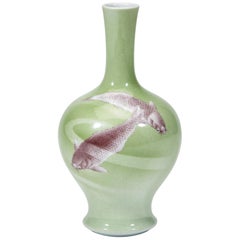
A Japanese long neck porcelain vase circa 1900-1910s by the studio of Miyagawa Kozan (1842–1916), one of the most established and collected Japanese ceramist from the end of Meiji Period. Commonly known as Makuzu Kozan, which also appears as the signature on his work, his originally birth name was Miyagawa Toranosuke. He was the appointed artist to the Japanese Imperial household and his work was exhibited in many international fairs that the Meiji government participated at the turn of the century.
This vase features an elegant Classic form with a slender neck and slightly flared mouth above a baluster body. It was finely painted with two swimming carps in a copper red underglaze among green ribbons like waves. The background display a brilliant verdant green overall, Around the fish a poetic hazy effect was emphasized for a visual complexity by Fuki-e (the blow painting), an invention in Kozan's studio. The new technical development of chemical colors from the west was embraced circa 1900s in Kozan studio. This empowered the more creative experiments with not only colors, but also concept of dimension, which led Makuzu Kozan's work to become a bridge between East and West aesthetics. This is particularly evident in this vase with the Masterly details of the brush strokes, the expertly employment of gradient of color, and a very realistic and detailed rendering of the fish and their vivid motions.
For two similar examples of Kozan's work with similar carps decoration, see Page 148-149 of the book: Sekai ni Aisa Reta ya Kimono Miyagawa Kozan Makuzu...
Category
Early 20th Century Japanese Meiji Ceramics
Materials
Ceramic
Large Japanese Ceramic Vase by Makuzu Kozan Meiji Period
By Makuzu Kozan
Located in Atlanta, GA
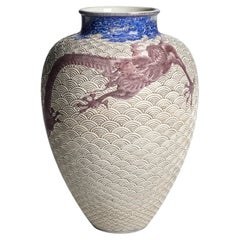
A large Japanese ceramic vase by the celebrated Meiji imperial potter Makuzu Kozan (1842-1916) circa 1880-1890s. Dated to his underglaze phase post 1887 after he successfully mastered the new colors available from the west and used them to the best advantage in his work deeply rooted in Japanese aesthetics. The vase has an impressive size and was potted in the classic baluster form with an elegant proportion. The surface is decorated using a combination of techniques of low relief sculpturing...
Category
Antique Late 19th Century Japanese Meiji Ceramics
Materials
Ceramic
Japanese Porcelain Vase Makuzu Kozan Meiji Period
By Makuzu Kozan
Located in Atlanta, GA
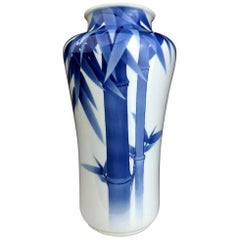
A striking blue and white vase from the studio of Japanese Potter Makuzu Kozan, also known as Miyagawa Kozan (1842–1916), one of the most established and collected ceramist from Meiji Period. Born as Miyagawa Toranosuke, Kozan established his pottery studio in Yokohama circa 1870s and later became one of the appointed artists to the Japanese Imperial household. His work was exhibited in many international fairs that the Meiji government participated at the turn of the century and won many grand prizes.
Of a relatively large size, this vase is decorated with underglaze cobalt blue using the novel technique developed by Kozan called Fuki-e (the blow painting). As a result, the bamboos appear took on a three-dimensional quality as if appearing in a mist. Known as one of the most creative ceramists, circa 1887, Kozan started experimenting with new chemical colors from the West in the format of his porcelain glaze. New colors allowed him to create underglaze design that appeared bright, smooth and glossy. He even invented his own receipt of cobalt blue to achieve a much brighter yet softer shade, as evident on this vase. To create landscape that is realistic and dimensional, more common in the western paintings, he was inspired by the native Japanese ink painting technique developed around 1900 by Yokoyama Taikan...
Category
Antique Early 1900s Japanese Japonisme Ceramics
Materials
Ceramic
Early Porcelain Underglaze Dragon Ewer by Makuzu Kozan Meiji Period
By Makuzu Kozan
Located in Atlanta, GA
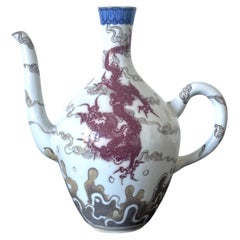
A porcelain ewer with fine underglaze iron red, brown and blue decoration made by the legendary Japanese imperial potter Makuzu Kozan (1842-1916), this relatively rare piece is dated to circa Meiji 23rd to 26th year (1890-1893) based on the mark used on the base. This is the starting period when the artists departed from his high-relief and gold gilt period and started focusing on making porcelain pieces with underglaze paint and experimented new colors. The ewer form is also relatively rare in the artist's survived repertoire compared to other forms.
The piece takes its shape from the prototype Chinese...
Category
Antique 1890s Japanese Meiji Ceramics
Materials
Ceramic
Large Japanese Porcelain Dragon Vase by Makuzu Kozan Meiji Period
By Makuzu Kozan
Located in Atlanta, GA
Made by the studio of the legendary Japanese imperial potter Makuzu Kozan (1842-1916), this is a large porcelain vase glazed in a soft yellow color with a subtle gradient, on top of ...
Category
Early 20th Century Japanese Meiji Ceramics
Materials
Ceramic
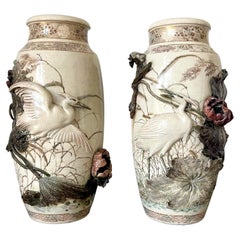
Rare Pair of Early Period Makuzu Kozan Takauki High-Relief Vases
By Makuzu Kozan
Located in Atlanta, GA
A stunning pair of ceramic vases with gilt, paint and high-relief decoration by imperial artist Makuzu Kozan (1842-1916, also known as Miyagawa Kozan) circa 1876-81 (late Meiji period). These vases belong to early period (1876-1881) of Kozan's repertoire, during which time the high relief sculpturing (known as Takauki ware) was used as a distinguished technique on top of the traditional gilt and paint ornaments of satsuma ware. Due to the relatively limited production and the fragile nature of these wares, not a large quantity of the examples remained in the first place, not mentioning a fine matching signed pair in such impressive sizes.
Not only a rarity, this pair of vases is also superb in workmanship, thus the fine example of the work from that short and unique period of the artist's career before he switched to the underglaze period. In a conceptually mirrored fashion, the surface is richly decorated with flying cranes among large lotus leaves and flower, like an idyllic aqua scenery of pure poetry on a circular scroll. The high-relief appliques were rendered and composed in realistic fashion but with a dramatic touch. They are literally about to break the surface free, alive and in motion. The dark colors of the glaze were used to set a moody tone. The approach to create this type of ornamentations is more akin to sculpturing an ink painting in three-dimension than ceramic making. It is not hard to imagine the demand of both the artistry and the technique.
Both vases were signed as "Makuzu Kozan Kiln" and each further with another name and seal, which are most likely the individual artist involved in the making process. Similar signatures can be seen in the reference book below.
For similarly Takauki vases, see Miyagawa Kozan Makuzu...
Category
Antique 1870s Japanese Japonisme Ceramics
Materials
Ceramic
Still Thinking About These?
All Recently ViewedMore Ways To Browse
Antique China Ware
Blue Antique China
Japanese Meiji Art
Japanese Artists
China Blue Porcelain
Antique Chinese Blue And White Porcelain
Chinese Porcelain Hand Painted
Chinese Blue And White Ceramics
Japan Hand Painted Porcelain
Japanese Imari
Century Furniture Ming
Meiji Period Furniture
Vintage Asian Ceramics
Famille Porcelain
Ming Dynasty
Japanese Porcelain Imari
Japanese Blue And White Porcelain
Japanese Gilt