Want more images or videos?
Request additional images or videos from the seller
1 of 17
Antique Japanese Lacquered Incense Box Kobako with MOP Inlays
Price:$2,400
$3,000List Price
About the Item
- Dimensions:Height: 1.6 in (4.07 cm)Width: 2.8 in (7.12 cm)Depth: 3.5 in (8.89 cm)
- Style:Japonisme (Of the Period)
- Materials and Techniques:
- Place of Origin:
- Period:
- Date of Manufacture:18th Century
- Condition:Wear consistent with age and use. Good antique condition with aged patina throughout, mellow and beautiful. There are overall fine scratches, small nicks, minute losses and metal oxidation as expected. Heavy rubbing and noticeable bumps on the base as shown.
- Seller Location:Atlanta, GA
- Reference Number:1stDibs: LU945025844052
About the Seller
4.9
Platinum Seller
Premium sellers with a 4.7+ rating and 24-hour response times
Established in 2006
1stDibs seller since 2010
583 sales on 1stDibs
Authenticity Guarantee
In the unlikely event there’s an issue with an item’s authenticity, contact us within 1 year for a full refund. DetailsMoney-Back Guarantee
If your item is not as described, is damaged in transit, or does not arrive, contact us within 7 days for a full refund. Details24-Hour Cancellation
You have a 24-hour grace period in which to reconsider your purchase, with no questions asked.Vetted Professional Sellers
Our world-class sellers must adhere to strict standards for service and quality, maintaining the integrity of our listings.Price-Match Guarantee
If you find that a seller listed the same item for a lower price elsewhere, we’ll match it.Trusted Global Delivery
Our best-in-class carrier network provides specialized shipping options worldwide, including custom delivery.You May Also Like
Japanese Lacquered Furoshiki Kobako
Box
Located in PARIS, FR
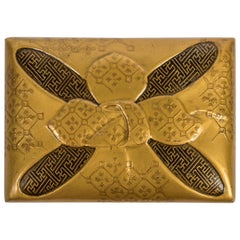
Rectangular and flat lacquer Kobako (small box) representing a furoshiki knot seen from above. Fundame background, furoshiki in takamaki-e with floral pattern, inside the folds of the fabric with black and gold sayagata pattern with togidashi maki-e technique. The saya (or sayagata) pattern is composed of Chinese swastikas...
Category
Antique Late 19th Century Japanese Lacquer
Materials
Lacquer
Japanese Tagasode (Whose Sleeves?) Lacquer Incense Box, Kobako, Meiji Period
Located in Austin, TX
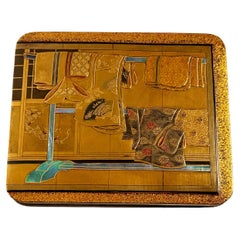
A fine and unusual Japanese lacquer box for incense accessories, kobako, featuring a tagasode (whose sleeves?) design, Meiji Period, circa 1900, Japan.
The exquisite box of simple rectangular shape worked in maki-e lacquer, taka-maki-e, and raden, all against a lush ground of gold nashiji. Fitted with silver rims.
The main decorative element of the box depicts a six panel folding screen, byobu, showing an interior scene with kimono strewn over a rack, a motif known as tagasode (whose sleeves), all in raised taka-maki-e lacquer and inlaid raden.
The screen depicts an intimate room with tatami mats on the floor and sliding shoji doors in the background. The foreground depicts a large clothing...
Category
Antique Early 1900s Japanese Meiji Lacquer
Materials
Silver
$7,500
H 1 in W 4 in D 3.25 in
Japanese Lacquer Hokai Box, 19th Century
Located in Pasadena, CA
This is a good example of a traditional Japanese Hokai shell storage box for the Kai-awase game. This box is well-detailed in chased brass appliques and makie. The box is in overall ...
Category
Antique Late 19th Century Japanese Japonisme Lacquer
Materials
Wood, Lacquer
Small Japanese Lacquer Duck Incense Box, Kogo, Meiji Period, Late 19th Century
Located in Austin, TX
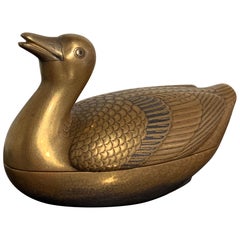
An exquisite Japanese Meiji Period small lacquer incense box, kogo, in the form of a duck or goose, late 19th century, Japan.
The delicate lacquer box, known as a kogo in Japanese, ...
Category
Antique Late 19th Century Japanese Meiji Lacquer
Materials
Lacquer
$2,900
H 1.5 in W 2.88 in D 1 in
Antique Japanese Lacquer Stacking Food Box
Jubako
Located in Hudson, NY
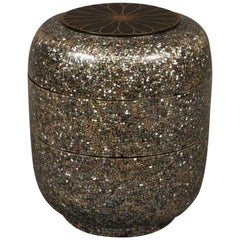
With all-over mother of pearl inlay and mon design of chrysanthemum in gold and black lacquer on top. The chrysanthemum is a national symbol of Japan and the Imperial family.
Category
Antique 19th Century Japanese Lacquer
Materials
Gold
Japanese Lacquered Tebako
Box
Located in PARIS, FR
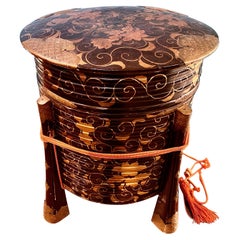
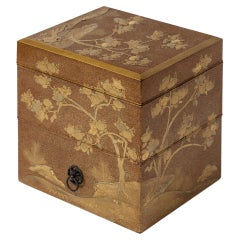
Tebako box with three compartments in golden and nashi-ji lacquer, decorated with golden, red, and kirigane lacquer, golden persimmon tree leaves, among rocks. The compartments are of increasing size from the top. The decoration is in continuity.
Persimmon has been cultivated in southern China for more than 2500 years and is believed to have been introduced to Japan in the 8th century. The veneer is a tree with very hard wood, similar to ebony. According to a legend, one specimen survived the atomic bombing of Nagasaki on August 9, 1945, close to the epicenter. It is therefore in Japan a symbol of strength and longevity. It is also the national fruit of the country. It is eaten as a traditional dish during New Year's Day celebrations.
Tebako literally means "portable box...
Category
Antique 1860s Japanese Lacquer
Materials
Lacquer
Japanese Meiji Period Antique Lacquer Box with Gold Maki-e Decoration
Located in New York, NY
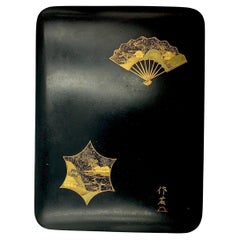
A fine antique Japanese Meji Period lacquer box decorated with a fan and a stylized star shaped window in the maki-e technique. The fan at the top right corner, fully opened depictin...
Category
Antique 19th Century Japanese Meiji Lacquer
Materials
Lacquer
$1,700
H 4.5 in W 3.25 in D 1.88 in
Japanese Lacquer Incense Box, Kogo, Momoyama or Edo Period, 16th/17th Century
Located in Austin, TX
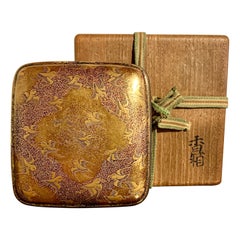
A wonderful Japanese lacquer incense box, kogo, with a design of plovers in flight, late Momoyama or early Edo Period, circa 1600, Japan.
The small box, called a kogo, was used to s...
Category
Antique Early 17th Century Japanese Edo Lacquer
Materials
Gold, Pewter
$6,000
H 2.75 in W 3.75 in D 3.75 in
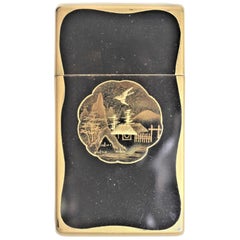
Antique Japanese Lacquered Card Box with Ornate Hand Painted Gilt Decoration
Located in Hamilton, Ontario
This antique card box is unsigned or initialed, so the specific artist is unknown, but is believed to have been made in Japan in circa 1900 in the per...
Category
Early 20th Century Japanese Meiji Lacquer
Materials
Wood
$2,450
H 3.5 in W 2.13 in D 0.5 in
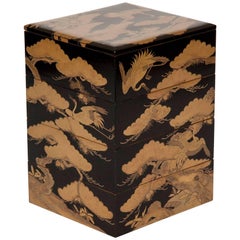
Japanese Black Lacquer Jubako Box with Stork Motif
Located in Stamford, CT
A four-tier Japanese Meiji period black lacquer Jubako box with stork and fir tree decoration. Box in four sections with lid.
Category
Antique Late 19th Century Japanese Edo Lacquer
Materials
Lacquer
More From This Seller
View AllAntique Japanese Lacquered Incense Box Kobako Ex-Christie
s
Located in Atlanta, GA
An old Japanese lacquered small box likely used to contain incense powder called Kobako, circa Momoyama to early Edo period (16-17th century). The rectangular form box with a fitted ...
Category
Antique 17th Century Japanese Japonisme Lacquer
Materials
Lead
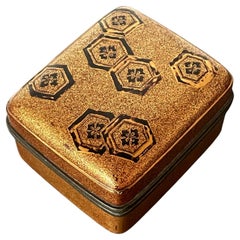
Antique Japanese Lacquered Incense Box Kobako in Kodaiji Style
Located in Atlanta, GA
An antique lacquered small box that was likely used to contain incense powder (it is called Kobako in Japanese), circa early to mid-19th century of the Edo...
Category
Antique 19th Century Japanese Edo Lacquer
Materials
Wood, Lacquer
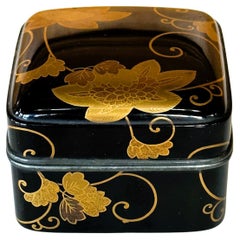
Unusual Japanese Lacquer Inkstone Box with MOP Inlays
Located in Atlanta, GA
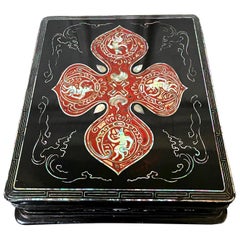
A Japanese black lacquer box with mother of pearl inlays circa early 20th century, end of Meiji period. It was likely to be used to store inkstone or other scholarly items. The piece displays several interesting characteristics that appear puzzling initially. First, the form is not typical Japanese, but more Chinese and Korean, with its scalloped base. Second, the decoration of MOP inlays also suggests a Korean and Chinese affiliation, especially with the linear borders and the scrolling cloud patters on the sides of the box. These two observations suggest that the box may be from Ryukyu Island instead of Japanese mainland. Third, strikingly in the center of the cover, a bold quarterly floral pattern outlined with MOP was filled with a striking mottled red lacquer using tsugaru nuri...
Category
Early 20th Century Japanese Japonisme Lacquer
Materials
Wood, Lacquer
Antique Japanese Lacquer and Inlay Box from Ryukyu Island
Located in Atlanta, GA
A lacquer presentation box with mother-of-pearl inlays from Japanese Ryukyu Islands circa 17-18th century. The lidded box in rectangular form with rounded corner is a classic example...
Category
Antique 18th Century Japanese Japonisme Lacquer
Materials
Mother-of-Pearl, Lacquer

Vintage Korean Lacquer Box with Inner Tray and MOP inlays
Located in Atlanta, GA
A lovely vintage Korean lacquer box in bright red and decorated with mother-of-pearl inlays circa 1970-80s. The square form box features an auspicio...
Category
Late 20th Century Korean Arts and Crafts Lacquer
Materials
Mother-of-Pearl, Lacquer
Fine Japanese Lacquered Inro with Inlays by Kajikawa
Located in Atlanta, GA
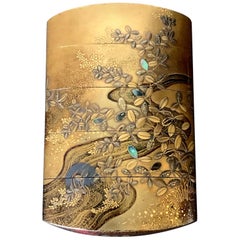
A Japanese four-case lacquer inro by a member of Kajikawa family circa 19th century (late Edo to early Meiji period). It depicts a nocturnal scenery of a meandering stream surrounded by bush clovers, where a full moon is reflected on the water. It was masterfully decorated in gold and silver maki-e using a combination of techniques including takamakie, togidashi and kirigane as well as aogai (abalone shell) inlays. The stream was set between the slightly elevated banks, adding to this piece a already strong three-dimensional composition. The interior was decorated in gold nashiji. It was signed on the bottom "Kajikawa Zou" (made by Kajikawa and a pot seal centered with "Ei" in Kanji. In one of the compartment, there is a katakana mark, appears to be a name, possibly the owner.
Kajikawa clan was one of the most famous lacquer artisanal family established in the 17th century. Many well known members over the generations produced lacquer art in a wide range of formats, but two third were signed only with the family name such as this one. It is therefore not possible to pinpoint the exact author of this piece.
Provenance: This inro was purchased as lot 349 in Christie's New York sale Japanese...
Category
Antique 19th Century Japanese Japonisme Lacquer
Materials
Shell, Wood, Lacquer
Still Thinking About These?
All Recently ViewedMore Ways To Browse
Incense Box
Pearl Of Mother Box China
Japanese Lacquer Pearl
Japanese Wood Inlay
18th Century Japanned Box
Japanese Pearl Inlay
Japanese Incense Box
Antique Japanese Lacquer Kobako
Antique Cinnabar
Cinnabar Lacquer
Cinnabar Furniture
Japanese Lacquer And Mother Of Pearl
Japanese Red Lacquered
Chinese Export Black Lacquer Gilt
Japanese Mother Of Pearl Art
Red Cinnabar
Chinese Cinnabar
Vintage Lacquer