1 of 8
Cinnabar Coin Box
$1,650List Price
About the Item
- Dimensions:Height: 4 in (10.16 cm)Width: 17 in (43.18 cm)Depth: 10.5 in (26.67 cm)
- Materials and Techniques:
- Place of Origin:
- Period:
- Date of Manufacture:1920s
- Condition:Good.
- Seller Location:San Francisco, CA
- Reference Number:Seller: JS211stDibs: U12011279031753
Authenticity Guarantee
In the unlikely event there’s an issue with an item’s authenticity, contact us within 1 year for a full refund. DetailsMoney-Back Guarantee
If your item is not as described, is damaged in transit, or does not arrive, contact us within 7 days for a full refund. Details24-Hour Cancellation
You have a 24-hour grace period in which to reconsider your purchase, with no questions asked.Vetted Professional Sellers
Our world-class sellers must adhere to strict standards for service and quality, maintaining the integrity of our listings.Price-Match Guarantee
If you find that a seller listed the same item for a lower price elsewhere, we’ll match it.Trusted Global Delivery
Our best-in-class carrier network provides specialized shipping options worldwide, including custom delivery.You May Also Like
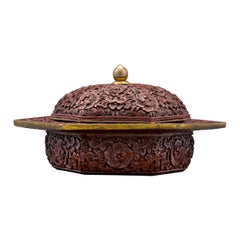
Chinese Cinnabar Lacquer Cuspidor
Located in New Orleans, LA
This intriguing Chinese zhadou is intricately carved of fine cinnabar lacquer. A work of exceptional artistry, this covered bowl is adorned with an intricately carved floral motif on all surfaces, including the cover and the wide rim. Also known as a cuspidor or spittoon, this rare container would have been used by members of the imperial family and scholar- officials at the court. Carved during the Kangxi period (1662-1722), this charming piece exhibits the high detail and charm associated with items from that period, making it a true treasure,
Early 18th century (Kangxi dynasty)
Measures: 6 ¼” wide x 3 ¼” high
Cinnabar has been revered for its color all over the world. It has been found in the royal burial chambers of the Mayas, in the rituals of India, and in the ruins of ancient Greece and Rome. In China, cinnabar and gold were the two most important elements in alchemy. Mined since the Neolithic Age, cinnabar is the ore of mercury, and as such, it can be incredibly toxic, especially when mining. In fact, during the Roman Empire, miners at Spain’s Almadén mine in Spain were frequently exposed to mercury fumes, and the subsequent, often fatal, sickness was considered an occupational hazard.
The most popular known use of cinnabar is in Chinese carved lacquer-ware, a technique that is believed to have originated in the Song Dynasty, in which cinnabar is ground to a powder and added to clear lacquer. As with mining, there was inherent danger of mercury poisoning for those who carved the lacquer, as mercury was also released into the air when artisans ground the pigments. Most antique cinnabar...
Category
Antique 18th Century Chinese Other Lacquer
Materials
Lacquer
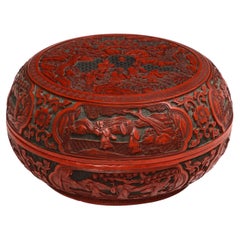
18th/19th Century Chinese Cinnabar Circular Box with Multiple Cartouches
Located in New York, NY
An 18th/19th Century Chinese cinnabar circular box with multiple cartouches of Families. This is a marvelous piece with very fine details on the main top panel of the box. The top pa...
Category
Antique 1790s Chinese Qing Lacquer
Materials
Lacquer
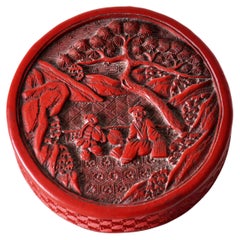
Antique Chinese Cinnabar Box
Located in Miami, FL
A fine antique Chinese red cinnabar lacquer lidded round box carved with a scene with a young boy and a seated elderly bearded sage within a rocky landscape with trees. The "dragon's...
Category
Antique 19th Century Chinese Qing Lacquer
Materials
Lacquer
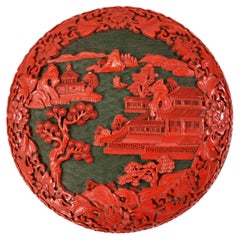
Large Domed Chinese Cinnabar Box
Located in Miami, FL
A large vintage Chinese red cinnabar box with deep relief carved lid depicting peonies, trees and a landscape with a palace. The round box has...
Category
Vintage 1930s Chinese Chinese Export Lacquer
Materials
Brass
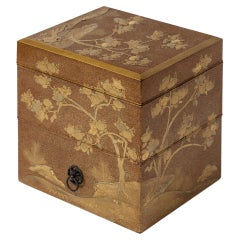
Japanese Lacquered Tebako
Box
Located in PARIS, FR
Tebako box with three compartments in golden and nashi-ji lacquer, decorated with golden, red, and kirigane lacquer, golden persimmon tree leaves, among rocks. The compartments are of increasing size from the top. The decoration is in continuity.
Persimmon has been cultivated in southern China for more than 2500 years and is believed to have been introduced to Japan in the 8th century. The veneer is a tree with very hard wood, similar to ebony. According to a legend, one specimen survived the atomic bombing of Nagasaki on August 9, 1945, close to the epicenter. It is therefore in Japan a symbol of strength and longevity. It is also the national fruit of the country. It is eaten as a traditional dish during New Year's Day celebrations.
Tebako literally means "portable box...
Category
Antique 1860s Japanese Lacquer
Materials
Lacquer
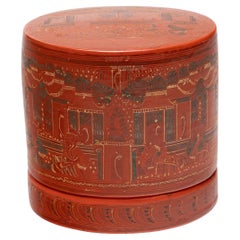
Burmese Yun Lacquer Betel Box
Located in Chicago, IL
Intricately decorated with red and black lacquer, this petite Burmese betel box (kun-it) is a lovely example of a traditional craft. A blend of betel leaves, areca nuts, slaked lime,...
Category
20th Century Burmese Folk Art Lacquer
Materials
Bamboo
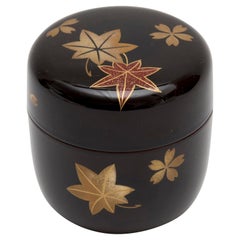
Japanese Lacquered Natsume
Tea Box
Located in PARIS, FR
Natsume in dark red lacquer, decorated with autumn leaves and cherry blossoms in hiramaki-e and nashiji. Interior in black lacquer.
Maple leaves (Momiji) are celebrated in literatur...
Category
Mid-20th Century Japanese Lacquer
Materials
Lacquer
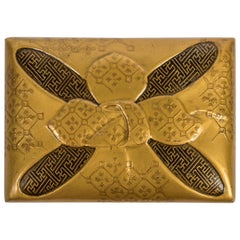
Japanese Lacquered Furoshiki Kobako
Box
Located in PARIS, FR
Rectangular and flat lacquer Kobako (small box) representing a furoshiki knot seen from above. Fundame background, furoshiki in takamaki-e with floral pattern, inside the folds of the fabric with black and gold sayagata pattern with togidashi maki-e technique. The saya (or sayagata) pattern is composed of Chinese swastikas...
Category
Antique Late 19th Century Japanese Lacquer
Materials
Lacquer
1800s Russian Lacquer Box Philosopher
Located in Vienna, AT
In this ad you get the chance to buy a beautiful hand-painted Russian lacquer box from the 1800s. It is cylindrical in shape, slightly curving in...
Category
Antique 18th Century Russian Lacquer
Materials
Bentwood
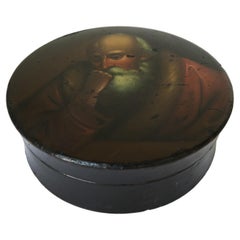
Chinese Lacquered Snack Box, c. 1820
Located in Chicago, IL
This simple lacquered container was once used as a 19th-century snack box, presented as a gift during holidays and special occasions. To the delight of the r...
Category
Antique Mid-19th Century Chinese Qing Lacquer
Materials
Wood, Lacquer
