Items Similar to Edo Maki-e Japanese Box
Want more images or videos?
Request additional images or videos from the seller
1 of 9
Edo Maki-e Japanese Box
$3,111.51
£2,329.31
€2,600
CA$4,283.39
A$4,682.58
CHF 2,477.30
MX$56,034.64
NOK 31,520.05
SEK 28,853.42
DKK 19,808.80
About the Item
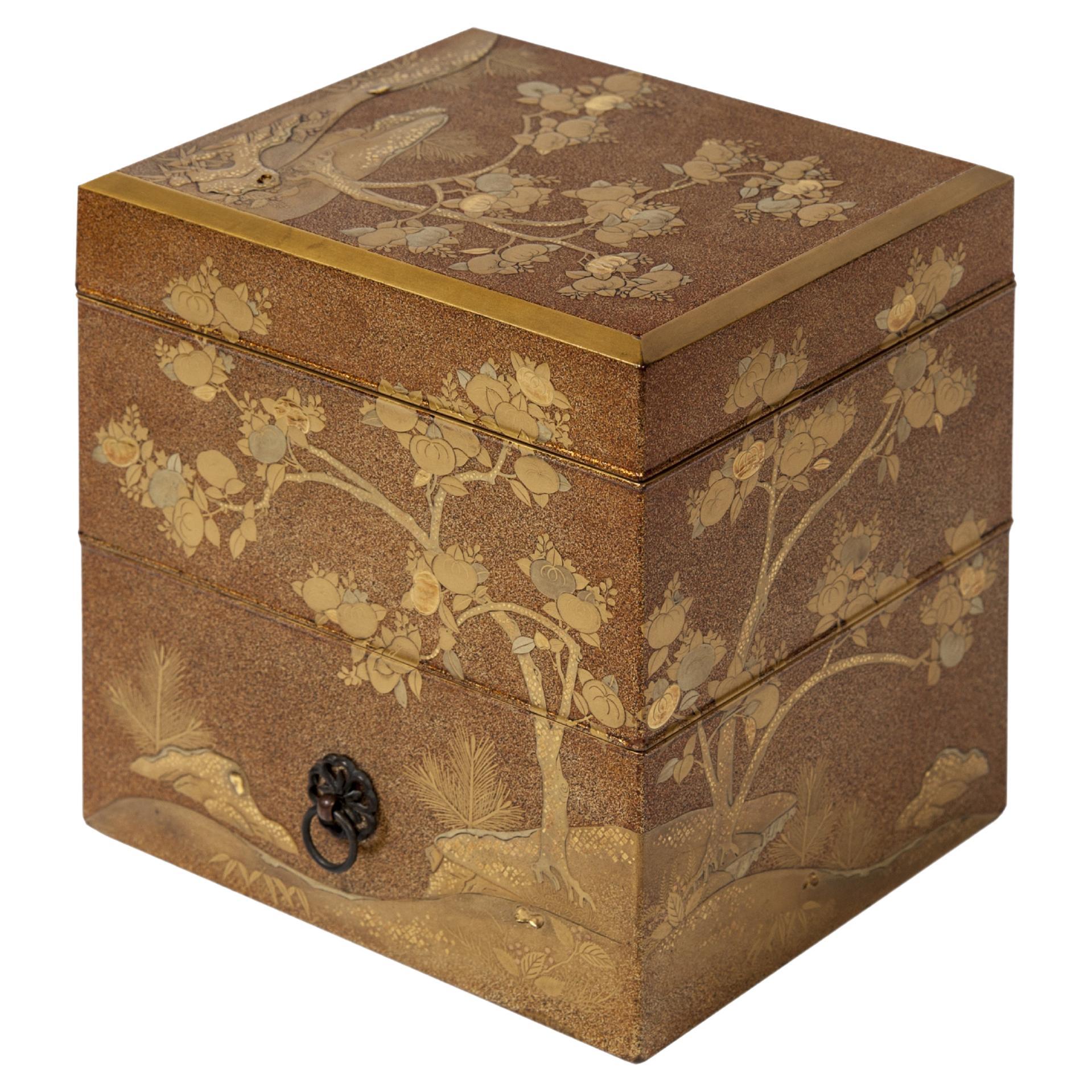
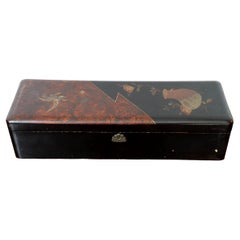
Japanese box with lacquer lid finely decorated with Maki-e, dating from the 18th century, mid-Edo period.
The box is of special size to preserve important calligraphy.
All sides of the box are embossed with maki-e.
The interior and base were finished in Nashiji.
The box is in very good condition considering its age and use.
- Dimensions:Height: 4.93 in (12.5 cm)Width: 18.71 in (47.5 cm)Depth: 3.94 in (10 cm)
- Style:Edo (Of the Period)
- Materials and Techniques:
- Place of Origin:
- Period:
- Date of Manufacture:1780 circa
- Condition:Wear consistent with age and use.
- Seller Location:Brescia, IT
- Reference Number:1stDibs: LU5628237943142
About the Seller
5.0
Recognized Seller
These prestigious sellers are industry leaders and represent the highest echelon for item quality and design.
Established in 1981
1stDibs seller since 2021
20 sales on 1stDibs
Typical response time: 13 hours
- ShippingRetrieving quote...Shipping from: Brescia, Italy
- Return Policy
More From This Seller
View AllParavento Giapponese a sei pannelli su foglia d
oro.
By Japanese Studio
Located in Brescia, IT
Paravento giapponese a sei pannelli , opera di un pittore della prima metà del 19° secolo, di scuola Rinpa.
Sei pannelli dipinti con inchiostro su foglia oro e "gofun" su carta veget...
Category
Antique Early 19th Century Japanese Edo Paintings and Screens
Materials
Gold Leaf
Six-panel gold leaf screen
By Japanese Studio
Located in Brescia, IT
Large Japanese six-panel screen, ink, color, gold, and gold leaf on paper, depicting three scenes from Genji monogatari (The Tale of Genji), the vignettes punctuated by raised golden...
Category
Antique Early 19th Century Japanese Edo Paintings and Screens
Materials
Gold Leaf
$16,754
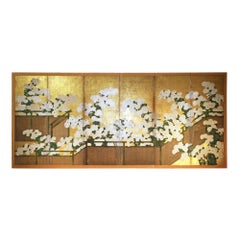
Japanese Screen mid Edo gold leaf
By Japanese Studio
Located in Brescia, IT
This 18th century six-panel screen is truly special. The author is unknown, but his singular genius in portraying dozens of chrysanthemum flowers created with the white of the "gofun...
Category
Antique Mid-18th Century Japanese Edo Paintings and Screens
Materials
Gold Leaf
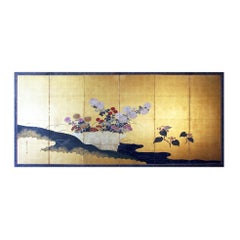
Japanese Byobu - Japanese Folding Screen Gold Leaf
By Japanese Studio
Located in Brescia, IT
Floral scene of a "Rimpa School" garden with polychrome chrysanthemum flowers.
Six-panel screen painted with pigments on golden rice paper of good size and well preserved.
Bold color...
Category
Antique Early 19th Century Japanese Edo Paintings and Screens
Materials
Gold Leaf
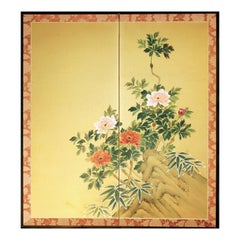
Japanese screen
By Japanese Studio
Located in Brescia, IT
Two-panel screen of Rinpa school painted with mineral pigments on silk and rice paper.
It depicts colorful peony flowers. This is the flower of spring, symbolizing success and pro...
Category
20th Century Japanese Showa Paintings and Screens
Materials
Silk, Paper
$7,060
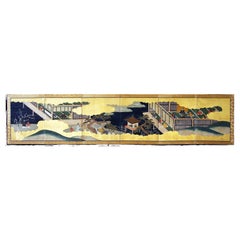
Japanese Folding Screens Gold Leaf
By Japanese Studio
Located in Brescia, IT
This Japanese six-panel Byobu screen, used for tea ceremonies, is a unique size and depicts scenes from the 11th-century Japanese literary classic "The Tales of Prince Genji."
Painte...
Category
Antique Mid-19th Century Japanese Edo Paintings and Screens
Materials
Gold Leaf
You May Also Like
Japanese Lacquered Maki-e Fubako Edo Period
Located in Atlanta, GA
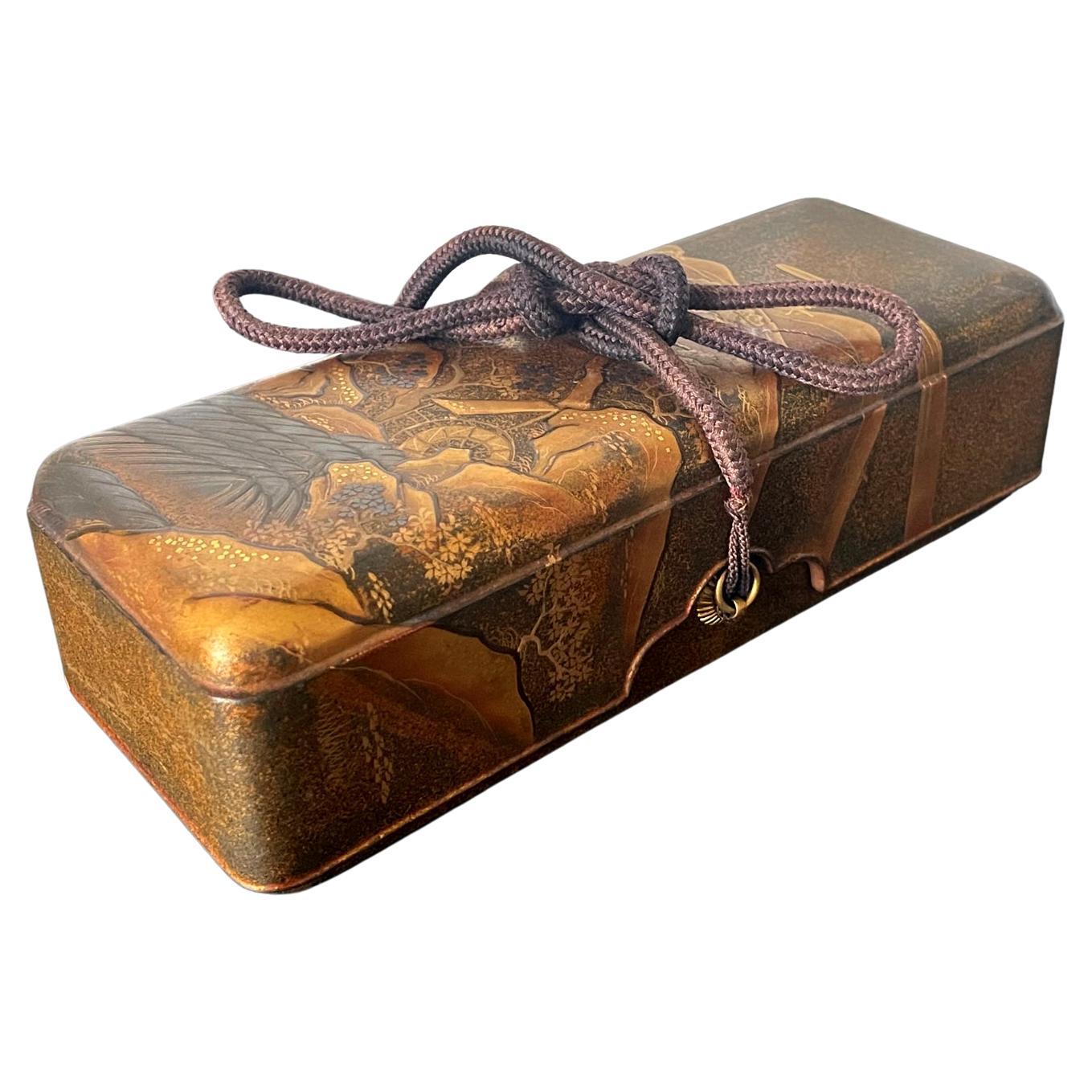
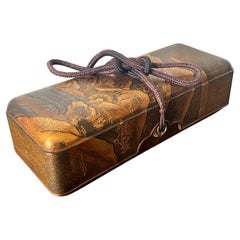
A Japanese lacquered wood fubako (a box used to store document or small scroll painting), circa second half of 19th century late Edo period. The rectangular box features an unusually deep lipped lid with slightly rounded corners, a conforming lower box that is almost entirely covered by the lid which has two bronze medallion rings with tasseled...
Category
Antique 19th Century Japanese Edo Lacquer
Materials
Wood, Lacquer
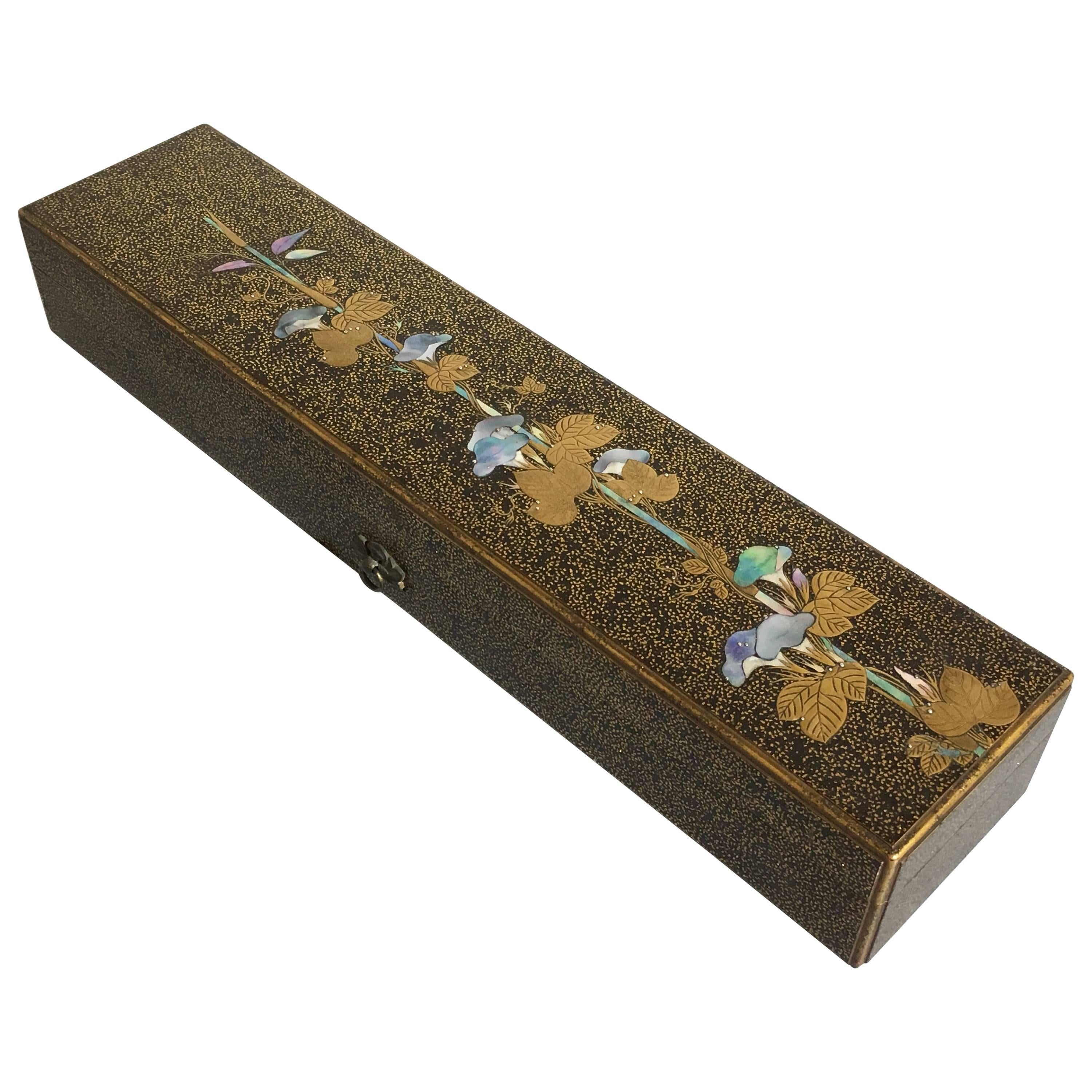
Japanese Edo Period Igarashi School Long Lacquer Box, Tanzaku-Bako
Located in Austin, TX
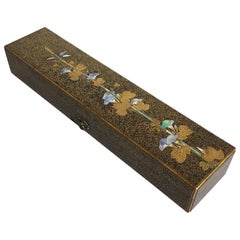
A stunning Japanese Edo period lacquer tanzakubako, box for poem cards, late 18th-early 19th century, Edo Period, Japan.
Attributed to the Igarashi School, this box is masterfully ...
Category
Antique Early 19th Century Japanese Edo Lacquer
Materials
Mother-of-Pearl, Lacquer
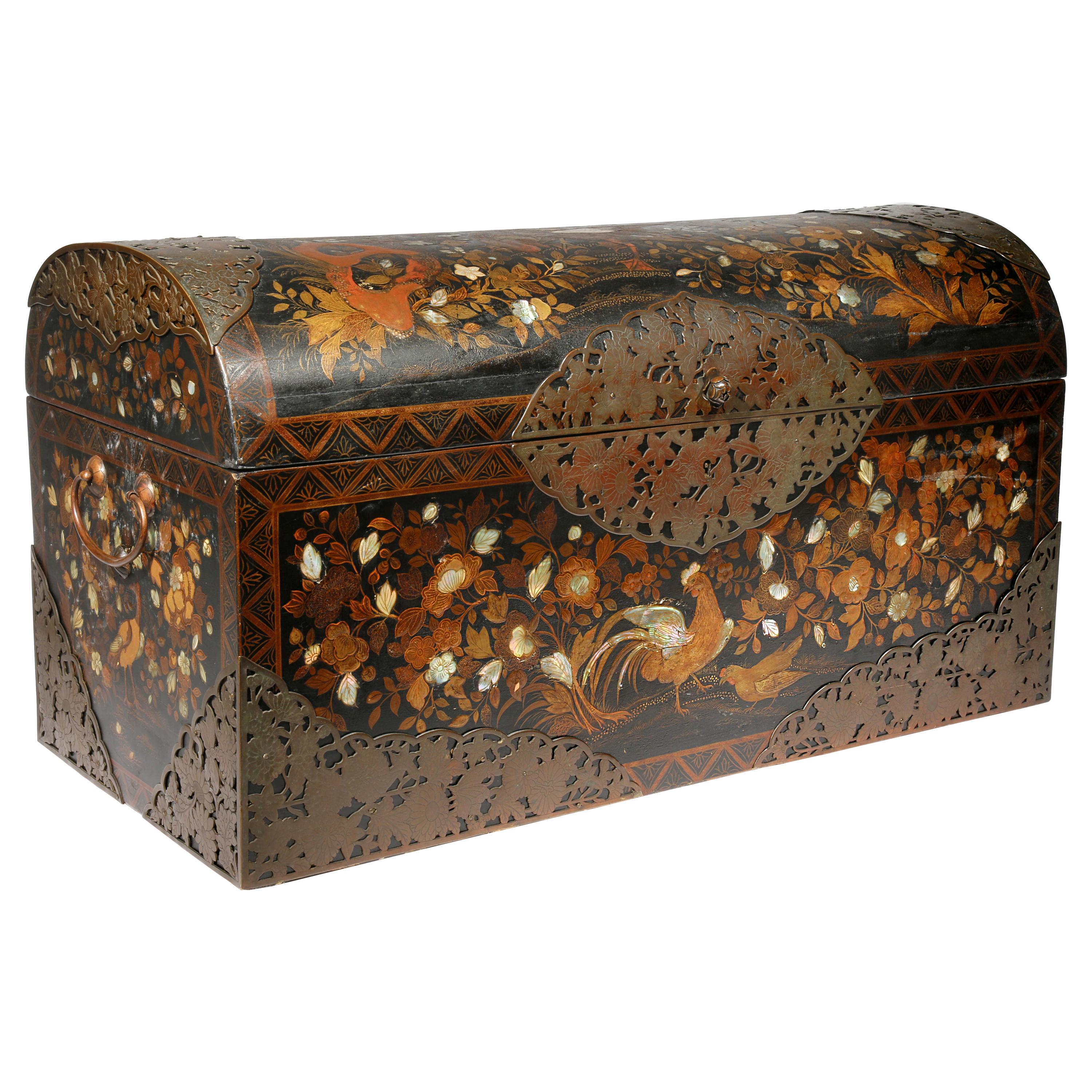
Japanese Namban Lacquer and Inlay Coffer Momoyama Period
Located in Atlanta, GA
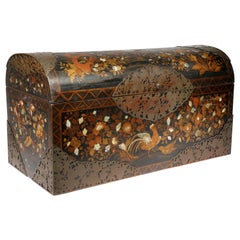
A rare Japanese Namban Lacquer domed coffer circa 1570-1610s of Azuchi-Momoyama to early Edo period. These types of lacquerware were made for export to ...
Category
Antique 16th Century Japanese Japonisme Lacquer
Materials
Wood, Lacquer
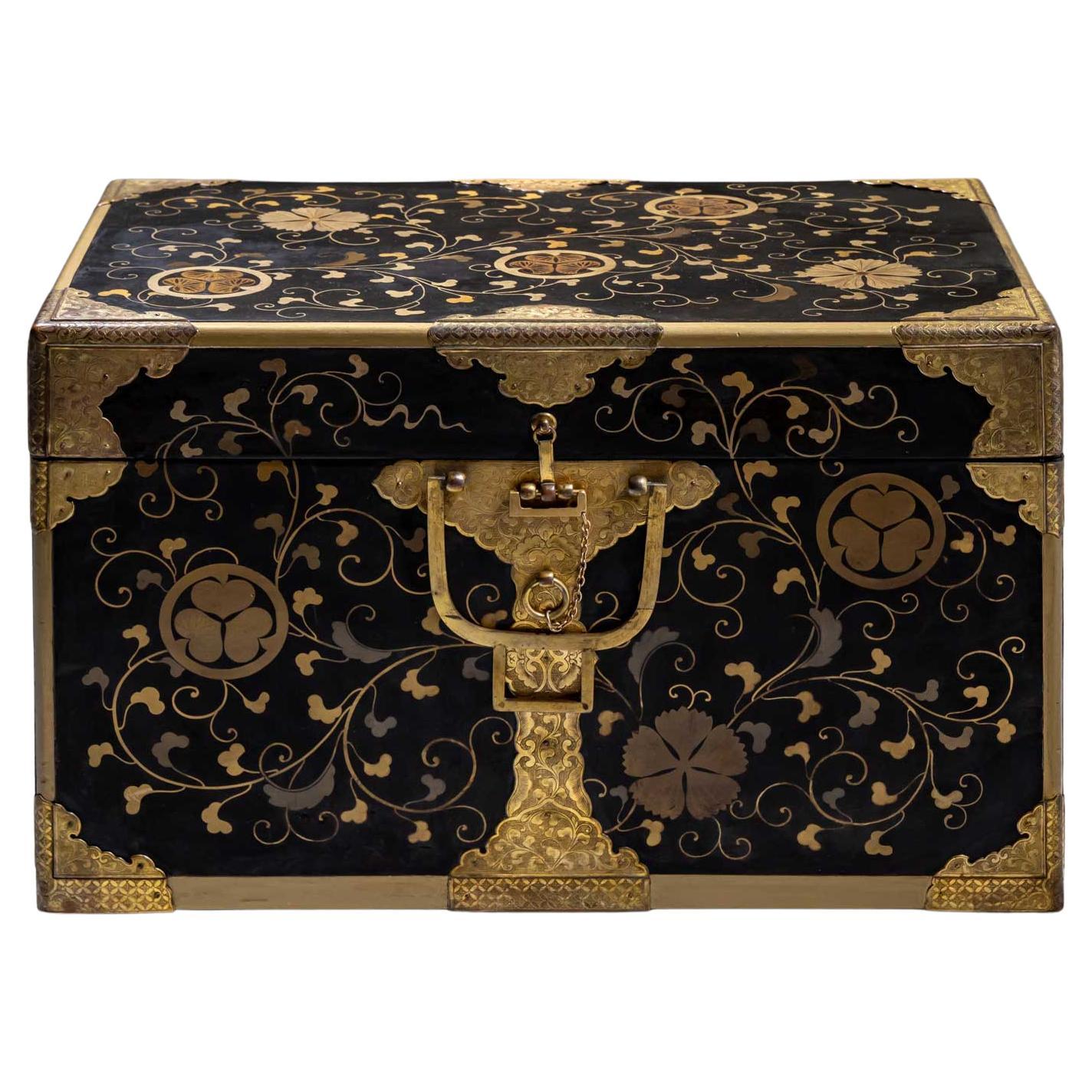
Japanese Lacquer Chest, Edo Period
Located in Greding, DE
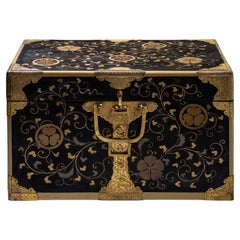
Small rectangular Japanese chest with gold lacquer decoration in the form of leaf tendrils. The chest is decorated with cut-out and ornamentally engraved fittings on the corners and ...
Category
Antique 18th Century Japanese Edo Decorative Boxes
Materials
Brass
Japanese Maki-e Lacquered Box, Ric.049
Located in Norton, MA
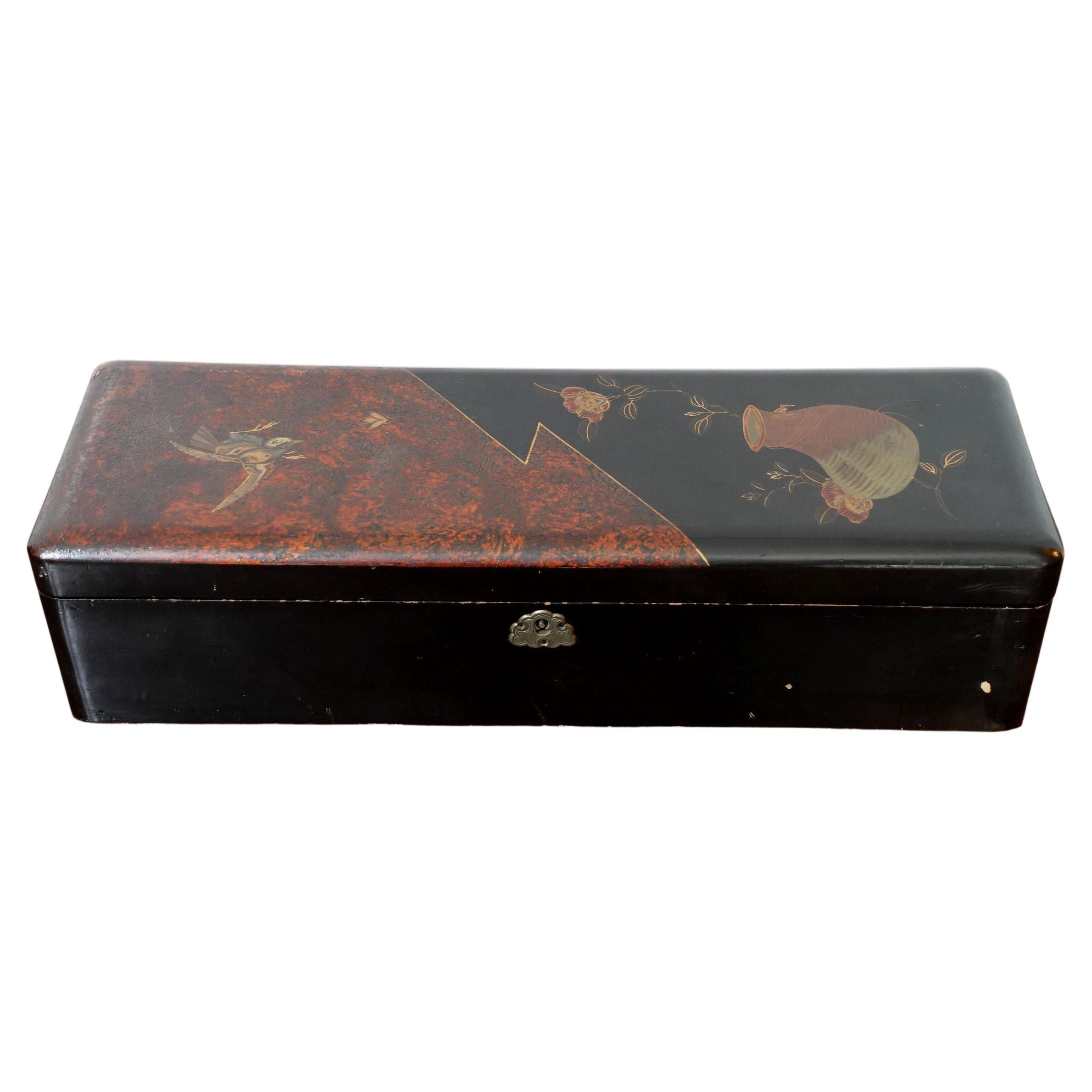
Japan, Edo to Meiji period, a long rectangular document box with hinged cover, decorated with a bird and a floral basket,
The locker is not functioning.
Category
Antique 19th Century Japanese Decorative Boxes
Materials
Lacquer
Japanese Lacquered Tebako
Box
Located in PARIS, FR
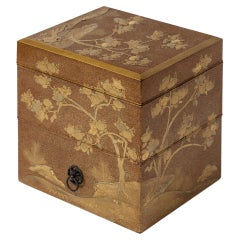
Tebako box with three compartments in golden and nashi-ji lacquer, decorated with golden, red, and kirigane lacquer, golden persimmon tree leaves, among rocks. The compartments are of increasing size from the top. The decoration is in continuity.
Persimmon has been cultivated in southern China for more than 2500 years and is believed to have been introduced to Japan in the 8th century. The veneer is a tree with very hard wood, similar to ebony. According to a legend, one specimen survived the atomic bombing of Nagasaki on August 9, 1945, close to the epicenter. It is therefore in Japan a symbol of strength and longevity. It is also the national fruit of the country. It is eaten as a traditional dish during New Year's Day celebrations.
Tebako literally means "portable box...
Category
Antique 1860s Japanese Lacquer
Materials
Lacquer
More Ways To Browse
Asian Gold Leaf Art
Cinnabar Lacquer Furniture
Antique Chinese Cinnabar
Japanese Lacquered Tray
Chinese Carved Cinnabar
Japanese Lacquerware
Red Lacquer Cinnabar
Antique Inro
Japanese Gold Lacquer Box
Red Lacquer Boxes Asian
Lacquer Fan
Asian Cinnabar
Japanese Lacquer Pearl
Japanese Wood Tray
19th Century Carved Chinese Fan
Black Japanese Tray
Chinese Carved Cinnabar Red Lacquer
Antique Japanese Lacquer Tray