Items Similar to Fine Japanese Inro with Maki-e and Inlay by Shokasai and Shibayama

Want more images or videos?
Request additional images or videos from the seller
1 of 15
Fine Japanese Inro with Maki-e and Inlay by Shokasai and Shibayama
$5,800
£4,392.96
€5,045.16
CA$8,127.70
A$8,836.45
CHF 4,685.09
MX$105,926.57
NOK 59,545.13
SEK 54,551.44
DKK 37,706.22
About the Item
A Japanese four-case inro stringed together with a silk cord of a carved wood Ojime and a carved ivory netsuke circa 19th century of Edo period. This fine piece was made in collaboration between members of Shokasai and Shibayama lineages, specialists in lacquer and inlay work respectively and it is signed as such.
The inro has a smooth rectangular form with rounded corners with a solid gold background. On one side, there stands Jurojin, a member of the Japanese Seven Lucky Gods. He is the incarnation of the south pole star and symbol of longevity. Donning a flowing robe in ancient style, the beard old man is holding a branch of magical peaches, the fruits that grant immortality. In front of him crawls a minogame, a mythological turtle with extraordinary age. The face of Jurojin and the peach blossom petals are fine ivory inlays while the peaches are coral. The figure itself was decorated in fine hiramaki-e, complemented with kirigane on the attire. The other side of the Inro features a seated Fukurokuju, another member of group, the god of luck, wealth and longevity. The deity holds a red bowl (coral inlay) to receive the liquor from an attendant, who pours from a green ewer (jade inlay). Interestingly, Fukurikuju was rendered in a typical Samurai attire completed with a sword. The boy attendant appears to be mortal with his typical Edo-period hairdo and outfit. The free-flowing mixture between the mythological and vernacular figures was quite interesting in Japanese art, revealing the folky aspect of incorporating mythology and religion into daily life. Connected by a silk cord, the ojime is a carved wood figure of Ebisu holding a fish. He is also a member of the seven lucky gods, the god of prosperity and patron god of fishermen. The netsuke is a large bone piece in the form of Jurojin, holding a basket of peaches on one hand and a branch of peaches on the other. This matches the deign on the Inro well.
The inro is signed on the bottom as shown. Maki-e signature Shokasai and an MOP plaque with Shibayama.
This piece cannot be shipped out of United States.
- Creator:Shibayama Factory (Maker)
- Dimensions:Height: 3.5 in (8.89 cm)Width: 1.8 in (4.58 cm)Depth: 0.5 in (1.27 cm)
- Style:Edo (Of the Period)
- Materials and Techniques:
- Place of Origin:
- Period:
- Date of Manufacture:19th Century
- Condition:Wear consistent with age and use. Fine condition with minimal age-related wear only a minute ding on the bottom surface as shown.
- Seller Location:Atlanta, GA
- Reference Number:1stDibs: LU945047017302
About the Seller
4.9
Platinum Seller
Premium sellers with a 4.7+ rating and 24-hour response times
Established in 2006
1stDibs seller since 2010
584 sales on 1stDibs
Typical response time: <1 hour
- ShippingRetrieving quote...Shipping from: Atlanta, GA
- Return Policy
More From This Seller
View AllAntique Japanese Inro by Shigehide Edo Period
Located in Atlanta, GA
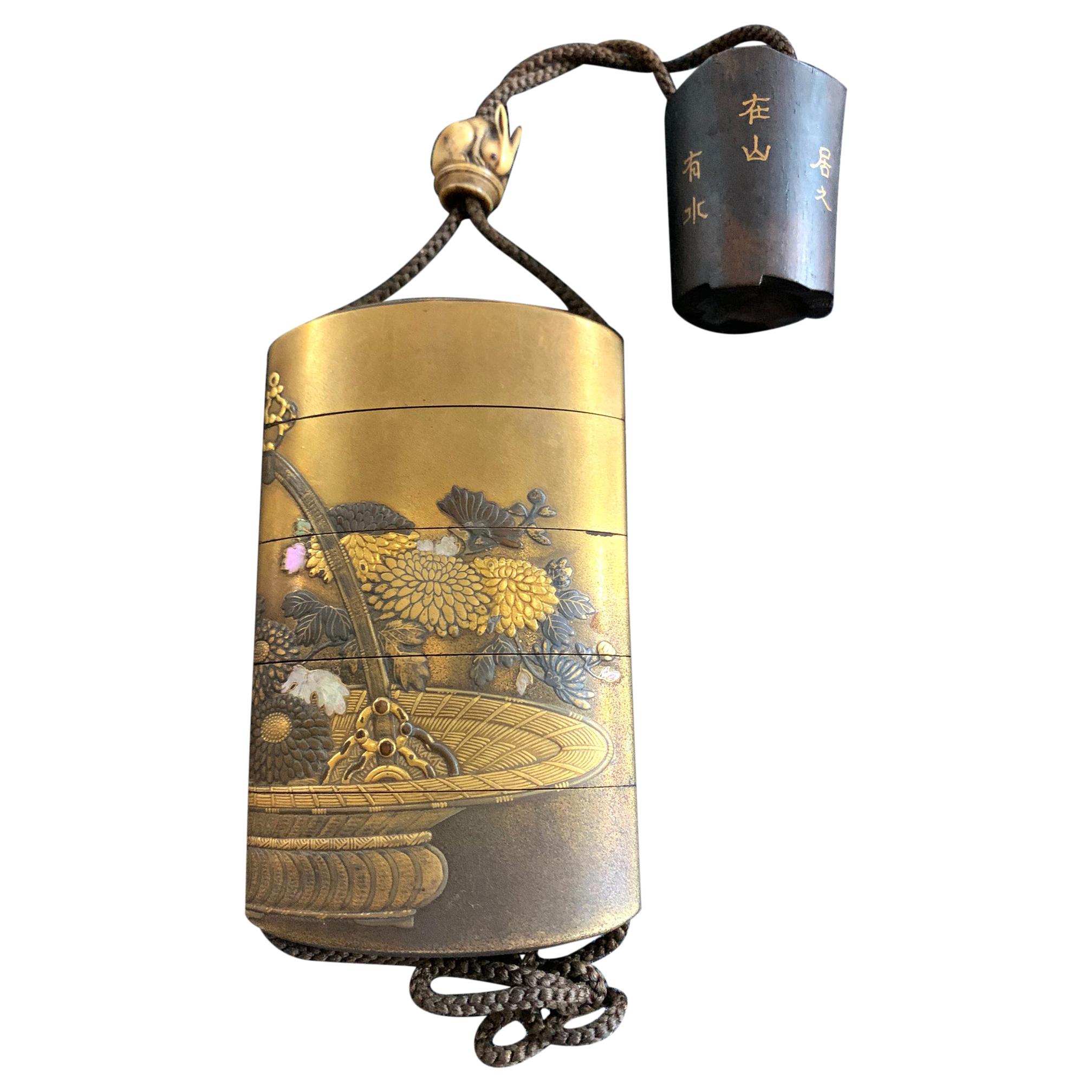
This exquisite four-case lacquered inro was dated to the latter part of 18th century to early 19th century (Edo period) and made by Shigehide. The opposite sides of the inro together features a lavish flower arrangement in a bamboo basket (ikebana). The detailed craftmanship was a true pleasure to behold. Mostly Takamaki-e (high relief) were used to texturize the delicate petals of the chrysanthemums, on which different shades of gold were used to create contrast. Raden (mother of pearl) shells were also used to highlight some leaves, rendering the piece an interesting balance of color and material. The interior was completed in a mottled gold finish. It was signed Shigehide on the bottom with a Kao. There is a small carved rabbit ojime bead...
Category
Antique Late 18th Century Japanese Japonisme Lacquer
Materials
Wood, Lacquer
Japanese Lacquer Inro with Gold Maki-e and Carved Wood Netsuke Meiji Period
Located in Atlanta, GA
A Japanese four-case inro with a stringed carved wood netsuke circa 19th century. The inro has a near square form with rounded corners, The surface is decorated with gold hiramaki-e ...
Category
Antique 19th Century Japanese Meiji Lacquer
Materials
Wood, Lacquer
Japanese Lacquered Gold Maki-E Naga Fubako Meiji Period
Located in Atlanta, GA
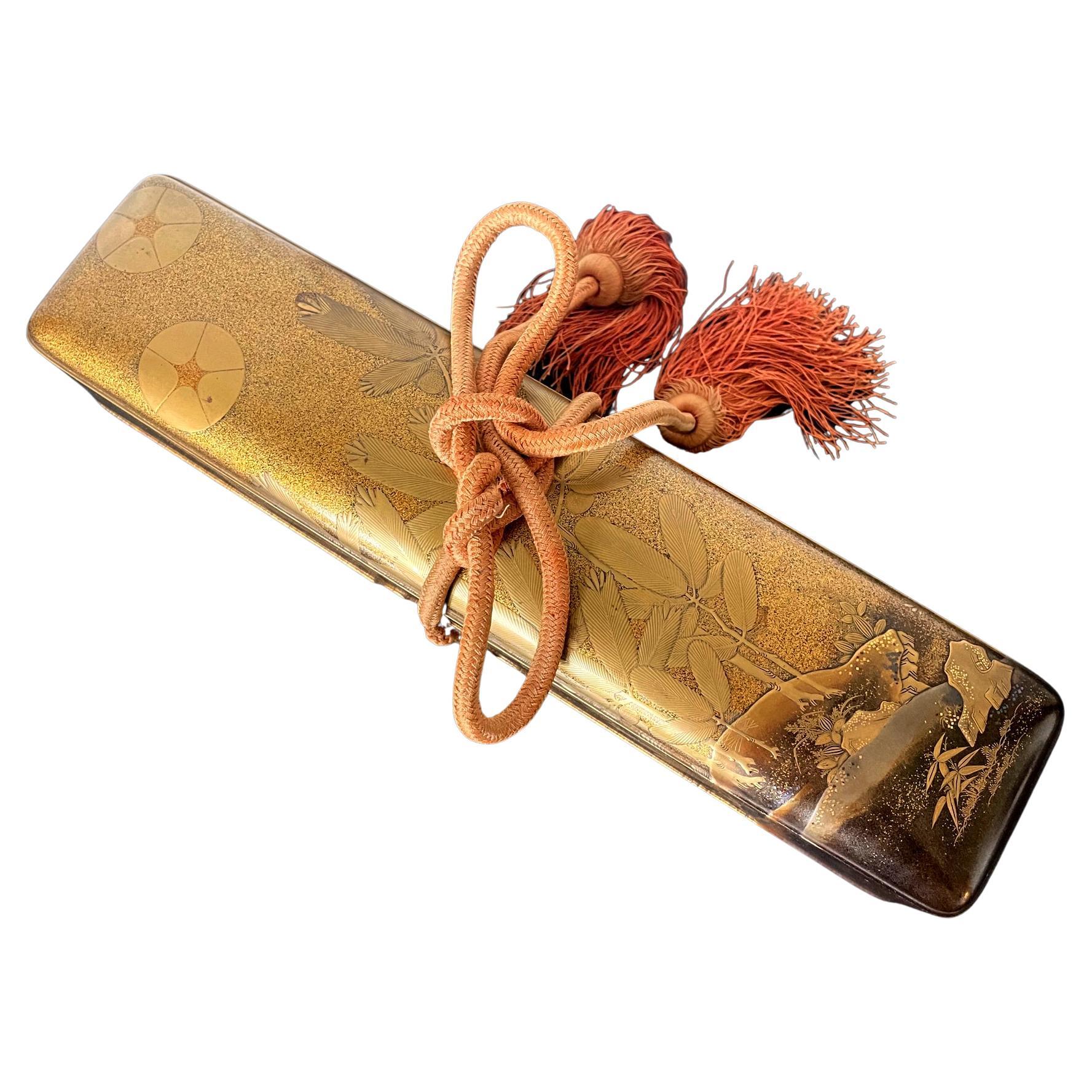
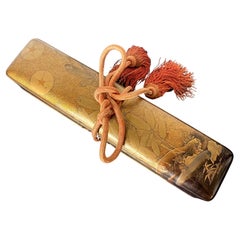
A Japanese lacquered wood Naga Fubako (a long box used to store document or large scroll painting), circa 19th century Meiji period. The rectangular box features an unusually deep lipped lid with slightly rounded corners, a conforming lower box with bronze medallion rings with tasseled...
Category
Antique 19th Century Japanese Meiji Lacquer
Materials
Wood, Lacquer
Fine Japanese Lacquered Inro by Yutokusai
Located in Atlanta, GA
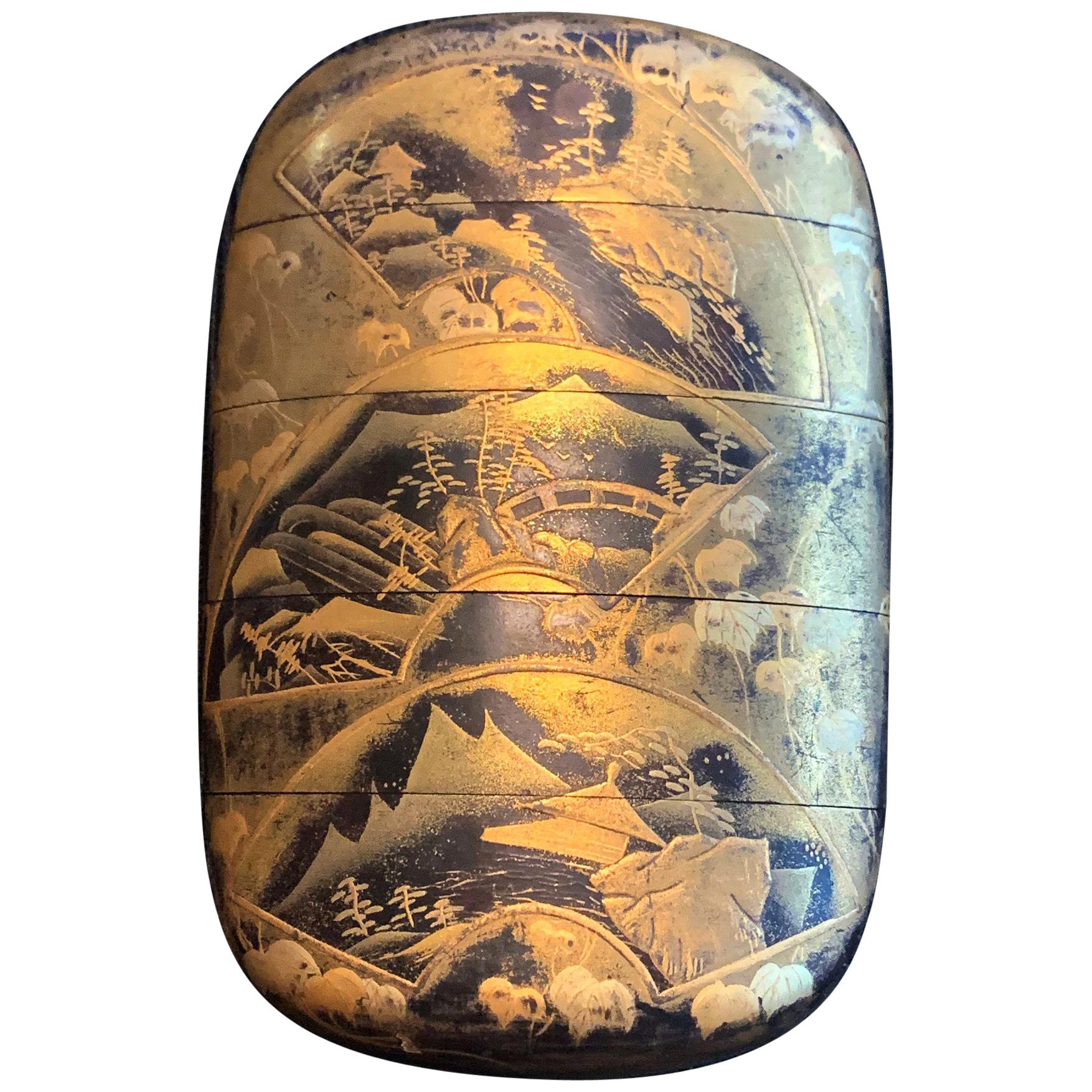
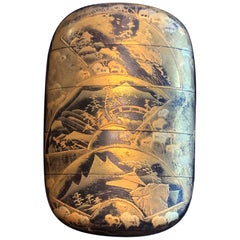
A four-case lacquered Japanese inro by Yutokusai (Gyokkei), a lacquer artist active from 1845-1900 (end of Edo to Meiji period). The slightly round inro features a very intricate design with three unfolded fans on the front and two on the back: each reveals a vignette landscape scenery, likely real places in Japan. Using a combination of hiramaki-e and slight takamaki-e, the artist deftly created the pictures with fine details, rendering the inro as a miniature artwork...
Category
Antique 19th Century Japanese Japonisme Lacquer
Materials
Wood, Lacquer
Japanese Lacquered Maki-e Fubako Edo Period
Located in Atlanta, GA
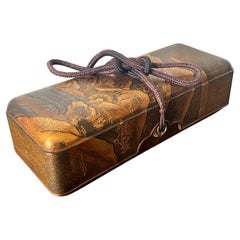
A Japanese lacquered wood fubako (a box used to store document or small scroll painting), circa second half of 19th century late Edo period. The rectangular box features an unusually deep lipped lid with slightly rounded corners, a conforming lower box that is almost entirely covered by the lid which has two bronze medallion rings with tasseled...
Category
Antique 19th Century Japanese Edo Lacquer
Materials
Wood, Lacquer
Japanese Inro by Koma Koryu Edo Period
Located in Atlanta, GA
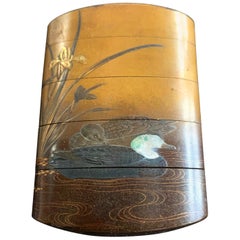
A four-case lacquered inro by Koma Koryu circa 19th century late Edo period. The inro features a pair of Chinese mandarin duck resting under a bundle of blooming irises on the pond. ...
Category
Antique 19th Century Japanese Japonisme Lacquer
Materials
Wood, Lacquer
You May Also Like
Lacquer inro, Japanese, Late 19th c.
Located in Stockholm, SE
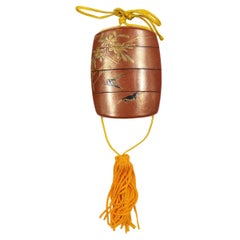
A fourpart Japanese lacquer Inro. the lacquer is red with motives of a spider with its web in gold and two flying cranes. The lowest part of the inro has a crack on one side.
Category
Antique Late 19th Century Japanese Lacquer
Materials
Lacquer
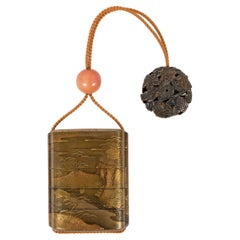
Japanese inro of the edo period adorned with a landscape houses near a lake
Located in PARIS, FR
Inrō with four gold lacquer compartments, decorated with a lake landscape. Accompanied by a bronze ryusa manju.
Small boxes formed of compartments that fit one on top of the other, i...
Category
Antique Late 18th Century Japanese Edo Lacquer
Materials
Gold
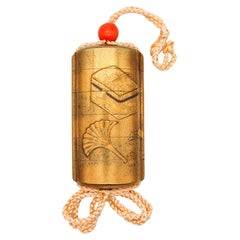
Japan 1800 Edo Period Six Drawer Inro In Lacquered Gilt Wood With Utensils
Located in Miami, FL
Japanese Inro from the Edo Period (1603-1867).
Beautiful Inro, created in Japan during the Edo period (Shogunate), circa 1800. It was carefully crafted in carved precious wood with ...
Category
Antique Early 1800s Japanese Edo Lacquer
Materials
Coral
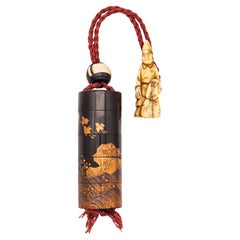
Japan 1870 Meiji Period Round Five Drawer Inro Lacquered Wood With Flying Cranes
Located in Miami, FL
Japanese Inro from the Meiji Period (1868-1912).
Beautiful Inro, created in Japan during the Meiji imperial period, circa 1870. It was carefully crafted in carved precious wood with applications of lacquer and decorated with orientalism patterns. All dan trays are attached together with a himo cord. The detailed craftsmanship was a true pleasure to behold.
Period: Meiji 1868-1912, Period of Emperor Mutsuhito.
Approximate Date: 1870.
Motif: Organic design with cascade landscape scene and five flying cranes.
Drawers: Five.
Shape: Cylinder. Very unusual and rare shape.
Technique: Carved wood, Lacquer, hiramaki-e, takamaki-e, Gilding.
Ojime: 17mm, round with Ebony wood.
Netsuke: Carved dressed...
Category
Antique 1870s Japanese Meiji Lacquer
Materials
Wood, Ebony, Giltwood, Lacquer
19th Century Japanese Inro with 5 Lacquered Wood Compartments
Located in Marseille, FR
19th Century Japanese inro with 5 lacquered wooden compartments, 93 x 50 x 30 mm in size. Weight 59.2 g.
Additional information:
Material: Lacquered ...
Category
Antique 19th Century Japanese Snuff Boxes and Tobacco Boxes
Materials
Wood
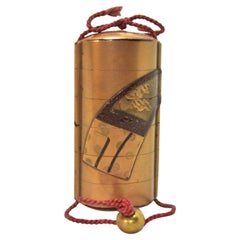
Japanese Inro with 4 Boxes in Gold Lacquer with Mat Kinji Background
Located in Marseille, FR
19th century Japanese inro with 4 boxes in gold lacquer with kinji mat background decorated in taka makiyé of gold of different tones. Lacquered wood siz...
Category
Antique 19th Century Japanese Japonisme More Asian Art, Objects and Furn...
Materials
Giltwood