Want more images or videos?
Request additional images or videos from the seller
1 of 8
Fine Lacquer Kogo
Incense Box
$14,500List Price
About the Item
- Dimensions:Height: 2 in (5.08 cm)Width: 4.25 in (10.8 cm)Depth: 3.5 in (8.89 cm)
- Style:Meiji (Of the Period)
- Materials and Techniques:
- Place of Origin:
- Period:
- Date of Manufacture:circa 1875
- Condition:Most items that are 100 years old have been cleaned or polished in their lifetime. More involved restorations are mentioned in the above description. For a detailed condition report and a video of this item please contact us directly. -Naga Antiques.
- Seller Location:Hudson, NY
- Reference Number:Seller: NA16901stDibs: LU855123754082
About the Seller
5.0
Recognized Seller
These prestigious sellers are industry leaders and represent the highest echelon for item quality and design.
Established in 1971
1stDibs seller since 2008
170 sales on 1stDibs
Typical response time: 5 hours
Associations
The Art and Antique Dealers League of AmericaAntiques Associations Members
Authenticity Guarantee
In the unlikely event there’s an issue with an item’s authenticity, contact us within 1 year for a full refund. DetailsMoney-Back Guarantee
If your item is not as described, is damaged in transit, or does not arrive, contact us within 7 days for a full refund. Details24-Hour Cancellation
You have a 24-hour grace period in which to reconsider your purchase, with no questions asked.Vetted Professional Sellers
Our world-class sellers must adhere to strict standards for service and quality, maintaining the integrity of our listings.Price-Match Guarantee
If you find that a seller listed the same item for a lower price elsewhere, we’ll match it.Trusted Global Delivery
Our best-in-class carrier network provides specialized shipping options worldwide, including custom delivery.You May Also Like
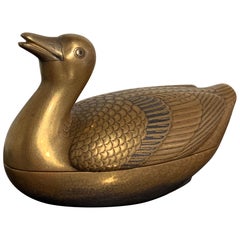
Small Japanese Lacquer Duck Incense Box, Kogo, Meiji Period, Late 19th Century
Located in Austin, TX
An exquisite Japanese Meiji Period small lacquer incense box, kogo, in the form of a duck or goose, late 19th century, Japan.
The delicate lacquer box, known as a kogo in Japanese, ...
Category
Antique Late 19th Century Japanese Meiji Lacquer
Materials
Lacquer
$2,900
H 1.5 in W 2.88 in D 1 in
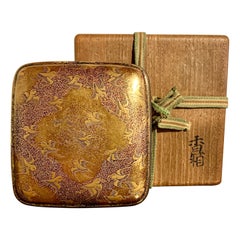
Japanese Lacquer Incense Box, Kogo, Momoyama or Edo Period, 16th/17th Century
Located in Austin, TX
A wonderful Japanese lacquer incense box, kogo, with a design of plovers in flight, late Momoyama or early Edo Period, circa 1600, Japan.
The small box, called a kogo, was used to s...
Category
Antique Early 17th Century Japanese Edo Lacquer
Materials
Gold, Pewter
$6,000
H 2.75 in W 3.75 in D 3.75 in
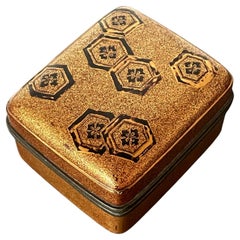
Antique Japanese Lacquered Incense Box Kobako Ex-Christie
s
Located in Atlanta, GA
An old Japanese lacquered small box likely used to contain incense powder called Kobako, circa Momoyama to early Edo period (16-17th century). The rectangular form box with a fitted ...
Category
Antique 17th Century Japanese Japonisme Lacquer
Materials
Lead
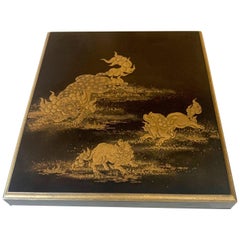
Japanese Lacquer Box with Fine Maki-e Decoration Meiji Period
Located in Atlanta, GA
A lacquered wood box with lid from Japan circa 19th century Meiji Period. The finely decorated box was used to store paper slips and small documents on the desk. It is overall finished with black lacquer (kuro) with sparse Mura-Nashiji effect outside and on the top surface of the lid, there are three Komainu, (sometimes known as Shishi or Japanese lions) frolicking and forming a circle in lively motion. Komainu are auspicious animals in Japanese cultures in both Shinto and Buddhism tradition. Originally from China, these animals symbolizes guardians to ward off evil spirits. Hiramaki-e was used in combination with carving and combing to render the lions with various surface textures. A gilt border with an slight angle was given to the lid and even the thin band is decorated with miniature floral scrolls. The interior of the box was finished in a dense nashiji. Underneath the lid, a cluster of peonies open lavishly by two gentle mounts. Takamaki-e (high relief) in both gold and silver were...
Category
Antique Late 19th Century Japanese Japonisme Lacquer
Materials
Wood, Lacquer
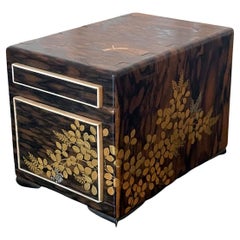
Fine Miniature Japanese Kodansu with Lacquer Inlays
Located in Atlanta, GA
A fine Japanese miniature kodansu constructed from Kaki wood (Persimmon) circa 19th century, late Meiji period. With its expressive exotic wood grains and exposed tenon construction,...
Category
Antique Late 19th Century Japanese Meiji Lacquer
Materials
Wood
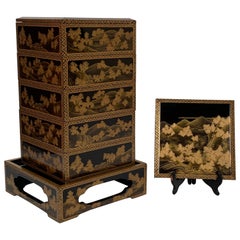
Japanese Maki-e Lacquer Stacking Box, Jubako, Meiji Period, Japan
Located in Austin, TX
A fine and impressive Japanese gold maki-e decorated black lacquer five-tier jubako with presentation tray, two lids, and the original tomobako storage box, Meiji period, late 19th c...
Category
Antique Late 19th Century Japanese Meiji Lacquer
Materials
Lacquer
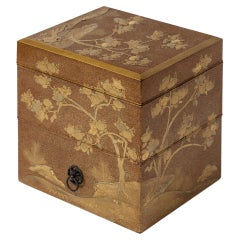
Japanese Lacquered Tebako
Box
Located in PARIS, FR
Tebako box with three compartments in golden and nashi-ji lacquer, decorated with golden, red, and kirigane lacquer, golden persimmon tree leaves, among rocks. The compartments are of increasing size from the top. The decoration is in continuity.
Persimmon has been cultivated in southern China for more than 2500 years and is believed to have been introduced to Japan in the 8th century. The veneer is a tree with very hard wood, similar to ebony. According to a legend, one specimen survived the atomic bombing of Nagasaki on August 9, 1945, close to the epicenter. It is therefore in Japan a symbol of strength and longevity. It is also the national fruit of the country. It is eaten as a traditional dish during New Year's Day celebrations.
Tebako literally means "portable box...
Category
Antique 1860s Japanese Lacquer
Materials
Lacquer
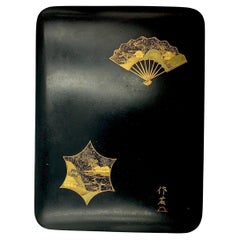
Japanese Meiji Period Antique Lacquer Box with Gold Maki-e Decoration
Located in New York, NY
A fine antique Japanese Meji Period lacquer box decorated with a fan and a stylized star shaped window in the maki-e technique. The fan at the top right corner, fully opened depictin...
Category
Antique 19th Century Japanese Meiji Lacquer
Materials
Lacquer
$1,700
H 4.5 in W 3.25 in D 1.88 in
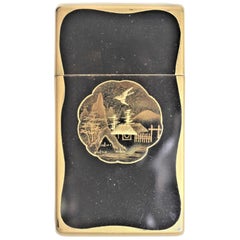
Antique Japanese Lacquered Card Box with Ornate Hand Painted Gilt Decoration
Located in Hamilton, Ontario
This antique card box is unsigned or initialed, so the specific artist is unknown, but is believed to have been made in Japan in circa 1900 in the per...
Category
Early 20th Century Japanese Meiji Lacquer
Materials
Wood
$2,450
H 3.5 in W 2.13 in D 0.5 in
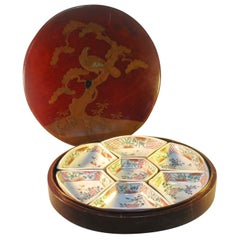
Japanese 7-Pcs, Arita Sweetmeat Set
Matching Lacquer Box Meiji Period, 1880s
Located in Ottawa, Ontario
A seven-piece Japanese Arita Sweetmeat set and matching lacquer box, Meiji period (1880-1890). Comprising of a central hexagonal dish and six-fan shaped ...
Category
Antique Late 19th Century Japanese Meiji Lacquer
Materials
Porcelain, Lacquer
More From This Seller
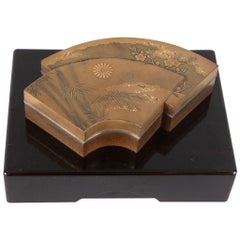
View AllJapanese Lacquer Kogo
Incense Box
Located in Hudson, NY
Late Edo (1614 - 1868) period incense storage box in stacked, double fan design. Fans have bamboo and plum design with a chrysanthemum crest. Silve...
Category
Antique Mid-19th Century Japanese Edo Lacquer
Materials
Gold
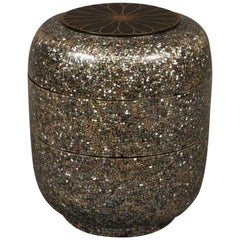
Antique Japanese Lacquer Stacking Food Box
Jubako
Located in Hudson, NY
With all-over mother of pearl inlay and mon design of chrysanthemum in gold and black lacquer on top. The chrysanthemum is a national symbol of Japan and the Imperial family.
Category
Antique 19th Century Japanese Lacquer
Materials
Gold
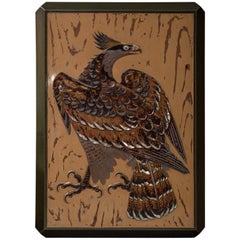
Japanese Antique Lacquer Document Box with Elaborate Hawk and Faux Oak Grain
Located in Hudson, NY
Japanese antique lacquer document box with elaborate hawk and faux oak grain, Late Meiji (1868 - 1912) / Early Taisho (1912 - 1926) period lac...
Category
Early 20th Century Japanese Lacquer
Materials
Lacquer
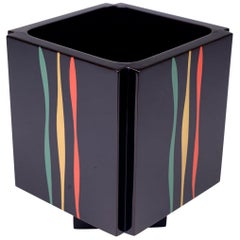
Showa Period Lacquer “Flower Basket”
Located in Hudson, NY
The artist calls this vessel a flower basket in the calligraphy on the box. Showa period (1926-1989) black lacquer container in square form with notched c...
Category
Vintage 1930s Japanese Showa Lacquer
Materials
Lacquer
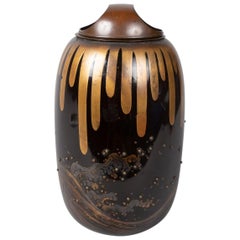
Japanese Lacquer Koro
Incense Burner
Located in Hudson, NY
Removable bronze top, with gold drip pattern at top. Cresting ocean waves on bottom with raised silver sea spray.
Category
Antique Early 19th Century Japanese Edo Lacquer
Materials
Silver, Bronze
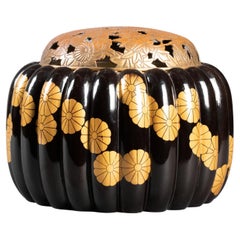
Japanese, Black Lacquer, Chrysanthemum Shaped Incense Burner
Koro
Located in Hudson, NY
With chrysanthemum motif and a gilded bronze lid. Includes unsigned collector's box. Interior measurements: 7 1/2" opening, 5 1/4" deep.
Category
Antique Late 18th Century Japanese Lacquer
Materials
Lacquer
Still Thinking About These?
All Recently ViewedMore Ways To Browse
Antique Incense
Japanese Lacquer Boxes
Silver Antique Japanese Boxes Silver Boxes
Japanese Incense
Gold Folding Screen
19th Century Japanese Lacquer Screen
Incense Box
Meiji Lacquer Box
Japanese Incense Box
Heron Screen
Tray Japan
Maki E
Antique Cinnabar
Cinnabar Lacquer
Cinnabar Furniture
Japanese Lacquer And Mother Of Pearl
Japanese Red Lacquered
Chinese Export Black Lacquer Gilt