Items Similar to Japan 1810 Kajikawa Edo Period Five Drawer Inro Lacquered Gilt Wood With Rooster
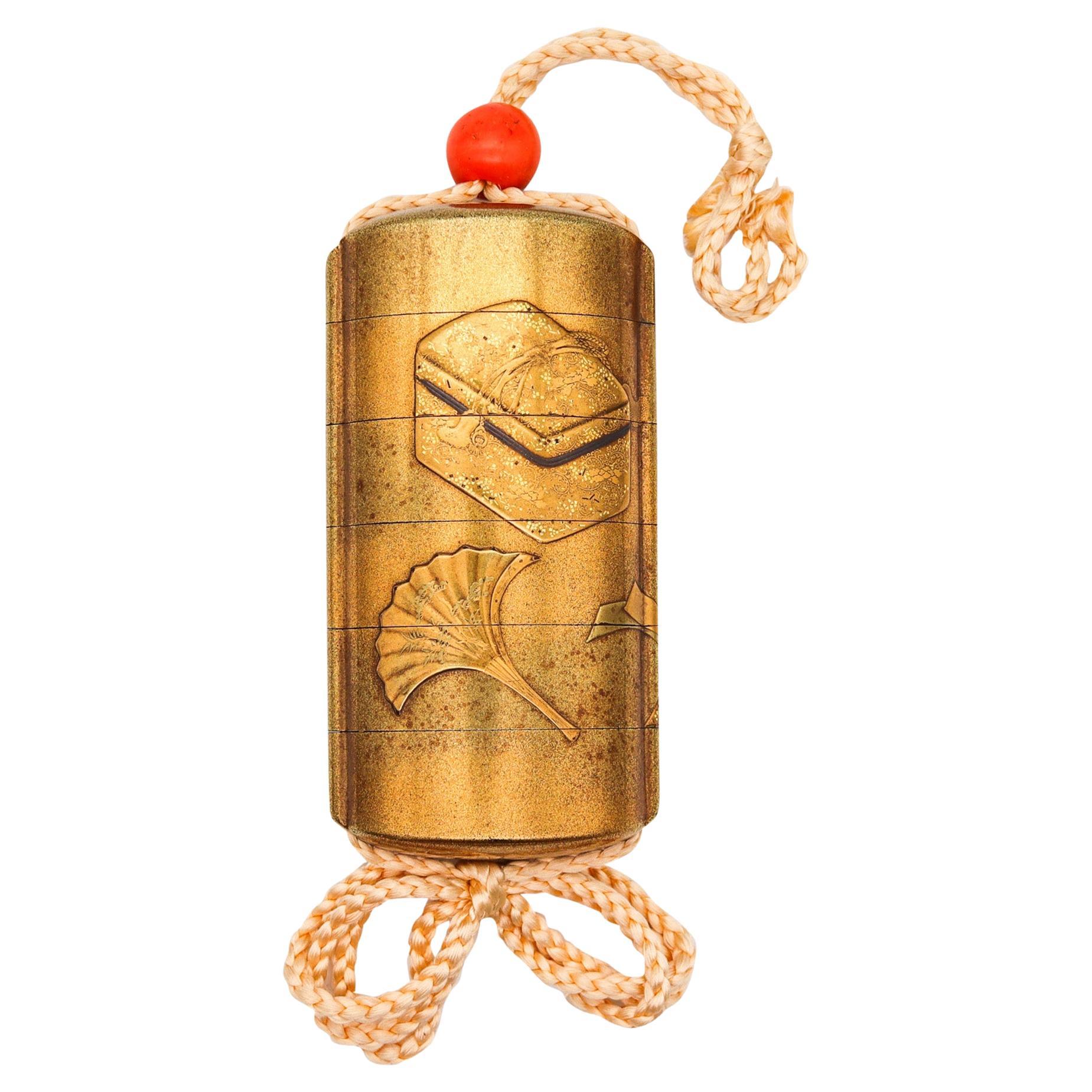
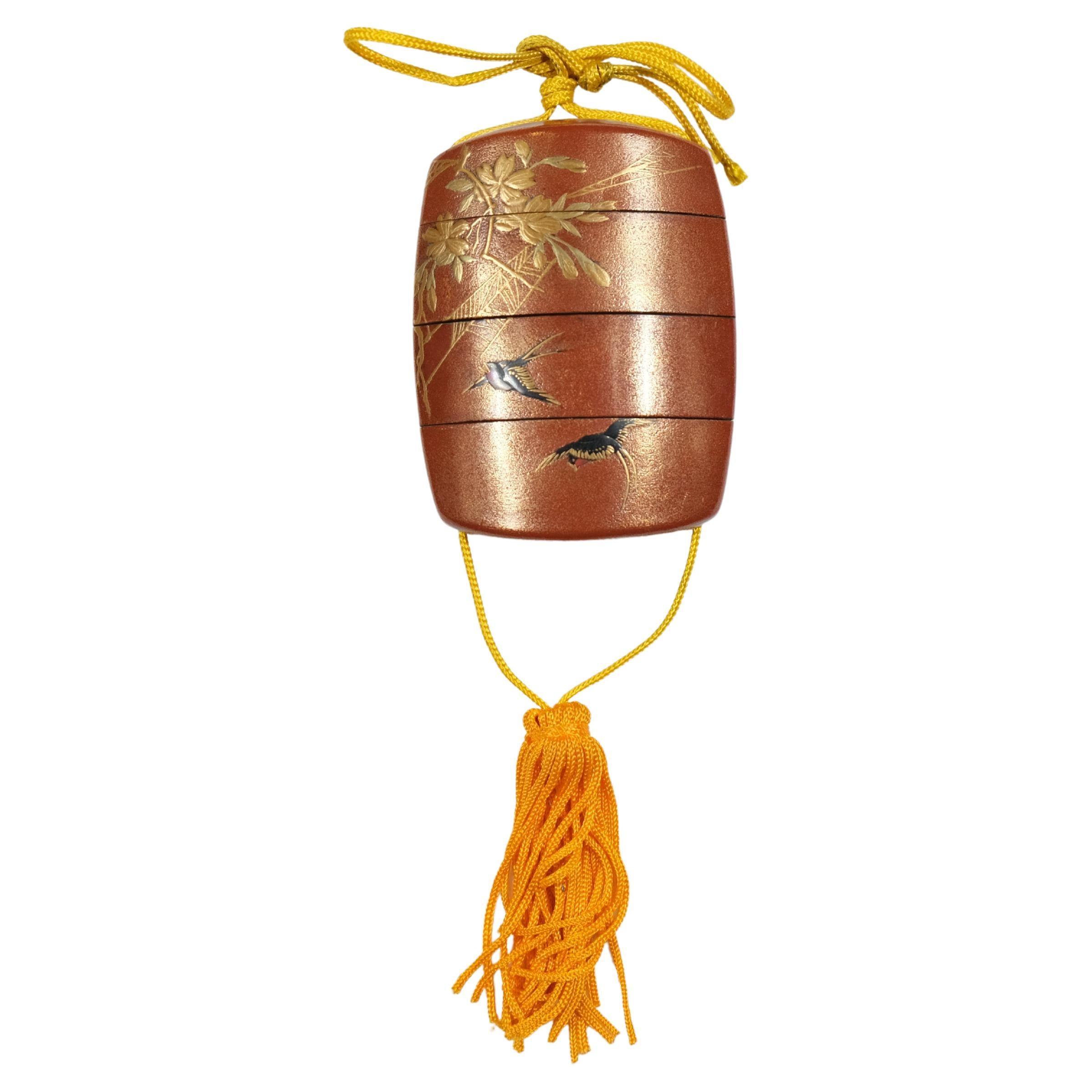
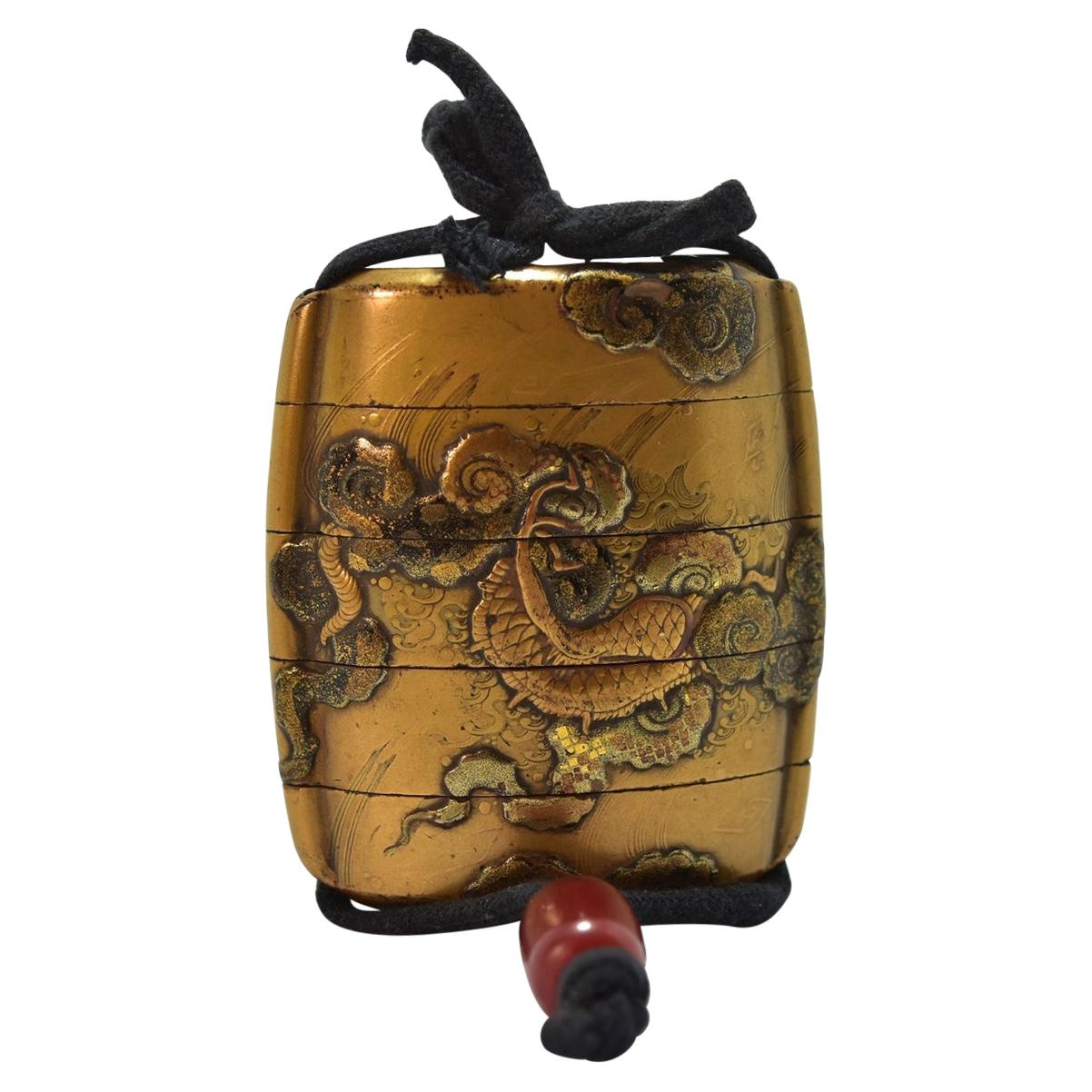
Want more images or videos?
Request additional images or videos from the seller
1 of 6
Japan 1810 Kajikawa Edo Period Five Drawer Inro Lacquered Gilt Wood With Rooster
$3,337.50
$4,45025% Off
£2,492.12
£3,322.8225% Off
€2,870.58
€3,827.4425% Off
CA$4,657.33
CA$6,209.7725% Off
A$4,924
A$6,565.3325% Off
CHF 2,646.02
CHF 3,528.0325% Off
MX$59,137.98
MX$78,850.6525% Off
NOK 33,132.88
NOK 44,177.1825% Off
SEK 30,319.03
SEK 40,425.3825% Off
DKK 21,436.90
DKK 28,582.5425% Off
About the Item
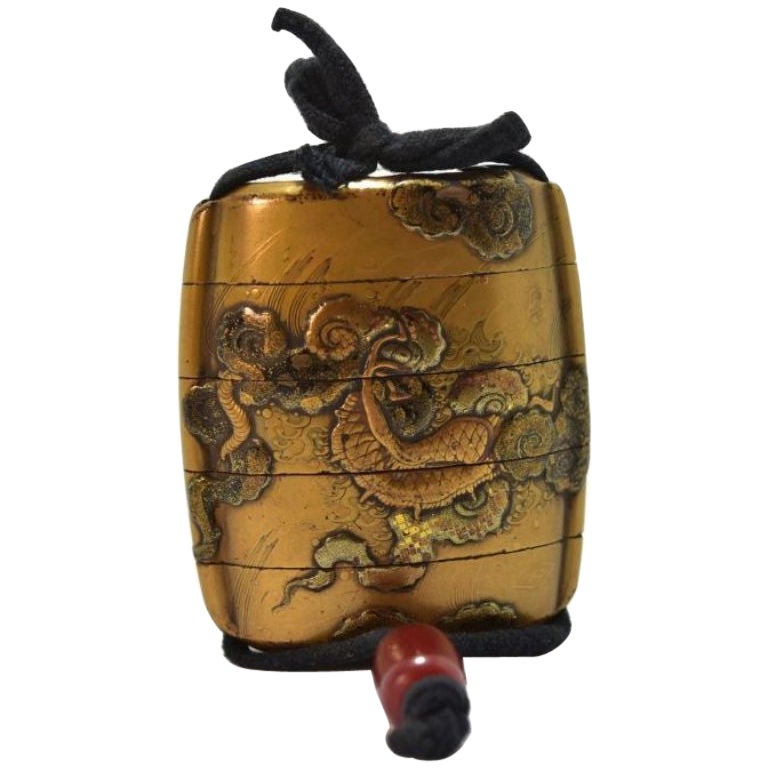
Japanese Inro from the Edo period (1615-1868) created by Kajikawa.
Beautiful Inro, created in Japan by one of the Kajikawa family during the Edo period (1615-1868), circa 1810. Has been carefully crafted in carved precious wood with applications of gilding maki-e and decorated with Japonism patterns. All dan trays are attached together with a himo cord. The detailed craftsmanship was a true pleasure to behold.
Period: Edo period (1615-1868). Shogunate.
Approximate Date: 1790-1810
Motif: A family of birds consisting of a cockerel, the hen and three chicks.
Drawers: Five.
Shape: Rectangular navette.
Technique: Carved wood, lacquer and decorated in iroe-hiramaki-e on a gold ground.
Ojime: 15mm 20mm, oval carved from natural translucent agate.
Netsuke: None
Weight: 47.70 Grams.
Measurements: Inro is 78 mm by 55 mm by 18 mm (3.07 x 2.17 x 0.71 Inches).
Signatures: Kajikawa Saku, in the underside with the signature KAJIKAWA. By a member of the Kajikawa family, signed Kajikawa 梶川 Japan, late 18th century to early 19th century, Edo period (1615-1868).
The Kajikawa family
Kajikawa family, flourished in the 19th century, they was Japanese lacquerware artists whose school in Edo (now Tokyo) flourished for more than 200 years. This family is perhaps the most famous of all the dynasties of Japanese lacquer artists, and certainly the name most often found on inro. The family is said to have been founded by Hikobei at Edo in the early 17th century, although some claim that the family’s great reputation really stemmed from his son and pupil Kyujiro. In any event, Hikobei worked for the shogunate, as did his successors until well into the 19th century. Kijirō excelled in designing particularly delicate lacquer inrō, portable medicine cases composed of a nest of tiny boxes tightly fitted into one another and secured with a silk cord. Because so much artistic skill went into decorating the outside of the inrō, they were worn on the obi (a broad sash) by men of the upper classes and were prized as collector’s items. Kajikawa artists also designed lacquer netsuke-toggles carved in the shapes of animals, human figures, and plants, used to attach medicine boxes and tobacco and money pouches to men’s sashes. Objects exemplifying the exquisite craftsmanship of the Kajikawa artists are in the Victoria and Albert Museum, London, and in the Charles A. Greenfield Collection, New York City. The Soken Kisho describes Kyujiro as ‘the best inro maker of the past or present’. See Earle, Joe [ed.] (1995) The Index of Inro Artists, p. 107.
The Edo Period
The Edo period or Tokugawa period is the period between 1603 and 1867 in the history of Japan, when Japan was under the rule of the Tokugawa shogunate and the country's 300 regional daimyo. Emerging from the chaos of the Sengoku period, the Edo period was characterized by economic growth, strict social order, isolationist foreign policies, a stable population, perpetual peace, and popular enjoyment of arts and culture. The period derives its name from Edo (now Tokyo), where on March 24, 1603, the shogunate was officially established by Tokugawa Ieyasu. The period came to an end with the Meiji Restoration and the Boshin War, which restored imperial rule to Japan. The Tokugawa (or Edo) period brought 250 years of stability to Japan. The political system evolved into what historians call bakuhan, a combination of the terms bakufu and han (domains) to describe the government and society of the period.[3] In the bakuhan, the shōgun had national authority and the daimyo had regional authority. This represented a new unity in the feudal structure, which featured an increasingly large bureaucracy to administer the mixture of centralized and decentralized authorities. The Tokugawa became more powerful during their first century of rule: land redistribution gave them nearly seven million koku, control of the most important cities, and a land assessment system reaping great revenues.
Inro
Is a traditional Japanese case for holding small objects, suspended from the obi (sash) worn around the waist when wearing a kimono. They are often highly decorated with various materials such as lacquer and various techniques such as maki-e, and are more decorative than other Japanese lacquerware. Because traditional Japanese dress lacked pockets, objects were often carried by hanging them from the obi in containers known as sagemono (a hanging object attached to a sash). Most sagemono were created for specialized contents, such as tobacco, pipes, writing brush and ink, but the type known as inro is suitable for carrying small things, and was created in the Sengoku period (1467–1615) as a portable identity seal and medicine container for travel. In the middle of the Edo period (1603–1868), inro became popular as men's accessories, and wealthy merchants of the chōnin and samurai classes collected inro often beautifully decorated with lacquer. As the technique developed from the late Edo period to the Meiji period (1868–1912) and the artistic value of inro increased, inro were no longer used as an accessory and came to be regarded as an art object for collection.
Ojime: An ojime (緒締め), lit. is a bead cord fastener used in Japanese inrō (carrying cases). It is typically under an inch in length. Each is carved into a particular shape and image, similar to the netsuke, though smaller.
Netsuke: A netsuke (根付, [netsɯ̥ke]) is a miniature sculpture, originating in 17th century in Japan. Initially a simply carved button fastener on the cords of an inrō box, netsuke later developed into ornately sculpted objects of craftsmanship.
Collateral: This piece is accompanied by a presentation pouch.
Condition: The overall condition of this Inro is excellent. Beside the little normal wear, there is no damage to any part. All part are original and secured. This piece has been carefully inspected to guarantee the condition and authenticity.
INVENTORY REF: D070523MTNE/.1111
- Dimensions:Height: 3.07 in (7.8 cm)Width: 2.17 in (5.52 cm)Depth: 0.71 in (1.81 cm)
- Style:Edo (Of the Period)
- Materials and Techniques:
- Place of Origin:
- Period:
- Date of Manufacture:1810
- Condition:Wear consistent with age and use. The overall condition of this Inro is excellent. Beside the little normal wear, there is no damage to any part. All part are original and secured. This piece has been carefully inspected to guarantee the condition and authenticity.
- Seller Location:Miami, FL
- Reference Number:Seller: D070523MTNE/.11111stDibs: LU8303235127042
About the Seller
5.0
Gold Seller
Premium sellers maintaining a 4.3+ rating and 24-hour response times
1stDibs seller since 2023
251 sales on 1stDibs
Typical response time: 1 hour
- ShippingRetrieving quote...Shipping from: Miami, FL
- Return Policy
More From This Seller
View AllJapan 1800 Edo Period Six Drawer Inro In Lacquered Gilt Wood With Utensils
Located in Miami, FL
Japanese Inro from the Edo Period (1603-1867).
Beautiful Inro, created in Japan during the Edo period (Shogunate), circa 1800. It was carefully crafted in carved precious wood with ...
Category
Antique Early 1800s Japanese Edo Lacquer
Materials
Coral
$2,437 Sale Price
25% Off
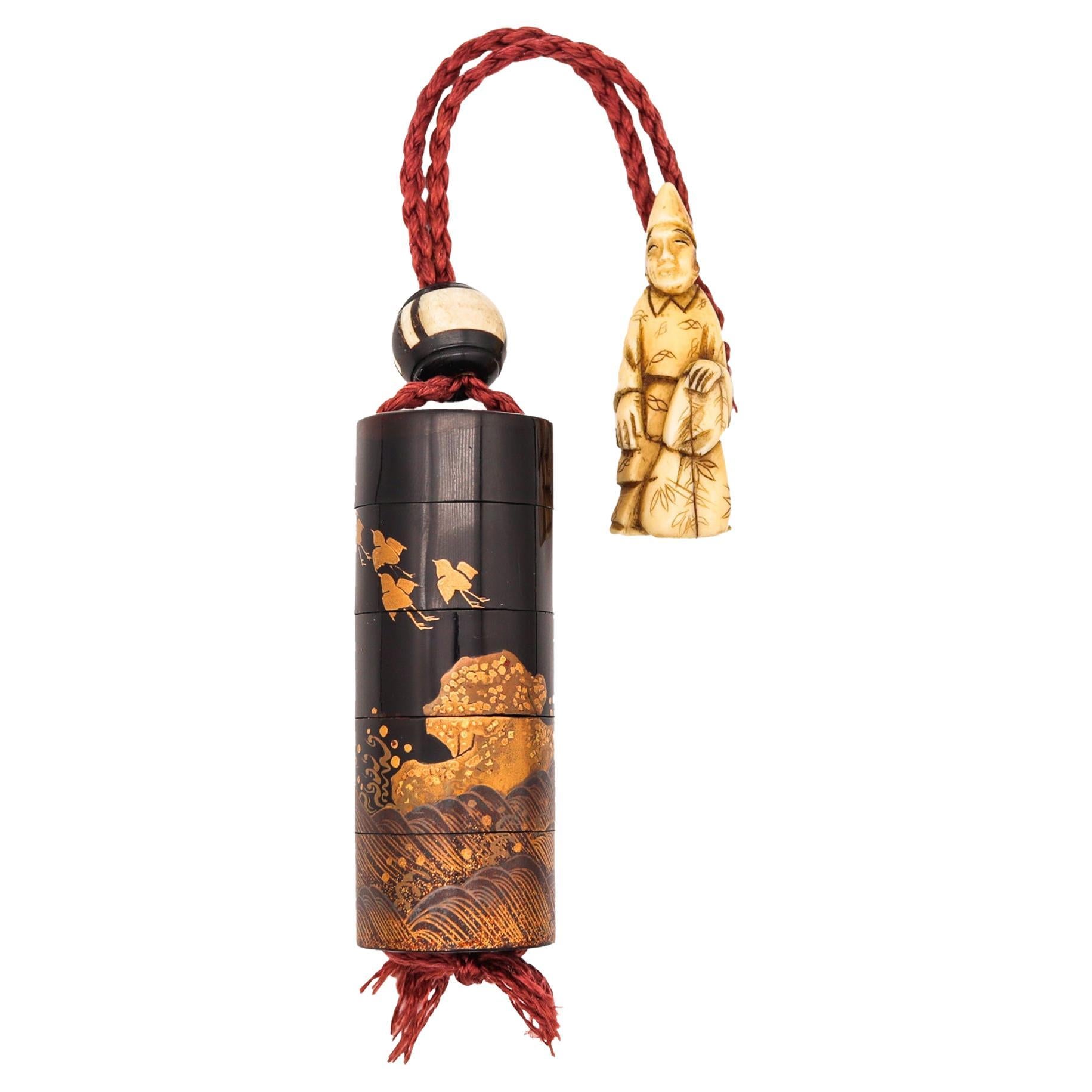
Japan 1870 Meiji Period Round Five Drawer Inro Lacquered Wood With Flying Cranes
Located in Miami, FL
Japanese Inro from the Meiji Period (1868-1912).
Beautiful Inro, created in Japan during the Meiji imperial period, circa 1870. It was carefully crafted in carved precious wood with applications of lacquer and decorated with orientalism patterns. All dan trays are attached together with a himo cord. The detailed craftsmanship was a true pleasure to behold.
Period: Meiji 1868-1912, Period of Emperor Mutsuhito.
Approximate Date: 1870.
Motif: Organic design with cascade landscape scene and five flying cranes.
Drawers: Five.
Shape: Cylinder. Very unusual and rare shape.
Technique: Carved wood, Lacquer, hiramaki-e, takamaki-e, Gilding.
Ojime: 17mm, round with Ebony wood.
Netsuke: Carved dressed...
Category
Antique 1870s Japanese Meiji Lacquer
Materials
Wood, Ebony, Giltwood, Lacquer
$2,238 Sale Price
25% Off
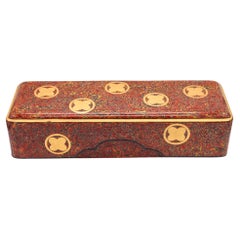
JAPAN 1900 Meiji Period Fubako Box In Hiramaki-e Lacquered Wood With Gilding
Located in Miami, FL
Fubako letters-box from the Japanese Meiji period (1868-1912).
Beautiful decorative Fubako letters box from the Japanese Imperial Meiji period, circa 1900. This box has been meticul...
Category
Antique Early 1900s Japanese Meiji Lacquer
Materials
Gold
$1,048 Sale Price
25% Off
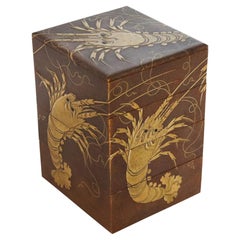
JAPAN Meiji Period 1870 Four Tiers Presentation Jubako Box Namiki Lacquer
Gold
Located in Miami, FL
Four Tier Japanese Gilt Jubako Maki-E box with red Interior.
This is a beautiful decorative presentation Jubako box created in the Imperial Japan during the early Meiji period (1868...
Category
Antique 1870s Japanese Meiji Lacquer
Materials
Gold
$4,087 Sale Price / set
25% Off
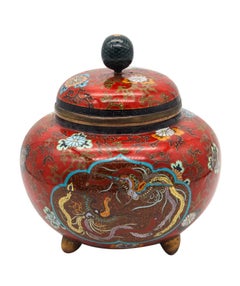
JAPAN IMPERIAL 1900 Meiji Period Tripode Koro Censer In Cloisonné Enamel With
Located in Miami, FL
Japanese tripod Koro from the Meiji Period (1868-1912).
This is a rare and beautiful antique koro censer, created in the imperial Japan during the Meiji period (1868-1912), circa 1900. It was carefully crafted in solid bronze and copper with silver wires and embellished with applications of polychromatic Cloisonné enamels and aventurine. The designs depict organics and natural motifs such mythological animals and flowers.
The Chrysanthemum Symbol
In Imperial Japan, the chrysanthemum (Kiku) was a potent symbol of the imperial family and the emperor himself, representing longevity, royalty, and divine power. The 16-petaled chrysanthemum is the Imperial Seal and crest, found on passports, coins, and the Chrysanthemum Throne. This association dates back to the Kamakura period (1185–1333), particularly with Emperor Go-Toba's fondness for the flower, establishing its link to imperial authority and lineage. The connection between the chrysanthemum and the imperial family began when Emperor Go-Toba adopted it as a personal emblem, aligning it with the strength and refinement of the emperor's rule. During the Meiji Period, the 16-petaled chrysanthemum crest, solidifying the association with the imperial family, was established during this time.
The Meiji Imperial Period
This is an era of Japanese history that extended from October 23, 1868 to July 30, 1912.The Meiji era was the first half of the Empire of Japan, when the Japanese people moved from being an isolated feudal society at risk of colonization by Western powers to the new paradigm of a modern, industrialized nation state and emergent great power, influenced by Western scientific, technological, philosophical, political, legal, and aesthetic ideas. As a result of such wholesale adoption of radically different ideas, the changes to Japan were profound, and affected its social structure, internal politics, economy, military, and foreign relations. The period corresponded to the reign of Emperor Meiji. It was preceded by the Keiō era and was succeeded by the Taishō era, upon the accession of Emperor Taishō.
Country: Imperial Japan.
Period: Meiji, 1890-1910.
Technique: Silver Wire Cloisonné over copper and bronze.
Weight: 416.80 Grams, (0.417 Kg).
Measurements:118 mm by 115 mm (4.65 x 4.52 Inches).
Koro
This term refers to a Japanese censer, incense burner, perfume burner or pastille burner is a vessel made for burning incense or perfume in some solid form. They vary greatly in size, form, and material of construction, and have been in use since ancient times throughout the world. They may consist of simple earthenware bowls or fire pots to intricately carved silver or gold vessels, small tabletop objects a few centimeters tall to as many as several meters high. Many designs use openwork to allow a flow of air. In many cultures, burning incense has spiritual and religious connotations, and this influences the design and decoration of the censer.
Cloisonné
This is an enameling technique in which the pattern is formed by wires soldered to the surface of the object to be decorated, which is usually made from copper, forming cells or cloisons, each of which holds a single colour of enamel paste which is then fired, and ground and polished. The champleve technique also uses an enameling technique, but the cells are formed by carving into the surface of the object, or in the casting. The cloisonne technique has been in use since the 12th century BC in the west, but the technique did not reach China until the 13th or 14th century. It became popular in China in the 18th century. Initially bronze or brass bodies were used, and in the 19th century copper, at which time the quality of the items produced began to decline. Chinese cloisonné is the best-known enamel cloisonné, though the Japanese produced large quantities from the mid-19th century, of very high technical quality. In the west the cloisonne technique was revived in the mid-19th century following imports from China, and its use continued in the Art Nouveau and Art Deco periods.
Condition: Basically, is in great antique condition, near mint, with insignificant and minimal usage, in great condition. All parts are secured in the settings. This Japanese Meiji Koro...
Category
Antique Early 1900s Japanese Meiji Metalwork
Materials
Silver, Bronze, Copper, Enamel
$1,498 Sale Price
25% Off
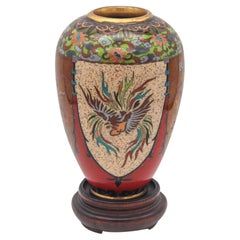
Japan 1890 Meiji Period Decorative Vase In Cloisonné Enamel With Wood Base
Located in Miami, FL
Japanese vase from the Meiji Period (1868-1912).
Beautiful antique decorative vase, created in Japan during the Meiji period (1868-1912), circa 1890s. It was carefully crafted in so...
Category
Antique 1890s Japanese Meiji Metalwork
Materials
Bronze, Enamel
$523 Sale Price / set
25% Off
You May Also Like
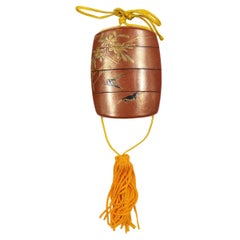
Lacquer inro, Japanese, Late 19th c.
Located in Stockholm, SE
A fourpart Japanese lacquer Inro. the lacquer is red with motives of a spider with its web in gold and two flying cranes. The lowest part of the inro has a crack on one side.
Category
Antique Late 19th Century Japanese Lacquer
Materials
Lacquer
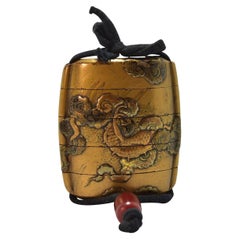
Japanese Inro with 4 Boxes in Gold Lacquer with Mat Kinji Background
Located in Marseille, FR
19th century Japanese inro with 4 boxes in gold lacquer with kinji mat background decorated in taka makiyé of gold of different tones. Lacquered wood siz...
Category
Antique 19th Century Japanese Japonisme More Asian Art, Objects and Furn...
Materials
Giltwood
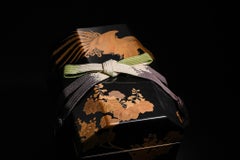
Edo Period Maki-e Lacquer Drum Box with Phoenix and Paulownia, 17th-19th Century
Located in Taichung, TW
Designer's Note:
Historical Elegance: This drum box is a museum-quality example of Edo-period craftsmanship. Its presence adds an immediate sense of history and "Old World" Japanese...
Category
Antique 19th Century Japanese Edo Lacquer
Materials
Lacquer
$15,700
Free Shipping
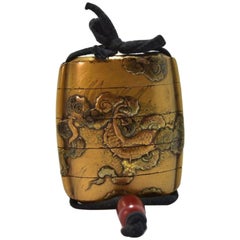
Japanese Inro with 4 19th Century Boxes in Gold Lacquer with Matt Kinji Backgrou
Located in Marseille, FR
Japanese inro with 4 XIXth century boxes in gold lacquer with matt kinji background decorated in gold taka makiyé of different tones. Lacquered wood measuring 65 x 70 x 22 mm. Weight...
Category
Antique 19th Century Japanese Snuff Boxes and Tobacco Boxes
Materials
Lacquer
19th Century Japanese Inro with 5 Lacquered Wood Compartments
Located in Marseille, FR
19th Century Japanese inro with 5 lacquered wooden compartments, 93 x 50 x 30 mm in size. Weight 59.2 g.
Additional information:
Material: Lacquered ...
Category
Antique 19th Century Japanese Snuff Boxes and Tobacco Boxes
Materials
Wood
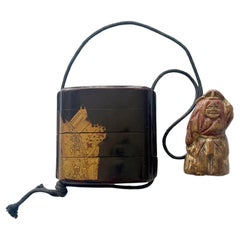
Japanese Lacquer Inro with Gold Maki-e and Carved Wood Netsuke Meiji Period
Located in Atlanta, GA
A Japanese four-case inro with a stringed carved wood netsuke circa 19th century. The inro has a near square form with rounded corners, The surface is decorated with gold hiramaki-e ...
Category
Antique 19th Century Japanese Meiji Lacquer
Materials
Wood, Lacquer
More Ways To Browse
Japanese Wood Crafts
Edo Wood
Wood Furniture With Animal Motif
Japanese Gilt Wood
Edo Period Gold
Carved Netsuke
Japanese Lacquerware
Antique Inro
Tobacco Pipes
Antique Obi
Inro Box
Japanese Rooster
Antique Japanese Lacquerware
Japanese Inro
Antique Japanese Inro
Japanese Lacquer Box With Drawers
Hens And Chicks
Tobacco Pouch