Items Similar to JAPAN 1880 Meiji Period Tebako Box In Red Lacquered Wood With Abalone Inlaid
Want more images or videos?
Request additional images or videos from the seller
1 of 12
JAPAN 1880 Meiji Period Tebako Box In Red Lacquered Wood With Abalone Inlaid
$3,080per set
$3,850per set20% Off
£2,338.28per set
£2,922.85per set20% Off
€2,695.65per set
€3,369.57per set20% Off
CA$4,357.09per set
CA$5,446.36per set20% Off
A$4,690.80per set
A$5,863.50per set20% Off
CHF 2,512.01per set
CHF 3,140.02per set20% Off
MX$56,522.45per set
MX$70,653.06per set20% Off
NOK 31,694.65per set
NOK 39,618.32per set20% Off
SEK 29,005.73per set
SEK 36,257.16per set20% Off
DKK 20,143per set
DKK 25,178.75per set20% Off
About the Item
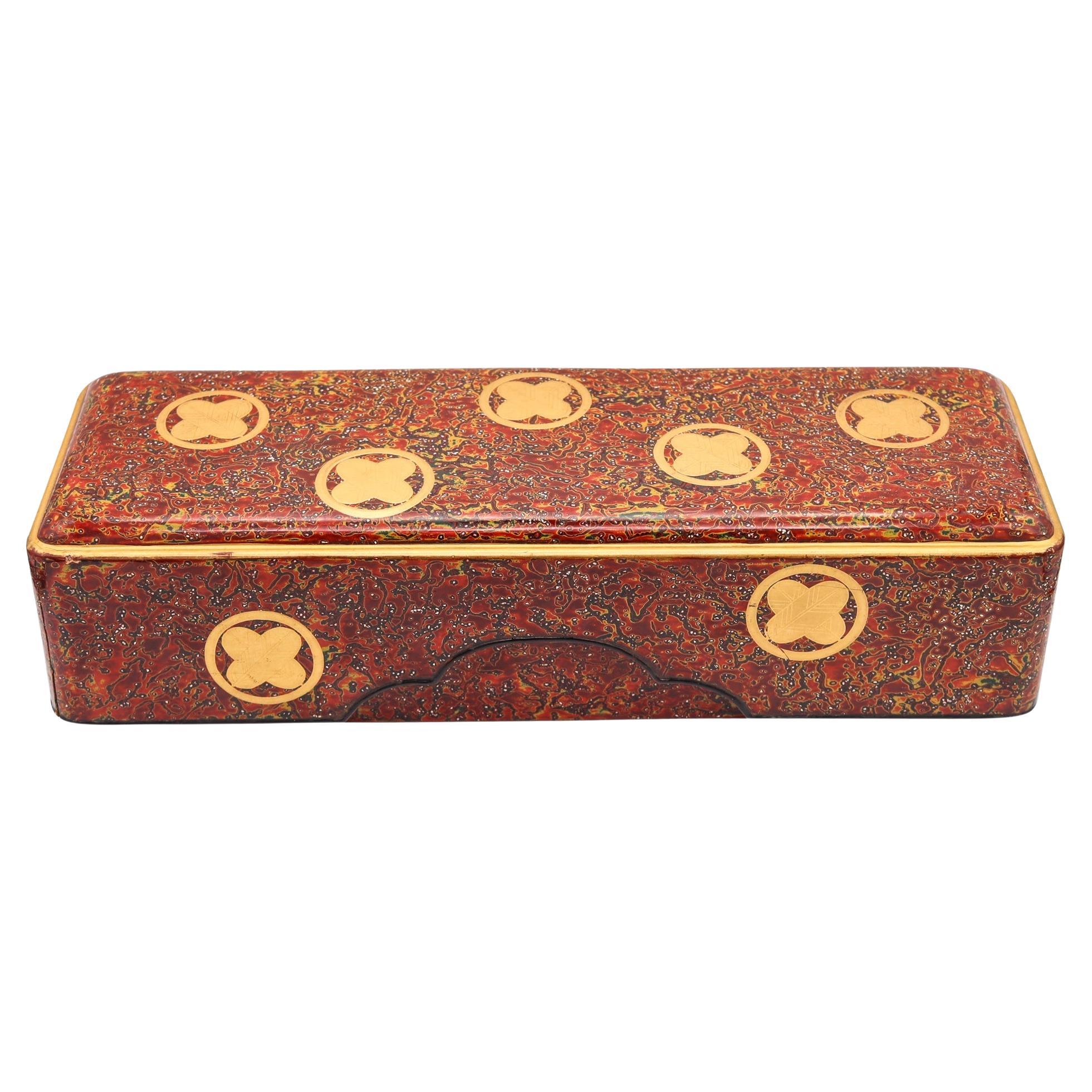
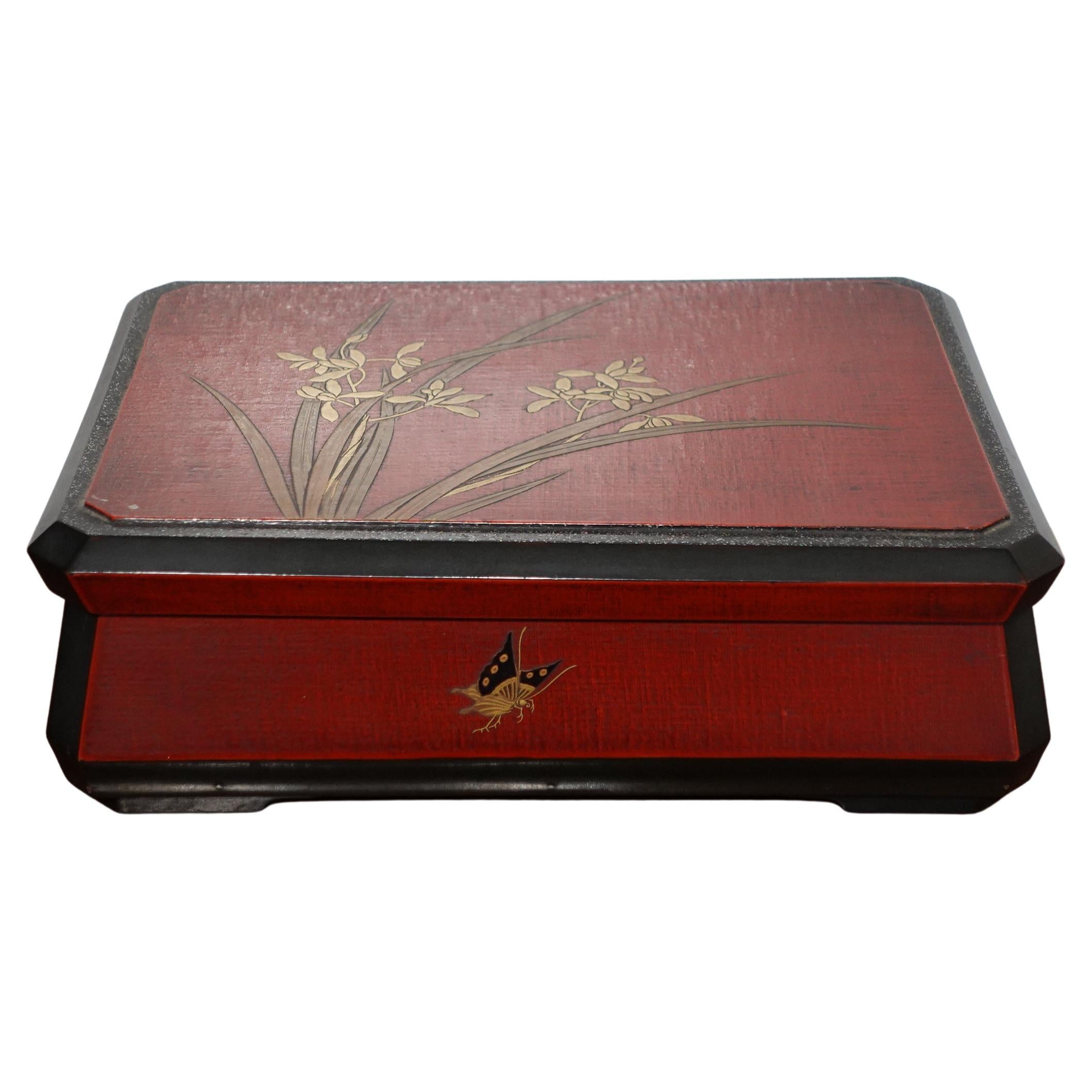
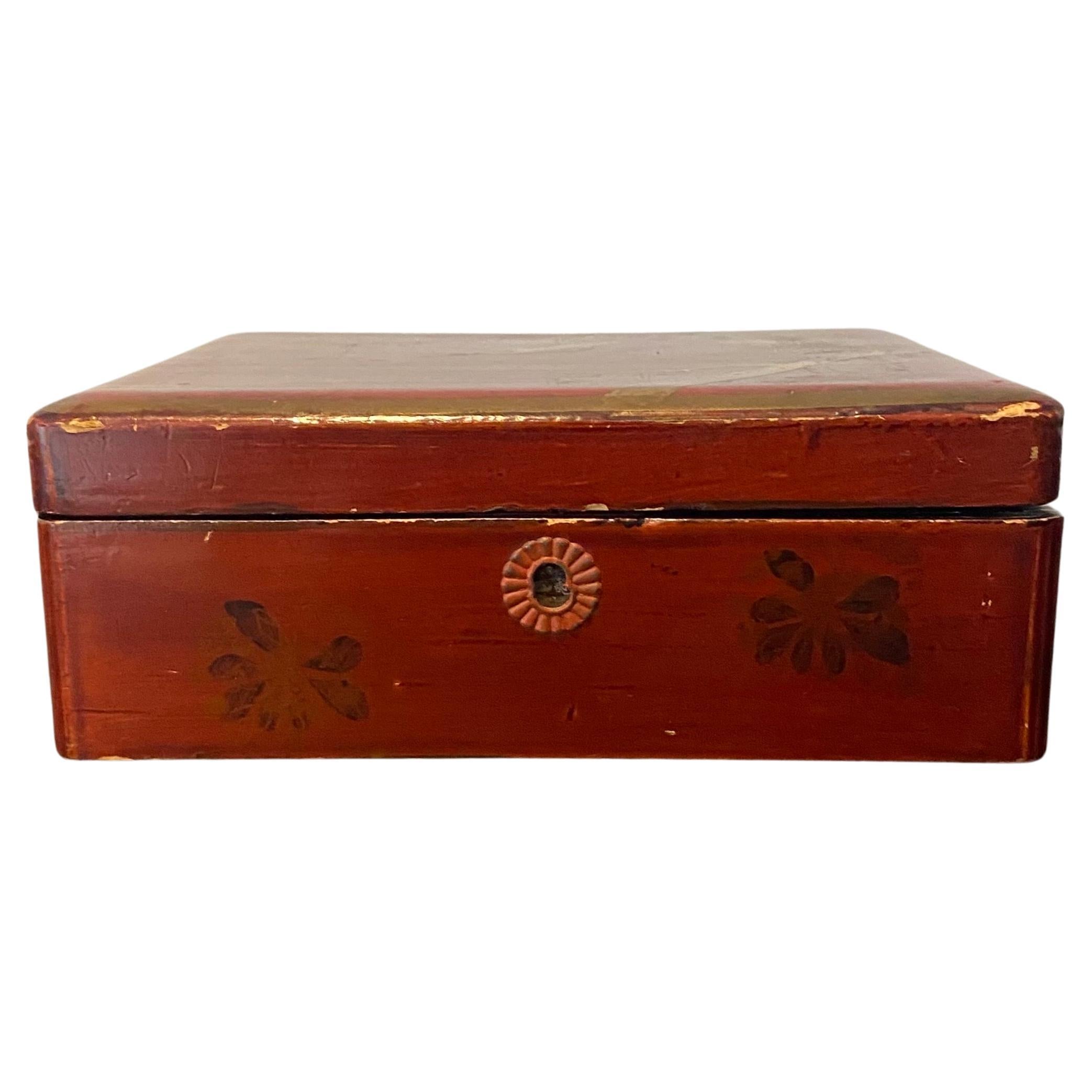
Presentation Tebako box from the Japanese Meiji period (1868-1912).
Beautiful decorative presentation Tebako box from the Japanese Imperial Meiji period, circa 1880. This box has been meticulously crafted in a squared cushioned shape in wood with kara coating Kobayashi red lacquer, gilding, black lacquer and inlaid decorations of abalone shell, Raden. Tebako literally means "portable box", it is a toilet box containing the objects necessary for washing and make-up, especially blush mirror and little boxes. This is a great decorative box, actually to be used for any purpose and with great eye appeal.
Tsugaru Nuri Lacquer in The Kara Nuri Style
Tsugaru lacquerware originated in the Edo period (1603-1868), when the lord of the Hirosaki Domain (now part of Aomori Prefecture) invited a lacquer artisan from Wakasa Province (now Fukui Prefecture). In the Meiji period (1868-1912), Tsugaru lacquerware grew into a major local industry after the establishment of a lacquerware factory and a cooperative association. Tsugaru lacquerware gained worldwide recognition after it was exhibited at the Vienna World Exposition in 1873.
Raden
This is a Japanese decorative technique used for lacquerware and woodenware, in which linings of mother-of-pearl or of abalone shells are cut into designs and either glued onto or inserted into the surface of the lacquer or wood. There are several varieties of Raden lacquerware.
The Meiji Imperial Period
This is an era of Japanese history that extended from October 23, 1868 to July 30, 1912.The Meiji era was the first half of the Empire of Japan, when the Japanese people moved from being an isolated feudal society at risk of colonization by Western powers to the new paradigm of a modern, industrialized nation state and emergent great power, influenced by Western scientific, technological, philosophical, political, legal, and aesthetic ideas. As a result of such wholesale adoption of radically different ideas, the changes to Japan were profound, and affected its social structure, internal politics, economy, military, and foreign relations. The period corresponded to the reign of Emperor Meiji. It was preceded by the Keiō era and was succeeded by the Taishō era, upon the accession of Emperor Taishō.
Country: Imperial Japan,
Period: Meiji, 1880.
Materials: Wood, red and black lacquer, gold and abalone shell.
Weight: 550 Grams, (1.21 Pounds).
Measurements: 95 mm by 172 mm by 172 mm (3.75 x 6.75 x 6.75 Inches).
Signature: Signed in black lacquer in the underneath.
Condition: Basically, is in great antique condition, with minimal flea bites at the inside border due the usage, otherwise in great condition. All parts are secured in the settings. This presentation Tebako box has been carefully inspected to guarantee the condition and authenticity.
INVENTORY REF: D032425MNNN/.6745
- Dimensions:Height: 3.75 in (9.53 cm)Width: 6.75 in (17.15 cm)Depth: 6.75 in (17.15 cm)
- Sold As:Set of 2
- Style:Meiji (Of the Period)
- Materials and Techniques:
- Place of Origin:
- Period:
- Date of Manufacture:1880
- Condition:Wear consistent with age and use. Basically, is in great antique condition, with minimal flea bites at the inside border due the usage, otherwise in great condition. All parts are secured in the settings. This presentation Tebako box has been carefully inspected to be guarantee.
- Seller Location:Miami, FL
- Reference Number:Seller: D032425MNNN/.67451stDibs: LU8303244639362
About the Seller
5.0
Gold Seller
Premium sellers maintaining a 4.3+ rating and 24-hour response times
1stDibs seller since 2023
250 sales on 1stDibs
Typical response time: 1 hour
- ShippingRetrieving quote...Shipping from: Miami, FL
- Return Policy
More From This Seller
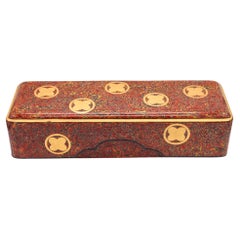
View AllJAPAN 1900 Meiji Period Fubako Box In Hiramaki-e Lacquered Wood With Gilding
Located in Miami, FL
Fubako letters-box from the Japanese Meiji period (1868-1912).
Beautiful decorative Fubako letters box from the Japanese Imperial Meiji period, circa 1900. This box has been meticul...
Category
Antique Early 1900s Japanese Meiji Lacquer
Materials
Gold
$1,118 Sale Price
20% Off
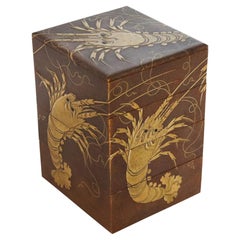
JAPAN Meiji Period 1870 Four Tiers Presentation Jubako Box Namiki Lacquer
Gold
Located in Miami, FL
Four Tier Japanese Gilt Jubako Maki-E box with red Interior.
This is a beautiful decorative presentation Jubako box created in the Imperial Japan during the early Meiji period (1868...
Category
Antique 1870s Japanese Meiji Lacquer
Materials
Gold
$4,360 Sale Price / set
20% Off
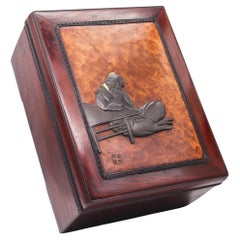
JAPAN Meiji Period 1890 Tebako Desk Box Made In Precious Woods, Bronze
Gold
Located in Miami, FL
Presentation Tebako box from the Japanese Meiji period (1868-1912).
Beautiful decorative presentation Tebako desk box from the Japanese Imperial Meiji period, circa 1880. This box h...
Category
Antique 1890s Japanese Meiji Decorative Boxes
Materials
Gold, Bronze
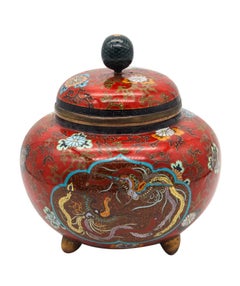
JAPAN IMPERIAL 1900 Meiji Period Tripode Koro Censer In Cloisonné Enamel With
Located in Miami, FL
Japanese tripod Koro from the Meiji Period (1868-1912).
This is a rare and beautiful antique koro censer, created in the imperial Japan during the Meiji period (1868-1912), circa 1900. It was carefully crafted in solid bronze and copper with silver wires and embellished with applications of polychromatic Cloisonné enamels and aventurine. The designs depict organics and natural motifs such mythological animals and flowers.
The Chrysanthemum Symbol
In Imperial Japan, the chrysanthemum (Kiku) was a potent symbol of the imperial family and the emperor himself, representing longevity, royalty, and divine power. The 16-petaled chrysanthemum is the Imperial Seal and crest, found on passports, coins, and the Chrysanthemum Throne. This association dates back to the Kamakura period (1185–1333), particularly with Emperor Go-Toba's fondness for the flower, establishing its link to imperial authority and lineage. The connection between the chrysanthemum and the imperial family began when Emperor Go-Toba adopted it as a personal emblem, aligning it with the strength and refinement of the emperor's rule. During the Meiji Period, the 16-petaled chrysanthemum crest, solidifying the association with the imperial family, was established during this time.
The Meiji Imperial Period
This is an era of Japanese history that extended from October 23, 1868 to July 30, 1912.The Meiji era was the first half of the Empire of Japan, when the Japanese people moved from being an isolated feudal society at risk of colonization by Western powers to the new paradigm of a modern, industrialized nation state and emergent great power, influenced by Western scientific, technological, philosophical, political, legal, and aesthetic ideas. As a result of such wholesale adoption of radically different ideas, the changes to Japan were profound, and affected its social structure, internal politics, economy, military, and foreign relations. The period corresponded to the reign of Emperor Meiji. It was preceded by the Keiō era and was succeeded by the Taishō era, upon the accession of Emperor Taishō.
Country: Imperial Japan.
Period: Meiji, 1890-1910.
Technique: Silver Wire Cloisonné over copper and bronze.
Weight: 416.80 Grams, (0.417 Kg).
Measurements:118 mm by 115 mm (4.65 x 4.52 Inches).
Koro
This term refers to a Japanese censer, incense burner, perfume burner or pastille burner is a vessel made for burning incense or perfume in some solid form. They vary greatly in size, form, and material of construction, and have been in use since ancient times throughout the world. They may consist of simple earthenware bowls or fire pots to intricately carved silver or gold vessels, small tabletop objects a few centimeters tall to as many as several meters high. Many designs use openwork to allow a flow of air. In many cultures, burning incense has spiritual and religious connotations, and this influences the design and decoration of the censer.
Cloisonné
This is an enameling technique in which the pattern is formed by wires soldered to the surface of the object to be decorated, which is usually made from copper, forming cells or cloisons, each of which holds a single colour of enamel paste which is then fired, and ground and polished. The champleve technique also uses an enameling technique, but the cells are formed by carving into the surface of the object, or in the casting. The cloisonne technique has been in use since the 12th century BC in the west, but the technique did not reach China until the 13th or 14th century. It became popular in China in the 18th century. Initially bronze or brass bodies were used, and in the 19th century copper, at which time the quality of the items produced began to decline. Chinese cloisonné is the best-known enamel cloisonné, though the Japanese produced large quantities from the mid-19th century, of very high technical quality. In the west the cloisonne technique was revived in the mid-19th century following imports from China, and its use continued in the Art Nouveau and Art Deco periods.
Condition: Basically, is in great antique condition, near mint, with insignificant and minimal usage, in great condition. All parts are secured in the settings. This Japanese Meiji Koro...
Category
Antique Early 1900s Japanese Meiji Metalwork
Materials
Silver, Bronze, Copper, Enamel
$1,598 Sale Price
20% Off
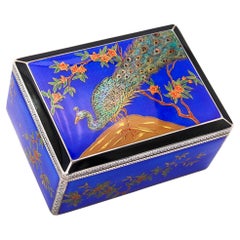
ALFRED DUNHILL Paris 1928 Louis Kuppenheim Enameled Japonisme Box 935 Sterling
By Louis Kuppenheim, Alfred Dunhill
Located in Miami, FL
An enameled box by Louis Kuppenheim for Alfred Dunhill.
This is an extraordinary and extremely rare desk box with double enameling. The box have been created in the city of Pforzhei...
Category
Vintage 1920s French Art Deco Decorative Boxes
Materials
Gold, Silver, Enamel
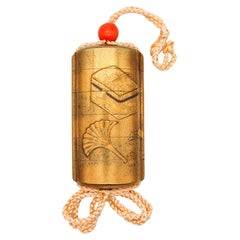
Japan 1800 Edo Period Six Drawer Inro In Lacquered Gilt Wood With Utensils
Located in Miami, FL
Japanese Inro from the Edo Period (1603-1867).
Beautiful Inro, created in Japan during the Edo period (Shogunate), circa 1800. It was carefully crafted in carved precious wood with ...
Category
Antique Early 1800s Japanese Edo Lacquer
Materials
Coral
$2,600 Sale Price
20% Off
You May Also Like
Chinese Cloisonne Mounted Red
Black Lacquer Box
Located in Atlanta, GA
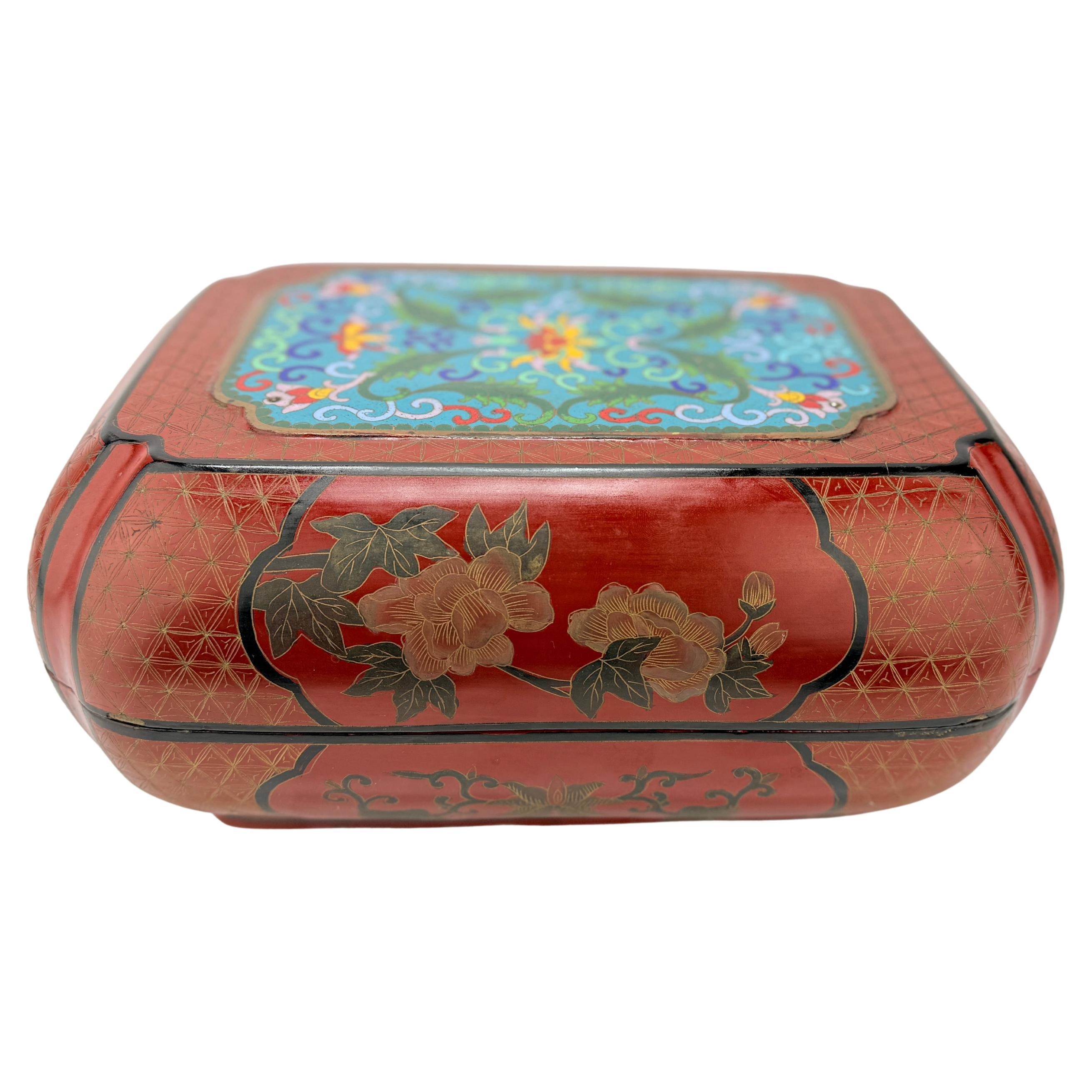
This is a beautifully crafted lacquer box with a cloisonné enamel mount, featuring an intricate design that combines traditional craftsmanship with vibrant artistry. The lid showcase...
Category
20th Century Chinese Chinese Export Lacquer
Materials
Enamel
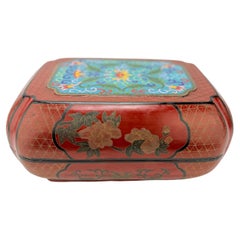
Red Japanese Lacquered Box Meiji Decorative Box, circa 1880
Located in Auribeau sur Siagne, FR
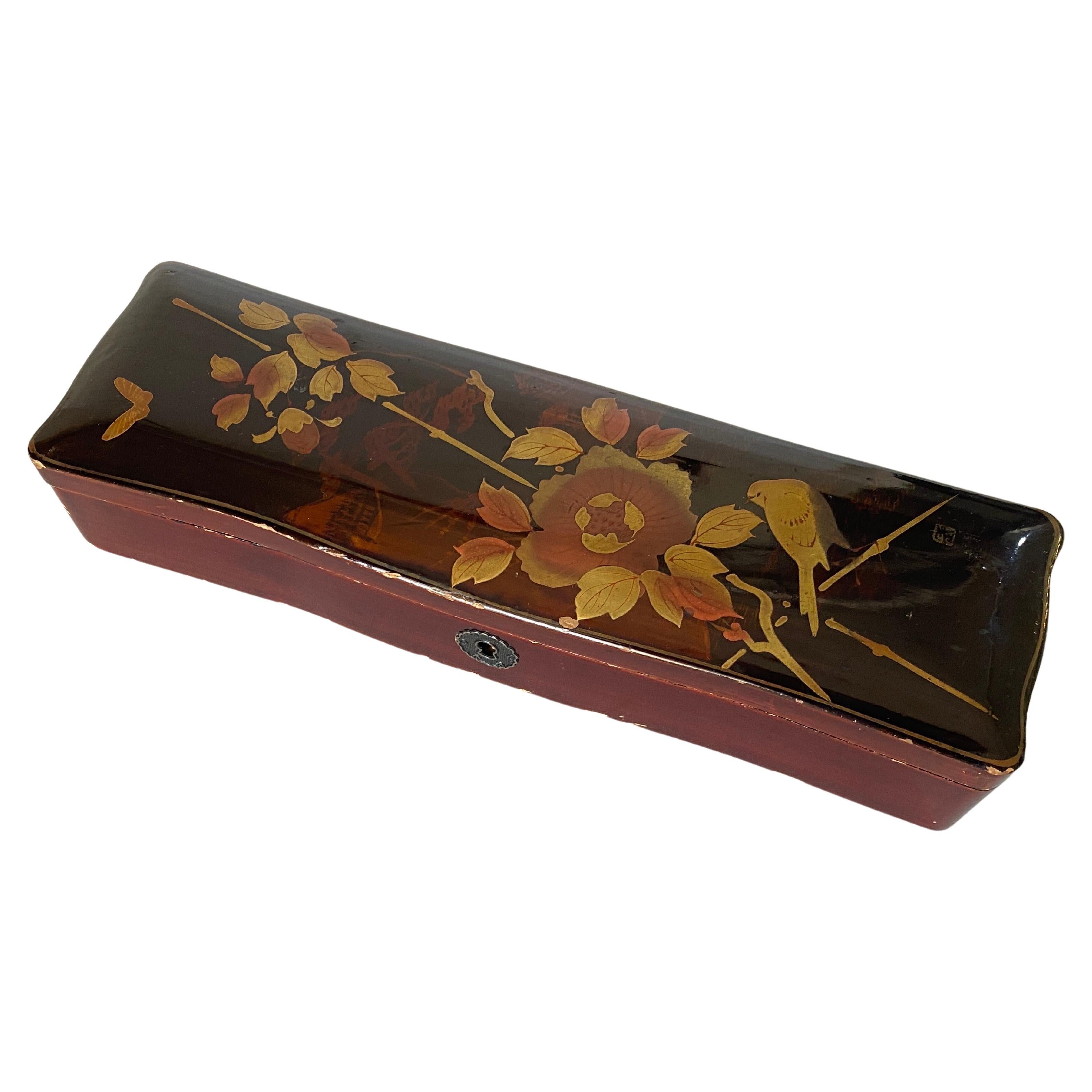
Nice Japanese glove box in red and black lacquered wood dating from the end of the 19th century. It is decorated with delicate gold, black and white flowers and foliage on all its vi...
Category
Antique 19th Century Japanese Meiji Decorative Boxes
Materials
Lacquer, Wood
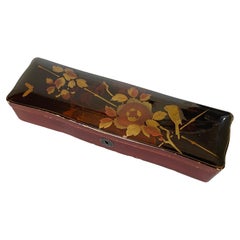
Japanese Red Ginbari Cloisonne Trinket Box, Meiji Period, circa 1900, Japan
Located in Austin, TX
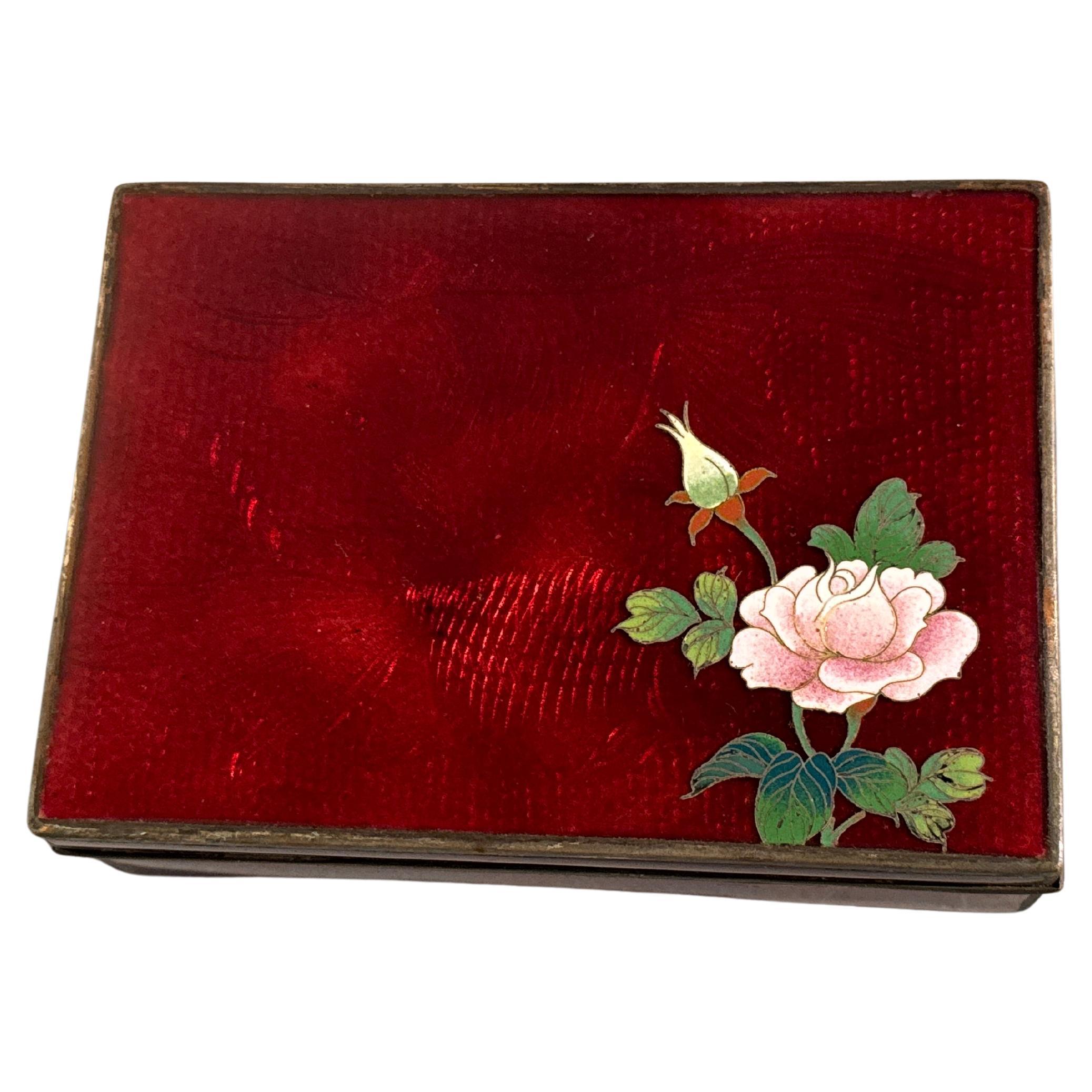
A rich and elegant Japanese export red ginbari cloisonne trinket box, Meiji Period, circa 1900, Japan.
The attractive Japanese cloisonne box features a striking textured red ginbari...
Category
Antique Early 1900s Japanese Meiji Decorative Boxes
Materials
Metal, Copper, Enamel, Foil
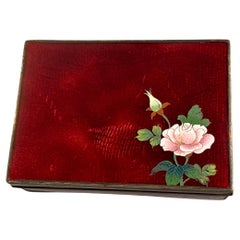
Japanese late Meiji period A Large Organizer Red Lacquered Box, Ric.052
Located in Norton, MA
Japanese late Meiji period A Large Organizer Red Lacquered Box, decorated with irises and butterflies in gold and black.
Category
Antique 19th Century Japanese Decorative Boxes
Materials
Lacquer
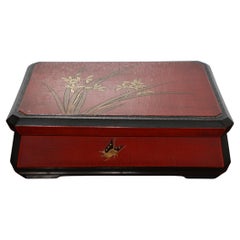
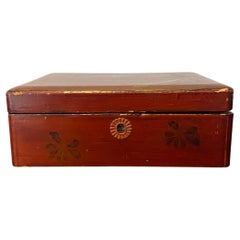
Japan Red Lacquered Box 19th century
Located in Beuzevillette, FR
Beautiful Japanese box in red lacquered wood.
The lid is decorated with golden herons and flowering tree branches and signed by the artist. Black flowers are painted around the box.
...
Category
Antique Late 19th Century Decorative Boxes
Materials
Wood
$171 Sale Price
20% Off
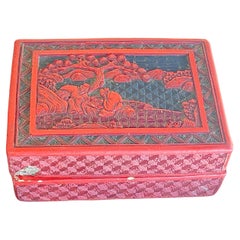
Antique Chinese Cinnabar Lacquered Rectangular Box and Cover, China, circa 1880,
Located in Auribeau sur Siagne, FR
Red lacquer box with the lid representing a scholar and children playing in a mountainous garden, the outer sides covered with repeated geometric patterns. This box was made in China...
Category
Antique Late 19th Century Asian Chinese Export Jewelry Boxes
Materials
Wood, Lacquer
More Ways To Browse
Red Lacquer Furniture
Black Gold Lacquer
Japanese Wood Crafts
Emperor Japan
Meiji Wood
Meiji Wood Furniture
Imperial Japan
Black And Red Lacquer
Black Lacquer Mother Of Pearl
Japanese Lacquer Boxes
Antique Toilet
Abalone Pearl
Red Lacquer Box
Inlaid Wood Box
Polished Wood Box
Antique Mirror Box
Black Abalone
Japanese Pearl Of Mother Box