Items Similar to JAPAN Meiji Period 1870 Four Tiers Presentation Jubako Box Namiki Lacquer
Gold

Want more images or videos?
Request additional images or videos from the seller
1 of 13
JAPAN Meiji Period 1870 Four Tiers Presentation Jubako Box Namiki Lacquer
Gold
$4,360per set
$5,450per set20% Off
£3,325.50per set
£4,156.88per set20% Off
€3,786.95per set
€4,733.68per set20% Off
CA$6,127.13per set
CA$7,658.91per set20% Off
A$6,682.50per set
A$8,353.12per set20% Off
CHF 3,539.94per set
CHF 4,424.92per set20% Off
MX$80,113.64per set
MX$100,142.05per set20% Off
NOK 45,083.05per set
NOK 56,353.81per set20% Off
SEK 41,225.10per set
SEK 51,531.37per set20% Off
DKK 28,292.20per set
DKK 35,365.25per set20% Off
About the Item
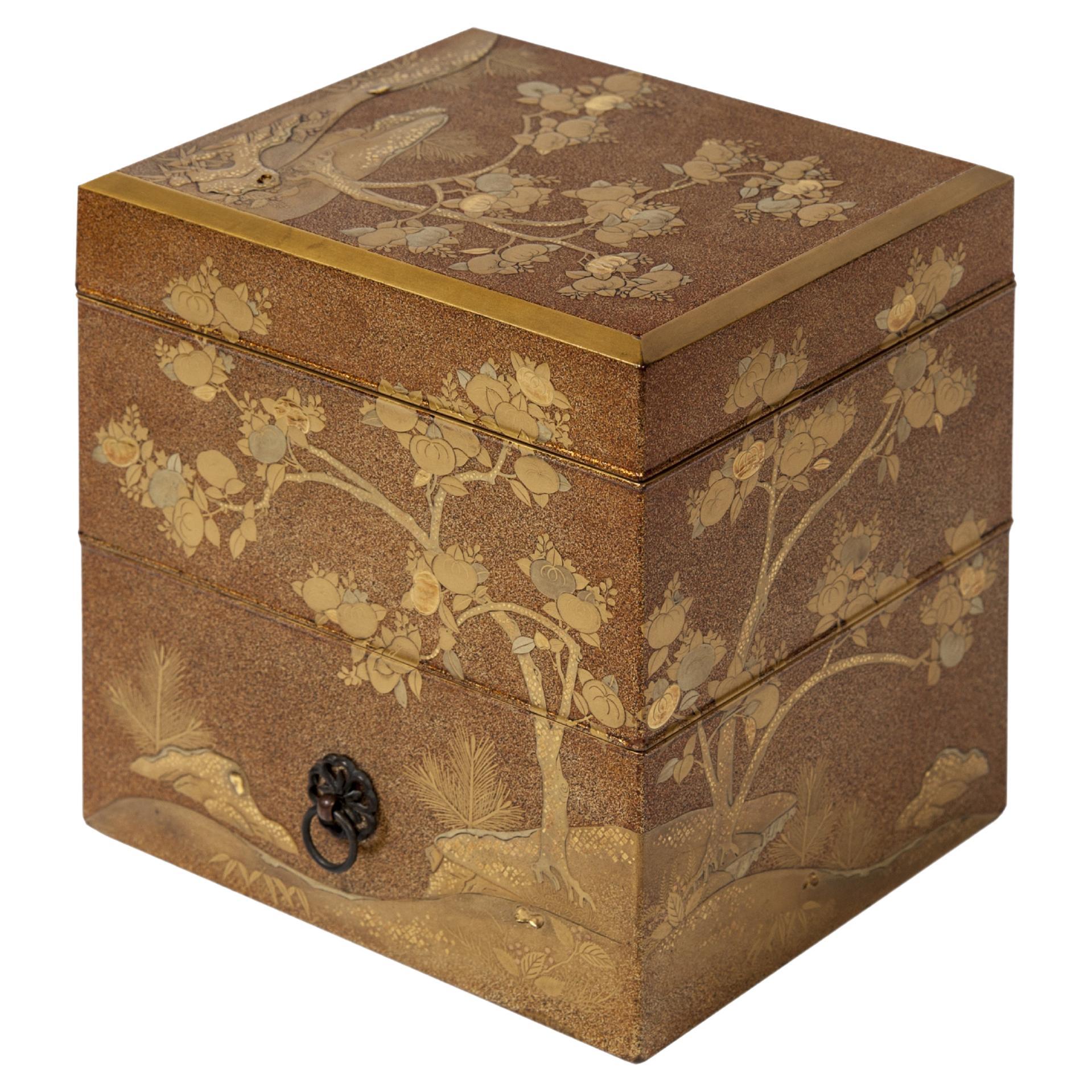
Four Tier Japanese Gilt Jubako Maki-E box with red Interior.
This is a beautiful decorative presentation Jubako box created in the Imperial Japan during the early Meiji period (1868-1912), circa 1870. This fabulous four tier box has been meticulously crafted in in precious wood, with a rectangular shape and decorated with several golden lobsters in high relief and maritime motifs. The four tiers are perfectly match and fitted on top with a lid cover. The five main sides of the box are decorated in shades of gold hiramaki-e and takamaki-e technique, embellished with gold, vivid red and black lacquer. This is a great decorative box, actually to be used for any purpose and with great eye appeal.
Lobsters and longevity
In Japanese culture, the lobster, or "ebi", is primarily a symbol of longevity and good fortune, often associated with celebrations and new beginnings. This symbolism stems from the lobster's bent back, reminiscent of an elderly person, and its ability to shed its shell, representing renewal. Lobsters are also further solidifying their association with good luck and prosperity.
The Meiji Imperial Period
This is an era of Japanese history that extended from October 23, 1868 to July 30, 1912.The Meiji era was the first half of the Empire of Japan, when the Japanese people moved from being an isolated feudal society at risk of colonization by Western powers to the new paradigm of a modern, industrialized nation state and emergent great power, influenced by Western scientific, technological, philosophical, political, legal, and aesthetic ideas. As a result of such wholesale adoption of radically different ideas, the changes to Japan were profound, and affected its social structure, internal politics, economy, military, and foreign relations. The period corresponded to the reign of Emperor Meiji. It was preceded by the Keiō era and was succeeded by the Taishō era, upon the accession of Emperor Taishō.
Country: Imperial Japan,
Period: Meiji, 1880-1890.
Materials: Wood, red and black lacquer, gold and Namiki.
Weight: About 4 Pounds, (1.82 Kg.)
Measurements: 340 mm by 255 mm by 255 mm (13.4 x 10.05 x 10.05 Inches).
Condition: Basically, is in great antique condition, near mint, with insignificant and minimal flea bites at the inside border due the usage, otherwise in great condition. All parts are secured in the settings. This presentation Jubako four tiers box has been carefully inspected to guarantee the condition and authenticity.
INVENTORY REF: D062625MANS/.7838
- Dimensions:Height: 13.4 in (34.04 cm)Width: 10.05 in (25.53 cm)Depth: 10.05 in (25.53 cm)
- Sold As:Set of 5
- Style:Meiji (Of the Period)
- Materials and Techniques:
- Place of Origin:
- Period:
- Date of Manufacture:1870
- Condition:Wear consistent with age and use. Basically, is in great antique condition, near mint, with insignificant and minimal flea bites at the inside border due the usage, otherwise in great condition. All parts are secured in the settings. This presentation Jubako four tiers box is genuine.
- Seller Location:Miami, FL
- Reference Number:Seller: D062625MANS/.78381stDibs: LU8303245750712
About the Seller
5.0
Gold Seller
Premium sellers maintaining a 4.3+ rating and 24-hour response times
1stDibs seller since 2023
244 sales on 1stDibs
Typical response time: <1 hour
- ShippingRetrieving quote...Shipping from: Miami, FL
- Return Policy
More From This Seller
View AllJAPAN 1900 Meiji Period Fubako Box In Hiramaki-e Lacquered Wood With Gilding
Located in Miami, FL
Fubako letters-box from the Japanese Meiji period (1868-1912).
Beautiful decorative Fubako letters box from the Japanese Imperial Meiji period, circa 1900. This box has been meticul...
Category
Antique Early 1900s Japanese Meiji Lacquer
Materials
Gold
$1,118 Sale Price
20% Off
JAPAN 1880 Meiji Period Tebako Box In Red Lacquered Wood With Abalone Inlaid
Located in Miami, FL
Presentation Tebako box from the Japanese Meiji period (1868-1912).
Beautiful decorative presentation Tebako box from the Japanese Imperial Meiji period, circa 1880. This box has been meticulously crafted in a squared cushioned shape in wood with kara coating Kobayashi red lacquer, gilding, black lacquer and inlaid decorations of abalone shell, Raden. Tebako literally means "portable box", it is a toilet box containing the objects necessary for washing and make-up, especially blush mirror...
Category
Antique 1880s Japanese Meiji Lacquer
Materials
Abalone, Wool, Lacquer

$3,080 Sale Price / set
20% Off
JAPAN 1820 Edo Period Black Lacquered
Gilded Tansu Cabinet Chest With Drawers
Located in Miami, FL
Lacquered cabinet of drawers from the Edo Period.
This is a remarkable Japanese antique Tansu cabinet with drawers created during the Edo period (1600-1868). The portable Tansu cabi...
Category
Antique 1820s Japanese Edo Antiquities
Materials
Gold, Bronze, Copper
$5,400 Sale Price
20% Off
JAPAN Meiji Period 1890 Tebako Desk Box Made In Precious Woods, Bronze
Gold
Located in Miami, FL
Presentation Tebako box from the Japanese Meiji period (1868-1912).
Beautiful decorative presentation Tebako desk box from the Japanese Imperial Meiji period, circa 1880. This box h...
Category
Antique 1890s Japanese Meiji Decorative Boxes
Materials
Gold, Bronze
$3,198 Sale Price
20% Off
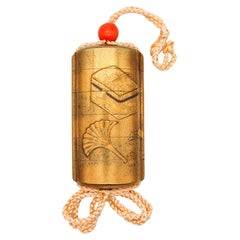
Japan 1800 Edo Period Six Drawer Inro In Lacquered Gilt Wood With Utensils
Located in Miami, FL
Japanese Inro from the Edo Period (1603-1867).
Beautiful Inro, created in Japan during the Edo period (Shogunate), circa 1800. It was carefully crafted in carved precious wood with ...
Category
Antique Early 1800s Japanese Edo Lacquer
Materials
Coral
$2,600 Sale Price
20% Off
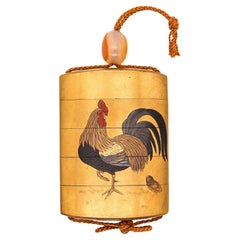
Japan 1810 Kajikawa Edo Period Five Drawer Inro Lacquered Gilt Wood With Rooster
Located in Miami, FL
Japanese Inro from the Edo period (1615-1868) created by Kajikawa.
Beautiful Inro, created in Japan by one of the Kajikawa family during the Edo period (1615-1868), circa 1810. Has been carefully crafted in carved precious wood with applications of gilding maki-e and decorated with Japonism patterns. All dan trays are attached together with a himo cord. The detailed craftsmanship was a true pleasure to behold.
Period: Edo period (1615-1868). Shogunate.
Approximate Date: 1790-1810
Motif: A family of birds consisting of a cockerel, the hen and three chicks.
Drawers: Five.
Shape: Rectangular navette.
Technique: Carved wood, lacquer and decorated in iroe-hiramaki-e on a gold ground.
Ojime: 15mm 20mm, oval carved from natural translucent agate.
Netsuke: None
Weight: 47.70 Grams.
Measurements: Inro is 78 mm by 55 mm by 18 mm (3.07 x 2.17 x 0.71 Inches).
Signatures: Kajikawa Saku, in the underside with the signature KAJIKAWA. By a member of the Kajikawa family, signed Kajikawa 梶川 Japan, late 18th century to early 19th century, Edo period (1615-1868).
The Kajikawa family
Kajikawa family, flourished in the 19th century, they was Japanese lacquerware artists whose school in Edo (now Tokyo) flourished for more than 200 years. This family is perhaps the most famous of all the dynasties of Japanese lacquer artists, and certainly the name most often found on inro. The family is said to have been founded by Hikobei at Edo in the early 17th century, although some claim that the family’s great reputation really stemmed from his son and pupil Kyujiro. In any event, Hikobei worked for the shogunate, as did his successors until well into the 19th century. Kijirō excelled in designing particularly delicate lacquer inrō, portable medicine cases...
Category
Antique 1810s Japanese Edo Lacquer
Materials
Agate, Gold
$3,560 Sale Price
20% Off
You May Also Like
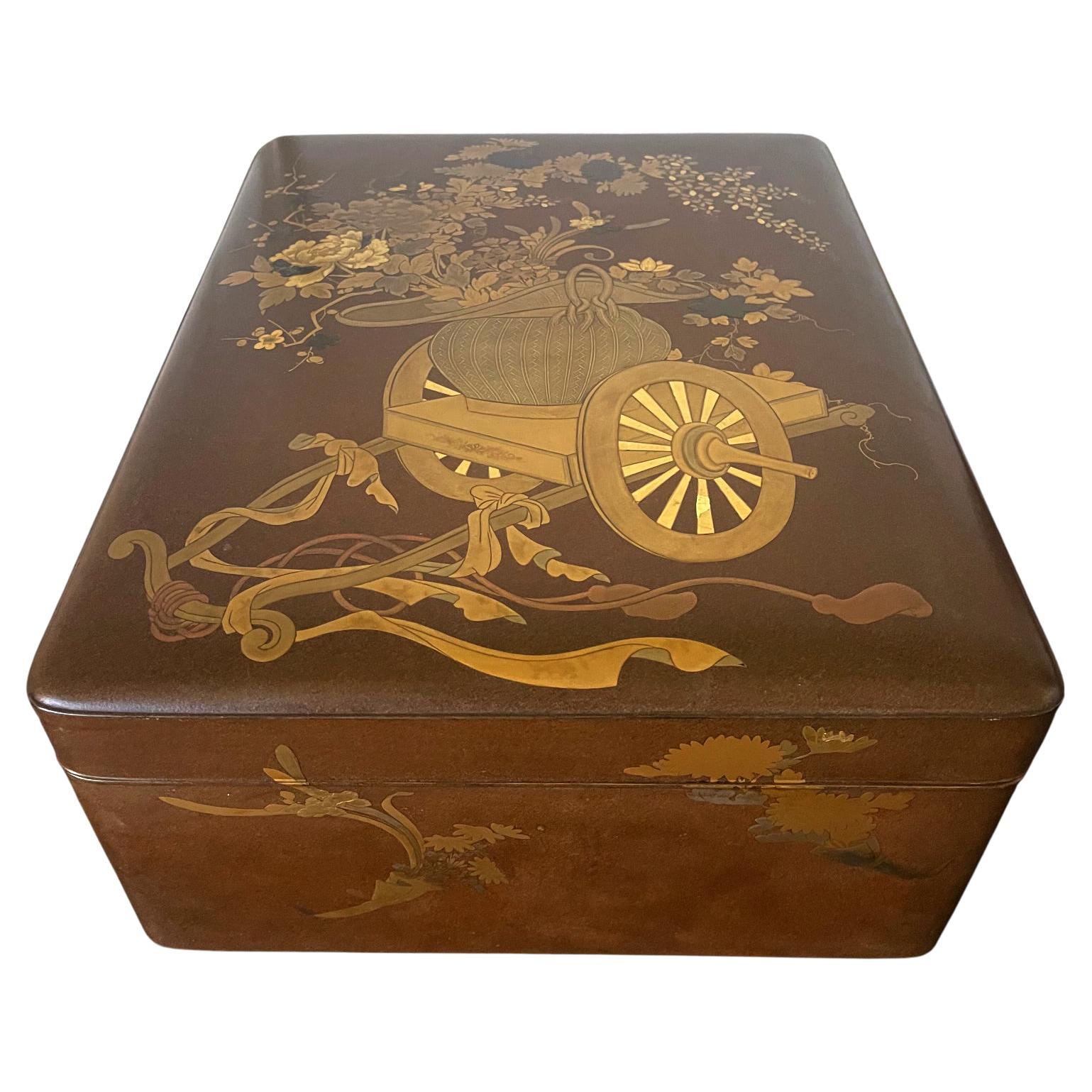
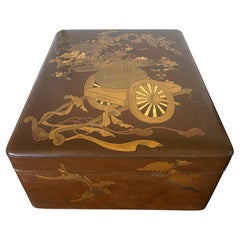
Japanese Lacquer Ryoshibako Document Box Meiji Period
Located in Atlanta, GA
A large Japanese lacquer box with elaborate Maki-e design from Meiji period, (mid-late 19th century). The generous size of the box was reser...
Category
Antique 19th Century Japanese Japonisme Lacquer
Materials
Wood, Lacquer
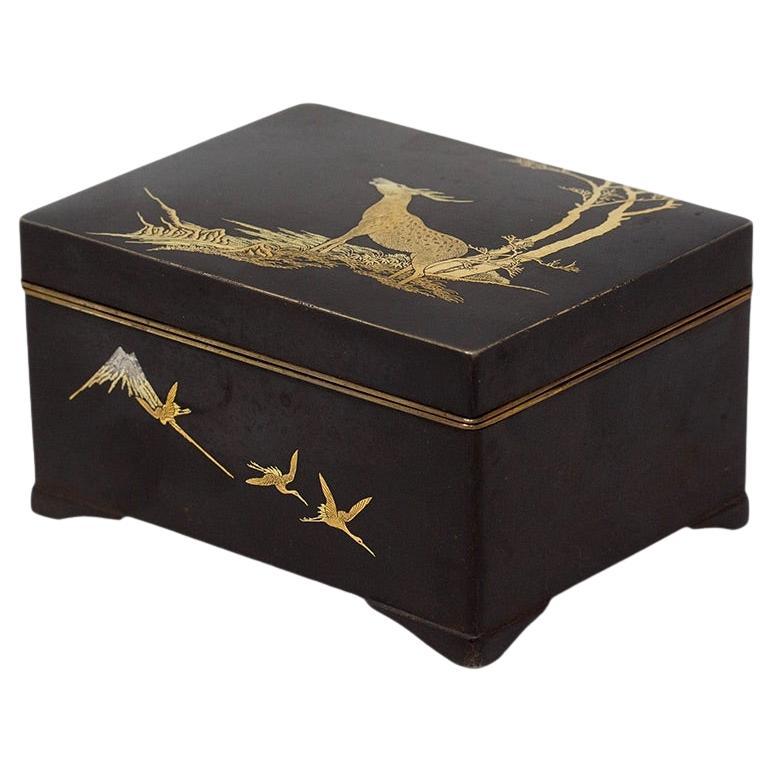
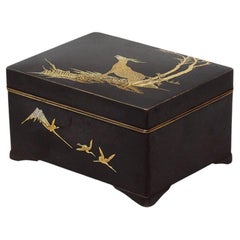
Japanese Meiji Period Damascene Box by Ashizuki with Gold and Silver
Located in Newark, England
INLAID WITH A GOLD AND SILVER DEER
From our Japanese collection we are pleased to offer this Japanese Damascene Box by Ashizuki. The Japanese Box of re...
Category
Antique 19th Century Japanese Meiji Metalwork
Materials
Gold, Silver, Brass, Iron
Exceptional Japanese Gold Lacquer Tebako 手箱
Box for Personal Accessories
Located in Amsterdam, NL
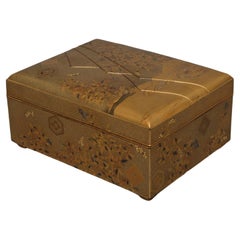
Exceptional Japanese rectangular gold lacquer tebako (box for personal accessories) with a slightly domed well-fitted lid and raised by four low bracket feet. The lid finely carved with pointed shapes as if it is covered by folded papers.
On top of this embossed surface it is decorated with gold and silver hiramaki-e (low-relief design) and takamaki-e (high-relief design) depicting a wild winding river landscape with along the waterfront...
Category
Antique 19th Century Japanese Lacquer
Materials
Giltwood, Lacquer
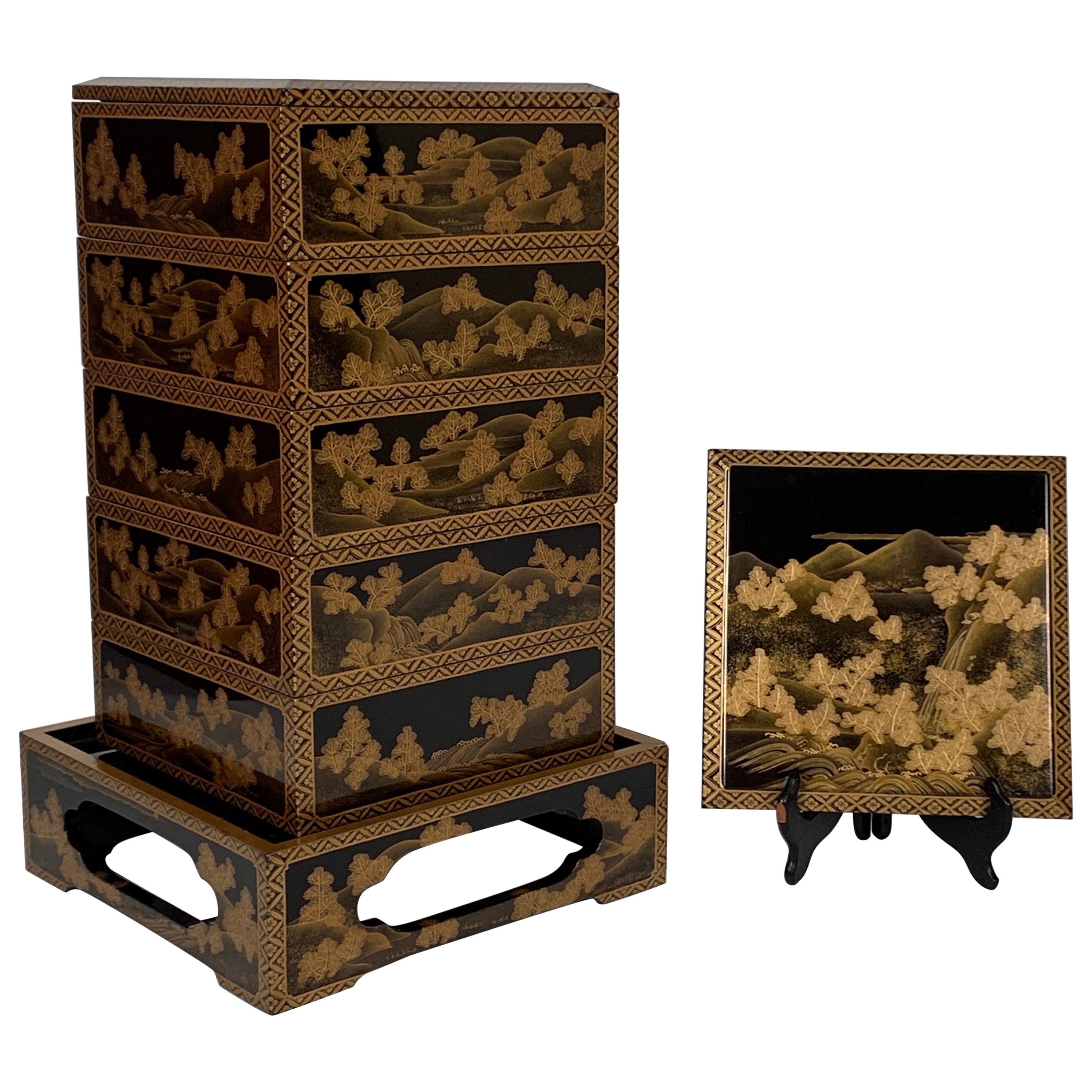
Japanese Maki-e Lacquer Stacking Box, Jubako, Meiji Period, Japan
Located in Austin, TX
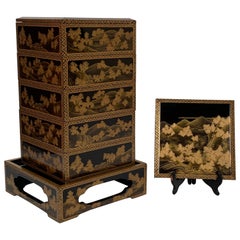
A fine and impressive Japanese gold maki-e decorated black lacquer five-tier jubako with presentation tray, two lids, and the original tomobako storage box, Meiji period, late 19th c...
Category
Antique Late 19th Century Japanese Meiji Lacquer
Materials
Lacquer
Japanese Lacquered Tebako
Box
Located in PARIS, FR
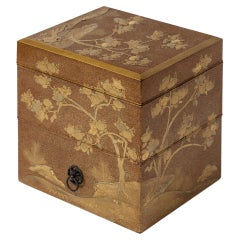
Tebako box with three compartments in golden and nashi-ji lacquer, decorated with golden, red, and kirigane lacquer, golden persimmon tree leaves, among rocks. The compartments are of increasing size from the top. The decoration is in continuity.
Persimmon has been cultivated in southern China for more than 2500 years and is believed to have been introduced to Japan in the 8th century. The veneer is a tree with very hard wood, similar to ebony. According to a legend, one specimen survived the atomic bombing of Nagasaki on August 9, 1945, close to the epicenter. It is therefore in Japan a symbol of strength and longevity. It is also the national fruit of the country. It is eaten as a traditional dish during New Year's Day celebrations.
Tebako literally means "portable box...
Category
Antique 1860s Japanese Lacquer
Materials
Lacquer
Japanese Lacquer Chest, Edo Period
Located in Greding, DE
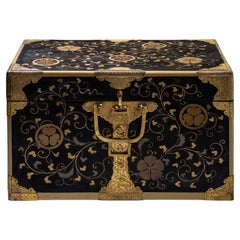
Small rectangular Japanese chest with gold lacquer decoration in the form of leaf tendrils. The chest is decorated with cut-out and ornamentally engraved fittings on the corners and ...
Category
Antique 18th Century Japanese Edo Decorative Boxes
Materials
Brass
More Ways To Browse
Black Gold Lacquer
Emperor Japan
Imperial Japan
Black And Red Lacquer
Japanese Lacquer Boxes
Lobster Antique
Antique Shed
Gilt Wood Box
Japanese Gilt Wood
Japanese Meiji Period Box
Meiji Lacquer Box
Lobster Shell
Jubako Box
Japanese Lobster
Japanese Jubako
Japanese Export 19th
Antique Japanese Lacquerware
Japanese Black Lacquer Gold