Items Similar to Japanese Bundai or writting table in gold lacquer with a decor of lake landscape
Want more images or videos?
Request additional images or videos from the seller
1 of 10
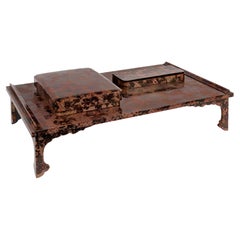
Japanese Bundai or writting table in gold lacquer with a decor of lake landscape
$17,951.05
£13,438.31
€15,000
CA$24,711.86
A$27,014.91
CHF 14,292.10
MX$323,276.79
NOK 181,846.47
SEK 166,462.05
DKK 114,281.53
About the Item
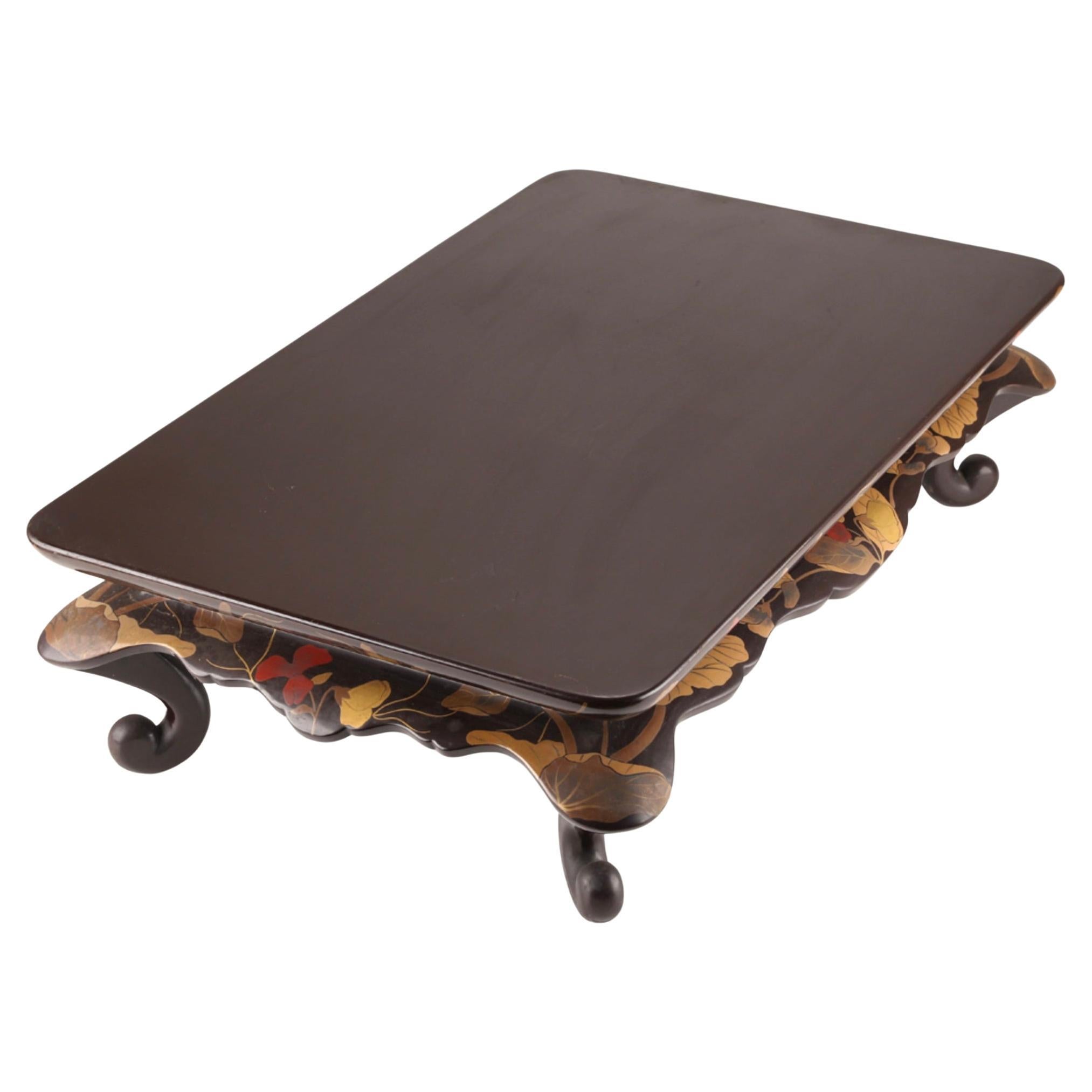
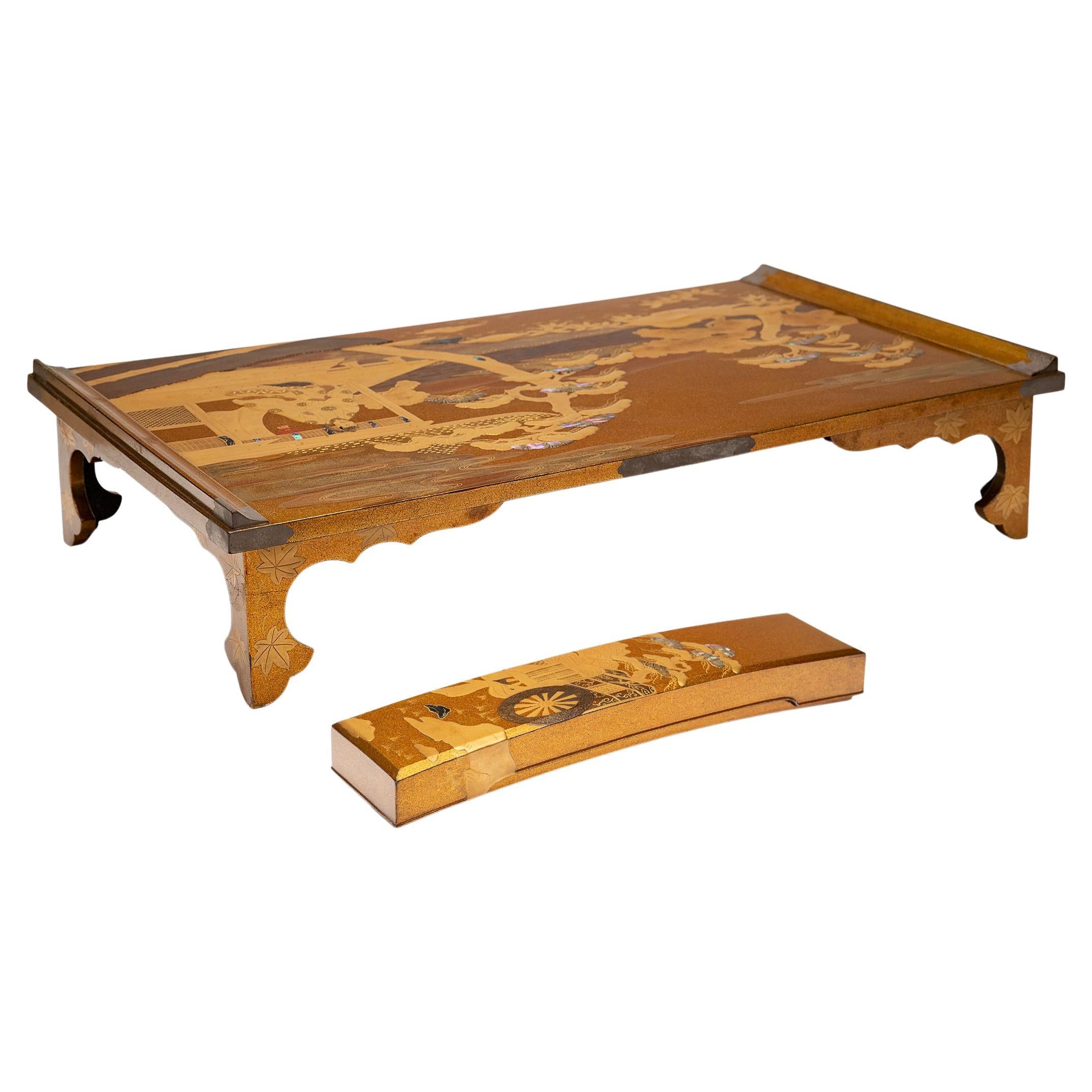
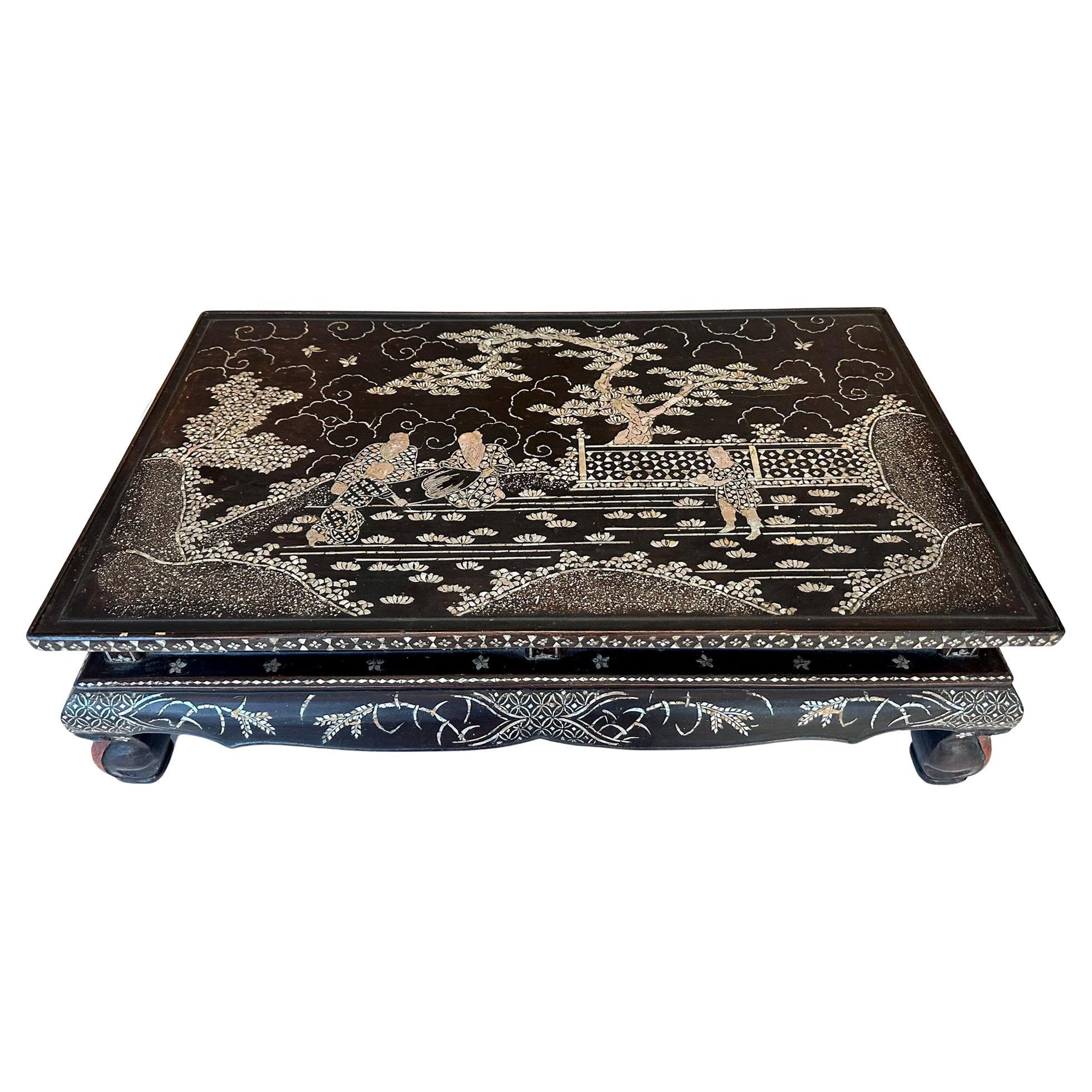
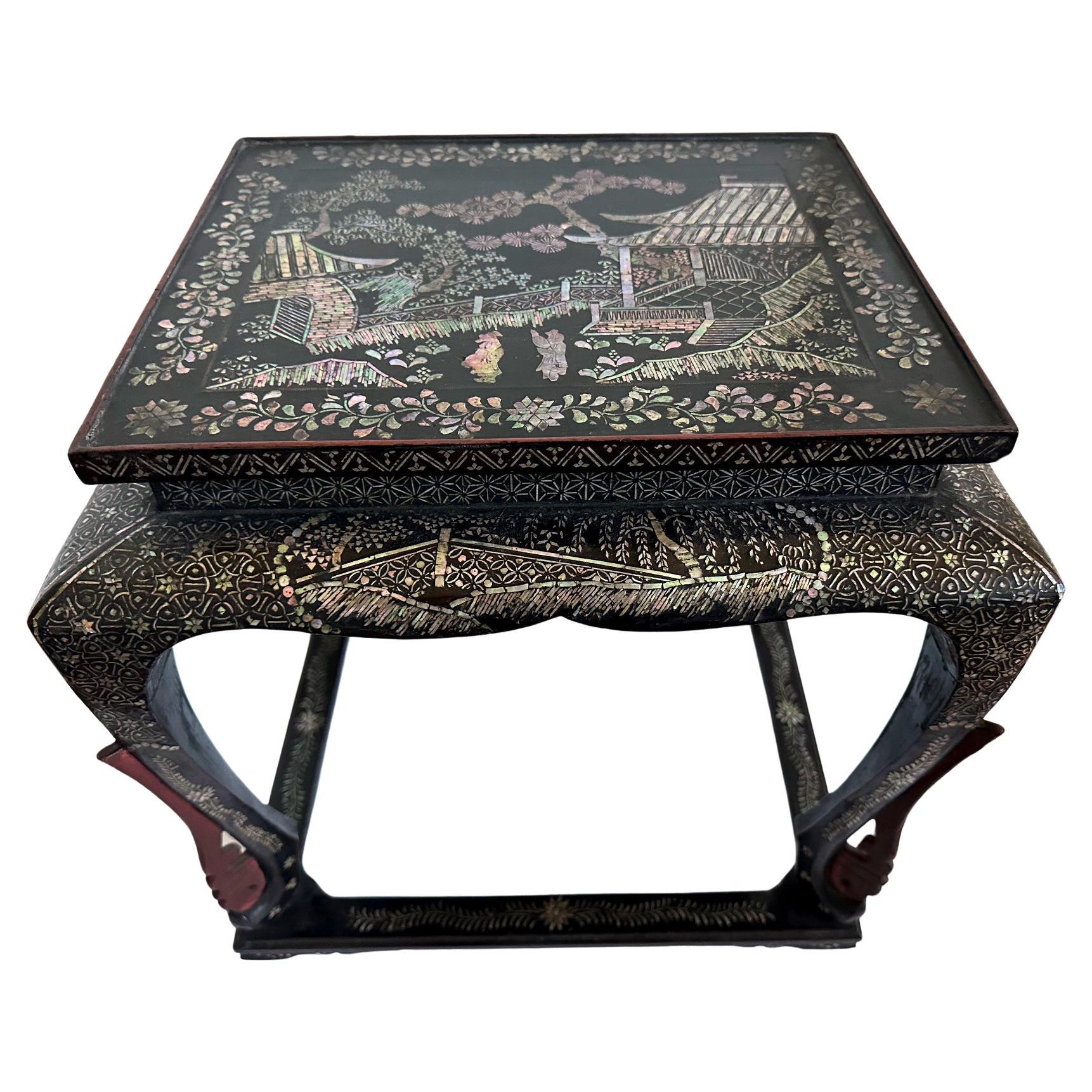
Rectangular bundai writing table on four legs in gold lacquer with black highlights on a nashi-ji background. The top is decorated with a lake landscape with plum trees, pine trees and the clover-shaped coat of arms mon (maru ni katabami) of one of the clans descended from the Matsudaira family in takamaki-e and kirigane lacquer and silver inlays.
Silvered bronze mounting.
Japan – Edo period (1612-1868)
Height : 4.5 in / 11.5 cm – length : 22.8 in / 58 cm – depth : 13.4 in / 34 cm
- Dimensions:Height: 4.53 in (11.5 cm)Width: 13.39 in (34 cm)Depth: 22.84 in (58 cm)
- Style:Edo (Of the Period)
- Materials and Techniques:
- Place of Origin:
- Period:
- Date of Manufacture:1603-1868
- Condition:Wear consistent with age and use.
- Seller Location:PARIS, FR
- Reference Number:Seller: 2023-11281stDibs: LU8311242791712
About the Seller
No Reviews Yet
Vetted Professional Seller
Every seller passes strict standards for authenticity and reliability
Established in 2013
1stDibs seller since 2023
Typical response time: 2 hours
- ShippingRetrieving quote...Shipping from: PARIS, France
- Return Policy
More From This Seller
View AllJapanese writting set in waqasa lacquer including bundai ryoshibako and fudebako
Located in PARIS, FR
Set of bundai, ryōshibako and fudebako in wakasa lacquer with an old rose background and black traditional Japanese patterns.
The saya pattern (or sayagata) is composed by Chinese svastikas. This symbol linked to Buddhism, mean intelligence, power and peace. It is a good omen sign.
The kanoko pattern reminds stains on fawn back.
The sakura (cherry blossom) pattern is emblematic of Japan. The blossoming in a short time marks spring beginning and is a symbol of renewal and ephemeral beauty.
There are also traces of calligraphy brush, in reference to the function of the objects.
Bundai is a low table used to put books or scrolls and, later, to write.
Rectangular ryōshibako (letter and document box) with a slightly domed
Fudebako (pencil case) of rectangular format very narrow in its length with two rounded corners, flat cover.
Wakasa lacquerware...
Category
Early 20th Century Japanese Taisho Lacquer
Materials
Lacquer
Wakasa-Nuri Lacquer Bundai, Ryoshobako, Fubako Set
Located in PARIS, FR
Set of bundai, ryoshibako and fudebako in wakasa lacquer with an old rose background and black traditional Japanese patterns.
The saya pattern (or sayagata) is composed by Chinese svastikas. This symbol linked to Buddhism, mean intelligence, power and peace. It is a good omen sign.
The kanoko pattern reminds stains on fawn back.
The sakura (cherry blossom) pattern is emblematic of Japan. The blossoming in a short time marks spring beginning and is a symbol of renewal and ephemeral beauty.
There are also traces of calligraphy brush, in reference to the function of the objects.
Bundai is a low table used to put books or scrolls and, later, to write.
Rectangular ryoshibako (letter and document box) with a slightly domed
Fudebako (pencil case) of rectangular format very narrow in its length with two rounded corners, flat cover.
Wakasa lacquerware...
Category
Early 20th Century Japanese Lacquer
Materials
Lacquer
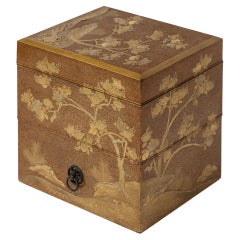
Japanese Tebako in Nashiji lacquer adorned with golden Persimon flowers
Located in PARIS, FR
Tebako box with two compartments in golden and nashi-ji lacquer, decorated with golden, red, and kirigane lacquer, golden persimmon tree leaves, among rocks. The compartments are of ...
Category
Antique Early 19th Century Japanese Meiji Lacquer
Materials
Gold
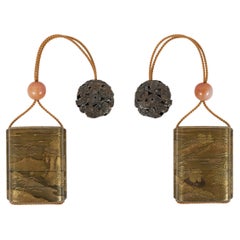
Gold Lacquer Inro Decorated with a Lake Landscape
Located in PARIS, FR
Inro with four gold lacquer boxes, decorated with a lake landscape. Accompanied by a bronze ryusa manju.
Small boxes formed of compartments that fit one on top of the other, inro (? ?) are traditional Japanese clothing...
Category
Antique Mid-19th Century Lacquer
Materials
Lacquer
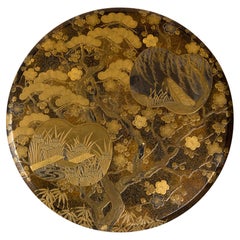
Suzuribako or writting box circular shape in nashiji and gold lacquer
Located in PARIS, FR
Suzuribako (writing box) in black lacquer, rectangular in shape, with a gold lacquer (maki-e) decoration of a pavilion by the edge of a waterfall and a mountain river surrounded by v...
Category
Antique Late 18th Century Japanese Edo Lacquer
Materials
Gold Leaf
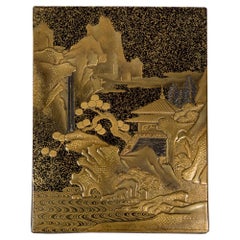
Kobako in black and gold lacquer decorated of a pavillion by a lake
Located in PARIS, FR
Elegant rectangular kobako decorated in nashiji lacquer on a black ground. The lid features a delicate landscape scene depicting a pavilion—possibly a small castle—set beside a river...
Category
Antique Late 19th Century Japanese Meiji Furniture
Materials
Gold Leaf
You May Also Like
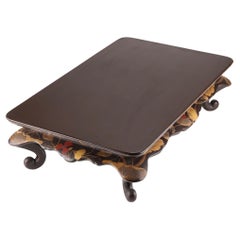
Exceptional 19th Century Wajima Lacquer Low Table with Gold Makie Decoration
Located in Fukuoka, JP
An exquisite antique Japanese low table (hiradaku) from the 19th century, crafted in the renowned Wajima lacquer tradition of the Noto Peninsula. The table features a deep, lustrous ...
Category
Antique 19th Century Japanese Meiji Furniture
Materials
Wood, Lacquer
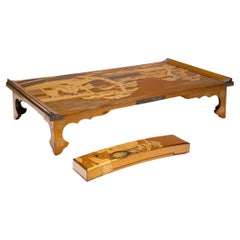
Japanese Meiji Gilt Lacquer Writing Desk
Poem Box
Located in Chicago, IL
With intricate construction and exquisite decoration, this fine tabletop writing set is a masterpiece of Japanese lacquerware. The matching set includes a writing table (bundai) and poem box (tanzaku bako), both decorated with gilt lacquer in the style of takamaki-e and hiramaki-e urushi lacquer.
Framed by everted ends, the lacquered table top is masterfully worked, depicting a robed man seated on a veranda within an idyllic mountain-and-water landscape. Swirling clouds drift overhead and pine trees bend towards the sky, formed of raised lacquer (takamaki-e) and mother of pearl inlay (raden). Dark lacquer at the corners imitate metal hardware and the sculptural corner legs are decorated with raised motifs of maple leaves.
The writing table includes a matching poem box (tanzaku bako), used for storing paper cards of painted calligraphy and poetry. The lid is similarly decorated in shimmering gilt lacquer with a raised design of a fine carriage beneath a pine tree, draped in cloths and shaded by bamboo blinds...
Category
Early 20th Century Japanese Meiji Lacquer
Materials
Mother-of-Pearl, Wood
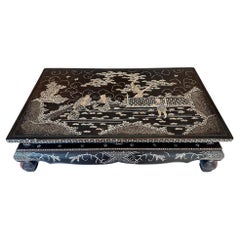
Antique Japanese Lacquer and Inlay Kang Table from Ryukyu Island
Located in Atlanta, GA
A small low table with lacquer and intricate mother-of-pearl inlay design from Ryukyu Islands kingdom circa 17-18th century. Ryukyuan kingdom was used to be an independent island cou...
Category
Antique 18th Century Japanese Edo Lacquer
Materials
Mother-of-Pearl, Lacquer
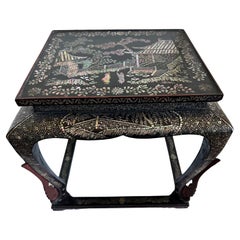
Antique Japanese Lacquer and Inlay Table from Ryukyu Islands
Located in Atlanta, GA
A small square-form table with lacquer and intricate mother-of-pearl inlay design from Ryukyu Islands kingdom circa 17-18th century. Ryukyuan kingdom was used to be an independent is...
Category
Antique 18th Century Japanese Edo Lacquer
Materials
Mother-of-Pearl, Lacquer
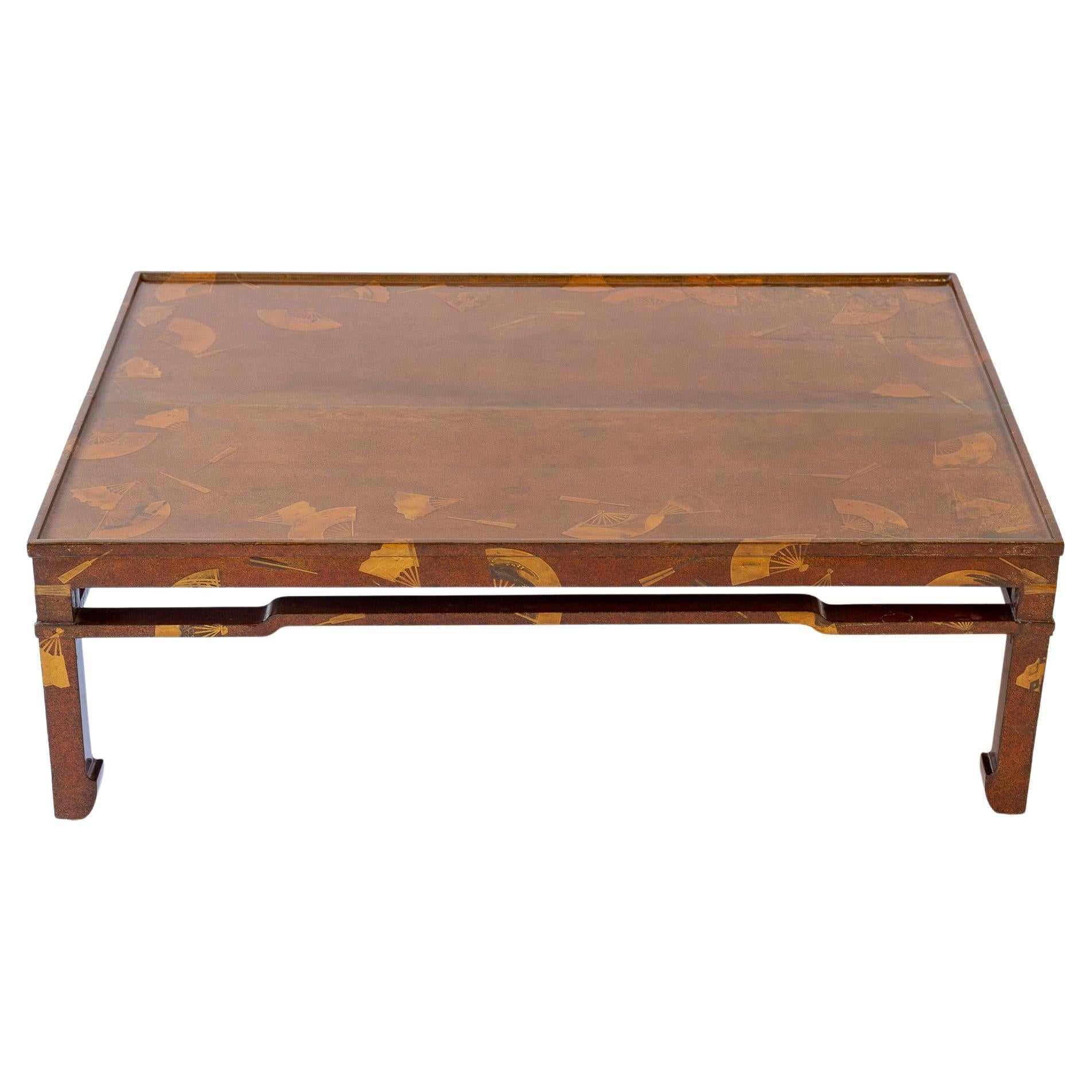
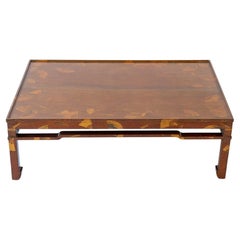
19th century Japanese Lacquer Zataku (low table) with Scattered fan Motif
Located in New York, NY
This Japanese antique low table features a scattered fan motif and is a type of zataku (low table), historically used for meals, tea ceremonies, and other seated activities.
Lacque...
Category
Antique Late 19th Century Japanese Lacquer
Materials
Gold Leaf
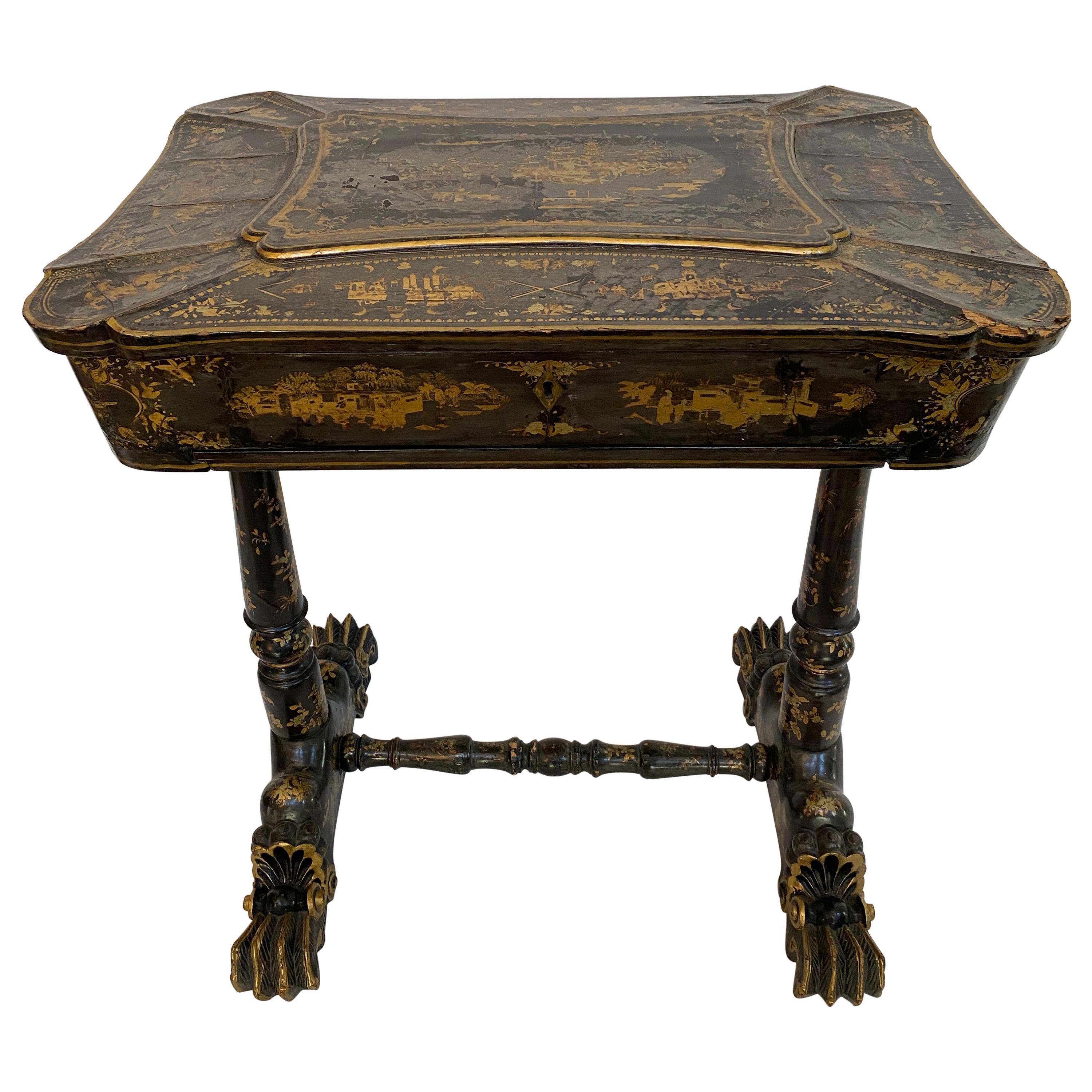
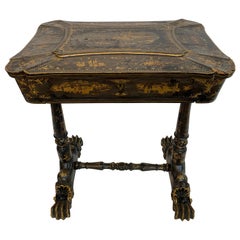
Early 19th Century Chinese Export Lacquer and Gilt Sew Working Table
Located in Brea, CA
Early 19th century Chinese export lacquer and gilt sew working table from the Qing dynasty, with carved gilt dragon head feet, with the table of canted rectangular form, with mounded...
Category
Antique Mid-19th Century Chinese Qing Lacquer
Materials
Lacquer
More Ways To Browse
Black Gold Lacquer
Table With Coat Of Arms
Japan Lacquer Table
Japanese Lacquered Table
Antique Japanese Lacquer Tables
Asian Table Gold
Antique Japanese Decor
Lacquer Fan
Asian Cinnabar
Japanese Lacquer Pearl
Japanese Wood Tray
19th Century Carved Chinese Fan
Black Japanese Tray
Chinese Carved Cinnabar Red Lacquer
Antique Japanese Lacquer Tray
Japanese Export 19th
Antique Japanese Lacquerware
Japanese Black Lacquer Gold