Items Similar to Japanese Kogo or inecens box in the form of a realistic eggplant
Want more images or videos?
Request additional images or videos from the seller
1 of 8
Japanese Kogo or inecens box in the form of a realistic eggplant
$2,153.96
£1,608.78
€1,800
CA$2,967.47
A$3,234.02
CHF 1,712.55
MX$38,843.97
NOK 21,681.29
SEK 19,933.82
DKK 13,712.88
About the Item
Small lacquered wooden box in the shape of an eggplant. Top of the fruit near the leaves painted with silver pigments. Interior painted with gold pigments, signature in the center partly erased: ka?e (か?エ).
Transport box included.
A kôgô is an incense box used in Japan during the tea ceremony. Made of glazed clay, lacquered wood or white porcelain, it often represents animals, plants of human figures.
The eggplant has a particular symbolism in Japan, especially with the hatsuyume (first dream of the new year). Traditionally, this dream is supposed to predict the luck of the dreamer in the following year. Since the Edo period, the popular belief is that a dream of Mount Fuji, a falcon and an eggplant is a very good omen. A Japanese formula summarizes the principle of hatsuyume: Ichi-Fuji, Ni-Taka, San-Nasubi (“1. Mount Fuji, 2. Falcon, 3. Eggplant”).
The first dream is widely spread during the Edo period. Nevertheless the origin of this tradition remains unknown. Several hypotheses exist. According to a version attributed to Tokugawa Ieyasu (1543-1616), this formula comes from the ancient province of Suruga: it would be the three highest thing of the province: Mount Fuji, Mount Ashitaka (ending with “taka” wich means “hawk”) and the very high price of the first eggplants.
Other hypotheses emphasize the symbolic significance of the three elements: the sacredness of Mount Fuji, the strength and intelligence of the falcon, the homonymy of the word eggplant and the verb “to accomplish” (nasu).
It is also possible that this formula comes from the city of Komagone, home of the Komagone Fuji-jinja, a temple from where it was possible to observe Mount Fuji. The remains of the falconer’s house established by the shogun Yoshimune Tokugawa (1684-1751) were also revealed by excavations conducted in the 1970s. Finally, Komagone was during the Edo period a land of eggplant production.
Japan – Showa era (1926-1989)
Height 2.1 in (5.3 cm) - length 3.2 in (8 cm) – width 1.3 in (3.3 cm)
- Dimensions:Height: 2.09 in (5.3 cm)Width: 1.3 in (3.3 cm)Depth: 3.15 in (8 cm)
- Style:Showa (Of the Period)
- Materials and Techniques:
- Place of Origin:
- Period:
- Date of Manufacture:1926-1989
- Condition:Wear consistent with age and use.
- Seller Location:PARIS, FR
- Reference Number:Seller: 2021-9021stDibs: LU8311242725122
About the Seller
No Reviews Yet
Vetted Professional Seller
Every seller passes strict standards for authenticity and reliability
Established in 2013
1stDibs seller since 2023
- ShippingRetrieving quote...Shipping from: PARIS, France
- Return Policy
More From This Seller
View AllMiniature hokkai bako or kaioke, doll furniture replica of a traditional box
Located in PARIS, FR
Small hokkai bako or kaioke seashells game box, of circular form with its four feet, its bronzes and cordon, decorated with a motive of flowers of gold lacquer on a black lacquer bac...
Category
Antique Late 19th Century Japanese Meiji Lacquer
Materials
Gold, Bronze
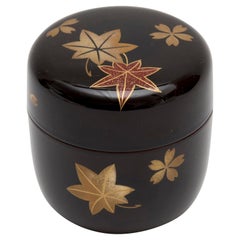
Japanese Lacquered Natsume
Tea Box
Located in PARIS, FR
Natsume in dark red lacquer, decorated with autumn leaves and cherry blossoms in hiramaki-e and nashiji. Interior in black lacquer.
Maple leaves (Momiji) are celebrated in literatur...
Category
Mid-20th Century Japanese Lacquer
Materials
Lacquer
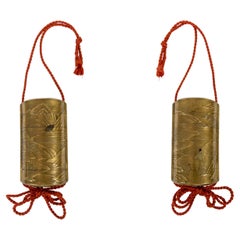
Japanese Sagemono Inro box with a maki-e decor of a Samuari in a lake landscape
Located in PARIS, FR
Inrô in gilded lacquer according to the takamaki-e, hiramaki-e and kirigane techniques, with five squares of a mountain lake landscape.
On the first side, there is a man on horsebac...
Category
Antique 18th Century Japanese Edo Lacquer
Materials
Gold
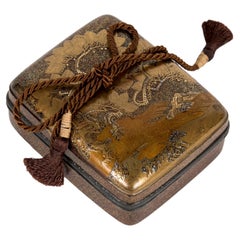
Japanese landscape pine kobako box Edo period 18th century
Located in PARIS, FR
Rectangular black and gold lacquer kobako box decorated with pine trees in a mountain landscape in takamaki-e, kirigane and hiramaki-e lacquer. Background in nashi-ji lacquer. Surmou...
Category
Antique 18th Century Japanese Lacquer
Materials
Gold
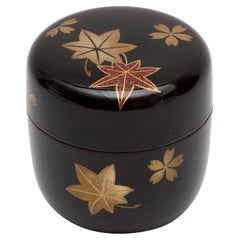
Japanese Natsume or tea box adorned with mapple leaves and sakure flowers
Located in PARIS, FR
Natsume in dark red lacquer, decorated with autumn leaves and cherry blossoms in hiramaki-e and nashiji. Interior in black lacquer.
Maple leaves (Momiji) are celebrated in literature...
Category
Early 20th Century Japanese Taisho Lacquer
Materials
Gold
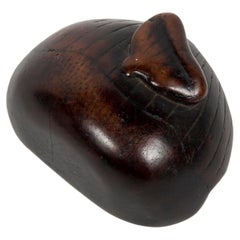
Japanese Netsuke in Boxwoord in the form of two chestnut
Located in PARIS, FR
Boxwood netsuke of two chestnuts, one smaller on top of the larger.
Chestnuts are a central part of Japanese culture and gastronomy. Castanea Crenata or Japanese chestnut is an indi...
Category
Antique Early 19th Century Japanese Edo Sculptures and Carvings
Materials
Boxwood
You May Also Like
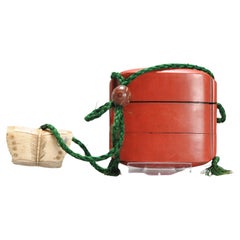
Antique Meiji Period Japanese Lacquer Inro Box, 19th Century
Located in Amsterdam, Noord Holland
Lovely Antique Meiji Period Japanese Lacquer Inro, 19th Century
Additional information:
Period: 19th century, 20th century
Region of Origin: Japan
Japan Dynasty Period: Meiji Period...
Category
Antique 19th Century Japanese Meiji Decorative Boxes
Materials
Lacquer
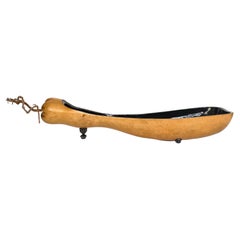
Japanese Lacquered Gourd Ikebana Vessel, with Storage Box, Mid-20th Century
Located in Point Richmond, CA
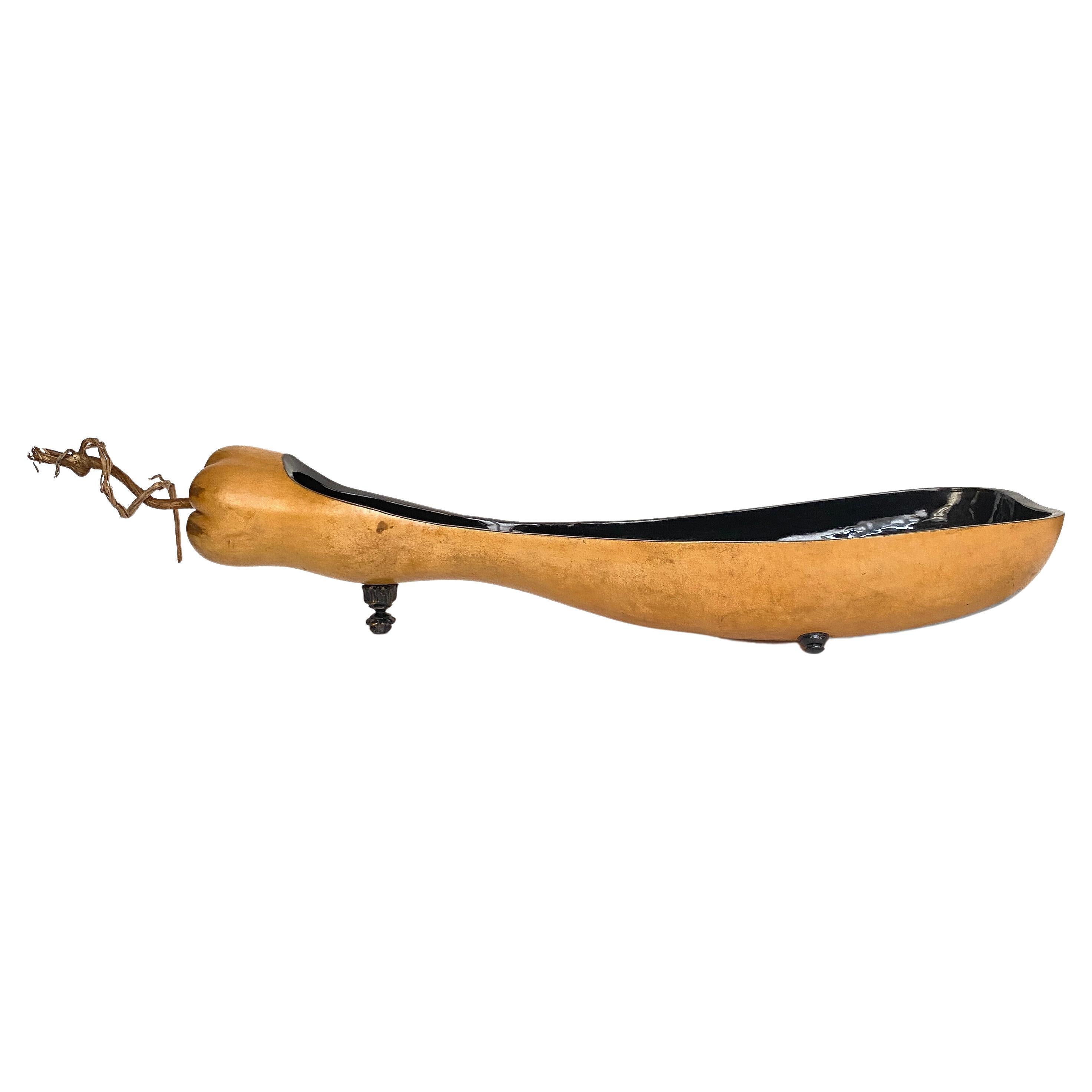
Large Japanese Lacquered Gourd Ikebana vessel with storage box, mid-20th century.
Ikebana, the art of flower arrangement, is one of the most sublime ...
Category
20th Century Japanese Mid-Century Modern Sculptures and Carvings
Materials
Wood
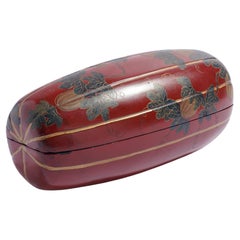
Japanese gourd form Maki-e red lacquered box
Located in Kenilworth, IL
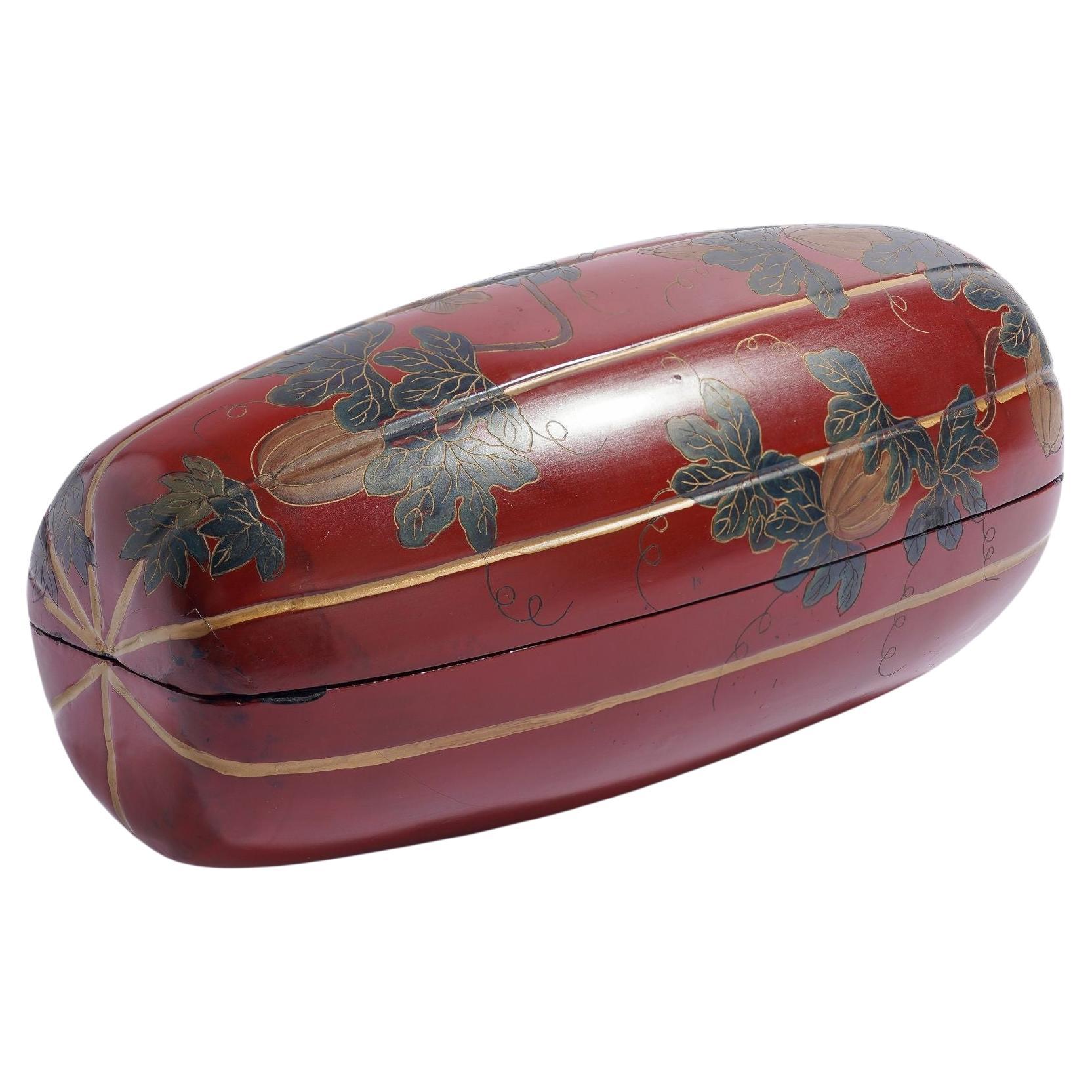
A hand carved wood & cinnabar red lacquered gourd shaped covered box. The exterior of the box is incised with gilt outlined dark green leafy vines, gilt gourds, flowers, and butterfl...
Category
Early 20th Century Japanese Decorative Boxes
Materials
Wood, Lacquer
Lovely Antique Meiji Period Japanese Lacquer Box, 19th Century
Located in Amsterdam, Noord Holland
Lovely 19th c Antique Meiji Period Japanese Lacquer box.
Additional information:
Material: Lacquer
Region of Origin: Japan
Period: 19th century, 20th century
Japan Dynasty Period: M...
Category
Antique 19th Century Japanese Meiji Decorative Boxes
Materials
Lacquer
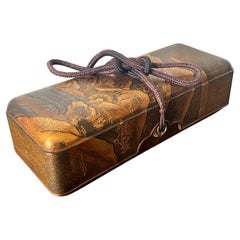
Japanese Lacquered Maki-e Fubako Edo Period
Located in Atlanta, GA
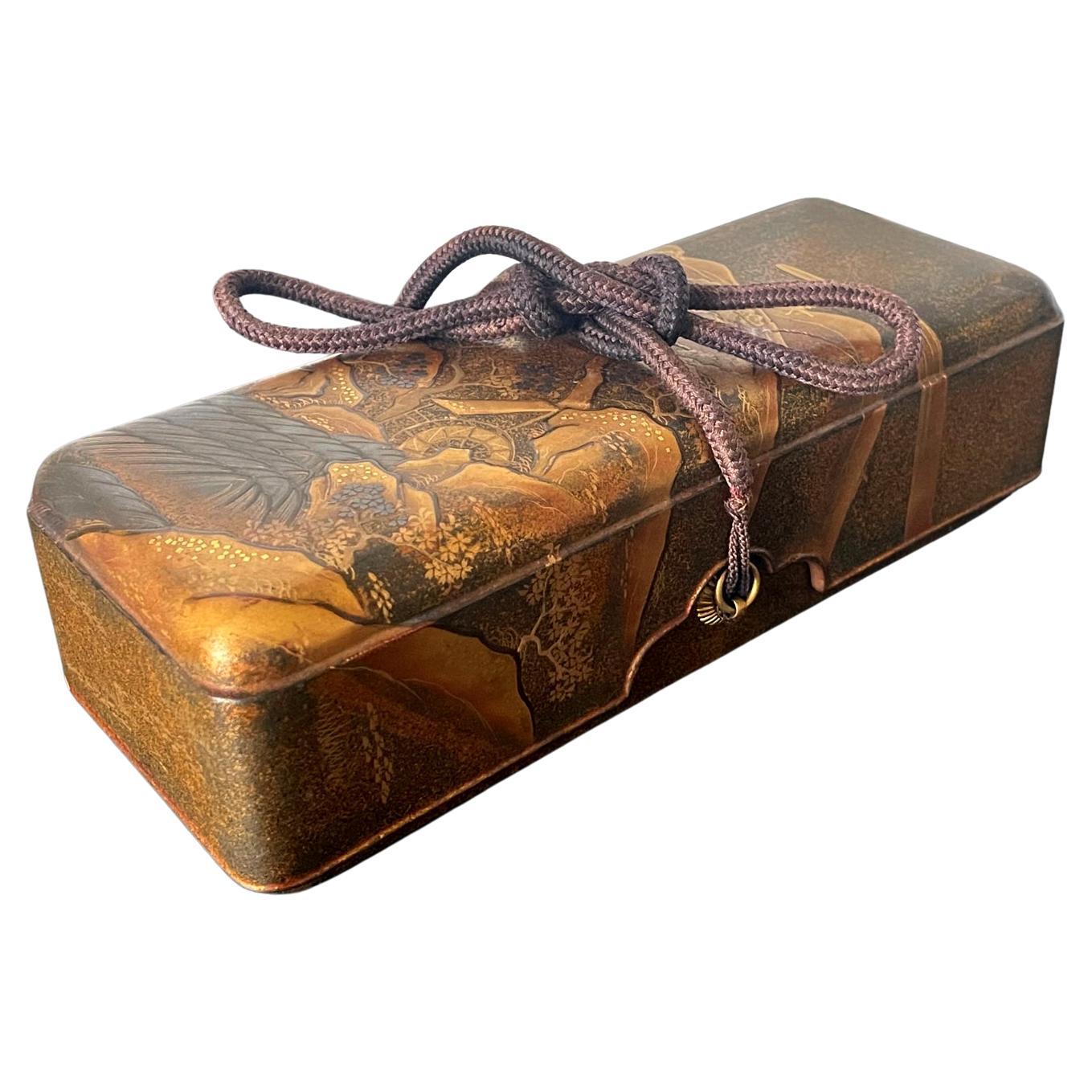
A Japanese lacquered wood fubako (a box used to store document or small scroll painting), circa second half of 19th century late Edo period. The rectangular box features an unusually deep lipped lid with slightly rounded corners, a conforming lower box that is almost entirely covered by the lid which has two bronze medallion rings with tasseled...
Category
Antique 19th Century Japanese Edo Lacquer
Materials
Wood, Lacquer
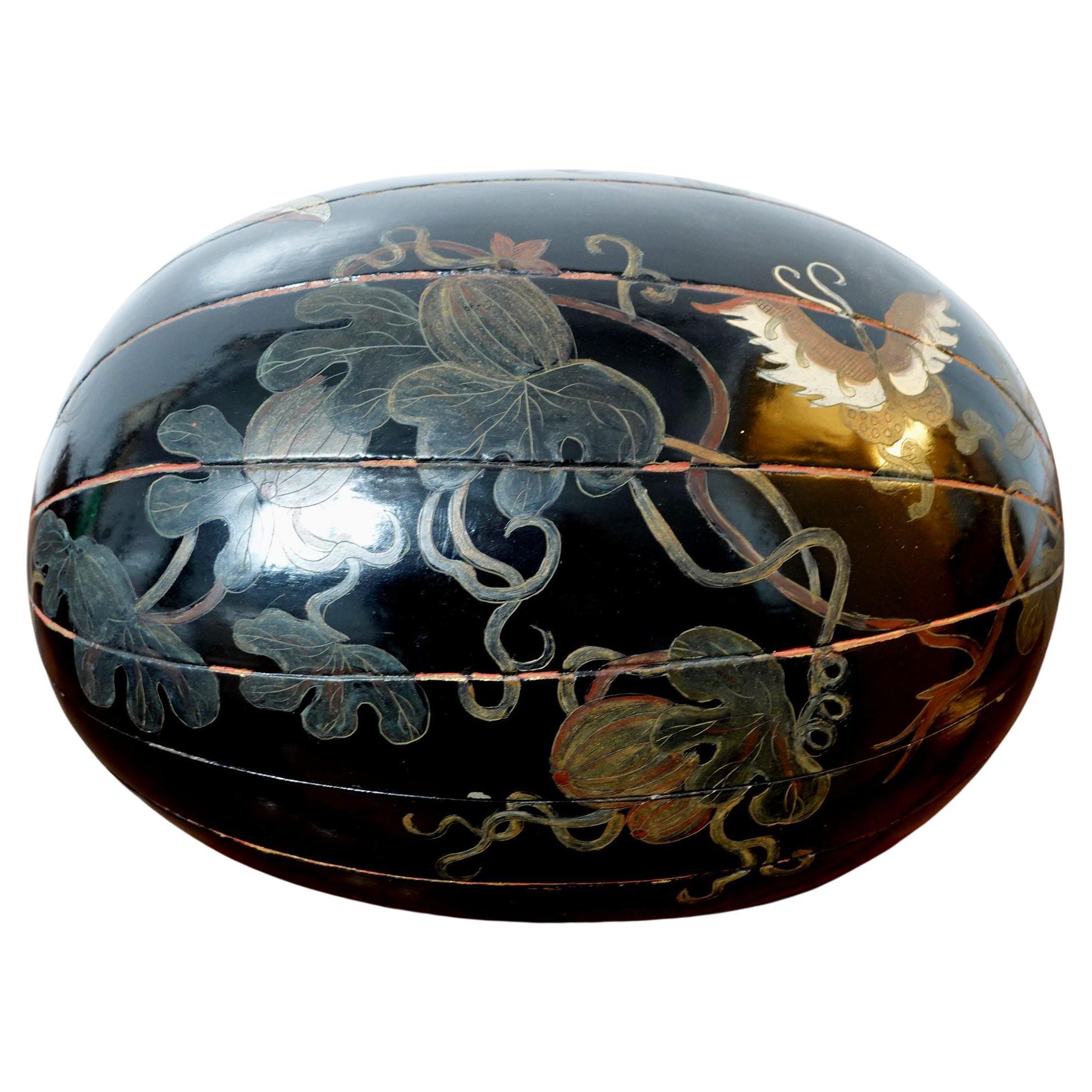
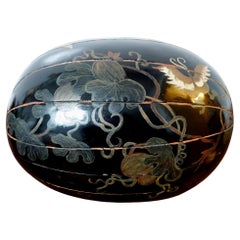
Japanese Large Lacquer Box with Cover in Melon shape
Located in Norton, MA
Japanese Large Lacquer Box with a Cover in Melon shape, depicting the melon with ivy branches, leaves, and butterflies.
Category
20th Century Japanese Decorative Boxes
Materials
Lacquer
More Ways To Browse
Japanese Showa
White Lacquered Wood
White Porcelain Animal
Silver Box Japan
Incense Box
Vintage Japanese Lacquer Box
Small Wooden Box
Lacquer Fan
Asian Cinnabar
Japanese Lacquer Pearl
Japanese Wood Tray
19th Century Carved Chinese Fan
Black Japanese Tray
Chinese Carved Cinnabar Red Lacquer
Antique Japanese Lacquer Tray
Japanese Export 19th
Antique Japanese Lacquerware
Japanese Black Lacquer Gold