Want more images or videos?
Request additional images or videos from the seller
1 of 5
Japanese Lacquer Document Box and Cover
$26,500List Price
About the Item
- Dimensions:Height: 17.13 in (43.52 cm)Width: 12.88 in (32.72 cm)Depth: 6.38 in (16.21 cm)
- Style:Meiji (Of the Period)
- Materials and Techniques:
- Place of Origin:
- Period:
- Date of Manufacture:circa 1880
- Condition:
- Seller Location:New Orleans, LA
- Reference Number:Seller: 29-91131stDibs: LU891119163602
About the Seller
5.0
Recognized Seller
These prestigious sellers are industry leaders and represent the highest echelon for item quality and design.
Established in 1912
1stDibs seller since 2010
115 sales on 1stDibs
Typical response time: 5 hours
Authenticity Guarantee
In the unlikely event there’s an issue with an item’s authenticity, contact us within 1 year for a full refund. DetailsMoney-Back Guarantee
If your item is not as described, is damaged in transit, or does not arrive, contact us within 7 days for a full refund. Details24-Hour Cancellation
You have a 24-hour grace period in which to reconsider your purchase, with no questions asked.Vetted Professional Sellers
Our world-class sellers must adhere to strict standards for service and quality, maintaining the integrity of our listings.Price-Match Guarantee
If you find that a seller listed the same item for a lower price elsewhere, we’ll match it.Trusted Global Delivery
Our best-in-class carrier network provides specialized shipping options worldwide, including custom delivery.You May Also Like
Large Japanese Lacquer Document Box, Ryoshibako, Edo/Meiji period, Japan
Located in Austin, TX
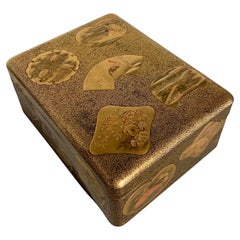
A large and magnificently decorated Japanese lacquer document box, ryoshibako, signed Umeboshi/Baikyo, late Edo or early Meiji Period, mid 19th century, Japan.
The large document box, ryoshibako, of tall, rectangular shape with rounded corners, and fitted with an inrobuta (flush-fitting) cover with beveled edges. The exterior of this exquisite box is decorated all over with fifteen different raised reserves shaped as uchiwa (paddle) fans against a lush and intricate krikane ground imitating shagreen.
The uchiwa shaped reserves all of takamaki-e, and exquisitely painted with designs of animals, flowers, and landscapes in silver, gold, maki-e, hiramaki-e, and takamaki-e, with kirikane, nashiji, and polychrome embellishments, upon gold lacquer fudame grounds.
The interior of the lid is nothing short of spectacular, featuring a large design of a magnificent and beautifully detailed rooster and hen with chicks gathered around a lazy stream. Large stalks of chrysanthemum bloom behind them. All against an ethereal nashiji ground.
The cover of the box features five reserves:
1. Three minogame (turtles with long tails), symbolizing longevity
2. "Narihira Crossing the Sumida" from The Tales of Ise...
Category
Antique 1860s Japanese Meiji Lacquer
Materials
Softwood, Lacquer
$27,500
H 5.75 in W 10 in D 13.25 in
Vintage Japanese Black, Gold and Red Lacquer Document Fubako Box
Located in Sheridan, CO
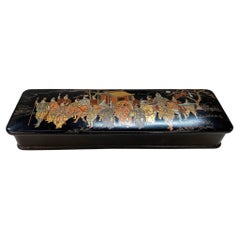
Black, Gold and Red Lacquer Japanese Document Fubako Box, Meiji period, late 19th C/Early 20th C. A Japanese lacquer box featuring hand decorated gold paint depicting scholars and sa...
Category
Vintage 1920s Japanese Meiji Lacquer
Materials
Lacquer
Japanese Lacquer Ryoshibako Document Box Meiji Period
Located in Atlanta, GA
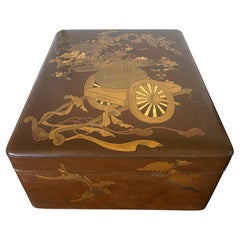
A large Japanese lacquer box with elaborate Maki-e design from Meiji period, (mid-late 19th century). The generous size of the box was reser...
Category
Antique 19th Century Japanese Japonisme Lacquer
Materials
Wood, Lacquer
Pair of 14‘’ Large Japanese Golden Black Lacquer Cover Boxes
Located in Brea, CA
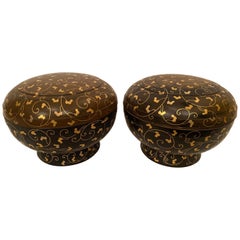
A pair of large Japanese golden black lacquer cover boxes, very big beautiful pieces. possibly 19th century, each 14 inch diameter x 10 inch high, one ...
Category
Antique Late 19th Century Japanese Meiji Antiquities
Materials
Lacquer
Japanese Maki-e Lacquer Document Box, Edo Period, early 19th Century, Japan
Located in Austin, TX
A spectacular Japanese maki-e lacquer lidded box, possibly a writing box, suzuribako, decorated with images of folding fans, ogi, Edo Period, earl...
Category
Antique Early 19th Century Japanese Edo Lacquer
Materials
Coral
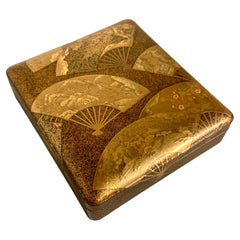
$12,000
H 2.5 in W 9 in D 10 in
Japanese Antique Lacquer Document Box with Elaborate Hawk and Faux Oak Grain
Located in Hudson, NY
Japanese antique lacquer document box with elaborate hawk and faux oak grain, Late Meiji (1868 - 1912) / Early Taisho (1912 - 1926) period lac...
Category
Early 20th Century Japanese Lacquer
Materials
Lacquer
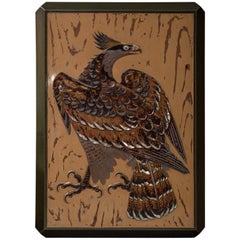
$12,500
H 16.75 in W 12.25 in D 8.75 in
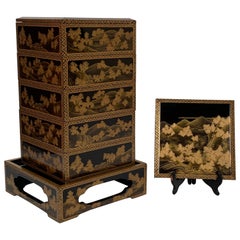
Japanese Maki-e Lacquer Stacking Box, Jubako, Meiji Period, Japan
Located in Austin, TX
A fine and impressive Japanese gold maki-e decorated black lacquer five-tier jubako with presentation tray, two lids, and the original tomobako storage box, Meiji period, late 19th c...
Category
Antique Late 19th Century Japanese Meiji Lacquer
Materials
Lacquer
Japanese Black Lacquer Document Box with Gold Plum Blossom Design, Taisho Period
Located in Prahran, Victoria
A high quality, antique, Japanese black lacquer document box. It has an external design of gold maki e plum blossoms. In Japanese culture plum blossom symbolises the beginning of Spring, having its own festival, the Ume Matsuri, alongside the more famous cherry blossom festival...
Category
Vintage 1920s Japanese Lacquer
Materials
Wood, Lacquer
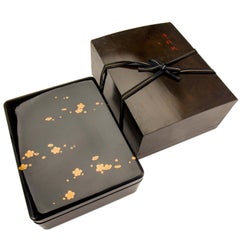
$2,880 Sale Price
20% Off
H 5.91 in W 16.15 in D 13 in
Japanese Lacquer Accessories Box, Tebako, Brocade Design, Meiji Period, Japan
Located in Austin, TX
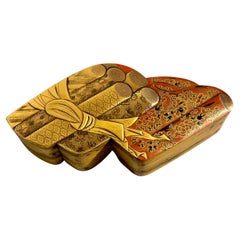
A very fine Japanese lacquer tebako, box for personal accessories, in the form of rolled bolts of brocade fabric, Meiji Period, late 19th century, Japan.
The box is whimsically shap...
Category
Antique Late 19th Century Japanese Meiji Lacquer
Materials
Softwood, Lacquer
$4,800
H 1.6 in W 6.25 in D 3 in
Japanese Lacquered Tebako
Box
Located in PARIS, FR
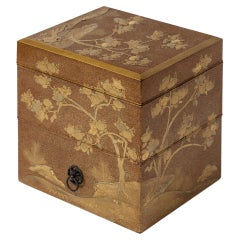
Tebako box with three compartments in golden and nashi-ji lacquer, decorated with golden, red, and kirigane lacquer, golden persimmon tree leaves, among rocks. The compartments are of increasing size from the top. The decoration is in continuity.
Persimmon has been cultivated in southern China for more than 2500 years and is believed to have been introduced to Japan in the 8th century. The veneer is a tree with very hard wood, similar to ebony. According to a legend, one specimen survived the atomic bombing of Nagasaki on August 9, 1945, close to the epicenter. It is therefore in Japan a symbol of strength and longevity. It is also the national fruit of the country. It is eaten as a traditional dish during New Year's Day celebrations.
Tebako literally means "portable box...
Category
Antique 1860s Japanese Lacquer
Materials
Lacquer
More From This Seller
View AllJapanese Lacquer Box
Located in New Orleans, LA
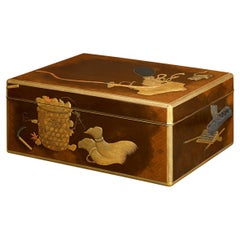
This exquisite Meiji-period lacquer document box known as a ryoshibako showcases the meticulous artistry of maki-e, a technique of raised lacquer decoration. Adorned with gold and vi...
Category
Antique 19th Century Asian Meiji Lacquer
Materials
Gold
$39,850
Japanese Lacquer and Gold Tray
Located in New Orleans, LA
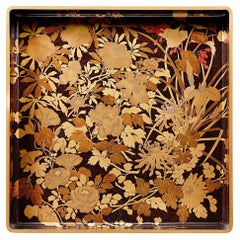
This Meiji-period lacquer tray represents the mastery of Japanese craftsmen in the art of lacquer work. Precious materials are precisely inlaid in the lacquer base, creating a highly...
Category
Antique Late 19th Century Asian Meiji Lacquer
Materials
Gold
Japanese Lacquer Tray
Located in New Orleans, LA
As beautiful as it is practical, this Japanese Meiji-period lacquered tray is distinguished by its exceptional craftsmanship. It exhibits a phenomenal artistry as the entire tray is ...
Category
Early 20th Century Japanese Meiji Lacquer
Materials
Lacquer
$8,850
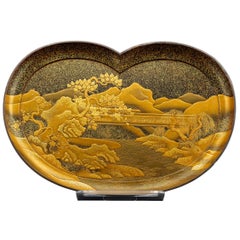
Japanese Lacquer Tray
Located in New Orleans, LA
Hailing from illustrious Meiji-period Japan, this lacquer tray showcases the mastery of Japanese craftsmen. Precious materials are precisely inlaid in the lacquer base, creating an a...
Category
Antique Late 19th Century Japanese Meiji Lacquer
Materials
Silver
$19,800
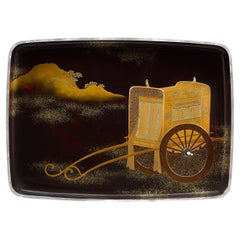
Japanese Lacquer Tray With Cards
Located in New Orleans, LA
This Meiji-period lacquer tray represents the mastery of Japanese craftsmen in the art of lacquer work. Precious materials are precisely inlaid in the lacquer base, creating a highly...
Category
Antique Late 19th Century Japanese Meiji Lacquer
Materials
Gold
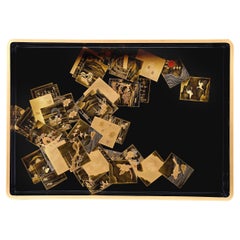
Chinese Cinnabar Lacquer Cuspidor
Located in New Orleans, LA
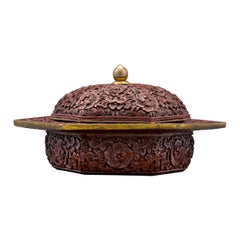
This intriguing Chinese zhadou is intricately carved of fine cinnabar lacquer. A work of exceptional artistry, this covered bowl is adorned with an intricately carved floral motif on all surfaces, including the cover and the wide rim. Also known as a cuspidor or spittoon, this rare container would have been used by members of the imperial family and scholar- officials at the court. Carved during the Kangxi period (1662-1722), this charming piece exhibits the high detail and charm associated with items from that period, making it a true treasure,
Early 18th century (Kangxi dynasty)
Measures: 6 ¼” wide x 3 ¼” high
Cinnabar has been revered for its color all over the world. It has been found in the royal burial chambers of the Mayas, in the rituals of India, and in the ruins of ancient Greece and Rome. In China, cinnabar and gold were the two most important elements in alchemy. Mined since the Neolithic Age, cinnabar is the ore of mercury, and as such, it can be incredibly toxic, especially when mining. In fact, during the Roman Empire, miners at Spain’s Almadén mine in Spain were frequently exposed to mercury fumes, and the subsequent, often fatal, sickness was considered an occupational hazard.
The most popular known use of cinnabar is in Chinese carved lacquer-ware, a technique that is believed to have originated in the Song Dynasty, in which cinnabar is ground to a powder and added to clear lacquer. As with mining, there was inherent danger of mercury poisoning for those who carved the lacquer, as mercury was also released into the air when artisans ground the pigments. Most antique cinnabar...
Category
Antique 18th Century Chinese Other Lacquer
Materials
Lacquer
Still Thinking About These?
All Recently ViewedMore Ways To Browse
Stacking Lunch Box
Japanese Inkstone
Japanese Red Lacquer Frame
Lac Burgaute
Manju Netsuke
Tiger Netsuke
16th Century Pewter
Basquiat Tray
Canton Embroidery
Chinese Baby Bath
Chinese Enamel Smoking Set
Chinese Lac Burgaute
Geisha Makeup
Japanese Letter Box
Red Lacquer Ware
Thai Offering Bowl
Jade Netsuke
Japanese Lacquer Letter Box