Want more images or videos?
Request additional images or videos from the seller
1 of 13
Japanese Lacquer Melon Shaped Incense Burner, Akoda Koro, Edo Period
$6,000List Price
About the Item
- Dimensions:Height: 3.25 in (8.26 cm)Diameter: 4 in (10.16 cm)
- Style:Edo (Of the Period)
- Materials and Techniques:
- Place of Origin:
- Period:
- Date of Manufacture:circa 1700
- Condition:Wear consistent with age and use. The exterior is very fine condition with extremely minor wear around the edges. The interior possibly missing a metal liner and most likely re-lacquered. The silver tarnished. The underside of the cover showing signs of use.
- Seller Location:Austin, TX
- Reference Number:1stDibs: LU894718408952
About the Seller
5.0
Platinum Seller
Premium sellers with a 4.7+ rating and 24-hour response times
Established in 2001
1stDibs seller since 2010
356 sales on 1stDibs
Typical response time: 1 hour
Authenticity Guarantee
In the unlikely event there’s an issue with an item’s authenticity, contact us within 1 year for a full refund. DetailsMoney-Back Guarantee
If your item is not as described, is damaged in transit, or does not arrive, contact us within 7 days for a full refund. Details24-Hour Cancellation
You have a 24-hour grace period in which to reconsider your purchase, with no questions asked.Vetted Professional Sellers
Our world-class sellers must adhere to strict standards for service and quality, maintaining the integrity of our listings.Price-Match Guarantee
If you find that a seller listed the same item for a lower price elsewhere, we’ll match it.Trusted Global Delivery
Our best-in-class carrier network provides specialized shipping options worldwide, including custom delivery.You May Also Like
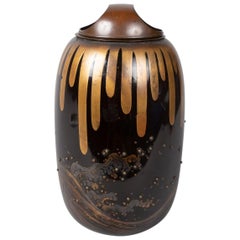
Japanese Lacquer Koro
Incense Burner
Located in Hudson, NY
Removable bronze top, with gold drip pattern at top. Cresting ocean waves on bottom with raised silver sea spray.
Category
Antique Early 19th Century Japanese Edo Lacquer
Materials
Silver, Bronze
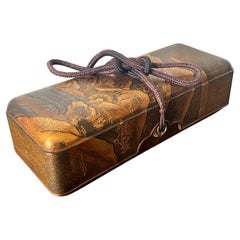
Japanese Lacquered Maki-e Fubako Edo Period
Located in Atlanta, GA
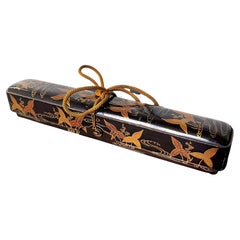
A Japanese lacquered wood fubako (a box used to store document or small scroll painting), circa second half of 19th century late Edo period. The rectangular box features an unusually deep lipped lid with slightly rounded corners, a conforming lower box that is almost entirely covered by the lid which has two bronze medallion rings with tasseled...
Category
Antique 19th Century Japanese Edo Lacquer
Materials
Wood, Lacquer
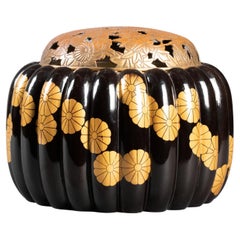
Japanese, Black Lacquer, Chrysanthemum Shaped Incense Burner
Koro
Located in Hudson, NY
With chrysanthemum motif and a gilded bronze lid. Includes unsigned collector's box. Interior measurements: 7 1/2" opening, 5 1/4" deep.
Category
Antique Late 18th Century Japanese Lacquer
Materials
Lacquer
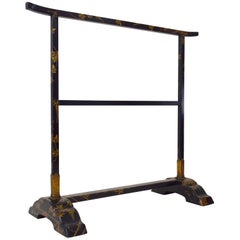
Elegant Japanese Edo Period Rack
Located in New York, NY
This refined object dates to the first half of the 19th century, and was probably used for obi, kimono sashes, which were hung over it. The gold decorations on the black-lacquered g...
Category
Antique 1830s Japanese Edo Lacquer
Materials
Lacquer
Exquisite Japanese Lacquer Maki-e Suzuribako by Koma Kyūhaku Edo Period
Located in Atlanta, GA
One of the finest Japanese Maki-e Suzuribakos (ink box) we have on offer, the roiro color box showcases an ambient nocturnal scene in which two shakudo inlaid crows perched on the ha...
Category
Antique Early 19th Century Japanese Edo Lacquer
Materials
Stone, Metal
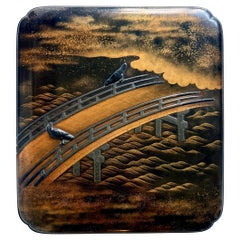
$18,000
H 2 in W 9.25 in D 10.125 in
Japanese Lacquer Tray with Maki-e and Inlay Hara Yoyusai Edo Period
Located in Atlanta, GA
A lovely Japanese lacquer rectangular lacquer tray with a slightly scalloped corner and four L shape supporting feet by one of the most celebrated lacquer artist active in Edo period Hara Yoyusai (1772-1845). Yoyusai lived in Edo (Tokyo) and worked under the patronage of Lord Matsudaira. He operated a large workshop and had a very prolific output of lacquer objects. Most survived pieces being inro...
Category
Antique 19th Century Japanese Japonisme Lacquer
Materials
Wood, Lacquer
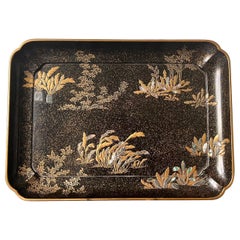
$8,000
H 1.5 in W 11.5 in D 8.25 in
Edo Period Makie Lacquer Incense Burner with Bronze Receptor
Located in Fukuoka, JP
A Fine Lacquer Incense Burner with Makie Gold Design.
This fine lacquer incense burner is a stunning example of Japanese craftsmanship. It is dated to the Edo-Meiji period, 19th cen...
Category
Antique 19th Century Japanese Edo Lacquer
Materials
Bronze
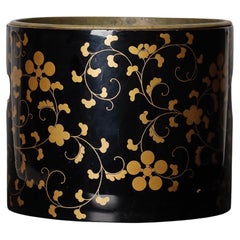
$889
Free Shipping
H 8.6 in W 10.2 in D 10.2 in
Japanese Lacquered Gold Maki-E Naga Fubako Meiji Period
Located in Atlanta, GA
A Japanese lacquered wood Naga Fubako (a long box used to store document or large scroll painting), circa 19th century Meiji period. The rectangular box features an unusually deep lipped lid with slightly rounded corners, a conforming lower box with bronze medallion rings with tasseled...
Category
Antique 19th Century Japanese Meiji Lacquer
Materials
Wood, Lacquer
Japanese Lacquered Maki-E Fubako in Kodaiji Style
Located in Atlanta, GA
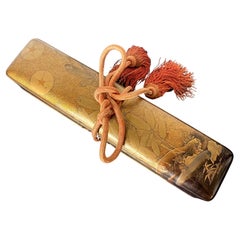
A rare Japanese lacquered wood fubako decorated in Kodaiji maki-e style circa early 17th century the beginning of the Edo period, possibly early toward the end of the Azuchi-Momoyama period. The rectangular, long and slim box features a deep lipped lid with slightly rounded corners, a conforming lower box with two bronze medallion rings with tasseled...
Category
Antique Early 17th Century Japanese Edo Lacquer
Materials
Wood, Lacquer
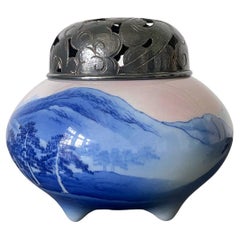
Japanese Glazed Ceramic and Silver Koro Incense Burner Makuzu Kozan
By Makuzu Kozan
Located in Atlanta, GA
A tri-pod ceramic incense burner (koro) by Japanese Imperial potter Makuzu Kozan (1842-1916) circa late Meiji to the start of Taisho period (1890-1910s). A fine example of the artist's work belonging to the late part of his underglaze paint phase (started around 1887 until his death), the surface of the koro was painted in beautiful shades of blue to depict a continuous landscape not unlike a traditional ink and watercolor hand scroll. The rise and fall mountains recede and fade into the horizon and are dotted with groves of pines. The sky is painted with a beautiful subtle shade of pink, suggesting a time of sunrise or sunset. The koro is fitted with an ensuite reticulated sterling silver hoya (incense cover), pierced with swirling cloud and marked with "pure silver' in Kanji. The base is signed in underglaze blue "Makuzu Kozan Sei" within a double ring. The piece is beautifully potted in form and the decoration was done with expertise using the novel technique developed by Kozan called Fuki-e (the blow painting), in order to achieve the striking landscape known as "Mountain and Water" with sense of dimensions and gradient, the poetic effects normally conveyed only by sumi ink staining on paper. The piece comes with an unsigned tomobako (wood storage box) of a recent age.
Also known as Miyagawa Kozan (1842–1916), Makuzu Kozan was one of the most established and collected ceramist from Meiji Period. Born as Miyagawa Toranosuke, Kozan established his pottery studio in Yokohama around 1870s and later became one of the appointed artists to the Japanese Imperial household. His work was exhibited in many international fairs that the Meiji government participated at the turn of the century and won many grand prizes. Being one of the most creative ceramists, Kozan started experimenting with new chemical colors from the West in the format of his porcelain glaze around 1880s. New colors allowed him to create underglaze designs that appeared bright, smooth and glossy. He even invented his own receipt of cobalt blue to achieve a much brighter yet softer shade, as evident on this vase. To create landscape that is realistic and dimensional, more common in the western paintings, he was inspired by the native Japanese ink painting technique developed around 1900 by Yokoyama...
Category
Antique Early 1900s Japanese Japonisme Ceramics
Materials
Silver
More From This Seller
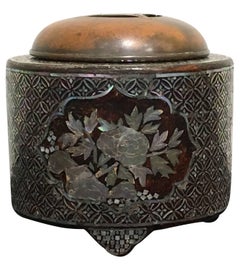
View AllJapanese Edo Period Lacquer and Mother-of-Pearl Embellished Stoneware Koro
Located in Austin, TX
A highly unusual Japanese crackle glazed koro (incense burner or censer), lacquered and inlaid with mother-of-pearl embellishment, signed Gyokusen, Ed...
Category
Antique 19th Century Japanese Edo Scholar s Objects
Materials
Copper
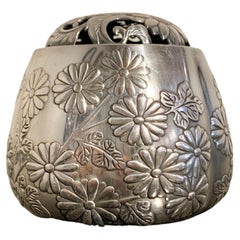
Japanese Silver Incense Burner, Akoda Koro, by Nomura, Meiji Period, Japan
Located in Austin, TX
A lovely and luxurious Japanese silver incense burner of lobed melon form, akoda koro, marked jungin and signed Nomura, Meiji Period, circa 1900, Japan.
The silver koro...
Category
Vintage 1910s Japanese Meiji Metalwork
Materials
Silver, Sterling Silver
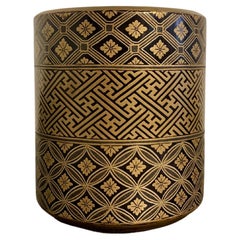
Japanese Lacquer Incense Burner, Koro, Edo period, mid 19th century, Japan
Located in Austin, TX
An elegant and refined Japanese lacquer koro, incense burner, in the form of a chaire, tea caddy, Edo Perio, mid 19th century, Japan.
The barrel shaped koro formed as a traditional ...
Category
Antique Mid-19th Century Japanese Edo Lacquer
Materials
Copper
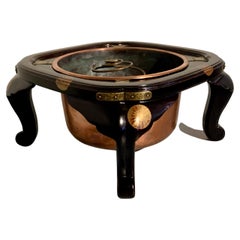
Japanese Lacquer Hibachi with Imperial Chrysanthemum, Meiji Period, Japan
Located in Austin, TX
A simple and elegant Japanese lacquer hibachi stand with imperial chrysanthemum mon and copper liner, now modified as an usubata, late Meiji Period, ci...
Category
Antique Early 1900s Lacquer
Materials
Copper
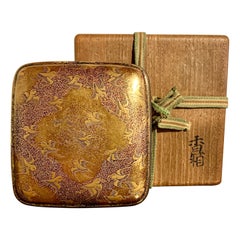
Japanese Lacquer Incense Box, Kogo, Momoyama or Edo Period, 16th/17th Century
Located in Austin, TX
A wonderful Japanese lacquer incense box, kogo, with a design of plovers in flight, late Momoyama or early Edo Period, circa 1600, Japan.
The small box, called a kogo, was used to s...
Category
Antique Early 17th Century Japanese Edo Lacquer
Materials
Gold, Pewter
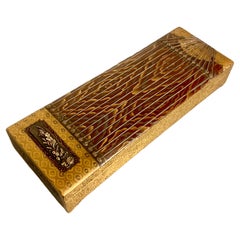
Japanese Lacquer Writing Box, Suzuribako, Edo Period, 18th Century, Japan
Located in Austin, TX
An exceptionally fine and unusual Japanese lacquer writing implements box, suzuribako, in the form of a zither, koto, Edo Period, 18th century, Japan. With a modern wood storage box,...
Category
Antique 18th Century Japanese Edo Lacquer
Materials
Gold, Silver, Copper
Still Thinking About These?
All Recently ViewedMore Ways To Browse
Stacking Lunch Box
Indian Wood Angels
Tomizo Saratani
Tsugaru Nuri
Japanese Letter Box
16th Century Pewter
Red Lacquer Ware
Thai Offering Bowl
Jade Netsuke
Straits Altar
Japanese Hokkai Box
Japanese Inkstone
Japanese Red Lacquer Frame
Manju Netsuke
Tiger Netsuke
Chinese Baby Bath
Chinese Enamel Smoking Set
Geisha Makeup