Items Similar to Japanese lacquer oblong storage box by Hiroshi Hayashi 林宏 (1967)
Want more images or videos?
Request additional images or videos from the seller
1 of 13
Japanese lacquer oblong storage box by Hiroshi Hayashi 林宏 (1967)
$3,328.47
£2,477.37
€2,800
CA$4,616.26
A$4,969.82
CHF 2,661.44
MX$59,884.61
NOK 33,579.96
SEK 30,731.09
DKK 21,341.17
About the Item
An exceptional, oblong lacquer 3-tiered storage box with cover, reminiscent of a bento box, by Hiroshi Hayashi (1967). Covered in shiny gold and black lacquer with red accents. The surface with different textures, the lowest tier decorated with stylized hieroglyphs.
The interior fitted with navy blue silk with a scrolling foliage design.
Including original signed wooden tomobako (storage box).
Hiroshi Hayashi, born in Osaka in 1967, embarked on his artistic journey at Tokyo University of the Arts, where he earned his degree in Crafts. After completing his Master's Course in Lacquer Art, he delved deep into the intricate world of natural materials, contributing significantly to the field. Serving as an Associate Professor at Onomichi City University, he has become a distinguished voice in the art community.
Throughout his career, Hayashi has showcased his exceptional talent in a series of exhibitions worldwide. From his solo exhibitions in Tochigi Argonaut to international shows in Helsinki, Finland, his work reflects a profound understanding of the art form.
When shipped we will add a certificate of authenticity.
Price including insured shipping.
- Creator:Hiroshi Hayashi (Artist)
- Dimensions:Height: 8 in (20.3 cm)Width: 15.44 in (39.2 cm)Depth: 4.65 in (11.8 cm)
- Materials and Techniques:
- Place of Origin:
- Period:
- Date of Manufacture:Heisei (1989-2019)
- Condition:Wear consistent with age and use. In a very good original condition. The fabric slightly loosened in one. Please look at the photos for a condition reference.
- Seller Location:Amsterdam, NL
- Reference Number:Seller: 920901stDibs: LU7165236960392
About the Seller
4.8
Vetted Professional Seller
Every seller passes strict standards for authenticity and reliability
Established in 1996
1stDibs seller since 2022
22 sales on 1stDibs
- ShippingRetrieving quote...Shipping from: Zwanenburg, Netherlands
- Return Policy
More From This Seller
View AllJapanese Ecru Lacquered Natsume 棗
Tea Caddy
with Maki-E of Carriage Wheels
Located in Amsterdam, NL
Uncommon ecru lacquer tea caddy (natsume) with a nice golden hiramaki-e (low-relief design) of cart wheels submerged in a wild swirling stream.
The design ...
Category
20th Century Japanese Lacquer
Materials
Giltwood, Lacquer
Japanese lacquer suzuri’bako 硯箱 (writing box) with ‘Rinpa School’-style design
Located in Amsterdam, NL
Superb rectangular ‘Rinpa School’-style black lacquer suzuri’bako (writing box) with a slightly arched well-fitted overhanging cover with rounded corners.
The lid with a design of a gosho’guruma (ox-drawn carriage for Heian-era nobles) featuring golden hiramaki-e (low-relief lacquer design) and takamaki-e (high-relief lacquer design), inlays of lead and shiny mother-of-pearl (raden). The design continues along the sides.
The reverse of the lid decorated with two large curving pine trees (matsu) executed in the same way, but also with intricate dots of tiny pieces of inlaid blue mother-of-pearl along the golden trunk.
The interior shaped to hold various scholar’s accessories, including a partially gold lacquered inkstone (suzuri) and a bronze waterdropper (suiteki) shaped like a mythical minogame.
The interior inscribed ‘Hokkyô Kôrin zô’ (Made by Hokkyô Kôrin). Referring to the design being in style of the master Ogata Kôrin, but the actual lacquer artist is unknown. It is a homage to Kôrin by an artist that followed the school of Rinpa.
Including black lacquer wooden tomobako (tomobako).
The Rinpa School was a key part of the Edo period revival of indigenous Japanese artistic interests described by the term yamato-e. Paintings, textiles, ceramics, and lacquerwares were decorated by Rinpa artists with vibrant colours applied in a highly decorative and patterned manner. Favoured themes, which often contained evocative references to nature and the seasons, were drawn from Japanese literature, notably The Tale of Genji, The Tales of Ise...
Category
Antique 19th Century Japanese Lacquer
Materials
Brass, Lead
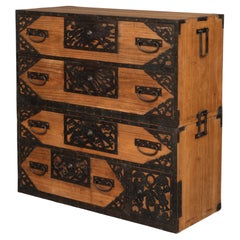
Japanese Sado ishô dansu 衣装箪笥 (cabinet of drawers) with elaborate hardware
Located in Amsterdam, NL
Exceptional, rare and completely restored wooden Sado ishô dansu (cabinet of drawers) with elaborately decorated open work iron hardware, in two sections. Fully restored, cleaned and waxed.
The exterior is made of hinoki cypress wood. Only slightly varnished, giving it a tad warmer colour. This soft underground lets the refined hardware stand out even more.
The upper part consists of two large drawers. The lower part with two drawers of different size and a hinged door. The interior behind the door with three small drawers. All the drawers are very deep and have a lot of volume, for easy storage. They run very smoothly as well.
The cabinet has extensively decorated hardware. The corner pieces of the drawers with stylized pine trees. The large decorative lock plates each with their own unique design of different auspicious animals; a peacock, a phoenix, a crane and a minogame. The hinged door decorated with different attributes of the Seven Gods of Fortune...
Category
Antique Late 19th Century Japanese Furniture
Materials
Iron
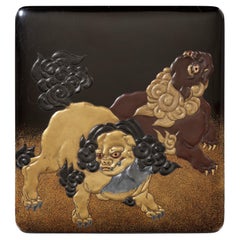
Japanese lacquer suzuri’bako 硯箱 (writing box) with shishi
Hotei design
Located in Amsterdam, NL
A captivating lacquer suzuri’bako (writing box) of rounded rectangular form depicting a pair of shishi (temple lions) and the lucky god Hotei 布袋 on a rôiro...
Category
Antique Early 19th Century Japanese Lacquer
Materials
Gold Leaf, Silver Leaf
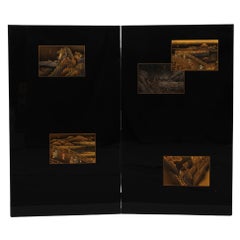
Tall, Japanese lacquer byôbu 屏風 (folding screen) by Mitsuo Takana 高名光夫 (1956)
By Mitsuo Takana
Located in Amsterdam, NL
Refined, tall two-panel byôbu (folding screen) completely adorned with ‘Wajima Ryûsaku’ lacquer by the Nitten award winning artist Mitsuo Takana (1956).
Featuring five refined images inspired by woodblock prints from the famous series ‘Tôkaidô gojûsan tsugi’ (The fifty-three stations of the Tokaido road), like the 1st station Nihonbashi, the 10th station Hakone, and the 21st station Okabe.
The design is executed in hiramaki-e (low-relief lacquer design) in shades of gold, silver, heightened by some multi-coloured details. Set on a shiny black lacquer substrate.
Signed in red lacquer in the lower right corner.
Including original signed & sealed wooden tomobako (storage box). The front with an inscription about the contents as described above. The inside:
‘Friend of the Nitten Exhibition Takana Mitsuo’ - Seal: ‘Hikari’.
‘Lacquer artist Wajima Ryûsaku’ - Seal: ‘Ryûsaku’.
Mitsuo Takana was born 1956 in Wajima, Ishikawa prefecture. He won several awards during exhibitions like: Ishikawa Contemporary Art Exhibition, Japan Artisans' Association Exhibition and the well-known Nitten Exhibition.
Dimensions:
Height 57.48 in/146 cm, Total width 66.92 in/170 cm (2 x 33.46 in/85 cm), Depth 1.10 in/2.8 cm.
Weight 56.21 lb/25.5 kg.
Wajima lacquerware...
Category
Late 20th Century Japanese Paintings and Screens
Materials
Wood, Giltwood, Lacquer
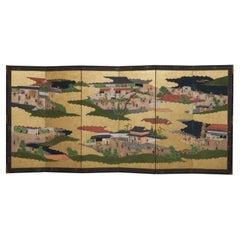
Large Japanese 6-panel byôbu 屏風 (folding screen) with Edo genre painting
Located in Amsterdam, NL
An elaborate, large six-panel byôbu (folding screen) featuring a detailed genre painting on gold leaf, capturing the vibrancy of festive scenes from the Edo period.
Central to the p...
Category
Antique Early 19th Century Japanese Paintings and Screens
Materials
Metal, Gold Leaf
You May Also Like
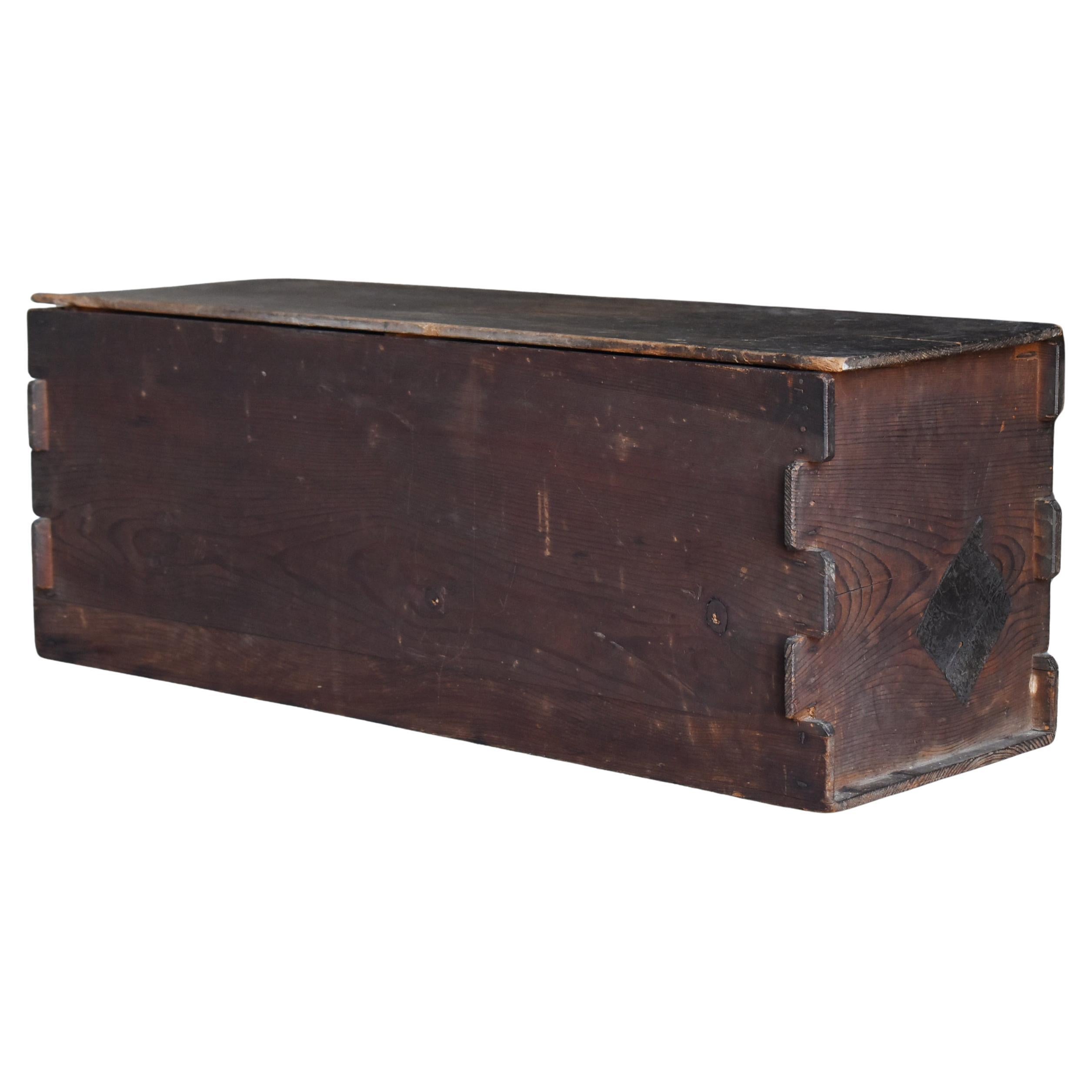
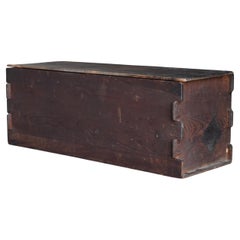
Japanese Antique Wooden Box 1860s-1920s / Sofa Table Storage Box Wabisabi
Located in Chōsei District Nagara, JP
This is an old Japanese wooden box, crafted in the Meiji to Taishō period (1860s–1920s). Despite its long history, it retains a quiet and compelling presence. The box is made from traditional sugi (Japanese cedar), whose soft grain and gentle texture reflect the depth and warmth of its age.
The form is strikingly minimal—its design is completely free of unnecessary elements. Although it is simply a box, the composition of clean lines and planes gives it a subtle tension and understated beauty. It carries the precision and warmth of handcraft, something that cannot be replicated by industrial production.
One particularly captivating feature is the visible trace of careful repairs made over many years. A knot hole on the side was thoughtfully patched with black washi paper, a practical repair that, over time, has become an expressive and almost artistic detail. In this small gesture, one can sense the quiet presence of Japanese aesthetic sensibilities.
The top and sides bear gentle wear and abrasion accumulated over decades. Rather than damage, these marks serve as a texture created by time, giving the piece its unique depth and character. The box possesses a humble yet powerful presence—a true embodiment of wabi-sabi, the beauty of imperfection and age.
The interior remains sturdy, offering ample storage capacity. It has been thoroughly cleaned, ensuring it can be used safely and comfortably. Its low, elongated proportions make it highly versatile: ideal as a low coffee table, a book table, a side table, or a display platform. Simply placing it in a modern interior instantly adds a sense of calm and visual depth.
A simple yet richly expressive antique wooden box...
Category
Early 20th Century Japanese Taisho Decorative Boxes
Materials
Cedar
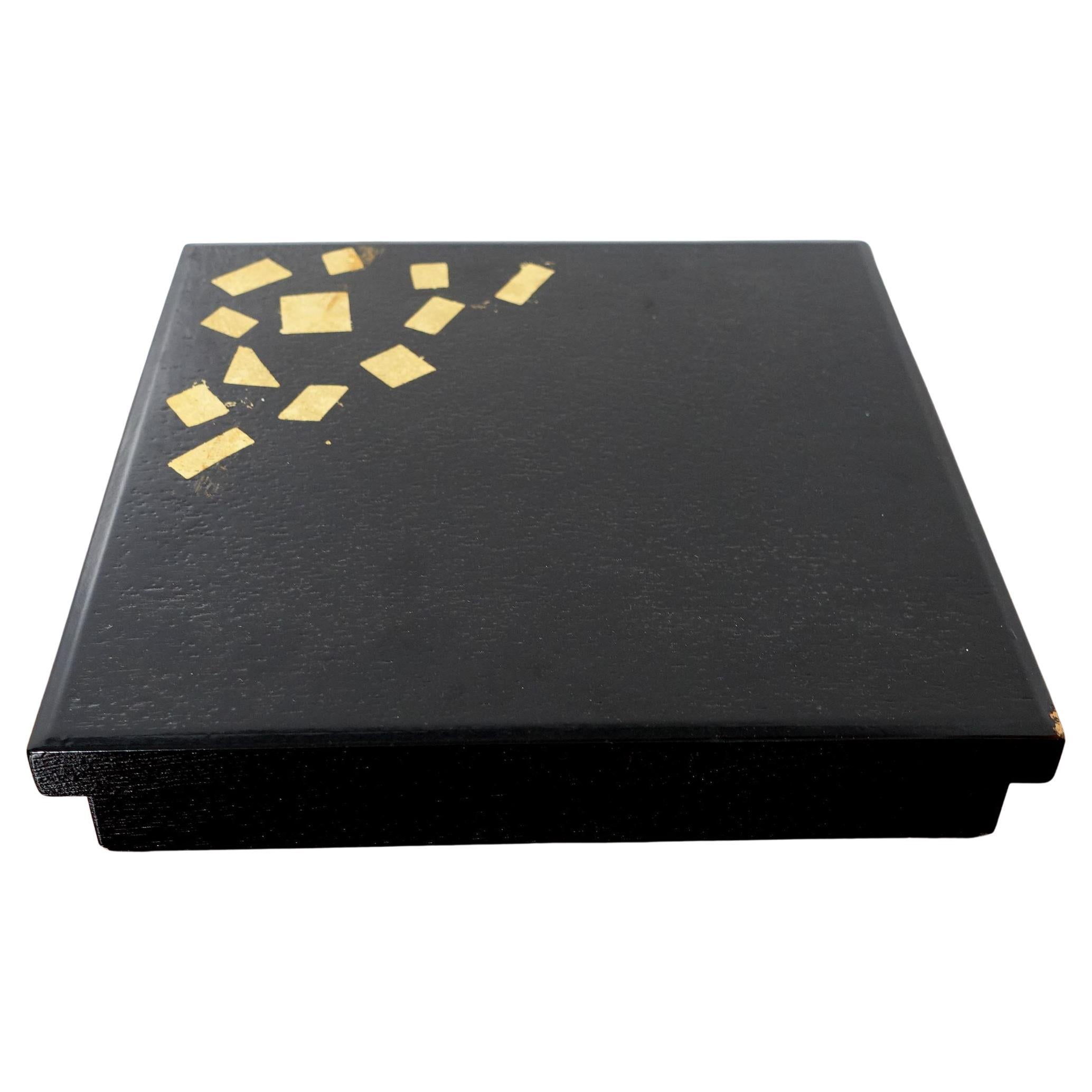
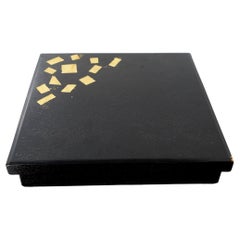
Japanese late Meiji period Large Organizer Lacquered Box, Ric.053
Located in Norton, MA
Japan, late Meiji period or later, a large black square organizer box and cover, decorated with geometric squares in gold on the cover
Category
Antique 19th Century Japanese Decorative Boxes
Materials
Lacquer
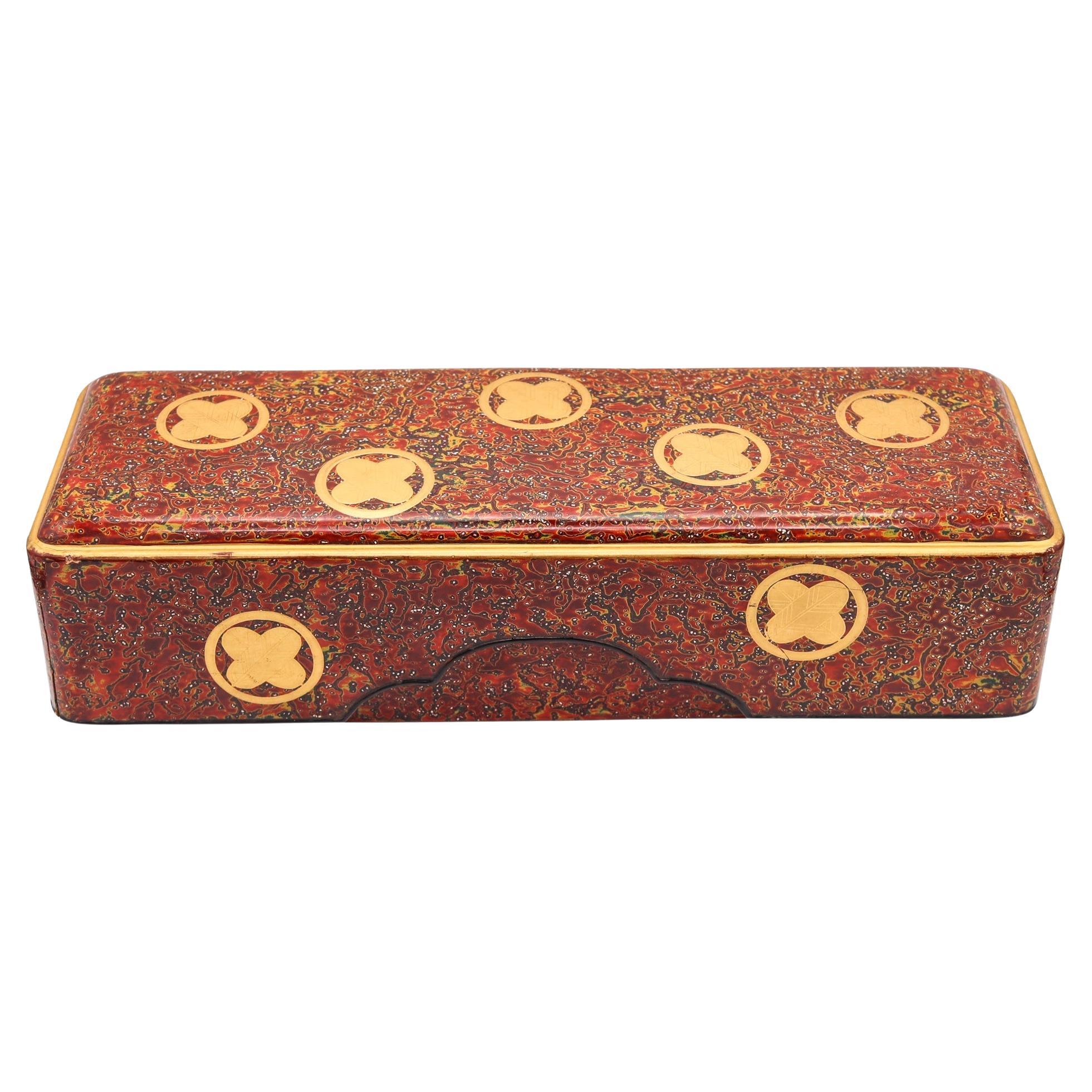
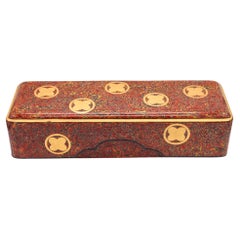
JAPAN 1900 Meiji Period Fubako Box In Hiramaki-e Lacquered Wood With Gilding
Located in Miami, FL
Fubako letters-box from the Japanese Meiji period (1868-1912).
Beautiful decorative Fubako letters box from the Japanese Imperial Meiji period, circa 1900. This box has been meticul...
Category
Antique Early 1900s Japanese Meiji Lacquer
Materials
Gold
$1,118 Sale Price
20% Off
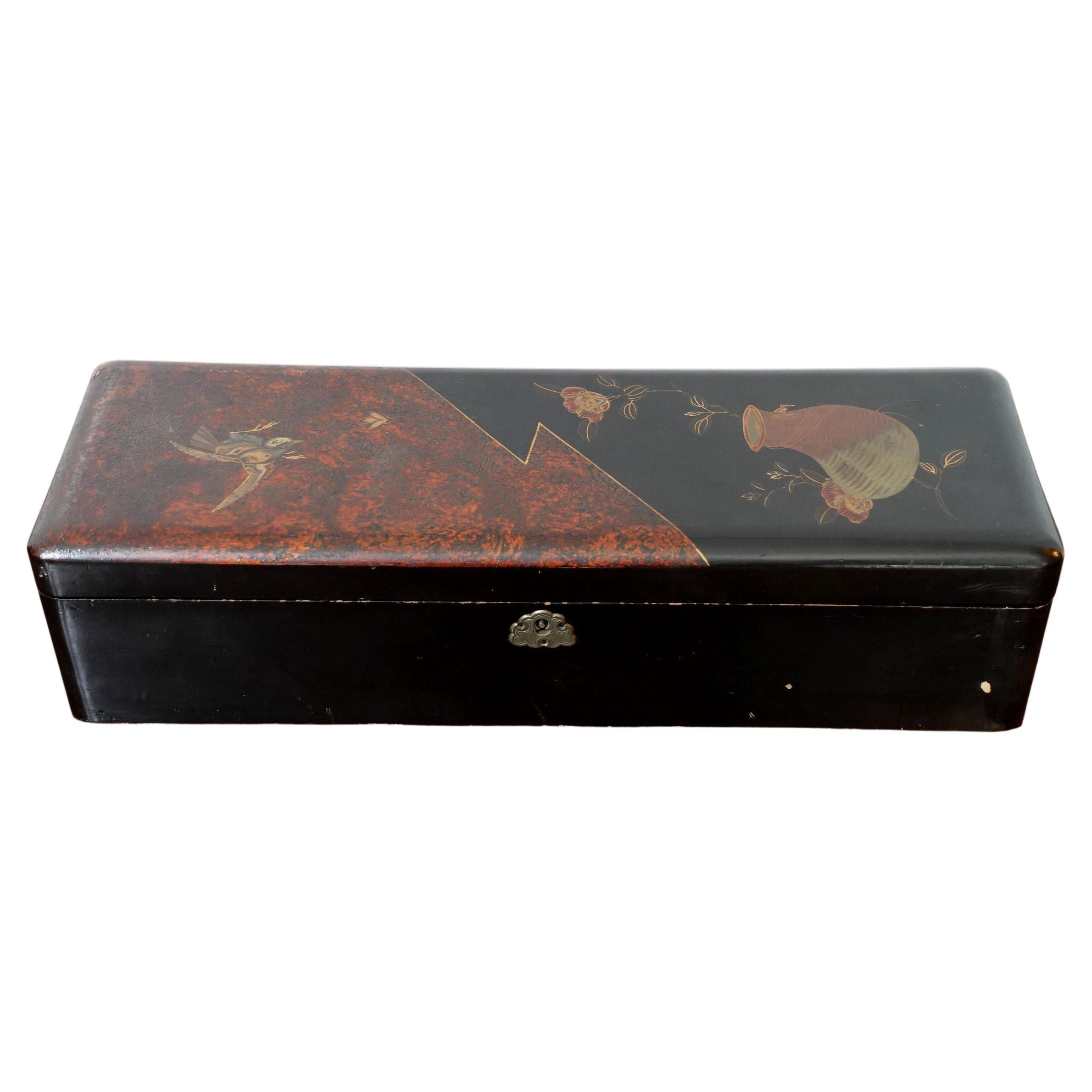
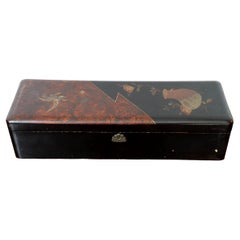
Japanese Maki-e Lacquered Box, Ric.049
Located in Norton, MA
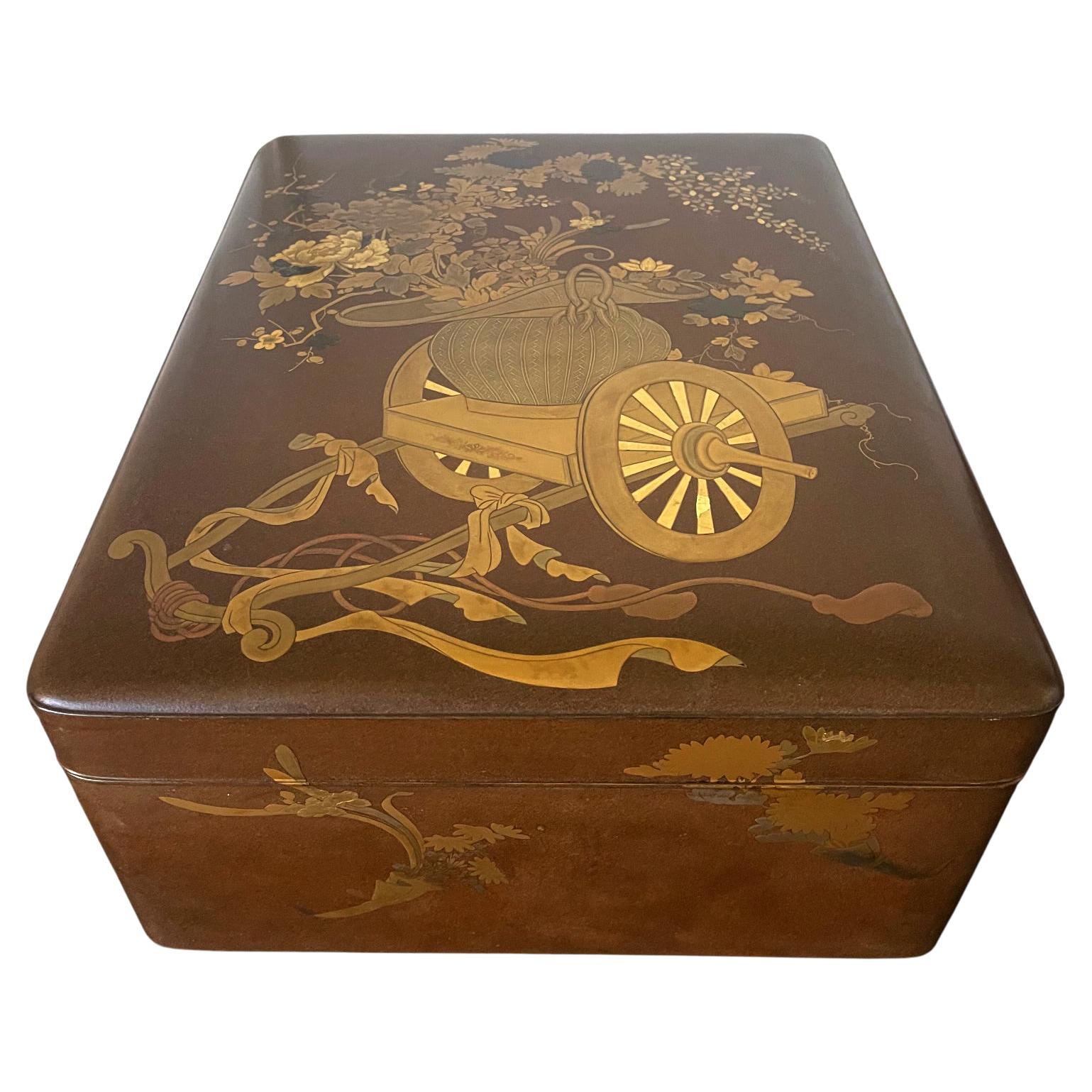
Japan, Edo to Meiji period, a long rectangular document box with hinged cover, decorated with a bird and a floral basket,
The locker is not functioning.
Category
Antique 19th Century Japanese Decorative Boxes
Materials
Lacquer
Japanese Lacquered Tebako
Box
Located in PARIS, FR
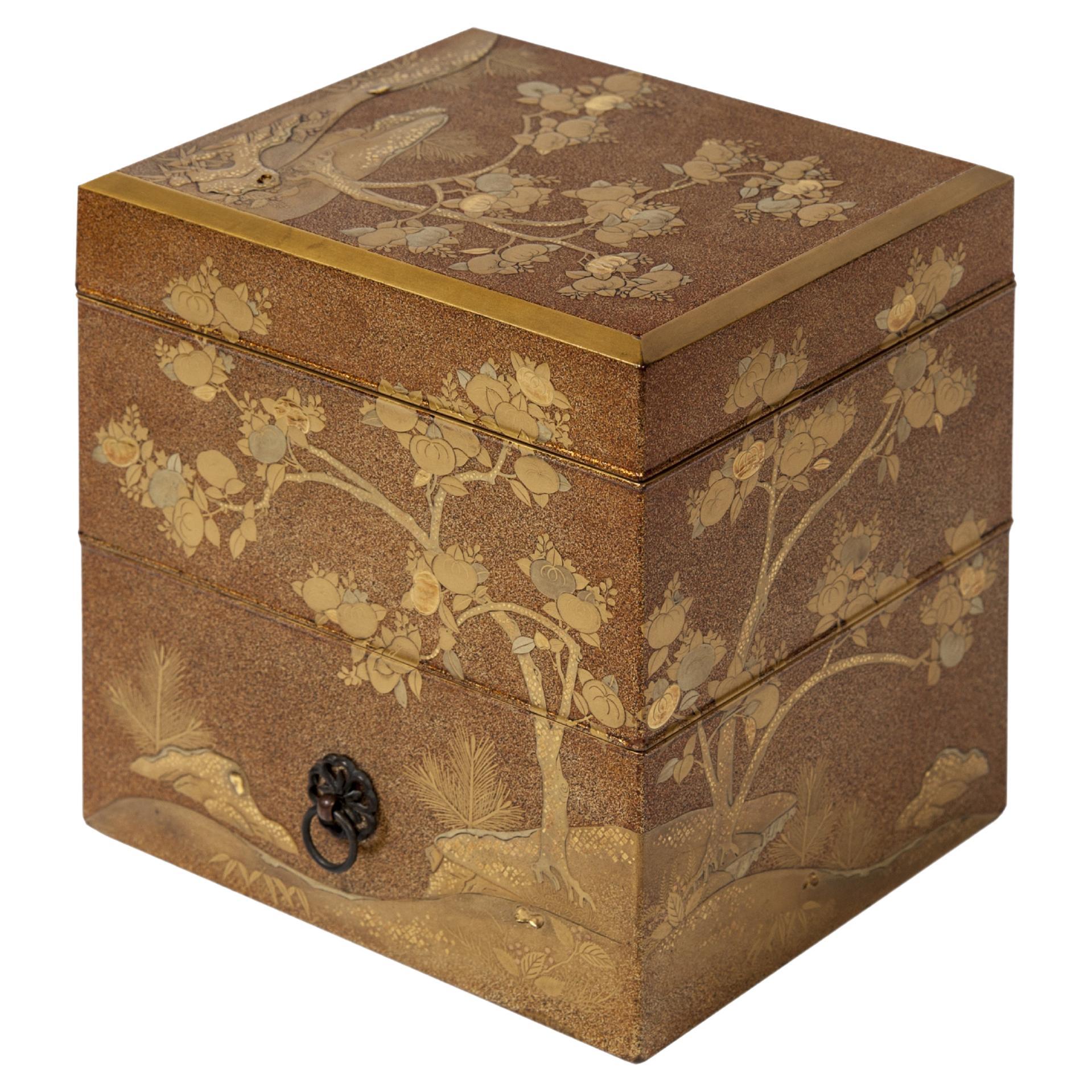
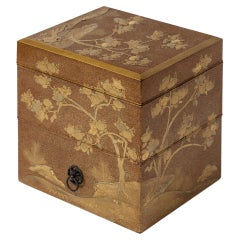
Tebako box with three compartments in golden and nashi-ji lacquer, decorated with golden, red, and kirigane lacquer, golden persimmon tree leaves, among rocks. The compartments are of increasing size from the top. The decoration is in continuity.
Persimmon has been cultivated in southern China for more than 2500 years and is believed to have been introduced to Japan in the 8th century. The veneer is a tree with very hard wood, similar to ebony. According to a legend, one specimen survived the atomic bombing of Nagasaki on August 9, 1945, close to the epicenter. It is therefore in Japan a symbol of strength and longevity. It is also the national fruit of the country. It is eaten as a traditional dish during New Year's Day celebrations.
Tebako literally means "portable box...
Category
Antique 1860s Japanese Lacquer
Materials
Lacquer
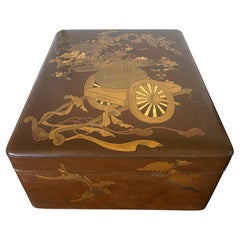
Japanese Lacquer Ryoshibako Document Box Meiji Period
Located in Atlanta, GA
A large Japanese lacquer box with elaborate Maki-e design from Meiji period, (mid-late 19th century). The generous size of the box was reser...
Category
Antique 19th Century Japanese Japonisme Lacquer
Materials
Wood, Lacquer
More Ways To Browse
Cinnabar Lacquer Furniture
Antique Chinese Cinnabar
Japanese Lacquered Tray
Chinese Carved Cinnabar
Japanese Lacquerware
Red Lacquer Cinnabar
Antique Inro
Japanese Gold Lacquer Box
Red Lacquer Boxes Asian
Lacquer Fan
Asian Cinnabar
Japanese Lacquer Pearl
Japanese Wood Tray
19th Century Carved Chinese Fan
Black Japanese Tray
Chinese Carved Cinnabar Red Lacquer
Antique Japanese Lacquer Tray
Japanese Export 19th