Items Similar to Japanese lacquer suzuri’bako 硯箱 (writing box) with shishi
Hotei design
Want more images or videos?
Request additional images or videos from the seller
1 of 17
Japanese lacquer suzuri’bako 硯箱 (writing box) with shishi
Hotei design
$5,284.40
£3,914.37
€4,400
CA$7,230.37
A$7,867.20
CHF 4,165.58
MX$94,647.75
NOK 52,893.63
SEK 48,393.96
DKK 33,531.60
About the Item
A captivating lacquer suzuri’bako (writing box) of rounded rectangular form depicting a pair of shishi (temple lions) and the lucky god Hotei 布袋 on a rôiro’urushi (black lacquer) ground. Hotei is the god of contentment and happiness, guardian of children, patron of bartenders, and one one of Japan’s ‘Seven Lucky Gods’ (Shichifukujin).
The cover finely decorated in gold and coloured takamaki-e (high-relief lacquer design) with e-nashiji (sprinkled gold lacquer) to depict two ferocious shishi standing foursquare in dynamic poses. Well-detailed with scrolling bushy manes and tails, muscular bodies, sharp claws and fangs, and large bulging eyes of inlaid glass with black pupils ringed in red.
The interior is decorated in gold, silver and black hiramaki-e (low-relief lacquer design) to depict Hotei standing beside his large treasure sack (nunobukuro) detailed with paulownia sprays and phoenixes in gold takakami-e. Supporting himself on a cane and holding Chinese fan (oogi) in his left, which is said to be a ‘wish giving’ fan. Wearing a loose-fitting robe, his face with a cheerful expression framed by large earlobes.
The baseboard fitted with plain brush holders and a suzuri (inkstone). The interior with gold fundame edges (matt golden lacquer).
Including red wooden tomobako (storage box) -wear-.
When shipped we will add a certificate of authenticity.
Price including insured shipping.
- Dimensions:Height: 1.78 in (4.5 cm)Width: 10.01 in (25.4 cm)Depth: 9.26 in (23.5 cm)
- Materials and Techniques:
- Place of Origin:
- Period:
- Date of Manufacture:18th-First half 19th century (Second half Edo period)
- Condition:Wear consistent with age and use. In a good original condition with some wear, minor rubbing to gilt, small nicks to interior of the cover, occasional light scratches. Some discolouration to the silver-lacquered robe of Hotei. Please look at the photos for a condition reference.
- Seller Location:Amsterdam, NL
- Reference Number:Seller: 2124171stDibs: LU7165238964082
About the Seller
4.8
Vetted Professional Seller
Every seller passes strict standards for authenticity and reliability
Established in 1996
1stDibs seller since 2022
22 sales on 1stDibs
- ShippingRetrieving quote...Shipping from: Zwanenburg, Netherlands
- Return Policy
More From This Seller
View AllJapanese lacquer suzuri’bako 硯箱 (writing box) with ‘Rinpa School’-style design
Located in Amsterdam, NL
Superb rectangular ‘Rinpa School’-style black lacquer suzuri’bako (writing box) with a slightly arched well-fitted overhanging cover with rounded corners.
The lid with a design of a gosho’guruma (ox-drawn carriage for Heian-era nobles) featuring golden hiramaki-e (low-relief lacquer design) and takamaki-e (high-relief lacquer design), inlays of lead and shiny mother-of-pearl (raden). The design continues along the sides.
The reverse of the lid decorated with two large curving pine trees (matsu) executed in the same way, but also with intricate dots of tiny pieces of inlaid blue mother-of-pearl along the golden trunk.
The interior shaped to hold various scholar’s accessories, including a partially gold lacquered inkstone (suzuri) and a bronze waterdropper (suiteki) shaped like a mythical minogame.
The interior inscribed ‘Hokkyô Kôrin zô’ (Made by Hokkyô Kôrin). Referring to the design being in style of the master Ogata Kôrin, but the actual lacquer artist is unknown. It is a homage to Kôrin by an artist that followed the school of Rinpa.
Including black lacquer wooden tomobako (tomobako).
The Rinpa School was a key part of the Edo period revival of indigenous Japanese artistic interests described by the term yamato-e. Paintings, textiles, ceramics, and lacquerwares were decorated by Rinpa artists with vibrant colours applied in a highly decorative and patterned manner. Favoured themes, which often contained evocative references to nature and the seasons, were drawn from Japanese literature, notably The Tale of Genji, The Tales of Ise...
Category
Antique 19th Century Japanese Lacquer
Materials
Brass, Lead
Exceptional Japanese Gold Lacquer Tebako 手箱
Box for Personal Accessories
Located in Amsterdam, NL
Exceptional Japanese rectangular gold lacquer tebako (box for personal accessories) with a slightly domed well-fitted lid and raised by four low bracket feet. The lid finely carved with pointed shapes as if it is covered by folded papers.
On top of this embossed surface it is decorated with gold and silver hiramaki-e (low-relief design) and takamaki-e (high-relief design) depicting a wild winding river landscape with along the waterfront...
Category
Antique 19th Century Japanese Lacquer
Materials
Giltwood, Lacquer
Japanese
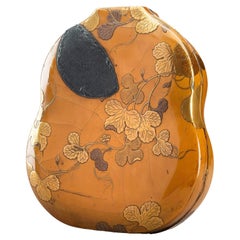
double gourd
lacquer suzuri’bako (writing box) by Hara Yôyûsai 原羊遊斎
By Hara Yôyûsai
Located in Amsterdam, NL
An uniquely double-gourd-shaped lacquer suzuri’bako (writing box) with a design of gourd leaves, by Hara Yôyûsai (1769-1845).
Covered with amber coloured l...
Category
Antique Early 19th Century Japanese Lacquer
Materials
Bronze
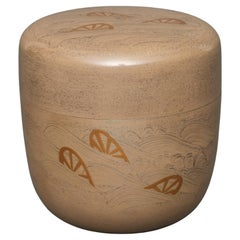
Japanese Ecru Lacquered Natsume 棗
Tea Caddy
with Maki-E of Carriage Wheels
Located in Amsterdam, NL
Uncommon ecru lacquer tea caddy (natsume) with a nice golden hiramaki-e (low-relief design) of cart wheels submerged in a wild swirling stream.
The design ...
Category
20th Century Japanese Lacquer
Materials
Giltwood, Lacquer
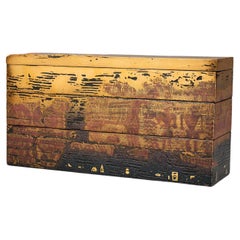
Japanese lacquer oblong storage box by Hiroshi Hayashi 林宏 (1967)
By Hiroshi Hayashi
Located in Amsterdam, NL
An exceptional, oblong lacquer 3-tiered storage box with cover, reminiscent of a bento box, by Hiroshi Hayashi (1967). Covered in shiny gold and black l...
Category
21st Century and Contemporary Japanese Lacquer
Materials
Silk, Wood, Lacquer
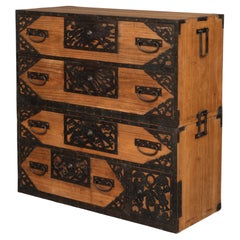
Japanese Sado ishô dansu 衣装箪笥 (cabinet of drawers) with elaborate hardware
Located in Amsterdam, NL
Exceptional, rare and completely restored wooden Sado ishô dansu (cabinet of drawers) with elaborately decorated open work iron hardware, in two sections. Fully restored, cleaned and waxed.
The exterior is made of hinoki cypress wood. Only slightly varnished, giving it a tad warmer colour. This soft underground lets the refined hardware stand out even more.
The upper part consists of two large drawers. The lower part with two drawers of different size and a hinged door. The interior behind the door with three small drawers. All the drawers are very deep and have a lot of volume, for easy storage. They run very smoothly as well.
The cabinet has extensively decorated hardware. The corner pieces of the drawers with stylized pine trees. The large decorative lock plates each with their own unique design of different auspicious animals; a peacock, a phoenix, a crane and a minogame. The hinged door decorated with different attributes of the Seven Gods of Fortune...
Category
Antique Late 19th Century Japanese Furniture
Materials
Iron
You May Also Like
Japanese Lacquer Kogo
Incense Box
Located in Hudson, NY
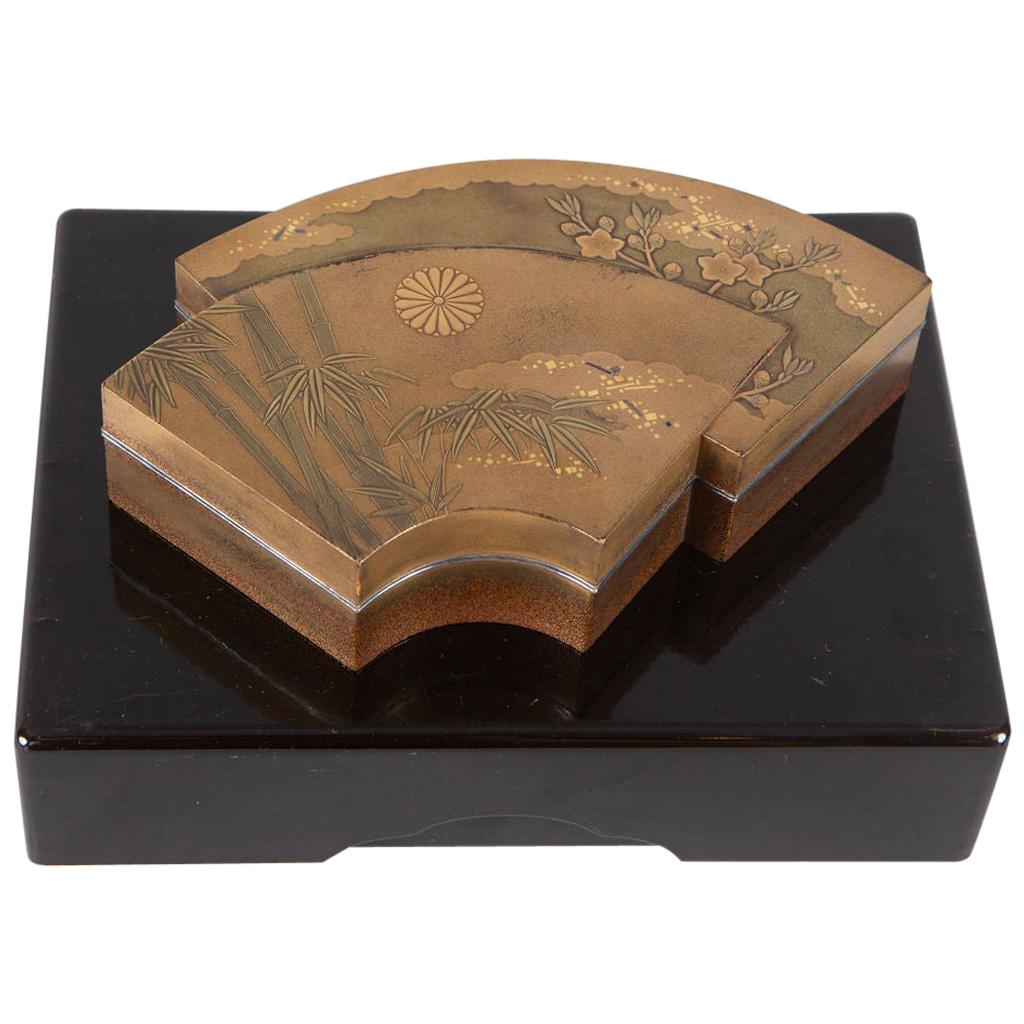
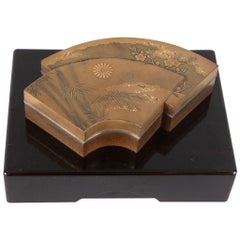
Late Edo (1614 - 1868) period incense storage box in stacked, double fan design. Fans have bamboo and plum design with a chrysanthemum crest. Silve...
Category
Antique Mid-19th Century Japanese Edo Lacquer
Materials
Gold
Japanese Tagasode (Whose Sleeves?) Lacquer Incense Box, Kobako, Meiji Period
Located in Austin, TX
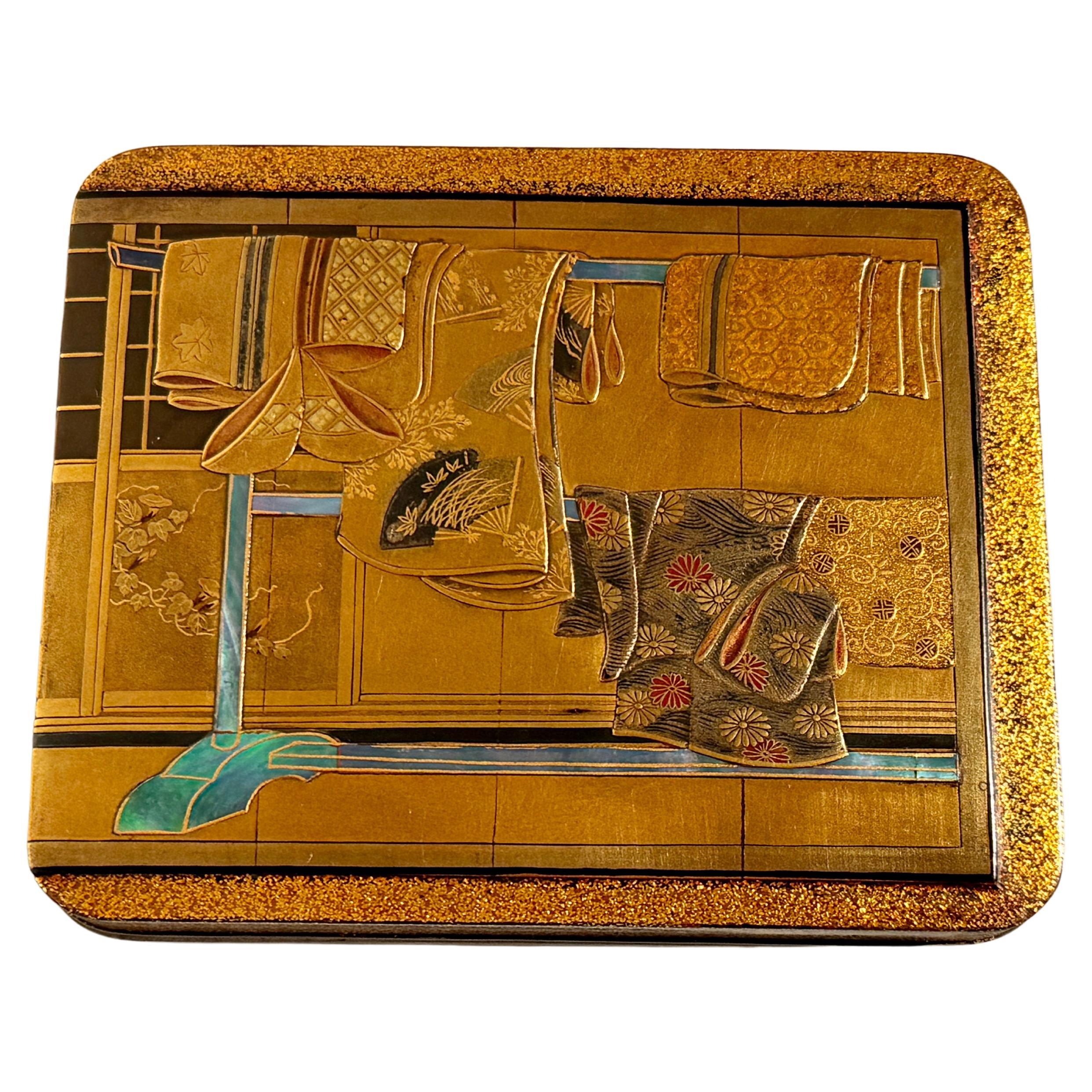
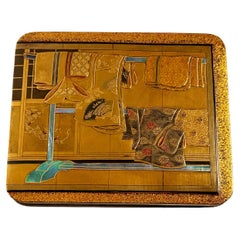
A fine and unusual Japanese lacquer box for incense accessories, kobako, featuring a tagasode (whose sleeves?) design, Meiji Period, circa 1900, Japan.
The exquisite box of simple rectangular shape worked in maki-e lacquer, taka-maki-e, and raden, all against a lush ground of gold nashiji. Fitted with silver rims.
The main decorative element of the box depicts a six panel folding screen, byobu, showing an interior scene with kimono strewn over a rack, a motif known as tagasode (whose sleeves), all in raised taka-maki-e lacquer and inlaid raden.
The screen depicts an intimate room with tatami mats on the floor and sliding shoji doors in the background. The foreground depicts a large clothing...
Category
Antique Early 1900s Japanese Meiji Lacquer
Materials
Silver
Lacquered Japanese Writing Box, Mid 20th Century
Located in Jimbaran, Bali
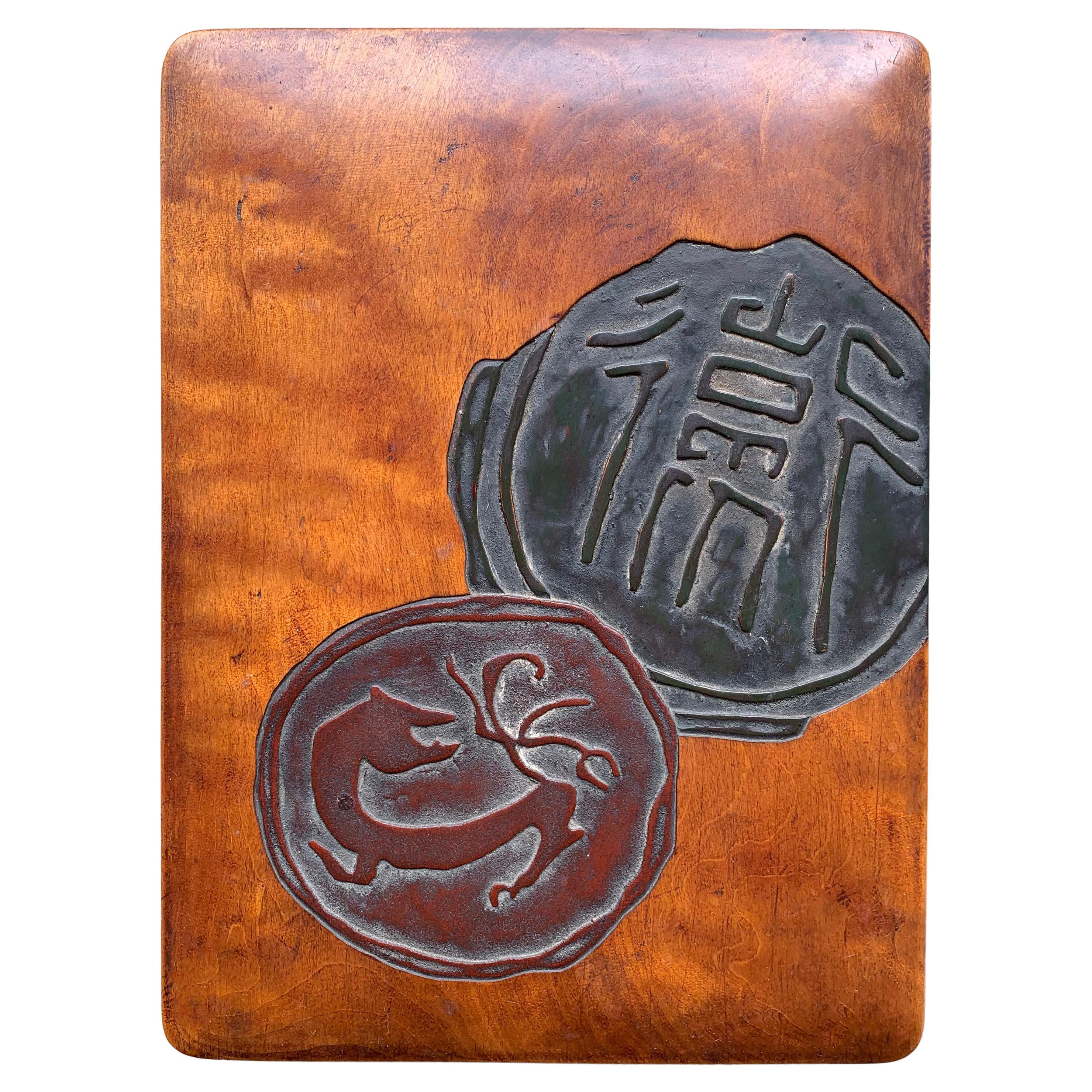
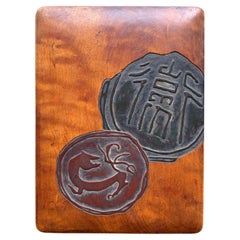
A Lacquered Japanese writing box with metal detailing, mid 20th century. The box has signs of patina on the metal, a small crack in one corner and...
Category
Mid-20th Century Japanese Other Decorative Boxes
Materials
Wood
Large Japanese Lacquer Document Box, Ryoshibako, Edo/Meiji period, Japan
Located in Austin, TX
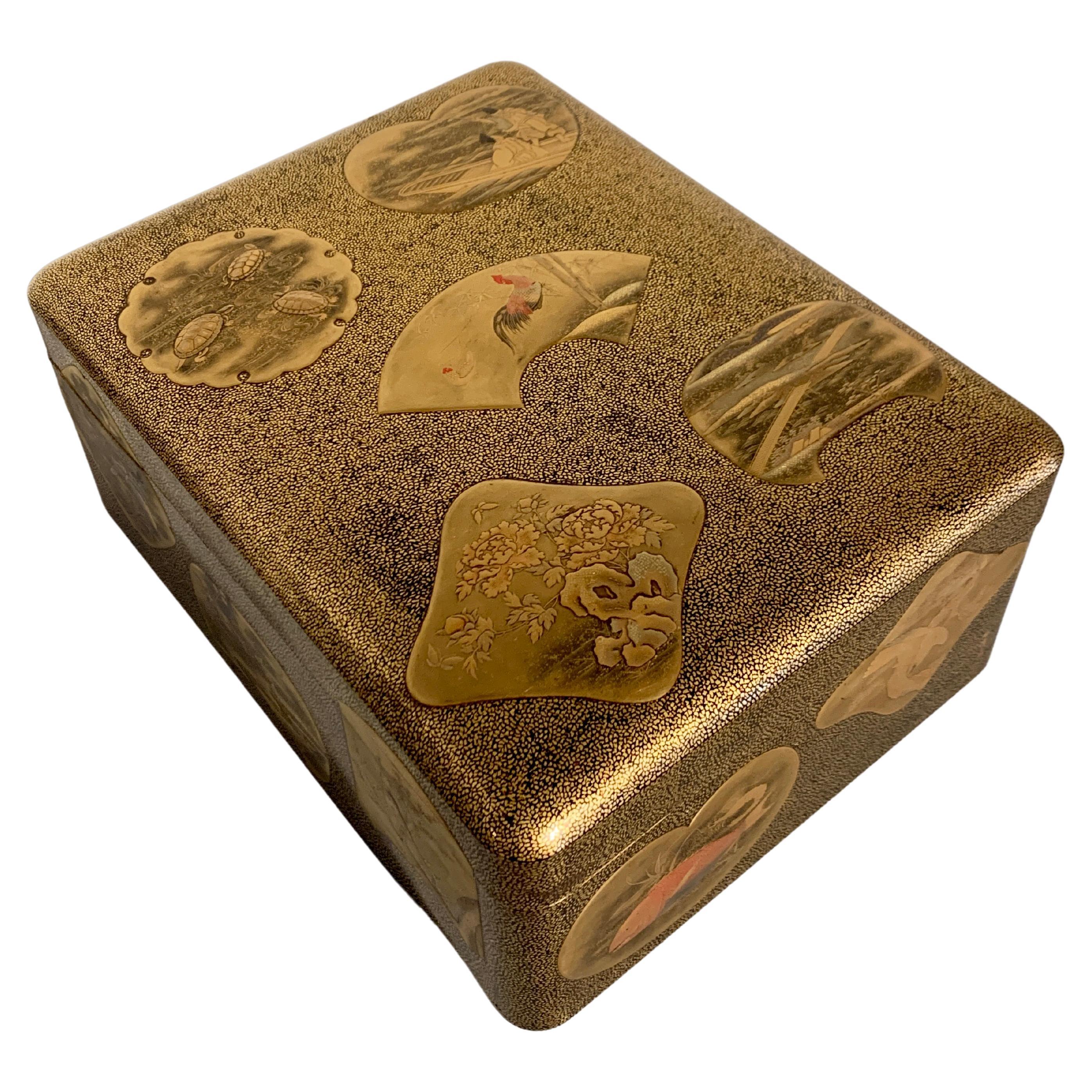
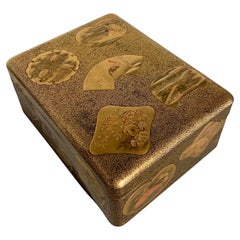
A large and magnificently decorated Japanese lacquer document box, ryoshibako, signed Umeboshi/Baikyo, late Edo or early Meiji Period, mid 19th century, Japan.
The large document box, ryoshibako, of tall, rectangular shape with rounded corners, and fitted with an inrobuta (flush-fitting) cover with beveled edges. The exterior of this exquisite box is decorated all over with fifteen different raised reserves shaped as uchiwa (paddle) fans against a lush and intricate krikane ground imitating shagreen.
The uchiwa shaped reserves all of takamaki-e, and exquisitely painted with designs of animals, flowers, and landscapes in silver, gold, maki-e, hiramaki-e, and takamaki-e, with kirikane, nashiji, and polychrome embellishments, upon gold lacquer fudame grounds.
The interior of the lid is nothing short of spectacular, featuring a large design of a magnificent and beautifully detailed rooster and hen with chicks gathered around a lazy stream. Large stalks of chrysanthemum bloom behind them. All against an ethereal nashiji ground.
The cover of the box features five reserves:
1. Three minogame (turtles with long tails), symbolizing longevity
2. "Narihira Crossing the Sumida" from The Tales of Ise...
Category
Antique 1860s Japanese Meiji Lacquer
Materials
Softwood, Lacquer
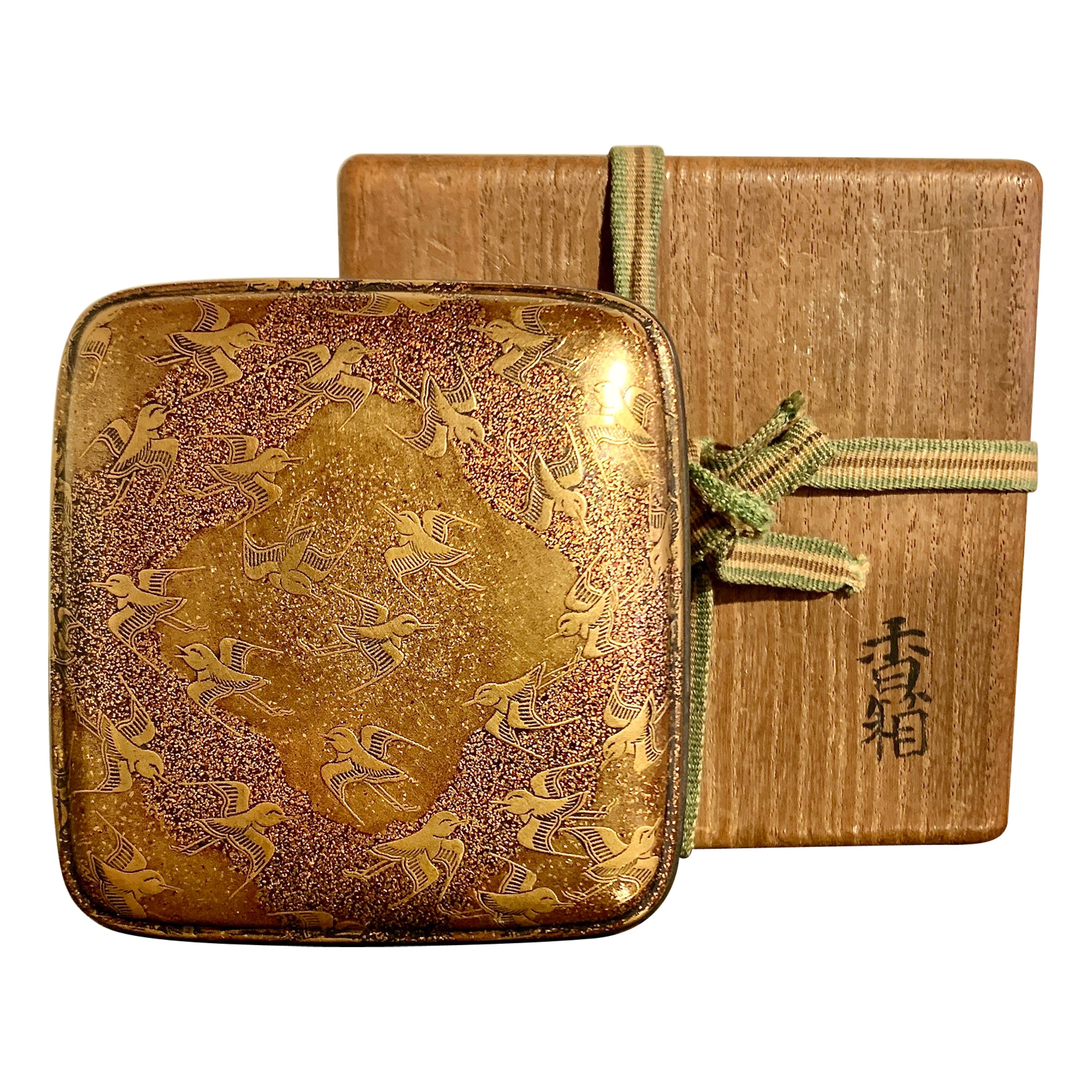
Japanese Lacquer Incense Box, Kogo, Momoyama or Edo Period, 16th/17th Century
Located in Austin, TX
A wonderful Japanese lacquer incense box, kogo, with a design of plovers in flight, late Momoyama or early Edo Period, circa 1600, Japan.
The small box, called a kogo, was used to s...
Category
Antique Early 17th Century Japanese Edo Lacquer
Materials
Gold, Pewter
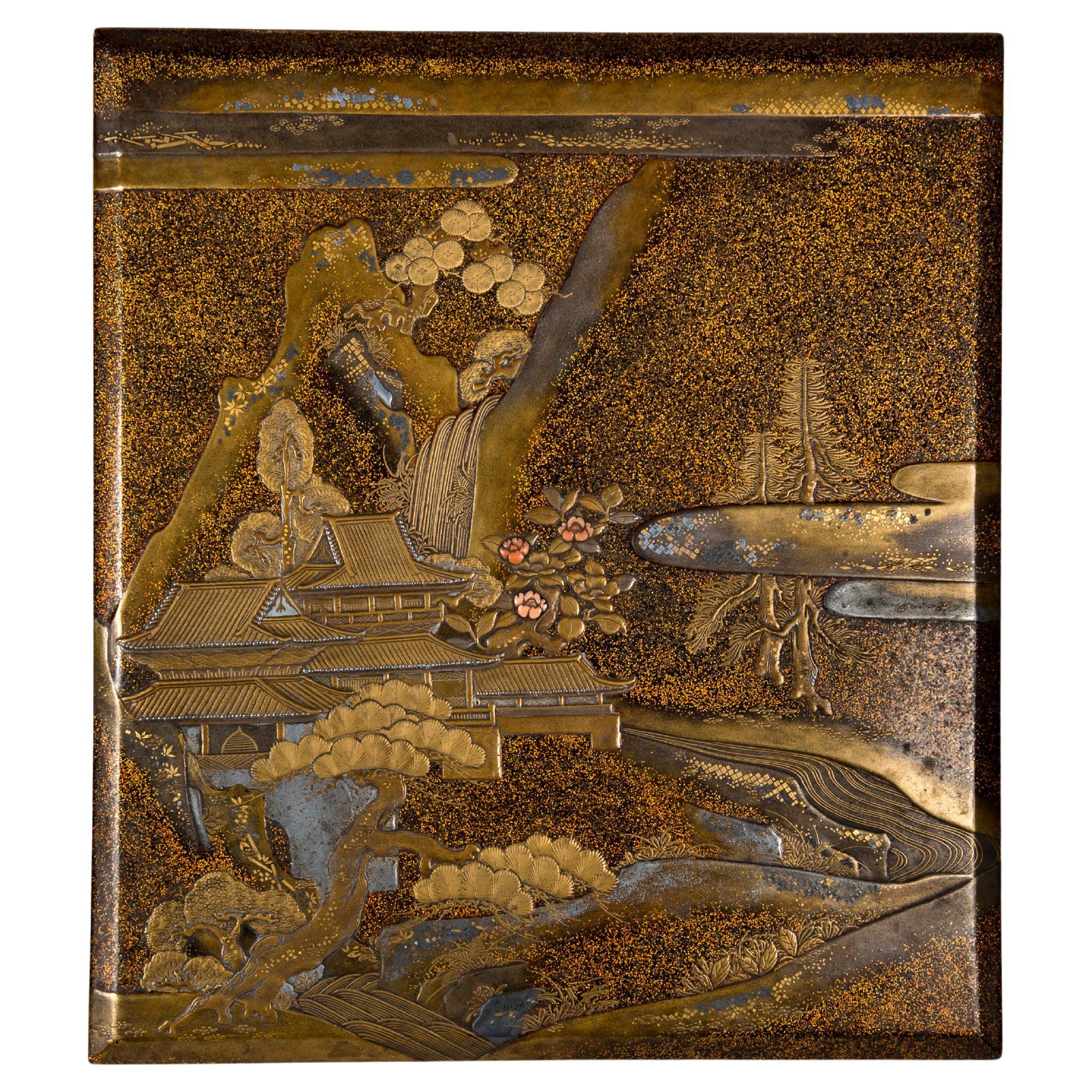
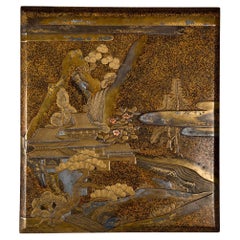
Suzuribako or writing box made of nashiji lacquer and adorned with a landscape
Located in PARIS, FR
Suzuribako, or writing box, of rectangular shape, decorated with an imposing architecture realized in hira maki-e lacquer, probably a palatial structure, situated beside a waterfall...
Category
Antique Late 18th Century Japanese Edo Lacquer
Materials
Gold Leaf
More Ways To Browse
Asian Gold Leaf Art
Chinese Black And Gold Lacquered
Japanese Lacquer Boxes
Antique Writing Box
Art Glass Japan
19th Century Chinese Lacquer Box
Silver Antique Japanese Boxes Silver Boxes
Urushi Lacquer
Wooden Storage Boxes
Chinese Fans
Japanese Silver Leaf
Antique Ships Box
Antique Wooden Storage Box
Silver Box Japan
Antique Silver Paint Box
Japanese Gold Lacquer Box
Temple Lions
Shishi Lion